影响力投资

Search documents
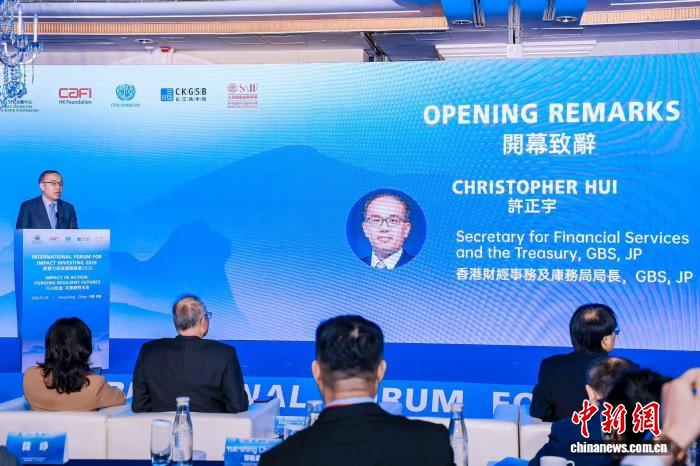
(机遇香港)业界人士:香港正加速成为国际影响力投资高地
Zhong Guo Xin Wen Wang· 2026-01-29 06:58
Core Viewpoint - Hong Kong is accelerating its position as an international hub for impact investing, leveraging its unique advantages and robust policy support to attract global capital while promoting social responsibility [1][3]. Group 1: Market Position and Advantages - Hong Kong manages assets totaling $4.5 trillion, supported by a sound legal system and an open market environment, making it uniquely positioned for impact investing [1]. - The city serves as a bridge between mainland China and the world, providing ample space for cross-border impact investments and enhancing its competitiveness as a global financial center [1]. Group 2: Government Initiatives - The Hong Kong government has extended its green and sustainable finance funding program until 2027 and the training pilot program until 2028, having approved over 9,700 applications to support impact investing [3]. - The government emphasizes the integration of financial technology with sustainable development as a key driver for the growth of impact investing [3]. Group 3: Challenges and Solutions - The balance between social responsibility and commercial profit has historically hindered the development of impact investing, but experts believe that technology can facilitate a dual synergy between capital and profitability [3][4]. - Impact investing should not be viewed as a cost burden but rather as an engine for efficiency, with technological innovations optimizing capital allocation for more affordable green transitions [3][4]. Group 4: Collaborative Efforts - The Hong Kong Productivity Council's "ESG One-Stop" platform has attracted over 1,500 companies across various industries, providing systematic support for enterprises [4]. - Long-term commitment from businesses, financial institutions, and public sectors is essential for the sustained development of impact investing and resilient growth [4].

银河证券章俊:中国需挖掘人才、市场、产业新红利
2 1 Shi Ji Jing Ji Bao Dao· 2026-01-28 15:26
Group 1 - The core viewpoint is that China's economy faces long-term challenges due to demographic changes, necessitating the exploration of "talent dividends," "market dividends," and "industry dividends" for high-quality growth [1] - International investors' confidence in China's economic situation and reforms is recovering, driven by significant changes in export structure, with high-value-added products like electromechanical products accounting for 60% of total exports [1] - The diversification of markets has made substantial progress, with a significant increase in exports to emerging markets, effectively reducing reliance on a single market and forming new growth momentum [1] Group 2 - China has over ten million college graduates annually, a large middle-class consumer market, and the world's most complete industrial supply chain, providing a solid foundation for the economy's transition to innovation-driven growth [1] - The government is committed to creating more jobs, increasing residents' income, and optimizing public services, as indicated by the emphasis on "investing in people" in last year's government work report [1] - In the AI sector, China's advantages in population scale, industrial chain, and market size align well with the key demands of AI development, which relies heavily on computing power and resource investment [2] Group 3 - The concept of "happiness return" integrates social impact with financial returns, demonstrating that high-quality investment opportunities can be discovered even in uncertain times [2] - The transition finance is crucial for supporting the green transformation of high carbon-emitting industries under China's "dual carbon" strategy, with increasing demands for climate risk and ESG information disclosure from capital markets [2] - From 2026, all listed companies in Hong Kong will need to comply with ISSB standards for disclosure, which may increase short-term costs but is expected to drive profound changes towards sustainable development in the long run [2]
20%上涨空间可期!高盛:TPG(TPG.US)借力保险巨头,以低成本模式构建长期盈利护城河
智通财经网· 2026-01-08 09:09
Core Viewpoint - Goldman Sachs has issued a report on TPG Inc. focusing on its long-term strategic partnership with Jackson Financial, which is expected to provide stable asset management and fee income for TPG, laying a solid foundation for future growth [1] Group 1: Partnership Details - TPG will manage an asset portfolio valued at $12 billion from Jackson Financial, with a diverse investment scope including investment-grade bonds and direct lending, expected to grow to $20 billion over the next five years [1] - In return, Jackson will receive $150 million in TPG stock and TPG will invest $500 million into Jackson [1] Group 2: Financial Projections - By 2028, TPG's free cash flow per share is projected to grow by 1.2% to 2.1%, while diluted earnings per share may see a slight decline of -0.2% to an increase of 1% [2] - The net present value (NPV) from the $20 billion asset is estimated to positively impact TPG's diluted earnings per share by approximately 2% to 3% in 2027 [2] Group 3: Fee Structure and Profitability - TPG will charge at least 50 basis points in management fees from Jackson's assets, with actual rates expected to range between 60 to 75 basis points as direct lending strategies increase [2] - TPG's incremental free cash flow margin is anticipated to remain high at 85% to 100%, benefiting from limited capital investment requirements [2] Group 4: Strategic Alignment and Future Plans - The partnership aligns with TPG's strategy of maintaining a light balance sheet and provides a long-term stable capital source [2] - TPG plans to raise approximately $20 billion in credit funding by 2025, with $8 billion expected in the fourth quarter, further enhancing its credit management fee income [2] Group 5: Investment Outlook - Goldman Sachs maintains a "Buy" rating for TPG with a 12-month target price of $80, based on a comprehensive valuation of TPG's cash flows [3] - The partnership with Jackson Financial is viewed as a significant opportunity for TPG to generate stable income and enhance overall profitability and market competitiveness [3]

【ESG真心话】施义:ESG不是“评分游戏”
经济观察报· 2025-12-10 13:01
Core Viewpoint - The article discusses a new path for ESG (Environmental, Social, and Governance) development in China, suggesting a shift from passive compliance to proactive "impact management" for high-quality development of A-share listed companies [1][6]. Group 1: ESG Development in China - ESG factors are becoming crucial for corporate competitiveness, moving beyond just financial metrics [2]. - The construction of the ESG system in China started late, with many companies still questioning the necessity of ESG practices [2]. - By 2027, various national ministries, including the Ministry of Finance, will introduce basic guidelines for sustainable disclosures, with a unified disclosure system expected by 2030 [2]. Group 2: Shift in ESG Focus - The shift from "surface compliance" to "substantive value creation" is seen as a key opportunity for Chinese companies [7]. - Companies are increasingly questioning the carbon footprint of their products and the social impact of their investments, indicating a move towards tangible outcomes [7]. Group 3: ESG Investment vs. Impact Investment - Traditional ESG investment focuses on a company's ESG characteristics, while impact investment emphasizes measurable positive impacts on society and the environment [10]. - Many companies are still at the stage of showcasing ESG risks without systematically assessing their substantive impacts [10]. Group 4: Governance Issues - Good governance is essential for effective ESG implementation, with room for improvement in board skills and executive compensation alignment with long-term goals [14]. - State-owned enterprises (SOEs) play a critical role in ESG development, often leading in compliance but needing to enhance communication with minority shareholders [15]. Group 5: Tools for Change - Investment institutions can drive substantive changes through proxy voting and active corporate engagement, setting clear, measurable goals for companies [16][17]. - The focus should be on establishing a framework that avoids "greenwashing" and promotes genuine corporate behavior change [17]. Group 6: Market Trends and Strategies - Despite recent anti-ESG trends in Western markets, the demand for transparency and risk management remains strong globally [18]. - The Chinese market is witnessing a strengthening of policies and infrastructure supporting ESG practices, which may provide a more stable foundation for long-term investment [18]. Group 7: Recommendations for Companies - Companies are advised to improve the timeliness of communication with investors, particularly regarding shareholder meeting materials, to facilitate better decision-making [20]. - A broader recommendation is to assess the dual importance of sustainability factors on financial performance and the impact of corporate activities on the environment and society [21].

【ESG真心话】施义:ESG不是“评分游戏”
Jing Ji Guan Cha Wang· 2025-12-10 11:44
Core Insights - The article emphasizes the growing importance of ESG (Environmental, Social, and Governance) factors in corporate competitiveness, moving beyond traditional financial metrics [2][3] - It highlights the late development of the ESG framework in China, with many companies still questioning the necessity of ESG practices [2] - The Chinese government is set to implement a unified sustainable disclosure framework by 2030, indicating a significant shift towards ESG compliance [2] Group 1: ESG Development in China - The Chinese ESG framework is evolving, with various government departments releasing new policies and guidelines to promote ESG practices [2] - By 2027, the Ministry of Finance and other national ministries will introduce basic guidelines for sustainable disclosures and climate-related disclosures for domestic companies [2] - The number of companies rated by MSCI has increased significantly, from 2 at the end of the 13th Five-Year Plan to 54, indicating a shift towards proactive ESG engagement [4] Group 2: ESG as a Value Creation Tool - ESG is viewed as a means to manage non-financial risks and create measurable, positive impacts rather than merely a compliance exercise [3][4] - Companies are beginning to focus on the actual carbon footprint of their products and the social impact of their investments, moving from superficial compliance to substantive value creation [4] - The distinction between traditional ESG investment and impact investment is crucial, with the latter requiring a deeper analysis of a company's positive contributions to society and the environment [8] Group 3: Governance and Corporate Engagement - Effective governance is foundational for successful ESG implementation, with a need for boards to possess diverse skills and effectively oversee company strategy and risk [12] - There is a call for improved communication between companies and investors, particularly regarding timely disclosures related to shareholder meetings [17] - Companies are encouraged to adopt a "double materiality" approach, assessing both the financial impact of external sustainability factors and the company's operational impact on the environment and society [17] Group 4: Future Trends and Strategies - The article notes a divergence in ESG sentiment globally, with some regions experiencing backlash against ESG, while China continues to strengthen its ESG policies and practices [15] - The focus on long-term structural trends in green and low-carbon transitions in China is seen as a more stable driver for ESG adoption compared to external pressures [15] - Companies are advised to set quantifiable impact goals for their key ESG issues, moving beyond mere compliance to achieve long-term value creation [17]

中国ESG信披转向“主动加强”
Jin Rong Shi Bao· 2025-12-09 03:33
Core Insights - The article highlights the significant transformation in ESG (Environmental, Social, and Governance) disclosure in China, moving from vague narratives to precise data quantification, marking a shift from "storytelling" to substantive implementation [1] - The contrasting trends between the U.S. and China regarding ESG policies are emphasized, with the U.S. experiencing a retreat while China is ramping up its ESG commitments [2][3] Group 1: Policy and Market Dynamics - The U.S. has seen a withdrawal from ESG commitments by major financial institutions due to rapid policy changes and legal risks, leading to a capital flight from sustainable funds [2][3] - In contrast, China is enhancing its ESG framework with mandatory disclosure requirements for listed companies, signifying a shift from voluntary to compulsory reporting [3][4] - Local governments in China are actively promoting ESG initiatives, providing financial incentives for compliant companies [3] Group 2: Unique Aspects of Chinese ESG Disclosure - China's ESG disclosure incorporates local issues such as rural revitalization and supply chain security, differentiating it from the Western focus on climate change [4] - The new "Corporate Sustainability Disclosure Guidelines" align with international standards while retaining local characteristics [4] Group 3: Trends in ESG Reporting - The disclosure rate of ESG reports among A-share listed companies has increased significantly, reaching 46.90% in 2025, up from 26.74% in 2019 [6] - There is a notable increase in companies obtaining environmental and energy management certifications, indicating a serious commitment to ESG practices [6] Group 4: Challenges and Opportunities - Despite progress, key metrics like energy consumption and greenhouse gas emissions reporting remain low, presenting opportunities for new market services such as supply chain ESG rating [7][8] - The demand for supply chain ESG ratings is growing, especially for companies engaged in trade with developed nations, where ESG compliance is becoming a critical factor [8] Group 5: ESG Investment Landscape - China's ESG banking products have surged, with the scale surpassing 270 billion yuan, indicating a shift in the ESG investment landscape from public funds to bank-managed products [9] - The market for passive ESG funds is expanding rapidly, with a notable increase in both the number and size of these products, reflecting a growing interest in this investment approach [10]
南南合作金融中心总干事吴忠:绿色“一带一路”建设中的影响力投资实践
Feng Huang Wang Cai Jing· 2025-11-30 22:20
Group 1 - The "South-South Cooperation Financial Center" emphasizes green development as its core mission since its establishment in 2014, aligning with international sustainable development goals through the concept of "impact investing" [3][4] - The center actively promotes agricultural technology to combat climate change, focusing on training and promoting mushroom cultivation to reduce agricultural emissions [3] - The center has been involved in establishing industrial parks in countries like Djibouti, Nigeria, Saudi Arabia, and Indonesia, utilizing advanced green equipment to showcase the win-win nature of China's production cooperation [4] Group 2 - The center plans to assist Chinese enterprises in going global over the next five years by establishing overseas industrial parks, coordinating policy differences among countries, and providing financial service support [4] - A significant challenge for Chinese companies expanding internationally is the lack of financial service support, which the center aims to address by offering targeted assistance [4] - The center's "impact investing" approach is considered more advanced than ESG, as it reflects a proactive choice by investors and companies rather than external requirements [4]
资管巨头发声,看多亚洲尤其是中国
Zhong Guo Ji Jin Bao· 2025-11-18 09:12
Core Viewpoint - Allianz Investment emphasizes that Asian markets, particularly the Chinese stock market, are key diversification choices for investors who are currently overexposed to US equities [1][4]. Group 1: US Federal Reserve and Interest Rates - Allianz's Chief Investment Officer for Fixed Income, Zeng Zheng, predicts further interest rate cuts by the US Federal Reserve, with a terminal rate of around 3.5% by mid-2026 [2]. - Zeng notes that the likelihood of the Fed choosing to cut rates is greater than maintaining the current rates, although the exact timing remains uncertain [2]. - Fixed income is highlighted as a core tool for capital preservation amid macroeconomic volatility, with a shift in return drivers expected from credit spreads to interest rate spreads by 2026 [2][3]. Group 2: Investment Opportunities in Asia - Zeng Yonghui, Chief Investment Officer for Asia Pacific equities, points out that many investors are overly concentrated in US stocks, particularly in large tech sectors, and are now reallocating to Asian assets [4]. - The current low allocation of global investors to Asian stocks presents a significant opportunity, especially as Asian stocks have a low correlation with US stocks [4]. - Four key themes driving investment opportunities in Asian stocks include innovation in technology, corporate reforms in major Asian economies, supply chain diversification, and emerging consumer trends [5]. Group 3: China's Economic Strategy - Allianz's Senior Economist, Tang Jicheng, identifies two main focuses of China's economic strategy: continued investment in advanced manufacturing and boosting domestic consumption [7]. - The "14th Five-Year Plan" outlines five strategic areas for attention, including modern industrial systems, technological breakthroughs, a unified domestic market, human-centered urbanization, and international cooperation [8]. Group 4: Multi-Asset Investment Strategies - Allianz's Head of Growth Multi-Asset, Hartwig Kos, notes that risk assets remain attractive, with a shift towards more diversified global allocations beyond US equities [10]. - The traditional "60/40" stock-bond portfolio remains viable, but flexibility and inclusion of non-core risk exposures like emerging market bonds and gold are essential for resilience [10]. - Gold is reaffirmed as a strategic asset, increasingly driven by geopolitical uncertainties and de-dollarization, making it a crucial component of a diversified investment portfolio [10]. Group 5: Sustainable Investment Trends - Allianz's Head of Sustainable and Impact Investing, Matt Christensen, indicates that sustainable investment regulation is entering a new phase, with a shift from mere disclosure to clearer product classifications in the EU [11]. - Impact investing is maturing, with growing recognition of achieving market-level returns, particularly in private markets, supported by clearer standards for outcomes and reporting [12].
家族办公室的“管家”能力应如何构建
Jing Ji Guan Cha Bao· 2025-10-25 02:19
Core Insights - The event focused on family offices and their role in addressing intergenerational conflicts and enhancing management capabilities [1] Group 1: Intergenerational Conflict Resolution - Intergenerational conflicts in family businesses arise from differences in upbringing and risk preferences between founders and their successors [2] - Solutions include employing professionals with psychological expertise in family offices to facilitate communication between generations [2] - Emphasizing the importance of early exposure for the third generation to family business operations to foster understanding and connection [2][3] Group 2: Family Office Management Capabilities - Family offices should act as a "glue" for family cohesion, especially post-sale of family businesses, by engaging in strategic charitable activities [4] - Not all family businesses require a family office; the effectiveness depends on the core members' ability to set a positive example [4] - Family offices are encouraged to focus on impact investing, balancing financial returns with social benefits, particularly in sectors like environmental protection and healthcare [4][6] Group 3: Strategic Wealth Management - Recommendations for wealth distribution include retaining 70% of core assets under the first generation's control while allocating portions for exploration and philanthropy [3] - Family offices should evolve into "chief architects" that not only promote strategic philanthropy but also support the development of future generations through various tools [4] - The development stages of family offices should align with client needs, focusing on practical family requirements such as education and healthcare [5]
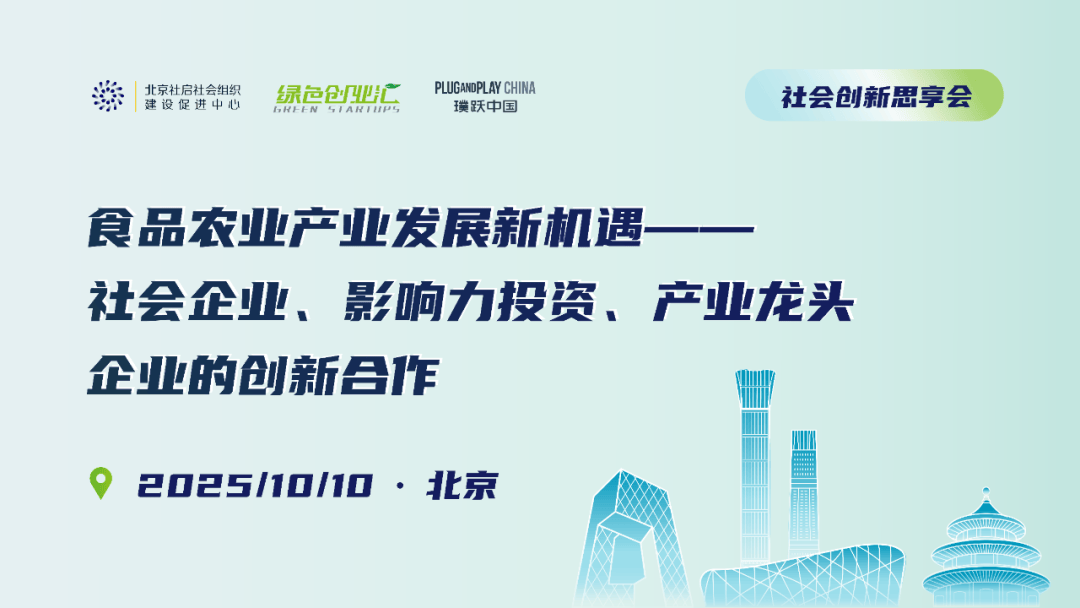
活动回顾丨跨界聚力·共创未来:社会企业、影响力投资与龙头企业共探食品农业可持续发展新路径
Sou Hu Cai Jing· 2025-10-16 12:03
Core Insights - The event "New Opportunities in Food and Agriculture Industry Development - Innovative Cooperation among Social Enterprises, Impact Investment, and Industry Leaders" was successfully held in Beijing, focusing on exploring industrial innovation and achieving a win-win situation between social and commercial values [2][5]. Group 1: Event Overview - The event was co-hosted by multiple organizations, including Beijing Social Organization Construction Promotion Center and Plug and Play China, gathering over 50 representatives from social enterprises, industry leaders, and impact investment institutions [2][5]. - The venue, AI Origin Community, is highlighted as a hub for AI technology and talent, featuring institutions like Tsinghua University's AI Institute [7][9]. Group 2: Key Themes and Discussions - The urgency of transformation in the food and agriculture industry was emphasized, driven by factors such as food security, climate change, and evolving consumer demands, with technology innovation identified as the core support for this transformation [14]. - The collaboration among social enterprises, industry leaders, and impact investors is crucial, with social enterprises providing innovative technologies, industry leaders offering practical scenarios and brand support, and impact investors filling funding gaps for early-stage projects [14]. Group 3: Case Studies and Innovations - Several innovative cross-industry collaborations were showcased, including: - Kangfen Bio's transformation of food processing by-products into high-value organic fertilizers and alternative feed through unique biotechnology [16]. - Zhi Nuo Technology's development of natural microbial pigments using synthetic biology, successfully applied in leading cashmere enterprises [17]. - Meicai's direct sourcing and smart logistics system that enhances farmer income while reducing costs for restaurant clients [17]. Group 4: Collaborative Discussions - A "World Café" session facilitated deep discussions among over 50 participants from various sectors, focusing on four core topics: - Innovative cooperation models between social enterprises and industry leaders [24]. - Scaling agricultural technology through partnerships [26]. - Diverse funding sources and innovative financing methods beyond impact investment [29]. - Building an ecosystem connecting enterprises, technology providers, research institutions, and funding sources [31]. Group 5: Innovative Solutions Presentation - Five social enterprises presented their sustainable value chain innovations, including: - Gengsheng New Materials' development of standardized planting soil from solid waste, significantly reducing soil restoration time [34]. - Qingyu Hall's use of IoT to enhance efficiency in the aquaculture industry [36]. - Huaxia Zhihui's active oxygen technology for plant disease control, utilizing only water and electricity [38]. - Zhongnong Chuangfa's biodegradable film technology for rice cultivation, addressing plastic pollution [40]. - Algae Chen's focus on commercializing microalgae for nutritional applications [42]. Group 6: Conclusion and Future Engagement - The event concluded with a call for continued engagement in upcoming initiatives, including the "Xiangguang Annual Meeting" and a closed-door seminar on rural revitalization [45]. - The collaborative efforts aim to inject new momentum into the green, inclusive, and sustainable development of the food and agriculture industry, emphasizing the importance of resilient partnerships in uncertain economic environments [45].