
清洁低碳

Search documents
机构:氢能行业尚处商业化初期
Zheng Quan Shi Bao Wang· 2026-01-14 01:30
Group 1 - The Sichuan Province has issued an action plan to establish a comprehensive green manufacturing system, emphasizing the steady advancement of hydrogen energy industrialization and the exploration of integrated technologies for green hydrogen, ammonia, and alcohol [1] - The plan includes the construction of pilot projects for hydrogen-based direct reduction of vanadium-titanium magnetite and hydrogen-rich smelting in high furnaces, as well as hydrogen roasting in cement production [1] - The initiative aims to couple renewable energy with hydrogen development in suitable regions, facilitating local hydrogen and oxygen production from water, wind, and solar energy [1] Group 2 - Guojin Securities notes that the hydrogen energy industry is still in its early commercialization stage, primarily driven by policy support, and suggests seizing the opportunity for investment [2] - The report highlights the global demand for green methanol, particularly in green shipping, driven by EU carbon taxes and IMO policies, indicating a clear trend towards green transformation in the shipping industry [2] - The development of hydrogen production equipment is seen as having significant long-term potential due to policy drivers and visible economic benefits, with the green hydrogen economy gradually becoming more viable [2] Group 3 - Industrial research from Xingye Securities indicates that the hydrogen energy sector is at a critical commercialization juncture, with downstream consumption scenarios being crucial [3] - The hydrogen industry chain encompasses production, storage, transportation, and application, forming a multidimensional energy ecosystem [3] - The report emphasizes that green hydrogen production relies entirely on renewable energy sources, ensuring a carbon-free process with water as the only byproduct, thus achieving a clean and low-carbon lifecycle [3]
2025年全球能源统计手册(简版)-能研智库
Sou Hu Cai Jing· 2025-12-31 05:48
Resource Reserves - The distribution of fossil energy resources is uneven, with the US, Russia, Australia, and China holding over 60% of global coal reserves. Venezuela, Saudi Arabia, and Canada account for 44.4% of global oil reserves, while Russia, Iran, and Qatar dominate natural gas reserves with over 50% [1] - In critical minerals for renewable energy, the Democratic Republic of the Congo monopolizes over 55% of global cobalt reserves, while Chile and Australia together hold over 58% of lithium reserves. China leads in rare earth reserves with a 48.3% share [1] Energy Consumption - Global primary energy consumption is projected to reach 636.25 exajoules in 2024, with China leading at 27.7%, followed by the US and India. Fossil fuels (oil, natural gas, and coal) still dominate, accounting for over 80% of consumption, but renewable energy's share is increasing from 8.15% in 2023 to 8.94% in 2024 [1] - China leads in solar and wind energy consumption, each exceeding 38%, with the US as the second-largest consumer of renewable energy [1] Energy Production - The energy production landscape remains stable, with China, the US, India, and Russia as the main producers. The total global primary energy supply is expected to be 592.22 exajoules in 2024, with fossil fuels still predominant, although renewable energy production is growing rapidly [2] - Coal-fired power generation's share has decreased to 33.96%, but it remains the primary method of electricity generation, with China accounting for 33.32% of global electricity production [2] Greenhouse Gas Emissions - Global energy-related CO2 emissions are projected to reach 1.9066 billion tons in 2024, with China, the US, and India being the major emitters. The scale of CCUS (Carbon Capture, Utilization, and Storage) is expanding, expected to reach 5.7824 million tons per year [2] Hydrogen and Energy Storage - Global hydrogen production capacity is steadily increasing, projected to reach 4.2766 million tons per year in 2024, with blue hydrogen accounting for 90.7% and green hydrogen for 9.3% [2] - The battery storage system for grid-level applications is expected to reach 126.14 million kilowatts in 2024, with China leading at 59.6% [2] Energy Prices - Energy prices are showing significant fluctuations, with coal, crude oil, and natural gas prices expected to decline compared to 2023. The prices of lithium carbonate have dropped significantly, while cobalt prices are steadily decreasing, contributing to lower battery costs and supporting the development of the renewable energy industry [3]


西藏:清洁能源燃起高原暖冬
Yang Guang Wang· 2025-12-26 08:36
Group 1 - The core viewpoint of the articles emphasizes the acceleration of economic and social development through a comprehensive green transformation in Tibet, leveraging local resources for clean heating projects to enhance the quality of life for residents [1][2][3] Group 2 - Tibet has established seven pilot projects for clean energy heating, including a significant geothermal heating project in Naqu City, which covers approximately 1.45 million square meters and is expected to reduce carbon dioxide emissions by nearly 300,000 tons annually [1][2] - The implementation of clean heating has been supported by substantial funding, with 4.105 billion yuan from the central budget and 3.775 billion yuan from social capital, benefiting over 900,000 residents across various cities and towns [3] - The goal is to achieve full coverage of heating and oxygen supply facilities in towns above 3,000 meters and in pastoral areas above 4,500 meters, marking a significant step towards a clean and low-carbon energy system in high-altitude regions [3]
完善煤炭清洁高效利用标杆水平
Qi Huo Ri Bao Wang· 2025-12-18 02:12
Core Viewpoint - The recent issuance of the "Benchmark and Baseline Levels for Clean and Efficient Utilization of Coal (2025 Edition)" aims to elevate the coal industry from low-end to high-end, transitioning coal products from primary fuels to high-value products [1] Group 1: Policy Implementation - The document encourages industry enterprises to implement upgrades and transformations based on actual conditions and long-term development [2] - It emphasizes three main aspects: 1. Classification management for new and existing coal projects to achieve benchmark levels [2] 2. Clear deadlines for project upgrades, generally not exceeding three years, with a focus on meeting baseline levels [2] 3. Strengthening the promotion and application of clean and efficient coal utilization technologies [2] Group 2: Support Mechanisms - The document outlines the use of existing policy tools to enhance market regulation and enforcement for clean coal utilization [3] - Financial support will be provided through existing central funding channels for eligible projects [3] - The establishment of favorable policies to accelerate the upgrade of enterprises and improve overall clean coal utilization levels [3]
优彩资源(002998) - 002998优彩资源投资者关系活动记录表20251115
2025-11-17 00:16
Group 1: Competitive Strategy - The company invests heavily in R&D to innovate the "physical-chemical method," allowing the use of multi-component recycled materials, enhancing both environmental and economic benefits [2][3] - The production line is flexible, accommodating diverse customer needs, which mitigates risks associated with high customer concentration [2][3] Group 2: Future Development Plans - The company aims for "clean and low-carbon" products and technologies, focusing on "green," "standardized," and "internationalized" development [4] - Plans to balance the focus on recycling and waste polyester resources, enhancing the efficiency and quality of recycled polyester fibers [4] Group 3: Project Initiatives - The construction of a new composite material production base in Tibet will enhance local production capabilities and align with national development strategies [3] - The biomass boiler project is expected to save fuel costs of approximately ¥23.55 million and reduce total costs by ¥19.85 million annually, contributing to significant economic benefits [3] Group 4: International Expansion - The company has increased its overseas sales efforts, with foreign sales revenue expected to double in 2024 compared to 2023, and aims for a 60% increase in the first half of 2025 [6] - A foreign subsidiary was established to support the expansion of international business [6] Group 5: Market Value Management - The company will enhance information disclosure to improve transparency and help investors understand operational conditions, while maintaining a stable business approach [6]

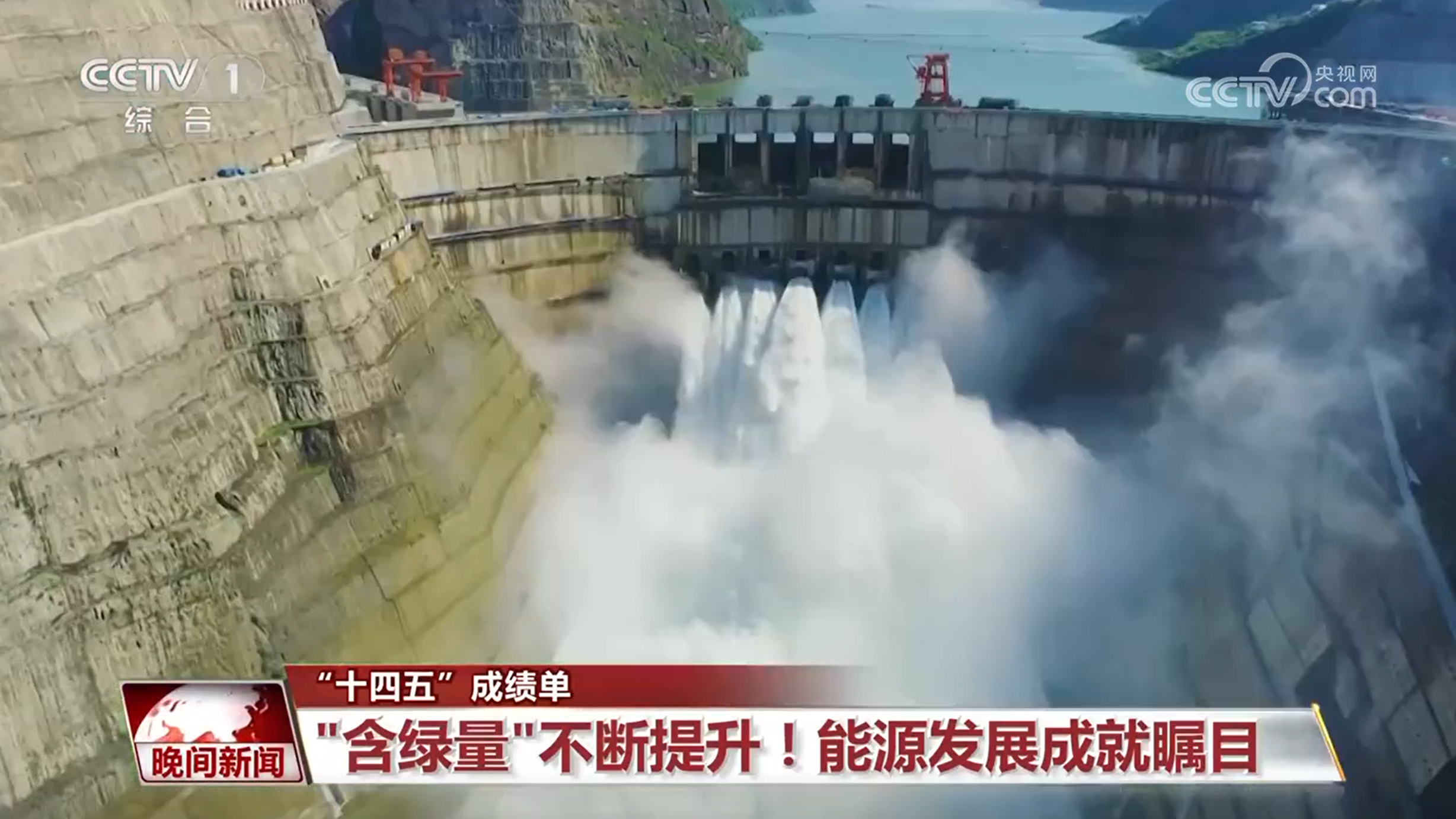
“含绿量”不断提升!能源发展“十四五”成绩瞩目
Yang Shi Wang· 2025-10-13 08:05
Core Insights - The "14th Five-Year Plan" emphasizes the importance of renewable energy as a key component for national energy security and economic stability [1][3][8] Group 1: Renewable Energy Development - During the "14th Five-Year Plan" period, China has built the world's largest and fastest-growing renewable energy system, with new energy storage capacity reaching approximately 95 million kilowatts, a nearly 30-fold increase over five years [3] - The proportion of renewable energy generation capacity has increased from 40% to around 60% [3] Group 2: Energy Consumption and Supply - The "14th Five-Year Plan" has seen energy consumption increase by 1.5 times compared to the total of the previous five years, while maintaining a stable energy self-sufficiency rate of over 80% [5] - The development of green energy has led to a significant shift in energy consumption, with one-third of electricity now generated from renewable sources [5] Group 3: Infrastructure and Technological Advancements - China has established the world's largest electric vehicle charging network, with two charging stations for every five electric vehicles, enhancing energy infrastructure [7] - The "14th Five-Year Plan" has positioned China as a global leader in renewable energy technologies and low-carbon development [8]
保供应、强民生、转低碳 能源强国之路越走越宽广
Yang Shi Wang· 2025-10-13 08:02
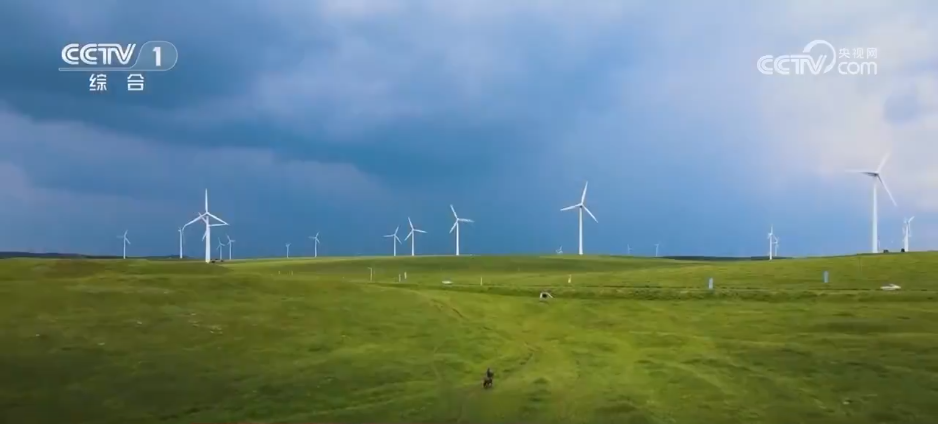
Core Insights - The "14th Five-Year Plan" emphasizes the importance of renewable energy as a crucial component for national energy security and economic development [1][3][13] Group 1: Renewable Energy Development - China has built the world's largest and fastest-growing renewable energy system during the "14th Five-Year Plan" period, with new energy storage capacity reaching approximately 95 million kilowatts, a nearly 30-fold increase over five years [5] - The proportion of renewable energy generation capacity has increased from 40% to around 60% [5] - The "Shagao Desert" has emerged as a new frontier for renewable energy construction, adding over 130 million kilowatts of installed capacity [7] Group 2: Energy Supply and Consumption - Energy consumption in China during the first four years of the "14th Five-Year Plan" has increased by 1.5 times compared to the total increase during the "13th Five-Year Plan" [9] - Despite high demand, China's energy supply and security have remained stable, with a self-sufficiency rate consistently above 80% [9] - The development of a robust electric vehicle charging network has been achieved, with the largest network globally, providing two charging stations for every five electric vehicles [11] Group 3: Future Outlook - With over 1.4 billion people's energy security effectively guaranteed, China is positioned as a global leader in renewable technology and green low-carbon development [13] - The path for high-quality energy development in China is expected to broaden significantly in the future [13]
无锡华光环保能源集团股份有限公司关于2025年半年度业绩说明会召开情况的公告
Shang Hai Zheng Quan Bao· 2025-09-15 21:17
Core Viewpoint - The company held a performance briefing on September 15, 2025, to discuss its half-year operating results and engage with investors, addressing concerns about declining revenue and profit while highlighting growth strategies and financial performance improvements [1][2]. Group 1: Performance Overview - For the first half of 2025, the company's net profit attributable to shareholders, excluding non-recurring gains and losses, was 27.1584 million yuan, representing a year-on-year increase of 27.41% [3]. - The gross profit margin for the main business was 19.01%, an increase of 4.62 percentage points compared to the same period last year [3]. - The company's revenue for the first half of 2025 saw a decline of 23.30% year-on-year, despite the increase in net profit [4]. Group 2: Future Growth Strategies - The company plans to accelerate its equipment business transformation, enhance overseas market development, and focus on clean and low-carbon product innovation [3]. - It aims to strengthen its supply chain through centralized procurement to reduce costs and improve efficiency [4]. - The company is committed to expanding its natural gas cogeneration layout through project acquisitions and self-built initiatives [4]. Group 3: Investor Engagement and Financial Policies - The company has a shareholder return plan for 2025-2027, committing to distribute at least 20% of the annual net profit attributable to shareholders as cash dividends, maintaining a consistent dividend policy [5]. - The company has completed a share buyback of 100 million yuan and emphasizes the importance of returning value to shareholders [5]. - The company encourages ongoing communication with investors through various channels to address their concerns and suggestions [6].
