双碳战略

Search documents
绿潮涌动处 奋进正当时
Bei Jing Ri Bao Ke Hu Duan· 2026-01-24 21:19
Core Viewpoint - The article emphasizes the importance of building a clean, low-carbon, safe, and efficient new energy system as a core mission for the Jingneng Group, aligning with national goals and local responsibilities [1][3]. Group 1: Strategic Development - By 2025, Jingneng Group aims to integrate green development into its overall industrial strategy, focusing on creating a robust, intelligent, environmentally friendly, and user-friendly heating network [2]. - The electricity sector will implement a strategy for green electricity to enter Beijing, enhancing energy supply systems and promoting significant breakthroughs in green electricity projects [2][3]. - The company is committed to transforming its coal power units to improve clean and efficient operation, while also developing green mining practices in its coal sector [2]. Group 2: Green Energy Expansion - Jingneng Group has over 31 million kilowatts of renewable energy installed capacity, accounting for 54% of its total power generation capacity, achieving a new clean energy installation every 18 hours [4]. - Significant projects include the largest centralized photovoltaic project in Beijing and various wind power initiatives, contributing to a multi-source, complementary energy supply network [4][5]. - The company has achieved a green electricity trading volume of 11.475 billion kilowatt-hours, providing stable clean energy options for residents and businesses in Beijing [5]. Group 3: Technological Innovation - The company is advancing its digital and intelligent capabilities, with a focus on smart heating networks and AI applications to enhance operational efficiency and safety [9][10]. - The establishment of a virtual power plant with a capacity of 4.12 GW aims to improve the stability of the energy grid and facilitate the integration of renewable energy sources [5][9]. - Collaborations with top research institutions are fostering innovation in low-carbon technologies and smart energy systems [10][11]. Group 4: Social Responsibility - Jingneng Group prioritizes public welfare by ensuring stable energy supply for over 200 million residents and implementing energy-saving measures for numerous enterprises [18]. - The company is actively involved in community projects, enhancing energy efficiency and reducing carbon emissions across various sectors [18][20]. - The development of a large-scale green hydrogen production project is expected to provide significant clean energy and reduce carbon emissions substantially [14][20]. Group 5: Future Outlook - The company plans to accelerate its green transformation and energy supply projects, focusing on renewable energy integration and enhancing the efficiency of urban heating systems [20][21]. - Jingneng Group aims to expand its low-carbon service capabilities and enhance its role in building an international green economy benchmark city [21].

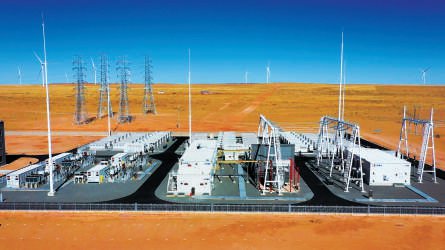
2026年中国燃煤添加剂行业分类、产业链图谱、市场现状及趋势分析:双碳战略驱动行业迈向低碳环保高效综合解决方案新纪元[图]
Chan Ye Xin Xi Wang· 2026-01-24 02:37
Core Insights - The Chinese coal additive industry is evolving from a simple "fuel-saving" role to a comprehensive solution that integrates "low carbon emissions, environmental compliance, and efficient combustion" [1][4] - The market size of the coal additive industry in China is projected to reach approximately 57.8 billion yuan in 2024, representing a year-on-year growth of 9.89% [1][4] Industry Overview - Coal additives are chemical substances added to coal to improve combustion efficiency, reduce pollutant emissions (such as SO₂, smoke, NOₓ), prevent boiler fouling and corrosion, and extend equipment lifespan [2][3] - The core principles of coal additives include lowering the activation energy of coal oxidation reactions, promoting complete combustion, converting harmful substances into harmless ones, and optimizing combustion conditions [2] Industry Value Chain - The upstream of the coal additive industry includes raw materials such as potassium nitrate, potassium chlorate, potassium permanganate, manganese dioxide, iron oxide, aluminum oxide, titanium dioxide, rare earth elements, and various sulfur-fixing agents [2] - The midstream involves the production and manufacturing of coal additives, while the downstream applications are primarily in thermal power, steel, cement, and chemical industries [2] Market Size - The coal additive industry is a crucial component of the clean and efficient utilization of coal, driven by the "dual carbon" strategy and stringent emission reduction requirements in high coal-consuming industries [1][4] - The demand for coal additives is increasing as industries seek to lower coal consumption, enhance combustion efficiency, and achieve simultaneous desulfurization, denitrification, carbon reduction, and ash removal [1][4] Key Companies - Yuan Da Environmental Protection Co., Ltd. focuses on a composite solution of "desulfurization efficiency agents + fuel-saving agents" and has covered over 20 units within its group [5] - Shandong Jiahe New Energy Development Co., Ltd. specializes in "HS" series environmental fuel-saving catalysts, leveraging partnerships with top universities for R&D [7] - The National Energy Investment Group's subsidiary emphasizes the development of coal additives and environmental technology integration, achieving significant efficiency improvements in desulfurization and fuel-saving [5] Industry Development Trends 1. **Policy and Technology Dual Drive**: The industry is shifting from "end-of-pipe treatment" to "process optimization" due to stricter environmental regulations and advancements in technology [8] 2. **Diversified Market Demand**: While the power industry remains the core demand driver, sectors like steel, cement, and chemicals are rapidly increasing their demand for coal additives [8] 3. **Optimized Competitive Landscape**: The industry is seeing increased concentration, with small and medium enterprises leveraging technological differentiation to compete [9]


深化产融结合 多晶硅期货服务光伏产业链企稳升级
Zhong Guo Zheng Quan Bao· 2026-01-23 20:57
Core Insights - The introduction of polysilicon futures has played a significant role in stabilizing the photovoltaic industry chain and optimizing the industry ecosystem, providing essential price signals and risk management tools for enterprises [1][2] Industry Overview - Polysilicon is a core material in the photovoltaic industry chain, which consists of "silicon material - silicon wafer - battery cell - module." China is the largest producer and consumer of polysilicon globally, having established a leading industrial advantage [2] - The price of polysilicon has experienced significant fluctuations due to various factors, with annual price volatility reaching 226.63%, 63.49%, and 280.17% from 2021 to 2023 [2] Futures Market Impact - Since its listing on December 26, 2024, polysilicon futures have shown a high correlation with spot prices, maintaining a correlation coefficient above 0.90 [2] - The futures market provides transparent pricing signals and effective hedging tools, helping to smooth out industry cycle fluctuations and ensuring the resilience and security of China's photovoltaic industry in global competition [2] Contract Design and Quality Standards - The design of the polysilicon futures contract includes a registered brand delivery system, ensuring that the quality standards of delivery products meet the needs of upstream and downstream enterprises [3] - The brand management system helps ensure the stability of delivery product quality and guides the market towards advanced technology and production capacity [3] Risk Management and Hedging - The hedging function of polysilicon futures has gained increasing attention from industry chain enterprises, with a noticeable rise in the frequency and scale of hedging business announcements from listed companies in the photovoltaic industry since 2025 [5][6] - At least 13 listed companies in the photovoltaic industry, including TBEA, Tongwei Co., and LONGi Green Energy, have announced participation in polysilicon futures hedging [6] Strategic Importance - The development of a more in-depth and broad polysilicon futures market is expected to provide robust support for Chinese photovoltaic enterprises in managing market uncertainties and may gradually establish a widely recognized "Chinese price" in the global market [6]



中国广核:截至2025年12月31日公司共管理在建机组20台
Zheng Quan Ri Bao· 2026-01-23 12:48
Group 1 - The company, China General Nuclear Power Corporation, manages 20 units under construction as of December 31, 2025, and will release an operational update on January 8, 2026 [1] - The company aims to leverage the "dual carbon" strategy opportunities by actively advancing the approval preparations and site development for new nuclear power projects, maintaining its leading position in installed and under-construction capacity in the industry [1] - As a capital-intensive public utility focused on nuclear power generation, the company primarily utilizes long-term debt financing, supplemented by a mix of short-term debt to meet operational needs [1] Group 2 - The company sets appropriate financing models based on the funding requirements during the construction and operation phases of nuclear power projects, continuously enhancing cooperation with banks [1] - The company plans to conduct debt swaps and restructuring as needed to reduce financing costs and ensure cash flow meets development needs [1]

双枪科技:竹基禾塑新材料应用场景可以覆盖汽车、工业、建材等多个领域
Zheng Quan Ri Bao Zhi Sheng· 2026-01-23 11:45
Core Viewpoint - The collaboration between Shuangqiang Technology and the Ningbo Institute of Materials Technology and Engineering aims to develop high-quality bamboo-based bioplastics, aligning with China's green circular economy policies and supporting the "dual carbon" strategic goals [1]. Group 1: Company Collaboration - Shuangqiang Technology is partnering with the Ningbo Institute of Materials Technology and Engineering to create bamboo-based materials [1]. - The project focuses on producing biobased materials that can replace traditional plastics, wood-plastic composites, and timber [1]. Group 2: Application and Market Potential - The bamboo-based materials are applicable in various sectors, including automotive, industrial, and construction [1]. - Specific applications include non-structural decorative parts for electric vehicles and outdoor decorative components [1]. Group 3: Strategic Alignment - The initiative supports national policies on green circular economy and aims to contribute to the transformation of material technologies in the traditional plastic industry [1]. - The project is positioned to enhance new productive forces in the context of sustainable development [1].
16套固定污染源废气(NH₃)排放连续监测系统入选中国环境监测总站适用性检测合格名录
仪器信息网· 2026-01-23 09:02
Core Viewpoint - The article highlights the release of a list of 16 qualified continuous monitoring systems for ammonia emissions from fixed pollution sources by the China National Environmental Monitoring Center, which will be valid until December 31, 2025. This list includes products from both international and domestic companies, showcasing the competitive landscape in ammonia monitoring technology [1][2][5]. Group 1: Monitoring Systems - A total of 16 ammonia emission monitoring systems have passed rigorous testing, meeting key indicators such as measurement range, response time, and anti-interference capability [2][3]. - The qualified systems include models from companies like ABB, Endress+Hauser, and domestic firms such as Shanghai Beifen and Zhetian Chunlai, indicating a blend of international and local technological strengths [5][6]. Group 2: Technological Advancements - The technology of ammonia monitoring equipment in China has significantly improved, featuring automation capabilities such as self-calibration, fault diagnosis, and remote operation, which reduce operational costs for enterprises [6]. - The adaptability of these devices has increased, allowing them to function effectively in complex environments characterized by high temperatures, dust, and humidity, thus catering to diverse industry needs [6]. Group 3: Market Growth - Ammonia is a critical precursor to PM2.5 and ozone, posing direct threats to ecosystems and human health, which makes its monitoring essential under China's dual carbon strategy [6]. - The fixed pollution source gas monitoring market is expected to experience a new growth phase, with the ammonia continuous monitoring system market projected to maintain a compound annual growth rate of over 15% in the next three years [6].

内蒙古《电碳计量技术规范》发布填补我国该领域技术空白
Nei Meng Gu Ri Bao· 2026-01-23 06:39
Core Viewpoint - The Inner Mongolia Autonomous Region has released the first provincial-level local standard for electric carbon measurement, which fills a technical gap in China's electric carbon measurement field and supports the green transformation of the energy industry in Inner Mongolia [1] Group 1: Standard Overview - The standard, titled "Technical Specifications for Electric Carbon Measurement," was developed by Inner Mongolia Power Group over two years [1] - It integrates key technologies such as power data collection, carbon emission value transmission, and metering device certification [1] - The standard establishes carbon measurement methods for all stages of electricity generation, transmission, distribution, and consumption, creating a database of carbon emission factors for various energy types [1] Group 2: Industry Impact - The implementation of this standard is expected to inject new momentum into the transformation of Inner Mongolia's energy base [1] - A carbon financial evaluation model developed based on this standard has been piloted in key enterprises in Baotou City, helping companies reduce costs and increase efficiency [1] - By 2027, the continued implementation of the standard is projected to expand the scale of green finance in the region and foster new service sectors such as carbon consulting and carbon asset management [1]
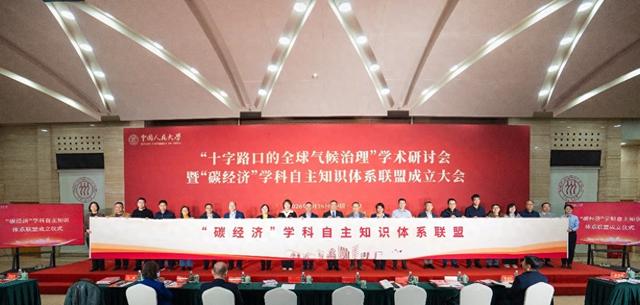
传播全球气候治理的中国声音,“碳经济”学科自主知识体系联盟成立
Xin Lang Cai Jing· 2026-01-23 05:30
Core Insights - The "Carbon Economy" discipline's independent knowledge system alliance was established to address the systematic economic and social transformation needs driven by the "dual carbon" goals [2][3] - The alliance aims to refine the core categories and research paradigms of the "Carbon Economy" discipline, promoting theoretical innovation and practical application [3] - The initiative is positioned as a crucial academic support for the national "dual carbon" strategy, high-quality development, and participation in global climate governance [3] Group 1 - The "Carbon Economy" independent knowledge system alliance was initiated by the School of Applied Economics at Renmin University of China, with participation from 24 related institutions [3] - The alliance will focus on academic research, talent cultivation, and industry-academia-research cooperation to enhance China's academic influence and voice in global climate governance and green low-carbon development [3] - The establishment of the "Carbon Economy" discipline is seen as a response to the demand for theoretical innovation and the dissemination of China's perspectives on climate issues [2][3]
瑞能股份:“十五五”开局之年的成长密码
Cai Fu Zai Xian· 2026-01-23 04:01
Core Insights - The company, Renergy Co., has recently achieved significant recognition in the global renewable energy sector, showcasing its robust capabilities through multiple awards [1] - Renergy's products and services are now available in over 80 countries, helping thousands of enterprises enhance battery production efficiency, ensure safety, and reduce overall costs [1] - The accelerating global energy transition during the "14th Five-Year Plan" period is expected to further expand the demand for renewable energy, positioning Renergy to benefit from its technological advantages and brand influence [1] Technological Leadership and Innovation - At the 6th Shenzhen Enterprise Innovation Promotion Conference, Renergy received multiple honors for its cutting-edge technology in the renewable energy testing equipment sector, including the "New Energy Industry Innovation Project Award" for its key technology in automatic online testing of power batteries [2] - The awarded project addresses long-standing challenges in battery production related to efficiency, quality, and cost balance, achieving goals of quality improvement, cost reduction, energy saving, and safety [2] - Renergy has established a closed-loop innovation application system that integrates "advantage technology—core standards—intelligent equipment—industry promotion," transforming technological advantages into replicable and scalable industrial solutions [2] Intellectual Property and Industry Standards - Renergy has developed over 500 intellectual property rights in the field of battery testing and intelligent manufacturing, focusing on key technological breakthroughs and creating a comprehensive testing technology platform covering the entire battery lifecycle [3] - The company actively participates in industry standard formulation, leading innovation directions and promoting collaborative development across the industry chain [3] Long-term Vision and Strategic Leadership - Renergy's Chairman, Mao Guangfu, has been recognized for his significant contributions to the lithium battery testing and energy management fields, emphasizing a long-term innovation strategy that drives the company's development [4] - Since its establishment in 2003, Renergy has focused on technological innovation, leading to the creation of key technologies and a transition from a battery testing equipment supplier to a core provider of intelligent solutions in the renewable energy industry [4] - The company has built a closed-loop ecosystem encompassing "testing technology + data intelligence + energy management," covering battery testing, automatic detection lines, and energy storage systems [4] Talent Development and Organizational Management - Renergy has been awarded the "Best Employer - Organizational Management Award" for its exceptional organizational management capabilities and talent development system [5] - The company views talent as its primary resource, establishing a comprehensive recruitment, training, and retention system to attract and develop outstanding talent [5][6] - Renergy emphasizes employee career development and provides ample training and promotion opportunities, fostering a positive and collaborative work environment [6] Green and Low-Carbon Industry Empowerment - Under the "dual carbon" strategy, Renergy is aligning with the trend of green and low-carbon development in the renewable energy sector, integrating photovoltaic, energy storage, and production lines with its self-developed EMS energy management system [7] - This system optimizes energy utilization and dynamically adjusts energy distribution based on photovoltaic generation and production line energy needs, significantly reducing reliance on traditional power grids and carbon emissions [7] - Renergy is strengthening ecological collaboration within the industry, working with upstream and downstream enterprises to promote safe, green, and high-quality development in the renewable energy sector [7]
全球风电玻纤龙头振石股份沪主板上市在即!多元布局+出海扩产启增长新篇
Sou Hu Cai Jing· 2026-01-23 02:46
Core Viewpoint - Zhejiang Zhenstone New Materials Co., Ltd. is advancing its IPO process, aiming to issue 26,105.50 million shares, which will account for 15% of the total share capital post-issue, with a strategic placement of 7,831.65 million shares, approximately 30% of the total issuance [2] Financial Performance - Revenue from 2022 to 2024 was 526,743.69 million, 512,395.29 million, and 443,879.18 million respectively, while net profit for the same years was 77,444.59 million, 79,015.57 million, and 60,563.70 million, demonstrating resilience during industry adjustments [3] - For the first half of 2025, the company reported revenue of 327,500.17 million and net profit of 40,440.18 million, indicating a recovery trend [3] - The gross margin improved from 23.82% in 2022 to around 26% in 2024, significantly above the industry average [4] Market Position - Zhenstone holds the global market share of over 35% in wind power glass fiber fabric, ranking first worldwide [6] - The company’s revenue structure is stable, with wind power fiber fabric and pultruded profiles accounting for over 85% of total revenue [6] Growth Drivers - The company is benefiting from favorable policies that support wind energy, with targets for annual new installations set at 50 million kilowatts during the 14th Five-Year Plan [7] - Global wind power installations are projected to grow at a compound annual growth rate of 10.94% from 2024 to 2030, providing strong demand for wind power materials [8] Investment and Expansion Plans - The IPO proceeds will be allocated to four major projects, including the construction of glass fiber product production bases and composite material production bases, with total investments exceeding 398,107.31 million [9][10] - The new production bases are expected to increase wind power fiber fabric capacity by 21.5 million tons and photovoltaic frame capacity by 8.1 million tons [10] Research and Development - The company has consistently invested in R&D, with expenses reaching 16,228.52 million, 17,002.49 million, and 16,057.84 million from 2022 to 2024, reflecting a commitment to technological advancement [12] - Zhenstone has developed 32 invention patents and 210 utility model patents, showcasing its strong R&D capabilities [15]