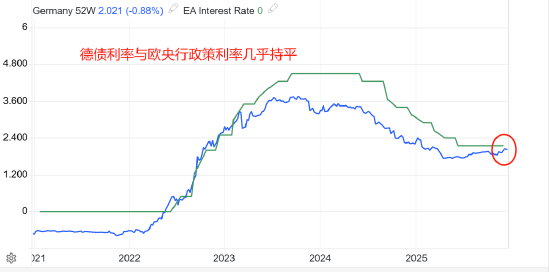
失业率

Search documents
美国消费者信心连续第五个月下滑 追平08金融危机以来最长纪录
智通财经网· 2025-12-23 15:33
Group 1 - The core viewpoint of the articles indicates that U.S. consumer confidence has declined for the fifth consecutive month, reflecting growing pessimism regarding the labor market and business environment [1][2] - The Conference Board Consumer Confidence Index fell to 89.1 in December, down from 92.9 in the previous month, marking the longest streak of declines since the 2008 financial crisis [1] - Four out of five components of the overall index decreased, with one component showing significant weakness, highlighting concerns about prices, inflation, tariffs, trade, and political factors [1] Group 2 - High price levels and concerns about a weakening job market have continuously suppressed consumer sentiment, keeping the index at low levels since the pandemic [2] - Current trends show a slowdown in U.S. job growth and an increase in unemployment rates, while inflation remains above the Federal Reserve's target, exacerbating household anxiety about the economic outlook [2] - Economists predict that hiring activity will remain sluggish next year, with limited improvement in the unemployment rate, which may continue to pressure consumer confidence [2]
特朗普跟失业率数据“过不去”,如今更是变本加厉!
Xin Lang Cai Jing· 2025-12-23 12:20
Core Viewpoint - The U.S. unemployment rate reached a four-year high of 4.6% in November, while Trump claimed he could reduce it to zero with a single phone call, highlighting a disconnect between his statements and the economic reality faced by the public [1][2][9]. Employment Market Statistics - The unemployment rate is reported at 4.6%, not the 4.5% claimed by Trump [3][11]. - Trump suggested that re-hiring 271,000 federal workers could lower the unemployment rate to 2.5%, but this calculation is flawed; it would actually require hiring 3.5 million additional workers to achieve that rate [3][11]. - To reach a zero unemployment rate, 7.8 million new jobs would need to be created, a feat never achieved historically [3][11]. - The unemployment rate has increased from 4% at the start of Trump's presidency to 4.6%, with 982,000 more unemployed individuals in November compared to January [3][11]. Employment Market Reality - The U.S. economy has seen job losses in three of the past six months, with 2025 projected to have the worst job growth since 2020 [4][13]. - The voluntary resignation rate dropped to a five-year low in October, indicating a stagnation in the job market [14]. - There is a mismatch between available jobs and the skills of the unemployed, particularly affecting low-income workers, with the unemployment rate for Black Americans surpassing 8% for the first time in four years [14]
下月降息?美联储内部分歧再起!
Jin Rong Shi Bao· 2025-12-23 08:55
Economic Resilience and Risks - The U.S. economy has shown unexpected resilience despite trade disputes, market volatility, and a prolonged government shutdown [1] - However, this resilience does not guarantee a positive outlook, as various unknown factors could disrupt the recovery, including a potential decline in the AI boom and the introduction of new tariffs by the Trump administration [1] Federal Reserve's Interest Rate Decisions - Federal Reserve Governor Stephen Milan indicated that unless the central bank continues to lower interest rates next year, the U.S. may face recession risks [2] - Milan expressed that rising unemployment should prompt the Fed to adopt a more dovish stance, as the unemployment rate has exceeded previous expectations [2] - The Fed implemented its third rate cut of the year in December 2025, lowering the federal funds rate target range to 3.50%-3.75% [2] Diverging Views Among Federal Reserve Officials - Unlike Milan, most other Fed officials prefer to maintain the current interest rates for the next few months until the economic outlook becomes clearer [3] - Cleveland Fed President Beth Harmack, a hawkish official, believes there is no need for rate adjustments in the coming months, citing concerns over persistent inflation rather than labor market weaknesses [3] Market Expectations for Future Rate Changes - According to CME's FedWatch, there is a 19.9% probability of a 25 basis point rate cut in January, with an 80.1% chance of maintaining current rates [4] - By March, the cumulative probability of a 25 basis point cut rises to 44.7%, while the probability of keeping rates unchanged is 47.1% [4]
集体飙涨,同日创新高!有人看傻眼,“下午刚买的,还没发货就赚了”
Sou Hu Cai Jing· 2025-12-23 08:04
Group 1: Market Trends - The market anticipates multiple interest rate cuts by the Federal Reserve next year, leading to a significant rise in international gold prices, surpassing $4,400 per ounce, marking both intraday and closing historical highs [1][10] - The S&P 500, Dow Jones, and Nasdaq all experienced gains, supported by seasonal and technical factors, with the S&P 500 rising by 0.64% and the Nasdaq by 0.52% [2][4] - European stock indices collectively declined, with the UK, France, and Germany experiencing drops of 0.32%, 0.37%, and 0.02% respectively [6] Group 2: Commodity Prices - International oil prices rose significantly due to concerns over potential disruptions in global oil supply linked to the U.S.-Venezuela situation, with light crude oil futures closing at $58.01 per barrel, up 2.64% [8] - Silver prices continued their strong upward trend, closing at $68.565 per ounce, an increase of 1.59%, driven by expectations of interest rate cuts and rising industrial demand [13] Group 3: Consumer Behavior - The surge in gold prices has led to increased consumer interest, with a notable 30% rise in foot traffic at jewelry stores, although actual sales volume has not seen a significant increase [18][20] - Online precious metal markets are experiencing high activity, with reports of rapid price increases for silver products shortly after purchase, indicating strong demand [20][21]

海外宏观周报:2025年最后央行周收官,各国央行表现如何-20251222
Min Yin Zheng Quan· 2025-12-22 05:07
Key Points Summary Group 1: Major Asset Trends - The 10-year U.S. Treasury yield decreased by 3.0 basis points to 4.16% as of December 19, 2025, while the 2-year yield fell by 4.0 basis points to 3.48% [3] - The S&P 500 index slightly increased by 0.10% to 6834.50, while the Nasdaq index rose by 0.48% to 23307.62 [3] - The Brent crude oil spot price decreased by 2.05% to $61.27, indicating a downward trend in commodity prices [3] Group 2: Central Bank Performance - The Federal Reserve's last three rate cuts in 2025, totaling 75 basis points, were seen as proactive and necessary due to weakening employment data and reduced inflation pressures [4][10] - The European Central Bank (ECB) has maintained a balanced approach, with inflation in the Eurozone stabilizing around 2.0-2.2%, while the Bank of England has room for further rate cuts due to inflation still being below target [14] - The Bank of Japan raised rates twice in 2025 but remains cautious, with expectations for 1-2 additional rate hikes in the coming year [15] Group 3: Economic Data Insights - U.S. non-farm payrolls showed mixed results, with November adding 64,000 jobs, while October was revised down to a loss of 105,000 jobs [20] - The U.S. unemployment rate unexpectedly rose to 4.56% in November, reflecting temporary layoffs and an increase in labor force participation [22] - Inflation pressures eased, with the November Consumer Price Index (CPI) rising by only 2.7%, significantly below expectations of 3.1% [25] Group 4: Market Sentiment and Trading Patterns - Recent data releases have led to increased expectations of recession, with trading patterns shifting towards recession trades [16] - The overall market sentiment reflects a cautious approach, with a notable increase in uncertainty and a mix of tightening and easing trades observed in recent weeks [16][17]
海外利率周报20251221:日本加息有什么影响?-20251221
Guolian Minsheng Securities· 2025-12-21 11:33
1. Report Industry Investment Rating No relevant content provided. 2. Report's Core View - This week, the entire curve of US Treasury yields declined slightly by 3 - 5bp. Although inflation and employment data are favorable for the bond market, the decline in interest rates is not significant. This is because the market doubts the validity of the data from October and November, and the expected change in the interest - rate cut path is small [2][11]. - The Bank of Japan raised the policy rate to 0.75%, but the yen continued to weaken. The "limited hawkish" stance of the Bank of Japan is due to the need to balance multiple pressures. As the yen approaches the "intervention level", the actions of the Japanese Ministry of Finance may affect the pricing of US Treasuries and the stock market [3][12]. - The US employment situation shows that the labor market has not changed significantly, with employers reluctant to increase recruitment significantly but not initiating large - scale layoffs. The economic growth momentum is weakening, and inflation is showing a downward trend [21][22][24]. - In the asset market, German medium - and long - term bonds and Japanese bonds rose; the global equity market was highly differentiated; black - series and chemical commodities strengthened, while grains and digital assets were under pressure; most global foreign exchange markets declined, with only the Russian ruble supported [26][27][28][29]. 3. Summary According to the Directory 3.1 US Treasury Yield Review - **Yield Changes**: From December 12 to December 19, 2025, the yields of 1 - month, 1 - year, 2 - year, 5 - year, 10 - year, and 30 - year US Treasuries decreased by 5bp, 3bp, 4bp, 5bp, 3bp, and 3bp respectively, reaching 3.71%, 3.51%, 3.48%, 3.70%, 4.16%, and 4.82% [2][11]. - **Reasons for the Limited Decline**: The market doubts the validity of the data from October and November, and the expected change in the interest - rate cut path is small [2][11]. - **Japanese Interest - Rate Hike Impact**: The Bank of Japan raised the policy rate to 0.75%, but the yen continued to weaken. As the yen approaches the "intervention level", the actions of the Japanese Ministry of Finance may affect the pricing of US Treasuries and the stock market [3][12]. - **Auction Results**: On December 17, the auction of 20 - year US Treasuries was robust, with a winning bid rate of 4.798%, a bid - to - cover ratio of 2.67 times (higher than the previous value of 2.41 times), and a tail spread of - 2.500 (higher than the previous value of - 0.200) [17]. 3.2 US Macroeconomic Indicator Review - **Employment**: In November, the seasonally - adjusted non - farm payrolls in the US increased by 64,000, higher than the forecast of 50,000 and the previous value of - 105,000. The unemployment rate was 4.6%, higher than the forecast of 4.5% and the previous value of 4.4%. The average hourly wage growth rate was 0.1% month - on - month, lower than the forecast of 0.3% and the previous value of 0.4%. The number of initial jobless claims in the week of December 13 decreased to 224,000 [21]. - **Business Index**: In December, the US Markit manufacturing PMI was 51.8, lower than the forecast of 52.0 and the previous value of 52.2; the service PMI was 52.9, lower than the forecast of 54.0 and the previous value of 54.1, hitting a six - month low. The US Philadelphia Fed manufacturing index was - 10.2, lower than the forecast of 2.5 and the previous value of - 1.7 [4][22][24]. - **Inflation**: In November, the US CPI increased by 2.7% year - on - year, lower than the previous value of 3.0% and the forecast of 3.1%. Some officials believe that there is a large space for the Fed to cut interest rates [4][22][24]. - **Housing Market**: In November, the annualized total of existing home sales in the US was 4.13 million units, with a median price of $409,200, a year - on - year increase of 1.2%. The housing market showed a significant differentiation, with low - priced housing sales under pressure and the high - end market relatively strong [24]. 3.3 Major Asset Review - **Bonds**: German medium - and long - term bonds and Japanese bonds rose. The yields of German 7 - year, 10 - year, 15 - year, and 30 - year bonds increased by 1bp, 3bp, 4bp, and 6bp respectively. The yields of Japanese 1 - year, 7 - year, 10 - year, 15 - year, and 20 - year bonds increased by 1.4bp, 0.7bp, 1.6bp, 2.4bp, and 1.6bp respectively [26]. - **Equities**: The global market was highly differentiated. The Vietnam VN30, UK FTSE 100, and France CAC40 rose by 3.55%, 2.57%, and 1.03% respectively, while the South Korea Composite Index, Japan's Nikkei 225, and Hong Kong's Hang Seng Index fell by 3.52%, 2.61%, and 1.10% respectively [27]. - **Commodities**: Black - series and chemical commodities strengthened, while grains and digital assets were under pressure. The coke index, coking coal index, and soda ash index rose by 9.82%, 9.11%, and 4.53% respectively, while CBOT wheat, CBOT soybeans, and Bitcoin fell by 3.68%, 2.55%, and 2.37% respectively [28]. - **Foreign Exchange**: Most global foreign exchange markets declined, with only the Russian ruble supported. The ruble rose by 0.35%, while the South Korean won, euro, and British pound fell by 0.62%, 0.37%, and 0.33% respectively [29]. 3.4 Market Tracking The report provides multiple charts, including the latest target - rate expectations of FED WATCH, the simulated trends of the US dollar, US stocks, US Treasuries, gold, and Bitcoin this week, the auction panel of US Treasuries, and the yield curves of US Treasuries, Japanese bonds, and German bonds, etc., to track the market situation [13][14][17].
美国消费者信心指数微涨
Xin Hua She· 2025-12-19 22:42
Group 1 - The core consumer confidence index in the U.S. rose to 52.9 in December, up from 51.0 in November, but significantly lower than 74.0 in December of the previous year [1] - The current economic conditions index fell to 50.4 in December, down from 51.1 in November and also lower than 75.1 in December last year [1] - The consumer expectations index increased to 54.6 in December, higher than 51.0 in November, but still below 73.3 from the previous year [1] Group 2 - Approximately 47% of surveyed consumers reported that high prices are putting pressure on their personal finances, unchanged from November and up from 35% a year ago [1] - Consumers expect inflation to remain high in the foreseeable future, which may weaken their potential purchasing power [2] - About 63% of consumers anticipate an increase in the unemployment rate over the next year, significantly higher than the 40% reported in the same period last year [2]
美国消费者信心指数微涨 对通胀和失业担忧犹存
Xin Hua Wang· 2025-12-19 18:59
与此同时,美国消费者预计通胀在可预见的未来仍将居高不下,从而削弱其预算的潜在购买力。 调查还显示,今年一整年,美国消费者普遍担心劳动力市场出现恶化。12月,约63%的消费者预计未来 一年失业率将上升,这一比例远高于去年同期的40%。 【纠错】 【责任编辑:马俊卿】 密歇根大学发布的12月当前经济状况指数终值降至50.4,低于11月份的51.1,也低于去年12月份的 75.1。消费者预期指数升至54.6,高于11月份的51.0,但同样低于去年12月份的73.3。 调查显示,尽管消费者信心指数有所改善,但比2024年12月仍低近30%。高物价和关税影响依旧是美国 消费者在大笔购物时最为关注的问题。约47%的受调查消费者自述高物价给个人财务造成压力,这一比 例与11月持平,高于去年同期的35%。 新华社纽约12月19日电(记者徐静)美国密歇根大学19日发布的调查数据显示,美国12月消费者信心指 数终值上升至52.9,高于11月的51.0,但远低于去年12月的74.0。 ...
美国消费者信心小幅回升 对个人财务的担忧依然持续
Xin Lang Cai Jing· 2025-12-19 15:36
Group 1 - The consumer confidence index in the U.S. rose by 1.9 to 52.9 in December, but this increase was below the expected median of 53.5 [2][6] - The current conditions index fell to a record low of 50.4, while the expectations index reached a four-month high [2][6] - Concerns over high living costs and anxiety about the job market are keeping consumer confidence near record lows, with worries about personal financial situations posing risks to household spending [2][6] Group 2 - The unemployment rate rose to 4.6% in November, the highest level in four years, with economists predicting only moderate job growth and limited improvement in the unemployment rate next year [2][6] - Nearly two-thirds of respondents expect the unemployment rate to continue rising over the next year, despite slight improvements in labor market expectations [2][6] - Consumers anticipate a 4.2% annual increase in prices over the next year, the lowest expected rate in nearly a year, and a long-term inflation rate of 3.2% over the next five to ten years [2][6]

ATFX汇评:欧央行决议在即 预期维持三大政策利率不变
Xin Lang Cai Jing· 2025-12-19 10:08
Core Viewpoint - The article discusses the anticipated interest rate decisions from the Bank of England (BoE) and the European Central Bank (ECB), highlighting differing economic conditions in the UK and Eurozone that influence these expectations [1][9]. Group 1: Interest Rate Decisions - The BoE is expected to lower rates by 25 basis points, although there is a possibility of maintaining the current rate [1][9]. - The ECB is anticipated to keep its three key policy rates unchanged, with a potential for future rate cuts depending on economic conditions [1][9]. - The ECB's current key rates are 2.15% for the refinancing rate, 2.4% for the marginal lending rate, and 2% for the deposit facility rate [4][12]. Group 2: Economic Indicators - The Eurozone's unemployment rate has remained stable at 6.4% for six consecutive months, and the core inflation rate has been steady at 2.4% for three months [4][12]. - In contrast, the UK's unemployment rate is projected to rise steadily until 2025, indicating potential economic recession, which may compel the BoE to reduce rates to stimulate growth [4][12]. Group 3: Market Analysis - The EUR/USD currency pair is currently in a mid-term sideways trading pattern that began on June 19, indicating a consensus among market participants regarding the trading range [7][15]. - The upper limit of this range is identified at 1.1917, while the lower limit is at 1.1467, with the latter forming a base for a potential upward movement [7][15].