对外开放

Search documents
山东新泰:创新驱动产业升级新路径
Zhong Guo Jin Rong Xin Xi Wang· 2025-11-12 03:38
Group 1: Technological Innovation and Upgrading - The fully automated spray painting production line at Taian Lebang Environmental Technology Co., Ltd. has an annual capacity of 400,000 sets of automotive exterior parts, achieving over 2 times the production efficiency compared to traditional methods and reducing energy consumption by 30% [1] - Shandong Runtong Gear Group Co., Ltd. improved the precision of its reduction gear from level six to level four through digital transformation, generating over 50 million yuan in revenue from the new energy commercial vehicle sector [2] - New Tai City has implemented a technology-based enterprise cultivation program, nurturing 240 technology-oriented SMEs, and has received multiple provincial awards for technological progress [1][2] Group 2: Collaboration and Market Expansion - New Tai City has strengthened innovation leadership by promoting university-enterprise cooperation, resulting in 70 collaborative projects and the recognition of a project with Jiangnan University as a model for deep integration of industry and academia [2] - The city has facilitated international market expansion for 30 companies, achieving an export value of 540 million yuan and signing contracts worth 330 million yuan for tractor exports to Nigeria and Indonesia [3] - New Tai City has implemented innovative service measures to enhance the efficiency of project approvals, achieving a 100% annual commencement rate for provincial key projects [3] Group 3: Infrastructure and Operational Efficiency - The digital transformation project at RuTai Glass Insulator Company is expected to increase semi-finished product capacity by 70% and reduce labor costs by 40% [3] - New Tai City has established a market-oriented operation for innovation platforms, partnering with Shandong University to create a comprehensive incubation and acceleration base [3] - The city has been recognized for its innovative land supply model, which has expedited project implementation, with a new production line being operational within eight months [3]
开放的中国 世界的机遇
Jin Rong Shi Bao· 2025-11-11 03:34
11月10日,第八届进博会圆满闭幕。 过去一周,黄浦江畔八方来客,"四叶草"成为世界目光焦点。来自155个国家、地区的新老朋友齐聚上 海,共同见证世界经济合作、交融、发展的盛景。 八年相约,进博会如同一扇窗,让世界见证中国开放的大门越开越大,中国超大市场潜力无限。在这 里,商品与服务交汇、创新与亮点涌现、开放与信心传递,共同汇聚成世界经济发展的澎湃动力。 以实际行动践行自由贸易,传递开放包容的中国声音。中国用开放的诚意和魅力留住老朋友,又迎来新 朋友,"朋友圈"越来越大、"经贸网"越织越密。在变动更频繁的世界中,始终坚定不移推进高水平对外 开放的中国,为世界注入了更多确定性和正能量。 正如"开放"与"平等"是进博会的底色,坚持"与天下同利"的中国始终秉持平等互利合作、拥抱自由贸易 的原则,与世界义利兼顾、同舟共济、守望相助。越办越好的进博会就是世界各国对合作、共享、共赢 的见证。 开放的中国,世界的机遇。就像进博会所呈现的——一个奋力开创中国式现代化建设新局面、坚定不移 扩大高水平对外开放的中国,将与世界各国共享机遇、共同发展,为百年变局下的世界经济注入更多确 定性。 这份机遇源于中国,属于世界。"我宣布举办 ...
昆明“十四五”:经济总量连续跨过7000亿元、8000亿元台阶
Sou Hu Cai Jing· 2025-11-11 02:43
Economic Growth - Kunming's economic total has continuously surpassed 700 billion and 800 billion yuan since the start of the 14th Five-Year Plan, contributing to the province's economic growth rate increasing from 13.3% in 2020 to 31.9% in 2024 [1] - The city has focused on industrial development, with five industry chains including chemicals, metallurgy, tobacco, digital economy, and biomedicine reaching a scale of 100 billion yuan, while two additional chains in equipment manufacturing and new materials are accelerating towards the same goal [1] Industrial Development - Kunming has implemented reforms to address development challenges and stimulate market dynamics, establishing key industrial cooperation parks such as the Mohan-Ding border cooperation zone and the Shanghai-Yunnan Port Kunming Science and Technology City [1] - A total of 49 projects have been launched in the Mohan area, and the Shanghai-Yunnan Port Kunming Science and Technology City has attracted 123 enterprises [1] Investment Environment - The city has been recognized as one of the top investment hotspots in China for three consecutive years, significantly improving its business environment [1] - Kunming has taken the lead in the western region by introducing regulations to promote the development of the private economy and establishing an "Entrepreneur Day" [1] Trade and Tourism - Kunming is transforming its geographical advantages into developmental strengths, expanding its openness to a broader range of areas and depths [2] - The city's foreign trade import and export volume has increased from 54.59% in 2021 to 61.7% in 2024, indicating a significant rise in its trade activities [2] - In 2024, Kunming is expected to receive 996,000 inbound tourists, a year-on-year increase of 147.6%, with international tourism revenue reaching 417 million USD, up 129.6% year-on-year [2]
助力第八届进博会释放开放新动能 中国银联与中国银行联合推出离境退税创新服务产品
Ren Min Ri Bao· 2025-11-10 22:15
Core Insights - The core focus of the news is the launch of an innovative tax refund service product by China UnionPay in collaboration with Bank of China during the China International Import Expo, aimed at enhancing the payment experience for foreign visitors in China [1][2]. Group 1: Innovative Service Model - The newly launched tax refund service integrates "immediate purchase and refund" and "port tax refund" scenarios, creating a complete service loop from "inbound consumption" to "outbound tax refund" [2]. - Foreign tourists can use various international cards, including UnionPay, Visa, Mastercard, JCB, and Diners Club, at designated tax refund service points and stores [2]. - The service utilizes dedicated POS machines provided by UnionPay Business, allowing for integrated pre-authorization and tax refund settlement, significantly reducing the time for tax refunds to be credited back to cards [2]. Group 2: Deepening Industry Collaboration - China UnionPay is enhancing its global payment network, which now covers 183 countries and regions, supporting international card issuance in 84 countries, thereby facilitating trade and cultural exchanges [3]. - The tax refund service reflects China UnionPay's commitment to the "payment for the people" philosophy and its role in promoting high-level openness in the financial sector [3]. - Future plans include further collaboration with Bank of China and other partners to improve cross-border payment services and ensure the effective implementation of innovative services like tax refunds nationwide [3].

明年进博会再见!六天会期收获满满 全球企业家期待“四叶草”再相聚
Yang Shi Wang· 2025-11-10 06:34
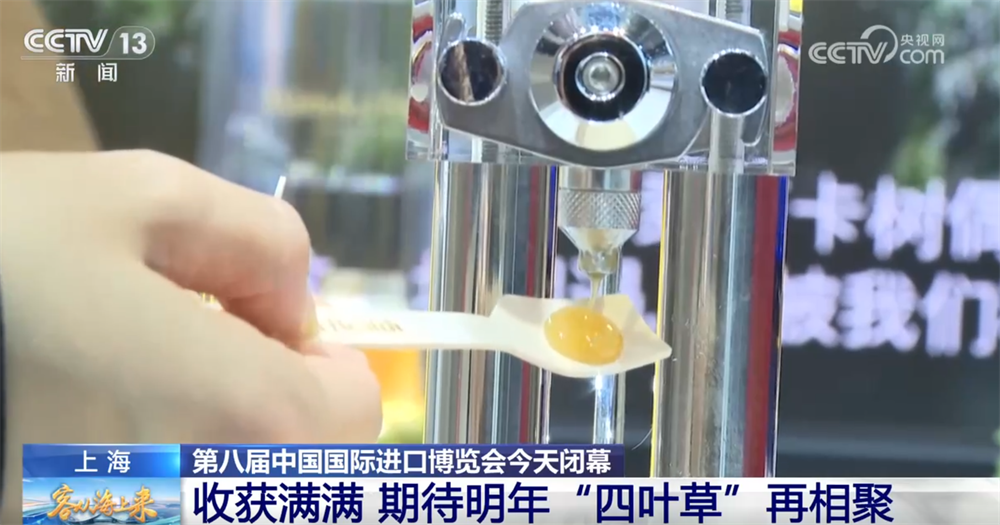
Core Insights - The eighth China International Import Expo (CIIE) is concluding, with exhibitors and buyers actively engaging in final negotiations, highlighting the event's significance for international trade [1][14] - New Zealand exhibitor Simon launched a globally first high-activity honey product, which sold out in just two days, indicating strong demand for innovative products in the Chinese market [1][3] - Italian exhibitor Felice has established agreements with e-commerce platforms to enhance online sales and plans to set up an office in China next year, showcasing the growing interest in the Chinese market [5] - The event has facilitated efficient connections between international exhibitors and buyers, with American exhibitor Donald noting the difficulty of meeting buyers without the expo [10] - Danish startup Beike is leveraging the expo to pursue potential clients interested in 3D printing technology and plans to establish a research center in Suzhou, reflecting the opportunities for tech companies in China [12] - The expo has also provided free exhibition space for companies from underdeveloped countries, allowing them to find new partners and opportunities, reinforcing China's commitment to openness [14] Summary by Category Exhibitor Experiences - New Zealand's Simon expressed excitement over the rapid sales of his honey product, emphasizing the value Chinese consumers place on quality [3] - Italian exhibitor Felice plans to invite friends from Spain and France to explore the Chinese market further, indicating a collaborative approach among international businesses [5] - Danish exhibitor Beike, participating for the first time, sees potential for growth and aims for a larger presence in future expos [12] Market Opportunities - The expo has created a vibrant atmosphere for international trade, with many exhibitors rushing to finalize deals before the event ends [1][7] - The high traffic and attention generated by the expo have made live streaming platforms popular, showcasing the digital engagement of the event [8] International Collaboration - The event has fostered connections among global entrepreneurs, with many already preparing for the next expo, reflecting confidence in the Chinese market [14]

为企业进入中国市场提供快速通道 访中国国际进口博览局综合办公室有关负责人
Zhong Yang Ji Wei Guo Jia Jian Wei Wang Zhan· 2025-11-10 00:17
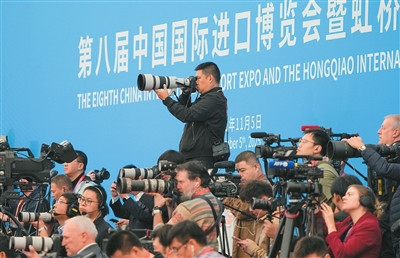
"进博会是中国扩大高水平对外开放的标志性实践。本届进博会在二十届四中全会后作为重大经济外交 活动隆重举办,是学习宣传贯彻全会精神的重要平台。办好进博会意义重大,国际社会各界都予以高度 关注。"该负责人介绍,进博会始终坚持开放、包容、普惠的办展理念,今年在企业展里对非洲产品专 区作了扩容和升级,这是扩大对最不发达国家的单边开放、支持非洲建交国用足用好100%税目产品零 关税政策的实际行动;虹桥国际经济论坛始终聚焦"开放"这个核心议题,广泛吸引政产学研各界发表真 知灼见,凝聚开放共识。 中央纪委国家监委网站 瞿芃 陈昊 本届进博会是党的二十届四中全会后中国举办的首场重大经济外交活动。如何看待特殊节点赋予的特殊 意义?举办过程中呈现出哪些突出亮点和特色?11月8日,中国国际进口博览局综合办公室有关负责人 就相关问题接受了记者采访。 特色鲜明、亮点纷呈,本届进博会开幕以来收到普遍评价。在该负责人看来,特色和亮点集中体现在三 个方面:一是规模达到新高度,展览面积超43万平方米,共有来自155个国家、地区和国际组织参与, 4108家境外企业参展,展览面积和参展企业数量均创下历史新高;二是参展呈现新形式,首次举办中外 友好 ...
进博会传递中国开放强音(国际论道)
Ren Min Ri Bao Hai Wai Ban· 2025-11-09 22:56
Core Insights - The China International Import Expo (CIIE) has become an indispensable platform for global economic and trade cooperation, especially amid global economic uncertainties, signaling China's commitment to shared opportunities and development [2][3][4] Group 1: Significance of CIIE - CIIE is viewed as a major initiative for China to open its market to the world, representing a significant milestone in international trade history [3] - The expo serves as a bridge connecting producers and consumers, innovation and opportunities, and China with the world [3][4] - It is described as a "global economic and technological 'Olympics'" and an immersive experience about future living [3] Group 2: Participation and Outcomes - Various countries, including South Africa and Georgia, recognize CIIE as a vital platform for connecting their enterprises with Chinese markets [4][5] - The expo has facilitated tangible results, such as Tanzanian honey entering the Chinese market and significant trade opportunities for Argentine beef [5][6] - CIIE has helped Singaporean companies generate over 5.33 billion Singapore dollars in trade since its inception [6] Group 3: Strengthening International Relations - CIIE deepens friendships and strategic partnerships between nations, with China being a major investor in countries like Serbia [7] - The UAE, as the guest country, aims to enhance investment cooperation with China in high-tech and clean energy sectors [7] - The event has fostered trade agreements between Chinese enterprises and Central Asian countries, enhancing regional cooperation [8] Group 4: Market Opportunities - CIIE is seen as an ideal platform for countries like Belarus and the Philippines to promote local products and expand market shares in China [5][6] - The expo supports countries along the Belt and Road Initiative by providing access to the Chinese market [6]
“2025昆明市商贸资源(上海)推介会”在沪成功举办
Sou Hu Cai Jing· 2025-11-08 05:41
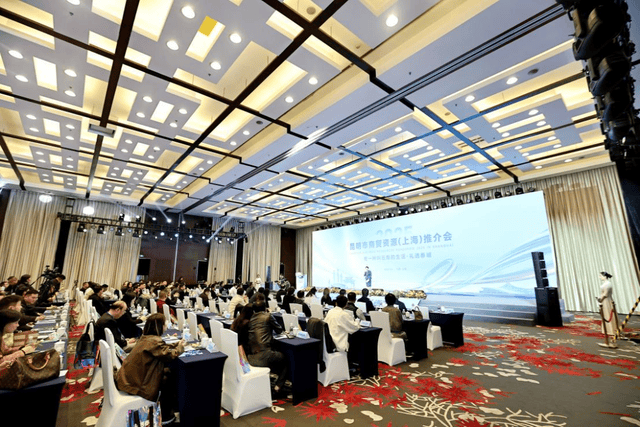
Core Viewpoint - The "2025 Kunming Trade Resource Promotion Conference" aims to deepen cooperation between Shanghai and Yunnan, showcasing Kunming's unique position and opportunities as a gateway to South Asia and Southeast Asia, while promoting cross-border e-commerce and consumption growth [1][3][11] Group 1: Economic Development and Opportunities - Kunming is actively promoting the integration of diverse consumption formats, focusing on emerging fields like coffee consumption to create nationally influential consumption scenarios [3][5] - The city is leveraging its rich "old brand" resources to rejuvenate traditional brands and stimulate various consumption potentials to meet diverse consumer needs [3][5] - The promotion conference highlighted Kunming's commitment to building a regional international center city, enhancing its role as a hub for international trade and commerce [1][4][7] Group 2: International Cooperation and Trade - Kunming is enhancing its exhibition platform to host international events, facilitating efficient connections and deep cooperation between domestic and foreign enterprises [3][4] - The city is focusing on high-quality foreign trade development through three main paths: improving trade efficiency, creating new open platforms, and enhancing international logistics channels [7][10] - The event attracted over a hundred well-known enterprises and investment institutions from Shanghai and the Yangtze River Delta, fostering discussions on international supply chain cooperation and collaborative market development [11][13] Group 3: Event Highlights and Outcomes - The promotion conference featured representatives from seven key units, emphasizing cross-border e-commerce and exhibition platforms, with 28 quality enterprises showcasing their products [10][11] - The event facilitated discussions between 22 representatives from Fortune 500 companies and participating enterprises, resulting in multiple cooperation intentions and agreements [10][11] - Attendees expressed optimism about Kunming's potential, recognizing it as a vibrant city with significant commercial opportunities and a welcoming business environment [13]
进博会观察|外资重新定义中国市场
经济观察报· 2025-11-08 03:44
Core Viewpoint - Multinational companies are increasingly committed to expanding their investments in China, recognizing the country's stable development environment and vast growth potential amidst global trade challenges [2][5]. Group 1: Investment and Trade Opportunities - The 8th China International Import Expo (CIIE) attracted over 4,108 companies from 155 countries, marking a record high in participation [4]. - Bilateral trade between China and Malaysia is projected to reach $212.04 billion in 2024, reflecting an 11.4% year-on-year increase, with China remaining Malaysia's largest trading partner for 16 consecutive years [3]. - Companies like Cargill have signed over $30 billion in cooperation agreements at previous expos, highlighting the platform's value for securing significant contracts [8]. Group 2: Localization and Market Adaptation - Baker Hughes has invested in a manufacturing facility in Tianjin to produce aerospace-related materials locally, responding to the growing demand in China's aviation sector [11]. - Mitsubishi Electric is shifting its strategy from exporting products to manufacturing in China, aiming to enhance its international competitiveness by leveraging local industry strengths [12]. - Spritzer, a Malaysian beverage company, has adapted its product offerings to include sparkling water, recognizing a gap in the Chinese market for healthier beverage options [13]. Group 3: Industry Growth and Consumer Trends - The aging population and rising income levels in China are driving demand for health-conscious food products, prompting companies to optimize their supply chains and product offerings [14]. - The CIIE serves as a vital platform for companies to connect with local partners and explore innovative solutions tailored to Chinese consumer preferences [17]. - Evonik has expanded its investment in China, with plans to increase production capacity in various locations, aiming for sustainable growth in the Asia-Pacific region [18].

进博会观察|外资重新定义中国市场
Jing Ji Guan Cha Wang· 2025-11-08 02:21
Group 1: Event Overview - The 8th China International Import Expo (CIIE) attracted over 4,108 companies from 155 countries and regions, marking a record high in participation [2][3] - Malaysia's bilateral trade with China is projected to reach $212.04 billion in 2024, a year-on-year increase of 11.4%, solidifying China's position as Malaysia's largest trading partner for 16 consecutive years [2] - The expo serves as a vital platform for Malaysian companies to enter the Chinese market, facilitating quick connections within the business ecosystem [2] Group 2: Corporate Participation and Impact - Companies like KraussMaffei and Cargill have reported significant business opportunities and partnerships formed during the expo, highlighting the event's role in fostering cross-industry collaborations [4][6] - Shanghai Zhenhua Heavy Industries announced contracts worth $390 million with 11 suppliers on the first day of the expo, showcasing the platform's effectiveness in meeting procurement needs [7] - Baker Hughes has shifted from exporting products to local manufacturing in China, responding to the growing demand for localized production in the aerospace sector [8][9] Group 3: Market Trends and Consumer Insights - The expo has seen a shift towards localized production and tailored consumer products, with companies adapting their offerings to meet the specific demands of the Chinese market [12][13] - There is a growing trend among multinational companies to enhance their local manufacturing capabilities in response to China's increasing demand for high-end products [9][10] - The health-conscious consumer trend in China is driving companies to innovate and diversify their product lines, as seen with Spritzer's focus on sparkling water [12][13] Group 4: Economic and Policy Context - The CIIE is viewed as a gateway for global companies to access the Chinese market, with many expressing confidence in China's stable development environment amid global trade uncertainties [3][15] - China's openness index has significantly improved, reflecting the country's commitment to expanding its market access and enhancing the business environment for foreign investors [14][15] - Companies like Evonik are increasing their investments in China, with plans for multiple projects to enhance local production capabilities, indicating a long-term commitment to the Chinese market [16]