戴维斯双击

Search documents
“旗手”放量冲刺,年末行情拉开序幕?金融科技午后猛涨超4.5%,顶流券商ETF获巨额资金埋伏
Xin Lang Cai Jing· 2025-12-05 12:09
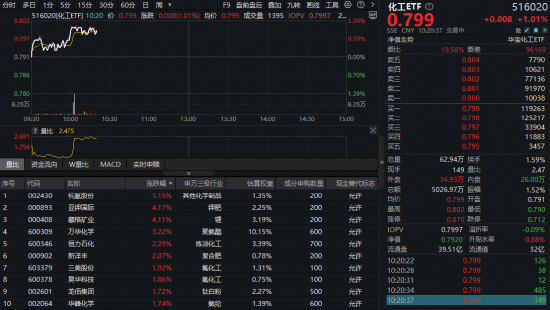
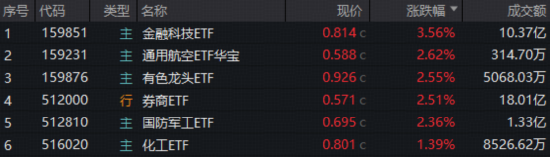
周五(12月5日),A股市场探底回升,创业板指涨超1%,沪指重回3900点。两市放量成交1.73万亿 元,全市场近4400只个股上涨。盘面上,非银金融、商业航天、有色金属、化工等热点轮番活跃。 午后"旗手"放量拉升,金融科技一马当先,同类规模最大的金融科技ETF(159851)场内一度冲高 4.71%,爆量成交超10亿元,资金顺势抢筹2.64亿份!390亿顶流券商ETF(512000)场内直线上攻逾 3%,成交额超18亿元创11月以来天量,资金此前10日累计加仓近15亿元! 商业航天狂掀涨停潮,场内热门通用航空ETF(159231)、国防军工ETF(512810)均涨超2%连收多根 均线。机构指出,随着我国首个商业可复用火箭朱雀三号成功首飞入轨,2026年起商业航天有望进入常 态化高频发射新阶段,建议关注产业链相关投资机会。 有色、化工等顺周期板块反复活跃,揽尽有色金属龙头的有色龙头ETF(159876)场内放量收涨 2.55%,逼近历史高点;沪市规模最大的化工ETF(516020)场内收涨1.39%。机构指出,供需结构优化 叠加价格回升预期带动下,有色、化工盈利修复路径清晰。 | 序号 代码 类型 名称 | ...



港股保险板块大涨 保险含量超68%的港股通非银ETF(513750)受关注
Xin Lang Cai Jing· 2025-12-05 06:57
Core Viewpoint - The Hong Kong insurance sector is experiencing significant gains, with major companies like China Ping An and China Taiping rising over 5% following a report from Morgan Stanley that includes China Ping An in its focus list and raises its target price [1] Group 1: Market Performance - As of 14:35, the non-bank financial theme index (931024) in Hong Kong has increased by over 3% [1] - The Hong Kong non-bank ETF (513750) is the only product tracking the non-bank financial theme index, which consists of 68.8% insurance, 12.8% Hong Kong Stock Exchange, and 14% securities [1] - The non-bank ETF has seen a net inflow of over 23.5 billion yuan this year, bringing its total size to 24.5 billion yuan [1] Group 2: Investment Opportunities - The Zhaoran team from CITIC Securities suggests that in the context of potential interest rate cuts by the Federal Reserve, the liquidity in the Hong Kong market is expected to improve, making the non-bank sector attractive [1] - There is an anticipated improvement in the performance of listed insurance companies, with a focus on the "Davis Double Play" investment opportunity, which highlights long-term growth and valuation recovery in the insurance industry [1]

港股保险板块大涨,保险含量超68%的港股通非银ETF(513750)涨幅居前
Mei Ri Jing Ji Xin Wen· 2025-12-05 06:49
展望后续保险板块投资机会,中信建投证券赵然团队表示,美联储降息背景下,港股市场流动性宽松, 关注非银板块向上弹性。其中,上市险企资负两端业绩有望迎来共振改善,建议重视保险业长期业绩增 长与估值修复的"戴维斯双击"投资机会。 港股通 - 银ET 基金代码:513750 12月5日,港股保险板块午后涨幅扩大,截至发稿,中国平安和中国太保涨6%、中国人寿涨4%。摩根 士丹利今日发布研报,将中国平安纳入中国内地/中国香港重点关注名单,维持"首选"评级,同时大幅 上调目标价,A股目标价从70元升至85元(+21%),H股目标价从70港元升至89港元(+27%)。大摩 相信中国平安可以抓住居民理财、医疗健康和养老领域的关键增长机会。同时,市场的主要担忧正在逐 步出清,为该公司估值提升铺平道路。中证港股通非银行金融主题指数(931024)盘中涨超3%。 联接A: 020500 联接C: 020501 Wind数据显示,港股通非银ETF(513750,场外联接A/C类020500/020501)是全市场唯一跟踪中证港 股通非银行金融主题指数的"独苗"品种,标的指数因"68.8%保险+12.8%港交所+14%证券"的成分底仓 ...
研报掘金丨华源证券:维持中国巨石“增持”评级,两大股东合力增持,彰显中长期发展信心
Ge Long Hui· 2025-12-05 06:20
Core Viewpoint - The report from Huayuan Securities highlights that the two major shareholders of China Jushi are increasing their stakes, demonstrating confidence in the company's medium to long-term development [1] Group 1: Shareholder Actions - The two major shareholders are increasing their holdings based on their strong belief in the company's future prospects and long-term investment value [1] - The shareholders have committed not to reduce their holdings during the implementation of the share increase plan, further showcasing their confidence in the company's medium to long-term development [1] Group 2: Company Overview - China Jushi is backed by China National Building Material Group and is one of the largest and most comprehensive manufacturers in the fiberglass industry globally [1] - As of the end of 2024, the company will have six production bases worldwide, with an annual production capacity of nearly 3 million tons of fiberglass yarn [1] Group 3: Market Opportunities - The company is entering the high-end electronic fabric sector, which is expected to provide significant growth opportunities [1] - This move is anticipated to create a "Davis double" effect, enhancing the company's overall value [1] Group 4: Investment Rating - The report maintains an "overweight" rating for the company, reflecting positive sentiment towards its future performance [1]

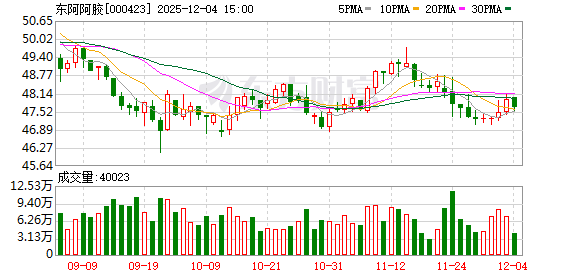
上限2亿元,东阿阿胶出手抄底,推出史上首次回购注销
2 1 Shi Ji Jing Ji Bao Dao· 2025-12-04 13:08
Core Viewpoint - Dong'e Ejiao Co., Ltd. has announced a significant stock buyback plan of 100-200 million yuan, marking its first-ever share repurchase and cancellation, aimed at enhancing earnings per share and reflecting confidence in future growth [2][3] Group 1: Shareholder Return and Financial Performance - The company has maintained a high cash dividend policy since its listing, with cumulative dividends exceeding 10 billion yuan and a consistent 100% payout ratio, showcasing its strong cash flow and commitment to shareholder interests [2][3] - The stock buyback plan is expected to improve key financial metrics such as earnings per share and return on equity, contributing to a total shareholder return exceeding 1.8 billion yuan by 2025 through a combination of high dividends and share repurchase [3] - Dong'e Ejiao's third-quarter report indicates a stable cash flow with a net cash flow from operating activities greater than 1, supporting both dividends and buybacks, which highlights the sustainability of its shareholder returns [4] Group 2: Market Position and Industry Context - The company is experiencing a notable trend of shareholder concentration, with a slight decrease in the number of shareholders, indicating a narrowing of market divergence and a potential signal for long-term investors [4][5] - Despite the industry being in a recovery phase, Dong'e Ejiao has shown approximately 10% growth in revenue and net profit for the first three quarters, with a gross margin of 73.69%, reflecting strong operational performance [4][6] - The company is well-positioned in the herbal medicine sector, benefiting from brand strength and product barriers, with a diversified product matrix that includes core products like Ejiao blocks and compound Ejiao syrup [6][7] Group 3: Policy Environment and Future Outlook - Recent consumer stimulus policies and a more favorable environment for traditional Chinese medicine are expected to boost demand for Dong'e Ejiao's products, enhancing its growth prospects [7][8] - The easing of price pressure from centralized procurement policies is likely to benefit the company, allowing it to capture a larger market share and improve profitability [7] - Dong'e Ejiao is anticipated to leverage its first-mover advantage in the recovery of the consumer sector, positioning itself as a strong candidate for investment as market opportunities emerge [8]

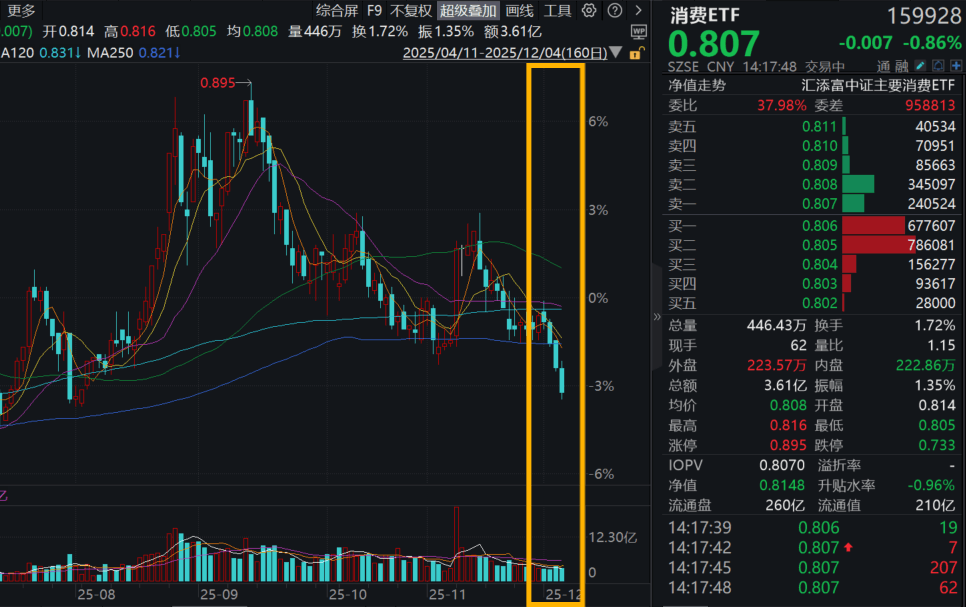
飞天茅台电商价低至1399元?消费ETF(159928)跌近1%弱势四连阴!机构评12月消费:市场风格继续有利!
Xin Lang Cai Jing· 2025-12-04 07:04
Group 1: Market Performance - The consumer sector continues to experience a pullback, with the Consumer ETF (159928) declining nearly 1% for the fourth consecutive day, with a trading volume exceeding 450 million yuan [1] - The Consumer ETF (159928) has accumulated over 420 million yuan in inflows over the past 20 days, and as of December 3, its latest scale exceeds 21.1 billion yuan, leading its peers significantly [1] - The Hong Kong Stock Connect Consumer 50 ETF (159268) also fell nearly 1%, with a trading volume exceeding 24 million yuan, and it received a net subscription of 2 million shares during the day, accumulating over 67 million yuan in inflows over the past 20 days [3] Group 2: Valuation and Investment Strategy - As of December 3, the TTM price-to-earnings ratio of the Consumer ETF (159928) is 19.74, which is at the 3.99% percentile over the past 10 years, indicating a higher valuation attractiveness [5] - Market style is expected to favor low valuations as the year-end approaches, with seasonal patterns suggesting a shift in investor allocation strategies [5] - High dividend and stable performance stocks are recommended for long-term attention in the context of insufficient growth and declining interest rates [7] Group 3: Alcohol Industry Insights - The white liquor sector is currently in a deep adjustment phase, with the demand and pricing strategies of leading brands like Moutai remaining uncertain [8] - Moutai's pricing strategy includes maintaining high-quality development and focusing on market-oriented marketing transformations, with an emphasis on digital and green transitions [8] - The white liquor sector is expected to see a recovery in demand, particularly with the upcoming long holiday period, which may support valuation recovery [8][9]





中国巨石(600176):两大股东合力增持,彰显中长期发展信心:中国巨石(600176.SH)
Hua Yuan Zheng Quan· 2025-12-04 06:09
Investment Rating - The investment rating for the company is "Accumulate" (maintained) [4] Core Views - The two major shareholders are increasing their stakes, demonstrating confidence in the company's medium to long-term development [6] - The company is a global leader in the fiberglass industry, with a significant production capacity and a strong historical growth trajectory [6] - The entry into the high-end electronic fabric sector is expected to provide substantial growth opportunities due to increasing demand [6] - Profit forecasts indicate a recovery in net profit and earnings per share over the next few years, with a projected net profit of 3.32 billion, 3.88 billion, and 4.23 billion RMB for 2025 to 2027 [6] Financial Summary - The company's revenue is projected to grow from 15.86 billion RMB in 2024 to 21.65 billion RMB in 2027, with a compound annual growth rate of 9.72% from 2014 to 2024 [5][6] - The net profit is expected to recover from 2.45 billion RMB in 2024 to 4.23 billion RMB in 2027, reflecting a significant growth rate [5][6] - The earnings per share (EPS) is forecasted to increase from 0.61 RMB in 2024 to 1.06 RMB in 2027 [5][6] - The company maintains a healthy return on equity (ROE), projected to rise from 8.14% in 2024 to 11.30% in 2027 [5][6]
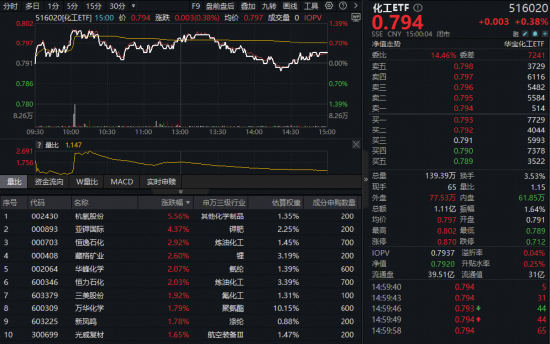
化工股逆市崛起!化工ETF(516020)盘中上探1.39%!板块近5日吸金189亿元,机构高呼行业景气或边际回暖
Xin Lang Ji Jin· 2025-12-03 12:01
Group 1 - The chemical sector experienced a counter-market rise on December 3, with the chemical ETF (516020) showing a maximum intraday increase of 1.39% and closing up 0.38% [1] - Key stocks in the sector included Hangyang Co., which surged by 5.56%, and Yara International, which rose by 4.37%, along with several others gaining over 2% [1] - The basic chemical sector attracted significant capital inflow, with a net inflow of 1.877 billion yuan on the day, ranking third among 30 major industries [3] Group 2 - The chemical ETF (516020) has shown a year-to-date increase of 28.13%, outperforming major indices such as the Shanghai Composite Index (15.7%) and the CSI 300 Index (15.15%) [4] - The basic chemical sector has seen a cumulative net inflow of 18.977 billion yuan over the past five days, ranking second among the 30 major industries [3][5] Group 3 - The chemical industry is expected to benefit from ongoing "anti-involution" policies, which may strengthen supply-side constraints and gradually reverse the overcapacity situation [6] - The overall profitability of the chemical sector is anticipated to recover from its bottom due to a slowdown in fixed asset investment and demand recovery [6] - The current price-to-book ratio of the chemical ETF (516020) is 2.33, indicating a relatively low valuation compared to the past decade, suggesting good long-term investment potential [6] Group 4 - Looking ahead, the chemical industry is projected to experience a cyclical upturn starting in 2026, driven by a combination of supply-side contraction and increased demand [7] - The demand recovery in downstream sectors such as automotive, home appliances, and textiles is expected to continue, supported by macroeconomic improvements and consumption stimulus policies [7] - The chemical ETF (516020) provides a diversified investment opportunity across various sub-sectors, with nearly 50% of its holdings in large-cap leading stocks [7]



ETF盘中资讯 | 锂电储能迎利好催化,化工ETF(516020)盘中涨超1%!机构:化工板块2026年或迎“戴维斯双击”
Sou Hu Cai Jing· 2025-12-03 02:45
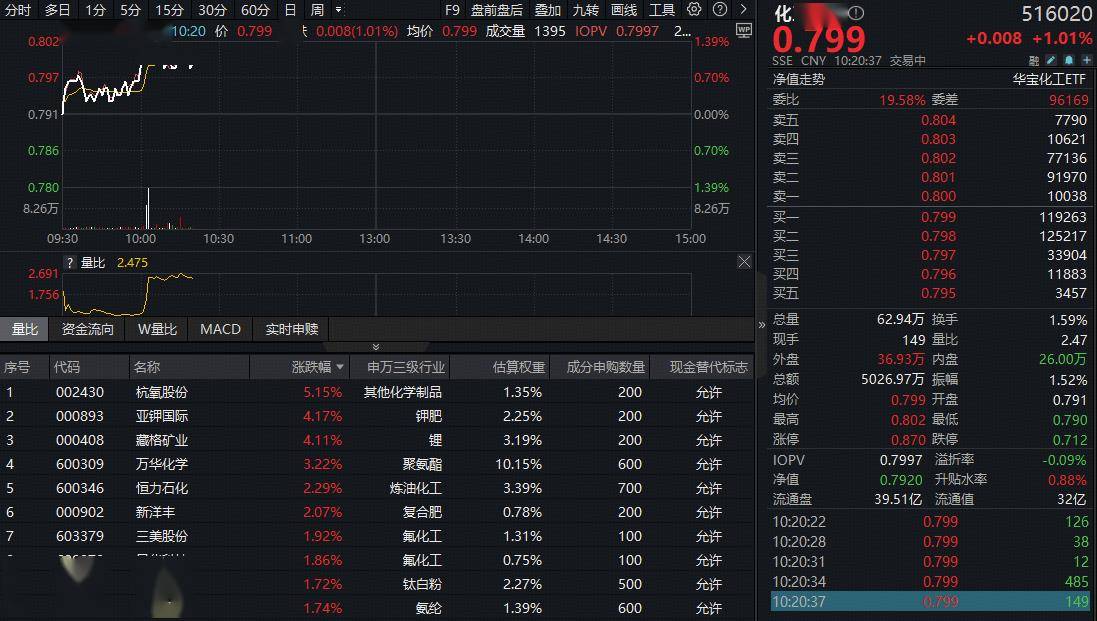
Group 1 - The chemical sector has regained momentum, with the chemical ETF (516020) experiencing a maximum intraday increase of 1.39% and closing up 1.01% [1] - Key stocks in the sector include Hangzhou Oxygen Plant, which surged over 5%, and other companies like Yara International and Zangge Mining, which rose over 4% [1] - The overall market sentiment is positive, driven by strong performances in potassium fertilizers, lithium batteries, and polyurethane segments [1] Group 2 - Investment enthusiasm in energy storage is high, supported by continuous capacity compensation policies and the ongoing development of renewable energy, which will sustain demand for energy storage [3] - The chemical ETF (516020) is currently at a relatively low price-to-book ratio of 2.33, indicating good long-term investment potential [3] - The chemical industry is expected to face negative growth in capital expenditure starting in 2024, with supply-side contractions anticipated due to the "anti-involution" trend and the clearing of outdated overseas capacities [3] Group 3 - The chemical ETF (516020) tracks the CSI segmented chemical industry index, covering various sub-sectors and concentrating nearly 50% of its holdings in large-cap leading stocks [4] - Investors can also access the chemical ETF through linked funds, enhancing investment efficiency in the chemical sector [4]

锂电储能迎利好催化,化工ETF(516020)盘中涨超1%!机构:化工板块2026年或迎“戴维斯双击”
Xin Lang Cai Jing· 2025-12-03 02:39
Group 1 - The chemical sector has regained momentum, with the Chemical ETF (516020) experiencing a maximum intraday increase of 1.39% and closing up 1.01% [1][6] - Key stocks in the sector include Hangzhou Oxygen Plant, which surged over 5%, and other significant gains from Yara International and Zangge Mining, both exceeding 4% [1][6] - The domestic first large-capacity all-solid-state battery production line has been completed and is in small-batch testing, potentially doubling battery energy density by 2026 [1][6] Group 2 - CITIC Securities highlights strong investment enthusiasm in energy storage, with policies supporting capacity compensation and a high growth rate in demand for renewable energy [3][8] - The chemical sector is currently viewed as having a favorable cost-performance ratio, with the Chemical ETF's price-to-book ratio at 2.33, placing it in the lower 39.73% of the last decade [3][9] - China Galaxy Securities anticipates a negative growth in capital expenditure for the chemical industry starting in 2024, with supply-side contraction expected due to the "anti-involution" trend and the clearing of outdated overseas capacity [4][10] Group 3 - The Chemical ETF (516020) tracks the CSI segmented chemical industry theme index, covering various sub-sectors, with nearly 50% of its holdings in large-cap leading stocks like Wanhua Chemical and Salt Lake Potash [4][10] - The ETF provides a more efficient way to capitalize on the rebound opportunities in the chemical sector, with a balanced exposure to different chemical sub-sectors [4][10]