高端电子布

Search documents
大摩闭门会:金融、电力、交运、原材料行业更新 _纪要
2026-03-26 13:20
Summary of Key Points from Conference Call Records Industry Overview J&T Express (极兔速递) - **Market Sentiment**: 87% of investors are bullish on J&T Express, with expectations for Southeast Asia's parcel volume growth exceeding 30% by 2026 [2][3] - **Regional Expectations**: - Southeast Asia: Nearly 90% of investors expect growth rates above 30%, with 7% anticipating over 50% growth [2] - New Markets: Consensus on growth between 50% to 100% [2] - China: Over 80% expect profits to remain stable or slightly improve [2] Financial Sector - **Bank Lending Trends**: Banks are becoming more rational in lending, with a minimum public loan rate set at 2.41% in Yiwu [1][17] - **Ningbo Bank**: Expected ROE recovery to 14%-15%, with current valuation below 1x PB, indicating significant investment appeal [1][19] Electric Power Industry - **Investment Growth**: Average annual growth rate for grid investment during the 14th Five-Year Plan is expected to rise to 9% from 5% [1][7] - **New Investment Directions**: Focus on smart microgrids and integration of power sources [7] Aluminum Industry - **Supply and Demand**: Global supply-demand tightness expected by 2026, with China's production capacity nearing 45 million tons [1][12] - **Key Players**: - **Innovation Industry**: Low-cost production and high dividend payout (51%) [1][14] - **Tianshan Aluminum**: Integrated operations and capacity growth [1][15] Glass Fiber Industry - **Market Dynamics**: AI-driven demand for high-end electronic fabrics leading to price increases (e.g., 29% rise in certain product prices) [1][20] - **China Jushi**: Expected significant profit growth due to capacity expansion and market positioning [1][21] Core Insights and Arguments J&T Express - **Growth Drivers**: E-commerce penetration and expansion into non-e-commerce segments are key growth factors [3] - **Risks**: Concerns about customer self-built logistics (e.g., TikTok) and geopolitical risks affecting growth and profitability [4][5] Financial Sector - **Stability and Growth**: The Chinese financial system shows resilience with reduced risk levels and improved asset quality [17] - **Ningbo Bank's Strategy**: Differentiated pricing and strong service capabilities expected to drive revenue growth [19] Electric Power Sector - **Transition to New Energy**: Shift from coal to renewable energy sources, impacting traditional power generation [10][11] - **Investment Opportunities**: Companies like XJ Electric and Pinggao Electric are well-positioned to benefit from increased grid investments [8] Aluminum Market - **Price Support Factors**: Anticipated supply constraints and geopolitical risks could bolster aluminum prices [12][13] - **Competitive Advantages**: Companies with low-cost production and strong market positions are expected to thrive [14][15] Glass Fiber Market - **Supply Constraints**: Long delivery cycles for weaving machines may limit supply, benefiting established players like China Jushi [20] - **Profitability Outlook**: Expected significant profit increases due to market dynamics and product diversification [21] Additional Important Insights - **Geopolitical Risks**: Potential energy crises could impact Southeast Asia's economic growth and logistics costs [1][4][5] - **Market Reactions**: Recent stock price adjustments in aluminum companies reflect broader market uncertainties, but long-term demand remains strong [16]
阅峰 | 光大研究热门研报阅读榜 20260315-20260321
光大证券研究· 2026-03-22 00:03
Group 1: Regulatory Changes in Wealth Management - The Financial Regulatory Bureau released the "Interim Measures for the Regulatory Rating of Wealth Management Companies" on March 16, 2026, aimed at guiding the quality development of the wealth management industry [3]. - The rating measures emphasize risk-based and capability-oriented assessments, giving high weight to asset management capabilities and risk management [4]. - The industry is expected to focus on "quality improvement" rather than "scale expansion" in 2026, with an estimated annual growth of 2-3 trillion yuan, reflecting a year-on-year decrease in growth [4]. Group 2: Company Performance Insights - Li Ning (2331.HK) reported a revenue of 29.6 billion yuan for 2025, a year-on-year increase of 3.2%, while net profit decreased by 2.6% to 2.94 billion yuan, with earnings per share (EPS) at 1.14 yuan [8]. - Cangge Mining (000408.SZ) achieved a revenue of 3.577 billion yuan in 2025, up 10.03%, and a net profit of 3.852 billion yuan, marking a significant year-on-year increase of 49.32% [10]. - JianTao Laminated Board (1888.HK) reported a revenue of 20.4 billion HKD for 2025, a 10% increase, and a net profit of 2.442 billion HKD, up 83.6% year-on-year, driven by price increases in copper-clad laminate products [19]. - ZhongAn Online (6060.HK) saw a revenue increase of 6.2% in 2025, with adjusted net profit rising by 198.3%, indicating a positive trend in profitability [24]. - AIA Group (1299.HK) reported a year-on-year decline of 8.8% in net profit for 2025, but new business value (NBV) increased by 17.1%, suggesting potential for future growth [28].

【光大研究每日速递】20260318
光大证券研究· 2026-03-18 07:58
Macro Insights - The "14th Five-Year Plan" introduces three new policy ideas: the establishment of the "investment in people" concept to enhance human capital quality, a focus on "first establish then break" in policy formulation to ensure systemic resilience during the transition period, and a dual-driven approach of "innovation-driven" and "institutional openness" to reshape global competitive advantages [5]. Fixed Income - Economic data from January to February 2026 shows that the industrial added value growth rate is within the range of the same period in the past two years. Fixed asset investment growth has significantly increased after a decline since Q2 2025, and retail sales growth has also improved. The government bond yield curve has steepened, and small-cap stocks have outperformed in equity assets. Market sentiment in the bond market is under pressure due to rising inflation expectations and geopolitical tensions [6]. Banking - The newly released "Interim Measures for the Regulatory Rating of Wealth Management Companies" aims to guide the high-quality development of the wealth management industry, emphasizing risk-based and capability-oriented assessments. The market anticipates a shift towards quality improvement over quantity expansion in the wealth management sector, with an estimated annual growth of 2-3 trillion yuan, reflecting a year-on-year decrease [7]. Materials - The price of iridium has increased by 12% this week and has risen by 71% year-to-date. In contrast, prices for beryllium and neodymium oxide have decreased, while uranium prices have risen. The price of silicon for photovoltaic materials has also declined, indicating mixed trends across various new materials [8]. Hydrogen Energy - The Ministry of Industry and Information Technology, the Ministry of Finance, and the National Development and Reform Commission have jointly issued a notice to launch hydrogen energy comprehensive application pilot projects. The policy framework aims to scale down costs and establish a closed-loop ecosystem for hydrogen energy applications, with a focus on expanding application scenarios, particularly in green ammonia and industrial settings [9]. Company Performance - For the year 2025, Jiantao Laminated Board (1888.HK) reported a revenue of 20.4 billion HKD, a year-on-year increase of 10.0%, and a net profit of 2.442 billion HKD, up 83.6%. This growth is attributed to multiple price increases in copper-clad laminate products and a significant recovery in fair value gains [9]. - Qiu Tai Technology (1478.HK) achieved a revenue of 20.877 billion RMB in 2025, a 29.3% increase year-on-year, with a gross margin improvement of 1.7 percentage points to 7.8%. The net profit surged by 435.2%, driven by a focus on mid-to-high-end camera modules and expansion into automotive and IoT sectors [10].
光大证券晨会速递-20260317
EBSCN· 2026-03-17 01:03
Macro Analysis - The economic data for January-February 2026 shows a positive start, with production, consumption, and investment growth rates exceeding market expectations. This is attributed to strong consumer performance driven by the extended Spring Festival holiday and pre-released funds for "old-for-new" exchanges, robust export performance, and improved corporate profits due to narrowing PPI declines, alongside effective investment policies from 2025 [1][2][3]. Industry Research Real Estate - As of March 15, 2026, new home transactions in 20 cities totaled 98,000 units, reflecting a decrease of 29.9%. Notable declines include Beijing at 4,764 units (-28%), Shanghai at 15,000 units (-14%), and Shenzhen at 2,866 units (-59%). In the secondary housing market, 10 cities recorded 174,000 transactions, down 8.0%, with Beijing at 30,000 units (-7%), Shanghai at 48,000 units (-2%), and Shenzhen at 9,845 units (-13%) [4]. Company Research Jiang Tao Laminated Board (1888.HK) - For the full year 2025, the company reported revenue of HKD 20.4 billion, a year-on-year increase of 10.0%, and a net profit of HKD 2.442 billion, up 83.6%. This growth is driven by multiple price increases in copper-clad laminate products, enhancing gross margins, and a significant recovery in fair value changes of equity instruments, which contributed HKD 504 million compared to a loss of HKD 79 million in 2024. The company is expected to maintain profit growth due to rising prices and potential growth in high-end electronic fabrics, leading to an upward revision of net profit forecasts for 2026-2027 by 28% and 26% to HKD 5.07 billion and HKD 6.08 billion, respectively, with a new forecast for 2028 at HKD 6.71 billion. The rating is maintained at "Buy" [5].
建筑建材-一线反馈及近况梳理
2026-03-16 02:20
Summary of Key Points from Conference Call Records Industry Overview - **Industry**: Electronic Fabric and Cleanroom Engineering - **Key Companies**: 亚翔集成 (Axon Integrated), 台积电 (TSMC), 美光科技 (Micron Technology), 巨石集团 (Jushi Group), 国际复材 (International Composites), 泰山玻纤 (Taishan Fiberglass), 日东纺 (Nitto Denko) Core Insights and Arguments Electronic Fabric Market - **Price Trends**: The average price of ordinary electronic fabric reached 5.7 RMB/m in March 2026, with expectations to approach 7 RMB/m in the first half of the year [1][5] - **Supply Constraints**: A significant supply gap of 10% exists due to the shift of weaving machine capacity towards high-end products, limiting new capacity investments due to high precious metal costs [1][4] - **High-End Fabric Localization**: The domestic production of high-end fabrics is accelerating, with a 20% price advantage over Japanese products, indicating potential for price increases [1][7] - **AI Hardware Impact**: The upgrade of AI hardware, particularly the Rubin platform, is driving demand for high-end fabrics, leading to non-linear price increases for copper foil and fillers [1][10] Market Dynamics - **Supply-Demand Imbalance**: The ordinary electronic fabric market is experiencing tight supply due to no new supply in the past two and a half years, while demand continues to recover, leading to monthly price increases since December 2025 [3][4] - **Key Influencing Factors**: The price trajectory is influenced by limited weaving machine supply, high precious metal costs, and low industry inventory levels [4][5] - **Future Price Outlook**: The price of ordinary electronic fabric is expected to continue rising in the first half of 2026, with historical price comparisons indicating a potential peak between 6.6 RMB/m and 9 RMB/m [5][6] High-End Special Electronic Fabric - **Supply Gap**: The high-end special electronic fabric market is projected to face a supply gap of 10%-15% in 2026, particularly for second-generation fabrics and LCTE [7][8] - **Price Adjustments**: Price adjustments for high-end fabrics are less frequent than for ordinary fabrics, but there is a strong expectation for price increases based on market research [7][8] Cleanroom Engineering Market - **Market Opportunities**: The cleanroom market is expected to see significant growth due to TSMC's new factory plans in North America, with projected capital expenditures reaching 125 billion USD from 2026 to 2030 [20][21] - **New Projects**: Micron's announcement of a new Fab in Singapore is expected to create additional orders for cleanroom engineering companies [15] Company Performance - **亚翔集成 (Axon Integrated)**: The company reported strong performance in its 2025 financials, particularly in its Singapore project, with a net profit margin of 28%, exceeding market expectations [14][17] - **Future Projections**: The company is expected to maintain a stable revenue stream of 18-20 billion RMB annually from its Singapore operations, with a focus on high-margin projects [17][20] Additional Important Insights - **Market Trends**: The electronic fabric industry is witnessing a shift from high-end technology to ordinary fabric sectors, with expectations for alternating focus between high-end and ordinary electronic fabrics throughout 2026 [2][12] - **Investment Considerations**: The stock price movements are often ahead of fundamental changes, with price increase expectations being a key driver for stock performance [6][12] - **Labor Market Dynamics**: Personnel expansion is a critical leading indicator for cleanroom engineering companies, as it precedes project bidding and revenue recognition [25]
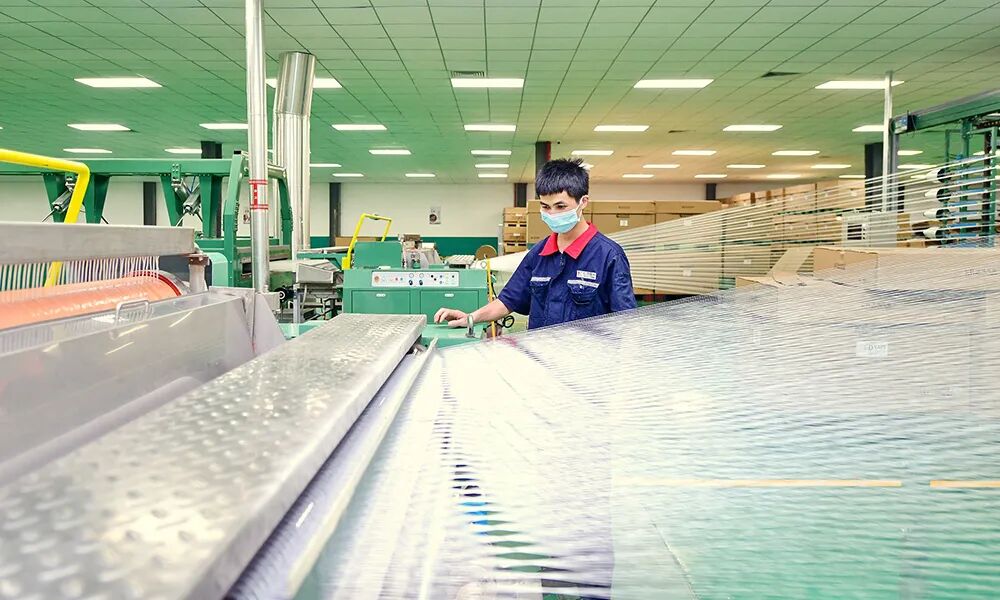
英伟达被卡脖子的产业,中国有望“换道超车”日本
Xin Lang Cai Jing· 2026-03-02 04:20
Core Insights - The article discusses the critical supply shortage of high-end electronic fabrics, particularly T-Glass, which is essential for AI chip manufacturing, and highlights the dominance of Nitto Denko in this market. Group 1: Market Dynamics - Nitto Denko holds over 90% of the global market share for T-Glass electronic fabric, which is crucial for AI chips due to its low thermal expansion properties [3] - The demand for high-end electronic fabrics has surged due to the AI race, with major tech companies like Nvidia, AMD, Google, and Amazon all requiring these materials [3][4] - Nitto Denko plans to triple its production capacity by 2028, but this will still not meet the global demand for electronic fabrics [3][5] Group 2: Competitive Landscape - The high technical barriers in producing high-end electronic fabrics make it difficult for new entrants to disrupt Nitto Denko's market position [4] - Taiwan's Taiwan Glass Group is emerging as a potential alternative supplier for Nvidia and other tech companies, having passed tests for T-Glass products [4] - The industry is exploring "quartz fabric" (Q-Fabric) as a next-generation alternative, which offers superior performance but is still in early development stages [5][8] Group 3: Investment and Future Outlook - Nitto Denko is receiving government subsidies of 2.4 billion yen to expand its T-Glass production, while the company plans to invest 80 billion yen over four fiscal years for global expansion [5] - Companies like Feilihua are gaining attention for their development of Q-Fabric, with Feilihua being the only supplier certified by Nvidia for this product [8] - The stock price of Feilihua has seen significant increases, reflecting market interest in advanced technologies, despite the company cautioning about the uncertainties in its new product's market performance [8][9]


英伟达被卡脖子的产业,中国有望“换道超车”日本
财富FORTUNE· 2026-02-28 13:08
Core Viewpoint - The article discusses the critical supply shortage of high-end electronic fabrics, particularly T-Glass, which is essential for AI chip manufacturing, and highlights the dominance of Nitto Denko in this market [3][4]. Group 1: Market Dynamics - Nitto Denko holds over 90% market share in T-Glass, which is crucial for AI chips due to its low thermal expansion coefficient [3]. - The demand for high-end electronic fabrics has surged due to the AI competition, affecting not only Nvidia but also companies like AMD, Google, and Amazon [3][4]. - The company is cautious about expanding production capacity, citing financial risks associated with overexpansion [3]. Group 2: Production Challenges - The production of high-end electronic fabrics involves complex processes, making it difficult for new entrants to compete with Nitto Denko's established technology [4]. - Nitto Denko plans to triple its production capacity by 2028, but this will still not meet the global demand for electronic fabrics [3][5]. Group 3: Alternative Materials - The article mentions the potential of quartz fabric (Q-Fabric) as a next-generation alternative to glass fabric, which could outperform existing products in terms of signal transmission and heat resistance [7]. - Companies like Feilihua are exploring this new technology, with expectations for mass production by 2026 [8][9]. Group 4: Investment and Market Sentiment - Feilihua has seen a significant stock price increase, reflecting market interest in new technologies despite the uncertainties surrounding their development [9][10]. - The article emphasizes the need for Chinese companies to establish a unique position in the global AI supply chain, indicating a long-term strategic challenge [10].
周期专场-节后投资主线解读
2026-02-11 15:40
Summary of Key Points from Conference Call Records Industry Overview Commercial Aerospace - Shanghai Port Bay's perovskite technology in collaboration with Dongfang Risen is expected to benefit from the SpaceX supply chain. The increase in satellite launches will boost the demand for solar wings, positively impacting related companies [1][3]. Refractory Materials - Companies like Zhongsen Technology, Luyang Energy, and Zhonggang Nairuo are performing well through business extensions and are considered important targets for investment as the sector begins to rally [1][3]. AI+ Sector - Companies such as China National Materials, Honghe Technology, Feilihua, and China Jushi are benefiting from LDK demand, leading to significant profit increases. Attention is drawn to upstream raw materials like high-end electronic fabrics [1][3]. Construction and Building Materials - New business models in the construction and building materials industry focus on increasing market share and revenue scale, with a clear supply clearing and gradual industry improvement. Sanjias Tree's beautiful countryside business and community stores are rapidly developing, while Yuhong enhances competitiveness through service model innovation [1][4]. Real Estate Market Insights Recent Data and Trends - Recent data indicates a positive trend in the real estate market, particularly in first and second-tier cities where second-hand housing transaction volume has increased year-on-year, and price indices have turned positive. The listing volume has decreased, with demand driven by school district housing improving transaction structure. The new housing market is expected to rebound post-holiday due to supply constraints [1][5]. Investment Strategy - The current rally in real estate stocks is characterized by a mix of speculative and long-term capital, suggesting a more sustainable upward trend. The second quarter may present an opportunity to increase real estate positions, with recommended stocks including China Merchants Shekou, New City Holdings, Jindi Group, and Wo Ai Wo Jia [1][6][8]. Transportation and Logistics Sector Investment Themes - The transportation and logistics sector has four main investment themes: 1. Domestic express logistics is entering a critical consolidation phase, with a focus on leading companies like ZTO Express and YTO Express [2][9]. 2. Cross-border e-commerce and the Belt and Road Initiative, with key companies including SF Holding and JD Logistics [2][9]. 3. Platform transportation through internet platforms like Didi and Cao Cao Mobility, which are expected to enhance profits with the realization of autonomous driving and new energy vehicle replacements [2][10]. 4. Large cycle sectors, including aviation and shipping, are anticipated to see profit growth due to tight supply and recovering demand. Companies like China Merchants Energy and COSCO Shipping are recommended, with significant profit elasticity expected from VLCC operations [2][10]. Additional Considerations - The real estate market's upward speed is not expected to be as rapid as in previous cycles, with a potential long-term upward trend following policy implementation. The core cities' housing prices may stabilize by the end of the year, with real estate stocks likely leading the fundamental bottom by 2 to 3 quarters [1][8]. - Long-term capital movements should be closely monitored to adjust investment strategies accordingly [1][7].
国联民生证券:预计25Q4玻纤收入利润高增 传统建材业绩承压
智通财经网· 2026-02-03 07:25
Group 1: Cement Industry - The demand for cement in developing countries is steadily increasing, with a favorable competitive landscape, leading to significantly higher profit per ton compared to domestic markets. Companies actively expanding into overseas markets are expected to perform better [1] - The domestic cement market is expected to face pressure in Q4 2025, while overseas performance is anticipated to be stronger. Non-operating projects may impact profits [1] - Cement prices and profits are expected to stabilize in 2025, with a slight seasonal rebound in Q4 2025 due to a temporary increase in coal prices. However, year-on-year pressure on prices and profits is expected in Q4 2025 [1] Group 2: Glass Industry - The float glass industry is experiencing a bottoming out phase, with weak downstream demand leading to continued losses. Some small to medium enterprises are reducing production, resulting in a slight decrease in capacity [2] - The photovoltaic glass segment is expected to see a decrease in volume but an increase in price in Q4 2025, leading to significant pressure on revenue and profits. The demand for photovoltaic glass is expected to be impacted by earlier demand surges [2] Group 3: Glass Fiber Industry - The glass fiber sector is projected to experience high growth in revenue and profits in 2025, driven by strong demand in wind power and thermoplastics. Domestic net demand for glass fiber is expected to reach 5.48 million tons in 2025, a year-on-year increase of 19% [3] - High-end electronic fabric is expected to see a simultaneous increase in both price and volume, benefiting companies with a first-mover advantage. The price of 7628 electronic fabric is projected to be 4.1 yuan per meter in 2025, a year-on-year increase of 9% [3] Group 4: Renovation and Building Materials - The renovation and building materials sector is expected to face continued pressure in 2025, with significant declines in housing starts, completions, and sales. The year-on-year declines for these metrics are projected to be 21%, 18%, and 8%, respectively [4] - The competitive landscape in the renovation and building materials sector is intensifying, with many companies exploring new business avenues to maintain resilience in performance [4]

建材行业2025年业绩前瞻:预计25Q4玻纤收入利润高增,传统建材业绩承压
Guolian Minsheng Securities· 2026-02-03 05:10
Investment Rating - The report maintains a "Recommended" rating for the building materials industry [1] Core Views - The report anticipates significant growth in revenue and profit for fiberglass in Q4 2025, while traditional building materials face performance pressure [1] - The overall outlook for the cement industry indicates continued price and profit stabilization, with domestic pressures expected to persist [4][7] - The glass industry is projected to experience ongoing revenue and profit pressure, particularly in the float glass segment due to weak downstream demand [14][20] - The fiberglass sector is expected to see robust growth driven by increased demand for raw yarn and high-end fabrics [28] Summary by Sections Cement - Q4 2025 is expected to see domestic cement performance under pressure, while overseas markets may perform better. The average national cement price is projected at 357 RMB per ton, down 16% year-on-year [7] - The report notes that the cement industry is experiencing a bottoming out phase, with a year-on-year production decline of 7% from January to November 2025 [7] - Non-operating projects may impact profits, with companies accelerating capacity replacement and asset disposals [4][7] Glass - The float glass industry is expected to remain under pressure, with high inventory levels and ongoing losses. The average price for 5mm float glass is projected at 62 RMB per box in Q4 2025, down 17% year-on-year [14] - The photovoltaic glass segment is also expected to face significant revenue and profit pressure due to weak domestic installation demand, with a projected average price of 12.3 RMB per square meter in Q4 2025 [20] Fiberglass - The fiberglass sector is projected to see continued high growth in revenue and profit, with domestic net demand reaching 5.48 million tons, a 19% year-on-year increase [28] - The average price for mainstream products is expected to be 3,603 RMB per ton in 2025, with a slight decrease in Q4 [28] - High-end electronic fabric prices are expected to rise, benefiting companies with a first-mover advantage [28] Renovation Materials - The renovation materials sector is expected to face continued pressure, with a year-on-year decline in housing starts, completions, and sales area [4] - Companies are exploring new business channels to maintain resilience in performance [4]