
科创金融

Search documents
科创金融加码,全国试点科技企业并购贷
Tai Mei Ti A P P· 2025-06-18 09:43
Core Viewpoint - The relaxation of merger and acquisition (M&A) loan policies is enhancing M&A activities among technology companies, providing venture capital (VC) and private equity (PE) firms with exit opportunities beyond IPOs, and facilitating capital circulation and reinvestment [2] Group 1: Financing Challenges for Technology Companies - Technology companies, especially those in growth and expansion phases, face three major financing challenges: high financing thresholds, low acquisition leverage, and short repayment periods [2] - Traditional M&A loan policies limited the loan-to-value ratio to 60%, requiring companies to self-fund 40%, which hampers the leverage effect during acquisitions [2] - The original loan term of up to 7 years often leads to a "short loan, long investment" risk due to the rapid technological iteration and long integration cycles in sectors like semiconductors and artificial intelligence [2][3] Group 2: Policy Adjustments and Impacts - In March, the financial regulatory authority initiated a pilot program to ease M&A loan policies for technology companies, increasing the loan-to-value ratio for "controlling" acquisitions from 60% to 80% and extending the loan term from 7 years to 10 years [2][3] - The extended loan term respects the nature of the technology industry, which typically requires a 3-5 year integration period, allowing companies to focus on technology integration and business expansion rather than short-term debt repayment [3] - The pilot program is being implemented in 18 cities, focusing on major technology resource hubs like Beijing, Shanghai, and the Guangdong-Hong Kong-Macau Greater Bay Area, ensuring precise release of policy benefits [3] Group 3: Banking System and VC/PE Challenges - The pilot program requires banks to shift from traditional risk assessment methods to a more nuanced understanding of technology, establishing differentiated credit evaluation systems that include industry analysis and patent assessments [4] - Banks are encouraged to optimize risk pricing mechanisms and develop comprehensive financial services through combinations of M&A loans and equity investments [4] - For VC/PE firms, increased competition from banks may replace some financing services traditionally provided by them, leading to valuation pressures as the influx of M&A transactions could affect target company valuations [4] Group 4: Market Activity and Trends - The policy changes are expected to invigorate the M&A market, with data from Q1 2025 indicating a 7.8% year-on-year increase in M&A exits, and 34 M&A exit cases in April involving a total amount of 1.209 billion yuan [5]


中央金融委员会印发《关于支持加快建设上海国际金融中心的意见》
news flash· 2025-06-18 09:03
Core Viewpoint - The central government has issued opinions to accelerate the construction of Shanghai as an international financial center, emphasizing the need to enhance its competitiveness and influence in line with national strategies [1]. Group 1: Key Measures - Deepening financial market construction by promoting high-quality development of multi-level equity markets and supporting the establishment of a world-class futures exchange in Shanghai [2]. - Enhancing the capabilities of financial institutions by attracting large domestic and foreign financial entities and promoting the establishment of international financial organizations in Shanghai [2]. - Improving financial infrastructure to support a leading international financial infrastructure system and enhancing the cross-border payment and settlement system for the Renminbi [2]. Group 2: Expanding Financial Openness - Gradually expanding institutional openness in the financial sector to align with international trade rules and facilitating cross-border trade and investment [3]. - Improving the quality and efficiency of services to the real economy by establishing a financial reform pilot zone for technology innovation and developing green finance standards [3]. - Ensuring financial security under open conditions by utilizing advanced technologies for risk assessment and establishing a monitoring and early warning system for cross-border capital flows [3]. Group 3: Implementation Mechanism - The central financial office will collaborate with local authorities and financial regulatory bodies to establish a coordination mechanism for the construction of the Shanghai international financial center, ensuring the implementation of central government decisions [4].
构建技术专利专属风控体系创新产品服务化解投融两难
Zhong Guo Zheng Quan Bao· 2025-06-16 20:58
Core Viewpoint - The issuance of technology innovation bonds by securities firms has gained momentum following the regulatory support, with a focus on developing specialized risk assessment frameworks for technology-driven enterprises [1][2][3] Group 1: Market Development - As of June 16, securities firms have issued a total of 34 technology innovation bonds amounting to 29.47 billion yuan, with an approved issuance limit exceeding 55 billion yuan in June alone [1] - Major securities firms like Huatai Securities and CITIC Securities have recently received approval to issue technology innovation bonds, indicating a growing trend in the market [1] Group 2: Risk Assessment Framework - The industry is shifting towards a multi-dimensional risk assessment framework that evaluates patent value and R&D cycle risks, moving beyond traditional credit rating models [2][3] - Key dimensions for assessment include legal status, technological advancement, and market application, with a need for dynamic evaluation systems covering the entire R&D cycle [2] Group 3: Financial Product Innovation - Securities firms are encouraged to innovate financial products tailored to technology enterprises, such as "technology loans" and "intellectual property loans," to better align with the unique characteristics of these companies [4][5] - The introduction of convertible bonds and bonds with warrants is suggested to balance investor risk and corporate financing costs, enhancing the attractiveness of these financial instruments [5][6] Group 4: Balancing Commercial and Social Responsibilities - The challenge of reconciling commercial viability with social responsibility in the context of technology innovation bonds is highlighted, especially given the lower economic returns of small bond projects compared to traditional bond underwriting [6][7] - Securities firms are advised to optimize their business structure and seek policy support to reduce costs and enhance profitability in the technology innovation bond sector [7][8] Group 5: Brand and Market Positioning - Building a strong brand image through active participation in technology innovation bond business can enhance a firm's professional capabilities and attract high-quality clients [8] - The long-term value creation in the technology finance sector is emphasized, with firms encouraged to adopt an ecosystem approach to business and leverage policy benefits for sustainable growth [8]
“园区+科技”深度融合,兴业银行南宁分行赋能新能源车企智造升级
Zhong Guo Jin Rong Xin Xi Wang· 2025-06-16 12:53
Core Viewpoint - Recently, Industrial Bank's Nanning Branch provided a loan of 86.8 million yuan to a listed new energy vehicle company for the construction of an intelligent manufacturing project for hybrid crankshafts, supporting the company's smart manufacturing upgrade [1][2]. Group 1: Financial Support and Strategy - The loan is part of a broader strategy by Industrial Bank to accelerate the layout of five new financial sectors: science and technology finance, inclusive finance, energy finance, automotive finance, and park finance [1]. - The Nanning Branch has tailored financing solutions for the new energy vehicle company by optimizing approval processes, matching special quotas, and offering preferential interest rates to ensure funds reach the company's R&D and production frontline [2]. - As of now, the Nanning Branch has cumulatively provided 276.93 million yuan in loan support for the project, assisting the company in optimizing financial management and reducing financing costs [2]. Group 2: Technological and Economic Integration - The Nanning Branch employs a "technology flow" credit evaluation system, converting the company's patent technology, R&D investment, and market prospects into financing "hard currency," providing long-term stable credit support [2]. - The bank continues to optimize its "commercial bank + investment bank" service model to offer a comprehensive suite of financial services, including investment-loan linkage, supply chain finance, and cross-border settlement, aiding the company in achieving sustainable development [2]. - The Nanning Branch aims to integrate "park finance + technology finance" to construct a comprehensive financial ecosystem that provides timely financial assistance to high-tech industrial clusters [3].

会员金选丨教授公开课:中美关税松绑背后的深层博弈,寻找企业的破局之道
第一财经· 2025-06-16 03:18
Group 1 - The article highlights the significance of the US-China tariff battle as a decisive force in reshaping the global economic order, emphasizing the competition for control over industrial chains, technological standards, and development models [1] - The dynamic tariff system under Trump's administration is seen as a strategy to segment high-end manufacturing chains, while China is countering with strategic resources like rare earths, impacting 42% of the global intermediate goods supply chain and increasing uncertainty in global supply chains [1] - Professor Hu Jie from Shanghai Jiao Tong University aims to decode the implications of tariffs and provide insights for companies to navigate the challenges posed by the US-China rivalry, focusing on how Chinese enterprises are restructuring supply chains and localizing operations through international expansion [1] Group 2 - The event featuring Professor Hu Jie is scheduled for June 21, focusing on the deeper implications behind the potential easing of US-China tariffs, with a structured agenda including a public lecture and interactive Q&A session [2] - Professor Hu Jie has extensive experience in financial economics and policy analysis, having worked at the Federal Reserve and in investment banking in Hong Kong and Singapore, before transitioning to entrepreneurship and management roles in software and fintech [3][4] - His research interests encompass financial markets, US macroeconomics, fintech innovations, and the internationalization of Chinese enterprises, indicating a strong focus on contemporary financial challenges and opportunities [3]
中新网:中国光谷启动科创金融“伙伴工程”助企融资
Zhong Guo Xin Wen Wang· 2025-06-11 03:35
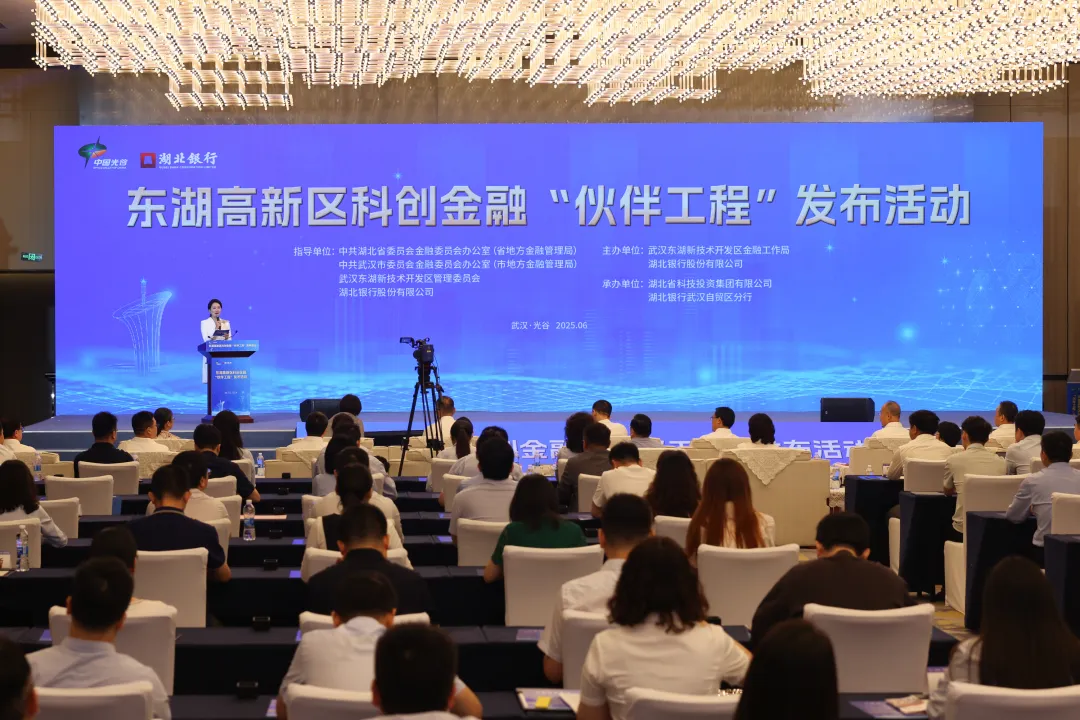
Core Viewpoint - Wuhan East Lake High-tech Zone has launched the "Innovation Financial Partner Program" to address financing challenges faced by startup technology companies, aiming to support technological innovation and achievement transformation [1][2]. Group 1: Program Overview - The "Innovation Financial Partner Program" focuses on the financing pain points of technology enterprises in the "0-1" stage, establishing a database of technology seedling enterprises with technological and intellectual property value [1]. - The program aims to encourage financial institutions to lend by implementing a layered risk-sharing mechanism and a return on investment design [1][2]. Group 2: Targeted Support - The program specifically supports three types of "hardcore" entities: talent enterprises founded by research teams from universities and research institutes, future unicorns with disruptive technologies and clear industrialization paths, and pioneers in technology achievement transformation through deep integration of industry, academia, and research [1]. - The initiative aims to provide precise financial support to high-risk, light-asset technology seedlings, facilitating their growth [1]. Group 3: Financial Mechanisms - The program will create a nurturing system for seedling enterprises, selecting 400 initial technology startups for a "seedling enterprise database" and launching a dedicated credit product called "Seedling Partner Loan + Equity Subscription" [1]. - A priority credit channel for seedling technology enterprises will be established, ensuring a 100% response rate to credit applications, with an annual financing amount of no less than 600 million yuan [1]. Group 4: Risk Compensation and Sustainability - A special risk compensation fund will be set up to achieve layered risk compensation, forming a sustainable operational loop of "financial support - enterprise growth - return on investment" [2]. - The program promotes risk-sharing and profit-sharing among cooperating partners, enhancing collaboration within the ecosystem [2]. Group 5: Historical Context and Achievements - Since its establishment, the East Lake High-tech Zone has nurtured 158,000 innovative enterprises, 5,821 high-tech enterprises, and 549 gazelle enterprises, becoming the first national demonstration zone for technology insurance innovation [2]. - The zone has attracted over 1,100 technology financial institutions, including technology banks, securities, insurance, and funds, establishing a comprehensive equity and bond financing chain covering the entire lifecycle of technology enterprises [2].
金融活水润泽民营经济“繁花似锦”——宁波金融业多维赋能民营经济高质量发展侧记
Zheng Quan Ri Bao· 2025-06-08 14:43
Core Viewpoint - The article highlights the robust development of the private economy in Ningbo, supported by various financial institutions and policies aimed at enhancing financial services for private enterprises [1][11]. Financial Support Policy System - The People's Bank of China Ningbo Branch is actively constructing a financial support policy system, collaborating with local government departments to optimize financial services for private enterprises [2]. - Over the past three years, Ningbo has injected 240 billion yuan in various central bank re-loans and rediscount funds, with over 2.5 billion yuan in loans issued to more than 9,000 technology-based enterprises [2]. - As of April 2025, the loan balance for private enterprises in Ningbo reached 1.64 trillion yuan, accounting for 54.7% of total enterprise loans [3]. Mechanism Innovation to Enhance Service Efficiency - Ningbo Tongshang Bank has established a unique innovation ecosystem for technology enterprises, providing comprehensive financial services and support [4]. - The bank's incubation base has served over 30 enterprises, addressing various needs and conducting 165 training activities, resulting in nearly 10 million yuan in cost savings for these enterprises [4]. Digital Empowerment Leading Service Innovation - Ningbo Bank has developed a comprehensive service platform called "Bobo Zhila," offering 22 professional services and two specialized platforms to assist enterprises in various operational challenges [7]. - The bank has provided a 100 million yuan group credit line and utilized supply chain financial tools to offer 50 million yuan in specialized financing to a foreign trade enterprise, reducing financing costs to 2.3% [7][8]. Precision Support Accompanying Enterprise Growth - Agricultural Bank of China has supported Ningbo Longyuan Co., Ltd. throughout its growth stages, providing tailored financial products and services, including a project loan of 320 million yuan for capacity expansion [9][10]. - The bank has established a specialized branch for technology enterprises, focusing on different development stages and using a differentiated evaluation system to assess enterprises based on their core technologies and market potential [10].


光谷发布科创金融“伙伴工程”,破解从“0到1”阶段科创企业融资难
Zhong Guo Jin Rong Xin Xi Wang· 2025-06-07 09:10
转自:新华财经 6月6日,光谷发布科创金融"伙伴工程"。现场,东湖高新区和湖北银行、长江证券、中金资本、武汉产业创新发展研究院等10家银行机构、投资机构、保 险机构、新型研发机构成立东湖高新区科创金融种苗伙伴联盟,合力为从"0到1"阶段的科创企业提供金融服务。 一直以来,初创科技企业融资难、首贷难都是限制科技创新和成果转化的"拦路虎"。"伙伴工程"通过严选优培构建动态"种苗企业库",首期遴选400家"技 术有高度、市场有前景、投资有价值"的初创科技企业入库,以"首贷"服务打通科技成果转化"最初一公里"。 会上,谦达智能、中科人因、纳博生命、科泰生物、伯森健康等初创科技企业和湖北银行签约意向合作,将围绕企业发展需求针对性进一步开展投融资对 接。 为让银行敢贷、愿贷,东湖高新区设立3000万元风险补偿专项资金,并形成收益共享机制,银行贷款获取的认股权,其收益全部反哺风险资金池,形 成"金融支持—企业成长—收益回补"的可持续闭环。 湖北银行相关负责人表示:"投资初创科技企业风险高,'伙伴工程'极大提升了银行的信心,期待未来联合各单位将一批光谷初创企业培养成参天大树。" 目前,东湖高新区集聚科技支行、科技证券、科技保 ...
化解初创科技型企业“融资难”问题 东湖高新区发布科创金融“伙伴工程”
Jing Ji Guan Cha Wang· 2025-06-06 22:59
Core Viewpoint - The "Partner Project" launched by Wuhan East Lake High-tech Zone aims to address the financing difficulties faced by startup technology companies, facilitating their innovation and achievement transformation [1][2]. Group 1: Financing Solutions - The "Partner Project" focuses on the financing pain points of technology companies in the "0-1" stage, leveraging the policy effects of knowledge value credit loans for technology enterprises in Hubei Province [1]. - The project will establish a "seed enterprise library" that values technological and intellectual property assets, encouraging financial institutions to lend [1][2]. - A total of 400 high-potential startup technology companies will be selected to form the "seed enterprise library" [2]. Group 2: Financial Products and Mechanisms - The project will introduce a specialized credit product called "Seed Partner Loan + Equity Option," ensuring a 100% response rate for credit applications from registered companies, with an annual financing amount of no less than 600 million [2]. - A risk compensation fund will be established to provide layered risk compensation, creating a sustainable cycle of "financial support - enterprise growth - revenue compensation" [2]. Group 3: Ecosystem and Collaboration - The initiative represents an upgrade in the innovation ecosystem, shifting credit resources from merely enhancing existing capabilities to providing essential support for innovation [3]. - The East Lake High-tech Zone will enhance coordination and set up special risk compensation funds to ensure resources reach their intended targets [3]. - The project aims to deepen government-bank-enterprise cooperation, expanding partnerships and innovating service models and financial products [3].

初创科企每年新增6亿元信贷额度,光谷发布科创金融“伙伴工程”
Di Yi Cai Jing· 2025-06-06 08:02
Group 1 - The core initiative is the "Partner Program" for innovative finance launched by Guanggu, which aims to select 400 high-potential startup tech companies annually, providing them with no less than 600 million yuan in credit financing [1][2] - The program targets three types of core entities: talent enterprises founded by research teams from universities and institutions, future unicorns with disruptive technologies and clear industrialization paths, and pioneers in technology transfer through deep integration of industry, academia, and research [1][2] - The initiative aims to create a financial ecosystem characterized by government guidance, market leadership, risk-sharing, and benefit-sharing, facilitating the growth of innovative startups [1] Group 2 - The "Seed Partner Loan + Equity Option" specialized credit product is designed to empower startups precisely, with banks committing to a 100% response rate for loan applications from selected companies [2] - A risk compensation fund of 30 million yuan has been established to support the program, creating a sustainable cycle of financial support, enterprise growth, and return on investment [2] - The initiative represents a shift in banking service models, moving from traditional financial assessments to a focus on technology and risk control, fostering a new breed of "pioneering banks" in tech finance [2][3] Group 3 - The East Lake High-tech Zone has been approved as the first national technology insurance innovation demonstration zone, gathering over 1,100 technology financial institutions and establishing more than 70 funds [3] - The funds managed in the region account for approximately 50% of the total fund net value in Hubei province, creating a comprehensive financing chain for tech enterprises throughout their lifecycle [3]