空间智能

Search documents
李飞飞最新发文:下一个十年,空间智能将成为人类认知的“脚手架”
Tai Mei Ti A P P· 2025-11-11 06:19
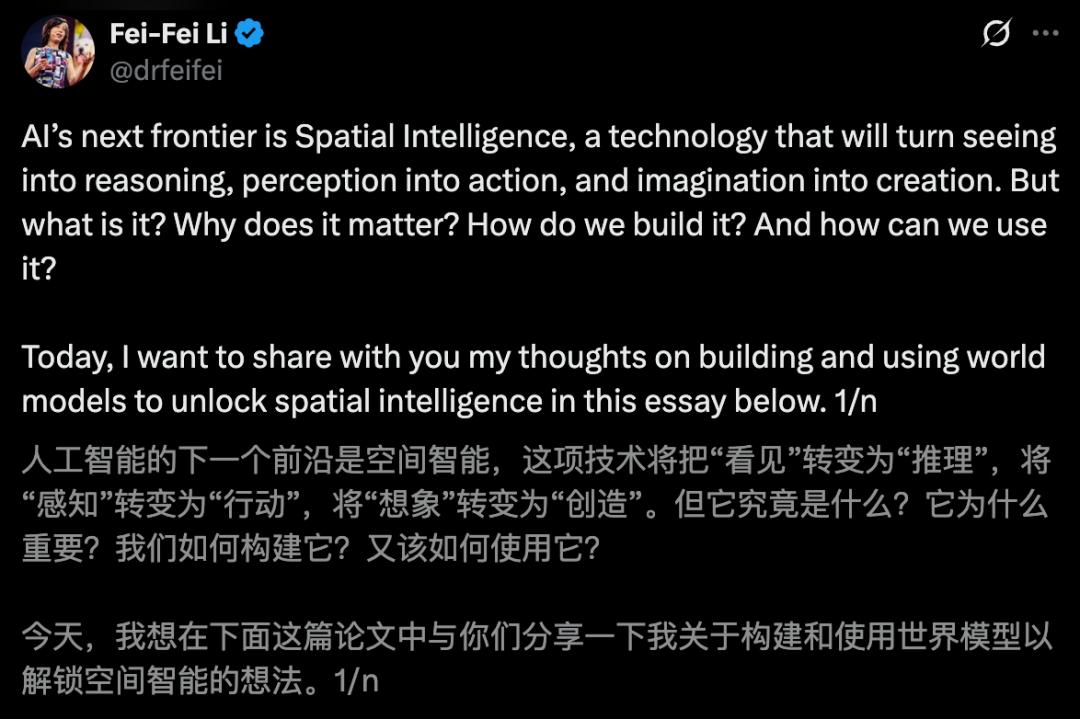
Core Insights - The article emphasizes that spatial intelligence will be the cornerstone of human cognition and the next frontier for AI development [3][4][5] - The establishment of WorldLabs aims to create a "world model" that embodies spatial intelligence, addressing the limitations of current AI systems [2][8] Group 1: Importance of Spatial Intelligence - Spatial intelligence is crucial for human interaction with the physical world and underpins imagination, creativity, and civilization progress [3][4][5] - Historical breakthroughs in civilization have been driven by spatial intelligence, as seen in the works of Eratosthenes, Hargreaves, and Watson and Crick [4][24] Group 2: Current Limitations of AI - Despite advancements in generative AI, current AI systems lack the spatial capabilities that humans possess, leading to fundamental limitations in perception, decision-making, and execution [6][25] - AI struggles with tasks such as estimating distances, navigating environments, and maintaining temporal coherence in generated content [6][25] Group 3: The Concept of World Models - The "world model" is proposed as a solution to enhance AI's spatial intelligence, enabling machines to understand, reason, generate, and interact with complex environments [8][27] - World models are defined by three core capabilities: generative ability, multimodal capability, and interactive ability [10][28][30] Group 4: Applications of Spatial Intelligence - In the creative domain, spatial intelligence will transform storytelling and design processes, allowing creators to visualize and iterate on concepts more efficiently [12][13][35] - In robotics, spatial intelligence will enable robots to become collaborative partners, enhancing their ability to assist in various environments [14][37] - In science, healthcare, and education, spatial intelligence will unlock new potentials for discovery, patient care, and immersive learning experiences [15][39][40] Group 5: Future Vision - The development of spatial intelligence is seen as a pathway to enhance human capabilities rather than replace them, fostering a more productive and harmonious relationship between humans and AI [18][34][42] - The vision for the future includes a world where AI seamlessly integrates into daily life, empowering creativity, exploration, and care [18][34][42]


李飞飞万字长文爆了!定义AI下一个十年
3 6 Ke· 2025-11-11 03:00
Core Insights - The article discusses the emerging field of "spatial intelligence" in AI, emphasizing its potential to enhance creativity, navigation, and reasoning capabilities in machines [1][4][10] - The concept of a "world model" is identified as central to achieving true spatial intelligence, enabling AI to generate and interact with environments that adhere to physical laws [2][4][25] Group 1: Importance of Spatial Intelligence - Spatial intelligence is crucial for understanding and interacting with the physical world, influencing everyday actions and complex tasks alike [17][20] - The evolution of spatial intelligence has historically driven significant advancements in civilization, from ancient geometry to modern scientific discoveries [20][21] Group 2: Current Limitations of AI - Current AI technologies, including multimodal large language models (MLLM), still lack the depth of spatial reasoning and interaction capabilities found in humans [21][22][24] - Despite advancements, AI struggles with tasks requiring spatial awareness, such as estimating distances or predicting physical interactions [22][24] Group 3: Building Spatial Intelligence - Developing AI with spatial intelligence requires a comprehensive approach, focusing on creating world models that can generate consistent and interactive environments [25][27] - Three core capabilities are essential for these world models: generative ability, multimodal input processing, and interactivity [27][30][34] Group 4: Applications of Spatial Intelligence - The potential applications of spatial intelligence span various fields, including creative industries, robotics, and scientific research, promising transformative impacts [46][75] - World Labs' Marble project exemplifies the application of spatial intelligence, enabling creators to generate and interact with 3D environments [5][45][56] Group 5: Future Vision - The future of AI lies in enhancing human capabilities through spatial intelligence, fostering collaboration between machines and humans in various domains [47][80] - Achieving this vision requires collective efforts from researchers, innovators, and policymakers to develop and govern AI technologies responsibly [52][75]
李飞飞最新长文火爆硅谷
量子位· 2025-11-11 00:58
Core Viewpoint - Spatial intelligence is identified as the next frontier for AI, with the potential to revolutionize creativity, robotics, scientific discovery, and more [2][4][10]. Group 1: Definition and Importance of Spatial Intelligence - Spatial intelligence is described as a foundational aspect of human cognition, enabling interaction with the physical world and driving reasoning and planning [20][21]. - The evolution of spatial intelligence is linked to the development of perception and action, which are crucial for understanding and interacting with the environment [12][13][14]. - Historical examples illustrate how spatial intelligence has driven significant advancements in civilization, such as Eratosthenes' calculation of the Earth's circumference and the invention of the spinning jenny [18][19]. Group 2: Current Limitations of AI - Current AI models, including multimodal large language models (MLLMs), have made progress in spatial perception but still fall short of human capabilities [23][24]. - AI struggles with tasks involving physical representation and interaction, lacking the holistic understanding that humans possess [25][26]. Group 3: World Models as a Solution - The concept of "world models" is proposed as a new generative model that can surpass the limitations of current AI by understanding, reasoning, generating, and interacting with complex virtual or real worlds [28][30]. - World models should possess three core capabilities: generative, multimodal, and interactive [31][34][38]. - The development of world models is seen as a significant challenge that requires innovative methodologies to coordinate semantic, geometric, dynamic, and physical aspects [39][41]. Group 4: Applications and Future Potential - The potential applications of spatial intelligence span various fields, including creativity, robotics, science, healthcare, and education [56][57]. - In creativity, platforms like World Labs' Marble are enabling creators to build immersive experiences without traditional design constraints [52][53]. - In robotics, achieving spatial intelligence is essential for robots to assist in various environments, enhancing productivity and human collaboration [60][62]. Group 5: Vision for the Future - The vision for the future emphasizes the importance of AI enhancing human capabilities rather than replacing them, with spatial intelligence playing a crucial role in this transformation [47][50]. - The exploration of spatial intelligence is framed as a collective effort that requires collaboration across the AI ecosystem, including researchers, innovators, and policymakers [51][63].

李飞飞最新长文:AI的下一个十年——构建真正具备空间智能的机器
机器之心· 2025-11-10 23:47
Core Insights - The article emphasizes the importance of spatial intelligence as the next frontier in AI, highlighting its potential to transform various fields such as storytelling, creativity, robotics, and scientific discovery [5][6][10]. Summary by Sections What is Spatial Intelligence? - Spatial intelligence is defined as a fundamental aspect of human cognition that enables interaction with the physical world, influencing everyday actions and creative processes [10][13]. - It is essential for tasks ranging from simple activities like parking a car to complex scenarios such as emergency response [10][11]. Importance of Spatial Intelligence - The article argues that spatial intelligence is crucial for understanding and manipulating the world, serving as a scaffold for human cognition [13][15]. - Current AI technologies, while advanced, still lack the spatial reasoning capabilities inherent to humans, limiting their effectiveness in real-world applications [14][15]. Building Spatial Intelligence in AI - To create AI with spatial intelligence, a new type of generative model called "world models" is proposed, which can understand, reason, generate, and interact within complex environments [17][18]. - The world model should possess three core capabilities: generative, multimodal, and interactive [18][19][20]. Challenges Ahead - The development of world models faces significant challenges, including the need for new training tasks, large-scale data, and innovative model architectures [23][24][25]. - The complexity of representing the physical world in AI is much greater than that of language, necessitating breakthroughs in technology and theory [21][22]. Applications of Spatial Intelligence - In creativity, spatial intelligence can enhance storytelling and immersive experiences, allowing creators to build and iterate on 3D worlds more efficiently [32][33]. - In robotics, spatial intelligence is essential for machines to understand and interact with their environments, improving their learning and operational capabilities [34][35][36]. - The potential impact extends to fields like science, medicine, and education, where spatial intelligence can facilitate breakthroughs and enhance learning experiences [38][39][40]. Conclusion - The article concludes that the pursuit of spatial intelligence in AI represents a significant opportunity to enhance human capabilities and address complex challenges, ultimately benefiting society as a whole [42].

AI从技术到生态,乌镇峰会的开源共识
2 1 Shi Ji Jing Ji Bao Dao· 2025-11-10 12:04
Core Insights - The narrative of the Wuzhen Summit has shifted from "Internet+" to "Artificial Intelligence+" [1][2] - The summit highlighted the increasing focus on hard tech entrepreneurs and the growing application of AI across various industries [2] Industry Trends - The future of the internet is moving from traffic competition to industrial revolution, with significant advancements in logistics and AI infrastructure [3] - Companies like JD.com and Alibaba are investing heavily in AI technologies, with JD.com planning to establish the world's first fully automated delivery station by next year [3] Technological Innovations - AI technology is transitioning from mere technical breakthroughs to large-scale application innovations, promoting deep integration of technology and industry [4] - The concept of "Spatial Intelligence" is emerging as a significant area of discussion, with applications in robotics and video generation [4][5] Application Scenarios - "Spatial Intelligence" technology is expected to have core application scenarios in cultural tourism and education, enabling immersive experiences through various hardware [6] - The development of a new generation of spatial intelligence platforms aims to create virtual spaces that interact in real-time with the real world [5][6] Open Source Movement - Open source has become a foundational structure for the future of the internet, with Alibaba creating the largest AI open-source community in China [8] - The open-source paradigm is reshaping AI competition, allowing for innovation in computing power, algorithms, and data [8][9] Community Engagement - The engagement of developers in open-source projects is crucial for the advancement of AI technologies, with competitions encouraging contributions from a diverse range of participants [8] - Companies are leveraging community feedback to iterate on tools and enhance core data, creating a positive feedback loop for development [8]


从大厂到新玩家,AI走向千行百业的N个路径
Bei Jing Shang Bao· 2025-11-09 13:41
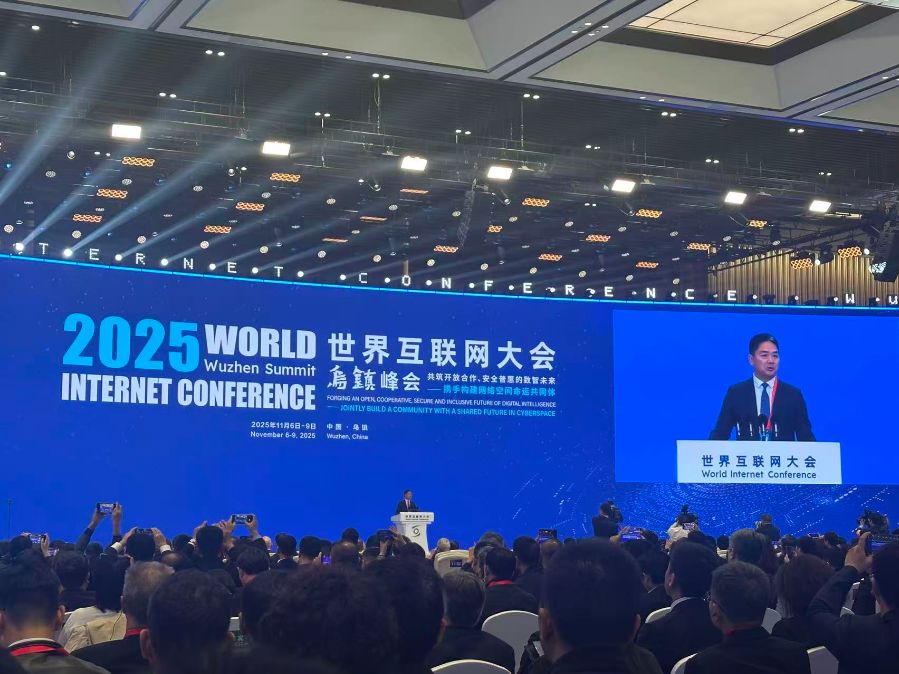
Core Insights - The 2025 World Internet Conference in Wuzhen highlighted the evolution of AI technology from laboratory settings to various industries, emphasizing discussions on ethics, security, and commercialization among tech giants [1] - Alibaba's CEO outlined a three-stage development plan for AI, aiming for "Super Artificial Intelligence (ASI)" by 2035, supported by significant investments in AI infrastructure and services [2] - The emergence of new players, referred to as the "Six Little Dragons" from Hangzhou, showcased innovative approaches to AI technology, indicating a shift towards niche breakthroughs alongside major corporate strategies [4] Group 1: Major Companies' Strategies - Alibaba is constructing a large-scale AI infrastructure and has released over 300 open-source models, achieving over 600 million downloads, with a significant presence in the Hugging Face community [2][3] - Kuaishou is focusing on AI applications in the film industry, reporting a reduction in production costs to one-tenth of traditional methods and a 60% decrease in production time [3] - Qi Anxin emphasized the importance of security in AI development, advocating for a systematic approach to ensure safety throughout the AI lifecycle [3] Group 2: Emerging Innovators - The "Six Little Dragons" are leveraging accumulated user data from the internet era to fuel AI advancements, with a focus on unique technological perspectives [4] - Challenges in the robotics sector were highlighted, particularly regarding the lack of standardized models and data collection methods, which are crucial for developing embodied intelligence [5] - Innovations in humanoid robotics and quadrupedal robots were discussed, showcasing significant progress in adapting to complex environments [5] Group 3: Societal Impact and Future Outlook - AI is seen as a transformative force in reshaping industry dynamics and societal structures, with discussions on how to foster a harmonious relationship between humans and AI [6] - The concept of AI as a supportive tool rather than a replacement for human intelligence was emphasized, advocating for a collaborative approach to enhance creativity and productivity [6][7] - The conference concluded with optimism about AI's future role in society, highlighting China's growing importance in the global AI revolution [7]
乌镇同台聚首 杭州“六小龙”共话未来科技图景
Zhong Guo Xin Wen Wang· 2025-11-08 15:31
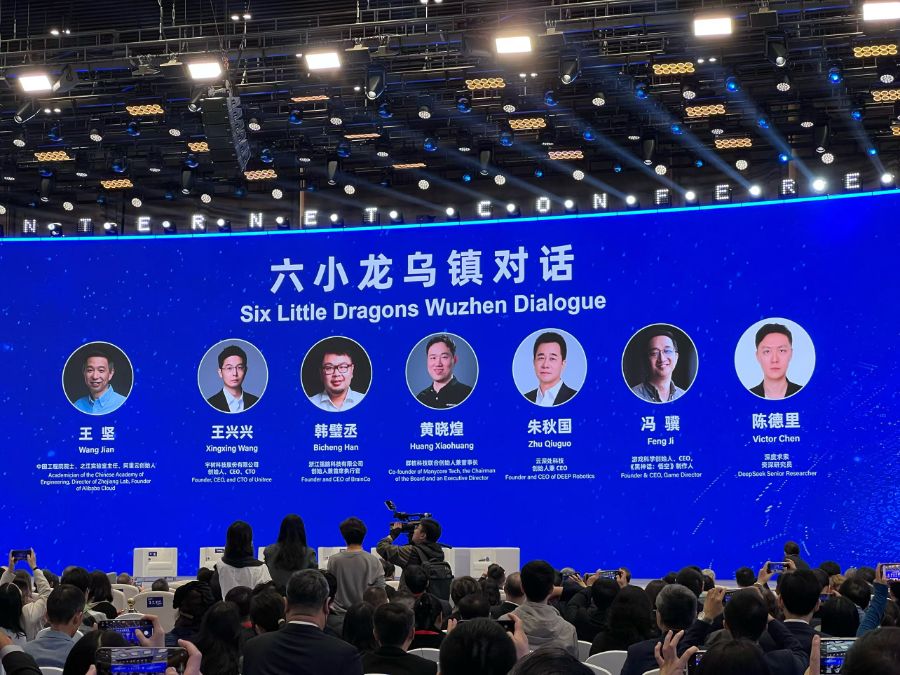
Core Insights - The article highlights the rapid rise of Chinese tech startups, particularly in the field of AI, with a focus on the "Six Little Dragons" from Hangzhou, who are gaining significant attention in the industry [1] Group 1: AI and Embodied Intelligence - The concept of "embodied intelligence" has been recognized as a key area in AI, with applications extending from industrial sectors to daily life, healthcare, and disaster relief [1] - The term "embodied intelligence" was first included in the government work report for 2025, indicating its growing importance [1] - Companies like Yushutech are optimistic about the future of embodied intelligence, believing it will serve as a crucial engine for the robotics industry [2] Group 2: Challenges in Development - The development of embodied intelligence faces challenges primarily related to high-quality data and model algorithms, with a need for improved data utilization [2] - Despite these challenges, industry leaders remain optimistic about advancements in the robotics sector over the next two years [2] Group 3: Innovations in Robotics - Companies like Yushutech and Cloud Deep Technology are focusing on practical applications of robotics, such as using robotic dogs for power inspections and emergency firefighting [2] - The emergence of humanoid robots is also being pursued, with the aim of replacing human labor in hazardous environments [2] Group 4: Future Vision - Industry leaders envision a future where robots will significantly populate work environments, necessitating unified management and command of these machines through spatial intelligence technology [2] - The transition from automation to intelligence in robotics is seen as a gradual process that will not take long [2] Group 5: Brain-Computer Interface Technology - Brain-computer interface technology is transitioning from experimental stages to real-world applications, such as neuro-controlled prosthetics that allow disabled individuals to perform intricate tasks [3] - This technology is moving closer to making previously fictional scenarios a reality, enhancing human capabilities [3] Group 6: Awareness of Risks - Industry representatives emphasize the importance of risk awareness regarding the potential long-term impacts of AI, including job displacement and the concentration of technological advantages among a few companies [4] - The balance between AI's capabilities and the anxiety it may cause in the workforce is highlighted as a critical issue for future consideration [4]
“杭州六小龙”聚首,梁文锋缺席
财联社· 2025-11-08 07:40
Core Insights - The "Six Little Dragons of Hangzhou" are leading advancements in various cutting-edge fields such as brain-computer interfaces, robotics, spatial intelligence, game technology, and open-source AI, showcasing China's transformation from a follower to a leader in technology [3][4][7]. Group 1: Industry Trends - The brain-computer interface sector has experienced significant growth over the past decade, transitioning from a niche interest to practical applications, driven by supportive policies [7]. - The rapid development of the robotics industry is attributed to China's strong manufacturing capabilities and core component integration technologies, enabling the creation of cost-effective and high-performance robots [9]. - The gaming industry in China has seen substantial growth, with local teams producing high-quality content that resonates with domestic users, as evidenced by the success of titles like "Black Myth: Wukong" [8]. Group 2: Technological Challenges - The lack of unified data standards in the field of embodied intelligence poses challenges for the development and integration of robotic systems [11]. - The complexity of human brain signal interpretation in brain-computer interfaces presents significant technical hurdles, particularly in applications like prosthetics [12]. - The robotics sector faces dual challenges of computational power and scene adaptability, necessitating innovative approaches to reduce data and computational requirements [14]. Group 3: Strategic Shifts - Companies are shifting their business models from serving human clients to focusing on machine clients, anticipating a future where the number of machines may exceed that of humans [13]. - The introduction of Spatial AI and digital twin products aims to address market needs in industrial robotics, reflecting a strategic pivot towards advanced technological solutions [14]. - The emphasis on open-source models in AI development is seen as a way to democratize access to technology and mitigate risks associated with monopolistic practices [14].

乌镇峰会剧透AI未来 互联网进入智联模式,空间智能将站上C位
2 1 Shi Ji Jing Ji Bao Dao· 2025-11-08 04:28
Core Insights - The 2025 World Internet Conference in Wuzhen focuses on building a community in cyberspace, emphasizing digital economy and cultural heritage protection [1] - The conference features over 24 sub-forums and attracts more than 1,600 guests from over 130 countries and regions [1] - The rise of artificial intelligence (AI) is highlighted, with discussions on the transition from "connected" to "intelligent" internet [1] Group 1: Digital Economy and AI Development - AI and robotics are becoming central to China's digital economy, with companies like JD.com leading the charge in smart logistics [2] - JD's founder predicts that social logistics costs in China could drop to below 10% of GDP within the next five years, surpassing progress made in the last 10 to 15 years [2] - The conference showcases the shift towards embodied intelligence and spatial intelligence in AI, moving from virtual to physical applications [2][3] Group 2: AI Infrastructure and AGI - Major Chinese internet companies are investing in large-scale AI infrastructure, with Alibaba focusing on building a super AI cloud [4] - The development of AI is seen as progressing through three stages: emergence of intelligence, general artificial intelligence (AGI), and super artificial intelligence (ASI) [4] - AGI is characterized as a digital entity capable of perception, reasoning, decision-making, and collaboration [4] Group 3: Challenges and Future Directions - Current AI lacks the stability of human intelligence, performing well in complex tasks but poorly in simpler ones due to fixed parameters post-training [5] - The industry views humanoid robots as ideal carriers for AGI, providing the best interface for interaction with the physical world [5] - The conference serves as a critical observation point for the evolution of China's internet ecosystem, highlighting the integration of technology with industry [5]
杭州六小龙,乌镇大会首次同框
2 1 Shi Ji Jing Ji Bao Dao· 2025-11-08 04:28
Core Insights - The "Six Little Dragons" of Hangzhou showcased their advancements and challenges in various tech sectors during the Wuzhen Internet Conference, highlighting the rapid development of AI and its implications for their industries [1][3]. Group 1: Industry Developments - Yushutech's CEO Wang Xingxing noted that AI is accelerating the development of the robotics industry, particularly in humanoid robots, which are relatively easier to advance compared to other cutting-edge technologies [3]. - Qiangnao Technology's founder Han Bicheng emphasized that brain-computer interfaces have transitioned from laboratory concepts to impactful products, such as aiding the visually impaired, with their second-generation sleep product aimed at improving sleep for those with insomnia [3]. - Qunke Technology's founder Huang Xiaohuang identified spatial intelligence as a significant field following large language models, applicable in robotics and video generation [3]. - Yundongchu Technology's CEO Zhu Qiuguo stated that robots will ultimately assist humans in addressing dangerous tasks in the workplace [3]. - Game Science's Feng Ji highlighted that China's gaming industry has the largest user base and market size globally, having developed significantly over the past decade [3]. Group 2: Challenges and Risks - The "Six Little Dragons" expressed concerns about the challenges posed by AI development. Wang Xingxing pointed out that while large language models have made significant progress, the training data for robotics cannot be decoupled from the robots themselves, leading to a lack of standardization [4]. - Han Bicheng mentioned that serious brain diseases like Alzheimer's and autism currently lack effective treatments, but AI could aid in data collection and analysis [4]. - Huang Xiaohuang warned that the rise of AI could lead to the replacement of traditionally stable creative jobs [4]. - Zhu Qiuguo noted that robotics faces power supply bottlenecks, and dexterous hands struggle with complex tasks in uncertain environments [4]. - Feng Ji raised concerns about the potential monopolization of technological advantages by fewer individuals and companies due to AI advancements, posing a significant risk [5]. - Chen Deli from Deep Exploration emphasized the need for effective and stable algorithms for AI, advocating for continuous learning in real-world environments [6].