
绿色制造

Search documents
绑定全球龙头,卡位黄金赛道,康瑞新材IPO加码钛合金全产业链布局
Sou Hu Cai Jing· 2025-11-07 02:44
Core Viewpoint - Jiangsu Kangrui New Materials Technology Co., Ltd. is preparing for an IPO on the Shenzhen Stock Exchange, aiming to enhance its capabilities in high-performance metal materials and contribute to the transformation of the manufacturing industry [2] Group 1: Company Overview - Kangrui New Materials is recognized as a national-level specialized and innovative "little giant" enterprise focused on the R&D, production, and sales of high-precision and high-performance metal materials [2] - The company has established a comprehensive precision metal materials technology system, integrating multiple core processes to ensure high consistency and control in production [4] Group 2: Financial Performance - From 2022 to 2024, the company's main business revenue increased from 1.019 billion to 2.961 billion, with metal layered composite materials becoming a key growth driver, rising from 12.46% to 65.23% of total revenue [6] Group 3: Product Portfolio - The product matrix includes various forms and materials such as titanium-aluminum composites, precision metal profiles, and precision metal rods, catering to diverse customer needs in terms of performance, form, and cost [6] - The products are widely used in consumer electronics, industrial equipment, automotive parts, and energy chemicals, with a focus on lightweight and durable materials [9] Group 4: Market Positioning - Kangrui New Materials has established stable partnerships with leading global consumer electronics brands, enhancing its competitive advantage through deep collaboration [8][9] - The company is well-positioned to meet the growing demand for high-performance metal materials driven by advancements in new information technology, new energy, and high-end equipment manufacturing [12] Group 5: Sustainability Initiatives - The company emphasizes green manufacturing and sustainable development, implementing practices to reduce carbon emissions throughout the product lifecycle [11] - Initiatives include recycling titanium alloy waste and adopting low-carbon production technologies, aligning with national carbon neutrality goals [11] Group 6: Future Growth Strategy - Kangrui New Materials has a clear strategy for vertical and horizontal expansion, aiming to enhance its manufacturing capabilities and explore emerging technologies such as metal powder metallurgy and 3D printing [14] - The IPO proceeds will support projects to increase production capacity and improve the overall value of the supply chain [15]


研判2025!中国泡沫镁合金行业产业链、市场规模及重点企业分析:以低密度、高强度、优异吸能与电磁屏蔽特性,成为航空航天、汽车等领域轻量化核心材料[图]
Chan Ye Xin Xi Wang· 2025-11-07 01:26
Core Insights - The foam magnesium alloy industry in China is projected to reach a market size of approximately 5.826 billion yuan in 2024, reflecting a year-on-year growth of 11.27% [1][8] - The demand for foam magnesium alloys is increasing, particularly in the automotive and electronics sectors, driven by the rapid development of new energy vehicles and the trend towards miniaturization and lightweight electronic products [1][8] Industry Overview - Foam magnesium alloy is a new type of lightweight structural functional material characterized by a high strength-to-weight ratio, excellent energy absorption, and electromagnetic shielding properties [2][4] - The material is widely used in various fields, including aerospace, automotive, electronics, and construction [1][2] Industry Supply Chain - The upstream supply chain includes metals such as magnesium, aluminum, zinc, and manganese, as well as auxiliary materials like foaming agents and refractory materials [4] - The midstream involves the production and manufacturing of foam magnesium alloys, while the downstream applications span automotive, aerospace, electronic communications, biomedical, construction, and military equipment sectors [4] Market Size - The foam magnesium alloy market is expected to grow significantly, with a projected market size of 5.826 billion yuan in 2024, marking an 11.27% increase from the previous year [1][8] Key Companies and Performance - Baowu Magnesium Industry holds a significant market share due to its comprehensive industry chain and technological advantages, focusing on high-end applications in new energy vehicles and aerospace [9][10] - In the first half of 2025, Baowu Magnesium Industry reported a revenue of 6.970 billion yuan, a year-on-year increase of 9.82%, while its net profit attributable to shareholders decreased by 43.13% [9][10] Industry Development Trends 1. Continuous technological innovation will drive industry upgrades, with advancements in 3D printing and nanomaterials enhancing the performance and customization of foam magnesium alloys [11][12] 2. The application scenarios for foam magnesium alloys are diversifying, particularly in new energy vehicles, aerospace, and biomedical fields, with expected increases in usage [12] 3. The industry is moving towards green manufacturing, supported by policies aimed at reducing carbon emissions, and companies are adapting to global competition through technology and sustainable practices [13]


兴化戴南一公司引进砂型3D打印装备 告别铸造业“翻砂”时代
Yang Zi Wan Bao Wang· 2025-11-06 11:35
Core Viewpoint - The introduction of a new 3D printing technology for sand molds in metal casting significantly enhances production efficiency, reduces development time, and aligns with green manufacturing trends [1][2]. Group 1: Technology Overview - The new equipment, known as sand mold 3D printing technology, allows for the direct and precise manufacturing of sand molds used in metal casting [1]. - The process involves a sand supply and layering system that creates a smooth sand layer, followed by a mechanical arm that sprays a binding agent according to pre-designed parameters, solidifying the sand particles [1]. Group 2: Advantages Over Traditional Methods - This technology eliminates the need for traditional mold-making, reducing the product development cycle from weeks or months to just a few days, thereby greatly improving production efficiency [2]. - The materials used, such as quartz sand and high-silica sand, are environmentally friendly, allowing for the recycling of used sand molds and minimizing waste and energy consumption [2]. - The technology enhances design freedom and innovation capabilities within the industry, facilitating a shift from manual and mold-dependent production to a more digital and intelligent manufacturing approach [2].
“视中国为最重要战略市场之一”,欧姆龙徐坚详解未来三年本土化布局
Guo Ji Jin Rong Bao· 2025-11-06 10:40
Core Insights - The eighth China International Import Expo (CIIE) was held from November 5 to 10, showcasing Omron's commitment to automation and healthcare solutions under the theme "New Era Automation+" [1][2] - Omron's global sales for the fiscal year 2024 are projected to reach 801.8 billion yen, with the Chinese market accounting for 20% of total global revenue [2][3] - Omron emphasizes the importance of CIIE as a platform for technological exchange and collaboration, enhancing its presence in the Chinese market [3][4] Company Overview - Founded in 1933 by Kazuma Tateisi, Omron operates in over 130 countries with more than 26,000 employees [2] - The company has been deeply rooted in the Chinese market for decades, making it a significant overseas market and a pillar of global revenue [2][3] Technological Innovations - At CIIE, Omron showcased advanced solutions such as the individual workpiece traceability system and multi-variety workpiece automatic vibration suppression system, enhancing production efficiency [4] - The introduction of a smart production management platform allows for visual monitoring and optimization of production processes, contributing to cost reduction and energy management [4] Industry Trends - The Chinese industrial automation market is experiencing rapid growth, with a market size of 279.5 billion yuan in 2023 and a compound annual growth rate of approximately 8.84% from 2018 to 2023 [5] - Challenges in the manufacturing sector include labor structure changes and the need for green transformation, which presents opportunities for Omron's automation solutions [5] Future Strategy - Omron plans to focus on three core areas in the Chinese market over the next three to five years: digitalization and smart manufacturing, green manufacturing and low-carbon development, and strengthening local innovation and industry collaboration [6]
连平:明年经济工作运行的六方面政策建议
和讯· 2025-11-06 09:55
Core Viewpoint - The article discusses the current state of China's economy, highlighting the challenges and structural imbalances in investment, while emphasizing the need for targeted policies to stimulate growth in the face of external uncertainties and insufficient domestic demand [2][3]. Economic Performance - In the first three quarters, China's GDP grew by 5.2% year-on-year, exceeding the target of around 5% set during the "Two Sessions" [3]. - The quarterly growth rates were 5.4%, 5.2%, and 4.8%, indicating a trend of "high at the beginning and stable later" [3]. Industrial Production - The industrial added value for large-scale enterprises increased by 6.2% year-on-year, with a notable recovery in the last quarter [5]. - The capacity utilization rate for large-scale industries rose to 74.6%, with manufacturing at 74.8% [5]. - The equipment manufacturing sector saw a 9.7% increase in added value, contributing significantly to overall industrial growth [5][6]. Consumption Trends - Retail sales of consumer goods increased by 4.5% year-on-year, with a growth rate of 2.4% in the third quarter [6][8]. - New consumption patterns, including digital and green consumption, are on the rise, with significant growth in online retail and new energy vehicles [8]. Export Performance - Exports grew by 6.1% year-on-year in the first three quarters, with a notable 7.84% increase in the third quarter [8]. - The share of exports to the U.S. has decreased from approximately 20.7% during Trump's first term to 10.44% [8]. - Mechanical and high-tech products, such as integrated circuits and automobiles, are driving export growth [9]. Inflation and Price Trends - The Consumer Price Index (CPI) fell by 0.1% year-on-year, with food prices declining by 1.8% [13][14]. - Core CPI, excluding food and energy, has shown a steady increase, reaching 1.0% in September [15]. - The Producer Price Index (PPI) decreased by 2.8% year-on-year, but the rate of decline has narrowed [17]. Investment Challenges - Fixed asset investment decreased by 0.5%, with real estate investment dropping by 13.9% [23][24]. - The decline in foreign investment is significant, with a 12.6% drop in foreign enterprise investment [27]. - Investment in the eastern region is particularly weak, with a 4.5% decline [27]. Policy Recommendations - The article suggests setting a GDP growth target of around 5.0% for the next year, with a CPI target of 2.0% [32][34]. - It recommends maintaining an active fiscal policy with a deficit rate of around 4.2% and increasing government investment in infrastructure and technology [34][35]. - Monetary policy should remain moderately loose, with potential interest rate cuts to stimulate consumption and investment [36].

加码布局中国市场,阿斯利康本届进博会首发多款创新药
Nan Fang Du Shi Bao· 2025-11-05 11:22
Core Insights - The eighth China International Import Expo opened in Shanghai on November 5, with AstraZeneca participating for the eighth consecutive year, showcasing its commitment to health in China and announcing an expansion of its production base in Qingdao [2] Group 1: New Drug Launch - AstraZeneca showcased two newly approved oncology drugs, QianKede® (Capecitabine Tablets) and Dazhuoyou® (Injection of Dazibotamab), at the expo, aimed at serving nearly 3.8 million patients in China [3] - Over the past seven years, the company has introduced 18 products in China, covering various therapeutic areas including respiratory, renal, digestive, rare diseases, autoimmune, and oncology [3] - The Beijing Global Strategic R&D Center was inaugurated in October, part of a $2.5 billion investment plan to accelerate the translation of innovative results into clinical drugs [3] Group 2: Production Expansion and Sustainability - On the first day of the expo, AstraZeneca signed an agreement with the Qingdao High-tech Zone Management Committee to invest approximately $136 million to expand its production base in Qingdao, enhancing the capacity for inhalation aerosol products to meet the needs of asthma and COPD patients [5] - The expansion project will incorporate energy-saving technologies with the goal of achieving near-zero carbon operations [5] - The company highlighted its three major bases in Wuxi, Taizhou, and Qingdao, with Wuxi achieving 100% renewable energy usage and carbon neutrality certification, and Taizhou reducing carbon emissions by 97.5% compared to 2015 [5][7]


中集集团:中集安瑞科在湛江建造华南首个规模5万吨/年的生物绿色甲醇示范工厂,预计今年第四季度投产
Mei Ri Jing Ji Xin Wen· 2025-11-04 01:22
Core Insights - The company has aligned its strategic transformation with the recently approved 14th Five-Year Plan, focusing on smart manufacturing, green manufacturing, and service-oriented manufacturing [1] - In the clean energy sector, the company is well-positioned to capitalize on emerging opportunities, particularly in hydrogen energy and other strategic new industries [1] Group 1: Manufacturing Strategy - The company is advancing its transformation strategy by implementing digital production lines and "lighthouse factories" to enhance smart manufacturing capabilities [1] - It has developed a range of smart manufacturing equipment, including intelligent welding robots and automated guided vehicles [1] - The company is pioneering green manufacturing practices, such as using environmentally friendly water-based paints and modular construction methods to reduce construction waste [1] Group 2: Clean Energy Initiatives - The company’s clean energy business encompasses green methanol, hydrogen, and energy storage, creating a synergistic effect across the clean energy value chain [1] - A significant project includes the construction of a 50,000-ton-per-year bio-green methanol demonstration plant in Zhanjiang, expected to commence production in Q4 of this year [1] - The collaboration with Ansteel on a coke oven gas hydrogen production project aims to produce 15,000 tons of hydrogen and 100,000 tons of LNG annually, reducing carbon emissions by 470,000 tons [1] - The company is enhancing its technological advantages in LNG and hydrogen, developing integrated solutions for production, storage, transportation, and usage [1] - In the energy storage sector, the company’s products cater to various applications, and it has partnered with Denmark's VESTAS to develop the world's first modular containerized wind turbine nacelle [1]

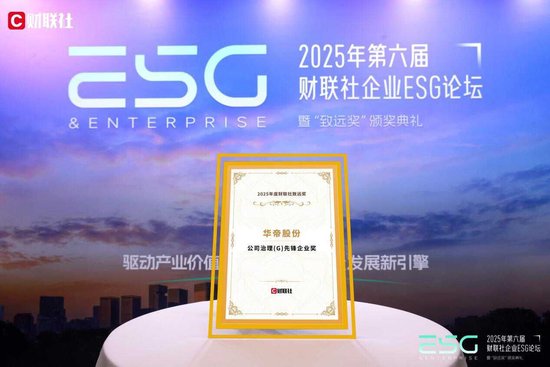
厨电行业ESG新标杆!华帝摘得治理先锋奖,彰显领军企业担当
Xin Lang Zheng Quan· 2025-11-03 08:35
Core Insights - The article emphasizes the importance of Environmental, Social, and Governance (ESG) as a core strategic element for companies to reshape their competitiveness in the context of a changing global economic landscape [1] - In 2024, various Chinese regulatory bodies have introduced guidelines to standardize ESG management and disclosure, providing a clear institutional path for companies to deepen their sustainable development practices [1] Group 1: Company Governance and Compliance - The company has integrated ESG sustainable development concepts deeply into its operations, adhering strictly to laws such as the Anti-Unfair Competition Law and the Anti-Monopoly Law, and has been recognized as a "Standing Council Unit of the China Anti-Fraud Alliance" in 2023 [3] - To enhance risk management, the company has implemented a series of internal management systems, including internal audit and supervision management, creating a comprehensive and responsive risk management framework [3] - The company ensures transparency and shareholder rights through strict adherence to investor relations and information disclosure management systems [3] Group 2: Technological Empowerment and Green Manufacturing - The company extends ESG principles to product development and manufacturing, focusing on energy-efficient kitchen appliances that exceed national energy efficiency standards [5] - The company’s gas stoves and innovative QC1i condensing wall-mounted boilers demonstrate significant reductions in CO and NOx emissions, achieving CO emissions as low as 0.005% and NOx emissions as low as 0.002% [5] - The company has established green factories certified by ISO 14001 and has implemented measures to reduce pollution during production, including the introduction of servo pressure machines and the replacement of traditional processes with environmentally friendly alternatives [5] Group 3: Social Responsibility and Community Engagement - The company views social responsibility as an intrinsic part of its development, engaging in diverse and continuous public welfare practices, including educational support initiatives that have benefited nearly 3,000 impoverished children [6] - The company has partnered with the Shenzhen One Foundation to support families with autism, establishing 20 "Parent Support Stations" and conducting 237 activities to assist over 6,000 individuals [8] - In 2024, the company plans to donate 1.3 million yuan to charitable organizations, with total public welfare investment reaching 4.55 million yuan, showcasing its commitment to social responsibility [8] Group 4: Recognition and Strategic Upgrades - The company has received multiple awards for its ESG efforts, including the "ESG New Benchmark Enterprise Award" and recognition for low-carbon initiatives, highlighting its leadership in the ESG domain [8] - The company has transitioned from passive compliance to proactive value creation in its ESG strategy, making ESG principles a core driver throughout the product lifecycle [8] - The company aims to become a leader in high-end kitchen spaces globally, focusing on creating economic, social, and environmental value in a sustainable manner [8]

辽宁累计培育省级及以上绿色工厂超800家
Liao Ning Ri Bao· 2025-11-02 00:44
Group 1 - The core viewpoint emphasizes that green manufacturing is a key pathway for the transformation and upgrading of the manufacturing industry, effectively reducing resource consumption and environmental pollution while enhancing industrial competitiveness [1][2] - The provincial industrial and information technology department announced the 2025 provincial-level green manufacturing list, which includes 184 green factories, 14 green supply chain management enterprises, and 10 green industrial parks, bringing the total number of provincial and above green factories to over 800 [1][2] Group 2 - Green factories are identified as the core implementation units of green manufacturing, with examples such as Liaoning Tianan Biological Pharmaceutical Co., Ltd., which optimized production equipment and achieved an 80% reduction in material consumption in the cell disruption process by replacing ultrasonic disruptors with high-pressure homogenizers [1] - The company established a digital model connecting over 25 key devices, resulting in a 15% increase in production efficiency, and implemented centralized dynamic monitoring and digital management of energy systems to improve energy balance and achieve systematic energy savings [1] - The provincial industrial and information technology department has accelerated the construction of a green manufacturing system through the implementation of guidelines and support for enterprises and industrial parks to undergo green transformation and upgrades [2]
我国首个绿色贸易领域专项政策文件出台
Sou Hu Cai Jing· 2025-10-31 19:53
Core Insights - The global market for green technologies such as electric vehicles, solar energy, and wind energy is projected to reach $2.1 trillion by 2030, which is five times the current size [1] - China has issued its first special policy document on green trade, titled "Implementation Opinions on Expanding Green Trade," focusing on addressing weaknesses in the country's green trade development [1] - China aims to actively participate in discussions on green development at major international forums and has included environmental content in existing free trade agreements [1] Group 1 - The Ministry of Industry and Information Technology plans to increase the proportion of output from green factories to 40% by 2030 and promote zero-carbon factories [2] - The People's Bank of China will support the application of green finance and transition finance standards, encouraging financial institutions to provide more support for green service trade enterprises [2] - China's wind power, photovoltaic, and new energy vehicle products have been exported to over 200 countries, significantly reducing global wind and solar power generation costs by over 60% and 80%, respectively [2]