AIoT

Search documents
朗鸿科技(920395):北交所信息更新:安防+AIoT紧密结合应用场景拓宽,2025Q1-3营收同比+17%
KAIYUAN SECURITIES· 2025-11-20 03:13
Investment Rating - The investment rating for the company is "Outperform" (maintained) [1] Core Insights - The company has achieved a revenue of 135 million yuan in Q1-Q3 2025, representing a year-on-year growth of 16.86%. However, the net profit attributable to the parent company decreased by 5.27% to 40.72 million yuan [2][3] - The company is focusing on enhancing its research and development capabilities, with R&D expenses increasing by 168.46% to approximately 18.93 million yuan in the first three quarters of 2025. The company holds over 325 patents [3] - The integration of security and AIoT is expanding application scenarios, with the global smartphone shipment volume showing a year-on-year increase of 2.6% in Q3 2025, indicating a recovery in the high-end smartphone market [4] Financial Summary - For 2025, the company is projected to have revenues of 177 million yuan, with a year-on-year growth of 11.0%. The net profit is expected to be 60 million yuan, reflecting a growth of 2.9% [5][7] - The gross margin is forecasted to be 56.1% in 2025, while the net margin is expected to be 33.8% [9] - The earnings per share (EPS) for 2025 is estimated at 0.39 yuan, with a price-to-earnings (P/E) ratio of 32.2 times [5][9]
小米拿出2937万股奖励员工及供应商,总价值11.4亿港元
Sou Hu Cai Jing· 2025-11-20 03:10
Group 1 - Xiaomi Group announced the grant of 29,366,734 incentive shares to 3,334 selected participants, including employees and service providers, under the 2023 share plan [1] - The total value of the granted shares is approximately HKD 1.14 billion, equivalent to about CNY 1.041 billion, based on the closing price of HKD 38.82 per share [1] - Each selected participant will receive an average of HKD 341,900, which is approximately CNY 312,000 [1] Group 2 - In Q3 2023, Xiaomi Group reported revenue of CNY 113.12 billion, a year-on-year increase of 22.3%, surpassing the estimated CNY 112.5 billion [3] - The adjusted net profit reached CNY 11.3 billion, marking a historical high with a year-on-year growth of 80.9% [3] - Revenue from the smartphone and AIoT segment was CNY 84.1 billion, a year-on-year increase of 1.6%, while the revenue from the smart electric vehicle and AI innovation segment reached CNY 29 billion, a historical high with a year-on-year growth of 199.2% [3]

“视觉龙头”智能产品不足10元,富瀚微估值多高?
阿尔法工场研究院· 2025-11-20 02:21
Core Viewpoint - Fuhangwei, a leader in the global smart vision chip market, is facing challenges with declining revenue, profits, and cash flow, raising concerns about its upcoming IPO in Hong Kong [3][4][6]. Group 1: Industry Position - Fuhangwei holds the largest market share in the global smart vision chip market, with a strong technological barrier and a product line covering smart video, IoT, and automotive sectors [3][6]. - The company ranked first in revenue in 2024 and leads in shipments of edge smart vision processing chips and automotive-grade ISP chips [6]. Group 2: Financial Performance - The company's revenue, profit, gross margin, and operating cash flow have been declining for three consecutive years, with net profit margin dropping to a low of 0.8% this year [4][7]. - From 2022 to 2024, Fuhangwei's revenue decreased from 2.111 billion to 1.79 billion, and net profit fell from 398 million to 258 million [13]. - In the first three quarters of 2025, revenue was 1.141 billion, down 12.42% year-on-year, and net profit dropped 55.82% to 82.03 million, with net profit margin falling to 4.23% [13]. Group 3: Customer Dependency - Fuhangwei's revenue heavily relies on a few major clients, with over 50% of sales coming from its top five customers, and the largest customer accounting for 55% of total sales in 2025 [19][21]. - The company's largest client, Hikvision, significantly influences its revenue, and any fluctuations in their purchasing can directly impact Fuhangwei's performance [21][22]. Group 4: Shareholder Actions - Prior to the IPO, significant shareholders have been reducing their stakes, including the controlling shareholder's associates, which raises concerns about the company's future outlook [8][15][16]. - The continuous reduction in shareholding by major stakeholders adds negative sentiment to the IPO process [16][17]. Group 5: Pricing and Market Challenges - Fuhangwei's core products have seen substantial price reductions, with the average selling price of smart video products dropping from 15.4 RMB to 11.1 RMB, and smart IoT products from 15.5 RMB to 8.6 RMB, a decline of 44.52% [24][26]. - The company's gross margin has decreased to 36.03% in Q3 2025, down from 37.86% the previous year, indicating pressure on profitability [27]. Group 6: Future Outlook - Fuhangwei aims to achieve a revenue target of 5 billion within the next 3-5 years, focusing on expanding R&D, product lines, and market presence, while integrating AI capabilities into all products [10][38]. - Despite having a strong technological foundation, the company faces significant challenges in proving that its new directions can improve profitability in the short term [39].

小米法务背刺雷军,天塌了
Sou Hu Cai Jing· 2025-11-20 02:17
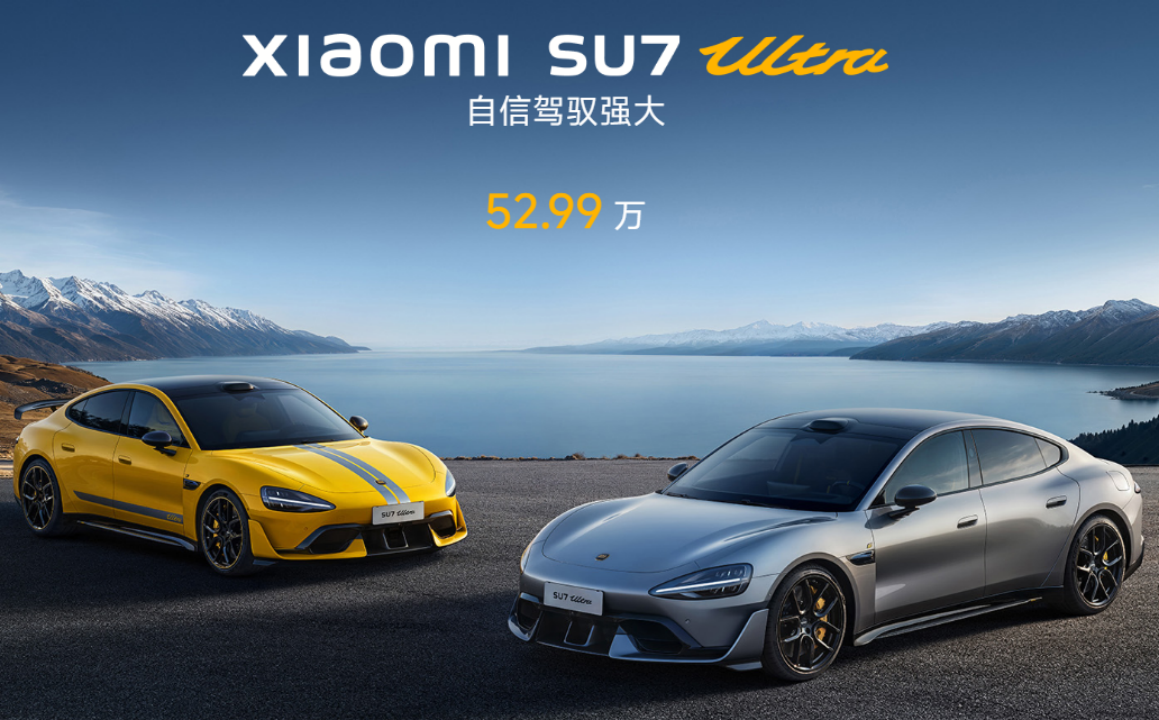
Core Viewpoint - The article discusses the rapid rise and subsequent challenges faced by Xiaomi's automotive division, highlighting the impact of CEO Lei Jun's personal brand on consumer trust and the company's market performance [1][23]. Group 1: Xiaomi Automotive Controversy - Xiaomi's SU7 Ultra model faced backlash from owners who claimed the vehicle did not match its promotional materials, leading to demands for refunds [2][4]. - The company acknowledged the lack of clarity in its communications and offered compensation options, which further angered customers, resulting in legal action against Xiaomi [5][10]. - Xiaomi's legal defense included claims that Lei Jun had warned consumers about pricing and that the promotional content was not part of the purchase contract [7][9]. Group 2: Financial Performance - Xiaomi reported a total revenue of 113.1 billion yuan for Q3, a year-on-year increase of 22.3%, with an adjusted net profit of 11.3 billion yuan, up 80.9% year-on-year [10][12]. - The smart electric vehicle segment showed significant growth, with revenues reaching 29 billion yuan, a 199.2% increase year-on-year, and the division achieved its first quarterly profit [12][16]. - Xiaomi's automotive division delivered over 100,000 vehicles in Q3, with total deliveries surpassing 260,000 units for the year, aiming for a target of 350,000 units by year-end [16][22]. Group 3: Market Position and Future Outlook - Despite impressive financial results, Xiaomi's stock price fell, indicating market skepticism about the sustainability of its automotive success [22]. - The article emphasizes the need for Xiaomi to shift consumer trust from Lei Jun to the brand itself as the automotive market matures, focusing on product quality and customer experience [23]. - Xiaomi's ongoing investment in R&D, with a budget of 30 billion yuan for the year, is seen as crucial for maintaining competitive advantage in the automotive and AIoT sectors [19].

需求回暖叠加订单增长,消费电子逻辑与机会怎么看
2025-11-20 02:16
Summary of Conference Call Records Industry Overview - **Industry**: Consumer Electronics - **Key Insights**: The consumer electronics sector is experiencing a significant recovery driven by government policies, improved performance, AI catalysis, and valuation recovery. The sector's revenue growth rate exceeds 20%, and net profit growth surpasses 30% [1][2][3]. Core Points and Arguments 1. **Government Policies**: The 2024 government work report emphasizes boosting consumption with measures such as a special bond of 300 billion and subsidies for trade-ins, expected to drive sales growth of 10%-15% [1][2]. 2. **High Industry Prosperity**: The consumer electronics sector shows a dynamic price-to-earnings (P/E) ratio of approximately 55, which is at a high percentile compared to the past five years [1][3]. 3. **AI Impact**: The demand for AI servers has significantly boosted the performance of related companies, with one leading manufacturer reporting a 150% year-on-year revenue increase in cloud computing and over 300% growth in GPU AI servers [1][3]. 4. **Domestic Brand Competitiveness**: Domestic smartphone brands are shifting towards the high-end market, leveraging technological innovation, such as Huawei's Mate 70 featuring 100% domestic Kirin 9020 chips [1][5]. 5. **AIoT Progress**: Leading domestic manufacturers have nearly 1 billion IoT devices connected, covering over 200 categories, indicating a strong position in the smart home ecosystem [1][6]. Additional Important Insights 1. **Investment Opportunities**: The rise of domestic brands in smartphones and AIoT presents numerous investment opportunities, particularly in innovative designs and technology upgrades [4][5]. 2. **Future Focus Areas**: Key areas to watch include edge AI, new terminal devices (like foldable screens), and automotive electronics, which are expected to integrate with AI technology [2][13]. 3. **Market Dynamics**: The current high valuation levels may lead to volatility, and investors should consider their risk tolerance [3]. 4. **Emerging Technologies**: New technologies such as AI glasses and advancements in automotive electronics are anticipated to have significant growth potential [14][21]. 5. **AI Glasses Market**: The AI glasses market is still in its early stages, with potential for growth if issues like weight, battery life, and pricing are addressed [15][16]. Conclusion The consumer electronics industry is poised for growth driven by favorable policies, technological advancements, and a shift towards high-end products. Investors should focus on emerging technologies and the evolving competitive landscape of domestic brands while being mindful of valuation levels and market dynamics.
雷军出手,11.4亿港元激励员工及供应商
21世纪经济报道· 2025-11-20 01:26
Core Viewpoint - Xiaomi Group announced a stock reward plan for 3,334 selected participants, granting a total of 29.3667 million shares, representing approximately 0.11% of the company's issued share capital, valued at around HKD 1.14 billion based on the closing price on November 19 [1][5]. Group 1: Stock Reward and Options - The stock reward plan includes not only group employees but also suppliers, with an average value of HKD 342,000 per person [5]. - The awarded shares will vest between November 20, 2025, and November 20, 2034 [5]. - Xiaomi has a remaining stock incentive pool of 577 million shares available for future grants, with specific limits for planned authorizations and service suppliers [5]. Group 2: Employee Stock Options - Three employees received a total of 496,300 stock options, averaging 165,400 options per employee, which will vest between November 20, 2026, and August 20, 2030 [5]. Group 3: R&D Investment - Xiaomi is increasing its R&D investment, with Q3 spending reaching HKD 9.1 billion, a year-on-year increase of 52.1%, and total R&D expenditure for the first three quarters nearing HKD 23.5 billion [5]. - As of the end of Q3, the number of R&D personnel reached 24,871 [5]. Group 4: Stock Buyback - Xiaomi has repurchased approximately 15.4 million shares this year, totaling around HKD 1.54 billion, complementing the incentive plan and signaling confidence in the company's value [6].


小米Q3营收1131亿,经调净利大增超80%!汽车业务实现单季盈利
Ge Long Hui· 2025-11-19 20:15
Core Insights - Xiaomi Group reported a total revenue of 113.1 billion yuan for Q3 2025, representing a year-on-year growth of 22.3%, exceeding the expected 112.5 billion yuan [2] - The group's operating profit for Q3 was 15.11 billion yuan, surpassing the forecast of 10.72 billion yuan, while net profit reached 12.27 billion yuan, exceeding the expected 9.62 billion yuan [2] - Adjusted net profit hit a record high of 11.3 billion yuan, marking an 80.9% year-on-year increase, against an expectation of 10.05 billion yuan [2] Revenue Breakdown - The "Mobile × AIoT" segment generated revenue of 84.1 billion yuan in Q3 2025, showing a year-on-year increase of 1.6% [2] - The "Smart Electric Vehicles and AI Innovation" segment achieved revenue of 29 billion yuan, a historical high with a year-on-year growth of 199.2% [2] - For the first time, the smart electric vehicle and AI innovation segment reported a quarterly operating profit of 700 million yuan, indicating a shift from loss to profit in Xiaomi's automotive business [2] Profitability Metrics - The gross margin for Q3 was 22.9%, an increase of 2.5 percentage points year-on-year, exceeding the forecast of 22.7% [2] - The gross margin for the automotive business rose to 25.5%, attributed to a decrease in core component costs, lower unit manufacturing costs due to economies of scale, and an increased delivery proportion of the Xiaomi YU7 series with a higher average selling price (ASP) [3] - The ASP for the automotive segment increased from 253,700 yuan to 260,100 yuan, reflecting the product structure upgrade [3]
汽车业务首度盈利、高端化创新业务全面兑现 小米Q3业绩打破增长天花板
Xin Lang Zheng Quan· 2025-11-19 11:52
Core Insights - Xiaomi Group reported a record-breaking Q3 performance with revenue of 113.1 billion yuan, a year-on-year increase of 22.3%, marking the fourth consecutive quarter exceeding the 100 billion yuan threshold [2][3] - Adjusted net profit reached 11.3 billion yuan, surging 80.9% year-on-year, setting a historical high [2][3] - The company’s total revenue for the first three quarters reached 340.4 billion yuan, nearing last year's total, with adjusted net profit surpassing the entire previous year's figure [2][3] Financial Performance - Q3 revenue was 113.1 billion yuan, up 22.3% year-on-year, with adjusted net profit at 11.3 billion yuan, exceeding Bloomberg's consensus estimate [3][4] - For the first three quarters, total revenue was 340.4 billion yuan, with adjusted net profit of 32.8 billion yuan, indicating strong growth momentum [3][4] - Gross margin for Q3 reached 22.9%, reflecting a 2.5 percentage point increase year-on-year, showcasing the effectiveness of the company's product structure optimization [6] Business Segments - Revenue from the smartphone and AIoT segment was 84.1 billion yuan, with smartphone revenue at 46 billion yuan, maintaining a top-three global position for 21 consecutive quarters [3][4] - IoT and lifestyle product revenue was 27.6 billion yuan, up 5.6% year-on-year, while internet services revenue reached 9.4 billion yuan, growing 10.8% [3][4] - The automotive and AI innovation segment generated 29 billion yuan, with electric vehicle revenue at 28.3 billion yuan, achieving a quarterly delivery record of 109,000 units [3][4] Strategic Initiatives - Xiaomi's R&D investment for Q3 was 9.1 billion yuan, a 52.1% increase year-on-year, with total investment for the first three quarters nearing 23.5 billion yuan [2][10] - The company aims to be a "contributor to industrial value" and "promoter of industrial progress," focusing on innovation rather than price competition [4][10] - The high-end strategy has shown results, with market share in the 4,000-6,000 yuan smartphone segment reaching 18.9%, a 5.6 percentage point increase year-on-year [7][11] Future Outlook - The automotive business, international expansion, and high-end strategy are expected to drive future growth [11][12] - Xiaomi has raised its 2025 delivery target for vehicles from 300,000 to 350,000 units, with some forecasts suggesting it could reach 400,000 [8][11] - The company maintains a strong cash reserve of 236.7 billion yuan, positioning itself for future growth opportunities [11][12]
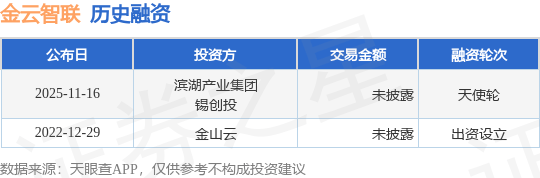
【投融资动态】金云智联天使轮融资,投资方为滨湖产业集团、锡创投等
Sou Hu Cai Jing· 2025-11-19 11:32
Group 1 - The core viewpoint of the news is the angel round financing of Wuxi Jinyun Zhiliang Technology Co., Ltd., with undisclosed financing amount and participation from Binhu Industrial Group and Xichuang Investment [1][2] - Jinyun Zhiliang was established in 2023 and is recognized as a leading AIoT-based IoT platform service provider under Kingsoft Cloud, holding over 60 invention patents [2] - The company offers comprehensive solution capabilities covering various scenarios including real estate, hotels, residential areas, parks, buildings, and offices, focusing on integrated solutions of design, technology, and ecology for enterprise clients [2]

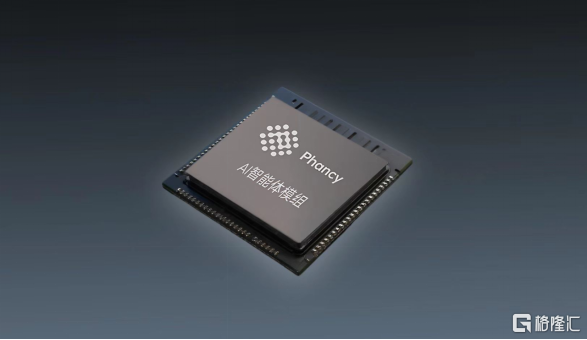
Phancy+联想深度合作五款智能手表 出货量累计突破50万台
Ge Long Hui· 2025-11-19 03:57
Core Insights - The strategic partnership between Phancy and Lenovo in the consumer electronics sector has achieved significant progress, with over 500,000 units of their jointly launched smartwatches shipped. They plan to introduce multiple new product series in the first quarter of next year [1]. Group 1: AI Capabilities - Phancy has developed a comprehensive AI interaction experience for Lenovo's smartwatches, integrating features such as natural language dialogue, real-time translation, smart activity recognition, and health data analysis. This enhances user experience across various scenarios like sports, work, and travel [3]. - The smartwatches utilize AI to learn user habits, providing precise and smooth interaction support, thereby significantly improving the product's intelligence level and user experience [3]. Group 2: Customized Operating System - Phancy has created a customized operating system for Lenovo's smartwatches, optimizing it based on scenario requirements. This OS achieves breakthroughs in smoothness, power consumption control, and third-party extension capabilities, ensuring stable operation under complex tasks and extending device battery life [4]. Group 3: Collaborative Ecosystem - Phancy has developed a dedicated application called "Lenovo Health Assistant," which facilitates efficient collaboration between the smartwatch and other smart devices like phones and tablets. This app allows users to synchronize activity data, receive instant notifications, perform firmware upgrades, and manage personalized watch faces, creating a comprehensive service ecosystem centered around the smartwatch [5]. Group 4: Integrated Hardware Solutions - Phancy provides comprehensive technical support covering the entire hardware chain, including component selection, structural design, low-power connectivity solutions, performance tuning, and reliability testing. This integration helps Lenovo efficiently transition from research and development to mass production, ensuring advantages in quality, cost, and delivery timelines [6]. Group 5: Full-Stack Technology Capability - The collaboration between Phancy and Lenovo not only represents a significant move in the AIoT field but also showcases Phancy's successful implementation of a "full-stack technology output" model. This model offers integrated support across AI capabilities, operating systems, application ecosystems, and hardware solutions, reinforcing Phancy's role as a technology enabler in the smart wearable sector [7]. - The five smartwatch models launched cover various niche markets, including sports health, business commuting, and fashion, further advancing Lenovo's strategic depth and market penetration in the smart wearable domain [8].