元宇宙

Search documents
智谱港交所上市 杭州上城如何精准落子“全球大模型第一股”?
Sou Hu Cai Jing· 2026-01-09 04:16
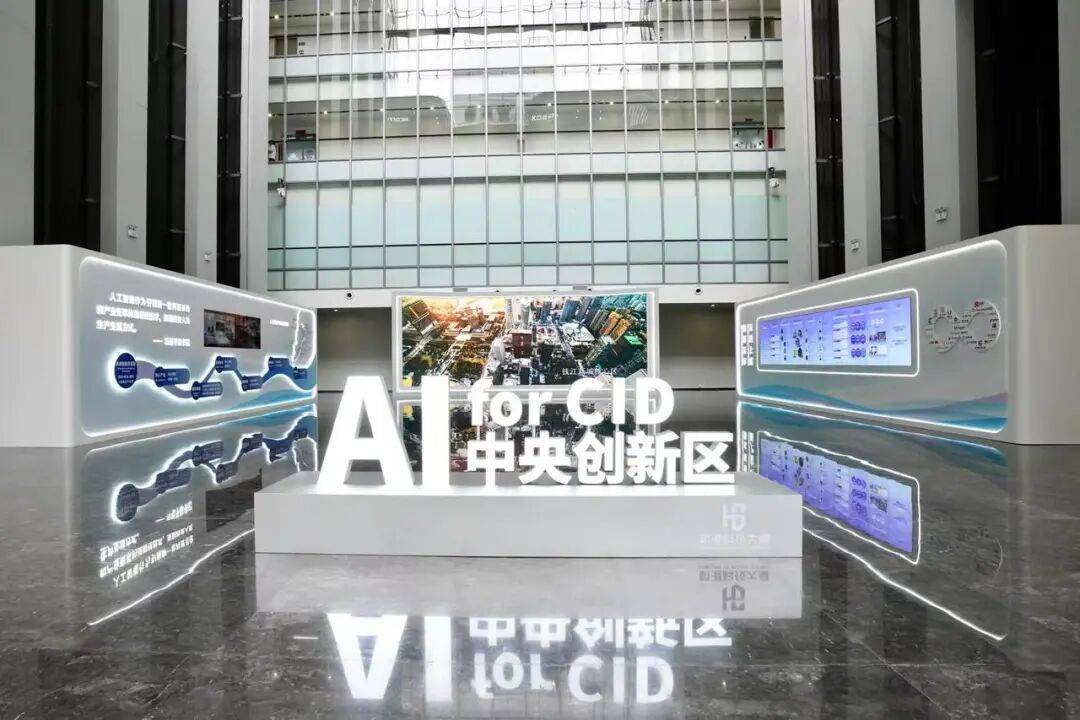
Core Viewpoint - Beijing Zhiyu Huazhang Technology Co., Ltd. (02513.HK) officially listed on the Hong Kong Stock Exchange on January 8, 2026, marking it as the world's first publicly listed company focused on General Artificial Intelligence (AGI) core business, with an opening price of HKD 120 per share and a market capitalization of HKD 52.828 billion [1] Group 1 - The investment by Shangcheng Capital in Zhiyu is not a pursuit of short-term trends but a strategic move made early in 2025, when the large model industry was still in its early stages [3] - Shangcheng Capital's investment logic is based on deep analysis, focusing on Zhiyu's leading position in the domestic and international large model development, as well as the potential cluster effect it can generate [3] - The company aims to promote large model applications in various sectors such as government, education, and cross-border e-commerce, while also building an industrial ecosystem empowerment platform [3] Group 2 - Shangcheng Capital provides a supportive environment for Zhiyu, offering growth services from initial setup to mid-development, including space, talent support, and policy alignment [4] - The collaboration with the Shangcheng District government allows Zhiyu to develop AI+government solutions, enhancing administrative efficiency and public service levels [4] - The release of the "2025 Shangcheng District Artificial Intelligence Industry Development Action Plan" provides a broader space for the integration of AI technology and government scenarios [4] Group 3 - Shangcheng Capital is focused on cultivating a complete artificial intelligence industrial ecosystem, leveraging its advantages as a state-owned capital operation platform [5] - The company has gathered nearly 30 AI enterprises, including Chaocheng Technology and Zhihan Xingtu, to promote innovation and integration within the industrial chain [5] - Shangcheng plans to invest no less than RMB 10 billion in the artificial intelligence industry over the next three years, aiming to create a distinctive AI industrial cluster [5]

什么AGI不AGI的,上市最重要
Sou Hu Cai Jing· 2026-01-09 01:14
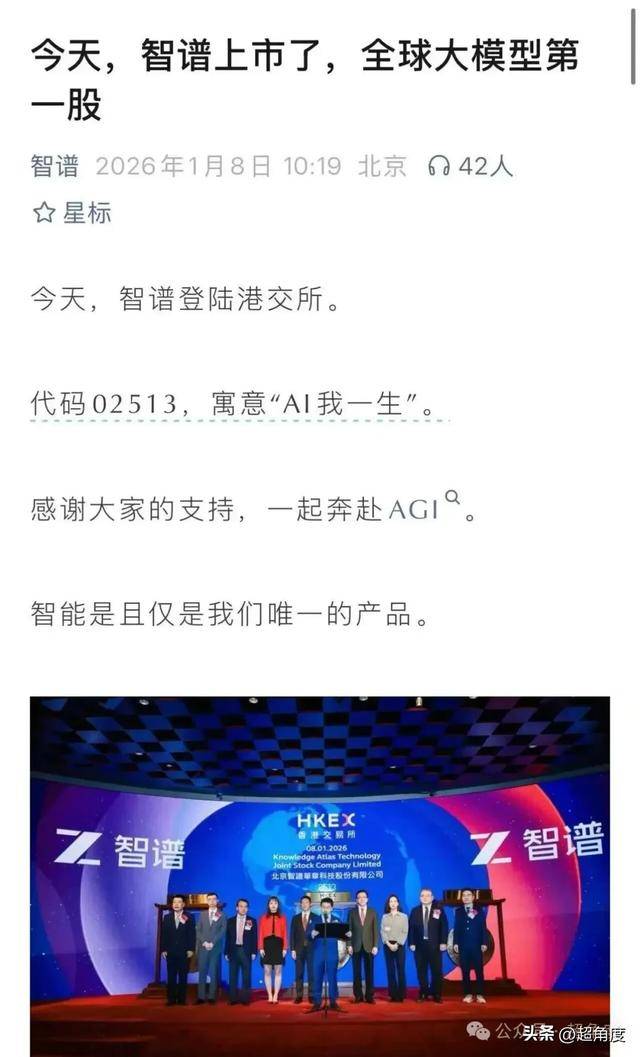
Core Viewpoint - The article discusses the recent IPO of Zhipu, marking it as the first stock in the global large model sector, while highlighting the tension between lofty AGI aspirations and the harsh realities of financial performance and market pressures [1][2][3]. Company Overview - Zhipu has officially listed on the Hong Kong Stock Exchange under the code 02513, which symbolizes "AI is my life" [4][8]. - The company reported a revenue of 312 million yuan and a loss of 2.958 billion yuan for the previous year, indicating significant financial challenges despite its ambitious goals [17]. Industry Context - The industry is experiencing a shift where the initial excitement around AGI is being tempered by financial realities, with companies like Zhipu and MiniMax acknowledging the early-stage development of AGI and the associated uncertainties [17]. - The article notes that the AGI vision, while inspiring investment and public interest, may also lead to speculative behavior and distract from tangible advancements in AI within specific verticals [16][17]. Market Sentiment - The market reaction to Zhipu's IPO has been mixed, with discussions focusing on stock performance, market capitalization, and the financial implications for investors, rather than the company's long-term vision [2][17]. - There is a growing sentiment in the industry that the focus should shift from AGI as a lofty goal to more immediate concerns of survival and customer acquisition [17].
北京30个案例入选全国“2025年元宇宙典型案例”
Xin Lang Cai Jing· 2026-01-08 10:44
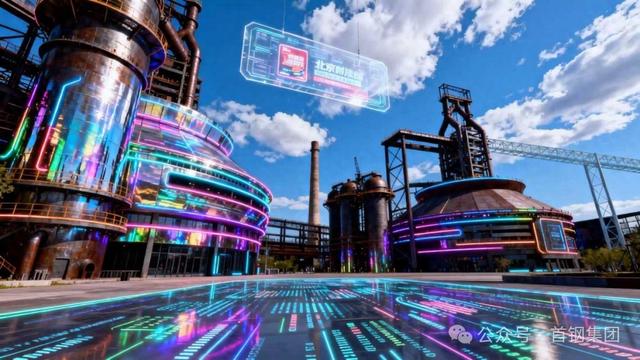
Core Insights - The Ministry of Industry and Information Technology, Ministry of Education, Ministry of Culture and Tourism, and National Radio and Television Administration jointly announced the "2025 Metaverse Typical Case" list, with 30 cases from Beijing, including Shougang Park as the only selected park case [1][3] - Shougang Park features advanced digital experiences, such as an AI digital museum and interactive installations that allow visitors to engage in the steel-making process, showcasing a blend of industrial heritage and digital technology [1][3] - The park has attracted nearly 200 metaverse-related technology companies, creating a complete industrial ecosystem with an annual growth rate of 10% and a cluster scale reaching 100 billion yuan [3][5] Digital Human Cases - Seven digital human cases were selected, including "Digital Employees" from CRRC and a smart guiding digital human from Zhongke Chuangda, demonstrating the application of digital humans in various sectors [5][6] - The smart guiding digital human at Peking University First Hospital has been operational for over a year, providing real-time assistance and consultations to patients [5] Typical Product Cases - The selected cases include two typical standard cases and 20 typical product cases, featuring innovative tools like the ONESIM digital simulation platform and Lenovo's Z-Engine 3D engine [5][8] - The "Smart Space Metaverse Transparent Earth" project aims to create a comprehensive 3D geographic information system, addressing limitations of existing platforms like Google Earth [5][8] Industry Applications - The metaverse industry in Shougang Park encompasses various sectors, including graphics engines, XR hardware, and creative content, forming a robust ecosystem [3][5] - Notable applications include immersive exhibitions and AI-driven interactive systems, enhancing user engagement and educational experiences [5][8]
广州:加快研发具有自主知识产权的操作系统、数据库、中间件、办公软件等通用基础软件
Zheng Quan Shi Bao Wang· 2026-01-08 09:23
Core Viewpoint - Guangzhou Municipal Government has issued a plan to accelerate the construction of a strong advanced manufacturing city from 2024 to 2035, focusing on developing independent software systems and enhancing product compatibility [1] Group 1: Software Development - The plan emphasizes the development of general foundational software with independent intellectual property rights, including operating systems, databases, middleware, and office software [1] - It aims to promote the establishment of new industrial software standards and achieve several landmark results in software development [1] Group 2: Industrial Software Focus - The initiative will focus on industrial general tools software such as CAD/CAM/CAE, EDA technology research and application, and common supporting technologies for industrial software [1] - There will be a push for the comprehensive application of independent innovation in industrial operating systems, middleware, industrial apps, and new database management systems [1] Group 3: Cloud Computing and Emerging Technologies - The plan includes the development of a next-generation cloud computing software system, enhancing cloud security and intelligent cloud service capabilities [1] - It supports innovations in high-performance data collection, high-capacity storage, massive information processing, artificial intelligence algorithms, toolsets, and blockchain technologies [1] - There is an emphasis on accelerating the development of new platforms related to machine learning, virtual reality, and the metaverse [1]
NFT市场崩塌!耐克(NKE.US)悄然出售数字产品子公司RTFKT
Zhi Tong Cai Jing· 2026-01-08 03:29
Core Viewpoint - Nike has confirmed the sale of its digital product subsidiary RTFKT, marking a shift in its strategy amidst the declining NFT market [1][2] Group 1: Company Actions - Nike sold RTFKT in December 2022, indicating a new chapter for the company and its community, while continuing to invest in innovative products and experiences in physical, digital, and virtual environments [1] - The acquisition of RTFKT in December 2021 was aimed at accelerating Nike's digital transformation and expanding its presence in the virtual product space, with a reported purchase price in the tens of millions of dollars [1] - In 2024, Nike signaled a reduction in NFT business investments, pausing new NFT production while maintaining some gaming and virtual collaboration projects [2] Group 2: Market Context - RTFKT, known for virtual sneakers and NFTs, saw a decline in demand and pricing power as the NFT market collapsed [2] - The NFT market's downturn led to a collective lawsuit against Nike by NFT holders, alleging that the company failed to disclose risks and violated U.S. securities regulations [2] - Other traditional companies, including Starbucks, GameStop, Budweiser, and Disney, have also faced challenges in the Web3 space due to market volatility, regulatory hurdles, and immature business models [2]

HTC 2025年营收29亿新台币,为上市以来新低
Sou Hu Cai Jing· 2026-01-08 00:49
宏达电表示,该公司正持续加快 AI 智能眼镜及可穿戴生态布局。旗下 VIVE Eagle 于 2025 年 12 月正式 进入香港地区市场,并同步扩大在台湾地区的渠道布局。 IT之家 1 月 8 日消息,宏达电(HTC)宣布公司 2025 年 12 月营收为 2.92 亿元新台币(现汇率约合 6473.6 万元人民币),环比下降 2.1%,同比下降 26.2%;全年累计营收约 29 亿元新台币(IT之家注: 现汇率约合 6.43 亿元人民币),同比下滑 5.8%,创公司上市以来新低。 此外,HTC 指出,目前自家元宇宙平台 VIVERSE 的月活跃用户数已突破百万,正持续成长为全球创作 者的重要平台之一。 ...
竞速未来产业 各地如何抢占新增长极
Xin Lang Cai Jing· 2026-01-07 16:09
Group 1 - The core viewpoint of the articles emphasizes the strategic importance of future industries in the "14th Five-Year Plan" across various provinces, highlighting the focus on emerging sectors such as artificial intelligence, low-altitude economy, and commercial aerospace as key growth areas for regional economic development [1][2][6] - Provinces are leveraging their unique resources and industrial foundations to create differentiated development paths, with examples including Guangdong's focus on "AI + robotics" and Hainan's integration of agriculture, deep-sea, and aerospace [1][3] - The integration of technology and industry is a common theme, with provinces like Beijing aiming to cultivate a leading AI industry ecosystem and Jiangsu focusing on deepening integration within the Yangtze River Delta's aerospace industry cluster [2][4] Group 2 - The articles highlight the importance of regional collaboration, such as the Beijing-Tianjin-Hebei model, which optimizes resource allocation through a cooperative framework, and the Guangdong-Hong Kong-Macau Greater Bay Area, which fosters differentiated policy matrices to support industrial development [5][6] - The need for systemic innovation in mechanisms to support future industries is emphasized, including talent cultivation, technological breakthroughs, and ecosystem development, as well as the importance of capital support from various sources to drive growth in these sectors [7][8] - The articles suggest that achieving successful outcomes in future industries requires not only market-driven initiatives but also precise policy support to facilitate the transformation of research results into marketable products [8]
米哈游,投出两个IPO
盐财经· 2026-01-07 09:05
Core Viewpoint - MiniMax is set to IPO on January 9, with miHoYo as an early investor holding 7.34% of shares, showcasing its strategic investment in AI technology [4][9]. - Suplay, another company backed by miHoYo, has also submitted its IPO application, with miHoYo holding 11.86% [4][10]. Group 1: Investment Strategy - miHoYo has been actively investing in various companies since 2018, leveraging its cash flow from successful games to explore new technologies and industries [5][13]. - The company has made significant investments in AI and metaverse technologies, aiming to reduce costs and enhance its gaming products through partnerships with firms like MiniMax [9][11]. - miHoYo's investment in Suplay aligns with its strategy to expand its IP derivative product offerings and reach younger consumer demographics [11][12]. Group 2: Company Background and Growth - miHoYo was founded in 2011 by three individuals, starting with a small loan and facing early financial challenges before achieving significant success with its games [13][14]. - The company has evolved into a prominent player in the VC space, making numerous investments across various sectors, including cutting-edge technologies like brain-computer interfaces [15][17]. - miHoYo's investment philosophy is characterized by a willingness to support young, innovative founders who share a vision of technological advancement [17][18]. Group 3: Future Prospects - The company is focusing on enhancing its AI capabilities, with its self-developed model reportedly improving development efficiency by over 30% [19]. - miHoYo's leadership transition, with Liu Wei taking over as chairman, indicates a strategic shift towards further technological research and development [18][19]. - The competitive landscape emphasizes the importance of attracting top talent in the AI sector, which is crucial for future growth and innovation [19].
现金流才是王道,2025文娱资本生存实录①
3 6 Ke· 2026-01-07 00:49
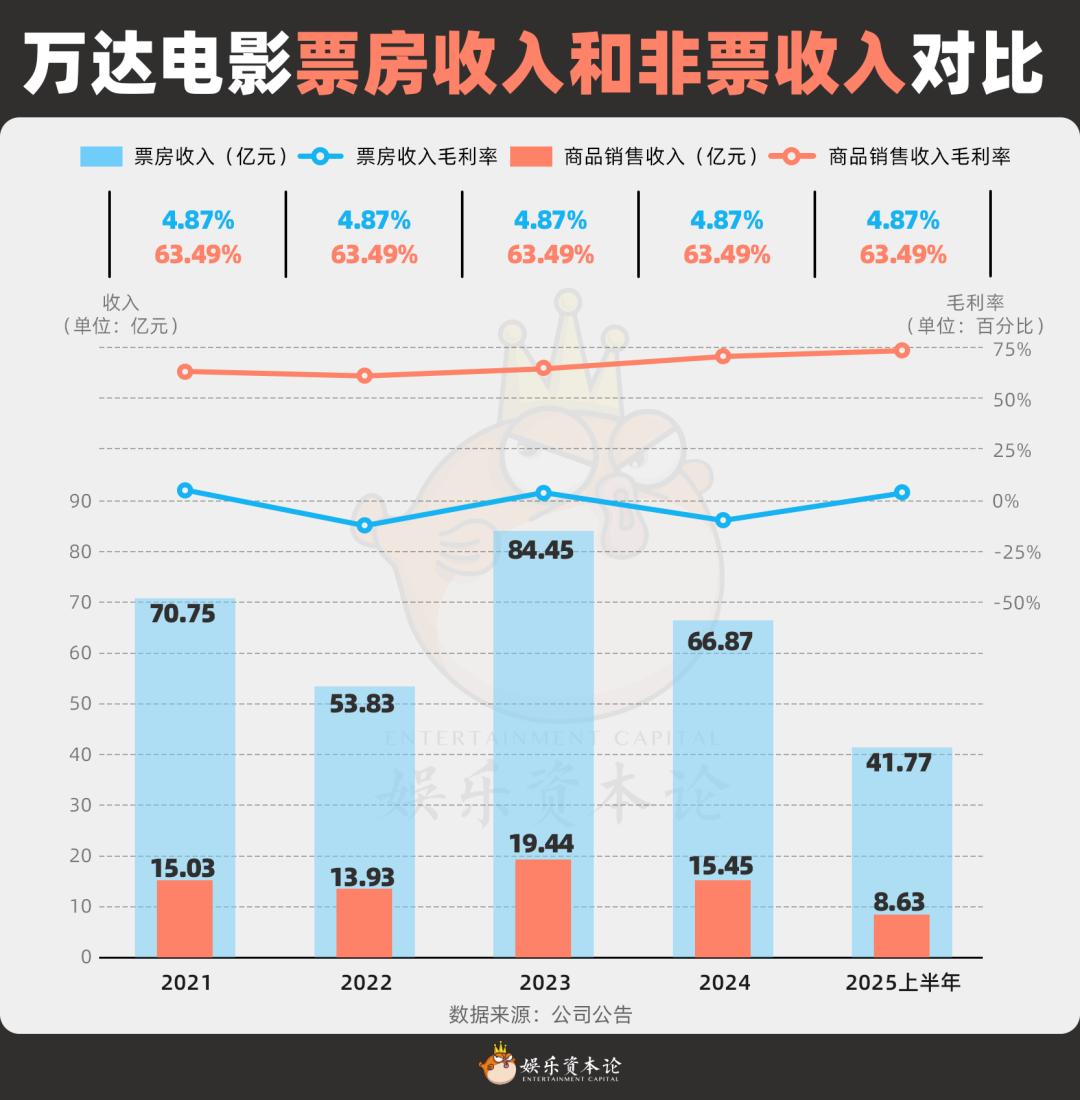
Core Viewpoint - The capital operations of the entertainment industry in 2025 can be summarized as "self-mutilation for survival," characterized by strategic expansion, tactical contraction, and overall defense. Expansion - In 2025, the capital expansion of listed companies is categorized into three types: transformation towards new hotspots, extension into other industries, and internal resource integration, all aimed at finding new narratives [1][2]. - The current "AI wave" is seen as a new narrative for the entertainment industry, with companies like Light Media and Huayi Brothers investing in AI-related technologies and partnerships [3][4]. - Companies are also extending into other industries, such as Wanda Film's investment in Guangzhou Fangtu Technology, which aligns with its strategy to increase non-ticket revenue [4][5]. Resource Integration - Resource integration is another common strategy, with companies like Shanghai Film acquiring stakes in other firms to leverage core assets and enhance operational efficiency [9]. - The entertainment industry is witnessing significant mergers and acquisitions, with companies like Baida Qiancheng acquiring digital marketing firms to explore new business avenues [5][9]. Contraction - The entertainment industry is facing significant contraction pressures, with many companies engaging in asset sales to survive, as evidenced by the reduction in shareholdings and capital [11][16]. - In 2025, 21 out of 45 listed entertainment companies experienced share reductions, indicating a growing trend of divestment in the industry [13][16]. - Companies are increasingly prioritizing cash flow management, with many opting for safer investments like large deposits and financial products instead of high-risk projects [21][22]. Cash Management - Cash flow is central to the capital operations of the entertainment industry, with companies like Baida Qiancheng and Huayi Brothers citing cash pressure as a reason for divesting assets [21][20]. - The trend of accumulating cash reserves is seen as a signal of financial safety, replacing growth narratives with a focus on stability [24][25]. - The industry is at a critical juncture, potentially shifting from a growth-driven model to one focused on maintaining cash flow for survival [25].



米哈游,投出两个IPO
36氪· 2026-01-06 09:37
Core Viewpoint - The article discusses the recent IPO activities of MiniMax and Suplay, both of which have significant investments from miHoYo, highlighting the company's strategic positioning in the tech and gaming sectors [4][5][12]. Group 1: MiniMax IPO - MiniMax is set to officially IPO on January 9, with miHoYo being an angel investor holding a 7.34% stake prior to the listing [4][10]. - miHoYo's investment in MiniMax aligns with its strategy to integrate advanced AI technologies into its gaming products, enhancing game AI capabilities [10][11]. - miHoYo has also become a client of MiniMax, utilizing its models for various aspects of game development, including character behavior control and NPC dialogue [11]. Group 2: Suplay IPO - Suplay, focusing on trendy consumer products for Generation Z, submitted its IPO application on New Year's Day, with miHoYo as the largest external investor holding an 11.86% stake [5][13]. - miHoYo's investment in Suplay supports its expansion into IP derivative products, helping to reduce supply chain costs and reach a broader consumer base [12]. Group 3: Investment Strategy - miHoYo has been actively investing in various sectors since around 2018, transitioning from gaming-focused investments to include cutting-edge technologies [18][20]. - The company has invested in projects like brain-computer interfaces and private space technology, indicating a willingness to engage with high-risk, high-reward ventures [19][20]. - miHoYo's investment philosophy emphasizes supporting young, innovative founders who share a vision of technological advancement [22]. Group 4: Future Directions - The leadership transition at miHoYo, with Liu Wei taking over as chairman, signals a shift towards prioritizing research in frontier technologies and new project development [23]. - The company is also focusing on developing its own AI models to enhance game production efficiency, aiming for a 30% improvement in development processes [24][25]. - The competition for top talent in AI is highlighted as a critical factor for success in the tech industry, reflecting broader trends in global technology development [25][26].