
全球发展倡议

Search documents
为“亚太引擎”注入中国动力
Xin Hua She· 2025-10-28 07:05
Core Viewpoint - The upcoming APEC informal leaders' meeting in South Korea is set against a backdrop of sluggish global economic growth and rising protectionism, highlighting the region's desire for an open world economy and shared prosperity [1] Group 1: Economic Cooperation - China is a steadfast advocate for regional open cooperation, with trade relations with APEC economies becoming increasingly tight, as evidenced by a 2% year-on-year increase in imports and exports to APEC economies, reaching 19.41 trillion yuan, which accounts for 57.8% of China's total trade [2] - China's commitment to high-quality implementation of the Regional Comprehensive Economic Partnership (RCEP) and its progress in joining the Comprehensive and Progressive Agreement for Trans-Pacific Partnership (CPTPP) and the Digital Economy Partnership Agreement (DEPA) demonstrate its determination to build an open APEC economy [2] Group 2: Innovation and Development - The current wave of technological revolution and industrial transformation presents opportunities for digital and green development, which are crucial for shaping new advantages in the Asia-Pacific region [3] - China's advancements in mobile payment technology and renewable energy projects in various countries illustrate its role in enhancing productivity and promoting sustainable development in the region [3] Group 3: Inclusive Growth - The uneven development in the Asia-Pacific region necessitates a focus on inclusive growth, with China advocating for the use of the APEC platform to strengthen economic and technical cooperation, particularly for developing economies and vulnerable groups [4] - China's global development initiative has yielded results in the Asia-Pacific, with specific projects aimed at poverty alleviation and public health cooperation, reflecting its commitment to shared development [4] - The 14th Five-Year Plan outlines China's future development blueprint, emphasizing its potential to provide new opportunities for the Asia-Pacific and global development through sustained modernization and high-level openness [4]

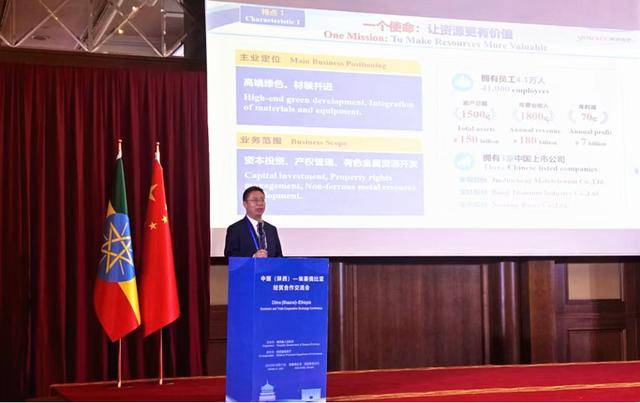
陕西有色金属集团随省经贸代表团出访 埃塞俄比亚、赞比亚两国
Sou Hu Cai Jing· 2025-10-28 04:53
Core Insights - The Shaanxi Provincial Department of Commerce is actively seeking to expand international markets and build cooperation platforms through a trade delegation visit to Ethiopia and Zambia from October 19 to 25 [1] Group 1: Delegation Activities - The delegation, led by Vice Director Fan Wanchun, included leaders from Shaanxi Nonferrous Metals Group and other companies, engaging in trade discussions and seeking business opportunities [1] - Meetings were held with relevant departments and local chambers of commerce in both countries, including the Ministry of Trade and Investment [1] - The delegation participated in the China (Shaanxi) - Ethiopia and Zambia Economic and Trade Cooperation Exchange Conferences, conducting a series of business exchanges [1][5] Group 2: Company Presentations - Wu Qunying, Chairman of Shaanxi Nonferrous Metals Group, presented the company's advantages, emphasizing its comprehensive industrial chain, diverse product categories, and deep historical foundation [5] - The company aims to position itself as a "modern production service provider," "specialized equipment manufacturer," "high-tech materials producer," and "green mining developer," expressing a vision for cooperation in various fields [5] Group 3: Focus Areas for Cooperation - Discussions focused on mineral resource exploration, mining development, engineering design and construction, and import-export trade [5] - The delegation conducted site visits to companies such as China Communications Construction Group's Ethiopia branch and Shaanxi Automobile's Ethiopia sales branch, furthering cooperation discussions [5][6] - The visit aligns with the company's "Belt and Road" initiative and aims to establish a foundation for overseas mineral resource development and utilization [6]

新华时评:为“亚太引擎”注入中国动力
Xin Hua She· 2025-10-28 03:16
Core Viewpoint - The upcoming APEC informal leaders' meeting in South Korea is set against a backdrop of global economic challenges, emphasizing the need for an open world economy and shared prosperity in the Asia-Pacific region [1] Group 1: Economic Cooperation - China is a steadfast advocate for regional open cooperation, with trade relations with other APEC economies tightening, as evidenced by a 2% year-on-year increase in imports and exports, reaching 19.41 trillion yuan, which constitutes 57.8% of China's total trade [2] - The implementation of the Regional Comprehensive Economic Partnership (RCEP) and the completion of negotiations for the China-ASEAN Free Trade Area 3.0 demonstrate China's commitment to building an open Asia-Pacific economy [2] Group 2: Innovation and Development - The rapid advancement of a new technological revolution and industrial transformation presents opportunities for digital and green development, which are crucial for shaping new advantages in the Asia-Pacific region [3] - Collaborative projects in Malaysia, Thailand, and Chile highlight China's role in enhancing local economies through technology, such as mobile payment systems and renewable energy initiatives [3] Group 3: Inclusive Growth - The uneven development in the Asia-Pacific necessitates a focus on inclusive growth, with China advocating for economic and technical cooperation to support developing economies and vulnerable groups [4] - China's global development initiative is yielding results in the region, with specific projects aimed at poverty alleviation and public health cooperation [4] - The 14th Five-Year Plan outlines China's commitment to modernization and high-level opening up, promising to unleash greater market potential and cooperation opportunities for the Asia-Pacific and global development [4]
新华时评丨为“亚太引擎”注入中国动力
Xin Hua She· 2025-10-28 01:24
Group 1: Core Perspectives - The upcoming APEC informal leaders' meeting in South Korea is set against a backdrop of sluggish global economic growth and rising protectionism, highlighting the region's desire for an open world economy and shared prosperity [1] - China is committed to promoting regional integration and connectivity, leveraging technological innovation to enhance development momentum, and fostering inclusive growth to inject new energy into the Asia-Pacific economy [1][2] Group 2: Economic Cooperation - Open cooperation is deemed essential for the Asia-Pacific region, with China being a key trade partner and a vital node in regional supply chains, as evidenced by a 2% year-on-year increase in China's trade with APEC economies, reaching 19.41 trillion yuan, which constitutes 57.8% of China's total trade [2] - China's proactive engagement in regional trade agreements, such as the RCEP and the completion of the China-ASEAN Free Trade Area 3.0 negotiations, underscores its commitment to building an open Asia-Pacific economy [2] Group 3: Innovation and Development - The current wave of technological revolution and industrial transformation presents opportunities for digital and green development, with China focusing on enhancing productivity through collaboration in cutting-edge fields like AI and healthcare [3] - Successful examples of Chinese technology facilitating local economies, such as mobile payment systems in Malaysia and renewable energy projects in Thailand, illustrate the shared innovation opportunities and sustainable development goals [3] Group 4: Inclusive Growth - The uneven development in the Asia-Pacific necessitates a focus on inclusive growth, with China advocating for economic and technical cooperation to support developing economies and marginalized groups [4] - China's global development initiative is yielding results in the region through various projects aimed at poverty alleviation and public health cooperation, reflecting its commitment to a win-win cooperation model [4] - The recent approval of China's 15th Five-Year Plan outlines a roadmap for future development, promising to unleash greater market potential and cooperation opportunities for the Asia-Pacific and global development [4]
“甘瓜抱苦蒂,美枣生荆棘”(思想纵横)
Ren Min Ri Bao· 2025-10-27 22:38
Core Viewpoint - The article emphasizes the importance of recognizing both the advantages and disadvantages of economic globalization, advocating for a balanced approach to harness its benefits while mitigating its risks [1][2][3]. Group 1: Economic Globalization - Economic globalization is an inevitable historical trend driven by the development of productive forces and technological progress, which cannot be altered by any individual or nation [1]. - The experience of China shows that embracing economic globalization has led to significant achievements, while isolationist policies have resulted in missed opportunities [1][2]. - The article argues that the long-term benefits of economic globalization outweigh its drawbacks, and it is essential to adopt a systematic approach to address its challenges [2]. Group 2: Global Governance Initiatives - The article outlines China's four global initiatives—development, security, civilization, and governance—as important contributions to global stability and cooperation [4]. - These initiatives aim to address the increasing deficits in peace, development, security, and governance, countering unilateralism and protectionism [3][4]. - By promoting a community with a shared future for mankind, these initiatives seek to enhance the vitality, inclusiveness, and sustainability of economic globalization [4].
开创携手前行、共同发展新局面——国际社会热议“十五五”发展蓝图的世界意义
Xin Hua She· 2025-10-27 13:00
Core Insights - The Fourth Plenary Session of the 20th Central Committee of the Communist Party of China concluded successfully, discussing the work report by General Secretary Xi Jinping and approving the "Suggestions on Formulating the 15th Five-Year Plan for National Economic and Social Development" [1][2] Group 1: Strategic Importance - The "15th Five-Year Plan" is seen as a significant blueprint for China's economic and social development over the next five years, reflecting a commitment to open cooperation and mutual benefit [1][2] - The plan emphasizes the importance of high-quality development, comprehensive deepening of reforms, and the combination of effective markets and proactive government [2][3] Group 2: Leadership and Governance - Xi Jinping's leadership in drafting the plan is highlighted as a demonstration of the Communist Party's wisdom and capability in governance, ensuring alignment with long-term strategic goals [2][3] - The plan's principles include prioritizing the people, high-quality development, and maintaining a focus on stability and gradual progress [3][7] Group 3: Economic Transformation - The plan prioritizes building a modern industrial system and strengthening the foundation of the real economy, indicating a shift from being the "world's factory" to a leader in smart and green manufacturing [4][5] - Emphasis is placed on accelerating technological self-reliance and innovation, which is crucial for enhancing production efficiency and fostering new industries [5][6] Group 4: Global Implications - The plan is expected to provide stability and predictability for global markets, making China a reliable partner for trade and investment [5][8] - China's experience with five-year planning is viewed as a valuable governance model for other developing countries, showcasing the importance of clear strategic vision and execution [6][7][8]
王毅出席蓝厅论坛就落实全球治理倡议发表讲话
Xin Hua She· 2025-10-27 11:00
Core Points - The 23rd Blue Hall Forum was held on October 27, with a speech by Wang Yi, emphasizing the importance of the Global Governance Initiative proposed by President Xi Jinping [1] - The initiative has received clear support from over 140 countries and international organizations, highlighting its alignment with global needs and aspirations [1] - The initiative aims to gather united efforts, uphold multilateralism, and pursue a fair future, while addressing urgent global challenges and improving governance frameworks [1] Group 1 - The Global Governance Initiative is presented as a significant public good from China, contributing stability and certainty to a turbulent world [1] - Wang Yi stressed the need for countries to defend the UN Charter and international relations principles, and to enhance global governance effectiveness [1] - The initiative seeks to respond to the demands of the Global South and to leverage the roles of diverse stakeholders in global governance [1] Group 2 - The forum was organized by the China Public Diplomacy Association, indicating a focus on enhancing China's diplomatic engagement and public diplomacy efforts [2]
王毅:全球治理倡议契合世界所需,顺应人心所向
Xin Jing Bao· 2025-10-27 06:17
Core Viewpoint - The global governance initiative proposed by China aims to reform and improve global governance, rooted in the principles of the UN Charter and reflecting China's diplomatic traditions, emphasizing shared destiny and cooperation [1] Group 1: Global Governance Initiative - The initiative is seen as an innovative and elevated understanding of global governance rules, moving beyond traditional international relations theories [1] - It has garnered explicit support from over 140 countries and international organizations, indicating its alignment with global needs and public sentiment [1] Group 2: Stability and Unity - The initiative provides stability and certainty in a world facing turmoil, advocating for unity at a time of global division [1] - It emphasizes shared governance rules rather than monopolistic approaches, aiming to address global challenges and defend multilateralism [1]
特稿|在宽广的亚太铺设发展通途——推动区域共同繁荣的中国实践
Xin Hua She· 2025-10-26 14:12
Group 1 - The Asia-Pacific region is a significant engine for global economic growth, and APEC serves as the most important economic cooperation mechanism in the region [1][3] - China's trade with APEC economies increased by 2% year-on-year in the first three quarters of this year, reaching 19.41 trillion yuan, accounting for 57.8% of China's total trade [3][5] - The opening of the smart green port in Peru has significantly enhanced trade between China and Latin America, exemplifying the benefits of open cooperation in the Asia-Pacific region [2][5] Group 2 - China is recognized as one of the fastest-growing economies in terms of innovation, with its global innovation index ranking rising from 34th in 2012 to 10th in 2025 [5] - The 22nd China-ASEAN Expo showcased 62 projects in advanced technologies, indicating a shift from product trade to collaborative innovation between China and ASEAN [5][6] - China's initiatives in global governance, including the Global Development Initiative, aim to enhance the representation and voice of developing countries in international economic rules [8][9]
李强同新加坡总理会谈
Yang Shi Wang· 2025-10-26 12:06
Core Points - The meeting between Chinese Premier Li Qiang and Singaporean Minister of Finance Lawrence Wong emphasized the strategic direction for the development of China-Singapore relations, following a previous meeting between President Xi Jinping and the Singaporean Prime Minister in June [1] - China expressed its willingness to enhance cooperation in various fields, including digital economy, green economy, artificial intelligence, new energy, and biomedicine, while also focusing on key projects like the Suzhou Industrial Park and Tianjin Eco-City [1] - Singapore reaffirmed its commitment to the One China principle and expressed support for Xi Jinping's global development initiatives, emphasizing the importance of maintaining free trade and multilateralism [2] Cooperation Initiatives - Both countries signed multiple cooperation documents in areas such as digital economy, green development, and information communication, indicating a commitment to practical collaboration [3]