
脑机接口

Search documents
机构密集调研 脑机接口赛道升温
Zhong Guo Zheng Quan Bao· 2026-02-26 20:28
Core Insights - The pharmaceutical and biotechnology sector is experiencing increased institutional interest, particularly in brain-computer interface (BCI) stocks, driven by advancements in technology and commercialization efforts [1][2][3] Group 1: Brain-Computer Interface (BCI) Stocks - BCI stocks such as Xiangyu Medical, Aipeng Medical, and Meihao Medical have attracted significant institutional attention, with Xiangyu Medical receiving 208 institutional inquiries, Aipeng Medical 177, and Meihao Medical 125 [1] - Xiangyu Medical plans to upgrade 27 core products by mid-2026 and aims to launch nearly 100 BCI products by the end of 2026, focusing on multi-modal and multi-paradigm applications [2] - Aipeng Medical emphasizes the rapid growth of the BCI industry, particularly in non-invasive applications, and is prioritizing commercialization strategies based on existing technologies and channels [2] - Meihao Medical aims to be a key supplier in the BCI field, enhancing its competitive edge in invasive BCI implants through increased R&D investment and collaboration with clients [2][3] Group 2: Globalization of Pharmaceutical Companies - Domestic pharmaceutical companies are focusing on global strategies, with an emphasis on the commercialization of innovative drugs abroad [4][5] - MediXis has established a 2,000 square meter R&D office in Boston to support its global strategy, with overseas revenue expected to account for approximately 47% of total income by 2025 [4] - Huayuan Pharmaceutical has set up multiple business and R&D centers globally, with overseas revenue reaching 43% of total income in the first half of 2025 [4][5] - The "innovation + internationalization" strategy remains a core focus for the sector, with increasing participation of Chinese companies in global pharmaceutical collaborations [6]


“发疯”的小鼠如何治“心病”
Xin Lang Cai Jing· 2026-02-26 14:31
Group 1 - The article discusses a groundbreaking research project at the Hefei Fourth People's Hospital focusing on a new invasive brain-machine interface aimed at treating mental illnesses such as schizophrenia and depression [1][2] - The research involves creating a model of hyperactive mice that react to specific visual stimuli, revealing abnormal neural responses in the brain under depressive states [1] - The World Health Organization reports that nearly 1 billion people globally suffer from mental health disorders, highlighting the increasing attention on mental illnesses in China [1] Group 2 - The current domestic market primarily features non-invasive brain-machine interfaces, which struggle to effectively record deep brain signals, with a success rate of less than 50% for capturing neuron signals [2] - A government procurement innovation pilot program launched in October 2024 allows for the transition from purchasing ready-made products to funding research and development, facilitating the practical application of new technologies [2] - The project aims to replicate successful experiences in various scenarios, ultimately establishing intelligent digital wards to benefit more patients from advanced technologies [2]
医药生物行业周报:产业链体系持续完善、板块业绩回暖在望,关注中药高质量发展
Shanghai Securities· 2026-02-26 13:30
Investment Rating - The industry investment rating is "Hold" for the pharmaceutical and biotechnology sector [2]. Core Insights - The report highlights the approval of Novartis' siRNA lipid-lowering drug for new indications in China, emphasizing the focus on the PCSK9 and small nucleic acid sectors [3]. - Mergers and acquisitions, along with licensing collaborations, remain active, accelerating resource integration in the innovative drug field [3]. - The development of brain-computer interfaces is entering a fast track, with the industrialization process accelerating [3]. - The Chinese herbal medicine industry is expected to see high-quality development, supported by a recently released implementation plan aimed at optimizing the structure and enhancing the resilience of the supply chain [5]. Summary by Relevant Sections Industry Development - The Ministry of Industry and Information Technology and seven other departments released the "Implementation Plan for High-Quality Development of Traditional Chinese Medicine Industry (2026-2030)," which aims to optimize the structure and upgrade the traditional Chinese medicine industry [5]. - By 2030, a collaborative development system for the entire traditional Chinese medicine industry chain is expected to take shape, with significant improvements in quality and efficiency [5]. - The plan includes six key tasks with 15 specific actions, focusing on enhancing raw material quality, promoting collaborative innovation, and modernizing the industry [5]. Performance Recovery - The report indicates a performance recovery trend in the traditional Chinese medicine sector, with companies like Te Yi Pharmaceutical expected to achieve a net profit of 70 million to 90 million yuan in 2025, marking a year-on-year increase of 241.55% to 339.13% [5]. - Yiling Pharmaceutical forecasts a turnaround with a projected net profit of 1.2 billion to 1.3 billion yuan, compared to a loss of 725 million yuan in 2024 [5]. - Other companies, such as Zhongsheng Pharmaceutical, are also expected to report significant profit increases, indicating a positive outlook for the sector [5]. Investment Recommendations - The report suggests that the traditional Chinese medicine industry is likely to continue its transformation and upgrade, with improved resilience and stability in the supply chain [6]. - It recommends focusing on companies such as Zhongsheng Pharmaceutical, Te Yi Pharmaceutical, Yiling Pharmaceutical, and China Resources Sanjiu [6].
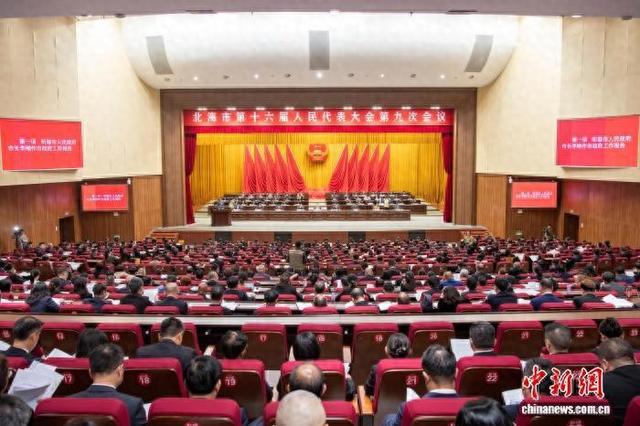
广西北海聚焦新赛道 培育壮大新兴产业和未来产业
Zhong Guo Xin Wen Wang· 2026-02-26 10:36
Core Insights - The government of Beihai is focusing on innovation-driven development, particularly in artificial intelligence and low-altitude economy sectors, to foster emerging and future industries [1][3] Group 1: Artificial Intelligence Developments - Beihai has accelerated the implementation of artificial intelligence, with 14 new AI projects introduced and multiple applications and models successfully deployed [2] - The city hosted the "China-ASEAN AI + Cultural Tourism Innovation Application Competition" and signed several cooperation memorandums with countries like Cambodia and Vietnam [2] - Beihai aims to develop AI hardware and key components, leveraging its existing electronic information and materials industries [3] Group 2: Low-Altitude Economy Initiatives - The city has initiated the construction of seven drone take-off and landing points and opened 37 low-altitude scenarios for logistics, industrial inspections, and emergency services [2] - Beihai has established the first city-level low-altitude flight service center in Guangxi and is developing a low-altitude flight service guarantee system [2][3] - The city plans to enhance its low-altitude economy by launching products such as low-altitude sightseeing and drone delivery services [5]

港通医疗跌0.85%,成交额3335.88万元,后市是否有机会?
Xin Lang Cai Jing· 2026-02-26 08:20
Core Viewpoint - The company, Sichuan Portong Medical Equipment Group Co., Ltd., specializes in the research, design, manufacturing, integration, and operation services of medical gas equipment and clean equipment systems, with a focus on the medical industry and advanced technologies like IoT [3][7]. Business Overview - The main business segments of the company include medical gas equipment and systems (37.30% of revenue), clean equipment and systems (55.69%), sales of medical devices and other products (4.06%), and operation services (2.81%) [8]. - The company has developed the Portong Cloud Monitoring Platform, which utilizes advanced IoT technology to provide real-time monitoring solutions for medical equipment in hospitals [2]. Market Position - The company has been recognized as a "specialized, refined, distinctive, and innovative" small giant enterprise, indicating its strong market position and innovation capabilities [3]. - As of February 13, the company had 8,585 shareholders, a decrease of 3.74% from the previous period, with an average of 7,637 circulating shares per person, an increase of 3.89% [8]. Financial Performance - For the period from January to September 2025, the company reported a revenue of 344 million yuan, a year-on-year decrease of 30.06%, and a net profit attributable to shareholders of -10.21 million yuan, a decrease of 150.92% [8]. - The company has distributed a total of 48.9973 million yuan in dividends since its A-share listing [9]. Stock Performance - On February 26, the company's stock price fell by 0.85%, with a trading volume of 33.3588 million yuan and a turnover rate of 1.98%, resulting in a total market capitalization of 2.555 billion yuan [1]. - The average trading cost of the stock is 24.84 yuan, with the stock currently near a resistance level of 26.16 yuan, indicating potential for upward movement if this level is surpassed [6].
收盘丨创业板指跌0.29%,CPO、PCB板块涨幅居前
Di Yi Cai Jing Zi Xun· 2026-02-26 07:21
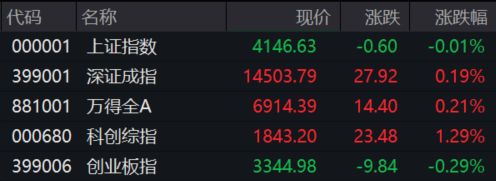
Market Overview - The A-share market showed mixed performance on February 26, with the Shanghai Composite Index down by 0.01% to 4146.63, while the Shenzhen Component Index rose by 0.19% to 14503.79, and the ChiNext Index fell by 0.29% to 3344.98 [1][2]. Sector Performance - Wind power equipment, CPO, PCB, and semiconductor sectors saw significant gains, while the film and television, insurance, and real estate sectors experienced declines [2]. - The CPO sector had notable performers, with stocks like Mingyang Circuit, Juchang Optoelectronics, and Jieputo reaching their daily limit up [2][3]. Notable Stocks - Top gainers included: - Mingyang Circuit (+20.00% to 35.16) - Juchang Optoelectronics (+20.00% to 9.30) - Jieputo (+20.00% to 242.46) [3]. - The film and television sector faced significant losses, with Bona Film Group dropping by 9.96% to 9.31 and Hengdian Film City down by 6.90% to 26.32 [4]. Trading Volume - The total trading volume in the Shanghai and Shenzhen markets reached 2.54 trillion yuan, an increase of 758 billion yuan compared to the previous trading day, with over 2800 stocks declining [4]. Capital Flow - Main capital inflows were observed in the electronics, communications, and machinery sectors, while outflows were noted in non-ferrous metals, media, and non-bank financial sectors [6]. - Specific stocks with net inflows included Huadian Electric (42.09 billion yuan), Runze Shares (33.37 billion yuan), and Shenghong Technology (32.05 billion yuan) [6]. Institutional Insights - Citic Securities indicated that Zimbabwe's suspension of lithium ore exports could lead to a significant rise in the lithium sector [7]. - Zhongtai Securities suggested continued attention to AI healthcare and brain-computer interface themes for potential investment opportunities [7]. - Huatai Securities noted that the U.S. designation of phosphorus-based agricultural resources as strategic resources could have far-reaching impacts [7].

AI医疗加速渗透,医疗创新ETF(516820)持续获资金关注
Sou Hu Cai Jing· 2026-02-26 06:15
Core Insights - The China Securities Medicine and Medical Device Innovation Index (931484) shows mixed performance among its constituent stocks, with New and Achieve leading the gains at 3.63% [1] - The Medical Innovation ETF (516820) has seen a net inflow of 12.6971 million yuan over the past three days, with a peak single-day inflow of 6.1732 million yuan [1] - The current phase of brain-computer interface technology is described as an explosive period, with multiple countries, including China, accelerating their strategic positioning in global brain science [1] - AI is transitioning from a supportive role to becoming a core driver of value reconstruction and efficiency revolution in the medical industry, impacting various sectors such as medical imaging and drug development [1] Industry Overview - The Medical Innovation ETF closely tracks the China Securities Medicine and Medical Device Innovation Index, which selects 30 profitable and growth-oriented companies in the pharmaceutical and medical device sectors [2] - As of January 30, 2026, the top ten weighted stocks in the index include WuXi AppTec, Mindray, and Hengrui Medicine, collectively accounting for 63.9% of the index [2]




习近平总书记关切事 | 经济大省勇挑大梁
Xin Hua She· 2026-02-26 06:01
Group 1 - Economic provinces are taking on significant responsibilities, contributing over 60% of the national GDP while occupying nearly 20% of the country's area [1] - Jiangsu has established joint innovation centers with hundreds of leading enterprises, successfully addressing nearly 100 technical demands in the past year [2] - High-tech manufacturing in provinces like Jiangsu, Zhejiang, and Sichuan has seen double-digit growth, with traditional industries being upgraded and new technologies emerging [3] Group 2 - Guangdong has optimized business approval processes, achieving the fastest processing times for individual business licenses in the country [4][5] - Economic provinces are leading deep reforms and high-level openness, with Guangdong's reforms serving as a model for the nation [6][7] - By 2025, major economic provinces are expected to achieve over 34 trillion yuan in total import and export volume, accounting for more than 75% of the national total [7] Group 3 - Ningbo Zhoushan Port has become a key hub for national development strategies, enhancing its capacity and connectivity [8] - Economic provinces are actively integrating into regional development strategies, with the Yangtze River Delta region generating over 34.6 trillion yuan in economic output [9][10] - Economic provinces are focusing on common prosperity, with Henan's rural income growth outpacing urban areas, showcasing a commitment to equitable development [11][12] Group 4 - Economic provinces are making significant strides in improving living standards, with Zhejiang's per capita disposable income surpassing 70,000 yuan for the first time [12] - A series of new initiatives in provinces like Shandong and Fujian are enhancing healthcare and employment, contributing to national stability [12] - Economic provinces are expected to continue leading in promoting common prosperity, with income disparities between urban and rural areas narrowing [12]
午评:深成指探底回升涨0.28% 算力硬件股集体走强
Xin Hua Cai Jing· 2026-02-26 04:18
Market Overview - A-shares showed mixed performance on February 26, with the Shanghai Composite Index slightly down, the Shenzhen Component Index rebounding, and the ChiNext Index showing weaker performance. The Shanghai and Shenzhen markets had a half-day trading volume of 1.64 trillion yuan, an increase of 117.3 billion yuan compared to the previous trading day [1] Sector Performance - Strong performance was noted in sectors such as computing hardware, power generation, and small metals, with stocks like Shenzhen South Circuit, Dazhu Laser, and Yunnan Zhenye hitting the daily limit. The power sector also saw gains, with Ganneng Co. achieving two consecutive limit-ups [1][2] - Conversely, the lithium battery sector experienced a decline, with Penghui Energy dropping over 9%, and the film and cinema sector faced significant losses, with Bona Film Group experiencing a sharp drop [1][2] Institutional Insights - Citic Securities highlighted a recent export ban on lithium from Zimbabwe, which aims to strengthen mineral regulation and promote deep processing. This ban could lead to a significant increase in lithium prices, as Zimbabwe is projected to account for 19% of China's lithium ore imports by 2025 and 12% of global lithium resource output by 2026. Investors are advised to focus on stocks not affected by this export policy [3] - Citic Jiantou noted a recent surge in Hong Kong-listed surgical robot companies, driven by positive bidding outcomes. The firm remains optimistic about the surgical robot sector and related investment opportunities. Additionally, the A-share brain-computer interface sector saw significant gains before the Spring Festival, suggesting continued interest in AI healthcare and brain-computer interface themes [3]
力箭二号计划今年3月下旬首飞,卫星ETF鹏华(563790)红盘向上
Xin Lang Cai Jing· 2026-02-26 02:25
Group 1 - The core viewpoint of the news highlights the advancements and plans of China Aerospace YuHang in the field of reusable liquid launch vehicles, with the first flight of the LiJian-2 rocket scheduled for late March this year, carrying the initial sample of the light cargo spacecraft [1] - The company has planned four launches within the year, focusing on satellite internet networking and major national tasks, while the solid launch vehicle LiJian-1 aims for at least eight launches, including two maritime launches, to solidify its position in commercial launches [1] - China Aerospace YuHang has submitted a launch plan for 2026, targeting 13 launches for the year and striving to add 1-2 more missions, setting a new record for launch frequency and task density [1] Group 2 - The low Earth orbit and spectrum resource scarcity is driving major economies globally to accelerate deployment, with China enhancing its satellite constellation planning, frequency applications, and launch capabilities [1] - The "14th Five-Year Plan" identifies brain-computer interfaces as one of the six key future industries, while quantum computing has also become a national strategy, collectively forming the core carriers of new productive forces [1] - The satellite industry index (931594) saw a 0.37% increase as of February 26, 2026, with notable gains in constituent stocks such as Changjiang Communication and Maixinlin [1] Group 3 - The satellite ETF Penghua closely tracks the China Satellite Industry Index, which includes 50 listed companies involved in satellite manufacturing, launching, communication, navigation, and remote sensing, reflecting the overall performance of the satellite industry [2] - As of January 30, 2026, the top ten weighted stocks in the China Satellite Industry Index accounted for 64.36% of the index, including companies like Aerospace Electronics and China Satellite [2]