
战略性新兴产业

Search documents
广州白云区筹备一季度开工产业项目总投资达214亿元
Zhong Guo Xin Wen Wang· 2026-01-22 15:47
Core Insights - The Baiyun District government announced the preparation of 19 industrial projects for the first quarter of the year, with a total investment of 21.4 billion yuan and a land area of nearly 730 acres, expected to generate an annual output value of 20.3 billion yuan upon completion [1][2] Group 1: Project Details - The Guangsheng Automotive Industry Base project, which is the first of the 19 projects, has commenced with a total investment of 1.2 billion yuan and covers an area of approximately 93.5 acres, focusing on high-end automotive modification, core component manufacturing, and intelligent production equipment research and development [1] - Once fully operational, the Guangsheng project is projected to achieve an annual output value of about 2 billion yuan and create over 1,000 jobs, serving as a core engine for industrial upgrading in Taihe Town [1] Group 2: Strategic Focus - The projects reflect Baiyun District's commitment to "entity economy as the foundation and manufacturing industry as the core," with a diverse range of sectors including advanced manufacturing, biomanufacturing, new generation information technology, high-end equipment, modern cultural tourism, and new energy materials [2] - The remaining 18 key projects are set to commence in succession within the first quarter, aiming to create a continuous wave of industrial activity characterized by "starting a batch, constructing a batch, and putting into production a batch" [2]
纳入“十五五”四大新兴产业,低空经济加速“起飞”还有多远
Di Yi Cai Jing· 2026-01-22 15:13
Core Insights - The article emphasizes the importance of strategic emerging industries in China's economic planning, particularly focusing on four key sectors: new energy, new materials, aerospace, and low-altitude economy [2][3] - The low-altitude economy is transitioning from early-stage applications to deeper penetration, with a focus on transforming blueprints into valuable commercial scenarios and improving related infrastructure [2][3] Group 1: Low-Altitude Economy Development - The Chinese government aims to accelerate the development of strategic emerging industry clusters, including the low-altitude economy, through large-scale application demonstrations of new technologies and products [3] - Nearly 1,000 companies have registered civil unmanned aerial vehicle products, with 3,191 types of products and over 478,000 units [3] - The eVTOL (electric vertical takeoff and landing) sector has received over 1,000 orders from domestic and international clients since 2025, with various application scenarios being explored [3] Group 2: Application Scenarios and Challenges - Most eVTOL applications are still in the testing phase, with commercial operations requiring operational certificates, which currently have many restrictions [4] - The low-altitude economy has three main application scenarios: manned low-altitude transportation, unmanned low-altitude logistics, and low-altitude digital applications [5] - Agricultural applications of the low-altitude economy are showing promising trends, with over 300,000 agricultural drones and an operational area exceeding 46 million acres by 2025 [6] Group 3: Infrastructure and Regulatory Challenges - Infrastructure development for the low-altitude economy is accelerating, with plans to establish 46 low-altitude flight service stations by 2025, covering 23 provinces [7] - Challenges include fragmented airspace management and the need for improved approval efficiency for new aircraft types, which is currently a bottleneck for rapid development [7][8] - The low-altitude airspace is still under strict control, requiring approvals from military and air traffic control, which complicates the establishment of a comprehensive low-altitude traffic network [8] Group 4: Future Outlook - The goal is to have large unmanned aerial vehicles with transfer capabilities operational by 2035, integrating manned and unmanned operations into a complex air route network [8] - The large-scale commercial application of eVTOL and other low-altitude economy aircraft in urban air traffic may take another decade to realize [9]


纳入“十五五”四大新兴产业,低空经济加速“起飞”还有多远
第一财经· 2026-01-22 14:34
Core Viewpoint - The article emphasizes the importance of developing strategic emerging industries, particularly focusing on low-altitude economy, which is transitioning from early-stage applications to deeper penetration, requiring effective infrastructure and commercial scenarios to accelerate growth [3][4]. Group 1: Emerging Industries - The recent guidelines highlight the need to accelerate the development of strategic emerging industries, including new energy, new materials, aerospace, and low-altitude economy [4]. - The low-altitude economy is characterized by a long industrial chain and requires cluster development, with the low-altitude manufacturing sector currently experiencing the fastest growth [4]. Group 2: eVTOL Development - As of 2025, over 1,000 domestic and international orders for eVTOLs have been received, with applications being explored in various scenarios, including logistics in mountainous regions and urban flights in Qatar [4]. - However, most eVTOL applications are still in the testing phase, with commercial operations requiring operational certificates, which currently have significant restrictions [5]. Group 3: Application Scenarios - The low-altitude economy has three main application scenarios: manned low-altitude transportation, unmanned logistics, and low-altitude digital applications [6]. - In agriculture, the low-altitude economy is showing promising results, with over 300,000 agricultural drones and a mechanization rate of 76.7% expected by 2025 [6]. Group 4: Infrastructure Development - The construction of low-altitude infrastructure is accelerating, with plans to establish a network of low-altitude flight service stations and optimize regulatory platforms by 2026 [7]. - The current strict regulation of low-altitude airspace poses challenges for the industry, necessitating a comprehensive air traffic network and operational rules [8]. Group 5: Future Outlook - The roadmap for civil unmanned aerial vehicles aims for the integration of manned and unmanned aircraft by 2035, indicating that large-scale commercial applications of eVTOLs may still be a decade away [8].

深圳国资基金圈定三大重点支持硬科技领域
Di Yi Cai Jing· 2026-01-22 10:20
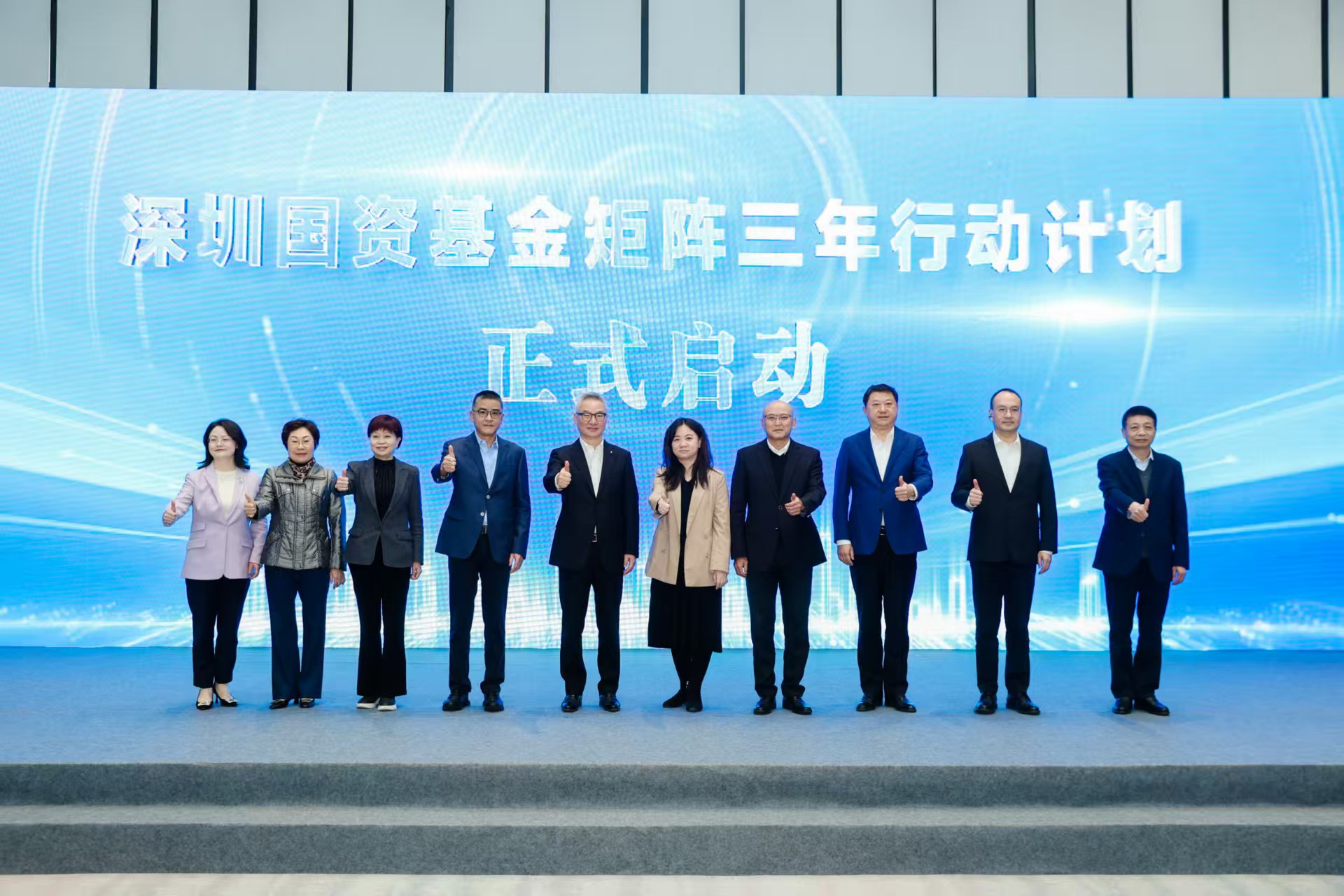
Core Viewpoint - Shenzhen has launched a "State-owned Capital Fund Matrix Three-Year Action Plan" to focus on supporting hard technology sectors such as semiconductors, integrated circuits, artificial intelligence, and biomedicine [1] Group 1: Fund Matrix and Strategic Focus - The fund matrix is based on the "Shenzhen Municipal State-owned Enterprises Fund Business Management Measures (Trial)" issued on January 1, 2023, and aims to cover the entire lifecycle of enterprises from seed to maturity [1] - This initiative is expected to concentrate state-owned capital on forward-looking strategic emerging industries, enhancing the long-term guiding and amplifying role of state-owned capital in technological innovation investments [1] - The Shenzhen State-owned Assets Supervision and Administration Commission aims to link innovation elements such as technology, talent, and scenarios to empower sci-tech enterprises throughout their lifecycle [1] Group 2: Collaboration and Ecosystem Development - Shenzhen's state-owned enterprises are transitioning from "resource holders" to "ecosystem builders," collaborating with private enterprises to create a virtuous cycle of innovation [3] - The Shenzhen Capital Group has invested 86% of its funds in early-stage and growth-stage companies, nurturing 288 listed companies to date [3] - The Kunpeng Capital sub-fund group has a cumulative investment scale exceeding 100 billion, covering nearly 2,000 projects, establishing a mature operational foundation for collaborative development in the industrial chain [3] Group 3: Investment Strategies and Fund Scale - Shenzhen is promoting "bold capital" and "patient capital" from state-owned enterprises, with over 500 funds created by the end of 2024, totaling over 700 billion, with more than 90% directed towards the "20+8" industries [4] - The Shenzhen Semiconductor and Integrated Circuit Industry Investment Fund was established with an initial scale of 5 billion, focusing on investments in semiconductor equipment, components, chip design, and advanced packaging [4] - The Shenzhen State-owned Assets Supervision and Administration Commission emphasizes the importance of maintaining the function of patient capital and continuously improving fund collaboration, project cultivation, and ecological service mechanisms [4]
2026年中国创新增量在哪里?
Xin Lang Cai Jing· 2026-01-22 10:20
Core Insights - The new economy, represented by technological innovation, has surpassed 18% of GDP, with new growth engines accelerating in strategic emerging industries, future industries, and the digital and AI transformation of traditional industries [3][4][25]. Group 1: Technological Innovation and Economic Growth - China aims to become an innovative power, with R&D expenditure reaching over 3.6 trillion yuan in 2024, accounting for 2.8% of GDP, approaching developed countries' average of 3.2% [4][26]. - The "three new" economies (including nine categories of new industries) accounted for 18.01% of GDP in 2024, an increase of 0.43 percentage points from the previous year, with a total value of 24.3 trillion yuan, growing by 6.7% [4][26]. - The government plans to expand investment in technology innovation and create a supportive ecosystem for scientific research and financial policies by 2026 [4][26]. Group 2: Strategic Emerging Industries - Strategic emerging industries are categorized into nine new industries, including new generation information technology, biotechnology, new energy, new materials, high-end equipment, new energy vehicles, green environmental protection, aerospace, and marine equipment [5][27]. - The "15th Five-Year Plan" emphasizes accelerating the development of strategic emerging industry clusters, particularly in new energy, new materials, and low-altitude economy [9][31]. Group 3: Future Industries and Market Potential - Future industries, such as brain-computer interfaces and embodied intelligence, are in early stages but show significant market potential, with predictions indicating the embodied intelligence market could exceed one trillion yuan by 2035 [14][36]. - The focus is shifting from technological novelty to commercial certainty in embodied intelligence applications across various sectors [14][36]. Group 4: AI Transformation in Traditional Industries - AI is transforming traditional manufacturing and service sectors, enhancing productivity, quality, and value addition [19][41]. - The core AI industry in China is projected to exceed 900 billion yuan in 2024, with a growth rate of 24%, and is expected to surpass 1.2 trillion yuan in 2025 [22][44]. Group 5: Investment and Financing Strategies - A multi-tiered financing service system is recommended to support innovation, including the establishment of a national-level intellectual property assessment center and a technology credit system [39]. - The National Venture Capital Guiding Fund, launched in late 2025, aims to invest in early-stage, small, and long-term hard technology projects, with a total funding of 100 billion yuan [40].

去年GDP增长5.1%左右,无锡明确今年抢抓人工智能机遇
2 1 Shi Ji Jing Ji Bao Dao· 2026-01-22 09:32
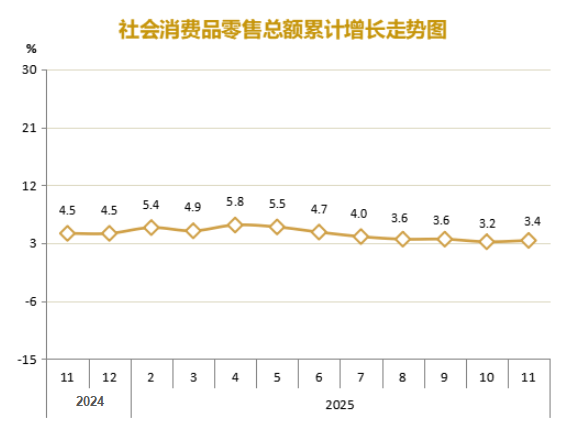
Group 1: Economic Performance - In 2025, Wuxi achieved a GDP of approximately 1.68 trillion yuan, growing by about 5.1%, surpassing the national average growth rate of 5.0% [1] - The total retail sales of consumer goods in Wuxi exceeded 440 billion yuan in 2025, but the growth rate declined from around 5% in the first half to approximately 3.5% in the second half [2] - Wuxi's total import and export value reached 829.28 billion yuan in 2025, marking a year-on-year increase of 7.6% [1] Group 2: 2026 Economic Goals - For 2026, Wuxi set a GDP growth target of 5% and a retail sales growth target of around 4% [4] - Key initiatives for 2026 include enhancing domestic demand, stabilizing major consumer sectors such as automobiles and home appliances, and expanding new business formats like duty-free economies [4] Group 3: Industrial Development - Over the past five years, Wuxi has developed five national advanced manufacturing clusters, with eight clusters generating over 200 billion yuan in revenue [5] - Wuxi aims to capitalize on artificial intelligence opportunities by collaborating with leading companies and deploying projects related to AI data centers and quantum chips [5][6] - The city plans to increase the revenue of the productive service industry by 7% and aims for the scale of future industries to reach 145 billion yuan [6] Group 4: Long-term Economic Vision - Wuxi's GDP is projected to exceed 2 trillion yuan in the next five years, with a target of achieving a per capita GDP of over $30,000 by 2024 [7] - The city aims for strategic emerging industries to account for over 46% of the industrial output of designated large-scale enterprises [7] - By the end of 2025, Wuxi is expected to have 127 listed companies, primarily in sectors such as power equipment, machinery, and automotive [7]
贵州电网统调负荷创历史新高 首次突破3000万千瓦
Sou Hu Cai Jing· 2026-01-22 08:38
大寒已至,1月21日18时27分,据南方电网贵州电网公司最新数据,贵州电网统调负荷创历史新高,首 次突破3000万千瓦,达到3008万千瓦,较上一次创新高负荷(2026年1月21日11:17,2972万千瓦)增加 36万千瓦,增幅1.20%。负荷的连续增长,标志着贵州电力供应保障能力迈上新台阶,也为全省经济社 会高质量发展提供了强有力的能源支撑。 负荷增长背后的驱动力 负荷攀升的背后,是贵州产业发展与民生改善的双重驱动。2025年以来,随着贵州省"四新""四化"战略 深入推进,新型工业化、新型城镇化进程加快,重点产业项目陆续投产,工业用电量稳步增长。特别是 大数据、新能源电池及材料、现代化工等战略性新兴产业快速发展,成为用电增长的重要引擎。 贵州电网负荷的创历史新高,不仅是一个数字上的突破,更折射出贵州经济发展的活力与韧性。电力作 为经济社会发展的"晴雨表",负荷增长直观反映了经济活动的活跃度和增长潜力。(来源:南方电网贵 州电网公司) 多措并举保障电力可靠供应 2025年以来,贵州电网公司推动建立并高效运转政企联动机制,电煤供应充足,火电机组稳发满发,煤 电顶峰能力始终维持在90%以上;提前研判,积极优化水 ...
新经济动能支撑租赁需求 深圳写字楼市场凸显韧性
Zhong Guo Jing Ying Bao· 2026-01-22 05:24
Core Insights - The Shenzhen Grade A office market is undergoing structural adjustments in 2025, characterized by high new supply and a transformation in corporate leasing demand, leading to a "total pressure, structural differentiation" pattern [1] - New economic sectors such as consumer electronics, smart manufacturing, and brand expansion are becoming significant drivers of leasing demand [1] Supply and Demand Dynamics - In 2025, Shenzhen will see a peak in new supply with 15 projects entering the market, totaling nearly 1.16 million square meters, the highest in three years, while the overall vacancy rate is expected to rise by 1.8 percentage points to 26.2% [1] - The technology sector continues to dominate market demand, accounting for nearly 30% of transaction area, with smart manufacturing showing particularly strong activity [2][3] - Major tech and financial firms are contributing significantly to net absorption, with over half of the total net absorption in 2025 coming from these sectors [2] Rental Trends - Rental levels in the Shenzhen Grade A office market are expected to decline, with a year-on-year decrease of 11.1% in 2025 [4] - The market is experiencing increased tenant bargaining power, leading to more frequent lease restructuring negotiations to stabilize occupancy rates and reduce tenant turnover risk [4] Future Outlook - In 2026, over 1.5 million square meters of new supply is anticipated, with structural supply-demand contradictions expected to persist, maintaining high competition and continued pressure on rental rates and vacancy levels [5] - Tenants are shifting their focus from price-driven decisions to a comprehensive evaluation of cost-effectiveness, property management, and supporting facilities, benefiting high-quality office spaces in core business districts and emerging areas with mature amenities [5]

锚定新质生产力发展方向 上市公司并购重组活跃
Zheng Quan Ri Bao Zhi Sheng· 2026-01-21 16:36
本报记者 曹卫新 开年以来,上市公司并购重组积极性持续升温。在政策引导与资本加持的双重作用下,市场资源正加速 向战略性新兴产业集中。据Wind资讯数据统计,按首次披露日期计,1月1日至21日,A股市场累计披露 240起并购重组事件。其中,10单涉及重大资产重组。 据和利时电机官网信息,该公司成立于1995年,20余年来一直专注于电机、驱动器及控制系统的研发, 靠过硬的产品品质及给用户的优质服务和技术支持赢得了用户的口碑及信赖。公司自主研制的步进电机 及驱动器、交流伺服电机及驱动器、无刷直流电机及驱动器三大系列核心产品(100余种驱动器,近500 种电机)已经占据国内市场的相当份额,销售收入每年平均增长率达到20%。 除高端制造领域外,医药行业的并购重组也较为活跃。例如,1月14日,江苏艾迪药业集团股份有限公 司发布公告称,公司拟向不超过35名特定投资者发行股份募集资金总额不超过1.85亿元,用于收购南京 南大药业有限责任公司(以下简称"南大药业")22.23%股权及补充流动资金。收购完成后,公司对南大 药业的直接持股比例将由51.13%增加至73.36%。 深度科技研究院院长张孝荣对《证券日报》记者表示,战略 ...


国经中心举办“经济每月谈” 热议推动投资止跌回稳
Xin Hua Cai Jing· 2026-01-21 14:44
Group 1 - The core viewpoint of the articles emphasizes the significant investment potential in China, particularly in traditional industries, infrastructure, and emerging strategic sectors, which could lead to the creation of trillion-yuan markets in the next five years [1][2] - Wang Yiming suggests six strategies to expand investment, including prioritizing major projects, increasing investment in public welfare projects, and enhancing private investment confidence [1] - Chen Yongjie proposes multiple policy recommendations to stimulate private investment, such as broadening investment opportunities, reducing costs, and improving financial support mechanisms [1][2] Group 2 - Zhang Yuxian highlights that current government investments focus on functional aspects, addressing weaknesses and risks rather than merely driving growth [2][3] - Du Yue recommends increasing central budget investments and optimizing financial tools to enhance infrastructure investment and attract private capital for major projects [2][3] - Emphasis is placed on supporting local governments in planning and implementing significant projects that align with national needs and local capabilities [3]