
电动化

Search documents
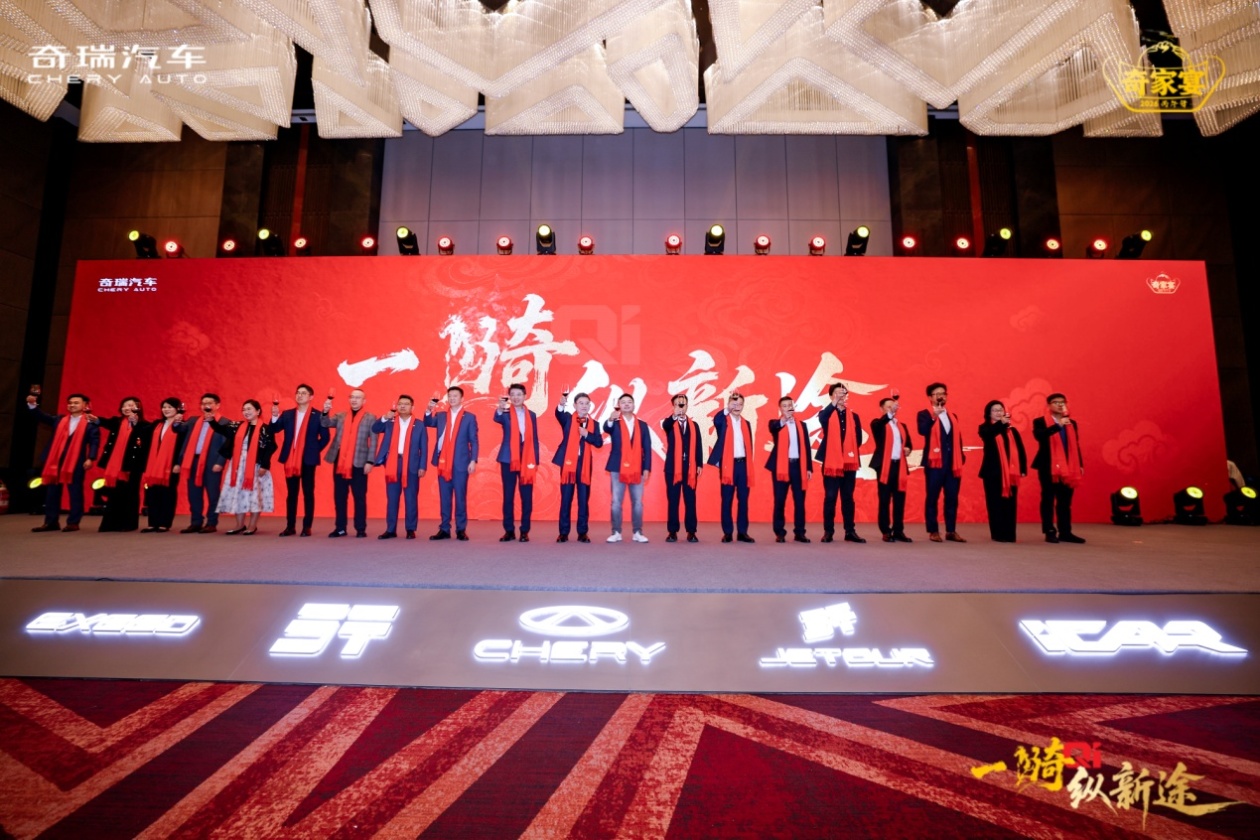
“一骑纵新途”2026奇家宴在京举行
Huan Qiu Wang· 2026-01-09 08:01
Core Insights - Chery Group has achieved significant milestones in its transformation into a global high-tech ecological group, with record sales, exports, and advancements in new energy and quality [3][4] Sales Performance - In 2022, Chery Group sold a total of 2,806,393 vehicles, marking a year-on-year increase of 7.8% and surpassing 18.53 million cumulative users [3] - The group exported 1,344,020 vehicles, reflecting a 17.4% year-on-year growth, with total exports reaching 5.85 million vehicles [3] - New energy vehicle sales reached 903,847 units, showing a substantial year-on-year growth of 54.9%, positioning the company among the industry's leaders [3][4] Quality and Safety Achievements - Chery received a nomination for the "China Quality Award" and ranked first among domestic brands in multiple categories according to J.D. Power's annual studies [3] - The group has achieved a total of 60 models with five-star safety ratings globally, emphasizing its commitment to safety and quality [3] Strategic Goals and Future Plans - For 2026, Chery Group aims to achieve a sales target of 3.2 million vehicles, representing a 14.03% increase from 2025, and plans to launch 17 key models [7] - The company is focused on accelerating its transition towards electrification and intelligence, aiming to enhance its global presence and brand value [7] Brand Performance - In 2025, Chery's brand sales are projected as follows: Chery brand at 1,700,940 vehicles, Exeed brand at 120,369 vehicles, Jietu brand at 622,590 vehicles, iCAR brand at 96,989 vehicles, and Zongheng G700 at 8,327 vehicles [5]

招聘 | 国联民生汽车 诚邀加入!【新财富团队 分析师/实习生招聘】
汽车琰究· 2026-01-09 07:22
Core Viewpoint - The article emphasizes the importance of deep research and analysis in the automotive industry, particularly focusing on the trends of electrification, intelligence, globalization, and premiumization, which are seen as key investment opportunities during the ongoing transformation of the sector [9]. Recruitment Information - The company is seeking analysts for the automotive and embodied intelligence sectors, highlighting the need for candidates who are passionate about sell-side research and eager to witness the transformative decade in electric and intelligent vehicles [11]. - Requirements for the analyst positions include a master's degree or higher, 1-3 years of relevant research experience, and strong communication skills, with a preference for candidates with backgrounds in electric intelligence or embodied intelligence [11]. - Intern positions are also available, targeting candidates from top universities with a strong interest in sell-side research and the ability to handle high-intensity research work [11]. Growth Opportunities - Joining the company offers the chance to work alongside talented individuals in the automotive industry, providing opportunities for rapid personal and professional growth [12]. - The company promises a structured research investment framework and valuable work experience, along with opportunities for in-depth communication with industry experts [12].

通用汽车2025在华新能源车型销量创新高
Zhong Guo Qi Che Bao Wang· 2026-01-09 01:22
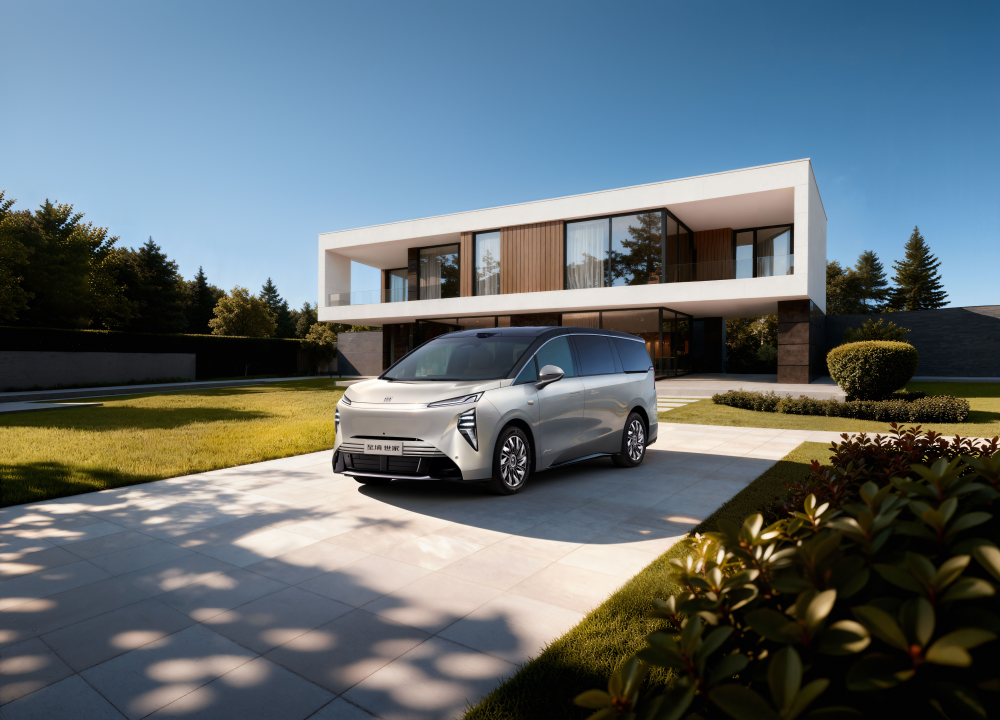
Group 1 - In 2025, General Motors (GM) sold nearly 1 million new energy vehicles (NEVs) in the Chinese market, accounting for over half of its total sales, marking a historic high in both sales and penetration rate of NEVs, reflecting the company's accelerated electrification process [2] - GM achieved year-on-year growth in both retail sales and market share in China, with total deliveries from the company and its joint ventures reaching nearly 1.9 million units, a 2.3% increase from 2024, driven by a 22.6% increase in NEV sales [2] - GM's Vice President and President of GM China, John Roth, attributed these positive results to the company's relentless pursuit of product excellence and disciplined measures in production and inventory management, expressing optimism for introducing more globally favored products in the coming year [2] Group 2 - Buick's high-end NEV sub-brand "Zhijing" launched its first models, the Zhijing L7 smart luxury sedan and Zhijing flagship MPV, which received positive market feedback after their release in Q4, built on the locally developed "Xiaoyao" super fusion architecture and equipped with the "Xiaoyao Intelligent Driving" system co-developed with Chinese tech company Momenta [3] - Buick has maintained its leading position in the high-end MPV market in China for over 20 years, with MPV sales exceeding 120,000 units last year, a 23% year-on-year increase, and plans to launch new models in 2025 to enhance its market presence [3] Group 3 - The Buick Envision and Buick LaCrosse reached significant production milestones in Q2, with the 1.8 millionth and 1.3 millionth vehicles rolling off the production line, respectively, with annual sales increasing by 76.4% and over 100% year-on-year [4] Group 4 - Cadillac continued to strengthen its influence in the luxury SUV market in 2025, with deliveries of the Lyriq and XT5 models increasing by 90% and 32.4% year-on-year, respectively [5] - The Cadillac F1 team announced that Chinese driver Zhou Guanyu will join as a reserve driver, supporting the team in its debut season in F1 in 2026, with participation in the F1 Shanghai race scheduled for March [5] Group 5 - The Wuling Hongguang MINIEV family, as GM's best-selling NEV in China, achieved annual sales of over 435,000 units, with approximately two-thirds of sales coming from the newly launched four-door version in Q1, and the newly launched Bingo S model contributing to the continued popularity of the Wuling Bingo series, with total sales surpassing 210,000 units in 2025 [6] - Baojun brand sales increased by 12.3%, with strong growth in the Yueye PLUS and Yunhai models, with Yueye PLUS sales exceeding 26,000 units and Yunhai deliveries rising by 60% year-on-year, surpassing 11,000 units [7]

新技术影响力有限,日本产业界反思
Huan Qiu Shi Bao· 2026-01-08 22:40
Group 1 - The core viewpoint of the articles is that by 2025, Chinese automotive manufacturers are expected to surpass Japan in global sales, reaching approximately 27 million units, marking a 17% year-on-year growth [1][2] - Japanese media has extensively reported on this development, highlighting the competitive edge of Chinese companies in the automotive sector, particularly in production equipment, supply chains, and technology systems [1] - Chinese enterprises have established advantages in large integrated casting equipment for vehicle body manufacturing, which enhances production efficiency and reduces the number of components, becoming crucial in electric vehicle manufacturing [1] Group 2 - In terms of technology, Chinese companies are making significant advancements in autonomous driving and related software, with some cities already operating unmanned taxis and buses, which contrasts with Japan's limited international influence in these new fields [1] - The current situation in the Japanese automotive industry is attributed to multiple factors, including Japan's continued competitiveness in hybrid technology, while the global market shifts towards electrification and software integration [2] - Chinese automotive firms have made notable progress in sales scale, overseas expansion, and the application of new technologies, while Japan lacks competitiveness in areas such as power batteries and autonomous driving [2]
创下重要里程碑!比亚迪在智利公共交通系统中投运电动巴士数量达950辆
Zhong Guo Qi Che Bao Wang· 2026-01-08 07:24
Core Insights - BYD has successfully delivered a new batch of electric buses in Chile, increasing the total number of zero-emission electric buses in the public transport system to 950 [1][2] Group 1: Delivery and Fleet Expansion - The latest batch includes 94 articulated electric buses and 30 double-decker electric buses, primarily serving high-traffic core bus routes in the capital region [2] - The delivery was celebrated in an event co-hosted by BYD and local operator Metbus, attended by key government officials and representatives from the International Public Transport Association (UITP) [2][5] Group 2: Environmental Impact and Achievements - Since 2017, BYD's electric buses operated by Metbus have accumulated over 230 million kilometers, resulting in a reduction of over 525,000 tons of carbon dioxide emissions [6] - The introduction of articulated and double-decker electric buses reflects BYD's long-term strategic vision for public transport, aiming for higher efficiency, lower operating costs, and zero emissions [5][6] Group 3: Commitment to Sustainable Transport - The new vehicles signify a strong commitment from all parties involved to build a cleaner, modern, and efficient public transport system, contributing to improved air quality and reduced urban noise [7] - The electric buses enhance public transport service levels, offering features like air conditioning, comfortable seating, and ergonomic designs for drivers, thus promoting a modern and dignified public transport system [6][7]


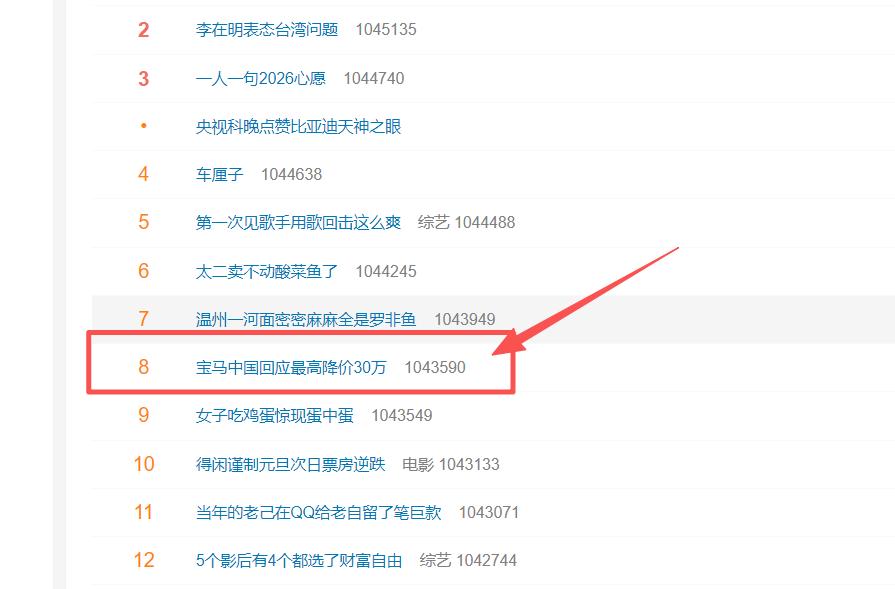
宝马开年挥刀,2026豪华车卷生卷死
3 6 Ke· 2026-01-08 01:08
Core Viewpoint - The luxury car market is experiencing significant changes due to price adjustments by major brands like BMW, which are interpreted as a response to increased competition from domestic manufacturers and shifting consumer preferences towards technology and value rather than traditional luxury symbols [2][3][4]. Group 1: Price Adjustments and Market Response - BMW announced price reductions on 31 key models in China, with 24 models seeing reductions of over 10% and 5 models over 20%, including the iX1 eDrive25L with a 24% drop and the i7 M70L with a maximum reduction of 301,000 yuan [2]. - The adjustments have led to an increase in the number of BMW models priced below 300,000 yuan, indicating a shift towards more competitive pricing in the luxury segment [2]. - BMW claims these price changes are part of a value upgrade strategy rather than a price war, although market interpretations suggest otherwise, especially following reports of Porsche closing several showrooms in China [3]. Group 2: Market Dynamics and Competitive Landscape - The luxury car market, particularly the BBA (BMW, Benz, Audi) trio, is facing declining profits, with net profits dropping significantly: Mercedes-Benz by 55.8%, Audi by 37.5%, and BMW by 29% in the first half of 2025 [3]. - The traditional dominance of BBA is being challenged by domestic brands like BYD and Xiaomi, which are gaining traction among younger consumers who prioritize technology and personalized experiences over brand prestige [5][7]. - The penetration rate of domestic electric vehicles in the 300,000 to 500,000 yuan price range has surged from under 10% in 2020 to over 40% by 2025, directly impacting BBA's sales [7]. Group 3: Strategic Challenges for BBA - BBA's transition to electric vehicles is perceived as slow, with Mercedes-Benz and Audi adjusting their electrification goals and timelines, while BMW has also revised its electric vehicle sales expectations downward by over 20% [9][11]. - The traditional luxury brands are struggling with high production costs and lengthy product development cycles, which hinder their ability to compete effectively with agile domestic brands [11]. - BBA's marketing strategies, rooted in traditional luxury branding, are becoming less effective in an era where consumers seek innovation and technological engagement [12]. Group 4: Future Outlook and Consumer Impact - The ongoing price competition may lead to increased efficiency and technological advancements in the luxury car sector, ultimately benefiting consumers [13][14]. - Analysts predict that more luxury brands may be forced to adjust their strategies or exit the Chinese market in the coming years due to intensified competition [13].

亿欧智库:中国蓄电池行业出海国别机会洞察报告 2025
Sou Hu Cai Jing· 2026-01-07 22:35
Industry Background and Development Characteristics - The lithium-ion battery industry is driven by the global electrification of new energy vehicles and energy storage demand, alongside stricter energy security and environmental regulations, leading to a focus on technology compliance, functional adaptation, and environmental sustainability [1][9] - Key industry trends include green initiatives (promoting low-carbon processes and optimizing recycling and wastewater treatment technologies), globalization (Chinese companies exporting technology and management systems to establish complete manufacturing capabilities overseas), and vertical integration among leading firms to reduce costs and enhance efficiency [1][9] Key Export Opportunities and Buyer Situations - In Vietnam, the top 10 high-frequency and high-value buyers within 87 days include SAMSUNG SDI VIETNAM CO., LTD and NEWTIMES IMPORT EXPORT, reflecting strong demand from the local electronics manufacturing sector [1][2] - In the United States, major buyers over 156 days include BELLEFIELD HOLDCO LLC. and TOYOTA MOTOR SALES USA INC., indicating significant procurement needs in the new energy vehicle and energy storage sectors [1][2] Import Policy Requirements by Key Countries - India requires products to pass BIS certification and imposes around 20% basic customs duty along with 18% or 28% integrated goods and services tax, with importers needing to register with CPCB and label products with EPR registration codes [2][26] - Vietnam mandates compliance with QCVN 101:2020/BTTTT standards for lithium batteries used in mobile phones and tablets, prohibits the import of used batteries, and requires exporters to fulfill recycling obligations [2][26] - The U.S. requires electric bicycle and balance vehicle batteries to meet UL 2271/UL 2272 standards, with lithium batteries classified as hazardous materials under PHMSA regulations, necessitating the provision of UN 38.3 test report summaries [2][26] Export Challenges and Development Trends - The industry faces challenges such as supply chain and resource constraints (with lithium and cobalt resources concentrated and affected by geopolitical conflicts), technological iteration pressures (difficulty in introducing overseas production capacity and the need to shift towards solid-state battery research), localization operational risks (long factory construction cycles and high costs), and rising compliance thresholds due to stricter regulations [2][31] - The industry is transitioning towards a "technology + compliance" dual-driven model, balancing supply chain resilience, technological upgrades, and localization to maintain global competitiveness while optimizing export costs through trade agreements and local assembly [3][31] Export Data Overview - From 2020 to 2025, China's lithium-ion battery exports are projected to grow from $20.203 billion in 2020 to $66.622 billion in 2025, with a year-on-year growth of 24.22% expected in 2025 compared to the same period in 2024 [10][12] - The U.S. is expected to account for 19.39% of China's lithium-ion battery exports in 2025, followed by Germany at 17.32%, with Cambodia, Bulgaria, and Chile showing the highest growth rates among export markets [10][15]
【重磅深度】乘用车电动化复盘:拥抱变化
东吴汽车黄细里团队· 2026-01-07 12:21
Investment Highlights - The automotive market began to show an upward trend in 2020 despite the pandemic, primarily due to a year-on-year increase in industry sales and a significant turning point in the penetration rate of new energy vehicles (NEVs), which led to a notable increase in the market share of domestic brands [2][26] - The core turning point for NEV penetration was driven by the localization of Tesla, with the Model 3 quickly becoming a best-seller, and improvements in the economic viability of the supply chain leading to a diverse supply [2][36] Historical Index Trends - In May 2021, the electric vehicle logic remained strong with a penetration rate of about 10%, and demand did not weaken despite a chip shortage that began in early 2021. The market anticipated a gradual easing of supply issues by July-August [3][45] - By May 2022, the penetration rate had increased to approximately 25%, with the resumption of production in lockdown areas and the implementation of tax reduction policies, which contributed to an upward trend in the index [3][48] - In February 2024, a shift in supply-demand dynamics occurred, leading to a price war initiated by Tesla's significant price cuts. The market began to rebound, with BYD's price reduction strategy proving effective [4][51] Profitability and Valuation Changes - The profitability of the automotive sector under the NEV trend has not significantly improved compared to the traditional fuel vehicle era, as selling NEVs has not altered the industry's business model, which remains rooted in manufacturing logic [5][56] - The valuation center for the automotive sector has shifted upward, with the price-to-sales (PS) ratio moving from a maximum of 2x during the fuel vehicle era to a current center of 1x, driven by increased market share and high-end breakthroughs of domestic brands [5][57] Competitive Factors in the NEV Era - The competition among automotive companies is characterized by a focus on hard power in the early stages, with soft power becoming more relevant later. The core competitive factors have evolved through different phases, including supply chain integration, electric vehicle technology, and marketing capabilities [6][60] - The first phase (2021-2022) emphasized supply chain advantages, while the second phase (2023) shifted towards electric vehicle technology and product definition capabilities, leading to a price war [6][60] - By 2025, the growth rate of NEV penetration is expected to slow down, with the main competitive logic focusing on imitating and surpassing leading NEV companies [7][60] Stock Performance Review - A review of stock performance from 2020 to 2025 indicates that early in the NEV development phase, the market had high expectations for leading companies from the previous cycle, while later periods required identifying emerging players based on changing competitive factors [8][20] - Notable stock performances include Seres as a tenfold stock, Jianghuai with an eightfold increase, and BYD with a fivefold increase, highlighting the importance of recognizing industry trends and selecting the best-performing stocks [8][20]


吉利汽车(00175.HK)2025年12月销量点评:超额完成全年目标 极氪9X月交付过万
Ge Long Hui· 2026-01-07 06:19
Core Viewpoint - Geely Automobile reported a total sales volume of 237,000 units in December 2025, representing a year-on-year increase of 12.7% but a month-on-month decrease of 23.7% [1] Group 1: December Sales Performance - December total deliveries continued to grow year-on-year, with Zeekr 9X deliveries exceeding 10,000 units, surpassing the annual target [1] - December sales breakdown by model: Geely brand/Link & Co/Zeekr sold 173,000/34,000/30,000 units, with year-on-year changes of +10.2%/+29.4%/+11.3% and month-on-month changes of -29.9%/-3.7%/+4.9% [1] - Geely brand's Galaxy model sold 101,000 units in December, up 45.0% year-on-year but down 24.1% month-on-month [1] - Exports in December reached 40,000 units, a year-on-year increase of 49.0% but a month-on-month decrease of 4.2% [1] - December new energy vehicle sales totaled 154,000 units, up 38.7% year-on-year but down 17.9% month-on-month, accounting for 65.1% of total sales, an increase of 12.2 percentage points year-on-year and 4.6 percentage points month-on-month [1] Group 2: 2025 Annual Performance - Total sales for 2025 reached 3.025 million units, a year-on-year increase of 39.0% [1] - Annual cumulative sales for Galaxy/Link & Co/Zeekr in 2025 were 1.236 million/350,000/224,000 units, with year-on-year changes of +149.9%/+25.4%/-1.8% [1] - Q4 2025 cumulative total sales for Galaxy/Link & Co/Zeekr were 854,000/361,000/109,000/81,000 units, with year-on-year changes of +24.2%/+73.3%/+30.1%/-5.6% [1] Group 3: Future Outlook - Geely aims for a total sales target of 3.45 million units in 2026, representing a year-on-year increase of 14%, with sales targets for Geely brand/Link & Co/Zeekr set at 2.75 million/400,000/300,000 units [2] - The new GEA architecture supports a new product cycle, with positive developments across Zeekr, Link & Co, and Galaxy [2] - The transition to new energy vehicles is progressing smoothly, with scale effects expected to enhance profitability [2] - The company maintains a solid foundation in fuel vehicles and continues to explore new overseas markets through innovative joint ventures [2] - The smart driving strategy is being accelerated to enhance driving capabilities, with significant profit elasticity anticipated under the new vehicle cycle [2] - The projected net profit for 2025 is 17 billion yuan, corresponding to a PE ratio of 10.6X, maintaining a "buy" rating [2]

观车 · 论势 || 政策将继续强调促消费、立规矩
Zhong Guo Qi Che Bao Wang· 2026-01-07 02:45
Group 1 - The core theme for the automotive industry in 2026 is to promote consumption, stabilize the market, and enhance industrial safety through optimized policies and regulations [1][2][3] - The central economic work conference has set the tone for 2026 as "seeking progress while maintaining stability, improving quality and efficiency," focusing on stimulating market vitality and enhancing innovation capabilities in the automotive sector [1][2] - The automotive industry will accelerate innovation in smart and electric vehicles, with advancements in L3 autonomous driving, solid-state batteries, flying cars, and AI technologies being key indicators of development [1][2] Group 2 - The promotion of automotive market consumption is a key focus for 2026, with measures such as halving the purchase tax for new energy vehicles and implementing targeted subsidies for vehicle trade-ins [2][3] - The adjustment of subsidies to a maximum of 12% of the vehicle price aims to enhance efficiency and tap into emerging consumer potential, while also exploring new subsidy scenarios in rural markets [2][3] - The removal of unreasonable purchase restrictions in certain cities is another critical measure to unleash automotive consumption potential [2][3] Group 3 - The establishment of new regulations aims to address pain points and risks in the automotive industry, with standards like GB36980.1-2025 and safety requirements for intelligent connected vehicles expected to be implemented in 2026 [2][3] - The introduction of compliance guidelines and regulations will help eliminate unfair competition practices, ensuring a shift from price competition to a focus on technology, quality, and service [3][4] Group 4 - Strengthening safety measures is crucial, with new standards for electric vehicle batteries emphasizing safety and requiring compliance with stricter technical goals [4][5] - Regulations on user data collection and cross-border data transmission will enhance data security and protect consumer rights, forming a robust safety framework for the automotive industry [5][6] - The transition to orderly development signifies a shift from scale expansion to value competition, with a focus on product quality and consumer experience becoming paramount [5][6] Group 5 - The automotive industry's orderly development will lead to a restructuring of competition, moving from price wars to high-quality value breakthroughs [6] - Technological advancements and global collaboration will open new growth opportunities, enhancing the international standing of Chinese automotive brands [6] - 2026 is seen as a pivotal year for the automotive industry, with a focus on harmonizing development incentives and regulatory frameworks to drive transformation [6]