
自动化

Search documents
瑞凌股份(300154) - 300154瑞凌股份调研活动信息20251011
2025-10-13 08:46
Group 1: Company Advantages - The company has a strong innovation advantage, having developed the first domestic inverter welding machine in 1987, and continues to lead in product innovation and technology development [2][3] - The brand and channel advantage is evident with nearly 400 primary distributors and over 2000 secondary distributors in the domestic market, along with over 100 distributors in more than 60 countries globally [3][11] - The company emphasizes quality and cost-effectiveness, with a significantly lower failure rate than the industry average and high product reliability [3][8] Group 2: Industry Trends - The global welding equipment industry is trending towards digital control, intelligent process control, network integration, and automation [4] Group 3: Digitalization and Sales Strategy - The company has invested in digital welding technology and has a comprehensive range of digital welding products, maintaining a competitive edge in the domestic market [5][6] - The sales model primarily relies on distributors, with a focus on digital marketing and online sales through platforms like Douyin and Kuaishou [6] Group 4: Automation and Product Development - The company offers a range of automation products, including welding carts and robotic welding systems, and has the capability to design large-scale automated welding production lines [7][8] - Continuous technological innovation is a core competitive advantage, with over 200 national patents and a focus on developing new technologies and products [8][9] Group 5: Market Applications and Expansion - The company's products are widely used in various industries, including new energy vehicles, marine engineering, military, aerospace, and construction [10] - Approximately one-third of the company's inverter welding products are sold overseas, with a focus on expanding into markets in Southeast Asia, Australia, and the Middle East [11] Group 6: Future Plans - The company is constructing an intelligent manufacturing industrial park to enhance production capabilities and overall competitiveness [12] - There are ongoing plans for strategic partnerships and potential acquisitions in sectors related to welding equipment, smart manufacturing, and industrial robotics [13]

IMARC 2025全球矿业盛会本月将于悉尼盛大启幕 五大洲部长级阵容齐聚 聚焦能源转型与投资新机遇 悉尼公寓周租金中位数创新高
Sou Hu Cai Jing· 2025-10-10 11:42
Core Viewpoint - The IMARC 2025 conference, set to take place in Sydney from October 21 to 23, 2025, will redefine global mining dynamics and cooperation trends, focusing on energy transition and investment opportunities in the context of a reshaped supply chain [1][27]. Group 1: Conference Overview - IMARC 2025 is expected to attract over 10,000 participants from more than 120 countries, marking a record scale and international influence for the event [3]. - The conference will feature high-profile speakers, including New South Wales Premier Chris Minns and Australian Federal Ministers, who will discuss Australia's strategic position in critical minerals and clean energy [5][6]. Group 2: Global Participation - Ministers from five continents, including representatives from Saudi Arabia, New Zealand, and Peru, will engage in discussions on supply chain security and energy transition [12][13]. - The conference will also showcase national pavilions from various countries, highlighting key mineral projects and investment opportunities [13]. Group 3: Innovation and Technology - IMARC 2025 will emphasize the application of digitalization, AI, automation, and low-carbon technologies in mining, with a new "Innovation & Investment Alley" to showcase breakthrough solutions [17]. - Notable projects expected to be presented include lunar exploration initiatives and next-generation electric mining vehicles [17]. Group 4: Investment Opportunities - The Investor Program will facilitate discussions on capital restructuring in critical mineral supply chains and the impact of electric vehicles and energy storage on mining investments [24]. - A new "Investor Concierge Service" will provide tailored matchmaking to enhance capital and project connections [24]. Group 5: Australia-China Cooperation - The conference is seen as a pivotal platform for deepening Australia-China cooperation in resource development and green technology, with both countries having complementary strengths in critical minerals and renewable energy [26]. - Australia's "Future Made in Australia" initiative aims to establish a localized critical mineral processing and green manufacturing system, enhancing energy security and regional development [26].


第24届东南非共同市场峰会在内罗毕召开 聚焦数字化转型
Yang Shi Xin Wen Ke Hu Duan· 2025-10-10 00:22
Core Points - The 24th COMESA Summit was held in Nairobi, Kenya, focusing on leveraging digitalization to deepen regional value chains for sustainable and inclusive growth [1] - Kenya assumed the rotating presidency from Burundi, with President Ruto emphasizing the importance of digital transformation for trade facilitation and industrial resilience [3] - A framework agreement was signed between COMESA and China State Construction International for the construction of a headquarters building and complex in Lusaka, enhancing regional governance capabilities [5][6] - COMESA, established in December 1994, consists of 21 member countries with a combined population of over 640 million and a regional GDP exceeding $1 trillion [8]

亚洲面临日益严峻的青年失业挑战
2025-10-09 02:00
Summary of Key Points from the Conference Call Industry Overview - **Industry**: Youth Unemployment in Asia - **Key Countries**: China, India, Indonesia Core Insights and Arguments 1. **High Youth Unemployment Rates**: Youth unemployment rates in Asia are significantly higher than overall unemployment rates, typically 2-3 times higher, with youth unemployment ranging from 4% to 18% while overall unemployment is between 2% and 7% [5][6][10] 2. **Specific Rates**: As of August 2025, youth unemployment rates are particularly high in China (16.5%), India (17.6%), and Indonesia (17.3%) [5][10][51] 3. **Economic Challenges**: Economic slowdown, "anti-globalization" policies in China, and the impact of AI and automation are contributing to structural challenges in the job market [5][6][10] 4. **Need for Policy Reform**: Policymakers are urged to implement reforms to shift growth models and increase investment ratios in India and Indonesia, while addressing labor market mismatches in China [5][10][61] 5. **Social Stability Risks**: There is a potential risk to social stability if youth unemployment continues to rise, which may lead to redistribution measures by policymakers [5][10][61] Additional Important Insights 1. **Labor Market Conditions**: Despite a seemingly stable youth unemployment rate, the underlying conditions of the labor market are deteriorating, with declining wages for entry-level positions in China and employment challenges in India and Indonesia [6][10][18][32] 2. **Mismatch in Supply and Demand**: In China, the rapid increase in graduates (from 8.2 million in 2019 to 11.7 million in 2024) is not matched by job creation, leading to a significant mismatch in the labor market [22][23][30] 3. **Investment Trends**: Indonesia's investment-to-GDP ratio has decreased from 32% pre-pandemic to 29% as of June 2025, indicating a decline in investment that could hinder job creation [51][55] 4. **Informal Employment**: A significant portion of employment in Indonesia (59%) is in the informal sector, which is a typical indicator of underemployment [51][59] 5. **Future Projections**: The youth labor force in Indonesia is expected to grow by 12.7 million over the next decade, exacerbating the employment challenges if investment and job creation do not keep pace [57][58] Conclusion - The youth unemployment crisis in Asia, particularly in China, India, and Indonesia, requires urgent attention from policymakers to implement reforms that can stimulate job creation and address the structural issues in the labor market. Failure to act may lead to increased social instability and economic challenges in the region [5][10][61]

鸣志电器股价跌5.27%,华夏基金旗下1只基金位居十大流通股东,持有374.75万股浮亏损失1671.36万元
Xin Lang Cai Jing· 2025-10-09 01:46
Core Insights - Mingzhi Electric experienced a decline of 5.27% on October 9, with a stock price of 80.18 CNY per share and a total market capitalization of 33.586 billion CNY [1] Company Overview - Mingzhi Electric, established on July 7, 1998, and listed on May 9, 2017, is located in Minhang District, Shanghai. The company focuses on research and development in motion control and intelligent power sectors, with a core business expanding in automation and intelligence [1] - The revenue composition of Mingzhi Electric is as follows: 83.60% from control motors and their drive systems, 8.39% from trade products, 6.90% from power and lighting system controls, 1.07% from equipment status management systems, and 0.03% from other sources [1] Shareholder Insights - Among the top circulating shareholders of Mingzhi Electric, Huaxia Fund's Huaxia CSI Robotics ETF (562500) increased its holdings by 678,100 shares in Q2, totaling 3.7475 million shares, which represents 0.89% of the circulating shares. The estimated floating loss today is approximately 16.7136 million CNY [2] - The Huaxia CSI Robotics ETF was established on December 17, 2021, with a current size of 14.471 billion CNY. Year-to-date returns are 40.61%, ranking 1266 out of 4221 in its category, while the one-year return is 51.95%, ranking 805 out of 3848 [2]

Resources nection(RGP) - 2026 Q1 - Earnings Call Transcript
2025-10-08 22:02
Financial Data and Key Metrics Changes - Revenue for Q1 was reported at $120.2 million, exceeding the outlook range, with a gross margin of 39.5%, which is 300 basis points higher than the prior year [26][27] - SG&A expenses were $44.5 million, a 7% improvement from $47.7 million a year ago, driven by lower management compensation and reductions in other G&A spend [28] - Adjusted EBITDA improved to $3.1 million, representing a 2.5% adjusted EBITDA margin [26] Business Line Data and Key Metrics Changes - On-demand segment revenue declined by 16% year-over-year to $44.4 million, but segment-adjusted EBITDA improved to $4.4 million, or a 10% margin [29] - Consulting segment revenue was $43.6 million, a decline of 22% from the prior year, with segment-adjusted EBITDA at $5 million, or an 11.6% margin [29] - Europe and Asia-Pacific segment revenue grew by 5% year-over-year to $19.9 million, with segment-adjusted EBITDA of $0.8 million, or a 4.2% margin [30] Market Data and Key Metrics Changes - Europe and Asia-Pacific achieved solid growth, with a 5% increase in revenue, driven by strong client relationships and effective regional strategy [23] - Demand for CFO advisory and digital transformation offerings remains strong, with a focus on local delivery combined with scalable global delivery centers [24] Company Strategy and Development Direction - The company is transforming from a professional staffing organization to a diversified platform combining on-demand talent with consulting and outsourced services [5] - Focus areas include CFO advisory and digital transformation, which are critical for driving client transformation and enhancing value [8][10] - The company aims to increase its addressable market and improve return for shareholders through strategic investments and enhanced service offerings [12] Management's Comments on Operating Environment and Future Outlook - Management noted that the global macro environment remains uncertain, but they are positioning the company for an upturn [3] - There is a belief that improvements in key operating metrics will lead to tangible revenue growth over time [27] - The outlook for Q2 anticipates revenue stability between $115 to $120 million, with gross margin expectations similar to Q1 [31][32] Other Important Information - The company is actively redesigning its cost structure to fit its current size and scale, with expected annual cost savings of $6 to $8 million from recent organizational changes [15][28] - The company maintains a strong balance sheet with $77.5 million in cash and no outstanding debt [30] Q&A Session Summary Question: What would you say regarding the trend in pricing? - Management indicated that while staffing rates have remained steady, there are pricing pressures in consulting, but value-added services are allowing for rate increases on new projects [35][36] Question: How much of the pipeline would you attribute to cross-selling? - The company is still building its pipeline but has seen an increase in $1 million-plus deals, anticipating further growth through cross-selling efforts [37] Question: Can you break out the revenue guide between segments? - The revenue guide for Q2 expects continued strength in Europe and Asia-Pacific, while on-demand and consulting segments are expected to perform similarly to Q1 [40][41] Question: Are there regional differences in demand? - Demand is strong in the West Coast and Southeast, attributed to team tenure and alignment with client priorities in CFO advisory and digital transformation [43] Question: What changes have new board members brought? - New board members have provided fresh perspectives, focusing on optimizing bottom-line performance and fostering collaborative teams [59][60]

华尔街大行:中国股市不是水牛!
Sou Hu Cai Jing· 2025-10-07 08:28
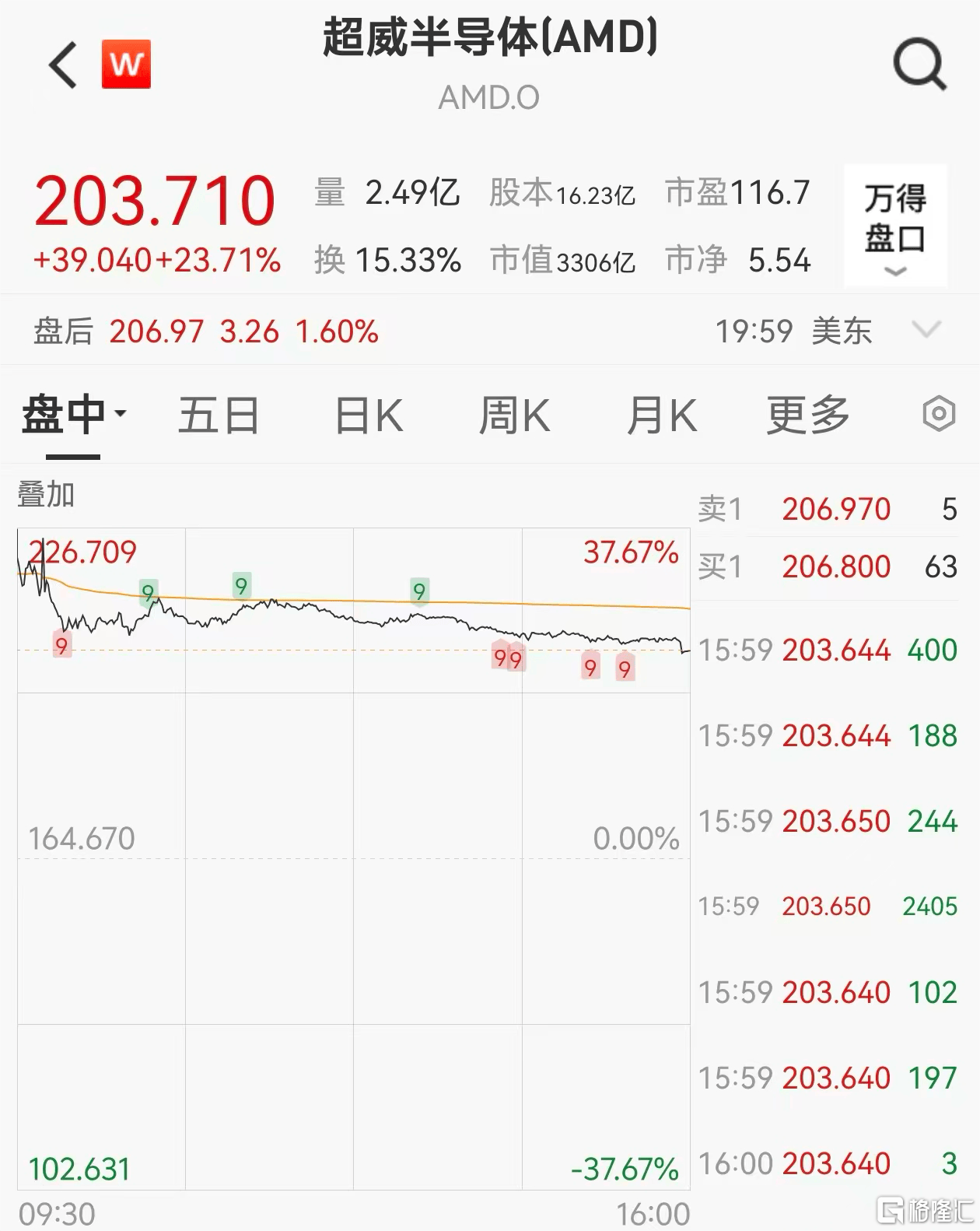
Group 1: Market Insights - Morgan Stanley's chief China equity strategist, Laura Wang, argues that the current A-share market rally is driven by earnings rather than liquidity, labeling it an "earnings bull market" [1] - The MSCI China Index has shown stable earnings over the past three quarters, with the earnings revision breadth indicator turning positive in August, making China the second market globally to enter this zone after the US [2] - Despite concerns about market divergence, key sectors such as information technology, internet, finance, and biotechnology are leading earnings growth, with foreign investors planning to increase their exposure to Chinese stocks [2] Group 2: AI and Technology Developments - OpenAI has entered a significant $90 billion GPU supply agreement with AMD, which includes a unique equity-for-purchase model, potentially redefining AI infrastructure financing [4][5] - AMD's stock surged over 37% in intraday trading following the announcement, marking its largest single-day gain since 2016 [6] Group 3: Gold Market Trends - China's central bank has increased its gold reserves for the 11th consecutive month, reaching 7.406 million ounces by the end of September [9] - Goldman Sachs has raised its gold price target for the end of 2026 from $4,300 to $4,900 per ounce, citing a 17% increase in gold prices since August 26, driven by long-term capital inflows and central bank purchases [11] - The report indicates that gold prices may have a further 23% upside in the next two years, with central bank purchases contributing significantly to this growth [11]

港股10月“开门红”,恒指创近四年新高
Sou Hu Cai Jing· 2025-10-03 10:40
Group 1 - The Hong Kong stock market experienced a strong start in October, with the Hang Seng Index rising 1.61% to close at 27,187.12 points, marking a nearly four-year high [2] - The technology sector led the gains, with notable increases in stocks such as SMIC (+12.7%), Xinyi Solar (+9.9%), Alibaba (+3.45%), and Kuaishou (+8.57%) [2] - Market turnover reached 222.468 billion HKD on October 2, despite the absence of southbound capital due to the National Day holiday [2] Group 2 - European investors have shown a significant recovery in confidence towards the Chinese stock market, driven by relatively low valuations and ongoing innovation [3] - Bank of America recommends increasing exposure to Chinese stocks while focusing on the inflow of household savings into the market, which is expected to boost consumption and CPI [3] - Morgan Stanley reports that over 90% of U.S. investors plan to increase their exposure to Chinese stocks, particularly in technology sectors like AI and biotechnology [3] Group 3 - The Hong Kong stock market continued its upward trend in September, supported by the resumption of U.S.-China trade negotiations and expectations of overseas interest rate cuts [4] - The net inflow of southbound capital exceeded 1.1 trillion HKD in 2023, setting a new historical high, which has been a key driver for the market [4] - The report highlights that the ongoing demand for quality AI-related stocks from mainland investors remains strong [4] Group 4 - The Hang Seng Index has rebounded significantly, gaining over 20% this year, but still has about 30% to go to reach its historical high [5] - The market is characterized as a "repair bull market," where many investors may still be at a loss until the index breaks historical highs [5] - Future performance of the Hong Kong stock market is expected to be influenced by U.S. Federal Reserve rate cuts, AI technology advancements, and supportive policies [5] Group 5 - Future performance of the Hong Kong stock market will depend on the pace of U.S. Federal Reserve rate cuts, progress in U.S.-China relations, and the implementation of mainland growth policies [6] - The market may enter a "quiet season" due to the National Day and Mid-Autumn Festival holidays, with potential short-term volatility from uncertainties in U.S. government financing [6] - Some quality sectors in the Hong Kong market are nearing historical high valuations, which may lead to profit-taking pressures in the short term [6]

90% Fewer Calls: the C3 Hive Impact on Trucking Yards
Yahoo Finance· 2025-10-02 15:31
Core Insights - Collaboration in logistics is essential for smooth shipments, yet most breakdowns still occur at the yard level [1][2] - Different systems lead to miscommunication and delays, highlighting the need for real-time collaboration among stakeholders [2][3] - Automation is increasingly driving collaboration, ensuring all parties are aligned and informed about changes [3][4] Industry Challenges - Delays often stem from minor issues such as late arrivals, reassigned dock doors, or missing gate codes, causing idle time for drivers and inefficiencies for shippers [2] - Visibility alone is insufficient; actionable workflows are necessary to address issues proactively before they escalate [4][5] Technological Solutions - C3 Hive serves as a connective platform that synchronizes information across transportation, warehouse, and yard management systems, enhancing communication and efficiency [6] - Automation improves the driver experience by providing clear instructions and facilitating quick entry and exit at facilities [7][8] - The supply chain collaboration platform allows for digital check-ins and instant updates, reducing the need for phone calls and enhancing operational efficiency [8]
大摩:全球投资者对中国股票的兴趣正在日益升温
Zhi Tong Cai Jing· 2025-10-02 12:56
Core Viewpoint - The interest of global investors, particularly from the United States, in Chinese stocks is increasing as corporate earnings stabilize and the technology sector shows potential for growth [1] Group 1: Investor Sentiment - Over 90% of U.S. investors plan to increase their exposure to Chinese stocks, indicating a growing confidence in Chinese companies' capabilities in technology innovation and research and development [1] - Investors are particularly excited about advancements in artificial intelligence, humanoid robotics, automation, and biotechnology [1] Group 2: Market Performance - From Q4 2024 to Q2 of the current year, quarterly performance of Chinese companies has generally met market expectations [1] - The increasing focus on technology innovation suggests a potential influx of capital into the Chinese stock market in the future [1] Group 3: Investment Strategy - It is recommended that investors underweight essential consumer goods and real estate sectors to better capture investment opportunities in the technology sector [1]