
农业现代化

Search documents
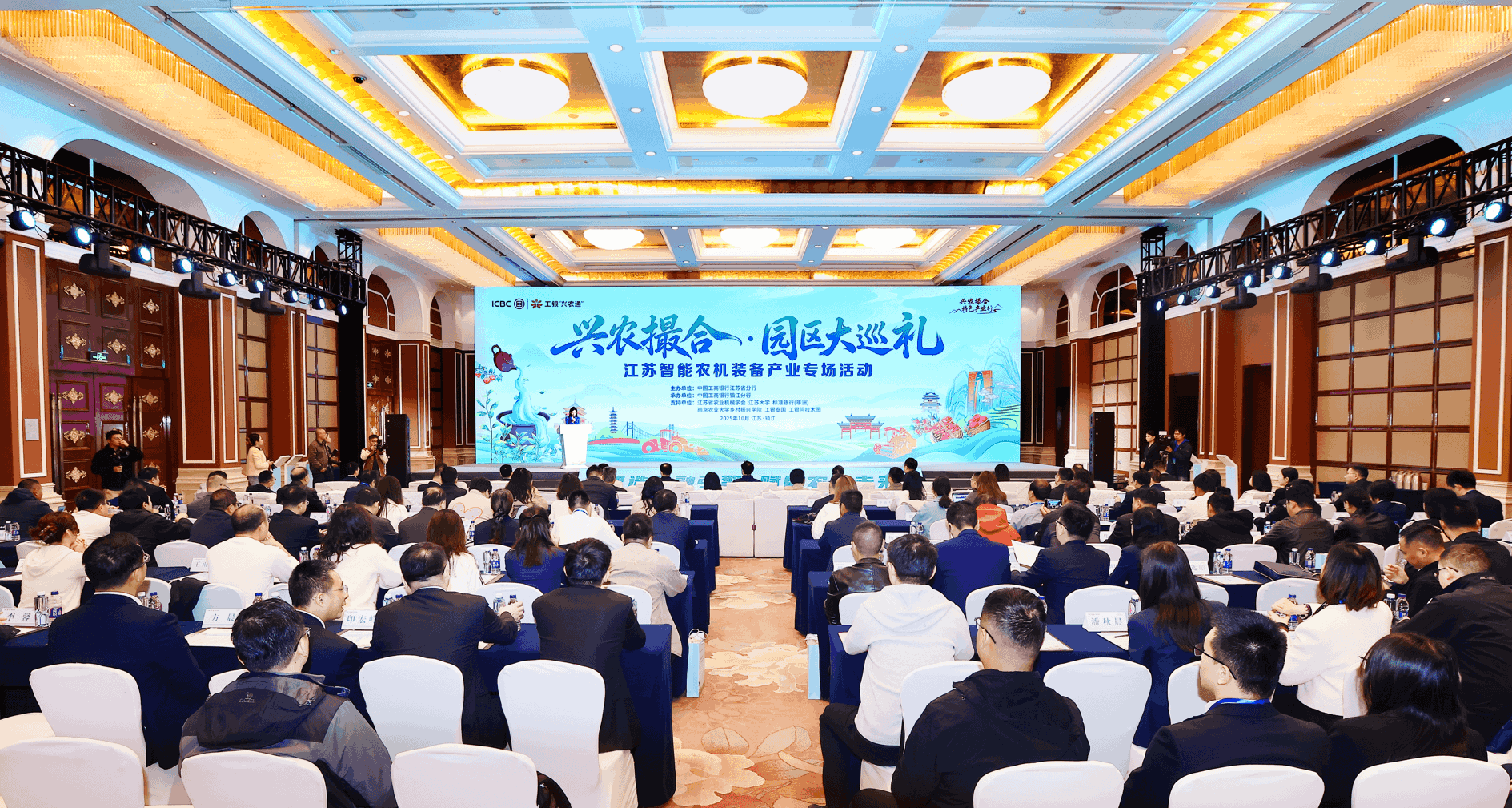
“兴农撮合”赋能乡村振兴,工行江苏分行举办智能农机装备产业专场活动
Zhong Guo Jin Rong Xin Xi Wang· 2025-10-22 14:54
Core Insights - The event "Xingnong Cuohe: Park Grand Tour" focused on the smart agricultural machinery industry in Jiangsu, organized by Industrial and Commercial Bank of China Jiangsu Branch in collaboration with the Ministry of Agriculture and Rural Affairs [1][3] - Since its launch in 2021, the "Xingnong Cuohe" series has provided comprehensive services to 480,000 agricultural operators, supporting modern agricultural parks and specialty industry clusters [3] - The event highlighted the importance of financial support in promoting high-quality development in the smart agricultural machinery sector, with the Jiangsu Branch having issued over 30 billion yuan in related loans [3][4] Financial Support and Innovation - The Jiangsu Branch of ICBC aims to enhance financial supply in the smart agricultural machinery sector through a dual-driven model of "industrial chain finance + scenario finance," focusing on increasing volume, reducing costs, and expanding coverage [4] - The bank has introduced innovative products such as digital supply chain financing and "Agricultural Machinery Loans" to lower financing costs for enterprises [3][4] - The event facilitated partnerships between financial institutions and agricultural machinery companies, including signing comprehensive financial service agreements with key local enterprises [6] Industry Development and Collaboration - Experts from Jiangsu University and other institutions discussed the current status and future prospects of the smart agricultural machinery industry, emphasizing the need for policy support and technological advancements [4] - The event served as a platform for multi-party cooperation among government, banks, enterprises, and educational institutions, promoting effective integration of financial resources with the real economy [6] - The collaboration aims to enhance innovation and mutual support among participants in the smart agricultural machinery sector, reinforcing the role of finance in ensuring food security and advancing rural revitalization strategies [6]

南农晨读 | 甘蔗节节高
Nan Fang Nong Cun Bao· 2025-10-20 02:01
Group 1 - The Ministry of Agriculture and Rural Affairs, along with five other departments, has issued guidelines to support the construction of modern agricultural service centers to enhance agricultural social services and promote agricultural modernization [7][10]. - The focus is on transitioning China's agricultural supply system from "quantity satisfaction" to "quality improvement," emphasizing the need for a strong supply guarantee, technological equipment, operational systems, industry resilience, and competitiveness [11][15]. Group 2 - In Huizhou, the integration of agriculture, culture, and tourism has led to a 15.3% increase in collective operating income for rural villages and a 6.2% rise in per capita disposable income for rural residents in the first half of the year [26][28]. - The city is implementing a high-quality development project to explore a new path for the integration of agriculture, culture, and tourism, effectively activating rural resources and driving industry upgrades [30][31]. Group 3 - A rice technology training class and field observation meeting were successfully held in Shaoguan, attended by agricultural technicians, grain growers, and representatives from various agricultural support teams [33][36].

科技筑牢农业减灾“防护堤”
Ke Ji Ri Bao· 2025-10-20 01:16
Core Viewpoint - Food security is a critical national issue, with autumn grain being a key factor in ensuring overall food safety in China. The recent adverse weather conditions have posed significant challenges to autumn harvests, highlighting the importance of technology in mitigating these risks [1][2]. Group 1: Impact of Weather on Agriculture - Continuous rainfall since September has severely affected regions like Henan, Anhui, and Shandong, leading to waterlogging in fields and difficulties in harvesting [1]. - The current autumn harvest is facing numerous challenges, with the need for rapid progress in both harvesting and planting [1]. Group 2: Role of Technology in Agriculture - The application of smart agricultural machinery, such as tracked harvesters, has significantly improved efficiency in adverse conditions [1]. - High-efficiency drying equipment and precise weather forecasting have played crucial roles in maintaining grain quality and guiding agricultural activities [1][2]. Group 3: Progress in Autumn Harvest - As of now, over 90% of autumn grain crops have been harvested in Henan, with Hebei at 85% and the national average nearing 70% [1]. - Major grain-producing areas are racing against time to complete the autumn harvest [1]. Group 4: Strategic Shifts in Agricultural Practices - The strategy of "storing grain in technology" is essential for transforming traditional agricultural production methods [1]. - The shift from relying on resources and labor to emphasizing technological innovation is a necessary response to global challenges such as climate change and geopolitical tensions [1]. Group 5: Infrastructure and Disaster Resilience - The recent weather events have exposed shortcomings in grain drying and storage facilities, necessitating improvements in agricultural infrastructure [2]. - High-standard farmland construction is crucial for disaster resilience, enabling rapid drainage during floods and ensuring crop growth during droughts [2].
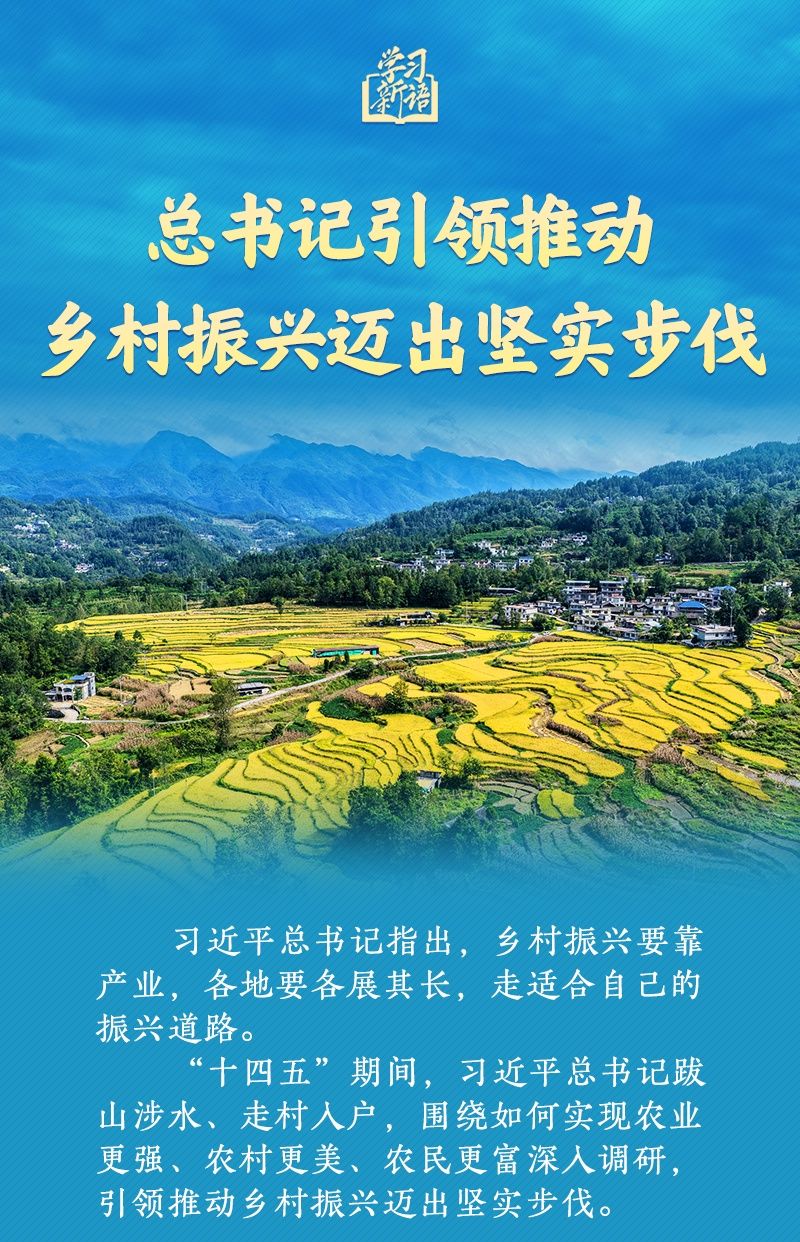
学习新语丨总书记引领推动乡村振兴迈出坚实步伐
Xin Hua She· 2025-10-19 04:21
Core Points - The article emphasizes the importance of industry in rural revitalization, highlighting that each region should develop its own unique path for revitalization [2][10][22] Group 1: Agricultural Development - Xi Jinping stresses the need for high-standard farmland construction and moderate-scale operations to enhance grain yield and quality, thereby attracting more farmers to participate in modern agriculture [13][29] - The article mentions the significance of developing the entire industrial chain in sectors like flower cultivation and pomegranate production to benefit local communities [5][19] Group 2: Tourism and Cultural Heritage - Rural tourism is identified as a significant industry, with a focus on preserving local characteristics and cultural heritage to enhance the tourism experience [7][30] - The integration of traditional village aesthetics with modern elements is encouraged to improve rural living conditions and promote happiness among residents [16][17] Group 3: Technological and Market Integration - The article highlights the necessity of modern agricultural technology promotion and training to improve productivity and sustainability in rural areas [27][34] - Emphasis is placed on the importance of market demand in guiding the development of local industries, ensuring that rural revitalization aligns with consumer needs [22][39]
农行昌吉分行赋能种业高质量发展
Zhong Guo Jin Rong Xin Xi Wang· 2025-10-17 07:59
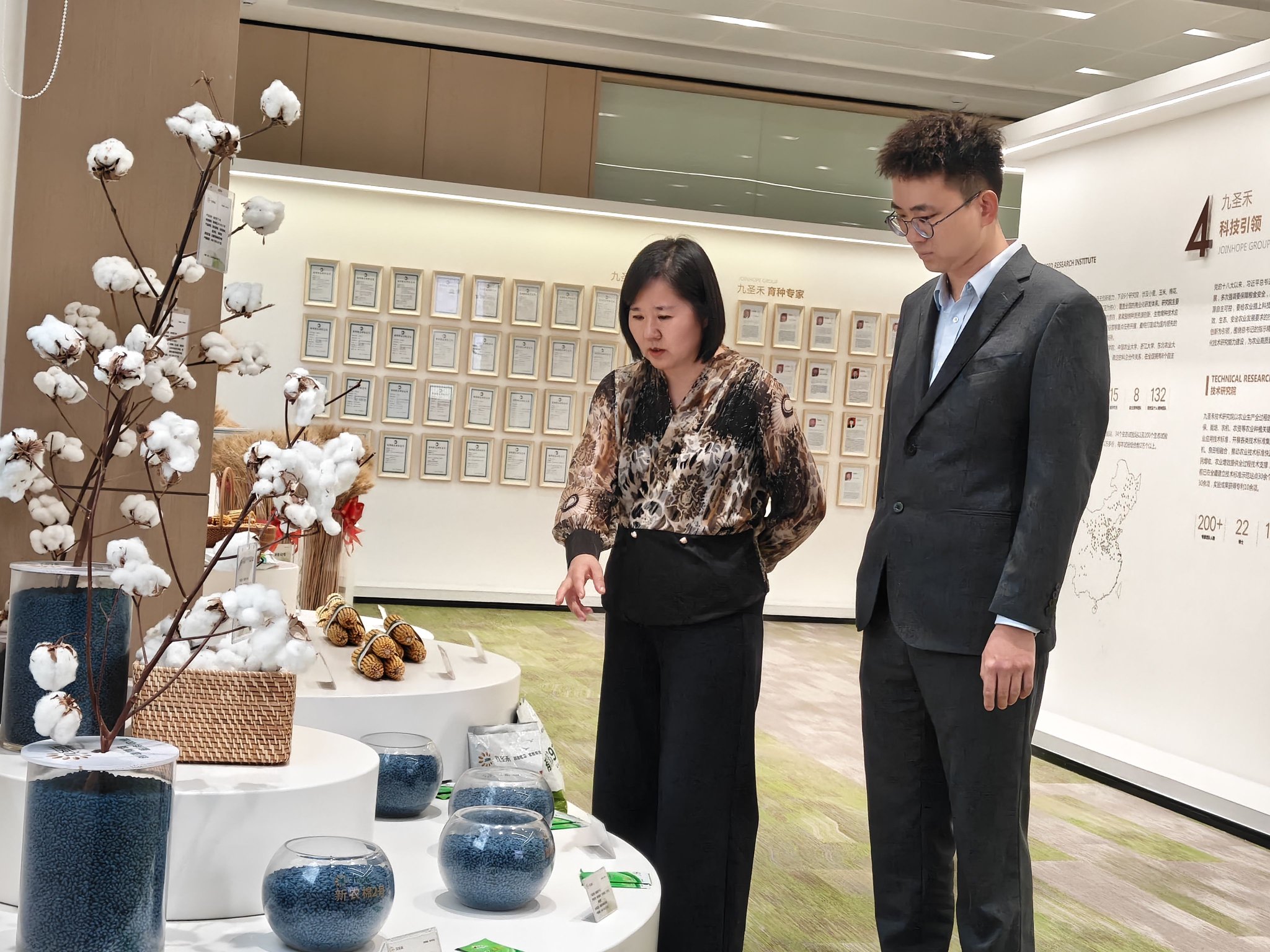
Core Viewpoint - Agricultural Bank of China Changji Branch is innovating financial products and services to meet the financing needs of the grain seed industry, contributing to high-quality development and national food security [1] Group 1: Financial Support and Innovation - The Changji Branch has issued over 1 billion yuan in loans to the grain seed industry over the past three years, supporting food security and technological innovation [1] - The bank has introduced innovative financial services, such as plant variety rights pledge loans, to address the financing difficulties faced by seed companies [7] - A loan of 50 million yuan was successfully issued through the plant variety rights pledge, marking a breakthrough in financing for the seed industry [7] Group 2: Company Overview - Xinjiang Changji Jiushenghe Seed Industry Co., Ltd. is a joint-stock enterprise engaged in the breeding, production, processing, and market services of new varieties of wheat, corn, cotton, and vegetables [3] - The company has established a stable seed production base of 500,000 acres and has 15 modern seed processing production lines, with a total seed production capacity of 300,000 tons [4] Group 3: Research and Development - The company has over 370 varieties and has obtained more than 100 plant variety rights, establishing over 10,000 high-yield demonstration households, with sales covering 18 provinces in China [8] - The focus is on developing drought-resistant, water-saving, high-quality, and disease-resistant new varieties that meet market demands, thereby enhancing agricultural productivity [8]

金融应适应需求变化 促进农业生产经营质效提升
Jin Rong Shi Bao· 2025-10-16 01:33
Core Insights - The primary task of rural revitalization is industrial revitalization, which relies on improving agricultural production efficiency and fostering new agricultural business entities [1] - Financial support is essential for enhancing agricultural production and ensuring stable income for farmers, but there is a mismatch between financial supply and demand in the agricultural sector [1][2] - The increasing complexity of agricultural operations necessitates tailored financial services that align with the evolving needs of agricultural producers [2][4] Financial Supply and Demand - There is a significant mismatch between the diverse funding needs of new agricultural business entities and the rigid lending criteria of financial institutions [1][3] - Many agricultural operators still rely on personal loans rather than corporate or cooperative loans, limiting their borrowing capacity and terms [1][3] - The profitability of agricultural entities has been pressured by market fluctuations, leading to a more urgent need for funding, while financial institutions have become more cautious in lending [1][3] Agricultural Production Adaptation - Agricultural production is increasingly adapting to market demands through intensification, order-based models, and technological integration, which require substantial financial investment [2][4] - The return on investment for agricultural improvements often has a long payback period, creating a mismatch with the short-term lending practices of financial institutions [2] Financial Institution Challenges - Intense competition among county-level financial institutions has led to reduced profit margins and a focus on cost-cutting measures, impacting service delivery [3] - Despite advancements in digital technology, there remains a need for on-the-ground financial services to meet the demands of agricultural producers [3] - New agricultural business entities face challenges in securing loans due to stringent risk management practices, which may hinder their growth [3] Opportunities for Financial Innovation - Financial institutions should focus on identifying "incremental" opportunities rather than competing for existing market share, especially as agricultural entities innovate and expand [4] - There is a need for financial products that are customized to meet the specific funding requirements of agricultural producers, particularly those exploring new markets and technologies [4] - Enhancing service capabilities and developing tailored financial solutions will be crucial for supporting the modernization of agriculture and enabling comprehensive rural revitalization [4]
自觉行动实现“粮食节约人人有责”
Jing Ji Ri Bao· 2025-10-16 00:07
Core Viewpoint - The importance of food waste reduction is emphasized as a collective responsibility, urging individuals to integrate food conservation into their daily lives for a sustainable future [2][4][6] Group 1: Food Waste and Loss - Food loss occurs at every stage from production to consumption, with significant waste observed during events like business banquets and family gatherings, where social pressures lead to over-ordering and food disposal [3] - Households often waste food due to poor planning and excessive purchasing, leading to spoilage and disposal [3] - The restaurant industry lacks adequate management and guidance, with menu designs often promoting excessive consumption and insufficient options for smaller portions [3] Group 2: Food Security and Sustainability - Reducing food loss is crucial for food security and environmental sustainability, as China's grain production has reached 1.4 trillion jin in 2024, yet structural supply-demand imbalances persist [4] - Every grain produced consumes significant land and water resources, highlighting the need for sustainable practices to mitigate environmental impacts [4] Group 3: Agricultural Modernization - The "14th Five-Year Plan" emphasizes the importance of food conservation actions and the transition from extensive agricultural practices to modernized methods, achieving significant reductions in food loss across storage, processing, and transportation [5] - Recent data indicates that average annual losses in these areas account for about 2% of total grain production, with specific loss rates for storage, transport, and processing being 3%, 0.8‰, and 0.8% respectively [5] Group 4: Behavioral Change and Responsibility - Changing perceptions around food consumption is essential, promoting balanced diets and responsible purchasing and cooking habits among consumers [6] - Restaurants are encouraged to take social responsibility by optimizing menu designs and providing options for smaller portions, while regulatory bodies should enhance laws and monitoring to curb food waste [6]

信长星会见中粮集团董事长李国强
Xin Hua Ri Bao· 2025-10-15 23:30
李国强表示,中粮集团与江苏有着深厚合作基础,未来将立足江苏良好的营商环境和区位优势,加 大全产业链布局,拓展双方合作的广度和深度,更好助力江苏高质量发展。 省委常委、常务副省长马欣参加会见。 10月15日,省委书记信长星在南京会见中粮集团党组书记、董事长李国强。 信长星对李国强一行表示欢迎,对中粮集团给予江苏发展的大力支持表示感谢。他说,当前,江苏 正按照习近平总书记重要指示精神,扎实做好"三农"工作,推动农业增效益、农村增活力、农民增收 入,加快建设新时代鱼米之乡,努力在推进农业现代化上走在前。希望中粮集团加大在江苏的投资和业 务布局,进一步深化互利合作,共同为保障国家粮食安全、建设农业强国作出更大贡献。 ...
河南:电力护航“三秋”生产
Xin Hua Cai Jing· 2025-10-14 13:58
Core Viewpoint - Continuous rainfall in Henan province has significantly impacted the autumn harvest and sowing, prompting the State Grid Henan Electric Power Company to implement seven measures to support agricultural production and ensure the operation of drying equipment [1][2]. Group 1: Agricultural Production Challenges - Henan province has experienced the highest rainfall and number of rainy days since 1961 during the autumn season, causing delays in the autumn harvest and difficulties in sowing [1]. - As of October 13, 2023, 9,766 million acres of autumn crops have been harvested, accounting for 82.8% of the total planting area, with 6,362 million acres of grain crops harvested [2]. Group 2: Measures Taken by Electric Power Companies - The State Grid Henan Electric Power Company has introduced measures such as efficient equipment operation, timely response to demands, and enhanced electricity management to support autumn grain production [1]. - In Pingdingshan, the State Grid Pingdingshan Electric Power Company has opened a "green channel" for electricity services and utilized advanced technologies like drones for inspections to ensure safe electricity use in humid conditions [2]. Group 3: Infrastructure and Investment - By the end of 2024, Henan province is expected to have built 88.08 million acres of high-standard farmland, representing about 78% of the total arable land area [3]. - The State Grid Xinxiang Electric Power Company has invested 177 million yuan in the past three years to improve power supply quality through 590 projects, enhancing agricultural production capabilities [3].
结“粮”缘·听“粮”言·谋“粮”策
Zheng Zhou Ri Bao· 2025-10-14 00:57
Core Insights - The 2025 China (Henan) - ASEAN Agricultural Cooperation Development Conference aims to enhance agricultural collaboration between Henan and ASEAN countries, focusing on full-chain and high-level development [1][3][5] Group 1: Event Overview - The conference features nearly 30,000 square meters of exhibition space, showcasing high-quality rice, tropical fruits, and advanced agricultural machinery from ASEAN and Belt and Road countries [2] - Interactive areas include tasting zones for local and ASEAN delicacies, and cultural experiences such as traditional paper-cutting and woodblock printing [2][8] Group 2: Cooperation and Opportunities - Henan is recognized as a major agricultural province in China, with ASEAN being its largest trading partner, creating strong complementary opportunities in grain cultivation, agricultural technology, and product processing [3][7] - The conference facilitates initial cooperation intentions among enterprises, with online channels available for remote participation [3] Group 3: Technological Advancements - The rapid development of digital technology and smart agriculture presents new opportunities for collaboration between Henan and Cambodia, which is seeking to modernize its traditional agricultural practices [4][5] - Zhengzhou Agricultural Development Group is leveraging technology to develop smart agriculture and aims to establish a China-ASEAN smart agriculture demonstration center [5][6] Group 4: Market Potential - The demand for high-quality agricultural raw materials in Henan aligns with the abundant agricultural resources available in ASEAN countries, enhancing trade and investment opportunities [7][8] - The establishment of a China-ASEAN product exhibition center is planned to promote ASEAN agricultural products in Henan, creating a comprehensive platform for trade and cultural exchange [8]