
网络安全

Search documents
离谱!印度强要手机厂商核心源代码,全球巨头就差直接骂人了。网友:这是要明抢啊
程序员的那些事· 2026-01-12 02:58
Core Viewpoint - The Indian government is pressuring Apple to provide the source code of iOS as part of a new security standard proposal, which is unlikely to be realized due to strong opposition from major tech companies [1][3]. Group 1: Government Proposal - The Indian government is preparing a new security standard plan that includes 83 items across various fields [3]. - The proposal requires tech companies to notify the government of major updates, retain security audit logs for 12 months, regularly prompt users to review permissions, and submit source code to government-designated labs for testing and vulnerability assessment [3]. Group 2: Industry Response - Major companies like Apple, Samsung, Google, and Xiaomi have collectively opposed the new regulations, arguing that source code is a core business secret and its disclosure could jeopardize technological security [4]. - The Indian industry organization MAIT has directly opposed the requirements, stating that they are impractical and has requested the government to withdraw the proposal [4]. - Concerns have been raised regarding the 12-month log storage and mandatory malware scanning, which could either consume phone storage or significantly drain battery life [4].





天融信涨2.10%,成交额1.06亿元,主力资金净流入470.49万元
Xin Lang Zheng Quan· 2026-01-12 01:52
Company Overview - Tianrongxin Technology Group Co., Ltd. is located in Shantou, Guangdong Province, and was established on August 30, 1985. It was listed on February 1, 2008. The company primarily engages in network security, with revenue composition as follows: network security 86.98%, intelligent computing cloud 12.40%, and others 0.63% [1]. Stock Performance - As of January 12, Tianrongxin's stock price increased by 2.10%, reaching 9.73 CNY per share, with a trading volume of 1.06 billion CNY and a turnover rate of 0.93%. The total market capitalization is 11.476 billion CNY [1]. - Year-to-date, Tianrongxin's stock price has risen by 7.28%, with a 5-day increase of 5.99%, a 20-day increase of 11.07%, and a 60-day increase of 3.07% [1]. Financial Performance - For the period from January to September 2025, Tianrongxin reported a revenue of 1.202 billion CNY, a year-on-year decrease of 24.01%. The net profit attributable to shareholders was -235 million CNY, down 39.10% year-on-year [2]. - Since its A-share listing, Tianrongxin has distributed a total of 456 million CNY in dividends, with 44.2017 million CNY distributed over the past three years [3]. Shareholder Information - As of September 30, 2025, the number of Tianrongxin shareholders reached 118,700, an increase of 60.25% from the previous period. The average number of circulating shares per shareholder decreased by 37.60% to 9,833 shares [2]. - Among the top ten circulating shareholders, Hong Kong Central Clearing Limited is the fifth largest, holding 19.3638 million shares, an increase of 1.6225 million shares from the previous period. The Southern CSI 1000 ETF is the eighth largest, holding 10.7835 million shares, a decrease of 133,000 shares [3]. Industry Classification - Tianrongxin is classified under the Shenwan industry category of computer software development, specifically in horizontal general software. It is associated with concepts such as digital economy, smart city, Huawei Kunpeng, network security, and integrated machine concepts [1].

电科网安股价涨5.41%,国泰基金旗下1只基金位居十大流通股东,持有575.83万股浮盈赚取673.72万元
Xin Lang Cai Jing· 2026-01-12 01:51
截至发稿,艾小军累计任职时间12年3天,现任基金资产总规模1690.29亿元,任职期间最佳基金回报 286.65%, 任职期间最差基金回报-46.54%。 风险提示:市场有风险,投资需谨慎。本文为AI大模型自动发布,任何在本文出现的信息(包括但不 限于个股、评论、预测、图表、指标、理论、任何形式的表述等)均只作为参考,不构成个人投资建 议。 责任编辑:小浪快报 数据显示,国泰基金旗下1只基金位居电科网安十大流通股东。国泰中证军工ETF(512660)三季度减 持111.51万股,持有股数575.83万股,占流通股的比例为0.68%。根据测算,今日浮盈赚取约673.72万 元。 1月12日,电科网安涨5.41%,截至发稿,报22.79元/股,成交8719.31万元,换手率0.45%,总市值 192.72亿元。 国泰中证军工ETF(512660)成立日期2016年7月26日,最新规模141.09亿。今年以来收益13.47%,同 类排名116/5579;近一年收益59.03%,同类排名871/4202;成立以来收益55.64%。 资料显示,中电科网络安全科技股份有限公司位于四川省成都高新技术产业开发区云华路333号 ...

股市必读:启明星辰(002439)1月9日董秘有最新回复
Sou Hu Cai Jing· 2026-01-11 18:28
Core Viewpoint - The company, Qiming Star (启明星辰), is actively engaged in quantum technology research and has made advancements in quantum security products, while also addressing investor concerns regarding stock performance and corporate governance [2][4]. Group 1: Company Performance - As of January 9, 2026, Qiming Star's stock closed at 14.96 yuan, reflecting a 1.98% increase, with a turnover rate of 2.69% and a trading volume of 195,400 shares, amounting to a transaction value of 290 million yuan [1]. - On the same day, the net inflow of main funds was 8.3671 million yuan, indicating a positive short-term sentiment from major investors [4]. Group 2: Quantum Technology Initiatives - The company is collaborating with China Mobile to advance quantum technology, focusing on security threats related to quantum computing. It has upgraded its anti-quantum encryption systems and integrated quantum key distribution technology into its VPN products [2]. - Qiming Star has successfully implemented quantum security solutions in critical information infrastructure sectors such as finance and telecommunications [2]. Group 3: Employee Stock Ownership Plan - The second phase of the employee stock ownership plan is set to expire on July 9, 2026, with the plan currently holding 487,115 shares, representing 0.04% of the total share capital. The company will decide on the timing and quantity of stock sales based on market conditions [3][4]. Group 4: Corporate Governance and Investor Relations - The company emphasizes the importance of fair information disclosure and compliance, ensuring that all investors receive significant information through formal channels [2]. - In response to concerns about stock price manipulation, the company is committed to monitoring trading activities to maintain a healthy investment environment [2].

记最美基层民警、辽宁省葫芦岛市绥中县公安局网安大队副大队长冯晶
Xin Lang Cai Jing· 2026-01-11 02:48
02 啦 子政策,研究推行常住地提供基本公共 国自然保护区条例(修订草案)》。 会议指出,实施财政金融协同促 内需一揽子政策,是扩大有效需求、创 新宏观调控的重要举措。要加强财政 政策与金融政策配合联动,充分发挥 政策效应,引导社会资本参与促消费、 扩投资。围绕促进居民消费,优化实 款贴息政策,推动增加优质服务供给, 增强居民消费能力。围绕支持民间投 资,实施中小微企业贷款贴息政策,设 立民间投资专项担保计划,建立支持 1月10日 星期六 一版编辑:吴晓杰,包哈 本版编辑:高导元,王清彬 李 强 主 持 召 开 国 务 院 常 务 会 议 部署实施财政金融协同促内需一揽子政策,研究推行常住地提供基本公共 服务有关工作,审议通过《中华人民共和国自然保护区条例(修订草案)》 新华社北京1月9日电 国务院总 民营企业债券风险分担机制,优化实 理李强1月9日主持召开国务院常务会 施设备更新贷款财政贴息政策,进一 议,部署实施财政金融协同促内需一揽 步降低企业融资门槛和成本。要采取 施,加强服务事项协同经办,不断完善 更多便利化措施,切实推动政策落地 服务有关工作,审议通过《中华人民共和 见效,增强群众和企业获得感。要 ...
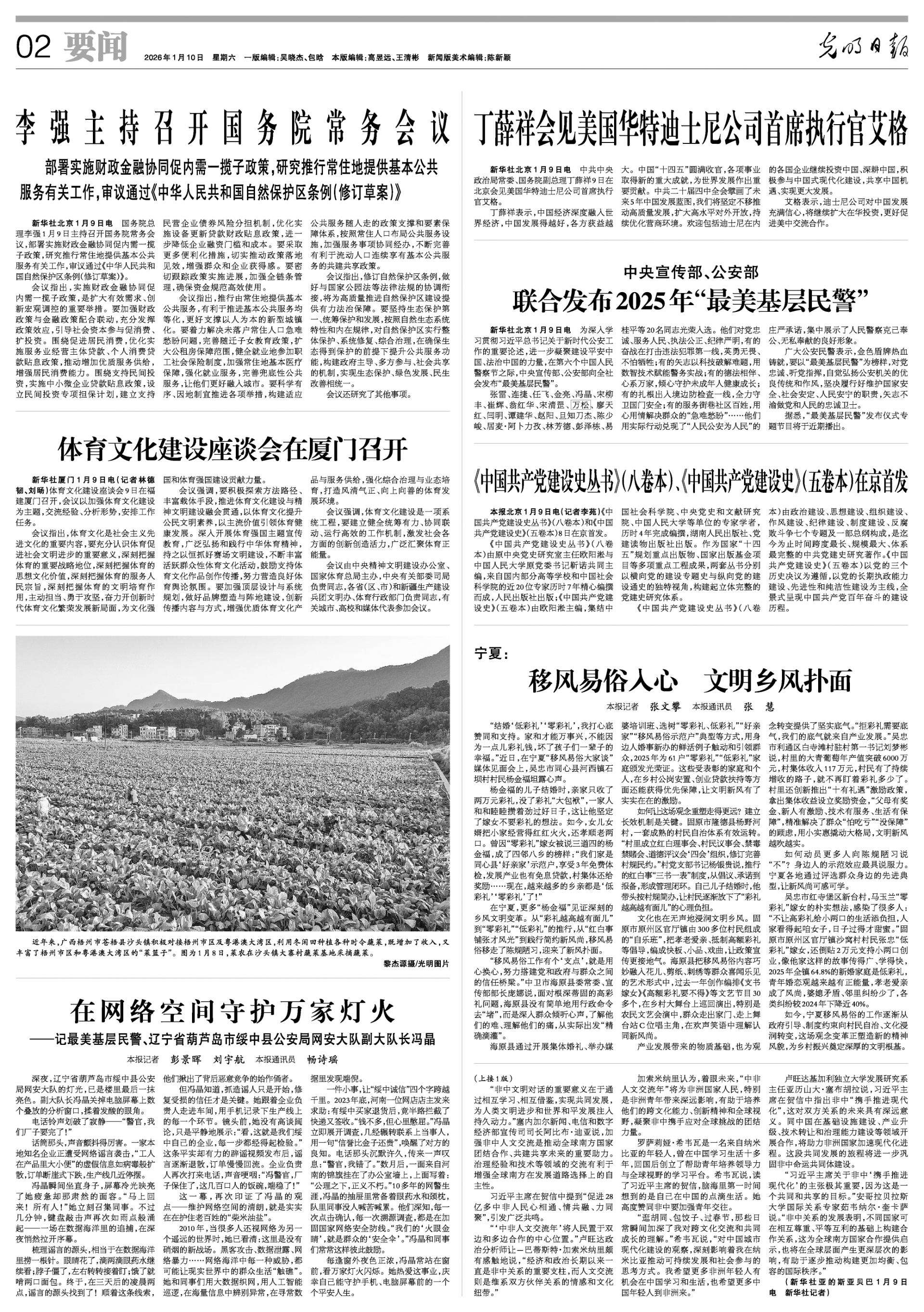
在网络空间守护万家灯火 ——记最美基层民警、辽宁省葫芦岛市绥中县公安局网安大队副大队长冯晶
Xin Lang Cai Jing· 2026-01-11 02:47
这一幕,再次印证了冯晶的观点——维护网络空间的清朗,就是实实在在护住老百姓的"柴米油盐"。 电话铃声划破了寂静——"警官,我们厂子要完了!" 话筒那头,声音颤抖得厉害。一家本地知名企业正遭受网络谣言袭击,"工人在产品里大小便"的虚假信 息如病毒般扩散,订单断崖式下跌,生产线几近停摆。 冯晶瞬间坐直身子,屏幕冷光映亮了她疲惫却那肃然的面容。"马上回来!所有人!"她立刻召集同事。不 过几分钟,键盘敲击声再次如雨点般涌起——一场在数据海洋里的追捕,在深夜悄然拉开序幕。 梳理谣言的源头,相当于在数据海洋里捞一根针。眼睛花了,滴两滴眼药水继续看;脖子僵了,左右转 转接着盯;饿了就啃两口面包。终于,在三天后的凌晨两点,谣言的源头找到了!顺着这条线索,他们 揪出了背后恶意竞争的始作俑者。 但冯晶知道,抓造谣人只是开始,修复受损的信任才是关键。她跟着企业负责人走进车间,用手机记录 下生产线上的每一个环节。镜头前,她没有高谈阔论,只是平静地展示:"看,这就是我们绥中自己的 企业,每一步都经得起检验。"这条平实却有力的辟谣视频发布后,谣言逐渐退散,订单慢慢回流。企 业负责人再次打来电话,声音哽咽:"冯警官,厂子保住了,这几百口人 ...
154个数据库被暗网黑客窃取?ASML回应
Guan Cha Zhe Wang· 2026-01-10 01:33
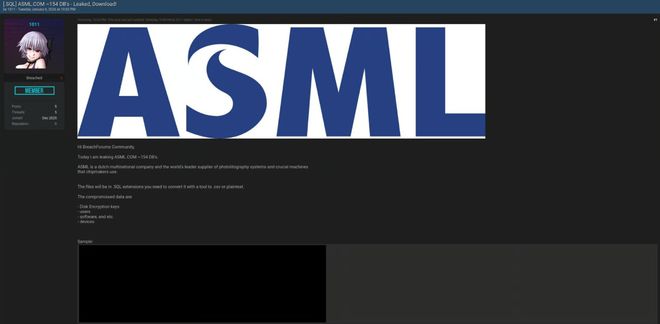
Core Viewpoint - A hacker known as "1011" claimed to have breached ASML's systems and stolen sensitive data, but ASML has refuted these claims, stating that the hacker's assertions are baseless and that the referenced files do not contain any ASML data [1][3]. Group 1 - The hacker "1011" posted on the dark web forum "BreachForums," claiming to have stolen 154 databases from ASML, including user information, software data, and encryption keys [1]. - Cybernews conducted a technical analysis and found that the sample data provided by "1011" was from a server with no verifiable connection to ASML and only contained default admin credentials, lacking any valuable encryption keys or confidential files [3]. - It is believed that "1011" may be fabricating claims of hacking to gain "points" on dark web forums, which can be used to purchase valuable content from other users [3]. Group 2 - ASML issued a statement on January 7, asserting that the claims of a data breach or hacking are unfounded and that a thorough investigation found no evidence of a breach [3].

154个数据库被暗网黑客窃取?ASML:毫无根据
Guan Cha Zhe Wang· 2026-01-10 01:16
Core Viewpoint - A hacker known as "1011" claimed to have breached ASML's systems and stolen sensitive data, but ASML has denied these allegations, stating that the claims are unfounded and the data cited does not belong to the company [1][4]. Group 1: Incident Details - The hacker "1011" posted on the dark web forum "BreachForums," claiming to have stolen 154 databases containing sensitive company information, including user data, software data, and encryption keys [1]. - Cybernews conducted a technical analysis and found that the sample data released by "1011" originated from a server with no verifiable connection to ASML, containing only default admin credentials and lacking any valuable encryption keys or confidential files [3]. Group 2: Analysis and Implications - Analysts suggest that "1011" may be fabricating claims of hacking well-known companies to gain "points" on dark web forums, which function like currency for purchasing valuable content [4]. - ASML issued a statement on January 7, asserting that after a thorough investigation, the claims of a breach or data leak are baseless, and the documents referenced by the hacker do not contain any ASML data [4].

银信科技涨2.05%,成交额1.16亿元,主力资金净流入271.10万元
Xin Lang Cai Jing· 2026-01-09 06:46
Group 1 - The core viewpoint of the news is that Yinxin Technology's stock has shown a positive trend with a 2.05% increase on January 9, 2025, and the company has a market capitalization of 4.869 billion yuan [1] - Yinxin Technology's main business includes IT infrastructure services, IT operation and maintenance services, and system integration services, with revenue composition being 48.15% from system integration, 44.96% from IT operation and maintenance, 5.68% from computing power services, and 1.21% from software development and sales [1] - As of September 30, 2025, Yinxin Technology achieved an operating income of 1.262 billion yuan, representing a year-on-year growth of 9.08%, and a net profit attributable to shareholders of 52.686 million yuan, with a year-on-year increase of 3.42% [2] Group 2 - Yinxin Technology has distributed a total of 719 million yuan in dividends since its A-share listing, with 212 million yuan distributed in the last three years [3] - As of September 30, 2025, the number of shareholders of Yinxin Technology decreased by 8.92% to 45,600, while the average circulating shares per person increased by 9.79% to 9,741 shares [2] - The company is categorized under the computer-IT services sector and is involved in concepts such as digital economy, smart city, network security, and computing power [2]

网宿科技涨2.04%,成交额1.92亿元,主力资金净流出565.53万元
Xin Lang Cai Jing· 2026-01-09 02:33
Core Viewpoint - Wangsu Technology's stock has shown a mixed performance with a year-to-date increase of 7.51%, while experiencing a decline of 7.71% over the past 60 days, indicating volatility in its market position [1]. Group 1: Stock Performance - As of January 9, Wangsu Technology's stock price reached 11.02 CNY per share, with a trading volume of 1.92 billion CNY and a market capitalization of 271.03 billion CNY [1]. - The stock has seen a net outflow of 5.6553 million CNY from major funds, with significant buying and selling activity from large orders [1]. Group 2: Financial Performance - For the period from January to September 2025, Wangsu Technology reported a revenue of 3.492 billion CNY, reflecting a year-on-year decrease of 3.27%, while the net profit attributable to shareholders increased by 43.60% to 616 million CNY [2]. Group 3: Shareholder Information - As of December 10, 2025, the number of shareholders for Wangsu Technology was 171,400, showing a slight increase of 0.16%, while the average circulating shares per person decreased by 0.16% to 13,452 shares [2]. - The company has distributed a total of 2.169 billion CNY in dividends since its A-share listing, with 1.338 billion CNY distributed over the past three years [3]. Group 4: Institutional Holdings - As of September 30, 2025, major institutional shareholders include E Fund's ChiNext ETF, which holds 44.1262 million shares, a decrease of 7.0387 million shares from the previous period [3]. - Other significant shareholders include Southern CSI 500 ETF and Hong Kong Central Clearing Limited, both of which have also reduced their holdings [3].
