
自主创新

Search documents
政策利好叠加产业突破,港股科网板块未来可期
Mei Ri Jing Ji Xin Wen· 2025-11-19 03:15
Group 1 - The capital market policies in China have significantly increased in intensity over the past two years, focusing on supporting technological development [1] - The reform direction of the capital market aims to optimize resource allocation and guide orderly flow of factors to serve the development of new productive forces [1] - Recent technological breakthroughs in areas such as large models, robotics, smart vehicles, and quantum computing are driven by top-level policy design that enhances the innovation ecosystem [1] Group 2 - The strategic competition between China and the US has evolved from trade friction to technology, with the US intensifying technology restrictions on China [1] - External pressures have accelerated China's pace of independent innovation, transitioning from a "follower" to a "leader" in technology [1] - Significant breakthroughs have been achieved in key technology fields in China since 2024, including Huawei's Ascend chips nearing international leading performance and domestic humanoid robots breaking foreign monopolies [1] Group 3 - The Chinese technology sector is witnessing a shift from technological catch-up to partial leadership in certain areas, exemplified by iFlytek's large model capabilities surpassing international counterparts and BYD's electric platform technology being exported to international giants [1] - This "pressure-response-breakthrough" innovation paradigm is reshaping the global technology competition landscape [1] Group 4 - The Hong Kong stock market is gathering domestic AI core assets, covering the entire industry chain including computing power, models, software applications, and hardware terminals, positioning itself as a pioneer in the revaluation of Chinese assets [2] - The Hong Kong Stock Connect Technology ETF (159101) covers the entire technology industry chain, while the Hang Seng Internet ETF (513330) focuses on leading internet companies [3]
看浪听风观云:自主创新为极地科考保驾护航
Xin Hua She· 2025-11-17 19:25
Core Viewpoint - The article highlights the advancements in meteorological support for China's polar scientific expeditions, particularly focusing on the "Mazu" ocean environment forecasting system, which enhances the accuracy and timeliness of weather predictions for maritime operations in extreme conditions [4][6][12]. Group 1: Technological Innovations - The "Mazu" system includes multiple sub-models for ocean circulation, waves, and sea ice, significantly improving the precision of wave forecasts through a hexagonal grid framework [4][6]. - The "Mazu·Wave" model can achieve GPU parallel acceleration, allowing for effective warnings about wave disasters 5 to 7 days in advance [6][8]. Group 2: Operational Enhancements - The meteorological support team can now predict cyclone formation, movement, and intensity changes 5 to 7 days ahead, allowing for more flexible and intelligent navigation strategies through the challenging "Roaring Forties" [9][11]. - The "Snow Dragon" vessel employs various crossing strategies based on real-time weather conditions, enhancing safety during expeditions [11]. Group 3: Historical Context and Evolution - Since the first Antarctic expedition in 1984, China has transitioned from hand-drawn weather maps to advanced autonomous technologies for weather observation, significantly improving the stability and reach of polar research missions [12].

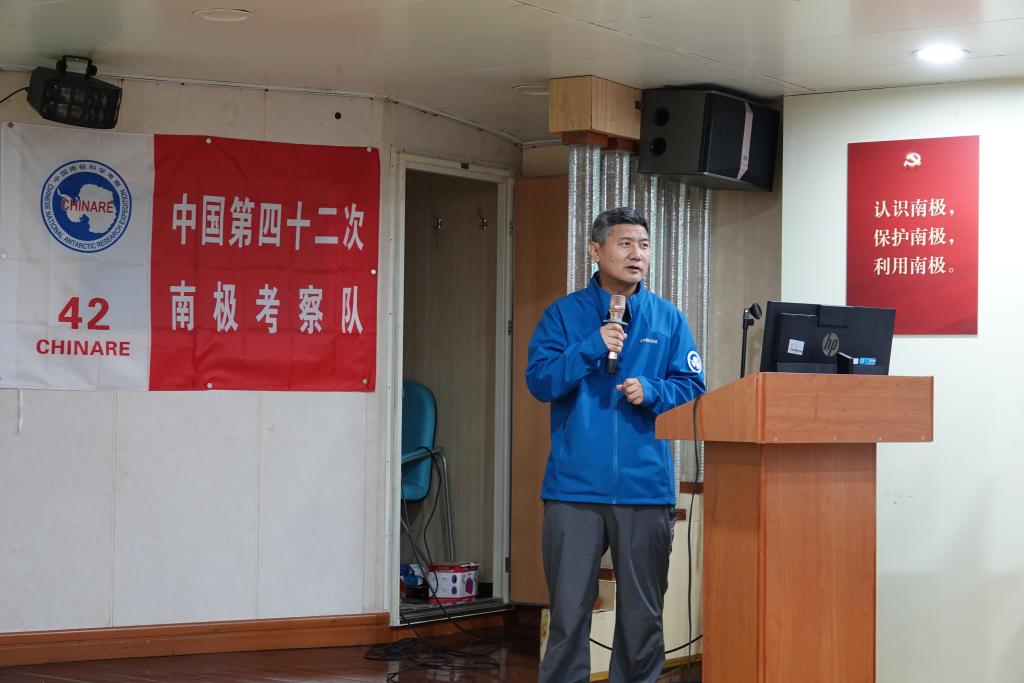
科学与健康|看浪听风观云:自主创新为极地科考保驾护航
Xin Hua She· 2025-11-17 15:17
原来,"妈祖"是我国自主研发的全谱系海洋环境预报系统的代号,包含海洋环流、海浪、海冰等多个子 模型。其中,"妈祖·海浪"模型采用基于六边形非结构网格的有限体积平流动力框架,可以更精确模拟 海浪变化,大幅度提升预报精度和时效。 新华社北京/"雪龙"号11月17日电 题:看浪听风观云:自主创新为极地科考保驾护航 新华社记者顾天成、徐鹏航 海浪、海风、海冰等海洋自然灾害,常给人类生活生产造成巨大损失,也是执行极地科考任务的潜在挑 战。 自20世纪80年代中国开启极地科学考察以来,每一艘科考船、每一座科考站都有气象保障团队。近年来 我国加大海洋灾害预警、预报技术和设备投入,一批自主研发技术和设备广泛应用于极地考察。 听风、看浪、观云,科技创新为中国第42次南极考察队保驾护航。 更精确模拟海浪变化 "妈祖"——在"雪龙"号上,气象预报员讨论未来海况时,常提到这样一个关键词。 这一在中国沿海地区备受敬仰的"守护者"与气象预报有何联系? "传统框架好比一张固定尺寸的网,而六边形框架能自由加密,捕捉到更精细的海洋变化。""雪龙"号气 象预报员、国家海洋环境预报中心研究员张蕴斐说。 实践证明,"妈祖·海浪"数值预报模式可实现G ...
莫迪狂言冲前五?印度造船梦碎!中国船厂早把技术焊死赢麻了
Sou Hu Cai Jing· 2025-11-17 11:11
全球造船行业的变迁,就像是一场大型的接力赛。二战后,英美国家曾是全球造船的领头羊,到了60年代,日本接过了这个接力棒,80年代时,韩国迅速超 车,2010年以后,中国一举崛起,牢牢占据了世界造船业的领导地位,堪称"江山代有才人出"。 如今,轮到印度开始兴奋了!中美博弈让印度看到了潜在的机会窗口,莫迪总理喊出了"十年内进入全球前五"的口号,不仅投入资金设立基金,还收购了斯 里兰卡的船厂,表现得相当雄心勃勃。印度自己总结了不少优势:海岸线漫长,人工成本极低,科钦造船厂还获得了法国的订单,印度似乎已经准备好复制 中国、日韩的成功之路。 总的来说,莫迪总理的雄心值得肯定,但造船业的成功从来不是靠喊口号就能实现的。如果印度能真正静下心来,花上15年时间逐步积累,或许还有机会。 但如果仍抱着"抄作业"的心态,恐怕只能在"全球前五"的门口徘徊了。 与中国的顺风顺水相比,印度则错失了很多机会。虽然苏联在当年给予了印度102项援助,但这些援助只是成品的转交,并没有提供核心技术。印度在与西 方国家建立关系时,也比中国晚了近20年,等到2010年代西方国家终于开始重视它时,全球化的红利早已过去,许多高科技技术都已经被严密封锁,印度 ...
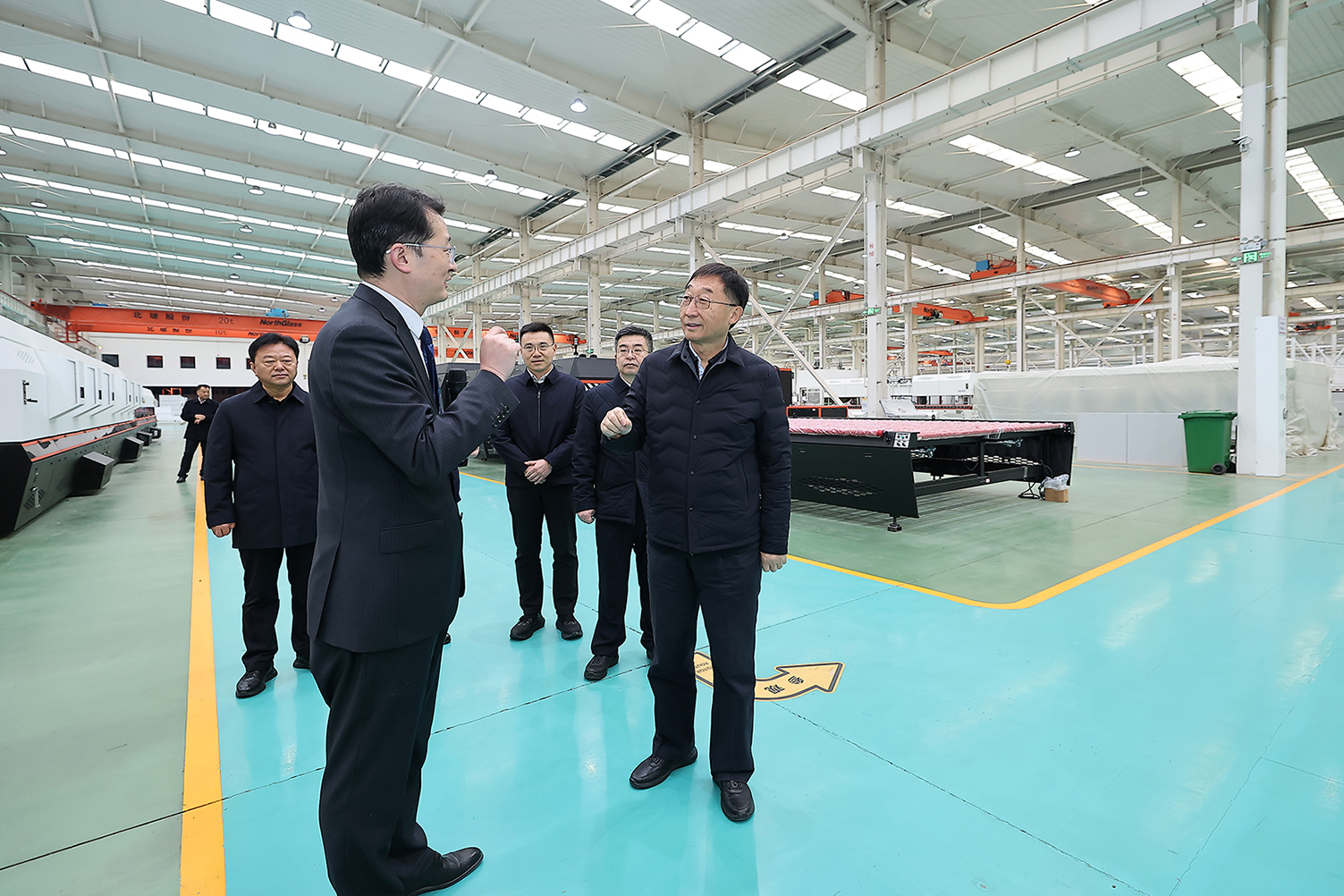
刘宁到洛阳市新安县宜阳县调研时强调:贯彻落实党的二十届四中全会精神 着力打造县域特色现代化产业集群
He Nan Ri Bao· 2025-11-17 10:54
Group 1: Industry Development - Liu Ning emphasized the importance of innovation-driven development in the bearing equipment industry cluster in Xin'an County, highlighting the application of bearing products in wind power and marine engineering [3] - The company Luoyang Beibo High-end Equipment Co., Ltd. produces glass deep processing equipment that is exported globally, showcasing the potential for high-end manufacturing [3] - The focus on building a modern industrial system includes strengthening key technology breakthroughs and enhancing the competitiveness of the industrial chain [3] Group 2: Aerospace and New Materials - At the Luoyang Aerospace Equipment Intelligent Innovation Industrial Park, Liu Ning discussed the development of the aerospace equipment industry and the importance of integrating resources and promoting innovation [4] - Luoyang Hanghui New Materials Co., Ltd. is recognized as a national-level "little giant" enterprise specializing in high-end titanium alloy materials, indicating a strong focus on advanced manufacturing technologies [4] - The emphasis on developing strategic emerging industries, such as new materials, aligns with national strategic needs and aims to enhance technological research and application scenarios [4] Group 3: Cultural Heritage and Tourism - Liu Ning visited the Qiantang Zhizhai Museum to assess the preservation and utilization of cultural relics, stressing the importance of protecting and promoting Chinese cultural heritage [4] - The integration of cultural heritage with tourism is seen as a vital area for development, aiming for creative transformation and innovative development of intangible cultural heritage [4] Group 4: Economic and Social Development - The focus on the "1+2+4+N" target task system aims to enhance the integration of technological and industrial innovation, strengthening county-level leading industries [5] - The goal is to improve the quality of industrial park construction and ensure the successful completion of annual objectives, contributing to the overall economic development strategy [5]


《求是》杂志发表韩文秀的重要文章《深刻领会因地制宜发展新质生产力的重要论述和决策部署》|宏观经济
清华金融评论· 2025-11-17 10:38
Core Viewpoint - The article emphasizes the importance of understanding and implementing Xi Jinping's discourse on developing new quality productivity in accordance with local conditions, which is crucial for establishing a solid material and technological foundation for Chinese-style modernization [3][4]. Summary by Sections Understanding New Quality Productivity - New quality productivity is characterized by innovation, moving away from traditional economic growth models, and is defined by high technology, high efficiency, and high quality, aligning with advanced production quality [5][6]. - Innovation is the core element of new quality productivity, encompassing technological, business model, management, and institutional innovations [6][7]. Key Characteristics - The focus is on quality improvement rather than just quantitative growth, with an emphasis on optimizing the combination of production factors to enhance overall productivity [7][8]. - New quality productivity signifies advanced productivity, which includes higher-skilled labor, advanced technological tools, and a broader range of labor objects, reflecting the evolution of production factors [8]. Basic Requirements for Development - The development of new quality productivity must respect and understand development laws, including the integration of market and government roles, and the importance of both basic and applied research [10][11]. - Regions should leverage their unique resources and industrial foundations to promote new industries and models, ensuring that traditional industries are not neglected but rather enhanced through new technologies [12][13]. Core Drivers and Systemic Support - Strengthening independent innovation is crucial, focusing on original and disruptive technological advancements, and fostering a robust innovation ecosystem [14][15]. - Building a modern industrial system is essential, balancing the upgrade of traditional industries with the development of strategic emerging industries [15][16]. Market and Reform Initiatives - Establishing a strong domestic market is vital for the growth of new quality productivity, emphasizing the role of consumption and investment in driving economic activity [16][17]. - Deepening reforms to create a supportive environment for innovation and productivity development is necessary, including optimizing the allocation of production factors and enhancing the financial system [17][18]. International Cooperation - Expanding high-level openness is important for integrating into the global economy, facilitating the flow of advanced production factors, and enhancing international collaboration [18].

犹太和盎撒资本内斗?张维为:一个重要原因是美国收割不了中国
Sou Hu Cai Jing· 2025-11-17 08:00
Group 1 - The historical collaboration between Jewish capital and Anglo-Saxon capital has allowed the U.S. to dominate global wealth through military and financial means [1][3][5] - Post-World War II, this partnership continued to exploit global resources, utilizing strategies such as food embargoes and dollar hegemony to control other nations [5][9] - The U.S. agricultural sector, particularly the four major grain companies, has historically monopolized global food trade, using tactics to undermine countries like the Soviet Union and Brazil [5][7] Group 2 - The U.S. dollar's dominance has been maintained through the Federal Reserve, heavily influenced by Jewish capital, which manipulates interest rates to attract global capital [9][11] - Despite U.S. financial maneuvers, China's currency has remained stable, showcasing its resilience against American economic strategies [9][14] - China's advancements in technology and self-sufficiency, particularly in rare earth elements, have shifted the balance of power, making it less reliant on U.S. markets [11][14] Group 3 - The differing interests of Jewish and Anglo-Saxon capital have led to internal conflicts within the U.S., particularly as trade wars and technology sanctions impact Jewish capital's investments in China [14][16] - The passage of the Anti-Semitism Awareness Act has exacerbated tensions between political parties, reflecting the growing divide between these two capital factions [16] - The lack of new wealth sources for the U.S. has intensified competition between these capital groups, potentially leading to ongoing internal strife [16]

“中国屏”靠什么逆袭
Ren Min Ri Bao· 2025-11-17 04:18
Core Insights - The article highlights the transformation of China's display industry from a reliance on foreign technology to becoming a global leader, showcasing China's rapid technological advancement and self-reliance in high-level technology [1][4]. Group 1: Market Position and Growth - China's display panel global market share has reached 55%, and the display materials market share is at 43%, both ranking first globally, with the industry's output value accounting for nearly half of the global market [1]. - The display industry has evolved significantly over the past two decades, overcoming initial challenges and reducing foreign dependency, which previously saw display panels as the fourth largest import product [1][2]. Group 2: Policy and Strategic Support - The rise of "China Screen" is attributed to proactive policy frameworks and government-enterprise collaboration, starting with the 2009 "Electronic Information Industry Adjustment and Revitalization Plan" that aimed to overcome bottlenecks in the new display industry [2]. - Subsequent policies and plans, including the "12th Five-Year Plan for Electronic Information Manufacturing" and the "Action Plan for Innovative Development of New Display Industry (2014-2016)," have further propelled the industry forward [2]. Group 3: Innovation and Technology Development - A clear understanding of industry trends and a commitment to independent innovation have been crucial for the development of the display industry, with companies adopting a dual-track strategy to navigate technological shifts [3]. - During the "14th Five-Year Plan" period, R&D investment in the display industry is expected to grow annually by 18%, with patent applications accounting for 42% of the global total, indicating a strong focus on innovation [3][4]. Group 4: Supply Chain and Market Advantages - Significant advancements have been made in key materials and upstream manufacturing equipment, with domestic replacement rates for polarizers and photoresists exceeding 60%, and market shares for domestic deposition and exposure machines rising to 35% [4]. - The vast domestic market and diverse application scenarios, including smartphones, electric vehicles, and AI technologies, have created substantial growth opportunities, with projections estimating the new display industry's output value to approach 800 billion yuan by 2025 [4].
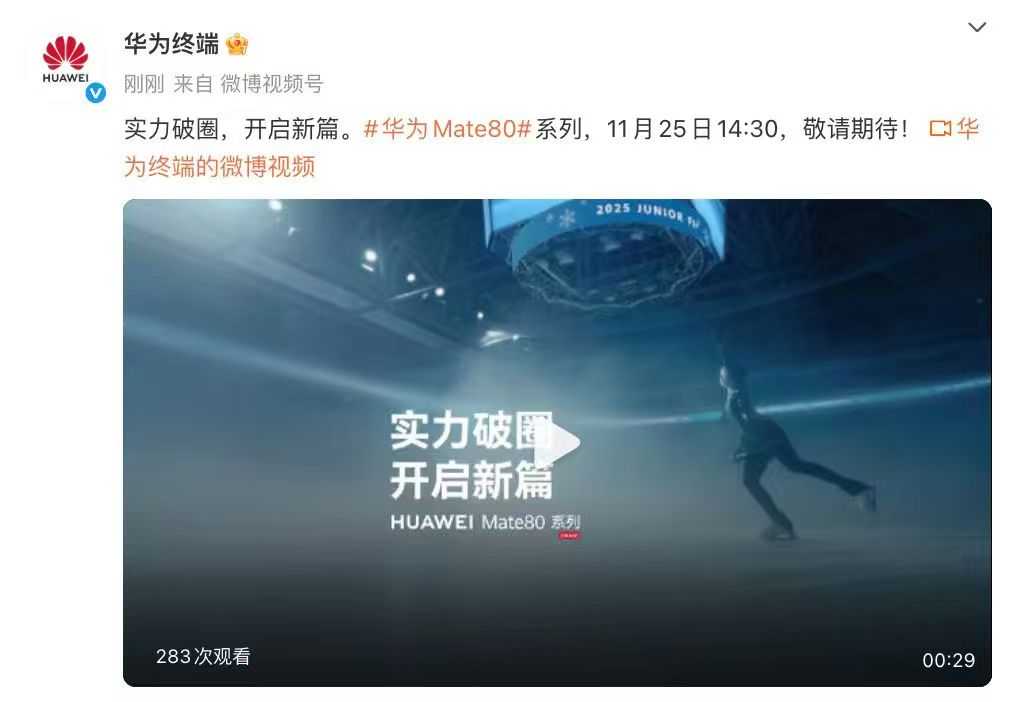
华为新品发布会定档11月25日
Jing Ji Guan Cha Wang· 2025-11-17 02:04
Core Insights - Huawei's Mate80 series and Mate X7, along with other new products, will be officially launched on November 25 at 14:30, marking a significant event in the tech industry [1] - The Mate80 series is expected to feature high-quality color options such as "Spruce Green" and "Extreme Day Gold," emphasizing both technology and aesthetics [1] - The anticipation surrounding the Mate80 series is not only due to its technological capabilities but also its representation of China's achievements in independent innovation [1] - The new devices are likely to be the first to run on HarmonyOS 6, which has rapidly developed over the past year, aiming to compete with established ecosystems like Apple and Android [1]
中经评论:完善政府采购事关全国统一大市场
Jing Ji Ri Bao· 2025-11-17 00:03
Core Insights - The total government procurement scale in China for 2024 is projected to reach 33,750 billion yuan, showing significant growth from 1,009 billion yuan in 2002, indicating a promising future for government procurement [1] Group 1: Government Procurement Scale and Structure - The proportions of government procurement in terms of goods, engineering, and services are 23.54%, 41.01%, and 35.45% respectively [1] - Government procurement is a crucial method of fiscal expenditure and an essential part of the national unified market [1] Group 2: Policy Functions and Economic Impact - Government procurement serves as an effective tool for macroeconomic regulation, particularly in supporting technological innovation, small and medium-sized enterprises (SMEs), and promoting green and low-carbon development [2] - In 2024, mandatory procurement for energy-saving and water-saving products is set at 33.7 billion yuan, while priority procurement for environmental products is 79.5 billion yuan [2] - Contracts awarded to SMEs account for over 70% of the total government procurement amounting to 24,230 billion yuan [2] Group 3: Challenges and Opportunities - Despite progress in institutional development and market scale, the proportion of government procurement relative to GDP remains low compared to international standards, indicating substantial potential for growth [2] - Recent trends show a slight decline in government procurement scale, attributed to tighter budgets in party and government agencies, highlighting the need for structural optimization and quality improvement in procurement [2] Group 4: Enhancing Fair Competition and Transparency - Strengthening the policy functions of government procurement is essential, especially in promoting innovation and supporting SMEs [3] - The government aims to establish a fair, transparent procurement system, addressing issues such as unreasonable conditions in bidding processes and local protectionism [4] - Measures to enhance transparency and public access to procurement information are crucial for fostering a healthy and stable government procurement environment [4]