全球发展倡议

Search documents
李詠箑任中国常驻WTO代表,她说:中方坚定维护多边贸易体制
Di Yi Cai Jing· 2025-10-20 06:17
任命李詠箑(女)为中华人民共和国常驻世界贸易组织代表、特命全权大使。 据新华社消息,中华人民共和国主席习近平根据全国人民代表大会常务委员会的决定任免驻外大使。 任命李詠箑(女)为中华人民共和国常驻世界贸易组织代表、特命全权大使,兼常驻联合国日内瓦办事 处和瑞士其他国际组织副代表。 根据公开信息显示,李詠箑曾历任商务部条约法律司副司长、司长等职。自2024年6月起,任商务部党 组成员、国际贸易谈判副代表(副部长级)。 据商务部网站显示,9月30日,李詠箑在2025年9月WTO贸易谈判委员会上发言。 她表示,"我也想借此机会表示,我愿与总干事及各位同事一道,在日内瓦共同推进世贸组织各项工 作。" 她还表示,关于农业议题,中方与多数成员持相似看法,即我们的预期应当务实。我们认为,成员仍有 机会在一些具体领域取得实质成果,例如帮助最脆弱成员应对粮食安全挑战,以及推动棉花发展领域的 合作。我们建议优先开展这些方面的工作。同时,我们也欢迎提案方在关键谈判支柱议题上所作的努 力。 据央视新闻显示,10月6日至7日,WTO在瑞士日内瓦召开总理事会2025年度第四次会议。中方主动设 置议题并提交《中国关于WTO特殊和差别待遇的 ...


2025国际能源变革论坛即将在苏州举行
Su Zhou Ri Bao· 2025-10-20 01:20
Core Viewpoint - The 2025 International Energy Transformation Forum will be held in Suzhou, Jiangsu Province from October 23 to 25, showcasing China's achievements in energy transition and international cooperation in the energy sector [1] Group 1: Forum Details - The forum's theme is "Ten Years Together in Energy Transformation Innovation Leading a Green Future" [1] - Key topics include international cooperation in new energy technology innovation, collaboration in global clean energy supply chains, and the construction of a new model for green low-carbon energy transition [1] - The event will feature participation from energy ministers of relevant countries, ambassadors to China, and leaders of international organizations [1] Group 2: Event Schedule - On October 23, there will be 11 sub-forums and 2 thematic activities [1] - The opening ceremony, keynote speeches, and results release will take place on the morning of October 24, followed by 2 high-level dialogues in the afternoon [1] - A closed-door seminar is scheduled for the morning of October 25 [1]
聚焦新实践解答新课题 阐释中国式现代化新篇章
Si Chuan Ri Bao· 2025-10-19 20:25
Core Points - The publication of the fifth volume of "Xi Jinping: The Governance of China" reflects the latest developments in the Party's innovative theories and is significant for understanding the mission and tasks of the Communist Party of China in the new era [1][2][4] - The fifth volume emphasizes the theme of Chinese-style modernization and high-quality development, aligning with the report of the 20th National Congress of the Communist Party of China [1][2] Summary by Sections Thematic Understanding - The fifth volume begins with the report of the 20th National Congress and focuses on Chinese-style modernization as the central theme, addressing major issues in the development of the Party and the country [1][2] - It presents a systematic approach to the latest theoretical contributions and insights from Xi Jinping, including the "six musts" worldview and methodology [2][3] Theoretical Framework - The volume outlines the theoretical system of Chinese-style modernization, emphasizing its unique characteristics, essential requirements, and major principles [2][3] - It highlights the importance of comprehensive deepening of reforms as the fundamental driving force for advancing Chinese-style modernization [2][3] Key Tasks and Responsibilities - The volume details the main tasks for economic construction, education, political development, legal construction, cultural development, social construction, ecological civilization, national security, and defense [2][3] - It stresses the need for a high-quality development model and the establishment of a new development pattern [2][3] Global Contributions - The volume records Xi Jinping's global development, security, and civilization initiatives, showcasing China's contributions to addressing global challenges [3][4] - It emphasizes the importance of maintaining a unified leadership of the Party and advancing the self-revolution of the Party [3][4] Systematic Integration - The five volumes of "Xi Jinping: The Governance of China" form an organic whole, presenting a comprehensive view of the Party's governance practices and theoretical innovations since the 18th National Congress [4]
东西问·中国学丨查尔斯·奥努奈居:研究中国,也是在思考非洲的未来
Zhong Guo Xin Wen Wang· 2025-10-19 07:40
Core Insights - The primary focus of the Nigeria China Research Center is on the concept of Chinese-style modernization, emphasizing that modernization does not equate to Westernization and can be tailored to a country's specific conditions [5][6] - The successful poverty alleviation efforts in China serve as a significant lesson for African nations, demonstrating that absolute poverty can be eradicated, which has influenced many African governments to adopt similar policies [5][6] - China's win-win approach to international relations is highlighted as a crucial concept, contrasting with the traditional zero-sum mindset, and aligns with Nigeria's support for various Chinese global initiatives [6][8] Research Focus - The center prioritizes the study of Chinese-style modernization, which is seen as a path that allows nations to achieve development based on their unique circumstances rather than imitating others [5] - The eradication of poverty is a key area of interest, with the center noting that many African countries are now implementing poverty reduction strategies inspired by China's success [5][6] - The center also emphasizes the importance of understanding China's historical and cultural context to fully grasp the essence of its development model [8][9] International Relations - The center advocates for a shift from a zero-sum perspective in international relations to a more inclusive, win-win approach, which has gained traction in Africa [6][11] - Nigeria's early support for China's global governance initiatives reflects a shared vision for a fairer and more inclusive international system [6][11] - The center recognizes the need for deeper engagement and understanding between Africa and China, promoting localized research and dialogue to counter existing biases [13][11] Academic Collaboration - There is a call for more localized research institutions in Africa to better articulate China's narrative in a culturally relevant manner [13] - The center is working with various institutions to integrate Chinese studies into educational curricula, aiming to foster a more accurate understanding of China among African youth [13] - Events like the World China Studies Conference are seen as beneficial for advancing discussions on China-Africa relations [13]
和音:守护天下粮安的中国担当
Ren Min Ri Bao· 2025-10-19 05:09
Core Points - China emphasizes food security as a top priority in governance, aiming to ensure the food supply for over 1.4 billion people while contributing to global food security efforts [1][2][3] - The global hunger rate reached 8.2% last year, with 673 million people struggling with hunger, highlighting the urgent need for international cooperation to achieve the UN's 2030 goal of "zero hunger" [1][2] - China's grain production is projected to exceed 1.4 trillion jin in 2024, an increase of 74 billion jin since 2020, with per capita grain availability reaching 500 kg, surpassing the international safety line of 400 kg [2] Group 1 - China has implemented a national food security strategy since the 14th Five-Year Plan, focusing on enhancing agricultural technology and land use to strengthen food security [2] - As a founding member of the UN Food and Agriculture Organization (FAO), China has transitioned from a recipient of technical assistance to a core contributor, providing the most funding and expertise under the South-South Cooperation framework [2][3] - China collaborates with over 140 countries and regions, promoting more than 1,000 agricultural technologies and training over 14,000 hybrid rice specialists [2] Group 2 - China actively participates in global agricultural governance, advocating for international cooperation in food security and contributing to initiatives like the Global Alliance Against Hunger and Poverty [3] - The country aims to maintain stability in global food supply chains and engage in poverty alleviation efforts, fostering a collective international approach to food security [3] - China is committed to supporting the UN FAO and advancing the 2030 Sustainable Development Agenda, focusing on enhancing the welfare of people worldwide [3]
多国专家共话全球发展:在差异中寻求和谐共生之道
Zhong Guo Xin Wen Wang· 2025-10-19 03:34
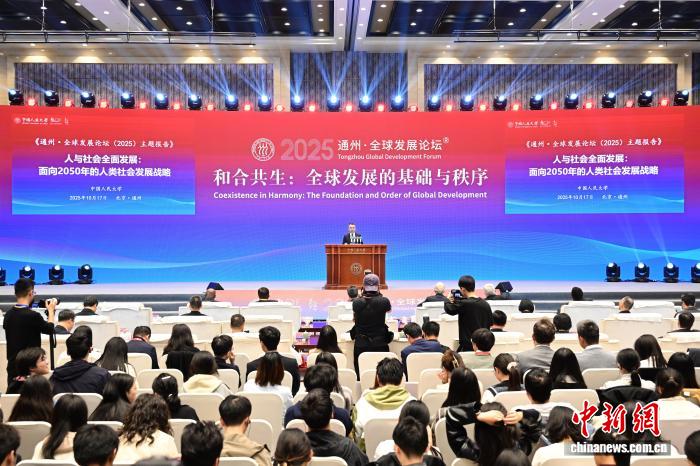
多国专家共话全球发展:在差异中寻求和谐共生之道 中新网北京10月19日电(记者 国璇) "人类历史告诉我们,可持续发展源于各国人民在差异中共存的能 力,文化、政治、经济、精神的多样性不应受到威胁,它是创新、对话与和平的财富。" "当前,全球各个领域正在发生巨大而深刻的变化。世界卫生组织、世界贸易组织等多边机构的功能遭 到削弱。"意大利前总理、欧盟委员会前主席罗马诺·普罗迪在主旨演讲中称,如今全球化进程面临诸多 问题,各方不能通过冲突的方式打破旧国际秩序、建立新国际秩序。作为全球重要力量,欧洲和中国应 共同承担推动和谐共存的责任,应对贸易不平衡等现实挑战,推动社会政策改革,真正推动欧中关系向 前发展。 巴西巴伊亚联邦大学副校长佩尼尔登·菲略结合巴西的社会实践表示,收入和财富分配的失衡、气候变 化、政府的信任危机和数字鸿沟等新旧问题交织叠加,人类有必要更新发展理念,建立一种推动经济、 社会、生态转型,更为全面的新范式。 与会嘉宾认为,在一个失序动荡的世界,坚定捍卫多边主义,推动各国平等参与、贡献并共享发展成果 尤为重要。德国前财政部长约尔格·库基斯表示,各国应深化跨领域、跨区域合作,促进全球贸易的自 由化、公平化 ...
财政部原部长楼继伟:中国仍是全球产业链和市场互利共赢的重要力量
Guo Ji Jin Rong Bao· 2025-10-19 01:09
楼继伟以新能源汽车产业举例称,中国新能源汽车产业成功实践了"技术自主、供应链多元、市场全 球"的立体化策略。一方面,上半年出口量占全球市场份额的42%,动力电池国产化率超95%;另一方 面,产业链中的关键材料则通过全球化合作实现多元供应,既保障了供应链安全,又深度融入全球市场 和产业生态,彰显了中国仍是全球产业链和市场互利共赢的重要力量。 10月18日,全球财富管理论坛理事长、中国财政部原部长楼继伟在全球财富管理论坛·2025上海苏河湾 大会上表示,中国上半年GDP以5.2%的增速在全球居于前列,高技术产业投资同比增长10.6%,同时通 过多元化产能与市场布局积极破局,成功对冲了单一市场依赖风险。 更重要的是,面对全球保护主义暗流涌动,产业链的碎片化割裂、阵营化对抗倾向,中国既未因外部压 力选择"脱钩断链",更未以邻为壑,而是以更开放的姿态坚定拥抱全球化;也未固守传统发展路径,而 是主动构建新发展格局,探索安全与效率并重的增长模式。 楼继伟指出,中国提出的全球发展倡议、全球安全倡议、全球文明倡议和全球治理倡议,为世界注入了 新的活力与智慧。这四大倡议彰显了中国对于全球经济应是"共生共荣"和谐生态的坚定信念,也 ...
专访丨长远规划在推动中国各领域发展方面发挥重要作用——访埃及《消息报》副总编辑阿米尔·塔马姆
Xin Hua Wang· 2025-10-18 09:02
Core Insights - Long-term planning in China has been a crucial tool for addressing challenges and promoting development across various sectors [1][2] - The focus of China's development has shifted towards high-quality growth, enhancing the reputation of its export products, such as electric vehicles [1] - Despite facing challenges, China has maintained an economic growth rate of around 5%, demonstrating strategic foresight and resilience [1] Group 1 - China's contribution to global economic growth is approximately 30%, positioning it as a stabilizing force in an uncertain world [1] - The "Belt and Road" initiative has provided tangible benefits in infrastructure, trade, and investment for participating countries, with Egypt exemplifying successful cooperation in green economy and infrastructure projects [2] - The next five years are expected to prioritize technological innovation, artificial intelligence, digital economy, and climate change response [2] Group 2 - China's development is driven by its people and aims to serve them, transforming human capital into a growth engine [2] - Developing countries can easily draw lessons from China's experiences due to shared characteristics and political consensus among global South nations [2]
省委常委会召开会议 传达学习习近平总书记重要讲话精神 研究林长制和林草工作等事项
Da Zhong Ri Bao· 2025-10-18 00:35
Core Points - The meeting emphasized the importance of implementing Xi Jinping's speeches and writings on women's and children's issues, family education, and family values, aiming to enhance the role of women and promote high-quality development in women's affairs in the province [2] - The meeting also focused on deepening international cooperation in technology, industry, and trade, while exploring effective paths for participating in global governance to contribute to building a community with a shared future for mankind [2] - The meeting reviewed the first volume of Xi Jinping's Ecological Civilization writings, stressing the need to uphold the concept that "lucid waters and lush mountains are invaluable assets" and to enhance the protection of forest and grassland resources [2] Summary by Categories Women's Affairs - The meeting called for the promotion of women's roles and the protection of their legal rights, alongside the reform and innovation of women's federations [2] - It highlighted the need to carry forward the spirit of the Beijing World Conference on Women and to enhance family education and values [2] International Cooperation - The meeting underscored the importance of implementing major decisions from the central government regarding foreign affairs and international collaboration [2] - It aimed to strengthen cultural exchanges and local friendly relations while exploring new avenues for high-level openness [2] Ecological Development - The meeting reviewed Xi Jinping's ecological civilization thoughts, emphasizing the importance of resource protection and sustainable development in forestry and grassland industries [2] - It called for the implementation of collective forest rights reform and accountability in ecological work [2]
“中国倡议彰显天下情怀”
Ren Min Ri Bao· 2025-10-17 22:13
"中国发展所取得的巨大成功,鼓舞着广大发展中国家。"近日,约旦共产党总书记法赫米·哈图特在接 受本报记者专访时表示,新中国成立以来取得了巨大发展成就,不仅仅是一个实现经济飞跃的成功故 事,更为广大发展中国家寻找符合自身发展道路提供了借鉴和动力。 法赫米表示,他高度关注中国的减贫经验。在中国共产党的领导下,中国已经实现8亿贫困人口全部脱 贫,提前完成联合国2030年可持续发展议程的减贫目标,创造了人类发展史上的壮举,为全球减贫事业 带来深刻启示。 法赫米表示,约旦当前仍面临安全和经济发展的多重挑战。约旦共产党致力于团结更多民众,维护国家 安全利益,实现经济自主发展。约旦共产党期望同中国共产党加强政党合作,借鉴中国发展经验。共 建"一带一路"倡议旨在加强基础设施互联互通和经贸投资往来。约旦和中国已经签署共建"一带一路"合 作文件。中国是约旦第二大贸易伙伴,约旦希望今后加强对华化工产品出口,并欢迎更多中企来约旦投 资发展。 法赫米说,中国在与阿拉伯国家交往中秉持相互尊重、互利共赢原则,中国发展经验为阿拉伯国家实现 经济独立和转型发展提供了借鉴。广大阿拉伯国家视中国为可靠合作伙伴,乐意同中国深化友好合作。 (本报中东 ...