
国内国际双循环

Search documents
国家统计局:我国经济实现全年预期目标有较好条件
Zhong Guo Xin Wen Wang· 2025-12-15 04:16
中新网12月15日电 国新办15日举行新闻发布会,请国家统计局新闻发言人、总经济师、国民经济综合 统计司司长付凌晖介绍2025年11月份国民经济运行情况,并答记者问。会上,付凌晖介绍,今年以来, 面对外部环境变化和内部风险挑战叠加的复杂严峻局面,在党中央坚强领导下,各地区各部门深入实施 更加积极有为的宏观政策,纵深推进全国统一大市场建设,积极做强国内大循环,国民经济保持总体平 稳、稳中有进发展态势。从全年情况看,尽管有困难有压力,但我国经济韧性强,宏观政策支持有力, 新动能稳步成长,实现全年预期目标有较好条件。 二是发展新动能持续壮大。科技创新和产业创新深入融合,新质生产力培育壮大,新业态新模式快速发 展,为经济发展注入新的活力和动力。从供给看,高端化、数字化、智能化生产发展向好。1-11月份, 规模以上高技术制造业增加值同比增长9.2%,数字产品制造业增加值增长9.3%;工业机器人、集成电 路产量分别增长29.2%和10.6%。从需求看,消费模式创新加快,文化体育等服务性消费快速成长。1-11 月份,服务零售额中,文体休闲类、通讯信息服务类零售额同比增长均超过10%。即时零售和直播电商 等带动下,1-11月 ...
国家统计局:尽管有困难有压力,但实现全年预期目标有较好条件
Sou Hu Cai Jing· 2025-12-15 03:46
Core Viewpoint - The Chinese economy is showing resilience and steady progress despite external challenges and internal risks, supported by proactive macroeconomic policies and the development of a unified national market [1][4]. Group 1: Market Demand - Market demand is steadily expanding, with a 4% year-on-year increase in total retail sales of consumer goods from January to November, surpassing last year's total growth [2] - Retail sales of services grew by 5.4% year-on-year during the same period, outpacing goods retail sales [2] - The total import and export value of goods increased by 3.6% year-on-year, with notable growth in trade with ASEAN (8.5%), the EU (5.4%), and Africa (18.7%) [2] Group 2: New Growth Drivers - New growth drivers are continuously strengthening, with high-tech manufacturing value-added increasing by 9.2% year-on-year and digital product manufacturing value-added rising by 9.3% from January to November [3] - The production of industrial robots and integrated circuits grew by 29.2% and 10.6%, respectively [3] - Service retail in cultural and sports sectors saw over 10% year-on-year growth, while online retail of physical goods increased by 5.7% [3] Group 3: Macroeconomic Policies - The implementation of proactive macroeconomic policies has been effective in maintaining steady economic growth, with recent measures aimed at boosting consumption and investment [4] - The recent Central Economic Work Conference has outlined the overall requirements and policy directions for economic work in the coming year, emphasizing the importance of a strong domestic market [4][5] - International organizations have raised their growth forecasts for the Chinese economy, reflecting confidence in its development [4]
统筹推进深层次改革和高水平开放
Zheng Zhou Ri Bao· 2025-12-15 00:46
Core Viewpoint - The article emphasizes the importance of deepening reforms and expanding high-level openness as key strategies for achieving modernization in China, particularly in the context of Zhengzhou's development as a national central city and a hub for domestic and international dual circulation [1][2][4]. Group 1: Reform and Development - The need to deepen reforms to enhance advantages and build a dual circulation hub is highlighted as a strategic choice for Zhengzhou to fulfill its responsibilities as a national central city [2]. - Zhengzhou is one of three cities in China designated as pilot cities for comprehensive market-oriented allocation of factors, indicating its role in leading reform initiatives [2]. Group 2: Open Economy and Market Integration - The article stresses the importance of integrating into the national unified market to leverage the advantages of a large market scale and unlock development potential [2]. - Zhengzhou aims to strengthen its position as a comprehensive international transportation hub and enhance its modern commercial logistics capabilities [2][3]. Group 3: Infrastructure and Connectivity - Zhengzhou is positioned as a critical transportation hub with a high-level international status, featuring a comprehensive high-speed rail network and international air transport capabilities [3]. - The city is recognized for its strategic resources that connect various regions, making it a vital manufacturing base and an inland opening window [3]. Group 4: Systematic Reform and Innovation - The article advocates for a unified approach to reform and openness, suggesting that deeper reforms will necessitate higher levels of openness and vice versa [4]. - It calls for innovative thinking to expand institutional openness and actively participate in the construction of a unified national market [4].
三大国际科创中心扩围,中央经济工作会议这样部署有何深意?
Nan Fang Du Shi Bao· 2025-12-14 13:17
中央经济工作会议近日在京举行,围绕中国经济展开了"今年怎么看、明年怎么办"的讨论,并最终定 调。值得关注的是,此次会议多次提及外部环境,并提出必须以苦练内功来应对外部挑战,坚持对外开 放,推动多领域合作共赢。 中美经贸摩擦长期存在。今年上半年美国对华商品加征关税累计高达145%,中国对美加征达125%,虽 于5月达成90天互降协定,将美国对华加征关税从145%降至30%,中国对美降至10%,但根本矛盾并未 消除,并且特朗普政府仍保留了部分关税。这反映出中美贸易关系的不稳定性,这也是中国对外贸易 的"老问题"之一。 当前外部环境如何?有哪些"老问题"和"新挑战"?未来将如何应对外部环境的变化?带着这些问题,南 都N视频记者采访了商务部中国国际经济合作学会副会长、致公党中央委员戴绪龙。 戴绪龙近年来一直关注国际经济合作、资源与环境经济、可持续发展等领域,在服贸会、进博会多次担 任国际经济论坛总负责人。他说:"这次中央经济工作会议有很多新提法值得关注,比如建设三大国际 科创中心,从原来的北京、上海、粤港澳大湾区扩容至京津冀、长三角和粤港澳大湾区,另外还部署了 多项支持科技创新的举措,可以看出我国未来科技强国的信心和 ...


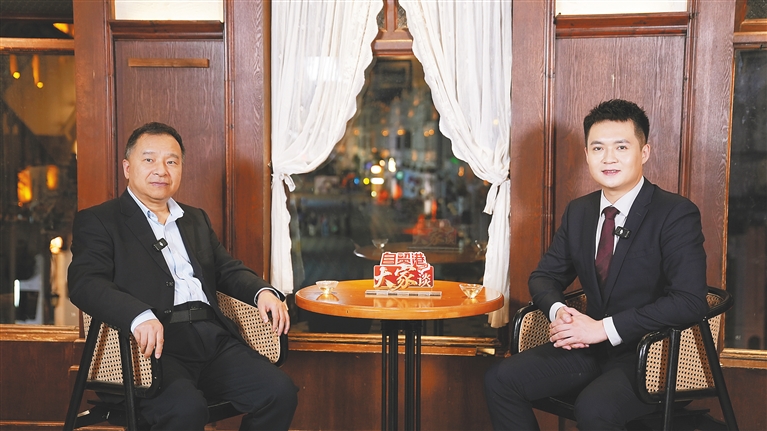
《自贸港“大家”谈》第十三期明日播出
Hai Nan Ri Bao· 2025-12-14 01:40
Core Viewpoint - Hainan Free Trade Port will officially start its full island closure on December 18, aiming to leverage policy advantages into industrial strengths and maximize the benefits for enterprises [1] Group 1: Hainan Free Trade Port Development - The construction of Hainan Free Trade Port is a crucial foundation for China's new development pattern, facilitating domestic and international dual circulation [1] - After the full island closure, Hainan needs to reorganize its industries to integrate competitive advantages with policy benefits, accelerating the establishment of a modern industrial system with Hainan characteristics [1] Group 2: Program Details - The program "Self-Trade Port 'Big Talk'" will feature a dialogue with Liu Yuanchun, President of Shanghai University of Finance and Economics, and will be broadcasted on December 15 [2] - The program is guided by the Hainan Provincial Party Committee Publicity Department and other local authorities, and will be available on multiple platforms including People's Daily Online, Xinhua News, and various local media outlets [2]
学习规划建议每日问答|怎样理解健全一体衔接的流通规则和标准
Xin Hua She· 2025-12-13 05:39
Core Viewpoint - The proposal to "improve the integrated circulation rules and standards" is a significant measure to reduce logistics costs and build a unified national market, emphasizing both goal-oriented and problem-oriented approaches [1] Group 1: Importance of Integrated Circulation Rules - Improving integrated circulation rules and standards is crucial for enhancing the efficiency of national economic operations, as efficient circulation is as important as production efficiency [1] - A high-efficiency circulation system can better connect production and consumption, expand transaction scope, reduce transaction costs, and deepen division of labor, ultimately improving production efficiency [1] - The integration of circulation rules and standards is key to building a modern circulation system, breaking local protectionism, and promoting smooth cross-regional flow of goods and factors [1] Group 2: New Requirements and Challenges - Since the 18th National Congress, significant progress has been made in China's circulation system reform, with the ratio of total social logistics costs to GDP decreasing from 18% in 2012 to 14% in the first half of 2025, though still above the developed countries' average of around 8% [2] - Factors contributing to this gap include the high proportion of manufacturing, vast territory, and complex geographical conditions, as well as structural and systemic issues [2] - The focus during the 14th Five-Year Plan period should be on optimizing logistics network distribution and enhancing the integration of various transportation modes [2] Group 3: Key Tasks for Standardization - Accelerate the construction of a modern logistics operation system with high-standard connectivity of market facilities, including railway freight network projects and inland waterway connectivity [3] - Promote deep integration of various transportation modes, enhance market-oriented reforms in railway freight, and standardize rules across different transport methods [3] - Further improve the unified circulation standards system, focusing on key areas such as commercial logistics and e-commerce, while prohibiting local governments from setting standards beyond their jurisdiction [3]
支持高标准建设海南自由贸易港 拓展多领域合作共赢新空间
Zheng Quan Ri Bao· 2025-12-13 01:28
Core Viewpoint - The General Administration of Customs emphasizes the importance of implementing the spirit of the Central Economic Work Conference and aligning actions with the decisions made by the Central Committee, aiming to contribute to the economic and social development goals for the upcoming year [1][2]. Group 1 - The Customs will focus on strengthening the domestic market, enhancing policy supply, promoting trade innovation, optimizing import and export structures, and facilitating domestic and international dual circulation [2]. - The Customs aims to expand high-level opening-up by innovating customs supervision systems, supporting the construction of the Hainan Free Trade Port, and signing more regional and bilateral trade agreements [2]. - The Customs will work on promoting regional coordinated development by optimizing port opening layouts and improving regional opening support policies [2]. Group 2 - The Customs is tasked with ensuring safety and risk management as the year-end approaches, emphasizing the importance of safety production responsibilities and maintaining smooth operations [2]. - The Customs will promote the normalization and long-term effectiveness of work style construction, aiming to establish a clean political environment and achieve practical results [2].
海南是中国经济发展的“点睛之笔”
Hai Nan Ri Bao· 2025-12-13 00:37
Core Viewpoint - Hainan is positioned as a pivotal element in China's macroeconomic development, serving as a vanguard for a new round of openness and aiming to lead in the development of new productive forces, particularly in commercial aerospace [2][3]. Group 1: Role of Hainan in Economic Development - Hainan Free Trade Port is set to become an important gateway for China's new era of openness, implementing higher-level open policies to create a more favorable business environment and stronger radiating effects [4]. - After the full closure of the island, Hainan will enhance its role as a strategic hub for domestic and international dual circulation, facilitating the free flow and optimal allocation of resources [5]. - Hainan will actively align with international high-standard economic and trade rules, serving as a highland for institutional openness and providing pioneering experiences for national reforms and expansions [5]. Group 2: Development of New Productive Forces - Hainan's advantages in developing new productive forces are summarized as "three degrees and one color," focusing on commercial aerospace, high-tech agriculture, and green development [7]. - The region aims to deepen institutional openness to align with international business environments, which is crucial for developing any industry and boosting consumption [8]. - Strengthening the integration of technological and industrial innovation is essential for attracting relevant talents and enterprises to Hainan [8]. Group 3: Building an International Consumption Center - Hainan can leverage its unique policy advantages to enhance duty-free shopping, education, and healthcare, creating attractive service consumption scenarios [9]. - In the duty-free shopping sector, Hainan should expand consumer groups, diversify product offerings, and improve logistics efficiency to establish a global duty-free shopping paradise [9]. - The education sector should focus on introducing high-quality overseas educational resources and creating a lifelong learning public service platform to meet industry demands [10]. - In healthcare, Hainan aims to become an international medical tourism destination by integrating innovative pharmaceutical production and high-end medical services with tourism [10].
海南自贸港如何构建区域联动发展新格局
Hai Nan Ri Bao· 2025-12-13 00:29
Core Viewpoint - The article emphasizes the importance of regional linkage development for the high-standard construction of Hainan Free Trade Port, as highlighted by President Xi Jinping, who calls for deeper integration with various economic regions and initiatives like the Belt and Road [1][4]. Group 1: Regional Linkage Development - Regional linkage development is essential for aligning with national strategies and is a necessary requirement for Hainan Free Trade Port to gather resources and achieve high-quality development [1]. - Hainan has actively engaged in multiple outreach activities, including delegations to Hong Kong and Macau, to enhance cooperation and implement agreements [2]. - Significant achievements in regional cooperation include the establishment of the Guangdong-Hainan Advanced Manufacturing Cooperation Industrial Park, which has attracted 766 enterprises as of November [2]. Group 2: New Opportunities and Advantages - The full island closure operation of Hainan Free Trade Port is set to commence on December 18, marking a new phase of high-level openness and closer ties with domestic and international markets [4]. - Hainan's geographical advantages position it as a strategic hub for international markets, facilitating accelerated flows of people, goods, and capital [5]. - The proposed "45432" development framework aims to create a modern industrial system with Hainan's unique characteristics, enhancing technological and industrial competitiveness [5]. Group 3: Strategic Collaboration and Future Outlook - Hainan is innovating cooperation models by learning from other regions and establishing mechanisms for collaboration with key areas like Tianjin and Hebei [6]. - The focus on key sectors such as finance, professional services, and digital economy aims to deepen cooperation with Hong Kong and support mainland enterprises [6]. - The full island closure is expected to enhance Hainan's attractiveness and resource allocation capabilities, fostering a new regional cooperation model characterized by complementary advantages and high-quality development [6].
入琼动物前置查验区在广东徐闻挂牌 在动物入岛前完成全流程监管
Hai Nan Ri Bao· 2025-12-13 00:24
海南日报徐闻12月12日电(海南日报全媒体记者 邵长春 通讯员 王钜 肖传壮)海南自由贸易港即将 启动全岛封关之际,12月12日,徐闻国际物流园项目启动暨入琼动物前置查验区挂牌仪式在广东徐闻举 行。 徐闻作为广东对接服务海南自贸港的前哨,区位战略价值在自贸港封关背景下愈发凸显。此次启动 的徐闻国际物流园由海南物流集团主导开发,总规划1629亩、总投资50亿元,与海口新海陆岛物流园形 成"一峡两园"联动格局;2025年11月,海南物流集团已成功摘得徐闻国际物流园项目首批土地80亩。 该项目定位"自贸港前哨枢纽",既是琼粤两省"相向而行"的具体实践,更是海南构建现代化物流体 系、筑牢自贸港安全屏障的核心举措之一,将成为内陆物资入琼的核心转运节点、应急物资储备保供基 地。同步实施的《徐闻县服务海南自贸港供应链创新十条措施》也将从要素保障、流程优化层面为项目 赋能。 建设徐闻国际物流园也是落实琼州海峡"多通道、多模式"过海建设要求的重要举措,可从根本上提 升琼州海峡物流转运效能,切实降低物流综合成本。 项目还依托"物资高效流转、风险精准防控"的综合枢纽功能,为海南自贸港封关后供需双链畅通提 供有力保障,助力海南自贸港 ...