贸易顺差

Search documents
对美国贸易逆差就能躲过关税战吗?巴西的答案是否定的,卢拉批特朗普关税信"内容失实"
Di Yi Cai Jing· 2025-07-11 10:11
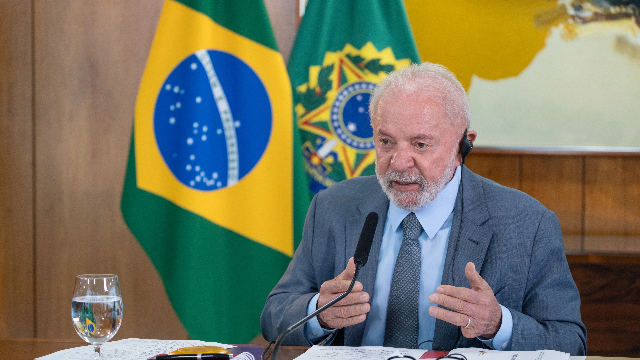
Group 1: Trade Relations - Brazil's trade surplus with the U.S. is approximately $7 billion for 2024, with a total trade surplus of about $410 billion over the past 15 years [1][3] - The U.S. has maintained a significant trade surplus with Brazil, which has been a long-standing goal of former President Trump [1][3] - Brazil's exports to the U.S. were around $40 billion, while imports were about $47 billion, resulting in a $7 billion surplus for the U.S. [3] Group 2: Tariff Implications - Trump announced a 50% tariff on all goods imported from Brazil starting August 1, which could significantly impact U.S. industries, particularly the restaurant sector [1][3] - Brazil exports nearly 8 million bags of coffee to the U.S. annually, and over half of the orange juice sold in the U.S. comes from Brazil, indicating potential price increases for these products due to tariffs [4] Group 3: Political Context - The tariff threats come amid tensions between Trump and Brazilian President Lula, with Trump accusing Brazil of unfair trade practices [3][5] - Lula emphasized Brazil's ability to protect its domestic industries and suggested that Brazil could seek new markets in response to U.S. tariffs [3][5] - Trump's actions are seen as an attempt to influence Brazil's internal politics, particularly regarding investigations into former President Bolsonaro [6]

智利六月份进口额为69.59亿美元,出口额为82.9亿美元,贸易顺差为13.31亿美元。6月铜出口额达46.7亿美元,锂出口额达1亿2930万美元。
news flash· 2025-07-07 12:39
Core Insights - In June, Chile's import value reached 6.959 billion USD, while export value was 8.29 billion USD, resulting in a trade surplus of 1.331 billion USD [1] - Copper exports in June amounted to 4.67 billion USD, and lithium exports totaled 12.93 million USD [1] Trade Performance - The total import value for June was 6.959 billion USD [1] - The total export value for June was 8.29 billion USD [1] - The trade surplus for June was recorded at 1.331 billion USD [1] Commodity Exports - Copper exports for June were valued at 4.67 billion USD [1] - Lithium exports for June were valued at 12.93 million USD [1]
越南第二季度GDP增长因出口强劲而加速,美国贸易协议使前景更加光明
news flash· 2025-07-05 02:59
Group 1 - Vietnam's GDP growth accelerated in Q2 2023, driven by strong exports, with a year-on-year increase of 7.96%, up from 6.93% in Q1 [1] - The government has set a target of at least 8% for annual GDP growth, which is slightly below the current trajectory [1] - Exports in the previous quarter saw a significant increase of 18.0%, reaching $116.93 billion, while imports grew by 18.8% to $112.52 billion, resulting in a trade surplus of $4.41 billion [1] Group 2 - Industrial production in Vietnam grew by 10.3% during the same period, indicating robust economic activity [1] - Consumer prices rose by 3.57% in June, reflecting inflationary pressures in the economy [1]
巴西贸易部:预测2025年进口额将达2915亿美元(此前预估为2829亿美元)。2025年出口额将达3419亿美元(此前预估为3531亿美元)。预测2025年贸易顺差为504亿美元(此前预估为702亿美元)。
news flash· 2025-07-04 18:08
Core Insights - Brazil's Ministry of Trade forecasts that the country's imports will reach $291.5 billion in 2025, an increase from the previous estimate of $282.9 billion [1] - The export forecast for 2025 is set at $341.9 billion, down from an earlier estimate of $353.1 billion [1] - The projected trade surplus for 2025 is $50.4 billion, significantly lower than the prior estimate of $70.2 billion [1]
巴西贸易部:巴西6月贸易顺差为58.89亿美元。6月原油出口量为797万公吨,去年同期为690万公吨。6月大豆出口量为1342万吨,去年同期为1396万吨。6月玉米出口量为369,533吨,去年同期为850,892吨。6月铁矿石出口量为3633万吨,去年同期为3310万吨。
news flash· 2025-07-04 18:04
Trade Surplus - Brazil's trade surplus in June was $5.889 billion [1] Export Volumes - In June, crude oil exports reached 7.97 million tons, up from 6.90 million tons in the same month last year [1] - Soybean exports totaled 13.42 million tons, a decrease from 13.96 million tons year-on-year [1] - Corn exports were 369,533 tons, down from 850,892 tons in the same month last year [1] - Iron ore exports amounted to 36.33 million tons, an increase from 33.10 million tons year-on-year [1]
辽宁大连:近十年来首次实现贸易顺差
Zhong Guo Chan Ye Jing Ji Xin Xi Wang· 2025-07-04 00:52
船舶产品拉动出口增长。前5个月,机电产品、石化产品强势拉动大连市出口增长。其中船舶出口98.3 亿元,同比增长58.7%,占大连市外贸出口总值的10.1%。同期,保税期货原油转口快速发展,共出口 保税原油65.8亿元,去年同期无出口记录。船舶和原油拉高大连市外贸出口增长12个百分点。 国有企业、外资企业保持增长。前5个月,大连国有企业进出口214.6亿元,同比增长16.7%。外资企业 进出口646.2亿元,同比增长11.1%。民营企业进出口1055.8亿元,同比下降0.4%。 新兴市场保持强劲势头。前5个月,大连市对马来西亚进出口保持强劲增长势头,进出口实现218.7亿 元,同比增长27.5%,继续保持大连市第二大贸易伙伴。传统市场方面,对日本进出口299.5亿元,同比 增长4.2%;对韩国进出口200.4亿元,同比增长19.3%;对沙特进出口125.4亿元,下降21.2%。(大连市 商务局供稿) 据大连海关初步统计,今年前5个月,大连市累计完成进出口总额1919.8亿元,同比增长5%,增幅高于 全国2.5个百分点,高于辽宁省6.8个百分点。其中,出口975.4亿元,同比增长17.2%;进口944.4亿元, ...
韩国5月商品贸易帐顺差扩大至106.65亿美元。5月经常账顺差扩大至101.42亿美元。
news flash· 2025-07-03 23:08
Core Insights - South Korea's merchandise trade surplus expanded to $10.665 billion in May [1] - The current account surplus also increased to $10.142 billion in May [1] Trade Performance - The significant increase in merchandise trade surplus indicates strong export performance [1] - The current account surplus reflects overall positive trade balance and economic health [1]
越南政府:上半年出口同比增长14.4%;上半年贸易顺差为76.3亿美元。
news flash· 2025-07-03 08:59
Core Insights - Vietnam's government reported a year-on-year export growth of 14.4% in the first half of the year [1] - The trade surplus for the first half of the year reached 7.63 billion USD [1] Export Performance - The export growth of 14.4% indicates a strong performance in international trade for Vietnam [1] - This growth may reflect increased demand for Vietnamese goods in global markets [1] Trade Balance - The trade surplus of 7.63 billion USD suggests that Vietnam's exports significantly outpaced imports during this period [1] - A positive trade balance can enhance Vietnam's economic stability and attract foreign investment [1]
30天倒计时,欧盟喊话中国必须解决稀土问题,中方直接反将一军
Sou Hu Cai Jing· 2025-07-03 04:47
Group 1 - The EU faces a critical rare earth shortage, with a warning from the EU Ambassador to China that a solution must be found within 30 days to avoid jeopardizing the visit of the European Commission President [1][2] - The EU's reliance on China is highlighted by the fact that 98% of its rare earth magnet supply comes from China, which is essential for electric vehicles and green energy transitions [2] - China's response includes a new regulation requiring rare earth companies to report key technical personnel information to prevent core technology leakage, emphasizing that export controls are in line with international norms [3][5] Group 2 - The Chinese Ministry of Commerce announced anti-dumping duties on stainless steel imports from the EU, UK, South Korea, and Indonesia for five years, effective July 1, 2025, as a defensive measure against potential market disruptions [1][5] - The EU's trade imbalance is evident, with a significant increase in its trade surplus with China, reaching $117 billion in the first five months of 2025, a 23% increase from the previous year [2][8] - The EU's contradictory stance of seeking fair competition while imposing trade barriers is criticized, as it aims to process 40% of its rare earths domestically by 2030, despite lacking the necessary technology [8][9]