
信用修复

Search documents
富时中国A50指数期货在夜盘收跌4.26%的基础上高开 现跌2.06%
Zhong Jin Zai Xian· 2025-10-13 02:49
Group 1 - The core viewpoint of the news is that after a significant drop in the cryptocurrency market and U.S. stock indices, there has been a notable rebound, indicating a potential recovery in market sentiment [2][4][5] - Bitcoin surged nearly 4% to reach $115,000, while Ethereum rose by 10%, and Binance Coin increased by 12%, reflecting a strong recovery in the cryptocurrency sector [2][4] - Market analysts suggest that the rebound may be linked to recent signals from Trump, indicating a possible influence of political factors on market movements [3] Group 2 - Analysts believe that the A-share market will continue to follow its own rhythm, independent of external influences [6] - Huajin Securities reports a long-term bullish trend for A-shares, driven by structural recovery in earnings and potential credit improvements, suggesting that the market remains resilient [7] - GF Securities indicates that historical analysis shows that if the market is in a bullish phase, the All A Index may find support between the 20-30 day moving averages, with limited downside potential [8]
券商四季度策略报告出炉 多数机构看好科技和周期股
Shen Zhen Shang Bao· 2025-09-25 23:18
Group 1 - The overall performance of A-shares is strong, with the Shanghai Composite Index reaching 3800 points, and most institutions are optimistic about the market outlook for Q4 [1][2] - Analysts expect a structural recovery in A-share earnings, driven by resilient export growth, manufacturing investment improvements, and seasonal consumption increases [2][3] - The market is anticipated to experience a "slow bull" trend, with a balanced style shift between growth and value stocks [2][4] Group 2 - The technology sector, particularly in optical communication and semiconductors, has shown strong performance, while cyclical and consumer stocks have lagged [4] - Historical data suggests a style rotation in Q4, with cyclical stocks likely to rebound and technology stocks diversifying beyond just hardware [4][5] - Key sectors to focus on in Q4 include TMT (Technology, Media, Telecommunications), machinery, pharmaceuticals, military, non-ferrous metals, chemicals, and non-bank financials [4][5] Group 3 - Financial analysts predict increased allocation to equity assets by residents in a low-interest-rate environment, with a current equity and fund allocation of 15% among Chinese residents, indicating room for growth [3] - Suggested investment themes for Q4 include precious and industrial metals, renewable energy, AI hardware and applications, and consumer sectors such as pet economy and beauty products [5]
一文读懂丨纳税缴费信用管理办法中的社保费指标
蓝色柳林财税室· 2025-09-23 14:10
Core Viewpoint - The "Tax and Fee Credit Management Measures" will be officially implemented on July 1, 2025, establishing a more scientific and efficient credit management system that links social security payment compliance directly to tax and fee credit ratings [2]. Group 1: Credit Repair Mechanism - Proactive correction can lead to credit repair, with earlier corrections yielding more credit points [4]. - The credit repair scoring system is detailed, with specific points assigned based on the timing of corrections for various infractions related to tax and fee declarations [5]. - The measures apply to enterprises that have completed tax information confirmation and identity reporting, with individual businesses able to voluntarily apply for management under these measures [6]. Group 2: Compliance and Reporting - Employers can check their social security payment status through the electronic tax bureau, ensuring timely declarations to avoid credit penalties [7][8]. - The process for verifying whether social security fees have been paid involves selecting the declaration date and checking the corresponding payment status [9][11]. - Late declarations not only affect tax and fee credit but also incur late fees [12].


以金融“活水”激发小微企业活力
Ren Min Ri Bao· 2025-09-23 02:31
Group 1 - The core viewpoint emphasizes the importance of financial support for small and micro enterprises, highlighting the role of a financing coordination mechanism in facilitating access to loans [1][2]. - As of June this year, the balance of inclusive loans for small and micro enterprises reached 36 trillion yuan, a year-on-year increase of 12.3%, with credit loans accounting for nearly 30% [1]. - The financing coordination mechanism established last year has significantly improved the financing situation for small enterprises, with nearly 98 million small business visits conducted and loans amounting to 22 trillion yuan disbursed by the end of July [1]. Group 2 - The article discusses the challenges faced by small and micro enterprises in obtaining loans, including information asymmetry between banks and enterprises, high communication and due diligence costs, and varying risk tolerance among businesses [1][2]. - Digital technology is highlighted as a crucial tool for bridging the information gap, enabling better communication and interaction between banks and enterprises, thus enhancing service efficiency [2]. - The article also mentions specific cases where financing coordination mechanisms have successfully assisted businesses in overcoming obstacles, such as credit repair and implementing no-repayment renewal policies to alleviate financial burdens [3]. Group 3 - The article stresses the need for effective implementation of supportive policies, emphasizing the importance of collaboration between central and local authorities, leveraging data, and uniting efforts across various sectors to enhance the reach and impact of financial support for small enterprises [3].
A股四季度策略展望:慢牛进行时
Huajin Securities· 2025-09-22 11:11
Core Views - The A-share market is expected to continue a slow bull trend in the fourth quarter, with increased volatility, following a strong performance in the third quarter led by technology stocks [3][4] - The market is likely to experience a structural recovery in earnings and continued credit repair, supported by a resilient export environment and steady growth in manufacturing and infrastructure investment [3][4][19] - Key sectors to focus on include technology, cyclical industries, and consumer sectors, with a balanced style favoring both large and small-cap stocks [4][5] Market Trends - The third quarter saw a bull market with the ChiNext Index and STAR Market leading gains, driven by liquidity easing and improved risk appetite [10][14] - The fourth quarter is anticipated to maintain a low-level recovery in earnings, with potential inflows from foreign investment and new funds, although IPOs and sell-offs may increase [4][5] - The overall market valuation is currently neutral to high, with supportive policies likely to sustain risk appetite [4] Industry Allocation - Technology remains the main focus for investment in the fourth quarter, with significant opportunities in core assets and cyclical sectors [5] - Recommended sectors for attention include TMT (Technology, Media, Telecommunications), machinery, electric new energy, pharmaceuticals, military industry, non-ferrous metals, chemicals, and non-bank financials [5][19] - The market style is expected to be balanced, with large-cap and small-cap stocks performing well during periods of structural recovery in earnings and credit [5][54]
注意啦!残保金未申报是否会影响信用等级评价?
蓝色柳林财税室· 2025-09-21 07:16
Core Viewpoint - The article discusses the consequences of tax-related misconduct and the scoring system for credit evaluation, emphasizing the importance of timely correction to restore credit scores. Group 1: Tax Misconduct and Scoring - Various tax-related misconducts can lead to credit score deductions, including failure to provide accurate tax information and not fulfilling tax payment obligations [3][4]. - Specific actions result in different point deductions: providing false tax information incurs an 11-point deduction, while late tax filings and payments can lead to 5-point deductions [3][4]. Group 2: Credit Score Restoration - Timely correction of tax misconduct can fully restore credit scores, with different recovery percentages based on the timing of the correction: 100% recovery if corrected within 3 days, 80% within 30 days, and so on [3][4]. - The article highlights that the sooner the correction is made, the more points can be regained, particularly emphasizing the critical 3-day window for maximum recovery [4].

从“执行掉”到“执行活” 托举企业“重生”
Jin Rong Shi Bao· 2025-09-17 02:22
Core Viewpoint - The article discusses the innovative approach taken by the Beijing Financial Court to balance the interests of creditors and struggling enterprises, emphasizing a shift from rigid enforcement to flexible judicial practices that aim to preserve business viability and protect jobs [1][2][9]. Group 1: Case Studies - The "Photovoltaic 1.0" case involved a leading solar power company that faced a funding crisis after borrowing over 700 million yuan for equipment upgrades, leading to a court ruling for full debt repayment [2][4]. - The court's traditional enforcement methods risked significant asset depreciation and potential bankruptcy for the company, which would have negatively impacted over 500 employees and the local solar industry [2][4]. - The court, with the help of an expert mediation team, determined that the company had potential for recovery and implemented flexible measures, allowing the company to continue operations while repaying debts [3][4]. Group 2: Implementation of Flexible Measures - The "active sealing and active deduction" policy allowed the company to use its assets for production, generating stable revenue to support debt repayment, thus preventing asset devaluation [4]. - The court facilitated communication between the financial leasing company and the solar enterprise, helping to resolve misunderstandings and foster cooperation [4][6]. - Ultimately, the company successfully restructured and repaid its debts within three months, preserving jobs and stabilizing the local solar industry [4][6]. Group 3: Expansion to "Photovoltaic 2.0" - The "Photovoltaic 2.0" case involved a prominent private renewable energy group with debts amounting to 2.39 billion yuan, where conventional enforcement could have led to reputational damage and potential chain litigation [5][6]. - The court engaged experts to analyze the company's situation and worked collaboratively with both parties to develop a feasible repayment plan, avoiding immediate enforcement actions [6]. - The successful resolution of this case further solidified trust in the court's approach and demonstrated the effectiveness of flexible judicial practices in maintaining business operations [6][9]. Group 4: Broader Impact and Future Outlook - The Beijing Financial Court's optimization of the business environment has led to the resolution of 212 cases involving 31.1 billion yuan, benefiting over 50 private enterprises and protecting the jobs of over 100,000 workers [7][8]. - The court's innovative methods, such as "active sealing and active deduction," have helped restore financial trust and support the stability of the industrial chain [7][8]. - The ongoing development of the optimization platform is expected to facilitate more enterprises in overcoming challenges, contributing to high-quality economic growth in the capital [9].
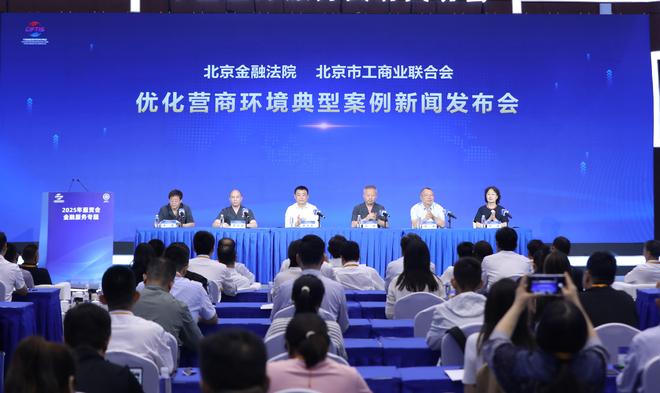
服贸会|“优化营商环境工作室”3年助50余家民营企业纾困解难
Zhong Guo Jing Ying Bao· 2025-09-16 18:44
Core Viewpoint - The establishment of the "Optimizing Business Environment Workstation" by the Beijing Financial Court and the Beijing Federation of Industry and Commerce has effectively addressed 212 business environment cases over three years, involving a total amount of 31.1 billion yuan, with 19.2 billion yuan fulfilled, aiding over 50 private enterprises and protecting over 1 million jobs [1] Group 1: Business Environment Optimization - The workstation was founded in July 2022, introducing 19 industry experts to mediate financial disputes, filling a gap in the World Bank's evaluation of the business environment in Beijing [1] - The workstation operates on principles of "restoring and reshaping trust and credit," establishing mechanisms for expert assistance, case selection, and exit strategies, facilitating judicial and market interactions [1] Group 2: Support for Private Enterprises - The private economy in Beijing consists of over 2.5 million entities, with approximately 2.05 million private enterprises, contributing around 30% to the regional GDP and absorbing about 60% of employment [2] - A socialized service system for the protection of private enterprise property rights has been created, providing comprehensive legal services 89,000 times [2] Group 3: Case Studies and Mediation - An example of successful mediation involved a large private enterprise facing severe debt crisis, where the expert mediator helped delay asset auction and facilitated restructuring efforts [3]
服贸会 “优化营商环境工作室”3年助50余家民营企业纾困解难
Zhong Guo Jing Ying Bao· 2025-09-16 15:11
Core Insights - The "Optimization of Business Environment Workstation" has successfully handled 212 cases related to the business environment over three years, involving a total amount of 31.1 billion yuan, with 19.2 billion yuan fulfilled [2] - The workstation aims to restore trust and credit in the financial sector by utilizing a collaborative approach involving industry experts and a series of mechanisms for case selection and exit [2] - The initiative has significantly contributed to the protection of over 2.3 million investors' rights and has helped more than 50 private enterprises alleviate difficulties, ensuring employment for over 100,000 workers [2] Group 1 - The workstation was established in July 2022 by the Beijing Financial Court and the Beijing Federation of Industry and Commerce, incorporating 19 experts from various industries to mediate financial disputes [2] - The "live sealing and live deduction" model allows temporarily distressed but salvageable enterprises to use seized equipment for normal operations, supporting their survival and development [3] - The private economy in Beijing consists of over 2.5 million entities, with private enterprises accounting for approximately 2.05 million, contributing around 30% to the regional GDP and absorbing about 60% of employment [3] Group 2 - The workstation has created the first socialized service system for the protection of private enterprise property rights in the country, providing comprehensive legal services 89,000 times [3] - An example of successful mediation involved a large private enterprise facing severe debt crisis, where the workstation facilitated a delay in asset auction to allow for restructuring [4] - The expert mediators, including private entrepreneurs and management personnel, play a crucial role in reflecting enterprise situations and proposing solutions for crisis resolution [4]
从濒临破产到企业重生,北京金融法院做对了什么?
Jin Rong Shi Bao· 2025-09-15 09:28
Core Insights - The article discusses the innovative approach taken by the Beijing Financial Court in handling corporate debt cases, emphasizing a shift from traditional enforcement to a more flexible judicial method that aims to preserve businesses and protect jobs [1][2][4]. Group 1: Case Studies - The "Photovoltaic 1.0" case involved a leading solar power company that faced a funding crisis after borrowing over 700 million yuan for equipment upgrades, leading to a court ruling for full debt repayment [2][3]. - The court's decision to implement flexible execution measures, such as "active sealing and active retention," allowed the company to continue operations and generate revenue, ultimately leading to a successful debt repayment within three months [4][6]. - The success of the "Photovoltaic 1.0" case laid the groundwork for the more complex "Photovoltaic 2.0" case, which involved a high-profile renewable energy group with debts amounting to 2.39 billion yuan [5][6]. Group 2: Judicial Innovations - The establishment of the Optimized Business Environment Workstation in July 2022 has played a crucial role in providing expert analysis and mediation in these cases, helping to assess the viability of distressed companies [3][8]. - The court's approach focuses on restoring credit and confidence in the business environment, utilizing methods such as precise evaluations and encouraging self-rescue efforts from companies [8][10]. - The successful resolution of these cases has resulted in significant financial recoveries, with the "Photovoltaic 1.0" case recovering over 700 million yuan and the "Photovoltaic 2.0" case achieving a similar outcome shortly after mediation [4][10]. Group 3: Economic Impact - The initiatives taken by the Beijing Financial Court have positively impacted the local economy, preserving over 500 jobs and stabilizing the solar industry cluster in the region [4][9]. - The court's innovative practices have addressed the needs of private enterprises, contributing to the overall economic development and modernization efforts in Beijing [9][10]. - By resolving disputes and fostering a supportive business environment, the court has helped maintain the operational integrity of numerous companies, thereby enhancing investor confidence and protecting stakeholder interests [8][10].