关税调整

Search documents
墨拟征亚洲车加征50%关税 沪金窄幅波动
Jin Tou Wang· 2025-09-11 02:20
Group 1 - The Mexican government, led by Economy Minister Marcelo Ebrard, plans to increase tariffs on cars imported from Asia to a maximum of 50% to protect local jobs, with an estimated 320,000 jobs directly related to the trade of these products [3] - This tariff increase is part of the "Mexican Plan" aimed at revitalizing domestic manufacturing, targeting countries that do not have trade agreements with Mexico [3] Group 2 - Current gold futures are trading around 834.32 yuan per gram, with a slight increase of 0.11%, and have fluctuated between a high of 836.62 yuan and a low of 833.00 yuan [1] - Key resistance levels for gold futures are identified between 840 yuan and 860 yuan per gram, while important support levels are between 802 yuan and 850 yuan per gram [3]
Mexico to raise tariffs on cars from China to 50%
Reuters· 2025-09-10 17:57
Core Point - Mexico will increase tariffs on automobiles from China and other Asian countries to 50%, up from the previous level of 20% [1] Group 1: Tariff Changes - The new tariff rate on automobiles will be 50% [1] - The previous tariff rate was 20% [1] - This change reflects a significant increase in trade barriers for automotive imports from specific regions [1]


纽约金低开低走!特朗普豁免多个关键领域商品关税!
Zheng Quan Shi Bao· 2025-09-08 00:07
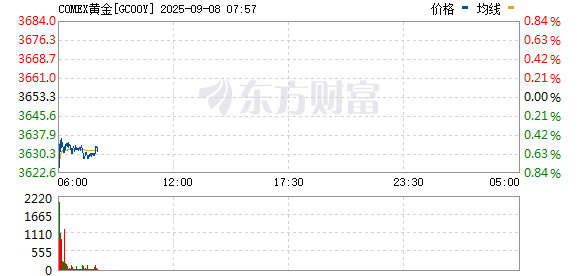
Group 1 - New York gold futures prices opened lower and continued to decline, currently at $3629.2 per ounce, with a decrease of 0.66% [2] - President Trump signed an executive order adjusting the scope of import tariffs, effective from September 8, which includes exemptions for various metals and forms of gold [3] - Major oil-producing countries, including OPEC and non-OPEC members, have decided to increase production by 137,000 barrels per day in October, citing stable global economic expectations and low oil inventories [5] Group 2 - The same group of countries increased production by 547,000 barrels per day in September [6] - Trump indicated readiness to implement a second phase of sanctions against Russia, although specific actions were not detailed [4]
关税重磅!特朗普宣布:豁免!
Zhong Guo Ji Jin Bao· 2025-09-06 10:01
Core Points - The U.S. government, under President Trump, announced exemptions from global tariffs for gold bars and certain metal products, while including silicone products in the tax range [1][2] - The tariff adjustments are set to take effect on September 8, 2023, and aim to facilitate trade agreements with other countries [2] - The changes are intended to address national emergencies and protect the U.S. economy and national security [2][3] Tariff Adjustments - Key materials used in aerospace, consumer electronics, and medical devices are among those exempted from tariffs [2] - The administration has extended the categories of tariffs to include resins and aluminum hydroxide, while maintaining tariffs on silicone products [2] Impact on Gold Market - The announcement alleviated previous market concerns regarding potential tariffs on gold bars, which had caused significant fluctuations in gold prices [2][3] - Gold prices surged, with spot gold reaching $3600 per ounce and COMEX futures exceeding $3655 per ounce [3] - Analysts suggest that if the Federal Reserve's credibility is compromised, gold prices could rise to nearly $5000 per ounce due to a shift in investor confidence [3]
关税重磅!特朗普宣布:豁免!
中国基金报· 2025-09-06 09:44
Core Viewpoint - The U.S. government, under President Trump, has announced exemptions from global tariffs for gold bars and certain metals, while imposing tariffs on silicone products, aiming to facilitate trade agreements and protect national security [2][3][4]. Group 1: Tariff Adjustments - The U.S. has exempted gold bars, graphite, tungsten, and uranium from tariffs, while extending tariffs to silicone products and other materials like resins and aluminum hydroxide [3]. - This adjustment is expected to accelerate the implementation of tailored trade agreements with other countries, making it easier to remove tariffs on specific products [3]. Group 2: Market Reactions - Following the announcement, gold prices surged, with spot gold reaching $3600 per ounce and COMEX gold futures exceeding $3655 per ounce [4]. - Concerns over U.S. employment data and potential interest rate cuts have led to a bullish outlook for gold, as investors anticipate a shift towards gold as a safe-haven asset [7]. Group 3: Future Projections - Goldman Sachs has projected that if the credibility of the Federal Reserve is compromised, gold prices could soar to nearly $5000 per ounce, as investors seek alternatives to U.S. Treasury bonds [8]. - The potential for inflation and a decline in the dollar's reserve currency status could further enhance gold's appeal as a store of value [8].

特朗普调整全球关税政策 黄金、钨、铀等关键商品获豁免
Hua Er Jie Jian Wen· 2025-09-06 08:59
Group 1 - The core viewpoint of the news is that President Trump signed an executive order to exempt various metals and graphite from the global tariff system while adding silicon products to the tax list [1][2] - The new policy will officially take effect on the following Monday and includes tariff adjustments for several key product categories [1][2] - Notably, gold bars have been confirmed to be exempt from tariffs, addressing previous concerns that they might face import taxes [1][2] Group 2 - Key materials such as graphite and tungsten, which are essential for high-tech and critical industries, have received tariff exemptions [2] - Various pharmaceuticals, including antibiotics, have also been granted new tariff reductions, despite being subjects of an ongoing trade investigation by the U.S. Department of Commerce [2] - The executive order introduces a procedural change aimed at improving the efficiency of trade agreement enforcement, allowing the U.S. Trade Representative and the Department of Commerce to act directly without needing individual executive orders from Trump [2]
关税突发!刚刚,特朗普签了
Zheng Quan Shi Bao· 2025-09-06 01:44
Group 1 - The core viewpoint of the article is that President Trump signed an executive order to adjust import tariffs and implement trade and security framework agreements with foreign trade partners to protect the U.S. economy and national security [1][3] - The executive order aims to address a national emergency and promote cooperation with foreign trade partners through trade and security agreements [3][5] - The Federal Reserve's Beige Book report indicates that from mid-July to the end of August, all Federal Reserve districts reported price increases related to tariffs, with many companies passing on cost increases to customers [3][4] Group 2 - The report highlights that due to increased economic uncertainty and higher tariff rates, many households' wage growth has not kept pace with rising prices, leading to stagnant or declining consumer spending across all Federal Reserve districts [3][4] - Employment levels remained largely unchanged across 11 Federal Reserve districts, with some regions experiencing layoffs due to weakened demand or increased uncertainty [3][4] - The U.S. government has been imposing higher tariffs on trade partners, with the trade-weighted average tariff rate rising significantly from 2.44% at the beginning of the year to 20.11% by August 7 [4][6] Group 3 - In July, the U.S. trade deficit widened to $78.3 billion, significantly higher than the adjusted $59.1 billion deficit in June, driven by increased imports as businesses rushed to import goods before new tariffs were announced [4][6] - The data shows that in July, U.S. imports amounted to $358.8 billion, a 5.9% increase month-over-month, while exports were $280.5 billion, a 0.3% increase [6] - The overall trade deficit for goods and services increased by 32.5% in July, totaling $78.3 billion, with a year-to-date increase of 30.9% compared to the same period in 2024 [6]
特朗普签了 关税大消息!
Mei Ri Jing Ji Xin Wen· 2025-09-06 01:22
Group 1 - The core viewpoint of the article is that President Trump signed an executive order to adjust the scope of import tariffs and implement a trade and security framework agreement with foreign trade partners [1][2] - The executive order allows for adjustments to tariffs based on agreements with foreign trade partners, including the possibility of reducing some equivalent tariffs to zero, but does not modify Section 232 tariffs on steel and aluminum products before a final agreement is signed [2][3] - The U.S. Department of Commerce and other relevant agencies will monitor compliance and trade deficits, reporting to Trump for further adjustment recommendations [2][3] Group 2 - The U.S. trade deficit widened to $78.3 billion in July, significantly higher than the adjusted $59.1 billion in June and above market expectations, attributed to increased imports ahead of new tariffs [3] - In July, U.S. imports rose to $358.8 billion, a month-on-month increase of 5.9%, while exports increased to $280.5 billion, a 0.3% rise [3] - The total trade deficit for goods and services increased by 32.5% to $78.3 billion, with a goods trade deficit of $103.9 billion and a services trade surplus of $25.6 billion [3][4]
关税突发!刚刚 特朗普签了
Zheng Quan Shi Bao· 2025-09-06 01:20
Core Points - The article discusses President Trump's executive order to adjust import tariffs and implement trade and security framework agreements with foreign trade partners [1][2][3] - The executive order allows for tariff adjustments based on agreements, including the potential reduction of some tariffs to zero, but maintains existing tariffs on steel and aluminum until final agreements are signed [2][7] - The measures are aimed at addressing national emergencies and protecting the U.S. economy and national security while promoting cooperation with foreign trade partners [3] Economic Impact - The Federal Reserve's "Beige Book" indicates that price increases related to tariffs have been reported across all Federal Reserve districts from mid-July to the end of August, with many businesses passing increased costs onto consumers [4] - The average trade-weighted tariff rate for the U.S. has risen significantly to 20.11% as of August 7, compared to 2.44% at the beginning of the year, reflecting the government's aggressive tariff policies [5] - In July, the U.S. trade deficit widened to $78.3 billion, driven by increased imports as businesses rushed to stock up before new tariffs were announced [6][8] Trade Statistics - In July, U.S. imports rose by 5.9% to $358.8 billion, while exports increased by only 0.3% to $280.5 billion, resulting in a significant increase in the trade deficit [8] - The total trade deficit for goods and services increased by 32.5% in July, reaching $78.3 billion, with a year-to-date increase of 30.9% compared to the same period in 2024 [8]
关税突发!刚刚,特朗普签了
证券时报· 2025-09-06 01:10
Core Viewpoint - The article discusses the recent executive order signed by President Trump to adjust import tariffs and implement trade and security framework agreements with foreign trade partners, aimed at addressing national emergency and protecting the U.S. economy and national security [1][3]. Group 1: Executive Order and Tariff Adjustments - The executive order emphasizes measures to respond to a national emergency and enhance cooperation with foreign trade partners through trade and security agreements [3][10]. - The order allows for adjustments to tariffs based on agreements, including the potential reduction of certain tariffs to zero for products that cannot be produced domestically or are in insufficient supply [10]. Group 2: Economic Impact of Tariffs - The Federal Reserve's "Beige Book" report indicates that from mid-July to the end of August, all Federal Reserve districts reported price increases related to tariffs, with many companies passing on cost increases to customers [5][6]. - The report highlights that due to increased economic uncertainty and rising tariff rates, wage growth for many households has not kept pace with rising prices, leading to stagnant or declining consumer spending across all Federal Reserve districts [6]. Group 3: Trade Deficit and Import Trends - Preliminary data from the U.S. Department of Commerce shows that the trade deficit in July expanded to $78.3 billion, significantly higher than the adjusted June deficit of $59.1 billion, driven by increased imports ahead of new tariffs [9]. - In July, U.S. imports rose by 5.9% to $358.8 billion, while exports increased by only 0.3% to $280.5 billion, resulting in a notable rise in the overall trade deficit [9]. - Year-to-date, the trade deficit has increased by $154.3 billion, or 30.9%, compared to the same period in 2024, with imports rising by 10.9% and exports by 5.5% [9].