
可再生能源

Search documents
人民日报︱每3度电就有1度是绿电,我们怎样做到?
国家能源局· 2025-12-23 13:47
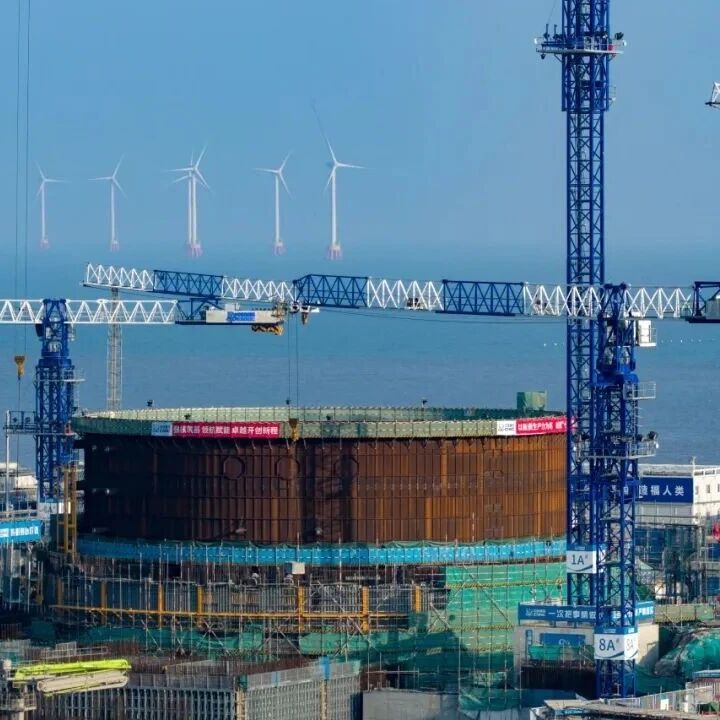
超10万亿千瓦时! 国家能源局最新发布的数据显示,今年全社会用电量预计创下新纪录。 10万亿千瓦时,这在全球尚属 首次,是我国2015年用电量的约两倍,高于欧盟、俄罗斯、印度、日本全年用电量的总和。 超大规模用电量背后,是不断攀升的"含绿量"。"十四五"以来,我国建成了全球最大的可再生能源体系,每使用3度电, 就有1度是绿电。 电力消费逐绿前行,我们是怎样做到的? 电源更足,绿电"发得出"。 西北荒漠,国能宁夏腾格里"沙戈荒"新能源基地首批300万千瓦光伏投产,640余万块光伏板铺展出一片"蓝色海洋"。 东部海域,我国离岸最远海上风电项目全容量并网,预计年均发电量超28亿千瓦时,可满足140万户家庭日常用电需求。 12月15日,浙江宁波象山县金七门核电项目建设现场,机械轰鸣,施工人员有序作业。章勇涛摄 "十四五"时期,我国可再生能源发电装机占比由40%提升至60%左右,风电光伏年新增装机先后突破1亿、2亿、3亿千瓦 关口,发展速度和力度前所未有。有媒体报道,如果将五年间全国新增的光伏板铺开,总面积可覆盖53万座足球场;将新 增的风机叶片依次连接,长度相当于从我国最东端到最西端走一个来回。 不只风电光伏,"十四 ...

徐州首个“驭风”项目在睢宁开工
Xin Lang Cai Jing· 2025-12-23 12:09
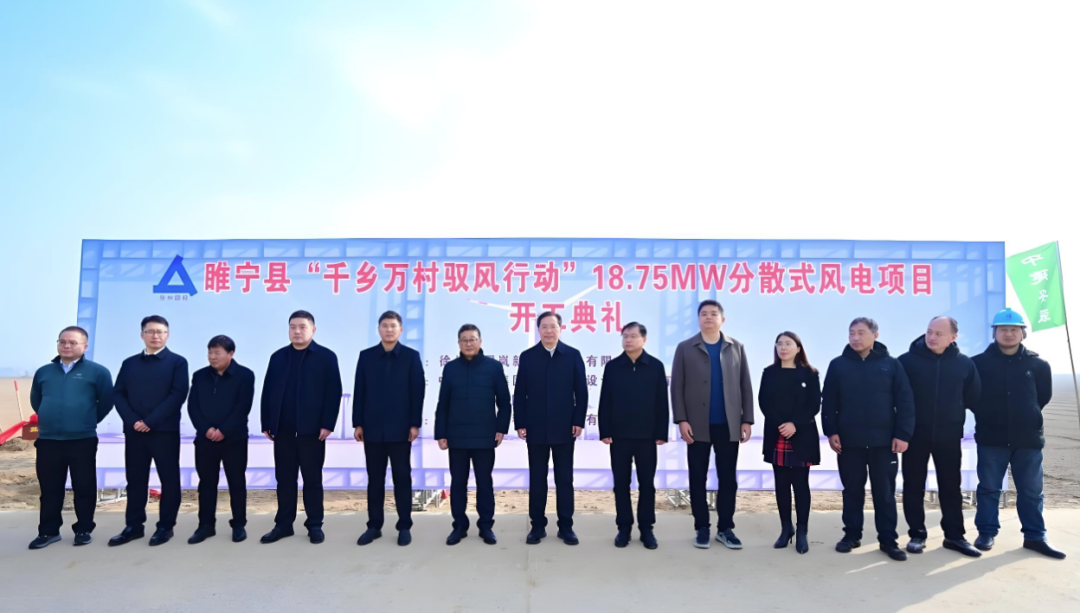
(来源:江苏省可再生能源行业协会) 12月19日,由中建安装上海公司承建的睢宁县"千乡万村驭风行动"18.75MW分散式风电项目开工仪式圆满完成。该项目是2024年江苏省陆上风电政策放开 以来,徐州市首个落地的风电项目。 睢宁风电项目规划建设3台单机容量6.25兆瓦的风力发电机组,总装机容量为18.75兆瓦,并新建一座10千伏开关站。项目并网运行后每年将产生可再生能 源发电量约4079.06万千瓦时,相当于节约标准煤1.23万吨,减少二氧化碳排放3.35万吨。 项目建设后,将为睢宁县探索风电就地就近开发利用提供新模式,也为促进乡村产业振兴、推动能源结构绿色转型、建设宜居宜业和美乡村注入新动能。 项目建设后,将为睢宁县探索风电就地就近开发利用提供新模式,也为促进乡村产业振兴、推动能源结构绿色转型、建设宜居宜业和美乡村注入新动能。 来源|中建安装上海公司 编辑|蒋梦文 特别声明:本号转载其他平台内容,出于传递更多信息而非盈利之目的,并不代表赞成其观点或证实其描述,内容仅供参考。版权归原作者所有,若有侵 权,请联系我们删除,邮箱:jsrea_mkt@126.com,电话:15380896722。 编辑|蒋梦文 特别 ...
信义能源拟6200万元收购金寨信义风能的全部股权
Zhi Tong Cai Jing· 2025-12-23 11:51
Group 1 - The core point of the news is the agreement for the sale of 100% equity of Jinzhai Xinyi Wind Power from Xinyi Glass (Wuhu) and Anhui Xinyi Power to Xinyi Energy (Fanchang) for a total consideration of RMB 62 million, which is subject to adjustment [1] - Jinzhai Xinyi Wind Power is located in Jinzhai City, Anhui Province, with an approved generation capacity of 64 megawatts, and its operations are governed by a management agreement [1] - As of the announcement date, the equity of Jinzhai Xinyi Wind Power is held by Xinyi Glass (Wuhu) and Anhui Xinyi Power at 82.0% and 18.0%, respectively [1] Group 2 - The proposed arrangement will reduce the need for independent operational teams for managing the wind farm, thereby effectively lowering costs and expenses related to non-core businesses for both Xinyi Glass Group and Xinyi Storage Group [2] - The acquisition of Jinzhai Xinyi Wind Power will enhance Xinyi Energy's renewable energy generation projects in China, expanding its business in the wind energy sector [2]

关税预期与矿山停产“共振”,伦铜首次突破1.2万美元再创历史新高
Hua Er Jie Jian Wen· 2025-12-23 11:16
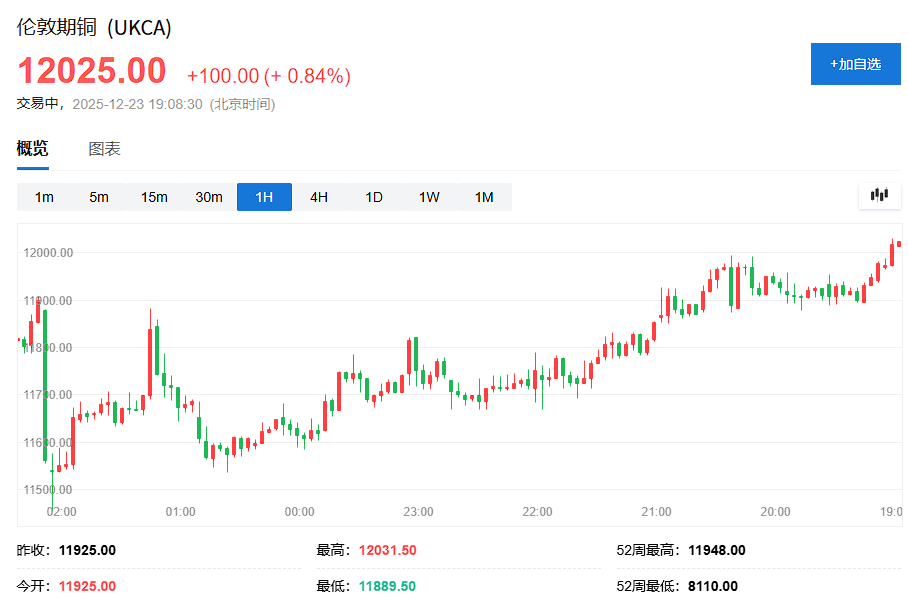
周二(12月23日),受全球多个矿山停产以及与特朗普政府潜在的关税政策影响,伦铜价格历史上首次突破每吨1.2万美元大关。 今年以来,铜价累计涨幅已约达37%,并有望创下自2009年以来的最大年度涨幅。 在供应中断预期和关税威胁的双重推动下,视为全球经济风向标的工业金属——铜再创历史性新高。 (LME期铜1H走势图) 市场对特朗普可能对金属加征关税的预期,已成为推高价格的核心因素。为了在潜在关税落地前抢占先机,交易员正将大量铜运 往美国,这导致美国进口量激增,进而迫使其他地区的制造商卷入一场维持库存的激烈竞购战。 与此同时,供应端也面临严峻挑战,美洲、非洲和亚洲的矿山均出现停产情况。市场警告称,供应端将出现重大缺口,为本轮涨 势进一步提供动能。随着铜价持续攀升,花旗预测牛市情景下可能升至1.5万美元。 关税威胁引发全球争夺 据德意志银行分析,全球最大矿商的产量今年将下降3%,并且在2026年可能再次下降。该行分析师在报告中指出: "2025年是受到严重干扰的一年,几座大型矿山经历了重大的运营挑战",并补充称"总体而言,我们认为市场处于明 显的供应短缺状态。" 多年来,供应风险一直笼罩着铜行业,并与电动汽车、可再 ...
LME期铜首破12000大关!花旗预警:牛市情景下可能触及15000美元
Jin Shi Shu Ju· 2025-12-23 11:16
Group 1 - Copper prices have reached a historic high, surpassing $12,000 per ton, driven by severe mine shutdowns and trade disruptions related to President Trump's tariff agenda [1] - The price of copper has increased approximately 37% this year, with expectations for the largest annual gain since 2009 [1] - Supply disruptions from mines in the Americas, Africa, and Asia have raised warnings of a significant supply shortage, contributing to the price surge [1] Group 2 - Analysts predict that 2025 will be a year of severe supply constraints due to operational challenges at several large mines, indicating a clear state of supply shortage in the market [2] - Demand from high-growth sectors such as electric vehicles, renewable energy, and artificial intelligence is expected to surge, further supporting bullish forecasts for copper prices [2] - Citigroup suggests that under a "bull market scenario," copper prices could reach $15,000, attracting more aggressive investment [2]
两部门:发挥调峰与长时储能双重价值!光热发电到2030年装机1500万千瓦,度电成本与煤电相当
中关村储能产业技术联盟· 2025-12-23 04:15
增强光热发电对新型电力系统的调节作用。发挥光热发电大规模、低成本和高安全储热系 统功能,利用光热宽负荷调节范围和快速变负荷能力,发挥深度调峰能力,提升电力系统 调节能力。鼓励配置或预留电加热系统, 支持配置电加热系统的光热电站通过电力市场 发挥系统长时储能电站功能,获得相应市场收益。 文件强调,在做好光热发电资源普查、光热发电规划的同时,还应做好光热发电与产业协 同布局, 鼓励以光热发电作为支撑调节电源的新能源一体化项目与矿产资源开发冶炼、 算力中心、动力电池制造、盐湖提锂等新型高载能产业紧密结合 ,探索通过算力电力协 同及绿电直连、源网荷储一体化等新能源就近消纳新业态,实现可再生能源高效利用,推 进高比例可再生能源供能产业园区建设布局。 全文如下: 文 | 国家发展改革委 国家能源局 1 2月23日,国家发展改革委 国家能源局关于促进光热发电规模化发展的若干意见。 文件提出, 光热发电兼具调峰电源和长时储能的双重功能 ,能够实现用新能源调节支撑 新能源,能够为电力系统提供长周期调峰能力和转动惯量,具备在部分区域作为调峰和基 础性电源的潜力,是实现新能源安全可靠替代传统能源的有效手段,是加快构建新型电力 系统 ...

史上最赚的一笔PE投资--来自8年前一笔无人看好的“抄底”
Hua Er Jie Jian Wen· 2025-12-23 00:24
Core Insights - Energy Capital Partners (ECP) is set to achieve significant returns from its 2017 acquisition of Calpine, with total earnings exceeding $25 billion, surpassing the previous record set by Blackstone's Hilton project at $14 billion [1] - The upcoming sale of Calpine to Constellation Energy is expected to be completed next month, with approximately $18 billion of the payment in Constellation stock, which has risen nearly 50% since the announcement [1] Group 1: Investment Strategy - ECP's acquisition of Calpine was initially viewed as controversial due to an oversupply of natural gas and the rapid growth of renewable energy, leading to a pessimistic outlook on gas-fired power plants [2] - ECP identified Calpine as an undervalued asset capable of generating substantial cash flow and believed that natural gas would play a critical role in providing reliable power during the energy transition, which they estimate will take 30 to 40 years [2] Group 2: Market Dynamics - The unexpected surge in electricity demand was driven by factors such as manufacturing reshore, the growth of electric vehicles, cryptocurrency mining, and the subsequent AI boom, which significantly increased power requirements [3] - The launch of ChatGPT by OpenAI in November 2022 sparked an AI investment frenzy, leading to a spike in valuations for publicly traded power suppliers, providing Constellation with the necessary "currency" for the acquisition [3] Group 3: Operational Improvements - Following the acquisition in 2018, Calpine initiated several growth initiatives, including new battery storage projects and expansion of geothermal capacity, which doubled the company's profits and reduced debt levels during ECP's ownership [4] - Calpine distributed approximately $8.5 billion in cash to investors while under ECP's management, reflecting the successful operational enhancements made during this period [4]
构建第二增长曲线维尔利加速转型绿色能源供应商
Zhong Guo Zheng Quan Bao· 2025-12-22 20:19
Core Viewpoint - The company is transitioning from a traditional waste management operator to a green energy supplier, focusing on biogas and biofuel oil, with significant growth potential in the renewable energy sector. Group 1: Transition to Bioenergy - The company has successfully launched the Linjiang demonstration project and achieved rapid gas production at the Zhejiang Shanying project, with a target biogas production capacity of 1 million cubic meters per day within two years [1] - Biogas is produced from various organic waste materials through anaerobic fermentation and purification, with the company responsible for the investment, construction, and operation of biogas resource utilization systems [1] - The company aims to leverage its existing expertise in organic waste management to establish a stable revenue model through long-term agreements for gas sales and raw material purchases [2] Group 2: Business Model Restructuring - The company has over 20 years of experience in the environmental sector, focusing on organic waste resource utilization, and is now seeking to reshape its business model to find a second growth curve [3] - The transition to bioenergy is seen as a natural extension of its existing organic waste processing business, supported by favorable policies promoting renewable energy [3] - The company plans to shift its customer base from municipal to industrial clients, enhancing its market presence in higher market-oriented sectors [4] Group 3: Rapid Scaling and Market Penetration - The company has established a dedicated energy business platform and professional team to facilitate the full chain from raw materials to products in the biogas sector [5] - Current projects have a combined daily biogas production exceeding 200,000 cubic meters, with a goal to reach 1 million cubic meters per day in the next two years [5] - In the biofuel oil sector, the company is developing pre-treatment facilities to convert waste oils into sustainable aviation fuel (SAF) compliant materials, aiming to create an integrated supply chain for international clients [6]

已爆单!外媒叹:这波中国又赶上了
Xin Lang Cai Jing· 2025-12-22 14:17
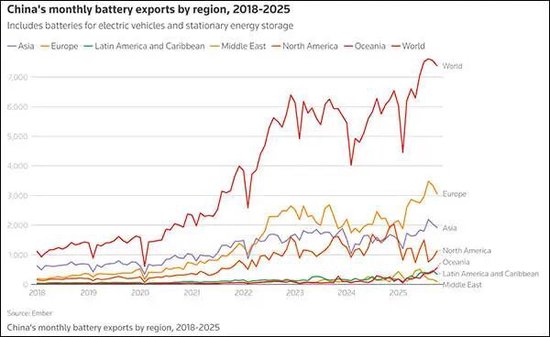
Core Insights - The current surge in China's energy sector, particularly in the energy storage industry, is described as one of the biggest surprises of the year, with leading companies experiencing high demand and full order books [1][8] - The demand surge is attributed to domestic market reforms and international factors such as AI data centers, aging European grids, and the expansion of renewable energy, which have collectively boosted international demand for energy storage [1][8] Domestic Market Dynamics - As of October this year, China has exported over $65 billion worth of energy storage and electric vehicle batteries, with a projected 75% year-on-year increase in global shipments of lithium-ion battery cells from Chinese companies [1][8] - Domestic demand is primarily driven by data centers and renewable energy projects, supported by market reforms and government subsidies [1][8] International Market Trends - UBS has raised its forecast for global battery storage installations by 25% for 2026, while the International Energy Agency expects a 16% year-on-year increase in global battery storage investment this year, reaching $66 billion [2][9] - Chinese companies dominate the core battery cell manufacturing segment, with major suppliers like CATL, Hicharge, and BYD leading the global rankings [2][9] Future Projections - Analysts predict a 40% year-on-year growth in global storage demand by 2026, driven by the increasing needs of data centers in the U.S. due to cloud computing and AI [3][10] - The U.S. market is seen as a key area for Chinese storage manufacturers, currently holding a 20% market share, although there are policy risks for Chinese firms in this market [3][10] Policy and Regulatory Changes - Recent reforms in China's electricity market are changing the economic viability of energy storage, allowing for more competitive pricing models that enhance profitability [5][12] - The Chinese government has set ambitious targets for energy storage capacity, aiming for over 180 GW by 2027, with significant investments expected [6][13]



博盈特焊:公司的产品和技术主要应用于节能环保、电力等工业防腐防磨领域
Zheng Quan Ri Bao Wang· 2025-12-22 10:45
Core Viewpoint - The company, Boying Special Welding (301468), focuses on products and technologies primarily used in energy-saving, environmental protection, electricity, energy, chemical, metallurgy, and papermaking industries, particularly in anti-corrosion and anti-wear applications [1] Group 1: Company Applications - The company's products and technologies are applicable in various fields including waste incineration power generation, biomass power generation, and hydropower station operations [1] - During the reporting period, the primary application of the company's technology was in the waste incineration power generation sector [1] Group 2: Industry Context - The company's offerings align with the "14th Five-Year Plan" for renewable energy development and related regulations promoting renewable energy consumption, which include wind power, solar power, conventional hydropower, biomass power, geothermal energy, and ocean energy [1]