
数智化转型

Search documents
企业新闻丨华宝股份以科技创新驱动“新质生产力”转型
Xin Lang Cai Jing· 2025-12-22 10:57
Core Insights - The article emphasizes the transformation of the flavor and fragrance industry in China, driven by technological innovation and consumer upgrades, aligning with national strategies like "Healthy China 2030" and the "14th Five-Year Plan" [1][15] Strategic Drive - The company is undergoing a comprehensive transformation focused on "green, nutrition, and health," evolving from a traditional flavor manufacturer to a provider of flavor and health solutions [3][15] - The expansion into food ingredients and the health industry aims to support consumer goods supply chain management, catering to the growing consumer demand for a better quality of life [3][15] Innovation Engine - High R&D investment is a core competitive advantage, with an average of over 9% of revenue allocated to R&D over the past three years, maintaining a leading position in the industry [5][16] - The company has established a global open R&D system, with technology centers and laboratories in multiple countries, ensuring the ability to capture global technological trends and market demands [5][16] Technological Advancements - As of October 2025, the company holds 328 patents and over 10,000 flavor formulas, achieving leading advantages in key technologies such as precision extraction and bioconversion [7][18] - The company is expected to make breakthroughs in synthetic biology and AI applications, continuously setting new technological standards [7][18] Digital Transformation - The company is advancing a comprehensive digital upgrade across its operations, utilizing SAP ERP and PLM systems to enhance efficiency and collaboration among global teams [8][19] - This digital transformation has earned recognition as a "2024 Leader in Digital Transformation" in China's light industry [8][19] Forward-Looking Strategies - The company is extending its innovation into global markets, focusing on high-growth potential areas like heated tobacco and oral nicotine products, leveraging its core advantages in flavor release and functional materials [12][23] - This strategy aims to provide competitive raw materials and technical solutions, driving the transition to reduced-harm products [12][23] - The company is poised to lead the flavor and fragrance industry into a new era of higher quality and creativity through ongoing technological advancements and global expansion [12][24]


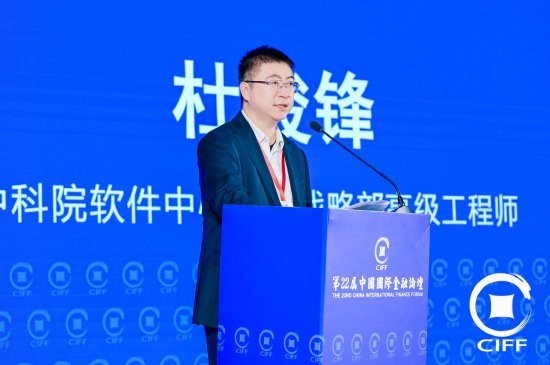
中科院软件中心市场战略部高级工程师杜俊锋出席“第二十二届中国国际金融论坛”并主持
Xin Lang Cai Jing· 2025-12-22 03:59
专题:第二十二届中国国际金融论坛 新浪声明:所有会议实录均为现场速记整理,未经演讲者审阅,新浪网登载此文出于传递更多信息之目 的,并不意味着赞同其观点或证实其描述。 责任编辑:李昂 专题:第二十二届中国国际金融论坛 12月19日-20日,"第二十二届中国国际金融论坛"在上海举行,主题为:数字经济时代的智能金融生态 构建。中科院软件中心市场战略部高级工程师杜俊锋出席并主持"金融科技助力金融业数智化转型"论 坛。 12月19日-20日,"第二十二届中国国际金融论坛"在上海举行,主题为:数字经济时代的智能金融生态 构建。中科院软件中心市场战略部高级工程师杜俊锋出席并主持"金融科技助力金融业数智化转型"论 坛。 新浪声明:所有会议实录均为现场速记整理,未经演讲者审阅,新浪网登载此文出于传递更多信息之目 的,并不意味着赞同其观点或证实其描述。 责任编辑:李昂 ...
省水泥行业对接活动在湖举办
Xin Lang Cai Jing· 2025-12-21 23:49
记者 吕浩 (来源:湖州日报) 其间,与会代表不仅实地考察了智能工厂,参观了涵盖设备制造、添加剂等领域的绿色技术产品展示, 还聆听了前沿专题报告,并围绕行业热点展开了深度对话。 转自:湖州日报 市经信局副局长傅饶表示,此次活动有效提振了行业信心,拓展了市场空间,湖州将以此为契机,进一 步加大政策扶持与行业指导力度。 本报讯 浙江省第四届散装水泥行业产需对接活动日前在我市举行,旨在推动行业绿色低碳与数智化转 型。来自全省散装水泥及预拌产品全产业链的230余家企业、320余名代表齐聚一堂,共谋发展。 活动现场,12个重点项目签约,涵盖绿色产品、新型基础材料、智慧物流、新能源装备及技术等关键环 节,展现了产业链协同创新与绿色转型的强劲势头。 ...
辽宁:“数智”赋能重塑工业版图
Xin Lang Cai Jing· 2025-12-21 19:39
Group 1 - General Technology Group delivered 4 high-end five-axis CNC machine tools to Dongfang Electric Group, which will be used in national key projects like the Yarlung Tsangpo River downstream hydropower project [1] - Liaoning province is transitioning from a manufacturing hub to a smart manufacturing highland, emphasizing innovation and digital transformation [1] Group 2 - Shengu Group's digital transformation has led to a 28.2% increase in core component processing efficiency and a 16% improvement in the overall efficiency of key bottleneck equipment [2] - The implementation of a manufacturing execution system and data collection systems has enabled comprehensive online management of "people, machines, materials, methods, and environment" [2] Group 3 - Liaoning has established 469 digital workshops and 238 smart factories, supported by 23 national 5G factories and 2 national industrial internet platforms, creating an integrated transformation pattern [3] - The digital design tool penetration rate has reached 84.8%, and the CNC rate for key manufacturing processes is at 68.5% [3] Group 4 - High-end manufacturing relies on close collaboration within the industrial chain, with breakthroughs in key equipment driving upgrades across materials, processes, software, and services [4] - The collaboration among over 40 research institutes and manufacturing enterprises to tackle the localization of shield machine main bearings has led to significant improvements in material and component performance [4] Group 5 - The "Xingliao Talent Plan" and "Million Students Stay in Liaoning" initiatives aim to optimize the talent development environment, fostering a positive cycle between talent attraction and industrial development [5] Group 6 - Liaoning's industrial transformation focuses on breaking current development bottlenecks while cultivating future core competitiveness through green manufacturing and integrated innovation [7] - Baosteel's smart technology innovations have led to a 65% increase in labor productivity and a 27% to 40% reduction in carbon emissions [7] Group 7 - The integration of manufacturing with R&D, information technology, and modern services is creating new business models, such as remote operation and predictive maintenance [7] - Dalian Rongke Energy is participating in the world's largest all-vanadium flow battery energy storage project, becoming a unicorn in the industry [7] Group 8 - Liaoning's transformation journey is characterized by smart manufacturing enhancing production efficiency, cluster development optimizing the industrial ecosystem, and green innovation defining future competitiveness [8]

中国海上最大油田年产油气突破4000万吨
Xin Hua Wang· 2025-12-21 13:58
Core Viewpoint - China National Offshore Oil Corporation (CNOOC) announced that the Bohai Oilfield, the largest offshore oilfield in China, is expected to achieve a cumulative oil and gas equivalent production of over 40 million tons by 2025, marking a historical high and providing strong support for national energy security and high-quality economic development [1] Group 1: Production and Capacity - The Bohai Oilfield is the highest-producing and largest offshore oilfield in China, currently operating over 60 oil and gas fields and more than 200 production facilities, with a cumulative crude oil production exceeding 600 million tons [1] - In the past five years, the oil and gas production of the Bohai Oilfield has grown at an average annual rate of 5%, with crude oil production accounting for nearly 40% of the national total increase [1] - By 2025, the Bohai Oilfield's capacity construction will accelerate, with the annual drilling and completion operations expected to reach a historical high, facilitating the rapid completion and production of several key projects, including the Kengli 10-2 and Bohai Central 26-6 oilfields [1] Group 2: Technological Advancements and Sustainability - The Bohai Oilfield is advancing its digital transformation and green low-carbon development, achieving significant breakthroughs in the localization of key equipment, including the successful deployment of the first domestically produced shallow-water subsea production system [1] - The Qinhuangdao 32-6 intelligent oilfield is enhancing traditional oil and gas production through technologies that enable unmanned operations and collaborative production and operation [1] - The largest offshore oilfield group in China has completed its shore power application project, with over 80% of the oilfields connected to shore power [1]

明年冲击40万亿!十大展望来了
Zhong Guo Ji Jin Bao· 2025-12-21 11:46
Group 1: Industry Outlook - The public fund industry is expected to reach a scale of 40 trillion yuan in 2026, driven by long-term capital inflows and a low-interest-rate environment [3][4] - The growth of public funds is supported by the continuous influx of long-term funds from insurance, personal pensions, and social security funds, as well as the ongoing shift of savings into diversified products like ETFs and fixed-income products [3][4] - The industry has seen a significant increase in net asset value from approximately 9.1 trillion yuan in 2016 to about 36 trillion yuan in 2025, with an average annual growth rate of around 16% [4] Group 2: Investor-Centric Approach - The industry is shifting towards an investor-centric model, emphasizing the importance of investor profitability and prioritizing the interests of fund holders [5][6] - Regulatory changes, such as performance assessment guidelines and new performance benchmarks, are reinforcing this investor-first approach [5][6] Group 3: Product Innovation - There is a growing trend of product innovation in the public fund sector, with a focus on meeting real market demands and expanding offerings like REITs and various ETF products [7][8] - Future innovations are expected to include a wider range of ETFs, including those focused on technology, real estate, and low-volatility products [7][8] Group 4: ETF Development - The ETF market is anticipated to enter a new phase of differentiated competition, with a focus on thematic and sector-specific ETFs [9][10] - The demand for passive investment products is increasing, driven by a structural shift towards low-cost, high-transparency options [9][10] Group 5: Active Equity Funds - Active equity funds are expected to return to a focus on value investing, moving away from short-term speculative strategies [11][12] - Regulatory frameworks are tightening performance benchmarks, which will encourage fund managers to concentrate on long-term value creation [11][12] Group 6: Sales Transformation - Fund sales are transitioning towards a model that emphasizes maintaining existing clients over acquiring new ones, focusing on service quality and client experience [16][17] - The sales strategy will shift from product-centric to client-centric, with a greater emphasis on advisory services and long-term client relationships [16][17] Group 7: AI Integration - The integration of AI technology is becoming crucial for the public fund industry, enhancing efficiency in product management, customer service, and governance [18][19] - AI is expected to evolve from a tool for efficiency to a collaborative decision-making partner, impacting all aspects of fund operations [18][19] Group 8: Long-Term Focus - The public fund industry is anticipated to return to a long-term investment philosophy, aligning more closely with wealth management and pension fund objectives [21][22] - The regulatory environment is pushing for a focus on stability and quality in fund offerings, which will attract more institutional and long-term investors [21][22] Group 9: Market Diversification - The industry is likely to see a diversification of products and strategies, with a focus on niche markets and global asset allocation [22] - The introduction of floating fee structures is expected to become more prevalent, aligning fund performance with investor returns [22]
“2025年度中国保险鼎峰50人论坛”举办
Zhong Guo Jing Ji Wang· 2025-12-21 07:47
Group 1 - The 2025 China Insurance Summit Forum will be held on December 17 in Beijing, focusing on the theme "'14th Five-Year Plan' Launch: Charting the Insurance Blueprint" [1] - The forum will gather nearly a hundred representatives from the "China Insurance Pinnacle 108" and experts from the financial regulatory field, academia, and corporate executives to discuss key issues in the industry's transformation [1] Group 2 - Former Vice Chairman of the China Banking and Insurance Regulatory Commission, Chen Wenhui, emphasized the revolutionary impact of AI technology on the insurance industry, suggesting that its comprehensive application is crucial for the survival of insurance companies [2] - Chen proposed a comprehensive digital transformation strategy for insurance institutions, highlighting the importance of cultivating a digital awareness among all employees and restructuring organizational frameworks [2] Group 3 - The Dean of the School of Insurance at the University of International Business and Economics, Xie Yuantao, stressed the need for interdisciplinary integration and the cultivation of composite talents in the insurance sector to drive high-quality development [3] - Xie suggested breaking traditional boundaries in insurance studies and proposed a new academic structure that integrates commercial and social insurance [3] Group 4 - The insurance industry is accelerating its transformation in 2025, with life insurance focusing on dividend insurance and personal marketing reforms, while property insurance is implementing "reporting and handling together" for non-auto insurance [4] - Beijing Life's General Manager Wang Xiuwen discussed the importance of aligning with national policies such as "Healthy China" and "Silver Economy" to seize development opportunities in the life insurance sector [4] Group 5 - Modern Property Insurance's President Zhang Zongtao shared insights on the company's strategic focus on new energy vehicle insurance, highlighting the importance of avoiding homogeneous competition and leveraging technological changes [5][6] - The company aims to build a comprehensive system for product development, pricing, and underwriting in the new energy vehicle insurance sector [6] Group 6 - The insurance industry is increasingly integrating with healthcare and elderly care sectors to create a comprehensive health and wellness ecosystem, driven by the "Healthy China" strategy and rising public demand for health services [7] - Recent regulatory guidance emphasizes the need for a multi-layered commercial medical insurance product system and the integration of new medical technologies into insurance coverage [7] Group 7 - A roundtable discussion at the forum focused on building a new health and wellness ecosystem, featuring leaders from various sectors discussing strategies for deep cross-industry integration [8] - A strategic partnership was initiated between Zhongbao Xinzhi and Guangdong Guosheng Medical National Key Joint Laboratory to collaborate on health management and insurance integration research [8]
中国海上最大油田年产油气超4000万吨 创历史新高
Zhong Guo Xin Wen Wang· 2025-12-21 02:06
Core Insights - China National Offshore Oil Corporation (CNOOC) announced that the Bohai Oilfield, the largest offshore oilfield in China, is expected to achieve a cumulative oil and gas equivalent production of over 40 million tons by 2025, setting a historical record [1][3] Group 1: Production and Capacity - The Bohai Oilfield, established in 1965, is the birthplace of China's offshore oil industry and currently has over 60 producing oilfields and more than 200 production facilities, with cumulative crude oil production exceeding 600 million tons [1] - In 2025, the Bohai Oilfield's capacity construction will accelerate, with the annual drilling and completion operations expected to reach a historical high, facilitating the rapid completion and production of key projects, including the Kenli 10-2 and Bohai Zhong 26-6 oilfields [3] - The annual crude oil production from mature oilfields is projected to exceed 32 million tons, maintaining a stable production baseline [3] Group 2: Technological Advancements and Sustainability - CNOOC is advancing its digital transformation and green low-carbon development, achieving significant breakthroughs in the localization of key equipment, including the successful deployment of the first domestically produced shallow-water subsea production system [3] - The Qinhuangdao 32-6 intelligent oilfield project, China's first offshore intelligent oilfield, is leveraging technologies for automation and collaborative production operations to enhance traditional oil and gas production [3] - The largest offshore oilfield group in China has completed its shore power application project, with over 80% of oilfields connected to shore power, replacing traditional self-generated electricity with clean energy [3] Group 3: Industry Growth - During the 14th Five-Year Plan period, marine crude oil has become a significant growth driver for China's oil and gas production, accounting for over 60% of the national oil production increase for five consecutive years [4] - The Bohai Oilfield has seen an average annual growth of 5% in oil and gas production over the past five years, contributing nearly 40% of the total increase in crude oil production nationwide, solidifying its role as a core force in supporting domestic oil and gas reserves and production [4]
我国海上最大油田年产油气突破4000万吨
Xin Hua Wang· 2025-12-20 23:10
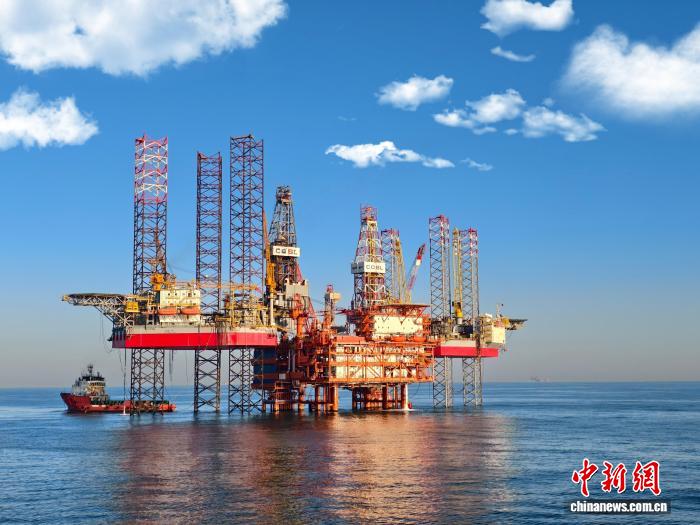
新华社北京12月21日电(记者王悦阳)中国海油21日宣布,我国海上最大油田——渤海油田2025年累计 生产油气当量突破4000万吨,创历史新高,为国家能源安全和经济社会高质量发展提供坚实保障。 【纠错】 【责任编辑:张樵苏】 渤海油田是我国海上产量最高、规模最大的主力油田,现拥有60余个在生产油气田、200余座生产设 施,累计生产原油超6亿吨。近五年,渤海油田油气产量年均增长5%,原油增量约占全国总增量近 40%。 渤海油田加速推进数智化转型和绿色低碳发展,关键装备国产化取得重大突破,成功投用首套国产化浅 水水下生产系统。秦皇岛32-6智能油田通过无人化少人化、生产运营协同化等技术赋能传统油气生产。 此外,我国最大规模海上油田群岸电应用工程全面收官,超80%油田接入岸电。 中国海油天津分公司相关负责人表示,2025年,渤海油田产能建设全面提速,全年钻完井作业量创历史 新高,高效推动垦利10-2、渤中26-6等亿吨级油田在内的多个重点项目快速建成投产。 在全力拓展新油田产能的同时,2025年渤海油田老油田年产原油超3200万吨,稳住产量"基本盘"。 ...
工程师牵手 AI“高徒” 一天节约千余度电
Xin Lang Cai Jing· 2025-12-20 22:07
□罗顺 四川日报全媒体记者 王培哲党的二十届四中全会通过的"十五五"规划建议提出,推动技术 改造升级,促进制造业数智化转型,发展智能制造、绿色制造、服务型制造,加快产业模式和企 业组织形态变革。12月12日上午,宜宾高新区一座光伏电池生产基地的数字化控制中心内,人们 围在大屏幕前观看一场别开生面的"师徒秀"。师父是工厂内经验丰富的技术工程师洪冬,"徒 弟"是两个月前启动部署、正在进行软件调试的高效机房制冷系统。"徒弟"接收指令不到1秒,便 分析完制冷负荷数据和系统运行工况,给出优化建议:25组冷却塔即可满足当前生产所需,其余 15组可转入低功耗状态。一旁,师父洪冬同步核对历史运行数据和气象信息,并与同事讨论十几 分钟后,给出一样的结论。党的二十届四中全会通过的"十五五"规划建议提出,推动技术改造升 级,促进制造业数智化转型,发展智能制造、绿色制造、服务型制造,加快产业模式和企业组织 形态变革。这场"师徒秀",正是制造业数智化转型的生动写照。AI"徒弟"正快速出师洪冬是和光 同程光伏科技(宜宾)有限公司(简称和光同程)的厂务部经理,负责工厂水、电、气等原料的 调配工作。此次他和"徒弟"操作的冷水机组及冷却塔,位 ...