
智能体

Search documents
谷歌Gemini 3夜袭全球,暴击GPT-5.1,奥特曼罕见祝贺
3 6 Ke· 2025-11-19 00:07
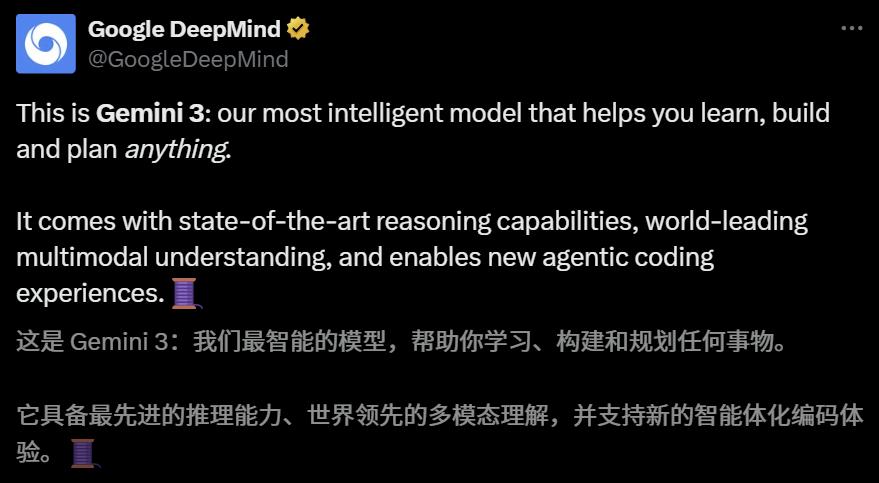
Core Insights - Google has launched its new flagship AI model, Gemini 3 Pro, which is touted as the "strongest reasoning + multimodal + ambient programming" AI to date, outperforming competitors like OpenAI's GPT-5.1 in benchmark tests [1][3][9] Performance Highlights - Gemini 3 Pro achieved significant improvements over its predecessor, Gemini 2.5 Pro, and outperformed GPT-5.1 in various benchmarks, including: - Humanity's Last Exam (HLE): 45.8% (highest score) without tools [4][5] - GPQA Diamond: 91.9% [4][17] - AIME 2025 (Mathematics): 95.0% [4][18] - Vending-Bench 2: $5,478.16 in net worth [4][18] Multimodal Capabilities - The model excels in multimodal understanding, scoring 81.0% in MMMU-Pro and 87.6% in Video-MMMU, showcasing its ability to process and reason across different types of data [19][22] - Gemini 3 can interpret complex scientific concepts and generate high-fidelity visual code, enhancing its utility in various fields [22][24] Ambient Programming - Gemini 3 Pro has advanced ambient programming capabilities, allowing developers to create interactive applications with simple prompts, significantly improving the development process [14][31] - The model scored 1487 Elo in the WebDev Arena, indicating its strong performance in web development tasks [31][32] Deep Think Mode - The introduction of Gemini 3 Deep Think mode marks a new era in AI, achieving exceptional results in challenging benchmarks, including 41% in HLE and 93.8% in GPQA Diamond [25][28] - This mode enhances the model's ability to tackle complex problems and demonstrates its potential for advanced reasoning [25][28] Developer Integration - Gemini 3 is integrated into various platforms, including Google AI Studio and Google Antigravity, allowing developers to leverage its capabilities for building sophisticated applications [36][42] - The model's training was completed on Google's TPU, reinforcing its competitive edge in the AI landscape [54]


凯文·凯利最新演讲:这个能力,下一个10年最具竞争力
创业邦· 2025-11-18 10:39
Core Viewpoints - The importance of preparing for the future rather than predicting it in an era of uncertainty [7] - AI is seen as a complement to human capabilities, enhancing efficiency and creativity rather than replacing jobs [20] - The future will be shaped by those who can collaborate with AI, rather than those who resist it [8] AI and Uncertainty - There are three key uncertainties regarding AI: the possibility of achieving general artificial intelligence, the direction of AI computing (centralized vs. decentralized), and the impact of AI on employment [10][14][16] - Current investments are heavily focused on exploring general intelligence, but the future may consist of various specialized AI systems rather than a single general system [11][13] - The trend towards edge computing is emerging, with a significant portion of computing already occurring at the edge, which offers advantages in speed, privacy, and energy efficiency [14][15] AI's Role in Employment and Industry - AI is not leading to mass unemployment but is instead enhancing productivity, with studies showing an average efficiency increase of about 25% for employees using AI [17][19] - The introduction of AI changes the nature of work, allowing humans to focus on more creative and judgment-based tasks while AI handles repetitive ones [20][41] - AI's role is to augment human capabilities rather than replace them, leading to a reorganization of job structures rather than job losses [43] Future Directions of AI - Future AI innovations will focus on four key areas: symbolic reasoning, spatial intelligence, emotional intelligence, and intelligent agents [22] - Symbolic reasoning will reintroduce structured intelligence to enhance AI's understanding and reasoning capabilities [22][23] - Spatial intelligence will enable AI to interact with and understand the real world, moving beyond text-based learning [24][27] - Emotional intelligence will allow AI to recognize and respond to human emotions, fostering deeper human-AI interactions [29][30] - Intelligent agents will evolve from mere tools to partners capable of executing tasks and collaborating with other agents [30][31] The Concept of "Cool China" - "Cool China" refers to a nation that attracts others through creativity and charm rather than force, with potential to lead in innovation and cultural influence [60][61] - China has the opportunity to produce world-class products and technologies, enhancing its global standing [62] - Cultural output will play a significant role in shaping China's soft power, allowing it to resonate with global audiences [63] - The development of attractive cities that blend technology and culture will further enhance China's appeal [64] Challenges and Responsibilities - The rise of an AI-driven society will bring challenges related to privacy, data usage, and the balance between personalization and individual rights [66][68] - AI has the potential to create a more just and efficient society, particularly in areas like social governance and resource distribution [69] - The realization of "Cool China" depends on a commitment to innovation, openness, and responsibility, shaping a respected and admired global presence [71]

粤开市场日报-20251118
Yuekai Securities· 2025-11-18 07:42
Market Overview - The A-share market experienced a decline today, with the Shanghai Composite Index falling by 0.81% to close at 3939.81 points, and the Shenzhen Component Index dropping by 0.92% to 13080.49 points. The ChiNext Index decreased by 1.16% to 3069.22 points. Overall, there were 1274 stocks that rose while 4103 stocks fell, with a total trading volume of 19261 billion yuan, an increase of 153 billion yuan compared to the previous trading day [1][10]. Industry Performance - Among the Shenwan first-level industries, the media, computer, and electronics sectors showed positive performance with increases of 1.60%, 0.93%, and 0.12% respectively. Conversely, the coal, electric equipment, steel, non-ferrous metals, and basic chemicals sectors faced declines, with decreases of 3.17%, 2.97%, 2.85%, 2.80%, and 2.67% respectively [1][10]. Concept Sector Performance - The concept sectors that performed well today included Pinduoduo partners, Xiaohongshu platform, WEB3.0, Kimi, Douyin Doubao, multimodal models, internet celebrity economy, operating systems, virtual humans, intelligent entities, ChatGPT, AIGC, medical payment reform, live streaming sales, and Chinese corpus. In contrast, the lithium battery positive electrode, lithium battery negative electrode, and lithium iron phosphate battery sectors experienced a pullback [2][12].
智能体技术加快多场景应用
Jing Ji Ri Bao· 2025-11-17 22:07
Core Insights - The article discusses the rapid advancement and industrial application of intelligent agents, which are becoming a significant driver for the smart transformation of industries [1] Group 1: Technological Empowerment and Efficiency Improvement - Intelligent agents combine environmental perception, task orchestration flexibility, and complex task automation capabilities with technologies like cloud computing and big data, showcasing vast application prospects across various fields [2] - The transition from traditional models to intelligent agents represents a paradigm shift, allowing machines to perform non-structured tasks that previously required human understanding and judgment, thus greatly expanding machine capabilities [2][3] Group 2: Application Scenarios and Expansion - 2023 is viewed as the year of industrialization for intelligent agents, with companies increasing their application efforts and expanding use cases across different sectors [4] - Examples include the use of digital patient intelligent agents in medical training at Shandong University and Lenovo's city super intelligent agents enhancing urban management processes [4] Group 3: Market Predictions and Trends - IDC predicts that by 2026, approximately 50% of the top 500 companies in China will utilize intelligent agents for data preparation and analysis, indicating a growing trend towards the commercialization of both general and specialized intelligent agent products [5][6] Group 4: Challenges to Large-Scale Implementation - Despite the rapid development, the industrial application of intelligent agents faces challenges such as model performance limitations, quality data set availability, and issues with decision-making quality and cross-scenario collaboration [7] - There is a need for unified standards and norms for intelligent agent interconnectivity to overcome current challenges in tool invocation and cloud resource utilization [7] Group 5: Recommendations for Development - To transition intelligent agents from experimental to commercial products, efforts should focus on enhancing reliability and collaboration, establishing a "safety belt" for human-machine cooperation, and reducing development barriers [7][8] - Companies are encouraged to treat intelligent agents as team members, prioritizing roles in clear processes and utilizing virtual teams for complex task handling [7]
计算机行业“一周解码”:阿里千问APP上线,全面对标ChatGPT
Bank of China Securities· 2025-11-17 06:30
Investment Rating - The industry investment rating is "Outperform the Market" [40] Core Insights - Alibaba has launched the "Qianwen" app, entering the C-end AI assistant market, aiming to create a comprehensive AI agent platform and expand globally, enhancing the integration of technology and commercialization [11][12] - The autonomous driving sector is accelerating, with "LuoBo Kuaipao" leading the global Robotaxi commercialization process, achieving over 250,000 fully autonomous orders weekly and expanding its services to 22 cities worldwide [13][14] - Rokid has partnered with BOLON to introduce AI smart glasses, which feature advanced functionalities such as AI object recognition and voice navigation, marking a significant step in wearable technology [17][19] - The release of GPT-5.1 signifies a new era in AI, enhancing ChatGPT's intelligence and conversational experience, with features like adaptive reasoning and personalized dialogue styles [20][21][23] Summary by Sections 1. Alibaba's Qianwen App Launch - Alibaba is developing the "Qianwen" app based on the Qwen model, directly competing with ChatGPT, and plans to enhance its AI capabilities over the coming months [11][12] - The international version of the app is also in development, targeting overseas users [11][12] 2. Autonomous Driving and Robotaxi - "LuoBo Kuaipao" has become the world's largest fully autonomous ride-hailing platform, with significant growth in service volume and geographical expansion [13][14] - The company has established partnerships in cities like Dubai and Abu Dhabi, facilitating its global expansion [14][15] 3. AI Smart Glasses by Rokid and BOLON - The new BOLON AI smart glasses are designed for comfort and functionality, featuring a 12-megapixel camera and various AI capabilities [17][19] - Rokid aims to innovate further in the AI glasses market, focusing on lightweight designs and enhanced user experience [18][19] 4. GPT-5.1 Model Release - OpenAI's GPT-5.1 introduces significant improvements in conversational AI, focusing on user experience and adaptability [20][21][23] - The model includes features for personalized dialogue and enhanced emotional intelligence, marking a shift towards more human-like interactions [21][23]
国产超节点扎堆发布背后
Jing Ji Guan Cha Wang· 2025-11-14 14:10
Core Insights - The AI computing power market is increasingly focused on "SuperNode" technology, with multiple companies showcasing their solutions at various conferences throughout 2023 [2][3] - The emergence of SuperNodes is driven by the need to overcome bottlenecks in training large AI models, particularly the "communication wall" that arises during parallel computing [4][9] - Domestic companies are adopting SuperNode technology as a practical solution to enhance overall computing power, compensating for limitations in single-chip performance [10][12] Group 1: SuperNode Technology - SuperNode refers to a high-density computing solution that integrates multiple AI chips within a single cabinet, allowing them to function as a unified system [6][7] - The design of SuperNodes involves two main approaches: Scale-Up, which increases resources within a single cabinet, and Scale-Out, which connects multiple cabinets [5][8] - The numbers associated with SuperNodes (e.g., "384", "640") indicate the number of AI training chips integrated within a single system, serving as a key metric for performance and density [7][8] Group 2: Industry Competition - Companies like Huawei and Inspur are positioning their SuperNode products as superior to NVIDIA's offerings, with Huawei claiming its Atlas 950 will outperform NVIDIA's NVL144 in multiple performance metrics [10][11] - The competitive landscape is marked by aggressive parameter comparisons, with domestic firms striving to achieve higher integration density within their SuperNode solutions [12][14] - The engineering challenges of integrating numerous high-power chips into a single cabinet necessitate advanced cooling and power supply technologies [12][14] Group 3: Market Demand and Challenges - The primary demand for AI computing power is expected to come from large internet companies and state-led cloud services, which have the infrastructure to support high-end computing needs [19][20] - Despite the strong demand, there are concerns about the sustainability of investments in AI computing infrastructure, particularly regarding the potential for overbuilding [20][22] - The software ecosystem remains a significant challenge for domestic manufacturers, as effective software solutions are crucial for the successful deployment of high-density computing systems [18][22]




城市智能体规模化落地,联想智能体工厂落子华中
Bei Jing Ri Bao Ke Hu Duan· 2025-11-14 11:45
Core Insights - Lenovo Group has signed a strategic cooperation agreement with Zhengzhou Airport Economic Comprehensive Experimental Zone to establish the Lenovo Intelligent Body Factory Central China Headquarters project, aiming to implement intelligent applications across five key sectors: cross-border trade, smart manufacturing, smart energy, smart tourism, and health care [1][2] - The project aims to create the largest intelligent innovation incubation base in China, targeting the introduction of over 100 upstream and downstream enterprises related to large models and the registration of 100 large models, referred to as the "two hundreds" goal [1] Summary by Sections - **Project Overview** - The Lenovo Intelligent Body Factory project will utilize the "1+N Intelligent Body" technology architecture to build an industrialization base for intelligent bodies in Zhengzhou Airport Zone [1] - The project has a proposed investment scale of 1.5 billion yuan [1] - **Ecosystem Development** - The project will establish a "one digital foundation + five centers" industrial ecosystem, which includes a shared computing power center and a corpus sharing center to support the cognitive and decision-making capabilities of intelligent bodies [1] - The five centers will encompass an intelligent body incubation and trading center, a research and education center, and an intelligent body operation center, providing a standardized incubation platform for the entire lifecycle from development to commercialization [1] - **Expansion and Collaboration** - Lenovo's city super intelligent body has accelerated its deployment in multiple cities across the country, having signed strategic cooperation agreements with various regions including Wuyishan, Yichang, Shanghai Hongkou, Hohhot, Shaanxi Xixian New Area, Shenzhen Guangming District, and Dunhuang, Gansu [2] - This initiative aims to promote deep applications of city super intelligent bodies in different regions and scenarios, forming a replicable and scalable model for smart city construction [2]

百度亮出秘密武器:一个自我演化的AI,给出了人类做不到的最优解
机器之心· 2025-11-14 09:30
Core Insights - The article discusses the rapid evolution of AI from being mere executors to becoming inventors, highlighting the introduction of Baidu's FM Agent, a self-evolving intelligent agent capable of solving complex problems autonomously [1][6][30] Group 1: AI Capabilities and Innovations - FM Agent can autonomously generate and optimize algorithms, significantly reducing the time required for tasks that would take human experts days or even weeks [4][8] - The system combines large language models with evolutionary search algorithms to tackle real-world problems, demonstrating a leap from executing commands to discovering solutions independently [6][8] - The agent's performance has been validated in various benchmarks, achieving a medal rate of 43.56% on MLE-Bench, outperforming the human median by 51.56% [13] Group 2: Technical Features - FM Agent employs four core technologies: automated machine learning processes, combination optimization, GPU kernel generation, and mathematical problem-solving capabilities [13][14] - The system operates through a workflow that includes cold start initialization, adaptive diversity sampling, and a distributed asynchronous infrastructure based on the Ray framework [12][14] Group 3: Industry Applications - FM Agent has shown effectiveness in multiple sectors, including finance, urban traffic optimization, and large-scale engineering projects, providing solutions that are faster and more efficient than traditional methods [25][18] - The agent can abstract real-world problems into mathematical algorithms, continuously iterating and optimizing solutions based on clear evaluation metrics [18][20] Group 4: Future Implications - The emergence of FM Agent signifies a shift towards a new paradigm where humans define problems and AI executes solutions, potentially transforming productivity across various industries [22][30] - Baidu's FM Agent has already attracted over 1,000 enterprises for testing, indicating strong interest and potential for widespread application in sectors like transportation, energy, and finance [33][32]

腾讯总裁剧透微信搭载智能体!阿里和谷歌也都开始互相伤害了
量子位· 2025-11-14 05:38
Group 1 - Major tech companies are engaging in a competitive AI product battle, with Alibaba, Google, and Tencent making significant moves in the AI space [3][4][31] - Alibaba is planning to revamp its Tongyi app, rebranding it as "Qwen" and integrating AI capabilities to enhance its e-commerce platform [6][7][8] - Google has introduced new AI shopping features aimed at enhancing the online shopping experience, allowing users to search, compare, and check out products using AI [16][18][21] Group 2 - Tencent is focusing on integrating AI into its WeChat platform, with plans to develop an AI agent that can assist users in various tasks within the app [22][30] - Tencent's Q3 financial report highlighted a 15% year-on-year revenue growth, with AI becoming a central theme in its strategic narrative [23][24] - The competition among these companies is centered around creating an "end-to-end closed loop" in user service, redefining the value chain in the internet landscape [33]



2.4万亿参数,创意写作全球第一!百度这次真站起来了?
Guan Cha Zhe Wang· 2025-11-13 06:23
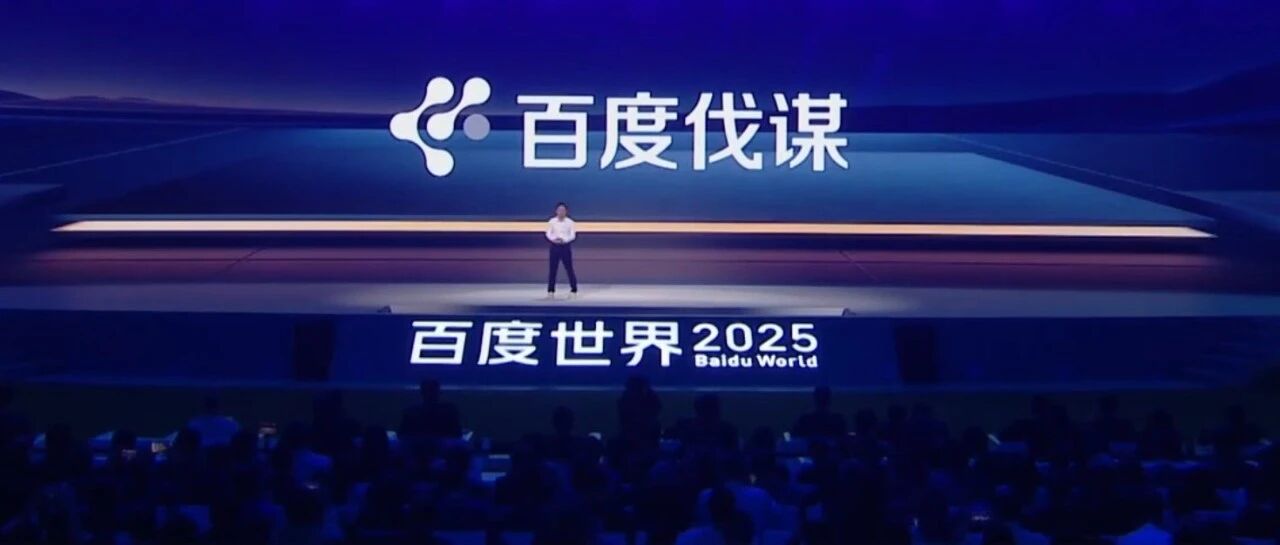
Core Insights - Baidu has unveiled its latest foundational model, Wenxin 5.0, at the "Baidu World 2025" conference, boasting a parameter count of 2.4 trillion and claiming to be at the forefront of native multimodal integration [1][5] - Wenxin 5.0 has achieved a global ranking of 8th on the LMArena leaderboard, surpassing several competitors and ranking first in creative writing capabilities [1][2] - Baidu introduced the world's first self-evolving intelligent agent, "Famu," which has demonstrated outstanding performance in recent global tests [2][8] Model and Technology Advancements - Wenxin 5.0 features a unified autoregressive architecture for native multimodal modeling, integrating language, images, video, and audio from the training phase [7] - The model employs a sparse mixture of experts (MoE) architecture, with over 2.4 trillion parameters and an activation ratio below 3%, enhancing inference efficiency while maintaining strong capabilities [7] - Baidu's new Kunlun chips, including the M100 and M300, are set to launch in 2026 and 2028, respectively, with the latter designed for training large-scale models [3][15] Applications and Use Cases - The Famu intelligent agent is designed to find global optimal solutions in complex industrial scenarios, such as traffic management and energy optimization [8][10] - In a collaboration with China Energy Construction Group, Famu has been applied to optimize offshore wind farm designs, significantly reducing costs and project timelines [10] - The intelligent cloud SaaS platform has improved traffic signal control in Ordos, reducing average vehicle delays by 50% through AI-driven solutions [11] Market Position and Future Plans - Baidu's digital human technology, "Huibo Star," has expanded into international markets, achieving a 91% year-on-year increase in GMV during the recent Double 11 shopping festival [12] - The company continues to lead in the AI cloud service market in China, with its AI capabilities integrated into various applications, including search engines and autonomous driving services [13][16] - Baidu has ambitious plans for the future, aiming to launch a million-card Kunlun chip cluster by 2030, further solidifying its position in the AI landscape [15]
