
文心5.0

Search documents
百度发布最新财报:2025年营收1291亿元 四季度AI业务收入占比43%
Zhong Guo Jing Ji Wang· 2026-02-27 07:44
Core Insights - In 2025, Baidu's total revenue reached 129.1 billion yuan, with AI business revenue at 40 billion yuan, exceeding market expectations [1] - The year 2025 is highlighted as a pivotal year for AI to become Baidu's new core, with strong momentum in AI cloud services [1] - Baidu's AI-native marketing services saw a significant revenue increase of 301% in 2025 [2] Group 1: Financial Performance - Baidu's total revenue for Q4 was 32.7 billion yuan, with AI business revenue accounting for 43% of general business revenue [1] - AI cloud revenue for the full year 2025 grew by 34% year-on-year, with Q4 AI high-performance computing subscription revenue increasing by 143% [1] - The number and amount of winning bids for large models in Baidu's intelligent cloud reached first place for two consecutive years [1] Group 2: User Engagement and AI Applications - Monthly active users of the Baidu App reached 679 million, while Wenxin Assistant had 202 million monthly active users, with a fourfold increase since the launch of the Spring Festival red envelope activity [2] - AI applications surpassed 10 billion yuan in revenue for the year 2025, with the no-code generation platform outperforming in functionality and application quality [2] - The "Luo Bo Kua Pao" service recorded 3.4 million global autonomous driving service instances in Q4, with a year-on-year growth of over 200% [2] Group 3: Technological Advancements - The official version of Wenxin 5.0 was launched, featuring 2.4 trillion parameters and supporting multiple information types [3] - Baidu's ESG performance has shown further improvement, as noted in the S&P Global Sustainability Yearbook 2026 [3]

百度去年AI业务营收400亿 昆仑芯分拆独立上市稳步推进
Nan Fang Du Shi Bao· 2026-02-26 14:52
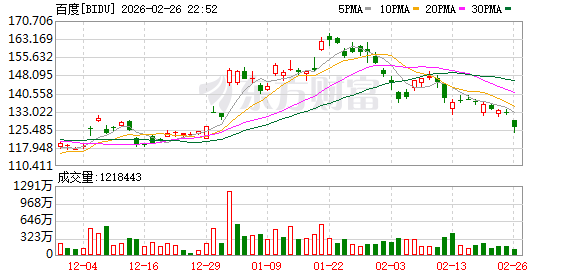
Core Insights - Baidu's total revenue for 2025 reached 129.1 billion RMB, a year-on-year decline of 3%, with AI business revenue at 40 billion RMB [2][4] - In Q4 2025, Baidu's total revenue was approximately 32.7 billion RMB, down 4.1% year-on-year, but AI business revenue exceeded market expectations, accounting for 43% of general business revenue [2][4] - The net profit attributable to Baidu in Q4 was 1.8 billion RMB, a significant year-on-year decline of 191% [2][4] Financial Performance - Baidu's operating income for 2025 was a loss of 5.8 billion RMB, compared to a profit of 21.3 billion RMB in 2024 [3] - Total costs and expenses for 2025 were 134.9 billion RMB, up from 111.9 billion RMB in 2024 [3] - The net profit for 2025 was approximately 5.6 billion RMB, a decrease of 76.5% year-on-year [4] AI Business Growth - AI cloud revenue for 2025 was 20 billion RMB, representing a year-on-year growth of 34% [4] - In Q4, subscription revenue from AI high-performance computing facilities grew by 143% year-on-year [4] - AI-native marketing services saw a remarkable revenue increase of 301% in 2025 [4] User Engagement and Product Development - Baidu's app monthly active users reached 679 million, with Wenxin Assistant achieving 202 million monthly active users [4][5] - The launch of Wenxin 5.0, a large model with 2.4 trillion parameters, supports various forms of input and output [6] - The company emphasizes that applications are more important than models in creating value, focusing on user needs for product development [6] Autonomous Driving Expansion - The autonomous driving service "Luobo Kuaipao" recorded 3.4 million service instances in Q4, a year-on-year increase of over 200% [5][6] - The service has expanded globally, with operations in multiple countries including the UK, Switzerland, and the Middle East [6] - As of February 2026, Luobo Kuaipao has provided over 20 million service instances across 26 cities worldwide [5][6]

百度2025年营收达1291亿元 第四季度AI业务收入占比43%
Zheng Quan Ri Bao Wang· 2026-02-26 13:05
Core Insights - Baidu's total revenue for 2025 reached 129.1 billion yuan, with AI business revenue accounting for 40 billion yuan, indicating a significant shift towards AI as a core business driver [1] - The company reported that AI-related services are expanding rapidly, with AI cloud revenue growing by 34% year-on-year and AI native marketing services increasing by 301% in 2025 [2][3] Group 1: Financial Performance - In Q4 2025, Baidu's total revenue was 32.7 billion yuan, with AI business revenue constituting 43% of general business income [1] - AI cloud's subscription revenue surged by 143% year-on-year in Q4, reflecting strong demand for high-performance computing [1] - AI native marketing services revenue reached 2.7 billion yuan in Q4, marking a 110% year-on-year increase [2] Group 2: User Engagement and Application Growth - Baidu App's monthly active users reached 679 million, while Wenxin Assistant's monthly active users hit 202 million, showcasing strong user engagement [2] - The launch of the Wenxin Assistant during the Spring Festival led to a fourfold increase in active users [2] - Baidu's AI applications generated over 10 billion yuan in revenue for the year, with significant growth in various sectors [2] Group 3: Autonomous Driving and Market Expansion - In Q4 2025, Baidu's autonomous driving service, "Luobo Kuaipao," recorded over 3.4 million rides, a year-on-year increase of over 200% [3] - The service has expanded to 26 cities globally, with a total of over 20 million rides provided [3] - Baidu's autonomous driving technology has accumulated over 300 million kilometers of total driving distance, with over 190 million kilometers being fully autonomous [3] Group 4: Capitalization and Strategic Moves - Baidu's subsidiary Kunlun Chip has submitted a listing application to the Hong Kong Stock Exchange, indicating a strategic move to capitalize on its AI chip business [4] - The company announced a share buyback plan of up to 5 billion USD and plans to declare its first dividend in 2026, enhancing shareholder returns [4] - These initiatives are expected to optimize Baidu's valuation structure and open financing channels for long-term technological investments [5]
百度发布最新财报!
Zhong Guo Ji Jin Bao· 2026-02-26 11:37
Core Insights - Baidu's total revenue for 2025 reached 129.1 billion yuan, with AI business revenue accounting for 40 billion yuan, indicating a strong performance in AI-related sectors [1] - In Q4 2025, total revenue was 32.7 billion yuan, with AI business revenue making up 43% of general business income, surpassing market expectations [1] - The company emphasizes that 2025 is a pivotal year for AI to become the new core of Baidu's operations, with a focus on expanding AI applications to meet diverse needs [1] AI Business Performance - AI revenue grew by 34% year-on-year, with Q4 subscription revenue from high-performance computing facilities increasing by 143%, accelerating from 128% in Q3 [1] - AI-native marketing services saw a remarkable 301% year-on-year revenue growth, with AI applications generating over 10 billion yuan in total revenue for the year [2] - Monthly active users for Baidu App reached 679 million, while Wenxin Assistant's monthly active users hit 202 million, with a fourfold increase since the launch of the Spring Festival red envelope activity [2] Autonomous Driving Expansion - The autonomous driving service "Luobo Kuaipao" recorded over 3.4 million service instances in Q4, marking a year-on-year growth of over 200% [3] - As of February 2026, Luobo Kuaipao has provided over 20 million service instances globally, covering 26 cities [3] - The total mileage for autonomous driving has exceeded 300 million kilometers, with fully autonomous driving mileage surpassing 190 million kilometers [3] Technological Advancements - The official version of Wenxin 5.0 was launched, featuring 2.4 trillion parameters and supporting multi-modal input and output [3] - Wenxin 5.0 has achieved top rankings in domestic text and visual understanding benchmarks, outperforming several mainstream models [3] - Kunlun Chip has submitted an application for a mainboard listing on the Hong Kong Stock Exchange [3]
百度最新财报:2025年营收1291亿元 四季度AI业务收入占比43%
市值风云· 2026-02-26 10:12
Core Insights - Baidu's total revenue for 2025 reached 129.1 billion yuan, with AI business revenue accounting for 40 billion yuan, exceeding market expectations [1] - The year 2025 is identified as a pivotal year for AI to become Baidu's new core, with strong momentum in AI cloud services and a growing portfolio of AI applications [1] - AI cloud revenue grew by 34% year-on-year in 2025, with high-performance computing subscription revenue increasing by 143% in Q4 [1] Group 1: AI Business Performance - AI native marketing services revenue increased by 301% year-on-year in 2025 [2] - Monthly active users of Baidu App reached 679 million, while Wenxin Assistant's monthly active users reached 202 million, with a fourfold increase since the launch of the Spring Festival red envelope activity [2] - The revenue from AI applications surpassed 10 billion yuan in 2025, indicating significant growth in this segment [2] Group 2: Autonomous Driving and AI Model Developments - The autonomous driving service "Luobo Kuaipao" recorded 3.4 million service instances in Q4, with a year-on-year growth of over 200% [2] - The total mileage for autonomous driving exceeded 300 million kilometers, with fully autonomous driving mileage surpassing 190 million kilometers [3] - The official version of Wenxin 5.0 was launched, featuring 2.4 trillion parameters and achieving top rankings in various AI model benchmarks [3] Group 3: Market Expansion and ESG Performance - Luobo Kuaipao is accelerating its expansion into global markets, having provided over 20 million service instances across 26 cities by February 2026 [2] - Baidu has made further improvements in ESG performance, as noted in the S&P Global Sustainability Yearbook 2026 [3]
百度最新财报:2025年营收1291亿元 四季度AI业务收入占比43%
Qi Lu Wan Bao· 2026-02-26 09:23
Core Insights - Baidu's total revenue for 2025 reached 129.1 billion yuan, with AI business revenue accounting for 40 billion yuan, exceeding market expectations [1] - The company emphasizes that 2025 is a pivotal year for AI to become its new core, with strong momentum in AI cloud services and a growing portfolio of AI applications [1] - AI cloud revenue grew by 34% year-on-year, with high-performance computing subscription revenue increasing by 143% in Q4 [1] Group 1: Financial Performance - In Q4, Baidu's total revenue was 32.7 billion yuan, with AI business revenue constituting 43% of its general business revenue [1] - AI-native marketing services saw a revenue increase of 301% for the entire year of 2025 [2] - The total revenue from AI applications surpassed 10 billion yuan in 2025 [2] Group 2: User Engagement and Market Expansion - As of December 2025, Baidu App had 679 million monthly active users, while Wenxin Assistant reached 202 million monthly active users, with a fourfold increase since the launch of the Spring Festival red envelope activity [2] - The autonomous driving service, "Luobo Kuaipao," recorded 3.4 million service instances in Q4, marking a year-on-year growth of over 200% [2] - Luobo Kuaipao has expanded its global reach, providing over 20 million service instances across 26 cities by February 2026 [2] Group 3: Technological Advancements - The official version of Wenxin 5.0 was launched, featuring 2.4 trillion parameters and supporting multiple forms of input and output [3] - Wenxin 5.0 has achieved top rankings in various domestic benchmarks, surpassing several mainstream models [3] - Baidu's ESG performance has improved, as noted in the 2026 Global Edition of the S&P Global Sustainability Yearbook [3]
互联网巨头AI超级入口的第一战场
Sou Hu Cai Jing· 2026-02-16 20:06
Core Viewpoint - The article discusses the intense competition among major internet companies during the Spring Festival, particularly focusing on the rise of AI applications and the strategic battles for user engagement and market share in the AI sector [3][4][37]. Group 1: AI Competition Landscape - The Spring Festival has become a battleground for internet giants to compete for traffic, with significant events like the 2015 payment war and the 2020 short video competition [3][4]. - In 2025, a new player, DeepSeek, emerged, surpassing existing applications in daily active users, indicating a shift in the AI market landscape [4]. - By 2026, the competition intensified, with major companies preparing extensively for the Spring Festival, marking it as a critical moment for AI applications [4][5]. Group 2: Model Updates and Innovations - Major companies like Baidu, Alibaba, and ByteDance have updated their AI models recently, with Baidu's Wenxin 5.0 featuring 2.4 trillion parameters and advanced multi-modal capabilities [6][8]. - Alibaba's Qwen3-Max-Thinking model, with over a trillion parameters and 36 trillion tokens of pre-training data, enhances its tool-calling capabilities [8][10]. - ByteDance launched several models, including Seedance 2.0 and Seedream 5.0 Lite, which significantly improved video and image generation capabilities [10][14][15]. Group 3: AI Super Entry Points - Companies are focusing on creating AI super entry points that integrate their core business models, such as Baidu's AI+search and Alibaba's AI+e-commerce [21][25]. - Alibaba's launch of the Qwen APP aims to enhance the e-commerce experience by integrating various services into a single platform [25][28]. - Tencent's Yuanbao group chat feature incorporates AI to enhance user interaction and engagement, including a cash red envelope feature during the Spring Festival [30][32]. Group 4: Cash Incentives and User Engagement - Major companies are investing heavily in cash incentives to attract users, with Tencent announcing a 1 billion yuan cash giveaway and Baidu offering 500 million yuan in red envelopes [35][37]. - The competition for user attention and brand recognition is driving these cash distribution strategies, as companies aim to establish their AI super entry points [37].



一日9发,中国AI显露8个信号
Xin Lang Cai Jing· 2026-02-12 02:55
Core Insights - The rapid growth of AI in China is attributed to multiple factors including the AI China chain, AI China ring, industrial AI confidence, talent aggregation, capital increase, market application momentum, and policy encouragement [1][2][6] Group 1: AI Model Releases - On February 11, nine significant AI models and intelligent products were launched, including Deepseek's unnamed new model, Zhiyu Pony Alpha, Minimax Agent M2.5, iFLYTEK's Spark X2 model, and Ant Group's Ming Flash Omni 2.0 [1][6] - The release of models such as Wenxin 5.0, Qwen 3-Max-Thinking, and Kimi-2.5 indicates a speeding up of China's AI capabilities since the beginning of the year [2][7] Group 2: Competitive Landscape - The domestic technology competition structure is expected to be 2+4+3+N, while the user market structure will be (3+1)+6+N, favoring platforms with full-stack AI capabilities [3][8] - The emergence of takeover-type agents is anticipated to accelerate competition in the AI space, with products like OpenClaw setting new benchmarks [3][9] Group 3: Technological Advancements - Native multimodal and full-modal capabilities are becoming standard, with advancements in video generation expected to enhance usability [4][9] - The Kimi-2.5 Swarm model has achieved a significant token volume, indicating a shift towards multi-agent and swarm intelligence [5][9] Group 4: Code and Infrastructure - Code is becoming a critical area of focus, with companies like Qwen, DS, and ByteDance increasing their capabilities in code and ecosystem development [6][10] - The year is projected to be pivotal for humanoid robots, with advancements in intelligent migration and autonomous learning expected to develop the "brain" of robots by 2026 [7][10] Group 5: Resource Challenges - A potential shortage of computing power is anticipated due to the rapid acceleration of applications and the influx of millions of new users [8][10] - The demand for computing resources is expected to outpace supply, even with increased domestic capacity, leading to challenges in meeting the needs of various AI applications [10]
突发!百万Token上下文+Agent新模型深夜连发,创业板人工智能ETF(159243)放量涨超2%!
Sou Hu Cai Jing· 2026-02-12 02:46
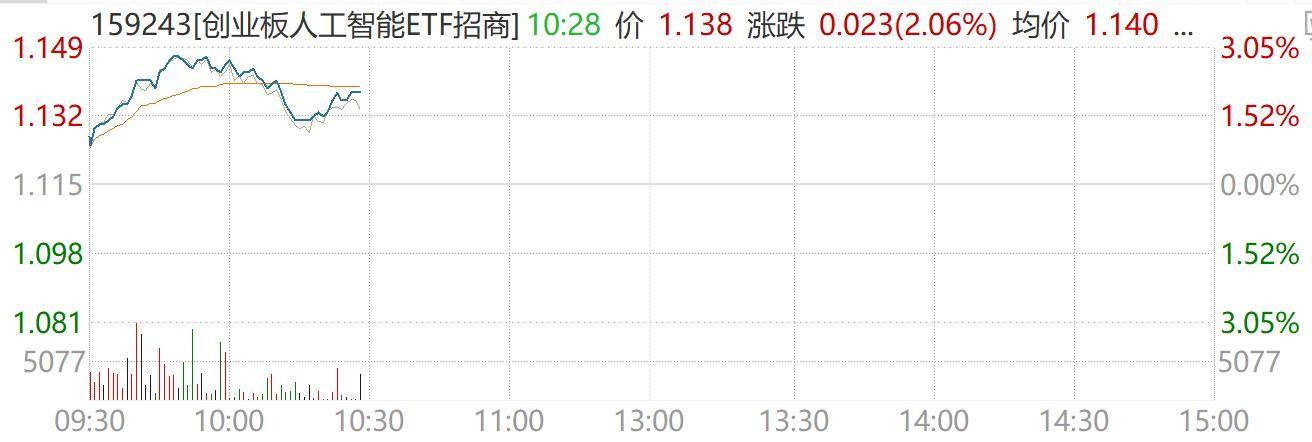
Group 1 - The domestic large model field has seen significant updates, igniting market expectations for a new round of innovation in the AI industry chain [2] - DeepSeek has launched an update that supports a maximum context length of 1 million tokens, enabling the model to process long texts such as entire novels and complex documents, facilitating AI applications in high-value scenarios like financial analysis and legal review [3] - Zhiyu AI has released its flagship model GLM-5, achieving state-of-the-art capabilities in coding and agent functions, bringing its performance close to international leaders, indicating that domestic models are now competitive in execution capabilities [4] Group 2 - The release of new models is part of a concentrated launch window, with several companies including DeepSeek, Kimi, Alibaba, and Baidu unveiling new models, reflecting a shift in the internet value chain towards execution capabilities and new business models [5] - The increasing demand for computing power is supported by significant capital expenditures planned by major companies, with ByteDance planning 160 billion yuan for 2026 and Alibaba investing 380 billion yuan in AI infrastructure over three years [5] - The AI ETF tracking the entrepreneurial board AI index covers the entire AI industry chain, including hardware, software, and applications, with major holdings benefiting from the expansion of cloud vendor capital expenditures [6]

百度千帆披露AI落地成绩:累计支持130万智能体
Bei Ke Cai Jing· 2026-02-06 01:36
Group 1 - Baidu Qianfan has supported the creation of over 1.3 million agents, with daily tool usage reaching tens of millions, facilitating innovation in key industries such as smart hardware, manufacturing, transportation, and energy [1] - The platform has developed over 100 high-frequency scenarios, including customer acquisition marketing and error correction [1] - Baidu Qianfan is expanding its open model ecosystem, recently set to launch multiple open-source models including Kimi K2.5, GLM 4.7, and MiniMax M2.1, in addition to supporting Baidu's native Wenxin 5.0 model [2] Group 2 - The industry is expected to complete a paradigm shift from validation to implementation by 2025, with a significant explosion of "agent-native" capabilities anticipated in 2026 [2] - By 2026, agents are projected to evolve from mere auxiliary tools to "digital employees" capable of complex task prediction and autonomous planning, deeply integrating into the core business processes of enterprises [2]