
实体经济

Search documents
以一域之稳服务全局之稳 山东较好发挥经济大省“挑大梁”作用
Zhong Guo Fa Zhan Wang· 2025-10-27 08:06
Core Viewpoint - The Shandong provincial government emphasizes its commitment to high-quality economic growth during the "14th Five-Year Plan" period, aiming for a GDP growth target of 5.5% and achieving better-than-average performance in key economic indicators compared to the national average [1] Group 1: Economic Growth and Industrial Performance - Shandong's industrial output value has an average annual growth rate of 7.5% during the "14th Five-Year Plan," with revenue from industrial enterprises increasing by 37% [2] - The province has completed over 3,000 projects annually, contributing approximately 500 billion yuan in output value, reinforcing the industrial sector's role as an economic stabilizer [2] Group 2: Domestic Demand Expansion - Shandong has a large demand potential with a population exceeding 200 million, implementing 15,000 key projects annually to enhance effective investment [3] - The average annual growth rate of retail sales of consumer goods is 7.6%, with significant contributions from sectors like new energy vehicles and tourism, which have seen substantial increases in consumption and infrastructure development [3] Group 3: Open Cooperation and Foreign Trade - Shandong is strategically located for international trade, with an average annual growth rate of 11.2% in foreign trade imports and exports during the "14th Five-Year Plan" [4] - Exports to emerging markets have increased by 16.1% annually, with machinery and electrical products seeing a 15.1% growth rate, indicating a shift towards higher-value exports [4]
绘蓝图·“十五五”关键部署怎么干?一文了解
Yang Shi Wang· 2025-10-27 04:33
Core Viewpoint - The key outcome of the Fourth Plenary Session of the 20th Central Committee is the approval of the "Suggestions on Formulating the 15th Five-Year Plan for National Economic and Social Development" [1][3] Group 1: Economic and Social Development Goals - The "15th Five-Year Plan" aims for significant achievements in high-quality development, substantial improvements in self-reliance in technology, breakthroughs in deepening reforms, enhanced social civilization, improved quality of life, major progress in building a beautiful China, and a more solid national security barrier [7][10] Group 2: Strategic Tasks and Major Initiatives - The plan emphasizes accelerating high-level technological self-reliance to lead new quality productivity, enhancing the overall effectiveness of the national innovation system, and fostering new quality productivity through original innovation and key core technology breakthroughs [12][14] - It prioritizes building a modern industrial system and strengthening the foundation of the real economy, focusing on intelligent, green, and integrated development [17][19] - The plan includes maintaining a reasonable proportion of manufacturing, constructing a modern industrial system centered on advanced manufacturing, optimizing traditional industries, and nurturing emerging and future industries [21][23]

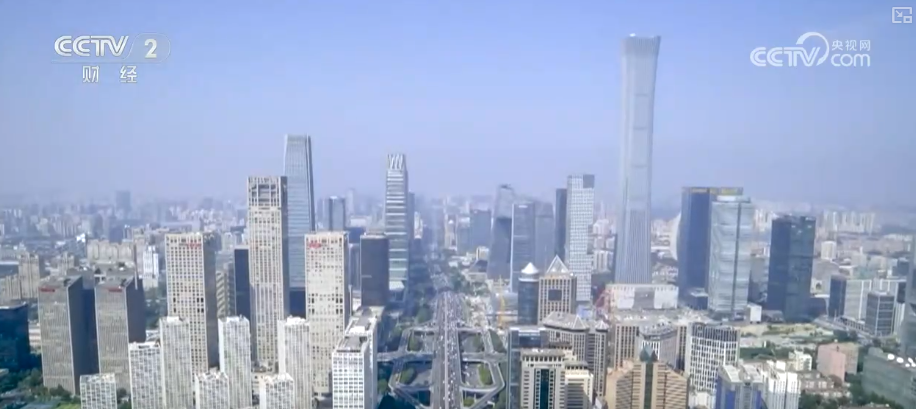
“十五五”规划建议有哪些重点
Bei Jing Shang Bao· 2025-10-26 15:37
Core Points - The 20th Central Committee's Fourth Plenary Session approved the "Suggestions for Formulating the 15th Five-Year Plan for National Economic and Social Development" as its most significant outcome [3][4] - The "15th Five-Year Plan" is crucial for advancing China's modernization and addressing complex external challenges [3][5] Summary by Sections General Overview - The "Suggestions" document consists of 15 parts and 61 articles, divided into three main sections: general overview, specific strategies, and tasks for strengthening centralized leadership [4] - The document is considered a significant guiding document for the Party, with clear development goals and practical measures [4] Economic and Social Development Goals - The guiding principles for the "15th Five-Year Plan" emphasize high-quality development, technological self-reliance, and social progress [5][6] - Key goals include significant improvements in high-quality development, technological independence, social civilization, and national security [6] Modern Industrial System - The plan prioritizes building a modern industrial system and strengthening the foundation of the real economy [7] - It outlines four key tasks: upgrading traditional industries, fostering emerging industries, enhancing service sector quality, and constructing modern infrastructure [7][8] Technological Innovation - The plan emphasizes the importance of technological self-reliance and innovation, with a focus on original innovation and integration of technology with industry [9][10] - It aims to enhance the national innovation system and promote the development of strategic emerging industries [10] Open Cooperation - The plan outlines strategies for expanding foreign trade and investment, enhancing China's global economic partnerships, and promoting high-quality Belt and Road cooperation [11] - It emphasizes the importance of creating a favorable environment for foreign investment and trade [11] Health and Population Development - The plan includes initiatives for improving public health, enhancing healthcare services, and promoting a population-friendly society [12][13] - It aims to address aging population challenges and improve the quality of life for citizens [13] Party Leadership - The plan stresses the importance of strengthening the Party's centralized leadership as a fundamental guarantee for advancing modernization [14] - It includes measures to enhance political integrity and combat corruption within the Party [14]

挺膺担当拓新局——中管企业、中管金融企业和中管高校干部职工以实干笃行贯彻落实全会精神
Xin Hua She· 2025-10-26 15:21
Group 1: Achievements and Developments - The Long March 5 rocket, China's largest active launch vehicle, successfully launched, marking significant achievements in the aerospace sector [2] - China Huadian has increased its installed capacity to over 250 million kilowatts, a 50.6% growth compared to the end of the 13th Five-Year Plan, with renewable energy capacity exceeding 100 million kilowatts [3] - The China Agricultural Development Bank is focusing on rural revitalization and enhancing the effectiveness of agricultural support policies [3] Group 2: Strategic Goals and Plans - The 14th Five-Year Plan has set ambitious goals for economic and social development, emphasizing the importance of the real economy and modern industrial systems [6] - China Construction Bank aims to increase its manufacturing loans by over 2 trillion yuan during the 14th Five-Year Plan, with a target of exceeding 5 trillion yuan in the next three years [6] - China Mobile is committed to advancing key technologies in 6G and artificial intelligence, aligning with national innovation strategies [7] Group 3: Cultural and Educational Initiatives - The importance of cultural innovation and development is highlighted, with educational institutions encouraged to contribute to the prosperity of Chinese culture [8][9] - Universities are urged to integrate the principles of the Communist Party into their educational frameworks to support national development goals [11] Group 4: Infrastructure and Modernization - The construction of the Sichuan-Tibet Railway is seen as a key project for achieving modernization goals, with a focus on overcoming challenges [12] - Financial institutions are expected to play a crucial role in supporting the development of the Hainan Free Trade Port and enhancing financial openness [10]
多部门详解“十五五”规划建议,国资将向新兴产业集中
Di Yi Cai Jing· 2025-10-26 13:30
Core Viewpoint - The article emphasizes the importance of building a modern industrial system and strengthening the foundation of the real economy as a primary task in China's 14th Five-Year Plan, with a focus on high-quality development and innovation-driven growth [2][3]. Group 1: Modern Industrial System - The construction of a modern industrial system is prioritized in the 14th Five-Year Plan, with a focus on solidifying and expanding the real economy [2][3]. - Key tasks include upgrading traditional industries, fostering new and future industries, and enhancing the quality and efficiency of the manufacturing sector [3][5]. - The manufacturing sector is projected to contribute significantly to global manufacturing growth, with an expected increase in value added from 26.6 trillion yuan to 33.6 trillion yuan during the 14th Five-Year Plan [4]. Group 2: Traditional Industries - Traditional industries account for approximately 80% of the manufacturing sector's value added, serving as the foundation of China's industrial system [5]. - The government aims to enhance the competitiveness of key traditional industries such as chemicals, machinery, and shipbuilding, with an estimated market space increase of around 10 trillion yuan over the next five years [5]. Group 3: Emerging Industries - The plan includes the development of strategic emerging industries such as new energy, new materials, and aerospace, which are expected to create several trillion-yuan markets [7]. - The focus on innovation and reform is crucial for the growth of emerging industries, which currently represent only about 13.4% of GDP compared to traditional industries [8]. Group 4: State-Owned Enterprises - Central enterprises have invested approximately 8.6 trillion yuan in strategic emerging industries since the beginning of the 14th Five-Year Plan, with a projected revenue of over 11 trillion yuan in 2024 [9]. - The government encourages state-owned enterprises to concentrate capital in emerging industries to enhance competitiveness and ensure strategic security in critical areas [10][11].
专家谈·“十五五”关键部署绘蓝图 诸多重要提法释放哪些信号?梳理解读↓
Yang Shi Wang· 2025-10-26 03:59
Group 1 - The core objective of the "15th Five-Year Plan" is to achieve significant results in high-quality development, which aligns with the primary task of Chinese-style modernization [3][5] - The plan emphasizes the importance of maintaining a reasonable proportion of the manufacturing industry and constructing a modern industrial system centered on advanced manufacturing [8] - The focus of the "15th Five-Year Plan" is on economic construction, with key areas including technology, new industrial chains, domestic markets, consumption, and people's livelihoods [10] Group 2 - The "15th Five-Year Plan" outlines strategic and innovative measures to build a strong domestic market, accelerate agricultural modernization, enhance social welfare, and promote a comprehensive green transition [12] - The plan highlights the need to combine investments in physical assets and human capital, emphasizing that expanding domestic demand and investing in people are two sides of the same coin [15][17] - The future five years will see a push for high-level opening-up, encouraging high-quality enterprises to enter China while supporting Chinese companies in forming their own industrial chains [20][22] Group 3 - The plan aims to accelerate self-reliance in high-level technology and lead the development of new quality productivity, seizing opportunities from the new round of technological revolution and industrial transformation [30] - It stresses the importance of original innovation and tackling key core technologies, promoting deep integration of technological and industrial innovation [32] - The plan calls for breaking down barriers to market flow and optimizing resource allocation to create a virtuous cycle of demand and supply [39] Group 4 - The plan identifies key areas for technological breakthroughs, particularly in artificial intelligence, quantum computing, and advanced nuclear energy technologies, which are expected to see explosive growth in the next five years [45][49]
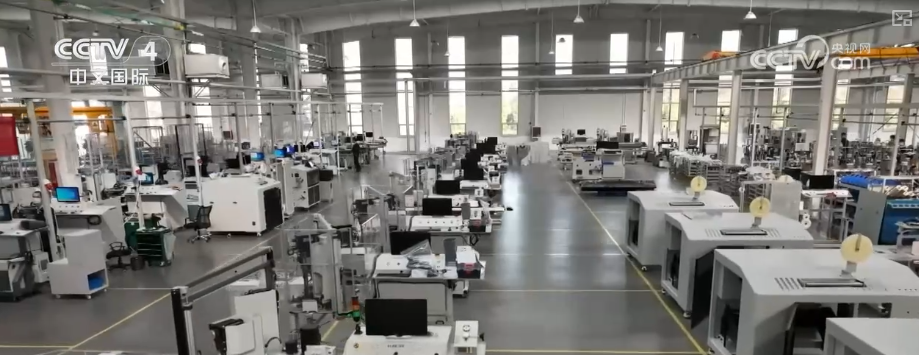
党的二十届四中全会精神在省级机关引发热烈反响以实干担当抓落实,为全国大局作贡献
Xin Hua Ri Bao· 2025-10-25 23:18
Core Points - The 20th Central Committee's Fourth Plenary Session emphasizes the importance of unifying thoughts and actions to ensure the successful completion of the "14th Five-Year Plan" and the scientific planning of the "15th Five-Year Plan" for economic and social development [1][2] Group 1: Economic Development - The session highlights the need to consolidate and strengthen the foundation of the real economy, promoting the renewal of traditional industries and the development of emerging and future industries [2][4] - The focus is on enhancing green development momentum and creating a new quality of productive forces [2][4] - The session calls for a comprehensive deepening of reforms and expansion of opening-up to better leverage the role of economic system reforms [2][4][5] Group 2: Technological Innovation - The session identifies accelerating high-level technological self-reliance and strength as a strategic task, reflecting the central government's emphasis on technological innovation [3] - The goal is to build a high-level technology province by 2035, focusing on original innovation and key core technology breakthroughs [3] Group 3: Industrial System - The session stresses the construction of a modern industrial system and the importance of maintaining a reasonable proportion of manufacturing [4] - It aims to create a modern industrial system with Jiangsu characteristics, integrating various technological and industrial innovations [4] Group 4: Financial and Market Regulation - The financial system is directed to serve the real economy and promote the integration of technological and industrial innovations [6][10] - The market regulation authority aims to enhance service for the construction of a modern industrial system and ensure safety in food, drugs, and industrial products [9] Group 5: Social Governance and Development - The session emphasizes the importance of social governance and the need for a comprehensive approach to enhance the effectiveness of social governance [11] - It highlights the role of various departments in promoting high-quality economic and social development through targeted actions and community engagement [11]
对话张占斌:如何理解“十五五”对“人”的强调
经济观察报· 2025-10-25 05:56
Core Viewpoint - The "15th Five-Year Plan" period is crucial for achieving basic socialist modernization and serves as a pivotal link between the first centenary goal of reform and the second centenary goal of national rejuvenation [3][10]. Group 1: Historical Functions of the "15th Five-Year Plan" - The "15th Five-Year Plan" period is tasked with three historical functions: domestic transformation, completion of reform tasks, and alignment with global rules [10]. - It acts as a critical "relay station" in the "two-step" strategy, connecting the "14th Five-Year Plan" and the "16th Five-Year Plan" [9][10]. - The period is also a "completion node" for over 300 major reform tasks, with a deadline set for 2029 [10]. Group 2: Highlights of the "15th Five-Year Plan" - The plan emphasizes the importance of the real economy, stating that economic development should focus on the real economy and maintain a reasonable proportion of manufacturing [6][11]. - It highlights the significance of "people," advocating for comprehensive human development and integrating investments in both material and human resources [7][18]. - The plan aims to promote new quality productivity by enhancing technological innovation and integrating it with industrial development [11][12]. Group 3: Strategic Positioning and Policy Coordination - The "15th Five-Year Plan" is strategically positioned to address complex internal and external environments, focusing on the well-being of the people [11]. - It emphasizes the coordination of various policies, promoting the deep integration of the digital economy with the real economy [11][12]. - The plan aims to establish a high-level market economy and advance the construction of a unified national market [11]. Group 4: Emphasis on Human Development - The "15th Five-Year Plan" places unprecedented importance on human development, upgrading the concept of people-centered development to a "people-first" governance principle [8][18]. - It aims to create a quantifiable and accountable reform loop that addresses the entire lifecycle of individuals, from birth to old age [18][19]. - The plan seeks to transform the demographic dividend into a quality dividend, ensuring that the populace feels tangible benefits from modernization efforts [19].
国际锐评丨蕴含“中国之治”密码的宏伟蓝图
Yang Shi Xin Wen Ke Hu Duan· 2025-10-25 05:34
Core Insights - The Fourth Plenary Session of the 20th Central Committee of the Communist Party of China has approved the "Suggestions on Formulating the 15th Five-Year Plan for National Economic and Social Development," outlining the guiding principles and main objectives for China's economic and social development in the upcoming five years [1][3] - The "15th Five-Year Plan" is positioned as a critical period for achieving basic socialist modernization, linking the achievements of the "14th Five-Year Plan" with the long-term goals set for 2035 [3][4] - The plan emphasizes high-quality development as the primary goal, with a focus on building a modern industrial system and strengthening the foundation of the real economy [5][7] Economic Growth and Development - China's economy is projected to reach approximately 140 trillion RMB by 2025, with an expected increase of over 35 trillion RMB, contributing around 30% to global economic growth [1] - The upcoming five years are expected to create an additional market space of about 10 trillion RMB through the optimization and upgrading of traditional industries, while emerging industries are anticipated to generate a scale equivalent to recreating China's high-tech industry over the next decade [7] International Cooperation and Openness - The "15th Five-Year Plan" includes a dedicated section on expanding high-level openness, aiming to create a new landscape of win-win cooperation, enhance trade innovation, and expand bilateral investment cooperation [7] - China's approach to openness is shifting from "catching up" to "leading," with multinational companies increasingly viewing investment in China as a necessity rather than an option [7][8] Strategic Vision - The plan reflects a long-term vision with consistent goals, emphasizing that China will continue to pursue its modernization agenda despite external uncertainties [8] - The commitment to high-quality development and international cooperation positions China as a stabilizing force in the global economy, with expectations for significant contributions to world economic growth [6][8]

对话张占斌:如何理解“十五五”对“人”的强调
Jing Ji Guan Cha Bao· 2025-10-25 03:05
Core Viewpoint - The "15th Five-Year Plan" period is crucial for solidifying the foundation of socialist modernization and serves as a pivotal link between the first centenary goal and the second centenary vision of national rejuvenation [1][5]. Summary by Sections Strategic Positioning - The "15th Five-Year Plan" emphasizes the importance of the real economy, stating that economic development should focus on the real economy and maintain a reasonable proportion of manufacturing [2][11]. - The plan aims to promote comprehensive human development and integrate investments in both material and human resources, highlighting a people-centered approach to governance [2][12]. Historical Functions - The "15th Five-Year Plan" serves three historical functions: facilitating domestic transformation, concluding major reform tasks, and aligning with global rule adjustments [5][6]. - It acts as a critical "relay station" in the "two-step" strategy for modernization, connecting the "14th Five-Year Plan" and the "16th Five-Year Plan" [3][4]. Policy Coordination - The plan will promote deep integration between the digital economy and the real economy, focusing on building a modern industrial system while ensuring coordinated development across various sectors [6][7]. - It emphasizes the need for a high-level market economy and the establishment of a unified national market [6]. New Quality Productivity - The "15th Five-Year Plan" will prioritize the development of new quality productivity, enhancing technological innovation support policies and increasing basic research investment [6][8]. - It aims to leverage data as a new production factor to foster and expand new quality productivity [6]. Emphasis on Human Development - The plan places unprecedented importance on human development, integrating it into the macroeconomic framework as a core infrastructure alongside traditional sectors like transportation and technology [12][13]. - It establishes a quantifiable reform loop addressing the entire lifecycle of individuals, from birth to retirement, ensuring that the aspirations for a better life are measurable and accountable [13][14]. - The plan aims to convert demographic dividends into quality dividends, enhancing the sense of gain among the populace and embedding the principle of "people first" into governance processes [14].