
人的全面发展

Search documents
年味之新也是发展之新
Ren Min Ri Bao· 2026-02-25 03:25
Core Insights - The essence of the Spring Festival has evolved from materialistic celebrations to a focus on spiritual fulfillment and family connections, reflecting societal changes and cultural development [1][2][3] Group 1: Changes in Celebration - The traditional emphasis on material aspects like lavish meals and new clothes has shifted to experiences such as travel and relaxation, indicating a transformation in what constitutes the "flavor" of the New Year [1][2] - People are increasingly choosing personalized ways to celebrate, such as family trips, cultural experiences, and quality time with loved ones, moving away from societal pressures of material comparison [2][3] Group 2: Economic and Policy Support - The government allocated 2.05 billion yuan to enhance consumer spending through vouchers and subsidies, reflecting a commitment to support new consumption patterns and improve market vitality [2] - Long-term policies aimed at aligning supply and demand in consumer goods have shown positive effects, contributing to a vibrant and diverse celebration experience [2] Group 3: Technological Integration - The integration of technology, particularly artificial intelligence, has enriched the Spring Festival experience, allowing people of all ages to engage with new culinary ideas and interactive experiences [3] - The presence of technology in everyday celebrations illustrates the benefits of new productive forces enhancing people's lives [3] Group 4: Cultural Continuity - Despite changes in celebration methods, the fundamental values of reunion, warmth, and the pursuit of a better life remain constant, highlighting the enduring significance of family and tradition [3][4] - The moments shared during the festival, such as family photos and discussions about future goals, encapsulate the strength and spirit of the Spring Festival [3]
农业农村现代化要抓住农民这个关键
Xin Lang Cai Jing· 2026-02-18 04:59
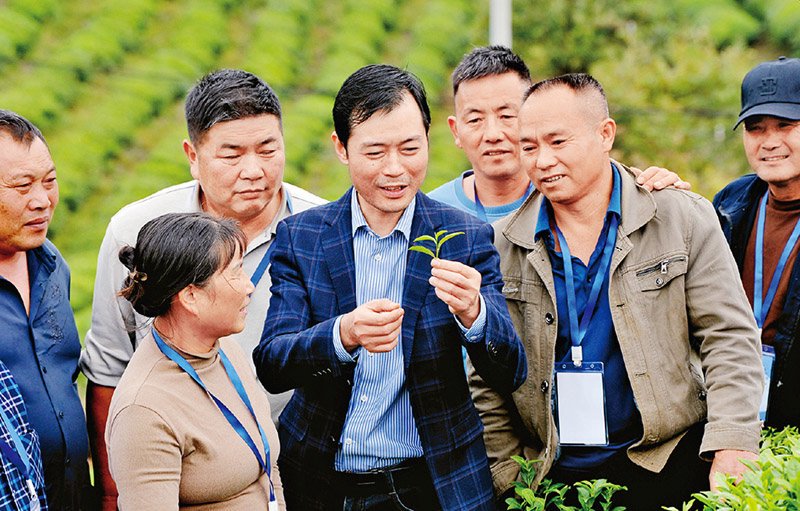
Core Viewpoint - The essence of modernization in China is "human modernization," focusing on the comprehensive development of people, particularly farmers, which is crucial for achieving agricultural and rural modernization [1][2]. Group 1: Achievements in Agricultural and Rural Modernization - Significant historical achievements have been made in agricultural and rural modernization, including improved irrigation facilities, enhanced mechanization, and increased coverage of quality seed promotion [2]. - The transition from food scarcity to food choice freedom has been accomplished, with approximately 20% of the world's population being fed by only 9% of global arable land [2]. - Rural infrastructure improvements, such as road hardening, electricity upgrades, and access to safe drinking water, have transformed rural living conditions [2]. Group 2: Challenges Faced by Farmers - Farmers face slow improvements in mindset, skills, and rights protection, which hampers their integration into modern economic systems [3]. - Many farmers struggle with adapting to digital economy and modern agricultural practices due to a lack of skills and knowledge [3]. - The dual urban-rural structure creates barriers for farmers, limiting their opportunities for development and integration into urban areas [4][10]. Group 3: Systemic Barriers and Inequalities - The urban-rural dual structure perpetuates systemic barriers, affecting farmers' access to public services, social security, and property rights [10]. - Farmers often experience difficulties in accessing equal opportunities in education, healthcare, and housing, leading to a sense of marginalization [4][7]. - The lack of a comprehensive social security system for rural residents exacerbates inequalities, particularly for migrant workers [10]. Group 4: Need for Human-Centric Development - The focus of agricultural modernization is shifting from material accumulation to the comprehensive development of people, necessitating increased investment in human capital [13][19]. - Policies should prioritize the enhancement of farmers' rights, skills, and overall development to foster sustainable agricultural modernization [19]. - A robust training system is essential to equip farmers with the necessary skills for modern agricultural practices and digital economy [15][19]. Group 5: Policy Recommendations - Reforming the household registration system and improving access to public services for rural residents is crucial for equitable development [14]. - Establishing a lifelong vocational training system tailored to market needs can significantly enhance farmers' skills and adaptability [15]. - Encouraging the flow of financial resources into rural areas and supporting new agricultural business models can help bridge the gap between urban and rural economies [18][19].

落实“投资于人”需科学谋划、统筹推进
Xin Lang Cai Jing· 2026-02-08 18:31
Group 1 - The core viewpoint emphasizes the need to release consumption potential by adhering to the principles of "doing what can be done and acting within limits" [1] - It advocates for strengthening institutional supply to promote inclusive, foundational, and safety-net social welfare construction [1] - The approach suggests a gradual increase in investment across education, healthcare, culture, tourism, elderly care, and childcare sectors to integrate effective investment with potential consumption [1] Group 2 - The strategy focuses on "comprehensive coverage and key emphasis" to expand effective supply in response to demographic trends such as declining birth rates and aging population [2] - It aims to align basic public service supply with population changes, combining full-cycle care in social welfare with targeted policies [2] - The plan highlights the need for multi-tiered elderly care and public service systems that are quality-assured, affordable, and sustainable [2] Group 3 - The approach of "scientific planning and dual efforts" promotes comprehensive human development by balancing investments in both material and human capital [3] - It stresses the importance of increasing investments in human capital to enhance individual potential and overall social welfare [3] - The strategy calls for a clear prioritization of government investments and a coordinated push for infrastructure and public service supply [3]
“投资于人”三大价值及着力点
Xin Lang Cai Jing· 2026-02-08 18:31
Core Viewpoint - The period of the "14th Five-Year Plan" is crucial for achieving socialist modernization, emphasizing the importance of "investing in people" and translating this concept into practice [1]. Theoretical Value - "Investing in people" represents a creative transformation of Marxist theory on comprehensive human development in contemporary China, focusing on the release of human potential through social relationships [1]. Era Value - The core value pursuit of Marxism is human comprehensive development, which is being realized through Chinese-style modernization, with "investing in people" positioned at the heart of modernization efforts to meet the people's expectations for a better life [2]. Practical Value - "Investing in people" is a core strategy for high-quality development, essential for enhancing labor productivity amidst demographic challenges like aging and declining birth rates, thereby promoting the formation and development of new productive forces [2]. Transition to Human-Machine Collaboration - The shift from a "machine-replacing-human" model to a "human-machine collaboration" model is necessary in the age of artificial intelligence, focusing on enhancing workers' skills and fostering lifelong learning to highlight their irreplaceable value [3]. Focus on Social Welfare - "Investing in people" should address the full lifecycle and comprehensive development of individuals, targeting key social welfare areas to meet the public's aspirations for improved living standards [3]. Emphasis on Close Collaboration - The integration of "investment in material and investment in people" is essential for driving innovation, requiring a balance between funding physical assets and developing skilled human resources to foster technological and industrial innovation [4]. Focus on New Productive Forces - The development of new productive forces relies on optimizing talent cultivation and enhancing the quality of human capital, transitioning from a "demographic dividend" to a "talent dividend" to support technological and industrial innovation [4]. Focus on Employment - Employment is a critical aspect of social welfare, and "investing in people" aims to create a collaborative work mechanism between AI and human labor, leading to new job opportunities and a shift towards a more equitable and efficient employment structure [5].
徐奇渊:展望2026年中国经济的三个角度
和讯· 2026-01-22 09:22
Group 1 - The core viewpoint of the article emphasizes the importance of the "14th Five-Year Plan" and the upcoming "15th Five-Year Plan" in shaping China's economic development, focusing on high-quality growth and the well-being of the population [4][7] - The "15th Five-Year Plan" highlights two main pushes: achieving effective qualitative improvement and reasonable quantitative growth, and promoting comprehensive human development and common prosperity for all [4][7] - The article outlines four key aspects of human-centered development in the "15th Five-Year Plan," including investing in human capital, aligning industry development with evolving consumer needs, urbanization as a means of optimizing resource allocation, and enhancing living standards to achieve common prosperity [5][6][7] Group 2 - The article discusses the integration of stock and incremental policies, emphasizing the need for a more proactive macroeconomic policy in 2026, which includes evaluating the consistency of various economic and non-economic policies [8][11] - It highlights the significant potential of existing fiscal deposits, which have fluctuated between -200 billion and +600 billion annually over the past two decades, with a notable increase in 2025, indicating underutilization of fiscal resources [9] - The article also points out the substantial policy space within state-owned assets, with total assets exceeding 400 trillion and liabilities around 260 trillion, suggesting that liquidity issues need to be addressed to activate these assets effectively [10] Group 3 - The article provides an analysis of the expected trend of the RMB exchange rate in 2026, with a general consensus on appreciation, but notes that this must be accompanied by policies to expand domestic demand [13][15] - It discusses the impact of geopolitical factors, particularly Sino-U.S. relations, on the undervaluation of the RMB, indicating that improving these relations could lead to a correction in the exchange rate [14][15] - The article concludes that the current exchange rate is primarily determined by market supply and demand, with geopolitical influences playing a significant role, and anticipates a favorable environment for RMB appreciation in 2026 [15]

“投资于人”的 实践理路探究
Xin Lang Cai Jing· 2026-01-16 16:00
Core Viewpoint - The "14th Five-Year Plan" emphasizes the integration of "investment in people" with consumer and investment needs, highlighting a development direction that focuses on human factors in the context of supply-demand cycles [1] Group 1: Investment in People - "Investment in people" enhances individual employment quality and income levels while driving overall industry efficiency through talent mobility and technology diffusion, creating a spillover effect of human capital [2] - The essence of "investment in people" is to respond comprehensively to the development needs of individuals at different life stages, from basic survival to self-actualization [4][5] - "Investment in people" should integrate various resources such as education, employment, health, and elderly care to build a complete support chain for equitable opportunities and comprehensive development [5] Group 2: Economic Circulation and Consumption - The central economic work meeting prioritizes "domestic demand as the main driver" for economic tasks in 2026, addressing the "strong supply but weak demand" issue in the Chinese economy [6] - "Investment in people" serves as a fundamental approach to enhance consumption willingness and optimize income distribution, thereby increasing overall domestic demand [6][7] - The shift from basic consumption to new consumption patterns, characterized by intelligence, digitization, greening, and sharing, is a significant trend in the evolving demand structure [7]
构建高质量科技教育与人文教育协同育人体系
Xin Hua Ri Bao· 2026-01-14 04:11
Core Viewpoint - The "Outline for the Construction of a Strong Education Nation (2024-2035)" emphasizes the need to strengthen the synergy between science and technology education and humanities education, indicating a clear direction for educational modernization [1] Group 1: Significance of Synergy - For individuals, the synergy between science and humanities education is essential for achieving "comprehensive human development," aiming to cultivate well-rounded socialist builders and successors [2] - For education, this synergy is a necessary choice to address contemporary challenges and achieve intrinsic development, as interdisciplinary integration has become a primary paradigm for scientific research and knowledge innovation [2] - For the nation, this synergy serves as a powerful driver for sustainable development and civilizational progress, ensuring that technological advancements are guided by humanistic values [3] Group 2: Current Challenges - The internal drive to enhance humanistic literacy is weakening, with some STEM students viewing humanities courses merely as a means to fulfill credit requirements rather than as essential components of their core competencies [4] - Clear disciplinary boundaries and the need for innovation in curriculum systems and teaching models are evident, as current approaches often lack deep integration between humanities and STEM education [4] - Insufficient support for implementation platforms and evaluation mechanisms hinders the advancement of synergistic education, with existing evaluation systems focusing too heavily on traditional academic outputs [5] Group 3: Pathways to Constructing a Synergistic System - Promoting deep integration of curricula and innovative teaching methods is crucial, requiring the development of interdisciplinary core courses that embed historical reflection and social context into STEM education [6] - Building a cross-disciplinary teaching team is essential, with a focus on transforming educators into architects of cognitive ecosystems and enhancing their interdisciplinary literacy [7] - Expanding practical, multi-dimensional educational scenarios beyond campus boundaries is necessary, involving collaboration with museums, communities, and enterprises to create interdisciplinary practice bases [8]
《思·享2026》:思想远征,照见未来
Xin Lang Cai Jing· 2026-01-04 23:12
Group 1 - The special program "Thinking and Sharing 2026" by Fujian Provincial Radio and Television Group focuses on the Taiwan issue and analyzes the current and future situation in the Taiwan Strait [1] - Experts from both sides of the Taiwan Strait participated in discussions, including Zhu Weidong, Li Peng, Li Shengfeng, Qiu Yi, and Yuan Juzheng [1] - The program also addresses domestic and international issues, contemplating how China can contribute more to humanity while managing its own affairs [1] Group 2 - The discussion emphasizes the importance of self-reliance in developing core technologies, as highlighted by Qiang Ge, Dean of the Marxism Institute at Nanjing University of Science and Technology [3] - The concept of localized industrial transfer is presented as a viable model for development, with examples such as Chinese companies producing sports shoes in Ethiopia for the local market [3] - The overarching goal of development is identified as the comprehensive development of individuals, as noted by various scholars during the program [3]

经济日报金观平:增强居民和企业的获得感
Jing Ji Ri Bao· 2025-12-29 23:49
Group 1 - The central economic work conference emphasizes the need for a pragmatic approach to enhance the sense of gain for residents and enterprises, focusing on solving existing difficulties and achieving breakthroughs in quality improvement [1] - During the "14th Five-Year Plan" period, significant achievements have been made in improving people's livelihoods, including the establishment of the world's largest education, social security, healthcare, and urban housing guarantee systems [1] - Employment support policies during the "14th Five-Year Plan" have resulted in over 470 billion yuan in employment subsidies and 138.9 billion yuan in stable job retention funds [1] Group 2 - To enhance the sense of gain for residents and enterprises, efforts are being made to address the issue of overdue payments to small and medium-sized enterprises (SMEs), with new regulations mandating payment timelines for large enterprises [2] - The government is encouraged to utilize new local government special bonds to facilitate the resolution of overdue payments and establish a long-term mechanism to prevent such issues [2] Group 3 - Investment in human capital is highlighted as essential for promoting high-quality population development and comprehensive human development, focusing on areas such as childcare, elderly care, health, and skills training [3] - Policies are to be coordinated across fiscal, monetary, industrial, and pricing sectors to effectively enhance employment quality and reasonable growth [3] - There is a call for improved public service equality and a focus on key employment groups, including recent graduates and migrant workers, through various support measures [3] Group 4 - The realization of people's aspirations for a better life is seen as the starting point and goal of Chinese-style modernization, with the implementation of policies aimed at benefiting the public and enterprises being a source of new economic growth and potential for expanding domestic demand [4]
增强居民和企业的获得感
Jing Ji Ri Bao· 2025-12-29 22:35
Group 1 - The central economic work conference emphasizes the need to comprehensively implement the overall requirements and policy orientation for economic work in the coming year, focusing on solving existing difficulties and enhancing the quality of life for residents and enterprises [1] - During the "14th Five-Year Plan" period, significant achievements have been made in improving people's livelihoods, including the establishment of the world's largest education, social security, healthcare, and urban housing guarantee systems, as well as the formation of the largest middle-income group globally [1] - Employment support policies during the "14th Five-Year Plan" have resulted in over 470 billion yuan in employment subsidies and 138.9 billion yuan in stable job retention funds, contributing to increased happiness and sense of gain among the population [1] Group 2 - To enhance the sense of gain for residents and enterprises, efforts must be made to address the issue of overdue payments to small and medium-sized enterprises (SMEs), which have seen an increase in accounts receivable and extended payment periods [2] - The revised "Regulations on Ensuring Payment to Small and Medium-sized Enterprises" clarifies payment deadlines, particularly requiring large enterprises to pay within 60 days of delivery, and prohibits conditional payments based on third-party receipts [2] - Local governments are encouraged to utilize new special bonds to promote state-owned enterprises in resolving overdue payment issues and to establish long-term mechanisms to prevent such occurrences [2] Group 3 - Investment in human capital is essential for promoting high-quality population development and comprehensive human development, which includes investments in childcare, elderly care, health, and skills training [3] - There is a need to improve the income distribution system and ensure that compensation is determined by market contributions, while also promoting equal access to basic public services [3] - Policies across finance, monetary, industry, and pricing sectors should work together to enhance both the quality and reasonable growth of employment, with a focus on key employment groups such as recent graduates and migrant workers [3] Group 4 - The realization of people's aspirations for a better life is the starting point and goal of Chinese-style modernization, with the enhancement of residents' and enterprises' sense of gain being an ongoing process [4] - The implementation of various benefit policies for the public and enterprises is not merely a one-way expenditure but contains new economic growth points and potential for expanding domestic demand and promoting consumption [4]