智能体

Search documents
企业级AI应用迎来加速渗透期
2 1 Shi Ji Jing Ji Bao Dao· 2025-11-13 05:52
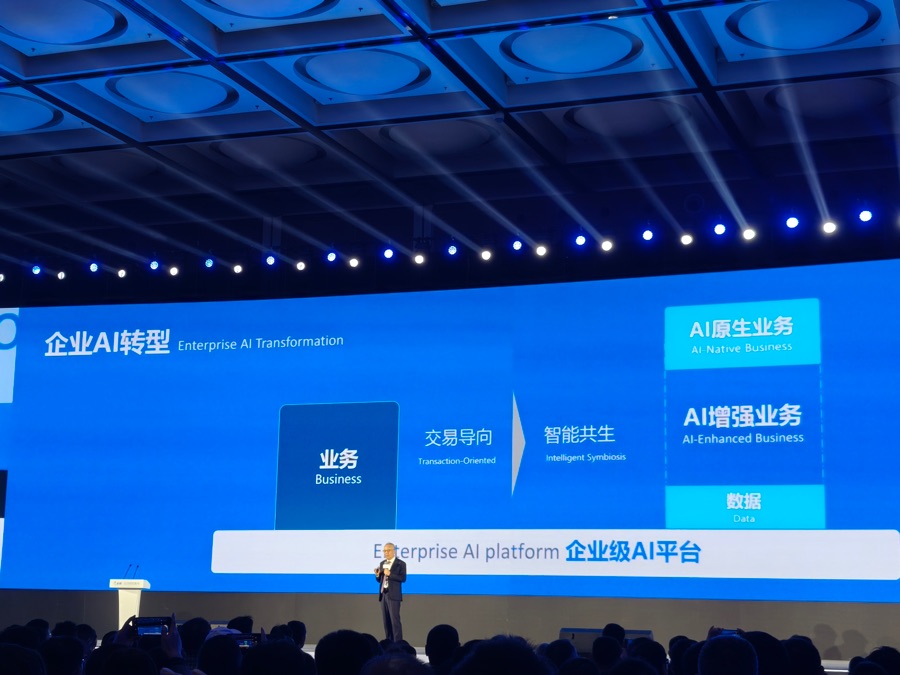
Core Insights - In 2025, artificial intelligence (AI) is transitioning from a "buzzword" to a deeper industrial application, with consumer-facing AI applications like Doubao and ChatGPT becoming widely accepted, while enterprise adoption remains uneven [1][3] - The transformation towards an AI-driven era requires companies to focus on data as an asset and integrate AI into existing business operations, as well as explore AI-native business models [1][3] Company Developments - Kingdee announced the comprehensive upgrade of "Kingdee Cloud" to "Kingdee AI" and introduced a new AI product called "Xiao K" [3][8] - The company aims to create a closed-loop system with "Sky Platform + Data Cloud + AI Native Intelligent Agents," focusing on embedding AI into business rather than merely applying it superficially [3][8] AI Transformation Challenges - Companies are facing seven areas of mindset transformation in their AI journey, including shifting from daily operations to strategic execution, traditional products to intelligent systems, and centralized ecosystems to intelligent symbiotic networks [4][7] - The transition from manual operations to automated intelligent operations is emphasized, with a focus on strategic decision-making rather than routine tasks [7][10] Product and Technology Strategy - "Xiao K" currently integrates nearly 20 intelligent agents across various fields such as marketing, supply chain, human resources, and finance, designed for immediate usability [8][9] - Kingdee's product strategy has evolved into the "Kingdee AI" product family, with the upcoming launch of the "Kingdee AI Starry Sky" suite, which will offer a comprehensive AI product solution [8][12] Data and AI Integration - Kingdee is addressing the challenge of data integration for AI applications by standardizing data and enhancing its semantic structure to make it more compatible with large language models [11][12] - The company's Data Cloud features a four-layer technical architecture aimed at building industry data models and templates to facilitate easier consumption by intelligent agents [15] Future Outlook - The year is referred to as the "Year of Intelligent Agents," indicating the initial phase of applying this technology in practical scenarios, with a focus on analysis and decision support as well as proactive actions by intelligent agents [15]

三六零首席财务官张海龙:智能体就像大模型的手和脚,帮助大模型真正落地应用
Xin Lang Cai Jing· 2025-11-13 03:37
Core Viewpoint - The 360 company is committed to enhancing safety in the AI era, with a new mission to make the AI world safer and better, while fully engaging in the "ALL IN AGENT" strategy [1][3]. Group 1: Company Strategy and Mission - 360 has been established for 20 years, focusing on security as its foundation [1]. - The company plans to upgrade its mission and strategy by 2025, emphasizing the importance of AI in its operations [1]. Group 2: Market Position and Competitiveness - 360 is recognized as a leading digital security enterprise in China, having identified and disclosed 58 foreign APT organizations, which accounts for over 98% of all APTs discovered domestically [1][3]. - The company's competitive edge lies in its vast user base, with approximately 1.5 billion terminals across 225 countries and regions, enabling rapid response to threats [3]. Group 3: AI Development and Applications - 360's updated "360zhinao2-o1.5" model ranks among the top tier of domestic AI models, with ongoing development of "nano AI" and "360 AI office" applications [3]. - In the AI product sector, 360's nano AI web platform has surpassed 400 million monthly visits, ranking among the top three in China, while its mobile platform has around 12 million active users, placing it in the top ten [3].


小米应用商店与腾讯元器共同推进智能体上新
Zheng Quan Shi Bao Wang· 2025-11-13 03:09
Core Insights - Xiaomi App Store has completed capability integration with Tencent's AI platform, becoming the first vendor to access Tencent's AI services [1] Group 1 - The integration allows developers to publish their creations on the Xiaomi App Store with a one-click synchronization feature after using Tencent's AI platform [1]


解密AI“黄埔军校”,10人撑起700亿美元估值
3 6 Ke· 2025-11-11 12:12
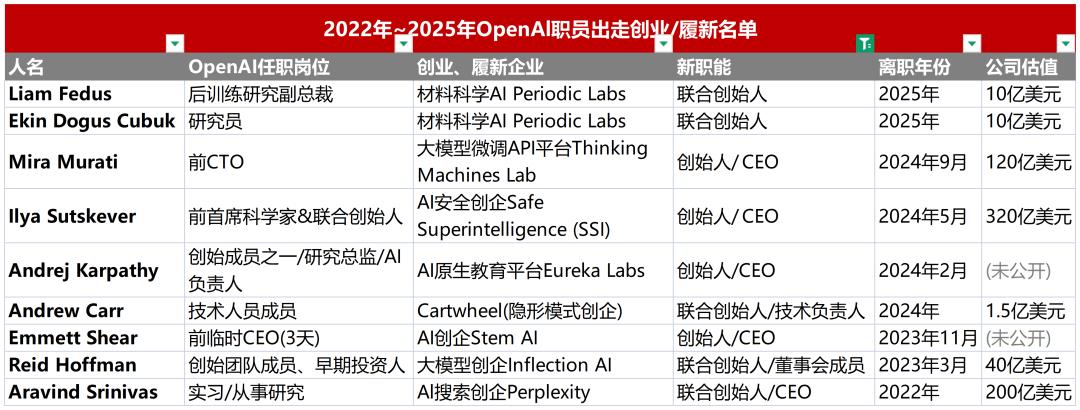
Core Insights - OpenAI is becoming a significant talent pool in the AI industry, similar to the "PayPal Mafia" in Silicon Valley, with many key members leaving to start new companies or join other firms [1][2][14] - From 2022 to 2025, 25 individuals have left OpenAI, with 9 founding 8 AI companies, collectively valued at approximately $70 billion [1][2][12] - The departure of these individuals has not diminished OpenAI's influence; instead, it has allowed its technology and organizational experience to spread across the industry [1] Talent Outflow and Company Formation - A total of 9 core members have left OpenAI to establish 8 AI companies, with a combined valuation nearing $70 billion, excluding two undisclosed valuations [2][12] - Key figures include Ilya Sutskever, who founded Safe Superintelligence (SSI) valued at $32 billion, and Mira Murati, who started Thinking Machines Lab valued at $12 billion [3][5][11] - The majority of these founders held significant positions at OpenAI, covering critical areas such as model development, training systems, and product engineering [3][12] Focus Areas of New Ventures - The new companies primarily focus on AI safety, intelligent agents, and AI applications [4][10] - SSI emphasizes "regulation as a service" for AI developers, while Thinking Machines Lab aims to create a research platform for academia and enterprises [5][9] - Other startups like Adept AI and Inflection AI focus on AI assistants and conversational agents, with significant funding secured shortly after their establishment [10][11] Market Dynamics and Valuation Trends - Companies founded by former OpenAI employees tend to achieve high valuations quickly, often without a clear product path [12][13] - For instance, SSI secured $1 billion in funding within three months of its founding, while Thinking Machines Lab raised $2 billion in its seed round [13] - This trend indicates a strong market signal where proximity to OpenAI is seen as a valuable asset for attracting investment [13] Talent Migration to Other Companies - Beyond entrepreneurship, many former OpenAI members have joined other AI firms, with at least 16 individuals moving to companies like Meta and xAI [14][16] - Meta has notably recruited a significant number of OpenAI alumni to enhance its AGI research capabilities, indicating a strategic move to leverage their expertise [16][18] - The unique organizational structure at OpenAI, which fosters a blend of research and engineering, has produced highly skilled individuals who are in demand across the industry [20][22]
17国开发者同台battle!讯飞这场AI大赛玩出新高度
AI研究所· 2025-11-10 09:41
Core Viewpoint - The 2025 iFLYTEK AI Developer Competition successfully integrated technology, talent, and industry, creating a unique experience that combines mental and physical engagement for developers [1][15]. Group 1: Competition Overview - The competition attracted 2,730 university student teams from 737 universities across 17 countries, showcasing a diverse range of innovative ideas and applications [3]. - The quality of participants improved, with 96% holding a bachelor's degree or higher and 4% having a doctoral degree among those tackling 72 AI algorithm challenges [4]. Group 2: Innovation and Accessibility - The event emphasized "zero-threshold" intelligent agent development, enabling individuals without technical backgrounds to create AI applications, with 4,622 vertical intelligent agent applications emerging from the competition [6]. - The collaboration with the Communist Youth League of China introduced an AI challenge track within the "Challenge Cup" national college student series, further promoting AI development [6]. Group 3: Cross-Industry Collaboration - The partnership with Xtep, a national sports brand, introduced a "brainpower sports competition" concept, encouraging developers to engage in physical activity while coding, enhancing creativity [8][10]. - iFLYTEK and Xtep provided technical manuals and sports gear to universities, fostering a new generation of tech-savvy and physically active individuals [10]. Group 4: Industry Impact and Support - iFLYTEK's ecosystem platform has offered technical investments to 18 outstanding entrepreneurial teams, facilitating access to the Starry Sky MaaS platform and domestic computing power [14]. - The competition served as a bridge for financing and industry connections, with several high-quality projects showcased at the developer festival, leading to seamless transitions from competition results to industry applications [14].


乌镇峰会蓝皮书:披露AI技术发展趋势、全球数字治理新动向
Nan Fang Du Shi Bao· 2025-11-08 10:04
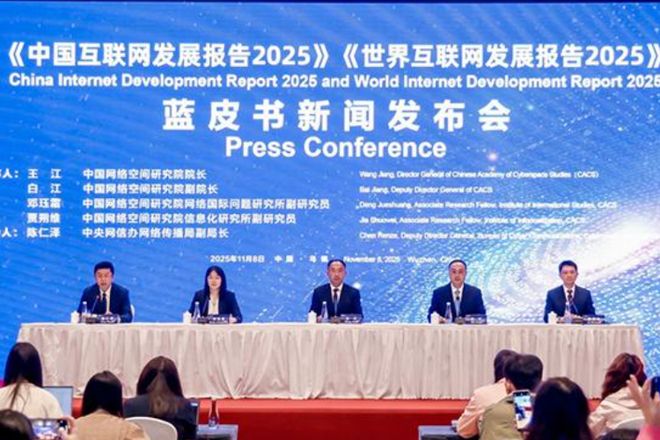
Core Insights - The reports highlight the significant advancements in China's digital economy and internet development, emphasizing the transition from "heavy training" to "heavy inference" in AI models, and the practical applications of humanoid robots across various industries [2][6][7] Group 1: Digital Economy and Internet Development - By the end of 2024, the core industries of China's digital economy are projected to account for 10.4% of the GDP, achieving the "14th Five-Year Plan" target ahead of schedule [3][4] - The scale of China's industrial internet core industries exceeds 1.5 trillion yuan, with agricultural technology contributing 63.2% to progress [3] - In 2024, mobile payment transactions are expected to reach 563.7 trillion yuan, and online retail sales are projected to hit 15.23 trillion yuan, making China the largest market globally for both [3][4] Group 2: AI and Technological Advancements - China has become the largest holder of AI patents globally, accounting for 60% of the total, and leads the world in 6G patent applications with a 40.3% share [4][7] - The development of AI models is shifting towards enhanced inference capabilities, with multi-modal models capable of processing text, images, and voice data simultaneously [6][7] - The application of embodied intelligence is gaining traction in sectors such as industrial manufacturing, logistics, healthcare, and elder care, with humanoid robots moving from labs to practical use [6][7] Group 3: Global Internet Trends - The "World Internet Development Report 2025" emphasizes that AI is driving global digital economic innovation and growth, while also enhancing the development of internet media [5] - There is a growing focus on cybersecurity, with major countries enhancing their capabilities in response to complex global threats [5] - The report underscores the importance of orderly technological development and the increasing emphasis on digital governance rules among nations [5]
【微科普】从AI工具看AI新浪潮:大模型与智能体如何重塑未来?
Sou Hu Cai Jing· 2025-11-07 13:36
Core Insights - The rise of AI tools, such as ChatGPT and DeepSeek, has significantly increased interest in artificial intelligence, with applications in data analysis and business opportunity identification [1][10] - Large models and intelligent agents are the two key technologies driving this AI revolution, fundamentally changing work and daily life [1][10] Group 1: Large Models - Large models are deep learning models trained on vast amounts of data, characterized by a large number of parameters, extensive training data, and significant computational resources [1][4] - These models provide powerful data processing and generation capabilities, serving as the foundational technology for various AI applications [3][4] - Major global large models include OpenAI's GPT-5, Google's Gemini 2.0, and domestic models like Baidu's Wenxin Yiyan 5.0 and Alibaba's Tongyi Qianwen 3.0, which continue to make breakthroughs in multimodal and industry-specific applications [3][4] Group 2: Intelligent Agents - Intelligent agents, powered by large language models, are capable of proactively understanding goals, breaking down tasks, and coordinating resources to fulfill complex requirements [5][7] - Examples of intelligent agents include OpenAI's AutoGPT and Baidu's Wenxin Agent, which can handle various tasks across different scenarios [7][9] - The micro-financial AI assistant, Weifengqi, utilizes a self-developed financial model to address challenges in the financial sector, transitioning services from labor-intensive to AI-assisted [9] Group 3: Synergy Between Large Models and Intelligent Agents - The relationship between large models and intelligent agents is analogous to the brain and body, where large models provide cognitive capabilities and intelligent agents enable actionable outcomes [10] - The integration of intelligent agent functionalities into AI products is becoming more prevalent, indicating a shift from novelty to practical assistance in daily life [10] - The ongoing development of AI technologies raises considerations such as data security, but the wave of innovation led by large models and intelligent agents presents new opportunities for individuals and businesses [10]

vivo AI Lab提出自我进化的移动GUI智能体,UI-Genie无需人工标注实现性能持续提升
机器之心· 2025-11-07 07:17
Core Insights - The article discusses the advancements in multi-modal large models (MLLM) and the development of mobile GUI agents that can autonomously understand and execute complex tasks on smartphones [2][3]. Group 1: Challenges in Mobile GUI Agents - A significant challenge in training mobile GUI agents is the reliance on high-quality expert demonstration data, which is costly to obtain and limits the agents' generalization and robustness [2][7]. - The correct execution of GUI operations is highly dependent on historical context, making it difficult to evaluate the effectiveness of each action in a task [6][7]. Group 2: UI-Genie Framework - The UI-Genie framework allows for self-evolving agents through collaboration between the agent model and a reward model, enabling high-quality data synthesis without manual annotation [3][27]. - UI-Genie-RM is introduced as the first specialized reward model for evaluating mobile GUI agent trajectories, designed to consider the entire operation history [9][10]. Group 3: Data Generation and Model Iteration - UI-Genie employs a closed-loop mechanism for data generation and model iteration, which includes reward-guided trajectory exploration, dual expansion of training data, and progressive task complexity enhancement [14][19]. - The framework has demonstrated significant improvements in task success rates and evaluation accuracy through iterative training, with the agent's success rate increasing from 18.1% to 38.7% [24]. Group 4: Performance and Future Applications - UI-Genie outperforms baseline methods in both offline and online operation tasks, achieving a 77.0% operation success rate and 86.3% element localization accuracy with a 72B model [21][23]. - The framework is expected to expand to more complex multi-modal interaction scenarios, including desktop agents, and aims to integrate reward models with reinforcement learning for autonomous growth [27][29].

Kimi K2 Thinking突袭,智能体&推理能力超GPT-5,网友:再次缩小开源闭源差距
3 6 Ke· 2025-11-07 03:07
Core Insights - Kimi K2 Thinking has been released and is now open-source, featuring a "model as agent" approach that allows for 200-300 consecutive tool calls without human intervention [1][3] - The model significantly narrows the gap between open-source and closed-source models, becoming a hot topic upon its launch [3][4] Technical Details - Kimi K2 Thinking has 1TB of parameters, with 32 billion activated parameters, and utilizes INT4 precision instead of FP8 [5][26] - It features a context window of 256K tokens, enhancing its reasoning and agent capabilities [5][8] - The model demonstrates improved performance in various benchmarks, achieving a state-of-the-art (SOTA) score of 44.9% in the Human Last Exam (HLE) [9][10] Performance Metrics - Kimi K2 Thinking outperformed closed-source models like GPT-5 and Claude Sonnet 4.5 in multiple benchmarks, including HLE and BrowseComp [10][18] - In the BrowseComp benchmark, where human average intelligence scored 29.2%, Kimi K2 Thinking achieved a score of 60.2%, showcasing its advanced search and browsing capabilities [18][20] - The model's agent programming capabilities have also improved, achieving a SOTA score of 93% in the ²-Bench Telecom benchmark [15] Enhanced Capabilities - The model exhibits enhanced creative writing abilities, producing clear and engaging narratives while maintaining stylistic coherence [25] - In academic and research contexts, Kimi K2 Thinking shows significant improvements in analytical depth and logical structure [25] - The model's responses to personal and emotional queries are more empathetic and nuanced, providing actionable insights [25] Quantization and Performance - Kimi K2 Thinking employs native INT4 quantization, which enhances compatibility with various hardware and improves inference speed by approximately 2 times [26][27] - The model's design allows for dynamic cycles of "thinking → searching → browsing → thinking → programming," enabling it to tackle complex, open-ended problems effectively [20] Practical Applications - The model has demonstrated its ability to solve complex problems, such as a doctoral-level math problem, through a series of reasoning and tool calls [13] - In programming tasks, Kimi K2 Thinking quickly engages in coding challenges, showcasing its practical utility in software development [36]

在失败中进化?UIUC联合斯坦福、AMD实现智能体「从错误中成长」
机器之心· 2025-11-07 03:06
Core Insights - The article discusses the transition of artificial intelligence (AI) from merely performing tasks to doing so reliably, emphasizing the need for self-reflection and self-correction capabilities in AI agents [2][43] - A new framework called AgentDebug is introduced, which aims to enable AI agents to diagnose and rectify their own errors, thus enhancing their reliability and performance [2][43] Summary by Sections AI Agent Failures - AI agents often exhibit failures such as goal forgetting, context confusion, misjudgment of task completion, and planning or execution errors [5][6][12] - A significant issue is that these agents can confidently output reasoning even when deviating from their goals, leading to a cascading effect of errors throughout the decision-making process [6][7][31] Research Innovations - The research proposes three key innovations to understand and improve AI failure mechanisms: 1. **AgentErrorTaxonomy**: A structured error classification system for AI agents, breaking down decision-making into five core modules: memory, reflection, planning, action, and system [9][10][11] 2. **AgentErrorBench**: A dataset focused on AI agent failures, providing detailed annotations of errors and their propagation paths across various complex environments [16][20] 3. **AgentDebug**: A debugging framework that allows AI agents to self-repair by identifying and correcting errors in their execution process [21][23][24] Error Propagation - The study reveals that over 62% of errors occur during the memory and reflection stages, indicating that the primary shortcomings of current AI agents lie in their cognitive and self-monitoring abilities [13][15] - The concept of "Error Cascade" is introduced, highlighting how early minor mistakes can amplify through the decision-making process, leading to significant failures [34][35] Learning from Errors - The research indicates that AI agents can learn from their failures by incorporating corrective feedback into their future tasks, demonstrating early signs of metacognition [38][41] - This ability to self-calibrate and transfer experiences signifies a shift in AI learning paradigms, moving beyond reliance on external data [41][42] Implications for AI Development - The focus of AI research is shifting from "what can be done" to "how reliably tasks can be completed," with AgentDebug providing a structured solution for enhancing AI reliability [43]