空间智能

Search documents
刚刚,李飞飞发布世界模型新成果!一张图生成3D世界,现在就能玩
创业邦· 2025-09-17 10:18
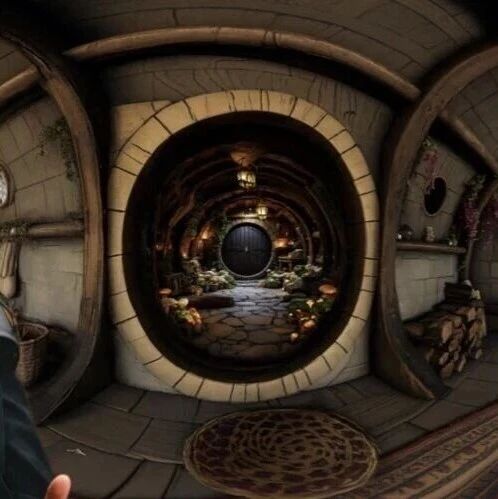
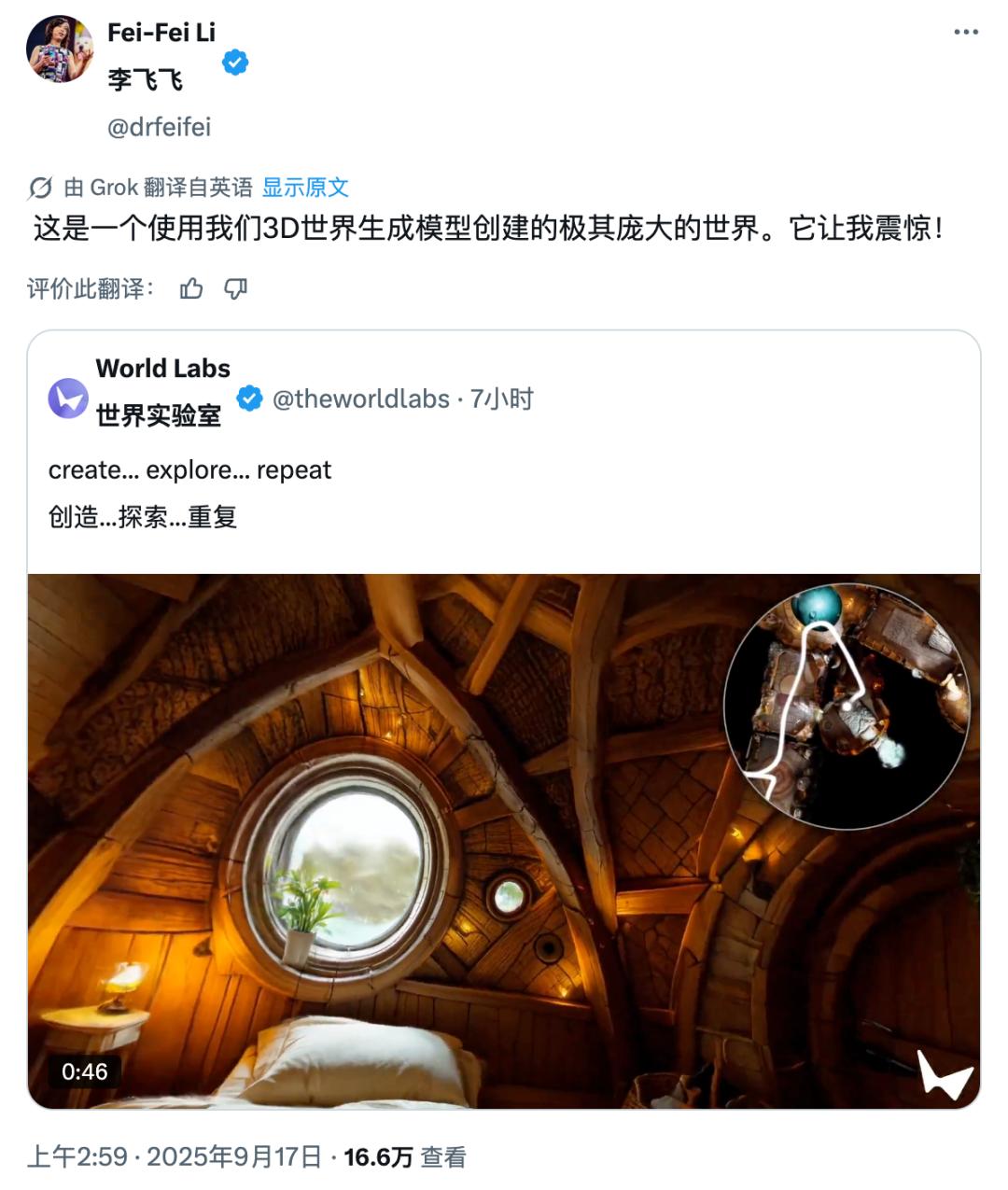
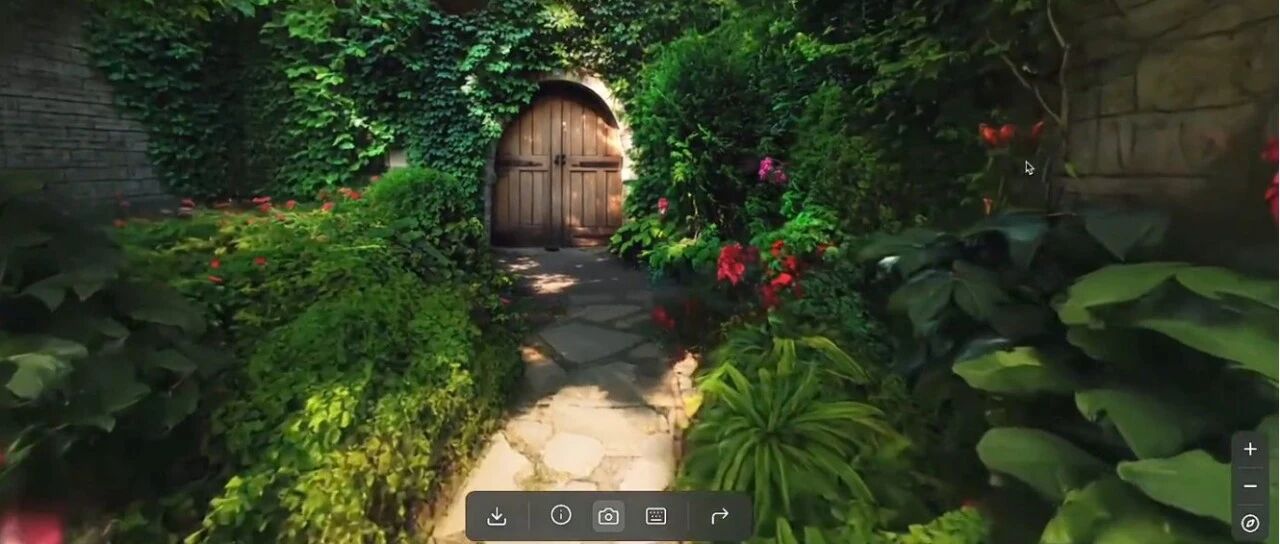
Core Viewpoint - World Labs, founded by Stanford professor Fei-Fei Li, has launched a beta version of its platform Marble, which allows users to create and explore 3D worlds using advanced AI technology [5][7]. Group 1: Technology and Features - Marble utilizes a 3D world generation model that can create vast and detailed environments based on a single photo, estimating depth maps and geometric boundaries [11][12]. - The generated 3D worlds are permanent, consistent, and feature clearer geometric structures compared to previous technologies [14]. - Users can export their created worlds as Gaussian splats and integrate them into web-based 3D experiences using the open-source rendering library Spark [14][16]. Group 2: User Experience - Users can navigate the AI-generated 3D spaces using keyboard and mouse controls, similar to first-person gaming experiences [16]. - The platform currently offers various demo scenes that showcase different indoor and outdoor environments, with impressive detail and realism in lighting and textures [17]. Group 3: Market Position and Future Potential - While Marble has made significant advancements, it is still in the early stages of commercial application, focusing primarily on 3D environments without the capability to generate characters or animals [19]. - The emergence of Marble coincides with a growing interest in AI gaming, as other companies like xAI are also venturing into AI-driven game development [26]. - The overall trend indicates a shift towards enabling users to easily create complex virtual worlds and gaming experiences, positioning AI as a tool for personal creativity and exploration [28][29].

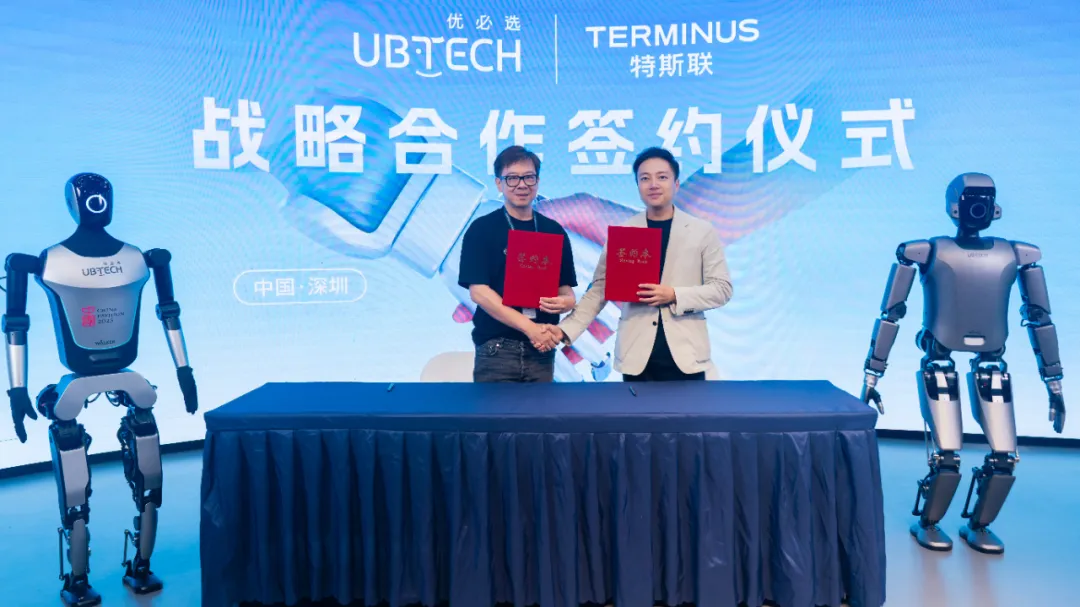
特斯联与优必选强强联手,融合打造具身智能
Di Yi Cai Jing· 2025-09-17 08:59
Core Viewpoint - The strategic partnership between TUSI and UBTECH aims to integrate spatial intelligence and embodied intelligence to enhance the capabilities of humanoid robots, creating a new paradigm for multimodal training and promoting the comprehensive deployment of intelligent robots [1][3]. Group 1: Strategic Collaboration - TUSI, a leader in spatial intelligence, and UBTECH, a pioneer in humanoid robotics, have signed a strategic cooperation agreement to share and innovate on their respective technologies [1][3]. - The collaboration is based on mutual recognition of each other's technological strengths and industrial value, aiming to create highly autonomous and interactive next-generation intelligent robots [3]. Group 2: Technological Capabilities - UBTECH possesses full-stack technology capabilities in humanoid robotics, including advanced hardware, AI technology, and integration of robotics with AI [3]. - TUSI has developed a three-layer strategic system focusing on AIoT infrastructure, AIoT domain models, and AIoT intelligent agents, with nearly 10,000 spatial intelligence project cases since 2015 [3][4]. Group 3: Spatial Intelligence - Spatial intelligence is crucial for robots to interact with the physical world, enabling them to understand complex, unstructured environments [4]. - TUSI's self-developed spatial large model allows for multi-modal integration and reasoning, helping robots to comprehend physical laws and perform complex task planning [4]. Group 4: AIoT Intelligent Agents - TUSI's intelligent agents possess capabilities such as human-like thinking, long-term memory, high-dimensional perception, and teamwork, enhancing robots' decision-making and collaborative abilities in complex environments [5]. - UBTECH's humanoid robots serve as intelligent terminals that can autonomously move and perform precise operations, continuously validating and enhancing spatial reasoning models through real-world interactions [5]. Group 5: Market Implications - The partnership between TUSI and UBTECH is expected to create significant opportunities for business upgrades and global market expansion, especially as TUSI is in the process of an IPO [5].
刚刚,李飞飞发布世界模型新成果,一张图生成 3D 世界,现在就能玩
3 6 Ke· 2025-09-17 07:34
Core Viewpoint - Stanford University professor Fei-Fei Li's startup World Labs has launched a beta version of its latest spatial intelligence research, Marble, allowing users to browse and create 3D worlds [1][3]. Group 1: Product Features - Marble is currently a limited-access beta platform that enables users to create and explore expansive 3D environments generated by AI [1]. - The platform utilizes a 3D world generation model that can infer the geometric structure of a scene from a single photo, estimating depth maps and geometric boundaries to create a consistent and permanent 3D world [4][11]. - Users can export generated worlds as Gaussian splats and integrate them into web-based 3D experiences using the open-source rendering library Spark, which operates efficiently across various devices including desktops, laptops, mobile devices, and VR headsets [4][6]. Group 2: User Experience - Users can navigate and explore AI-generated 3D spaces using keyboard and mouse controls, similar to first-person gaming experiences, with impressive detail and realistic lighting effects [6]. - However, Marble currently focuses on generating 3D environments and does not support the creation of characters or animals, limiting its application for certain user demographics [6]. Group 3: Industry Context - The launch of Marble coincides with a growing interest in AI-driven gaming, as other companies like xAI are also entering the AI gaming space, indicating a rapidly forming AI gaming ecosystem [16]. - The advancements in spatial intelligence suggest a shift in how AI can be utilized, moving beyond text-based applications to creating and understanding three-dimensional spaces, which could redefine user interaction and creativity in virtual environments [13][18].
特斯联与优必选达成战略合作:让机器人更容易“看懂”世界
Zheng Quan Shi Bao Wang· 2025-09-17 05:10
Core Insights - A strategic partnership has been established between Teslian, a leading AIoT company in China, and UBTECH, known as the "first humanoid robot stock," focusing on the integration of spatial intelligence and embodied intelligence [1][2][3] - The collaboration aims to create a new paradigm of multimodal training based on spatial intelligence, enhancing the capabilities of intelligent robots in real-world environments [1][2] Group 1: Company Profiles - Teslian has been deeply involved in the spatial intelligence sector since 2015, with nearly 10,000 project cases, establishing a three-tier strategic system centered on AIoT infrastructure, models, and intelligent agents [2] - UBTECH possesses leading technologies in robot hardware, AI, and the integration of robotics and AI, which are crucial for the development of intelligent agents capable of interacting with the physical world [1][2] Group 2: Technological Integration - The partnership emphasizes the deep integration of spatial intelligence and embodied intelligence, aiming to develop the next generation of intelligent robots with high autonomy and interaction capabilities in the physical world [2] - The combination of Teslian's spatial models and high-quality spatial data with UBTECH's humanoid robots will enhance the robots' ability to autonomously navigate and perform precise operations in real environments [3] Group 3: Market Implications - The collaboration is expected to create significant opportunities for business upgrades and global market expansion, especially as Teslian is in the process of an IPO, potentially becoming the "first AIoT stock" [3]

刚刚,李飞飞空间智能新成果震撼问世!3D世界生成进入「无限探索」时代
机器之心· 2025-09-17 00:07
Core Viewpoint - World Labs, founded by Stanford professor Fei-Fei Li, has launched a limited preview of its space intelligence model, Marble, which allows users to generate persistent 3D worlds from a single image or text prompt [1][4][11]. Group 1: Product Features - Marble generates expansive, navigable, and controllable 3D worlds that are free for users to explore [5][13]. - The model supports the export of generated worlds as Gaussian point clouds, facilitating integration into downstream projects using the open-source rendering library Spark [14]. - Users can combine multiple generated results to create larger worlds, enhancing the overall experience [15]. Group 2: Technical Advancements - The latest model shows improvements in consistency and style adherence, allowing for richer geometric complexity and more complete 3D scenes compared to previous models [17][20]. - Marble is designed primarily for creating 3D environments rather than focusing on individual objects, which may not cater to users interested in personal subjects like selfies or pets [18]. Group 3: User Experience - Users can navigate and interact within a consistent 3D world, which is a core requirement for many visual creators [17]. - The model allows for diverse style transformations, enabling users to explore various artistic expressions in their 3D worlds [20][21]. Group 4: Future Potential - The model encourages users to think beyond room-sized environments, allowing for the assembly of larger, more imaginative spaces [25].
亿道信息(001314) - 2025年9月16日投资者关系活动记录表
2025-09-16 11:46
Group 1: Company Overview - Yidao Information is a provider of smart electronic products and solutions, focusing on product definition and R&D design [2] - The company’s main business segments include rugged smart terminals and consumer smart terminals, with applications in smart manufacturing, transportation, energy exploration, and public utilities [2] Group 2: Business Performance - In the first half of 2025, the company achieved a revenue growth of 19.24% year-on-year [3] - The rugged smart terminal business grew by 24.71%, smart hardware by 16.27%, and XR and AIoT business by 27.60% [3] - R&D expenses increased by 2.71% year-on-year [3] Group 3: R&D Focus - The company is increasing R&D investments in AI, spatial computing, and native hardware to align with the AI+ industry development trend [3] - New R&D projects and patent applications have increased, leading to breakthroughs such as AI industry terminals, AI enterprise workstations, and AI glasses [3] - The establishment of Yidao Research Institute in January 2024 aims to collaborate with universities and research institutions to advance research in AI, perception technology, cloud computing, and spatial intelligence [3]
长城证券:维持阿里巴巴-W(09988)“买入”评级 高德推出“扫街榜”布局到店业务
智通财经网· 2025-09-12 08:04
Group 1 - The core viewpoint of the reports is that Alibaba maintains a "buy" rating, with projected revenues of 1.06/1.18/1.30 trillion yuan and adjusted net profits of 125.6/159.9/190.3 billion yuan for FY2026-FY2028, corresponding to PE ratios of 19.9/15.6/13.1 times [1] - Alibaba's synergy between instant retail and its main e-commerce platform is significant, further enhancing its "big consumption platform" strategy, while its cloud business is expected to benefit from AI applications and the commercialization of AIAgent [1] - Gaode Map, a subsidiary of Alibaba, launched the "Gaode Street Ranking," the world's first ranking based on user behavior, to support offline dining and service consumption, covering over 300 cities in China [1] Group 2 - Following the launch of Taobao Flash Sale, Alibaba has further expanded its offline business with the introduction of Gaode's "Street Ranking," which is expected to create synergies with its home delivery services [2] - The complexity of offline consumption scenarios is lower than that of delivery services, which reduces fulfillment and delivery costs, thus increasing profit margins [2] - Gaode Map's average DAU reached 186 million by July 2025, six times that of Dianping, indicating a strong traffic advantage, and it aims to become a "super app" in the domestic market by integrating various services [2]


阿里巴巴-W(09988):加码打造“大消费平台”,高德推出“扫街榜”布局到店业务
Great Wall Securities· 2025-09-12 08:02
Investment Rating - The report maintains a "Buy" rating for Alibaba Group (09988.HK) [4] Core Views - Alibaba is enhancing its "big consumption platform" strategy with the launch of Gaode's "Street Ranking," which supports offline dining and service consumption [1][2] - The integration of Gaode's services with Alibaba's existing platforms, such as Taobao, is expected to create synergies between in-store and delivery services, potentially increasing profit margins [2][3] - The report anticipates significant revenue growth for Alibaba, projecting revenues of CNY 1.06 trillion, CNY 1.18 trillion, and CNY 1.30 trillion for FY2026, FY2027, and FY2028 respectively [3] Financial Summary - Revenue (CNY million): - FY2024A: 941,168 - FY2025A: 996,347 - FY2026E: 1,058,220 - FY2027E: 1,183,302 - FY2028E: 1,304,354 - Year-over-year growth rates for revenue are projected at 8.34%, 5.86%, 6.21%, 11.82%, and 10.23% for FY2024A to FY2028E [1][3] - Net profit attributable to shareholders (CNY million): - FY2024A: 79,741 - FY2025A: 129,470 - FY2026E: 107,108 - FY2027E: 137,785 - FY2028E: 167,027 - Year-over-year growth rates for net profit are projected at 9.97%, 62.36%, -17.68%, 28.64%, and 21.22% for FY2024A to FY2028E [1][3] - The report highlights a significant increase in the return on equity (ROE), expected to rise from 8.11% in FY2024A to 12.47% in FY2028E [1][3] Market Position - Gaode's average daily active users (DAU) reached 186 million by July 2025, significantly outperforming competitors [2] - The report suggests that Gaode is on track to become a "super app" in the domestic market, integrating various services such as maps, ride-hailing, reviews, and group buying [2]
李飞飞一年前究竟说了啥?怎么又火了
量子位· 2025-09-11 01:58
Core Viewpoint - The limitations of large language models (LLMs) in understanding the physical world are highlighted, emphasizing that language is a generated signal dependent on human input, while the physical world is an objective reality governed by its own laws [1][5][19]. Group 1: Language Models and Their Limitations - Language models operate on a one-dimensional representation of discrete tokens, making them adept at handling written text but inadequate for representing the three-dimensional nature of the physical world [12][14]. - The challenge of spatial intelligence lies in extracting, representing, and generating information from the real world, which is fundamentally different from language processing [17][19]. - Experiments show that LLMs struggle with physical tasks, performing poorly compared to human children and specialized robots [22][28]. Group 2: Experimental Findings - In a test using the Animal-AI environment, LLMs could only complete simple tasks, failing at more complex ones even with additional teaching examples [26][27]. - A tool named ABench-Physics was developed to assess LLMs' physical reasoning abilities, revealing that even the best models achieved only a 43% accuracy rate on basic physics problems [30][34]. - Visual tasks further demonstrated the limitations of LLMs, with human accuracy at 95.7% compared to a maximum of 51% for the models [37][41]. Group 3: Philosophical and Future Considerations - The discussion includes perspectives on whether language can sometimes describe reality better than perception and the potential for AI to develop its own language for understanding the physical world [46][47]. - The ongoing development of models based on physical and multimodal understanding indicates a shift towards addressing these limitations [44].

空间智能新高度:港科大谭平团队SAIL-Recon突破万帧级图像大规模3D场景重建Transformer
机器之心· 2025-09-08 01:21
机器之心报道 机器之心编辑部 香港科技大学 谭平 教 授团队 与地平线(Horizon Robotics)团队 最新发布了一项 3D 场景表征与 大规模重 建新方法 SAIL-Recon ,通过锚点图建立构建场景全局 隐式表征,突破现有 VGGT 基础模型对于大规模视觉定位与 3D 重建的处理能力瓶颈,实现万帧级的场景表征抽取与定位重建, 将空间智能「3D 表征与建模」前 沿推向一个新的高度 。该技术作为 3D 场景表征与重建的一个 基础模型 ,不仅可以用于任意场景中的大规模 3D 重建和空间漫游,也可以为机器人的 3D 空间感 知、自主空间定位与导航提供基础技术支撑。 谭平教授目前为香港科技大学电子与计算机工程系正教授,冯诺依曼人工智能研究院副院长,也是「香港科技大学–比亚迪具身智能联合实验室」主任,长期致力 于 3D 空间智能与具身智能相关的技术前沿研究。 谭平教授创立的 人工智能初创公司「光影焕像」 致力于 3D 和空间智能的核心技术和产品研发,打造 3D 空间智能大脑,推进相关技术在游戏、影视和具身智能 等行业场景的商业化应用。 作者简介: 邓俊源 分别于 2021 年和 2024 年获上海交通大学学 ...