两山理念

Search documents
绿能澎湃 潮涌之江——国网浙江电力践行“两山”理念20年
Ren Min Ri Bao· 2025-08-14 21:59
Core Viewpoint - The article highlights the efforts of State Grid Zhejiang Electric Power Company in promoting green energy and ecological development in Zhejiang Province, emphasizing the integration of ecological priorities with energy supply and consumption. Group 1: Energy Supply and Infrastructure - Zhejiang's electricity grid is a key infrastructure for ecological civilization, with one-third of its power consumption coming from external sources [2] - The company has established a robust ultra-high voltage backbone network to facilitate large-scale clean energy consumption, with a significant increase in electricity transmission from the "West to East" project, reaching 1,025 billion kilowatt-hours in 2024, a 10.3% increase year-on-year [2] - The company is implementing a new operational model combining "three-dimensional inspection + centralized monitoring" to ensure the stability of its energy supply [2] Group 2: Green Development Initiatives - The company is advancing the concept of "ecological grid," integrating smart grid technology with environmental considerations, such as the near-zero carbon emission 110 kV substation in Huzhou [3] - Innovative projects include the construction of a net-zero carbon birdwatching house and the development of microgrids in national parks to support ecological research and conservation [3] - By 2024, clean energy capacity in Zhejiang is expected to exceed 50%, with solar power becoming the largest energy source in the province [4] Group 3: Energy Consumption and Efficiency - The company is promoting energy efficiency and low-carbon solutions for industrial enterprises, with over 49,000 industrial companies rated for carbon efficiency and green electricity transactions exceeding 1.3 billion kilowatt-hours [6] - Initiatives like "all-electric logistics" and the transformation of urban commercial spaces to reduce energy costs are becoming prevalent [5] - The company has established a comprehensive low-carbon service management system to support the transition to clean energy consumption [6] Group 4: Rural Electrification and Social Impact - The company has significantly improved rural electrification, achieving a power supply reliability rate of 99.988% and reducing average outage time to 1.05 hours per year [8] - Collaborative efforts in rural areas have led to the establishment of the "Green Energy Alliance," promoting eco-friendly business models and reducing energy costs for local businesses [8] - The company is extending its service network in rural areas, ensuring equitable access to energy services and contributing to the overall quality of life [7][9]
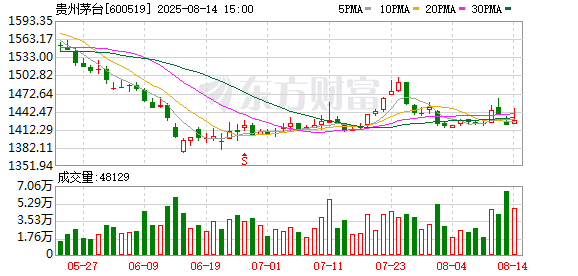
贵州茅台 探索“点绿成金” 助力“两山”转化
Ren Min Ri Bao· 2025-08-14 21:44
Core Viewpoint - Guizhou Moutai is actively implementing the concept of "lucid waters and lush mountains are invaluable assets," focusing on ecological protection and sustainable development while transforming ecological value into economic growth [2][5][8] Group 1: Ecological Protection Initiatives - The company emphasizes ecological priority and green development, particularly in the Chishui River basin, which is crucial for the production of Moutai liquor [3][4] - Moutai has invested over 400 million yuan in ecological protection efforts in the Chishui River basin, implementing comprehensive water management and recycling measures with a cooling water recycling rate exceeding 87% [3][4] - The company is committed to reducing carbon emissions and improving air quality through various initiatives, including the transformation of natural gas boilers and the application of renewable energy [4][6] Group 2: Economic and Ecological Value Transformation - Moutai focuses on converting ecological resources into green, organic products, aiming for a revenue target of 187.19 billion yuan in 2024 while enhancing ecological benefits [5][6] - The company allocates 1.5% of its annual revenue to environmental protection, aiming to reduce carbon emissions and water consumption by over 20% and 30%, respectively, by 2030 [6][8] - Moutai is developing high-value ecological products from production waste, contributing to a circular economy [6][7] Group 3: Strategic Development and Industry Leadership - Moutai has established a comprehensive ecological development index system to evaluate its green development efforts, achieving a significant upgrade in its ESG rating from B to A within two years [7] - The company leads various ecological protection initiatives, including tree planting and sustainable development forums, fostering collaboration across multiple sectors [7][8] - Moutai aims to enhance its role in ecological conservation and community development through the Chishui River Ecological Public Welfare Fund [8]


用“两山”理念绘就京华大地新画卷
Bei Jing Qing Nian Bao· 2025-08-14 18:48
Core Ideas - The article emphasizes Beijing's commitment to ecological civilization and the "Two Mountains" concept, aiming for a harmonious coexistence between humans and nature while promoting high-quality development [1][5] Group 1: "Two Mountains" Concept - The "Two Mountains" concept, proposed by Xi Jinping, highlights the relationship between economic development and environmental protection, advocating for a path of high-quality development that integrates ecological protection [2][3] - This concept has transformed the traditional dichotomy of economic growth versus ecological preservation, promoting a model where ecological factors are integrated into industrial upgrades [2] Group 2: Beijing's Ecological Achievements - Beijing has established nine districts as ecological civilization demonstration zones or "Two Mountains" innovation bases, with five ecological conservation areas receiving dual recognition [3] - The city recorded 290 days of good air quality in the past year, an increase of 114 days compared to 2013, marking the highest number of good air quality days in history [3] Group 3: Economic and Environmental Synergy - Since the 13th Five-Year Plan, Beijing has achieved an average economic growth of 5.2% while maintaining a low energy consumption growth rate of 1.5%, with carbon emission intensity being the best among provincial-level regions [4] - The proportion of green enterprises in Beijing stands at 24%, with high-tech and strategic emerging industries accounting for 30% and 25.1% of the economy, respectively [4]
8月14日晚间央视新闻联播要闻集锦
Yang Shi Xin Wen Ke Hu Duan· 2025-08-14 13:58
Group 1 - The core idea emphasizes the importance of ecological civilization construction as a fundamental strategy for sustainable development in China, guided by Xi Jinping's ecological civilization thought, with the "Two Mountains" concept becoming a consensus across society [6] - The "14th Five-Year Plan" period has seen significant achievements in the construction of a digital China, which has effectively supported high-quality economic and social development [8] - Financial support for the real economy has continuously improved, with broad money (M2) balance reaching 329.94 trillion yuan, a year-on-year increase of 8.8%, and social financing stock at 431.26 trillion yuan, up 9.0% year-on-year [9]
学习手记 | 因地制宜,充分发挥当地资源环境优势——读懂“两山”理念的科学路径
Xin Hua She· 2025-08-14 13:46
Group 1 - The "Two Mountains" concept emphasizes that ecological resources can be transformed into economic advantages, highlighting the importance of local resource utilization and environmental advantages [1][2] - The approach encourages tailored strategies based on local conditions, advocating for specific governance principles such as "suitable for forest, irrigation, grass, wetland, barren land, and sand" [2][3] - The concept has evolved over 20 years, showcasing a shift towards harmonious coexistence between humans and nature, with practical applications across various regions in China [3] Group 2 - The "Two Mountains" ideology serves as a guiding principle for ecological civilization construction, promoting a dialectical view of development that integrates ecological and economic considerations [3] - The implementation of this ideology requires recognizing the unique ecological value transformation capabilities and pathways of different regions, thus fostering distinctive local advantages [2][3] - The historical context of the ideology includes specific examples, such as the use of mushroom grass technology in arid regions, demonstrating the practical application of local strengths [2]
学习手记丨山水林田湖草沙——读懂“两山”理念的系统观念
Xin Hua She· 2025-08-14 12:49
Core Concept - The article commemorates the 20th anniversary of the "Green Mountains and Clear Water are Gold and Silver Mountains" concept, emphasizing the importance of a systematic approach to ecological civilization and integrated management of natural resources [4][6]. Group 1: Systematic Governance - The concept of "Two Mountains" promotes a comprehensive and coordinated approach to ecological governance, which includes the integration of mountains, water, forests, fields, lakes, grasslands, and sand [4][6]. - The addition of "sand" to the governance framework reflects a deepening understanding of ecological systems and the need for holistic management [4][6]. - Historical context shows a consistent evolution of this systematic view, starting from the recognition of "mountains, water, forests, fields, and lakes as a community of life" in 2013 to the current comprehensive governance model [4][5]. Group 2: Economic and Ecological Balance - The article stresses the necessity of achieving both economic growth and ecological advancement, advocating for a new development path that prioritizes ecological preservation and green development [5][6]. - It highlights the importance of top-level design in exploring high-quality development that harmonizes economic and ecological benefits [5][6]. Group 3: Long-term Strategy - The article discusses the long-term nature of ecological restoration, likening it to a chronic illness that requires comprehensive and sustained efforts for effective treatment [6]. - It emphasizes the need for a multi-faceted approach to address environmental issues, integrating various strategies for holistic governance [6][7]. Group 4: Practical Implementation - The successful case of Uliangsu Lake illustrates the effectiveness of a systematic governance approach, where recognizing the interconnectedness of ecological issues led to significant improvements in the local environment and economy [7][8]. - The article advocates for a dialectical materialist approach to understanding and addressing ecological problems, emphasizing the importance of a comprehensive perspective in both thought and action [8].
专访丨中国已成为全球绿色转型的领跑者——访埃及气候与环境专家阿拉姆
Xin Hua Wang· 2025-08-14 11:43
新华社记者董修竹 姚兵 "中国已成为全球绿色转型的领跑者,其生态环境建设方案不仅使中国自身受益,也为全球可持续发展 作出贡献。"埃及气候与环境专家、全球环境基金顾问马格迪·阿拉姆日前在接受新华社记者专访时说。 阿拉姆特别指出,习近平主席提出的"两山"理念,即"绿水青山就是金山银山",是中国国家生态文明建 设的"指路明灯"。 曾多次访华的阿拉姆把"两山"理念指引下的荒山变林海壮举称为中国"最令人震撼的生态成就之一"。他 还说:"中国在遏制污染方面取得了显著进展,清洁水源与绿色植被覆盖范围不断扩大。" 阿拉姆说,绿色转型直接改善了中国人民的生活质量,现在人们能享受更多绿荫、清新空气和洁净水。 新华社开罗8月14日电 专访丨中国已成为全球绿色转型的领跑者——访埃及气候与环境专家阿拉姆 阿拉姆强调,中国的可持续发展努力植根于长期规划与果断行动——从植树造林到逐步减少化石燃料使 用,再到引领清洁能源转型。这些成就不仅使中国的环境得到改善,而且使中国日益成为非洲、阿拉伯 地区及更广泛的全球南方可持续发展的关键支持者。 "中国正积极帮助包括埃及在内的非洲国家,特别是在新型可再生能源技术方面提供了很多支持。"他 说。 阿拉姆 ...
活力中国调研行丨“以绿生金”造就“亿元村”——重庆奉节绿色发展见闻
Xin Hua Wang· 2025-08-14 10:05
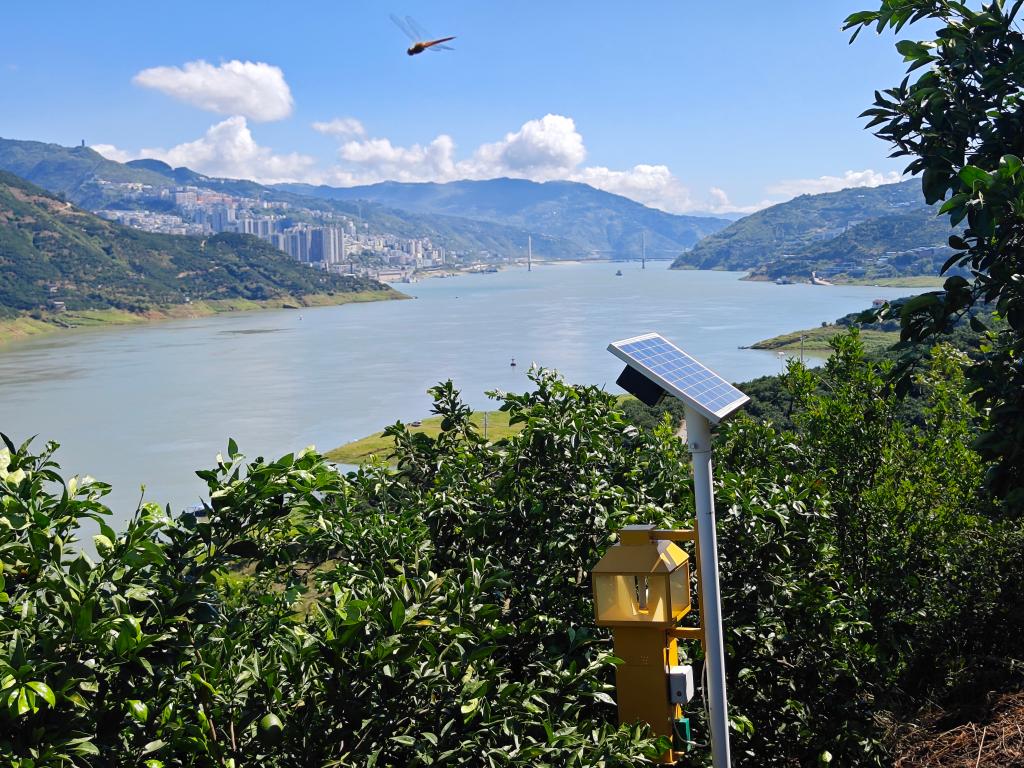
Core Insights - The article highlights how Chongqing's Fengjie County has transformed its ecological resources into economic benefits, creating "billion-yuan villages" through green development initiatives [1][3]. Group 1: Green Development Initiatives - Daba Village has been recognized as a national "One Village, One Product" demonstration village and a village with over 100 million yuan in specialty industry output, attributed to its lush green environment [3]. - The village has shifted from traditional crops like sweet potatoes and corn to cultivating 12,000 acres of navel oranges, generating an output value of 180 million yuan [3]. - Green planting techniques have been implemented, reducing chemical fertilizer use by over 300 tons and pesticide use by approximately 4,000 liters annually [3]. Group 2: Tourism and Economic Impact - The village has developed multiple tourism routes, attracting an average of 25,000 visitors annually, resulting in a tourism revenue of 2 million yuan [3]. - Local resident Fang Gang leveraged social media to promote the village's scenic beauty and navel oranges, selling hundreds of tons through live streaming [4]. Group 3: Historical Context and Transformation - Fengjie County was once a major coal-producing area, with a forest coverage rate dropping below 30% and severe soil erosion affecting 68% of the land [5]. - In 2016, the county closed all coal mines producing less than 90,000 tons annually, initiating a green transformation that restored the environment [6]. - The area has seen a significant recovery, with forest coverage now at 69.49% and ecological economic contributions accounting for 71.8% of GDP [6].
浙江首个地质生态产品交易仪式在安吉余村举行
Zhong Guo Xin Wen Wang· 2025-08-14 02:54
Core Points - The signing of the geological ecological product transaction agreement marks the first such transaction in Zhejiang Province, aiming to explore new pathways for the value transformation of ecological products under the "Two Mountains" concept [1][2] - Geological ecological products are defined as a type of ecological product formed by geological factors, addressing the gap in the ecological product system [1] - The project involves the leasing of 113.5 acres of land and forest around the Cold Water Cave mine for the development of the "Waterfall Coffee · Yucun Sea View" project, with a 10-year cooperation agreement established [1][2] Company Developments - Anji Borun Cultural Tourism Development Co., Ltd. plans to create an outdoor ecological complex centered on mine ecological restoration, including camping, dining, and art experiences, with trial operations expected to begin in mid-August [2] - The project is anticipated to create over 20 jobs for local villagers and attract more than 30 young people to the area [2] Industry Insights - Since May, multiple technical seminars have been held to facilitate the transaction of geological ecological products, establishing a transformation mechanism for geological ecological products from investigation and evaluation to value realization [2] - The successful implementation of this transaction provides a model for the realization of ecological product value in Zhejiang Province, referred to as the "Yucun Model" [2]
重庆绿色发展为何“渝”众不同?
Zhong Guo Huan Jing Bao· 2025-08-14 01:40
Core Viewpoint - The article emphasizes the importance of ecological protection and the transformation of ecological advantages into developmental benefits in Chongqing, highlighting various successful practices in ecological civilization construction [1][8]. Group 1: Ecological Wealth Generation - Fengjie County has shifted from a coal-dependent economy to developing the citrus industry, with Fengjie navel oranges achieving a brand value of 38.17 billion yuan in 2024, ranking 20th nationally [2][3]. - The county has invested 293 million yuan in infrastructure and implemented a brand management strategy, resulting in over 50 star-rated orange farms and benefiting more than 50,000 residents [2][3]. - The establishment of a "farmer technology follow-up" system has trained 32,000 farmers annually, and the average income for orange farmers exceeds 100,000 yuan [3]. Group 2: Mining Transformation - The restoration of the Cuoluo Mountain area, previously a mining site, has led to the creation of a national park with an investment of 342 million yuan, achieving a 70% ecological restoration rate [4][5]. - The project has improved living conditions for over 720 households and increased biodiversity in the area [4]. - Cuoluo Mountain Park has become a model for integrating ecological restoration with tourism, recognized by the United Nations [5]. Group 3: Digital Empowerment in Water Management - The "Bayu Water Management" initiative in Chongqing utilizes a data-driven approach to enhance water quality management, achieving a 100% good water quality rate at 74 national control sections [7][8]. - The initiative has established a comprehensive online coordination system, significantly improving the efficiency of pollution source management [7]. - The successful model has been recognized nationally and included in the "China Electronic Government Yearbook" [8]. Group 4: Pollution Control and Rural Development - Dazhu District has made significant progress in rural pollution control, achieving a 94.8% rate in rural sewage treatment by June 2025 [10]. - The district has implemented waste management strategies, including the establishment of 160 waste classification demonstration villages [10][11]. - Agricultural development initiatives have led to a 91.58% resource utilization rate for livestock waste, contributing to the district's economic vitality [11]. Group 5: Urban Water Quality Improvement - Tongliang District has successfully improved the water quality of the Xiao'an River, achieving a stable III class rating after comprehensive pollution control measures [15][16]. - The district has constructed 357 kilometers of new and upgraded sewage pipelines, enhancing the overall sewage treatment capacity [13][15]. - Collaborative agreements with neighboring areas have strengthened regional water quality management efforts [16]. Group 6: Air Quality Enhancement - Jiangbei District has undertaken significant oil depot renovations, reducing VOC emissions by over 400 tons annually through advanced sealing technologies [17][18]. - The transformation of three major oil depots has set a benchmark for industrial pollution control in the region [17][18]. - The district's approach combines policy support, technical guidance, and comprehensive oversight to promote green development [18]. Group 7: Industrial Wastewater Management - Fengdu County has established a "zero direct discharge" zone in its industrial park, significantly improving local water quality [19][20]. - The county's approach includes a comprehensive assessment of wastewater sources and the implementation of targeted remediation plans [19][20]. - The water treatment facility in the area has maintained stable compliance with discharge standards for three consecutive years [20]. Group 8: Comprehensive Environmental Governance - Liangping District has adopted a multi-faceted approach to improve air and water quality, focusing on PM2.5 and ozone control [21][22]. - The district has implemented a "seven-in-one" collaborative strategy for ecological protection and pollution control across administrative boundaries [22][23]. - Efforts to enhance biodiversity and promote green economic activities are underway, aiming for effective ecological value transformation [23].