单边主义

Search documents
美国的单边主义严重破坏全球贸易体系——访南方中心执行主任科雷亚
Xin Hua Wang· 2025-10-24 12:56
Core Viewpoint - The unilateral actions of the United States are severely undermining the global trade system, particularly affecting developing countries, which face significant economic challenges due to high tariffs and trade uncertainties [1][2] Group 1: Impact on Global Trade - The U.S. has imposed tariffs that exceed the World Trade Organization (WTO) limits on several countries, including China, Switzerland, and Indonesia, disregarding WTO rules and disrupting the global trade system [1] - Developing countries are experiencing a loss of export income, decreased product competitiveness, and job losses due to U.S. trade policies [1] - High tariffs are leading to reduced export competitiveness, decreased foreign investment, and currency depreciation in developing countries [1] Group 2: Structural Issues in the U.S. Economy - The root causes of the U.S. trade deficit are structural issues such as declining manufacturing competitiveness, imbalances in savings and investment, and corporate tax avoidance, rather than unfair trade practices [2] - It is estimated that up to 30% of the U.S. trade deficit may stem from corporate tax avoidance behaviors [2] Group 3: Call for Multilateral Cooperation - Developing countries are urged to actively participate in the multilateral system and advocate for WTO reforms that better serve their development interests [2] - There is a need for a fair and predictable multilateral trade system to prevent any country from unilaterally imposing trade measures [2]
专栏作家 | 美关税大棒扰动下全球贸易形势观察
Sou Hu Cai Jing· 2025-10-24 07:50
Core Viewpoint - The article discusses the impact of the U.S. government's shift towards protectionism and unilateral trade policies on global trade dynamics, highlighting the challenges and changes in trade forecasts from reputable organizations like WTO and UNCTAD [2][3]. WTO Insights - The WTO reports that the direct impact of tariff increases on global goods trade will have a lag effect, primarily manifesting in the second half of 2025 and into 2026 [4]. - Despite the tariff increases, global goods trade growth for 2025 has been revised upward to 2.4%, significantly higher than the previous forecast of 0.9% [4]. - The service trade growth forecast has been adjusted downwards, with expected growth rates of 4.6% in 2025 and 4.4% in 2026, primarily due to a slowdown in transportation and tourism sectors [5]. - Different regions show varied performance in goods exports, with Asia leading at 10.4% growth in the first half of 2025, while Europe shows a slight decline of 0.3% [5]. UNCTAD Insights - UNCTAD indicates that global trade remains robust despite uncertainties, with a 2.5% quarter-on-quarter growth in goods and services trade in Q2 2025 [7]. - The manufacturing sector, particularly the electronics and automotive industries, continues to drive global trade growth [7]. - UNCTAD forecasts a continued increase in global trade for Q3 2025, with goods trade expected to grow by approximately 2.5% and services trade by about 4% [7]. - Negative factors affecting trade include ongoing U.S. trade policy uncertainties and geopolitical tensions, which may alter regional trade dynamics [8]. - Positive factors include stronger economic growth and limited spillover effects from negative policies, supporting further trade growth [9]. China's Trade Performance - China's foreign trade has shown resilience, with a 4% year-on-year increase in goods trade in the first three quarters of 2025, despite external pressures from U.S. tariffs [10]. - Exports grew by 7.1% to 19.95 trillion yuan, while imports slightly decreased by 0.2% to 13.66 trillion yuan [10]. - The current global trade disruptions highlight the importance of predictable trade conditions, as emphasized by WTO Director-General Ngozi Okonjo-Iweala [10].


专访丨美国的单边主义严重破坏全球贸易体系——访南方中心执行主任科雷亚
Xin Hua Wang· 2025-10-24 07:01
Core Viewpoint - The unilateral actions of the United States are severely undermining the global trade system, particularly affecting developing countries, which face significant economic challenges due to high tariffs and trade uncertainties [1][2] Group 1: Impact on Global Trade - The U.S. has imposed tariffs that exceed the World Trade Organization (WTO) limits on several countries, including China, Switzerland, and Indonesia, disregarding WTO rules and disrupting the global trade system [1] - Developing countries are experiencing a loss of export income, decreased competitiveness of their products, and job losses due to U.S. trade policies [1] - High tariffs are leading to reduced foreign investment and currency depreciation in developing countries, creating an unstable economic environment [1] Group 2: Structural Issues in the U.S. Economy - The root causes of the U.S. trade deficit are structural issues such as declining manufacturing competitiveness, imbalances in savings and investment, and corporate tax avoidance, rather than unfair trade practices [2] - It is estimated that up to 30% of the U.S. trade deficit may be attributed to corporate tax avoidance behaviors [2] Group 3: Call for Multilateral Cooperation - Developing countries are urged to actively participate in the multilateral system and advocate for reforms in the WTO to better serve their development interests [2] - There is a need for a fair and predictable multilateral trade system to prevent any country from unilaterally imposing trade measures [2]
特朗普通告全球,不想摧毁中国,若中方作出让步,美或降低关税
Sou Hu Cai Jing· 2025-10-23 08:36
Group 1 - The core message of the article highlights the strategic maneuvering of the U.S. in its trade relations with China, particularly in the context of upcoming high-level talks and the pressures faced by American farmers due to declining soybean exports [2][4][5] - Trump's statement of not wanting to destroy China is seen as a tactical move to ease domestic pressures while simultaneously threatening to impose significant tariffs on Chinese goods, indicating a dual approach of soft and hard tactics [3][4] - The U.S. is facing challenges with its military supply chain due to China's export controls on rare earth elements, which are critical for advanced military technology, showcasing the strategic implications of trade relations [4][7] Group 2 - China is diversifying its soybean supply sources, with Brazil and Argentina becoming major suppliers, which undermines U.S. leverage in the agricultural sector [5][8] - The article discusses China's strategic responses, including legalizing export controls on rare earths and enhancing cooperation with ASEAN and African nations, indicating a shift from being a resource-dependent economy to a technology-exporting one [7][9] - The geopolitical landscape is evolving, with countries increasingly opting for multipolar cooperation rather than aligning solely with U.S. interests, reflecting a significant shift in global trade dynamics [8][9]
视频丨美教授:“十五五”式长期规划是美国该有的长远思维
Yang Shi Xin Wen Ke Hu Duan· 2025-10-22 03:05
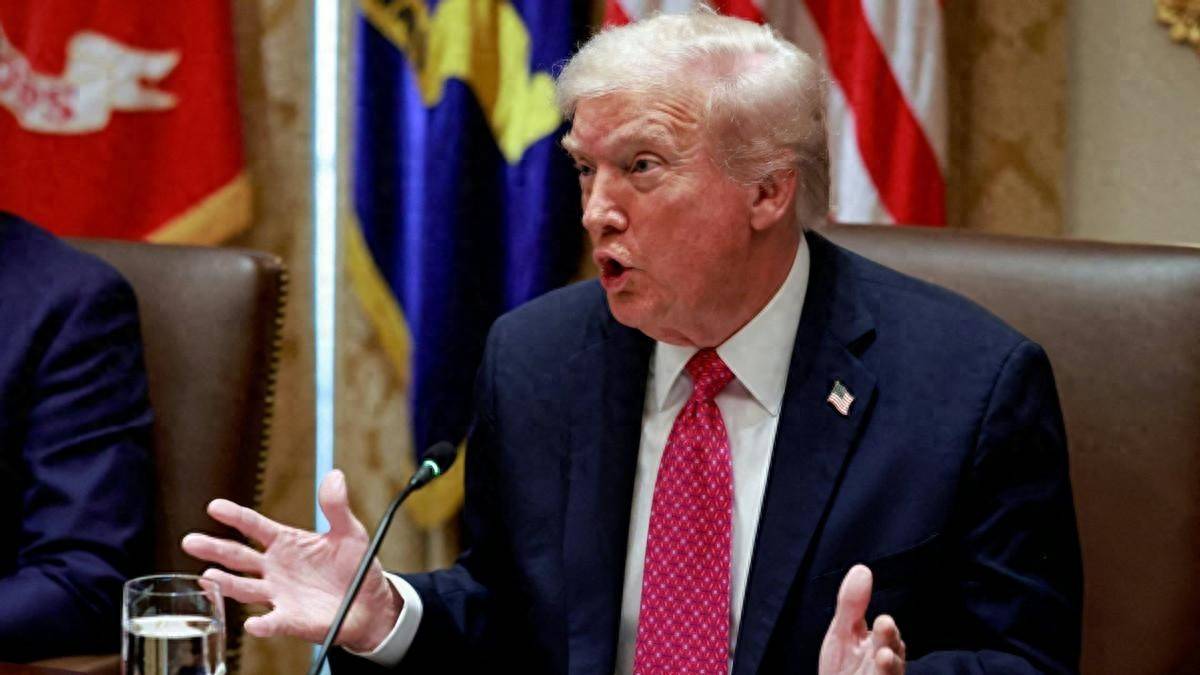
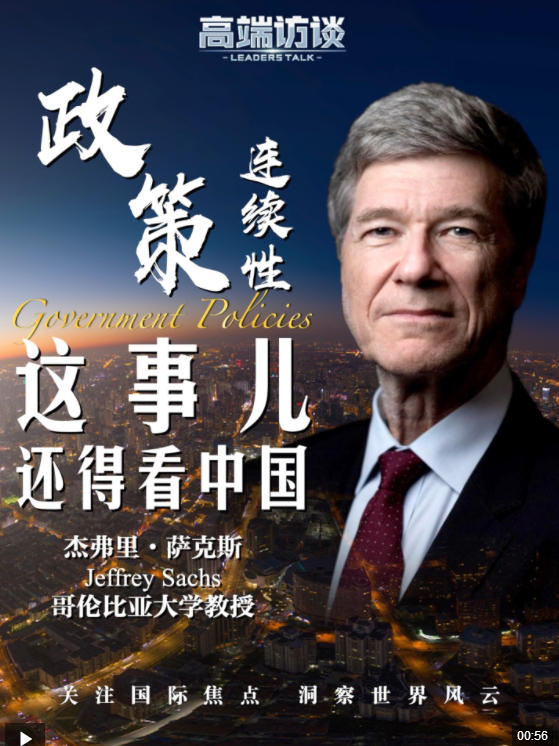
Core Viewpoint - Jeffrey Sachs, a professor at Columbia University, emphasizes the instability of U.S. President Trump's policies compared to China's long-term planning approach, such as the five-year plans [2] Group 1 - Sachs expresses hope that the U.S. will adopt a long-term perspective and engage in diplomatic interactions and negotiations with China [2] - He criticizes the U.S. for its unilateralism and erratic actions, contrasting it with China's consistent policy-making [2]
美教授:“十五五”式长期规划是美国该有的长远思维
Yang Shi Xin Wen Ke Hu Duan· 2025-10-22 02:01
Core Viewpoint - Jeffrey Sachs, a professor at Columbia University, emphasizes the instability of U.S. President Trump's policies compared to China's long-term planning approach, such as its five-year plans [1] Group 1 - Sachs expresses hope that the U.S. will adopt a long-term perspective and engage in diplomatic interactions and negotiations with China [1] - He criticizes the U.S. for its unilateralism and erratic decision-making [1]
英国学者看得很明白,特朗普对华毫无战略,说明美国根本不是中国对手
Sou Hu Cai Jing· 2025-10-20 16:20
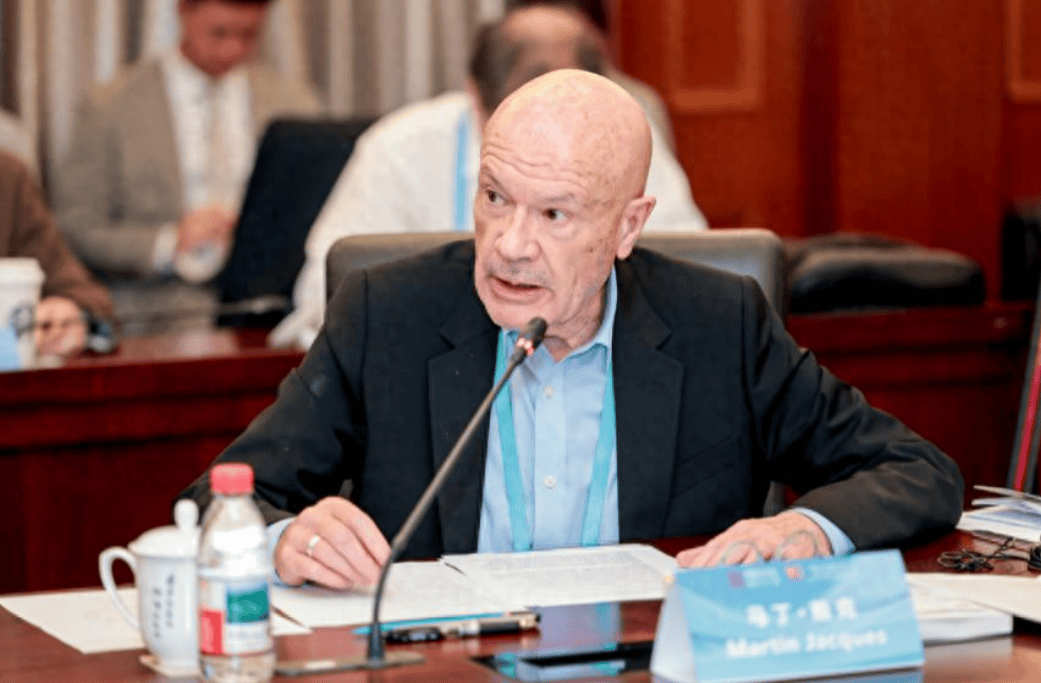
Group 1 - The core argument suggests that Trump's "America First" strategy may not lead to success in the trade war with China, revealing the awkward position of the U.S. in the global economic arena [1] - Martin Jacques from Cambridge University highlights that Trump's seemingly strong political stance lacks foresight, while China's long-term strategic planning puts the U.S. at a disadvantage [1][3] - The ongoing conflict over rare earth elements is intensifying, with Trump threatening to impose tariffs of up to 100% on Chinese goods, which led to a significant market reaction, resulting in a loss of $5.5 trillion in market value for tech giants [1][3] Group 2 - The U.S. Treasury Secretary indicated a potential reconsideration of tariff policies if China lifts its rare earth restrictions, reflecting internal contradictions within the Trump administration [3] - China's response to the trade threats demonstrates confidence, emphasizing its critical role in the rare earth supply chain, which is essential for various high-tech industries [3][6] - Since 2018, China has reduced its reliance on the U.S. market, seeking to boost domestic demand, which makes Trump's tariff strategy increasingly unrealistic [3][6] Group 3 - The political instability in the U.S. is highlighted as a fundamental issue, with policies lacking continuity and stability due to partisan conflicts [4] - Trump's reliance on tariffs as a unilateral tool reflects a broader issue of isolationism in a globalized economy, which fails to address deeper problems [4][6] - The "America First" ideology has weakened U.S. relationships with allies, diminishing its attractiveness as an investment destination [6] Group 4 - The trade war is characterized as a clash of national strategies, with China exhibiting clear long-term planning compared to Trump's inconsistent approach [6] - The current global economic slowdown and complex international situation render Trump's trade policies ineffective, presenting both opportunities and challenges for China [6]
大结局将至?特朗普一旦被判非法,中国将全面打赢“关税战”,全世界都在等结果,印度站错队了
Sou Hu Cai Jing· 2025-10-20 12:02
Core Viewpoint - The upcoming Supreme Court hearing on November 5 regarding the legality of Trump's tariff policies is seen as a pivotal moment that could reshape the U.S.-China trade war and impact Trump's political future [1][3]. Group 1: Legal Context - The U.S. International Trade Court previously ruled that Trump's imposition of tariffs under the International Emergency Economic Powers Act was an overreach of authority, stating that trade deficits do not constitute a national emergency [3]. - The Federal Circuit Court upheld this ruling with a 7-4 vote, emphasizing that the Act was intended for financial crises and not for initiating trade wars [3]. - Trump's legal strategy now relies on the conservative majority in the Supreme Court, which includes three justices he appointed, but the court has historically required congressional authorization for significant economic decisions [3][5]. Group 2: Political Implications - Trump's potential attendance at the hearing is viewed as a form of pressure on the justices, raising concerns about the integrity of the judicial system and the principle of separation of powers [5]. - The outcome of the case could have significant financial implications, with estimates suggesting that if the tariffs are deemed illegal, the government may need to refund billions in tariffs collected, further straining the U.S. budget [5][6]. Group 3: International Reactions - The situation has prompted international responses, such as India's declaration to restrict the export of rare earth materials to the U.S., which some interpret as support for China, although India's actions are seen as self-serving rather than a strategic alliance [6]. - China's recent export controls on rare earths are part of its strategy to counter the tariff war, indicating a complex interplay of global trade dynamics [6]. Group 4: Future Outlook - The November 5 ruling is anticipated to be a critical juncture for both the U.S. and China, with potential ramifications for international trade order and the effectiveness of unilateral tariff measures [8]. - Regardless of the ruling, the ongoing trade conflict highlights the challenges of unilateralism and the risks of self-inflicted economic harm through protectionist policies [8].
美国财长大发雷霆,背后藏着什么不可告人的秘密?
Sou Hu Cai Jing· 2025-10-20 08:16
Core Points - The U.S. Treasury Secretary expressed frustration over domestic issues while criticizing China, highlighting a disconnect between U.S. internal crises and external diplomatic rhetoric [2] - The U.S. is facing significant economic challenges, including a manufacturing PMI that has contracted for three consecutive months and a national debt reaching $37 trillion [2] - Political dysfunction is evident as the government shutdown has extended to a record 16 days, revealing a stalemate between the two parties over basic budget approvals [2] - Socially, 70% of U.S. businesses are complaining that trade policies towards China are hindering their operations, indicating widespread discontent within the business community [2] Industry Insights - The agricultural sector, particularly soybean farmers, is experiencing severe difficulties, with unsold soybeans accumulating in warehouses due to trade tensions [2] - China's strategic response includes diversifying its soybean import channels and implementing rare earth export controls, which pressures the U.S. to negotiate on tariff suspensions [2] - The situation illustrates the interconnectedness of global trade, where unilateral actions by the U.S. are leading to adverse effects on its own agricultural producers [2]
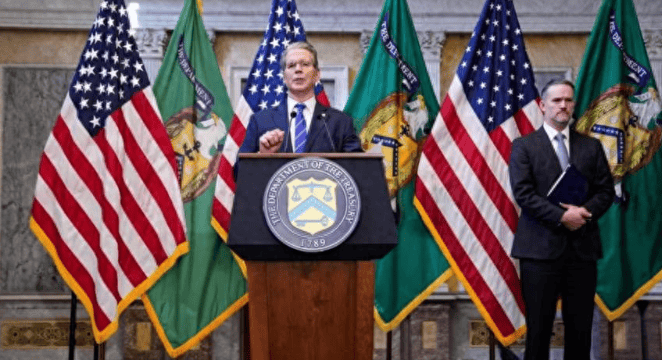
破防的美财长,公然侮辱中方谈判代表,我商务部当场怼了回去
Sou Hu Cai Jing· 2025-10-20 06:15
Group 1 - The core issue revolves around the diplomatic tensions between China and the U.S., triggered by U.S. Treasury Secretary Besant's accusations against Chinese trade representative Li Chenggang during a press conference [1][4][8] - Li Chenggang's visit to the U.S. aimed to advance the implementation of agreements made by the leaders of both countries and address the U.S. Section 301 investigation into China's shipbuilding industry [2][4] - The U.S. mischaracterized Li's diplomatic visit as provocative, leading to strong rebuttals from China, which emphasized that the visit was in line with previously established consensus [4][12] Group 2 - China's response to U.S. accusations included countermeasures against the U.S. Section 301 investigation, such as imposing special port fees on U.S. vessels, which could increase operational costs at U.S. ports by 12% to 15% [4][12] - In agricultural trade, China demonstrated supply chain resilience by utilizing satellite technology to monitor soybean cultivation in Argentina, ensuring quality and transparency in its procurement processes [6][14] - The U.S. agricultural exports to China significantly declined from January to August 2025, leading to increased unemployment rates in agricultural states, highlighting the negative impact of U.S. trade policies [8][10] Group 3 - The U.S. court ruling against tariffs on steel and aluminum products during Li Chenggang's visit further supported China's position and exposed contradictions in U.S. trade policy [10][12] - China's strategic approach includes diversifying import sources and leveraging technology for supply chain security, which has weakened U.S. bargaining power in agricultural trade [12][16] - The evolving global trade landscape, influenced by China's Belt and Road Initiative and cooperation with emerging agricultural nations, is reshaping trade dynamics, with projected agricultural trade between China and Argentina expected to exceed $50 billion by 2030 [14][16][17]