
量子技术

Search documents
“高科技”防晒产品亟须晒干水分
Bei Jing Qing Nian Bao· 2025-07-25 01:01
Core Viewpoint - The article highlights the issue of misleading marketing practices in the sunscreen product industry, particularly regarding the exaggerated claims of "high-tech" features and efficacy, which mislead consumers and disrupt market order [1][2][3] Group 1: Misleading Claims - Many sunscreen products claim to have unique technologies that provide superior sun protection, but actual performance often falls short of these claims, leading to consumer dissatisfaction [1][2] - Some products advertise long-lasting protection, such as 12 hours, yet consumers experience sunburn after just a few hours of outdoor activity, indicating a significant gap between marketing and reality [1] Group 2: Conceptual Marketing - The use of complex scientific terms like "nanoparticles," "quantum technology," and "gene repair factors" in marketing lacks substantial scientific backing and serves primarily to create a false sense of product superiority [2] - Brands exploit consumers' unfamiliarity with advanced scientific concepts to differentiate their products, often without any real technological basis [2] Group 3: Ingredient Misrepresentation - There are instances of false labeling regarding the ingredients in "high-tech" sunscreen products, where companies claim to include rare and expensive natural components that are either present in negligible amounts or entirely absent [2] - This deceptive practice undermines consumer trust in the sunscreen market and raises concerns about product integrity [2] Group 4: Need for Regulation and Self-Regulation - Increased regulatory oversight is necessary to combat exaggerated claims, conceptual marketing, and false labeling in the sunscreen industry, including stricter scrutiny of promotional content [2] - Companies should adopt self-regulation practices, focusing on genuine technological innovation rather than misleading advertising to enhance product quality [3] - Consumers are encouraged to develop better discernment skills to avoid being misled by exaggerated marketing claims and to focus on actual product performance data and reviews [3]
商道创投网·会员动态|山西国科·完成亿元A轮融资
Sou Hu Cai Jing· 2025-07-23 08:32
Core Insights - Shanxi Guoke Semiconductor Optoelectronics Co., Ltd. has recently completed a significant A-round financing led by multiple investment firms, indicating strong investor confidence in the company’s potential [1][4]. Company Overview - Founded at the end of 2020 by a team of scientists from the Chinese Academy of Sciences, Shanxi Guoke is the only high-tech enterprise in China that has established a complete production line for III-V antimonide semiconductors, focusing on laser chips, infrared detectors, and command systems [2]. Financing Purpose - The funds from this round of financing will be allocated to three main areas: enhancing R&D across the entire process from materials to systems, expanding the initial production line to increase capacity for high-end lasers and infrared modules, and accelerating market penetration in emerging sectors such as quantum communication and national defense, aiming for a dual strategy of "domestic substitution + cutting-edge leadership" [3]. Investment Rationale - The investment partners highlighted Shanxi Guoke's nearly two decades of technological accumulation and the establishment of the first production line compatible with III-V antimonides, which presents a high technical barrier. The company’s products have already entered strategic markets such as aerospace and quantum technology, indicating a broad market potential [4]. Investment Perspective - Recent government policies encouraging investment in semiconductor and quantum technologies align with Shanxi Guoke's fully controllable technology chain, showcasing the speed of hard technology entrepreneurship. The investment firms are strategically positioned in national priority sectors, reflecting their commitment to professional responsibility in managing investments [5].

对话量旋科技项金根:黄仁勋预测太保守,10年后将实现百万物理比特的容错量子计算机
Tai Mei Ti A P P· 2025-07-21 11:01
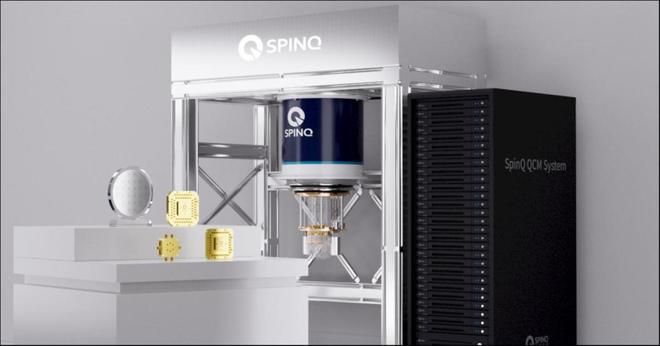
Core Viewpoint - Quantum computing company "Quantum Spin Technology" has completed a Series B financing round amounting to hundreds of millions, with investors including government funds and various institutions. The funds will be used to expand research and production of superconducting quantum computers and to grow the research team [2][6]. Financing - Quantum Spin Technology has completed five rounds of financing since its establishment, with investors including Ming Shi Capital, Shenzhen High-tech Investment Group, and others [7]. - The recent financing round is primarily supported by government funds and industrial capital [2]. Technology and Products - Quantum Spin Technology focuses on the industrialization and popularization of quantum computing, providing a one-stop solution that includes superconducting quantum computers, desktop nuclear magnetic quantum computers, quantum computing cloud platforms, and application software [6][7]. - The company has developed a self-researched superconducting chip "Shaowei," which features high Qi value, long qubit lifespan, and high stability [7][11]. Market Potential - According to McKinsey, the global quantum computing revenue is expected to exceed $1 billion by 2025, with the market potentially reaching between $28 billion and $72 billion by 2035 [5]. - The entire quantum technology industry is projected to approach $100 billion by 2035 and reach $198 billion by 2040 [5]. Competitive Landscape - Quantum Spin Technology is positioned as a leading technology enterprise in the superconducting and nuclear magnetic quantum fields, competing with major companies like IBM and Google [10][11]. - The company aims to achieve breakthroughs in core technology areas by 2025, including material processes, chip design, and system integration [11][12]. Future Outlook - The company plans to focus on three main areas: advancing technology in superconducting quantum computers and cloud platforms, deepening application scenarios in finance and AI, and expanding its global market presence [12][25]. - The CEO believes that achieving fault-tolerant superconducting quantum computers will require significant time and investment, with milestones set for 2029 and 2035 [12][22].
特朗普访华前,中方送美国一句话,不到24小时,白宫除名反华团队
Sou Hu Cai Jing· 2025-07-21 02:21
Group 1 - The Trump administration has laid off over 1,300 State Department employees, with total layoffs approaching 3,000, primarily affecting departments focused on China-related issues [1] - The layoffs are part of a broader restructuring plan aimed at reducing government spending, aligning with the goals of the "Department of Government Efficiency" established after Trump's initial election [3] - The affected China-related functions are not entirely eliminated but are being reorganized into other departments, indicating a strategic shift rather than a complete abandonment of these roles [5] Group 2 - Following the layoffs, Chinese Foreign Minister Wang Yi emphasized the importance of strengthening contact, preventing misjudgments, managing differences, and expanding cooperation in U.S.-China relations, reflecting China's expectations from the U.S. [7] - The timing of the layoffs coincides with Trump's upcoming visit to China, suggesting a potential diplomatic gesture to pave the way for improved relations [5][7]
“1+6”,重磅来了!
Zhong Guo Ji Jin Bao· 2025-07-20 13:47
Core Viewpoint - The launch of the "1+6" policy for the Sci-Tech Innovation Board aims to break the capital bottleneck and support "hard technology" companies, particularly those that are not yet profitable, by establishing a growth layer and optimizing listing standards [1][2][3] Group 1: Policy and Market Impact - The "1+6" policy is a significant step in supporting technology-driven companies, addressing the financing challenges faced by unprofitable firms in sectors like artificial intelligence, commercial aerospace, and biomedicine [2][3] - The establishment of the growth layer and the expansion of the fifth set of IPO standards are designed to facilitate the listing of high-growth, innovative companies [4][5] - The new regulations are expected to enhance the capital market's role in supporting new productive forces and align with national innovation-driven development strategies [2][3] Group 2: Investment Opportunities - The Sci-Tech Innovation Board is positioned to attract investments in sectors such as semiconductors, AI, and biomedicine, which are experiencing significant growth due to technological advancements and market demand [6][7][8] - The introduction of professional institutional investors is anticipated to improve resource allocation and reduce risks associated with low-growth companies [5][8] - The growth layer is expected to create a more inclusive financing environment for technology innovation companies, enhancing the investment landscape [3][4] Group 3: Fund Management Adjustments - Fund managers are adjusting their investment strategies to focus on long-term research and development rather than short-term financial metrics, aligning with the characteristics of growth layer companies [11][12] - The new standards will require funds to enhance their risk management frameworks to accommodate the high volatility associated with growth layer enterprises [13][14] - Public funds are expected to increase their focus on early to mid-stage technology companies, refining their pricing methods to better assess these firms [11][12] Group 4: Broker and Market Readiness - Brokers are actively preparing to implement the new rules, enhancing their systems to support the trading of growth layer stocks [20][21] - The launch of the growth layer is projected to bring significant growth to brokerage firms' investment banking businesses, with many firms expanding their "hard technology" project reserves [19][22] - Brokers are also focusing on educating investors about the risks associated with investing in unprofitable companies within the growth layer [21][22]
这类芯片,全球首颗
半导体行业观察· 2025-07-20 04:06
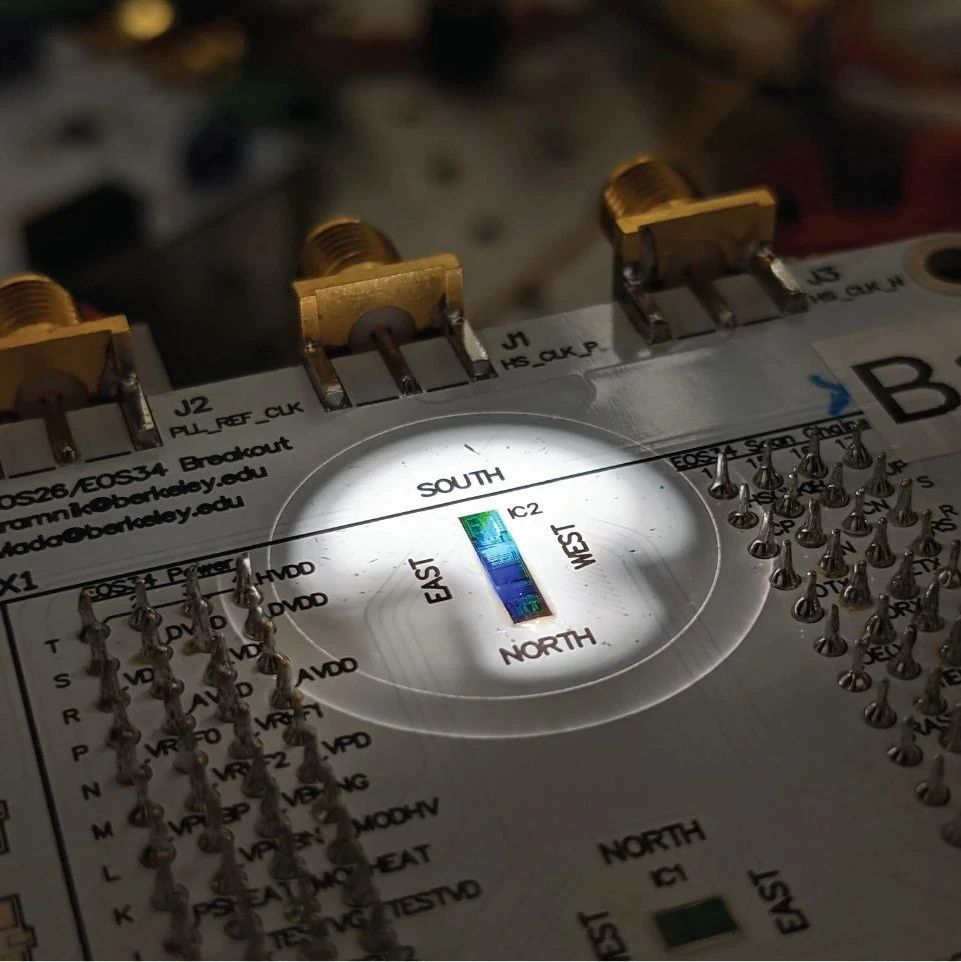
Core Viewpoint - A multidisciplinary academic team has successfully integrated quantum light sources and electronic devices into a single silicon chip, marking a significant advancement in quantum technology [3][4]. Group 1: Technological Breakthrough - The researchers developed the first chip that integrates electronic, photonic, and quantum components, utilizing standard 45-nanometer semiconductor manufacturing processes [3][4]. - This integrated technology enables the chip to produce a continuous stream of correlated photon pairs, which are fundamental for many quantum applications [4]. Group 2: Future Implications - The breakthrough signifies an important step towards the mass production of "quantum light factory" chips and the development of more complex quantum systems composed of multiple interconnected chips [4]. - The research indicates that quantum computing, communication, and sensing could transition from concept to reality over the next few decades [4]. Group 3: System Design and Stability - The chip features a system that actively stabilizes the quantum light sources, specifically the silicon micro-ring resonators, which are sensitive to temperature and manufacturing variations [6][7]. - Each chip contains 12 parallel-operating quantum light sources, with integrated photodiodes to monitor and maintain the alignment of the incident laser [7]. Group 4: Collaborative Efforts - The project required interdisciplinary collaboration among fields such as electronics, photonics, and quantum measurement, essential for transitioning quantum systems from the lab to scalable platforms [4][8]. - The chip is manufactured using a commercial 45-nanometer complementary metal-oxide-semiconductor (CMOS) platform, developed in collaboration with various institutions and companies [7][8]. Group 5: Industry Impact - The advancements in silicon photonics and quantum technology are expected to serve as a foundation for technologies ranging from secure communication networks to advanced sensing and ultimately quantum computing infrastructure [8]. - Several researchers involved in the project have moved into the industry, reflecting the growing momentum of silicon photonics and its potential in expanding AI computing infrastructure and scalable quantum systems [8].

国家知识产权局:我国品牌价值达1.76万亿美元 企业成为新技术产出的主阵地
Zhong Guo Jing Ying Bao· 2025-07-18 17:09
Core Insights - The National Intellectual Property Administration (NIPA) has made significant progress in promoting the transformation and utilization of patents during the "14th Five-Year Plan" period, with the industrialization rate of invention patents increasing from 44.9% in 2020 to 53.3% in 2024 [1][3] - China ranks second globally in brand value among the top 5000 brands, with a total value of $1.76 trillion [1][4] - The country has established intellectual property cooperation with over 80 countries and regions, and its global innovation index ranking has improved to 11th place, leading among middle-income economies [1][3] Intellectual Property Development - The NIPA is shifting focus from quantity to quality in intellectual property, promoting high-quality services and combating plagiarism and fraud in patent applications [2][3] - The average examination period for invention patents has been reduced to 15.5 months, and trademark registration takes about 4 months, both among the fastest globally [3] Economic Impact - The value added by patent-intensive industries accounted for 13.04% of GDP in 2023, up from 11.97% in 2020 [3][11] - The total import and export value of intellectual property usage fees is projected to rise from 319.44 billion yuan in 2020 to 398.71 billion yuan in 2024, with an annual growth rate of 5.7% [3] International Cooperation - China has made strides in international cooperation on intellectual property, including the implementation of the China-EU geographical indication protection agreement and joining the Hague Agreement for industrial design [4][5] Innovation and Technology - High-value invention patents are concentrated in strategic emerging industries, with 1.472 million effective invention patents in these sectors, representing a 2.2-fold increase since the end of the 13th Five-Year Plan [9][10] - The number of effective invention patents per 10,000 people has reached 15.3, surpassing the target of 12 set for the 14th Five-Year Plan [9] Industry Growth - The number of valid invention patents in China reached 5.01 million by June 2023, a year-on-year increase of 13.2% [7] - Patent applications in the digital and medical fields have seen significant growth, with increases of 34.1%, 22.7%, and 19.8% in key technology areas [8] Future Directions - The NIPA aims to further strengthen the cultivation of patent-intensive industries and enhance the integration of intellectual property, technological innovation, and industrial development [11]
国新证券每日晨报-20250718
Guoxin Securities Co., Ltd· 2025-07-18 06:44
Domestic Market Overview - The domestic market experienced a rise in both volume and price, with the Shanghai Composite Index closing at 3516.83 points, up 0.37%, and the Shenzhen Component Index closing at 10873.62 points, up 1.43% [1][4][9] - A total of 26 out of 30 sectors in the CITIC first-level industry rose, with significant gains in defense, military, communication, and electronics, while electricity, public utilities, banking, and transportation saw declines [1][4][9] - The total trading volume of the A-share market reached 15603 billion, showing an increase compared to the previous day [1][4][9] Overseas Market Overview - All three major U.S. stock indices closed higher, with the Dow Jones up 0.52%, the S&P 500 up 0.54%, and the Nasdaq up 0.74% [2][4] - Notable gains were seen in large tech stocks, with the Travelers Group rising over 3% and Disney nearly 2% [2][4] - Chinese concept stocks mostly rose, with Lingzhangmenhu increasing over 10% and NIO rising more than 6% [2][4] Key News Highlights - The Chinese Ministry of Foreign Affairs stated that fentanyl is a problem for the U.S., not China [3][11] - The mutual visa exemption agreement between China and Malaysia has officially come into effect [3][12] - The Yiwu Global Trade Center is set to open in October, attracting over 19,000 applicants for 900 shops, indicating strong demand [3][14] - China's annual import and export total for intellectual property usage fees is projected to reach 3987.1 billion by 2024, with a compound annual growth rate of 5.7% [3][15] - The U.S. Congress has officially approved the stablecoin bill, aiming for significant regulatory reform in cryptocurrency [3][17]
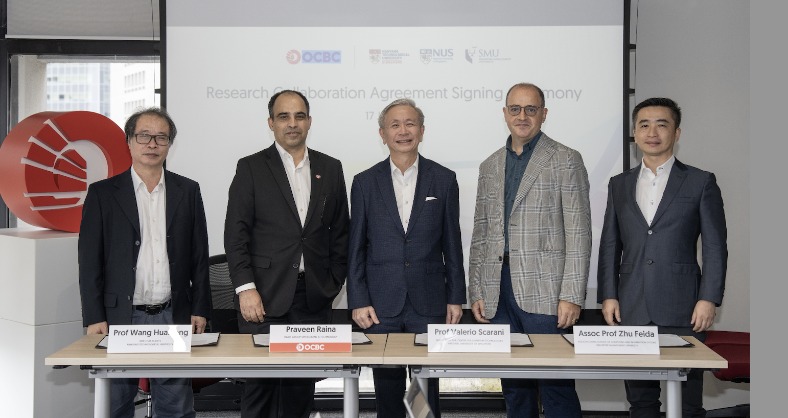
【环球财经】华侨银行携手新加坡三大高校 深化量子技术研究助推金融创新
Xin Hua Cai Jing· 2025-07-17 15:31
Core Viewpoint - OCBC Bank has signed a research collaboration agreement with three Singaporean universities to enhance the application of quantum technology in the financial sector [1][3]. Group 1: Collaboration Details - The collaboration will focus on three key areas: accelerating financial derivatives pricing using quantum computing, enhancing data security through post-quantum cryptography, and improving fraud detection capabilities via quantum machine learning [1][3]. - The partnership is set to last for 12 months, with the results to be published in papers to benefit the entire financial industry [1]. Group 2: Government Support and Industry Impact - The Singapore government has invested over 400 million SGD since 2007 to establish a world-class quantum research ecosystem, with an additional investment of nearly 300 million SGD announced last year to support the national quantum strategy [3]. - The collaboration is seen as a significant step towards translating quantum research from the laboratory to market applications, unlocking new opportunities for the financial sector [3]. Group 3: Institutional Perspectives - OCBC Bank's President of Operations and Technology emphasized the importance of industry-academia collaboration in addressing real-world challenges and showcasing the bank's commitment to innovation [4]. - University researchers expressed optimism about the collaboration, highlighting the opportunity to apply quantum algorithms in practice and enhance the resilience of banking infrastructure [4]. Group 4: Internal Development - Since 2021, OCBC Bank has been developing a roadmap for quantum technology and aims to train over 100 employees with intermediate quantum technology skills by 2026 [5].
新型原子钟创下最高精度纪录
news flash· 2025-07-15 22:04
Core Insights - The research team from the National Institute of Standards and Technology (NIST) has achieved a significant breakthrough in atomic clock technology, improving precision to an astonishing 19 decimal places [1] - This advancement is expected to influence the redefinition of the "second" in the International System of Units (SI) and promote the development of quantum technologies [1] Group 1 - The NIST team published their findings in the journal Physical Review Letters [1] - The improvement involves capturing aluminum ions in an ion trap, which enhances the accuracy of atomic clocks [1] - The achievement marks a notable milestone in precision measurement, potentially impacting various scientific fields [1]