三权分立

Search documents
一旦特朗普拿下美联储,美国引以为傲的三权分立也就名存实亡了
Sou Hu Cai Jing· 2026-01-14 04:02
Core Viewpoint - The conflict between Trump and Powell is not merely about the Federal Reserve chairmanship but signifies a profound transformation in American political power dynamics, threatening the independence of the Federal Reserve and the foundational stability of the U.S. system [1][17]. Group 1: Political Dynamics - Trump's public pressure on Powell indicates a shift where the Federal Reserve chair is no longer an untouchable figure, challenging the long-standing political neutrality of the Fed [1][3]. - The Federal Reserve has historically acted as a stabilizing force in the U.S. political system, maintaining independence from the executive, legislative, and judicial branches [1][6]. - Trump's worldview perceives power as either controllable or needing to be weakened, viewing the Fed's independence as a constraint on his authority [3][6]. Group 2: Economic Implications - If the President can undermine the Fed's independence through investigations or public pressure, U.S. monetary policy risks becoming politicized, directly influenced by electoral cycles and presidential approval ratings [6][9]. - The trust in the U.S. dollar as a global reserve currency relies on the Fed's relative independence and restrained monetary issuance; any erosion of this independence could lead to structural risks for the U.S. monetary system [9][10]. - Historical precedents show that politically driven monetary policies often lack long-term constraints, leading to potential credit system collapses when used for political ambitions [12][15]. Group 3: Institutional Integrity - Powell symbolizes the last resistance of the technocratic system against populist politics; his removal would signal a shift from rules to power, professionalism to loyalty, and institutions to individuals [15][17]. - The traditional balance of power, where the White House sets political direction and the Fed manages economic pace, is being disrupted, potentially leading to a concentration of power that resembles electoral authoritarianism [17][18]. - The global financial system could face significant restructuring if the credibility of the dollar declines due to internal U.S. power imbalances, prompting central banks to diversify reserves and seek alternative trade settlement methods [17][18].

不装了,特朗普掀桌子,自封委内瑞拉代总统,还锁定3个目标
Sou Hu Cai Jing· 2026-01-13 05:30
特朗普彻底放下了遮掩,公开表示他不再遵守国际法,选择以极为直接的方式摊牌,锁定了四个目标,甚至不惜在国际上制造纷争,同时对美国国内也开始 出手。对于特朗普如此频繁的行动,人们不禁要问,他真正的目的究竟是什么?近日,在接受媒体专访时,特朗普毫不掩饰地说:我不需要国际法,只有道 德才能约束我。然而,这句话背后藏着更多的含义,特朗普不仅公开否定国际法,甚至对美国的国内法律,包括宪法,都未曾放在眼里。从他的这一举动来 看,特朗普似乎已经放弃了维护国际秩序的责任,而是在推动美国从一个共和国逐步转变为一个帝国,这意味着未来可能充满更多的纷争与混乱。 在明确锁定多个目标后,特朗普的下一步动向引发了广泛猜测。有分析认为,格陵兰岛成为了特朗普最有可能的目标。由于欧洲国家在许多事务上几乎无法 形成统一立场,特朗普对格陵兰岛的强硬姿态得以轻松推进。更重要的是,欧洲国家在军事安全方面极度依赖美国的北约体系,这使得特朗普在面对欧洲 时,几乎可以肆无忌惮地行动。所以,无论欧洲怎么反应,特朗普是否动手,关键还是看他自己如何决定。 至于伊朗,虽然局势动荡,特朗普如果直接采取军事行动,依然面临巨大的风险。因为若美国发动战争,伊朗完全有可能转化 ...
否认国际法后,特朗普摊牌,同时锁定4个目标,兼任2国总统?
Sou Hu Cai Jing· 2026-01-13 04:02
在特朗普锁定了多个目标之后,下一步会是谁成为他的攻击对象?分析指出,格陵兰岛是最有可能的目标,但特朗普不太可能采取类似委内瑞拉那样的模 式。首先,从欧洲的局势来看,欧盟已经陷入了分裂状态,它在经济、制造业流失以及援乌问题等方面已经无力统一立场。在格陵兰岛问题上,特朗普已明 确表示不排除动武,然而,欧盟的大部分成员国并未对此发声。另一方面,欧洲对美国的军事依赖非常强,而北约便是美国的军事工具,这意味着欧洲本身 并没有军事主权。因此,即使欧洲反对,特朗普在格陵兰岛的军事行动依然可能付诸实践。 至于伊朗,虽然其内部正陷入动荡,但特朗普对伊朗动手的风险依然非常高。美国若发起军事行动,伊朗可能迅速宣布进入战时状态,把民众的不满转化为 对外敌的抵抗,削弱抗议的合法性。而且,伊朗的最高领袖哈梅内伊相对温和,他曾阻止强硬派的内贾德重返政坛。如果特朗普下令对伊朗进行军事打击, 可能反而使伊朗的强硬派掌权。再者,伊朗的抗议活动主要集中在库尔德人居住的地区,而库尔德人一直与美国关系密切,特朗普的军事行动可能无意间帮 助了伊朗政府稳定局势。 对于特朗普来说,一旦他认定了某个目标,他绝不会轻易放弃,虽然外界还无法准确预测他会如何行动, ...
局势有变,特朗普再对拜登出手,长子也将接班?美国爆发混乱
Sou Hu Cai Jing· 2026-01-11 07:32
美国的内部局势又有变化,特朗普再次对拜登出手,民主党的政治资产遭受打击,他们接下来会怎么应对?而在这个时候,美国爆发了混乱,又是怎么一回 事? 进入2026年,美国将迎来中期选举,特朗普在第一任期内,就遭遇过众议院选举失利的情况,这让他的执政受到极大约束。因此在2025年进入尾声之际,特 朗普连续出手,先是推动美军准备对委内瑞拉采取地面军事行动,随后又宣布废除前任拜登"自动笔签署"的行政令。显然,特朗普就是要清除拜登的所有政 治遗产,达到打击民主党的目的。但这个做法,也会让美国总统行政令的效力降低。毕竟,特朗普能随意废除前任的行政令,那么民主党若赢得下一届大 选,也会这么做。这个情况,只会让美国联邦政府的权威被瓦解,行政能力大幅度下滑。 当然,特朗普也不打算把政权"让给"民主党。根据最新民调显示,特朗普的长子小唐纳德·特朗普成为共和党下届大选的热门人选之一。对这个情况,有人 认为特朗普是潜在的"接班人"、美国副总统万斯感到不放心。而且,美国政治史上,已经有前例。佐治亚洲前州长尤金·塔尔梅奇虽然是民主党人,但他以 抨击精英体制、承诺维护白人农民利益的"民粹主义路线"著称。这种政治立场,让塔尔梅奇三度赢下州长选举 ...
特朗普“治国”,靠它
Xin Lang Cai Jing· 2025-12-25 07:24
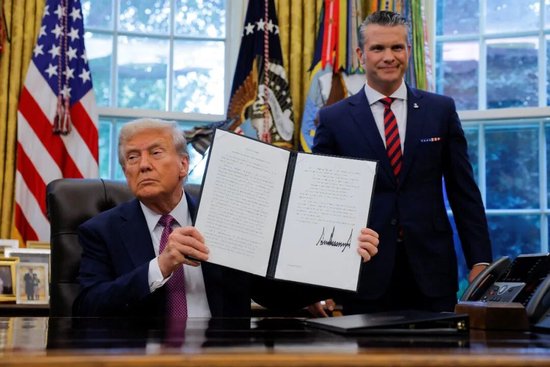
Core Viewpoint - The article discusses the unprecedented use of executive orders by Trump during his second term, highlighting the implications for American democracy and the balance of power among the branches of government [1][6][24]. Group 1: Executive Orders - Trump signed 220 executive orders within a year, significantly surpassing previous presidents, indicating a shift towards "governing by executive order" [1][6]. - In his first year, Trump issued over 40 executive orders on his first day and more than 200 in total, compared to 77 by Biden and 40 by Obama in their first years [16][21]. - A significant portion of Trump's executive orders invoked "emergency powers," with 30 out of 150 orders relying on such authority, a rate higher than any recent president [19][21]. Group 2: Legislative and Judicial Response - The U.S. Congress has shown minimal intervention, leading to a perception of weakened checks and balances, while the Supreme Court's independence has been questioned due to frequent government requests for intervention in major lawsuits [1][6][24]. - Over 20% of Trump's executive orders faced legal challenges, reflecting ongoing conflicts between the executive and judicial branches [6][23]. - Trump's administration often appealed judicial decisions, betting on the Supreme Court's support for its positions [6][23]. Group 3: Public Reaction and Protests - There have been widespread protests against Trump's policies, with themes like "no king" and calls to uphold the Constitution, indicating significant public dissent against perceived overreach [8][23]. - Protesters have criticized Congress for its inaction, expressing frustration over the lack of checks on Trump's administration [23][24]. Group 4: Implications for Governance - The article highlights a "legislative vacuum" due to increasing partisan divides, which has led to a failure of Congress to effectively govern [24][26]. - Trump's approach to governance through executive orders is seen as a challenge to the traditional understanding of the "unitary executive theory," raising concerns about the future expansion of presidential power [26][29].
列国鉴·年终观察丨特朗普“行政令治国”冲击美式“三权分立”
Xin Hua She· 2025-12-25 01:20
Core Viewpoint - The article discusses the unprecedented use of executive orders by former President Trump, highlighting the implications for American democracy and the balance of power among government branches [1][6][11]. Group 1: Executive Orders - Trump signed 220 executive orders in nearly a year, significantly surpassing previous presidents [1][3]. - In his first year, Trump issued over 200 executive orders, while Biden signed 77 and Obama only 40 [3]. - Many of Trump's orders invoked "emergency powers" and emphasized national security, such as declaring a "national emergency" at the southern border [3][4]. Group 2: Judicial and Legislative Response - Trump's extensive use of executive orders has led to numerous judicial challenges, with over 20% of these orders facing lawsuits [7]. - The U.S. Congress has shown a lack of intervention, leading to a perception of diminished checks and balances [1][11]. - Trump's administration often appealed judicial decisions, relying on the Supreme Court to support its stance [8]. Group 3: Public Reaction and Protests - There have been widespread protests against Trump's policies, with slogans like "stop illegal deportations" and "constitutional crisis" appearing during demonstrations [10][12]. - Public sentiment reflects dissatisfaction with Congress's inaction, particularly regarding Trump's controversial policies [10]. Group 4: Implications for Governance - The article notes a "legislative vacuum" due to increasing partisan divides, which has weakened Congress's governance capabilities [11]. - Observers express concern that Trump's expansion of executive power could set a precedent for future administrations, potentially undermining the foundational principles of the U.S. government [13][14].
特朗普“行政令治国”冲击美式“三权分立”
Xin Lang Cai Jing· 2025-12-24 18:49
Core Viewpoint - The article discusses the unprecedented use of executive orders by Trump during his second term, highlighting the implications for the balance of power in the U.S. government and the resulting societal divisions and legal challenges [1][5][7]. Group 1: Executive Orders and Their Impact - Trump signed 220 executive orders within a year, significantly more than previous presidents, indicating a shift towards "governing by executive order" [1][3]. - The use of emergency powers has been a hallmark of Trump's administration, with 30 out of 150 executive orders invoking some form of emergency authority, a rate higher than any recent president [4][5]. - The emphasis on "national security" and "emergency" has allowed Trump to bypass traditional legislative processes, leading to rapid policy implementation [3][4]. Group 2: Judicial and Public Response - Over 20% of Trump's executive orders have faced legal challenges, reflecting ongoing conflicts between the executive and judicial branches [5][6]. - Public protests against Trump's policies have emerged, with slogans highlighting concerns over constitutional rights and the perceived overreach of executive power [6][7]. - The lack of congressional action has been criticized, with many citizens expressing disappointment in the Republican-controlled Congress for not countering Trump's initiatives [6][7]. Group 3: Theoretical Implications - The article notes that Trump's approach challenges the traditional understanding of the "unitary executive" theory, which posits that the president has broad authority over the executive branch [7]. - Observers warn that the expansion of presidential power under Trump could set a precedent for future administrations, potentially undermining the foundational principles of the U.S. system of checks and balances [7][8].
美国政坛荒诞大戏,特朗普状告自己索2.3亿,离谱操作下暗藏算盘
Sou Hu Cai Jing· 2025-11-21 08:17
Core Points - The article discusses former President Trump's unusual legal maneuver of suing himself for $230 million, claiming political persecution from various federal investigations [3][5][7] - Trump's lawsuit is unprecedented in U.S. history, as it involves a sitting president suing his own administration [5] - The compensation is intended to cover legal fees and potential damages from investigations, which Trump argues have caused him emotional distress and reputational harm [7][9] Summary by Sections Lawsuit Details - Trump filed the lawsuit on October 21, 2025, seeking $230 million from the Justice Department, which he leads [5] - He claims that investigations like the Russia probe and the 2020 election interference inquiry are politically motivated attacks [7] Financial Implications - Trump has stated that the compensation would be used for charitable purposes or renovations to the White House, including a $250 million project for a luxury ballroom [9] - The lawsuit's approval process is likely to be influenced by Trump's allies within the Justice Department, raising concerns about self-review [10] Legal and Political Context - The lawsuit is framed within the context of ongoing political tensions, with Trump viewing the investigations as a vendetta by the Democratic Party [15][19] - Trump's legal challenges, including multiple federal charges, have persisted into the 2024 election cycle, and he is leveraging his presidential position to avoid legal repercussions [19] Public Reaction - The lawsuit has drawn significant criticism, especially as it is perceived as exploiting taxpayer money during a fiscal crisis [12][13] - Trump's actions are seen as a strategic political move to reinforce his victim narrative and consolidate support for future elections [19]
特朗普心急如焚,不仅对华“贸易战”要打输,还可能倒赔2万亿美元?白宫知道急也晚了
Sou Hu Cai Jing· 2025-11-14 16:42
Core Viewpoint - The U.S. Supreme Court is reviewing the legality of tariffs imposed by the Trump administration under the International Emergency Economic Powers Act, raising concerns about the potential financial implications for the government and the future of U.S.-China trade relations [1][6]. Group 1: Legal and Political Implications - The Supreme Court's questioning indicates skepticism about the administration's authority to impose tariffs, emphasizing that such powers belong to Congress as per the U.S. Constitution [3][6]. - Chief Justice Roberts highlighted that tariffs are essentially taxes on Americans, which should be legislated by Congress, not unilaterally imposed by the executive branch [3][6]. - The legal challenge reflects a broader issue of executive overreach and the balance of power within the U.S. political system, with previous lower court rulings deeming the tariff policy illegal [6][8]. Group 2: Economic Consequences - Trump's claim that the government may owe over $20 trillion in refunds if tariffs are deemed illegal is exaggerated; actual potential refunds range from $50 billion to $200 billion, with collected tariffs amounting to only $174 billion as of September [4][6]. - The administration's reliance on tariffs to secure foreign investment agreements, totaling over $1.7 trillion, may collapse if the tariffs are ruled illegal, posing a significant risk to these economic commitments [4][6]. - The bipartisan Committee for a Responsible Federal Budget has criticized the administration's claims about tariff revenues, suggesting that the actual income is likely only half or a third of what is being promoted [4][6]. Group 3: Strategic Responses - In contrast to the U.S. political turmoil, China has demonstrated strategic stability by signaling a willingness to ease tensions through dialogue and mutual concessions on tariffs [6][8]. - The ongoing legal battle over tariffs underscores the lack of domestic consensus on Trump's trade policies, with significant pushback from businesses and public dissatisfaction with economic conditions [6][8]. - The potential invalidation of the tariff policy could dismantle the narrative that tariffs are beneficial for the economy, leading to broader implications for the U.S. fiscal situation and capital markets [6][8].
最高法院审关税案:特朗普的权力赌局与美国的制度困局
Sou Hu Cai Jing· 2025-11-10 08:43
Core Points - The Supreme Court's debate on the legality of Trump's tariffs is seen as a "power boundary dispute" that raises fundamental questions about the U.S. political system [1] - The court's concern is not about the tariffs themselves but about the expansion of presidential power, as the Constitution grants Congress exclusive authority over taxation and tariffs [3] - If Trump wins, it could set a precedent allowing future presidents to bypass Congress by declaring "national emergencies," potentially disrupting the balance of power [3] - A loss for Trump could lead to significant financial repercussions, including refunds exceeding $100 billion for U.S. companies and potential global trade disruptions [5] - The recent local election results indicate a decline in Trump's influence, which could exacerbate internal party dissent if he loses the tariff case [5] - The ongoing situation reflects a recurring issue in the U.S. political system, where the separation of powers is being used as a tool for partisan conflict [7] - The Supreme Court's decision is anticipated to take weeks or months, but the tariff debate and its implications for Trump's political future will continue [7]