
中华文化传承

Search documents
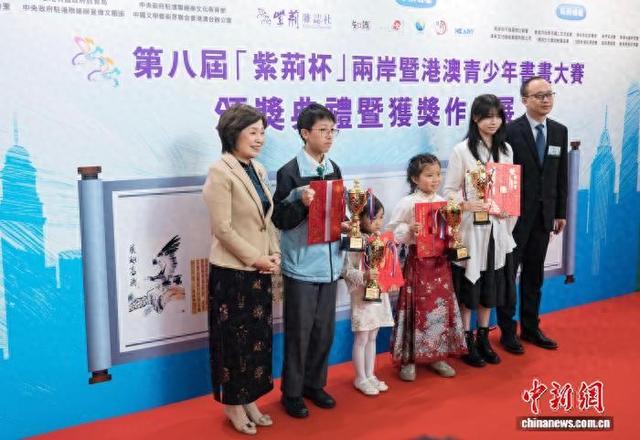
第八届“紫荆杯”两岸暨港澳青少年书画大赛在香港颁奖
Ren Min Ri Bao Hai Wai Ban· 2025-12-22 01:41
Core Viewpoint - The eighth "Bauhinia Cup" Cross-Strait and Hong Kong-Macau Youth Calligraphy and Painting Competition aims to promote traditional Chinese culture and enhance artistic exchanges among youth from both sides of the Taiwan Strait and Hong Kong-Macau [1] Group 1 - The event was organized by the Bauhinia Magazine and reflects the spirit of national unity and the vision of national reunification through the transmission of excellent traditional Chinese culture [1] - The president of Bauhinia Magazine, Yang Yong, highlighted the characteristics of Chinese culture, which include rigor, romance, and openness, showcasing the inclusiveness and vitality of culture through various art forms [1] - The Secretary for Education of the Hong Kong SAR Government, Cai Ruolian, emphasized the importance of Chinese cultural heritage in school curricula and the government's support for students to understand national conditions and pass on culture through art [1] Group 2 - The competition attracted over 200,000 students since its launch in June, setting a new record for participation scale and coverage [1] - A total of over 900 award-winning works were selected, including 9 gold awards, 36 silver awards, 81 bronze awards, 812 merit awards, and 6 special commendations [1]
第八届“紫荆杯”两岸暨港澳青少年书画大赛颁奖典礼在港举办
Xin Lang Cai Jing· 2025-12-20 12:56
Core Viewpoint - The eighth "Ziqing Cup" Cross-Strait and Hong Kong-Macau Youth Calligraphy and Painting Competition awarded over 900 works, highlighting the importance of cultural exchange among youth from these regions [1][3][4] Group 1: Competition Overview - The competition attracted over 200,000 students from the Cross-Strait and Hong Kong-Macau regions, marking the highest participation and coverage in its history [3] - A total of 900+ award-winning works were selected, including 9 gold awards, 36 silver awards, 81 bronze awards, 812 merit awards, and 6 special commendations [1][3] Group 2: Cultural Significance - The event serves as a platform for youth exchange, promoting patriotism and the transmission of traditional Chinese culture [4] - The Hong Kong Education Bureau emphasizes the importance of nurturing students' appreciation and inheritance of Chinese culture through optimized curricula and teacher training [3]

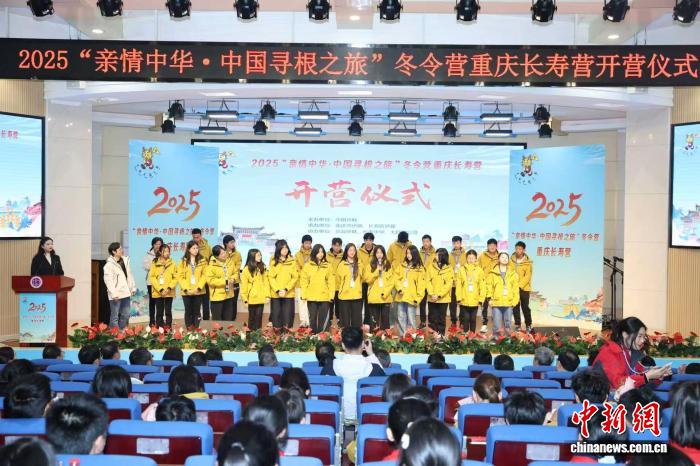
海外华裔青少年山城寻根续文脉
Zhong Guo Xin Wen Wang· 2025-12-18 00:17
Core Viewpoint - The "2025 Family China · Roots Seeking Journey" winter camp officially opened in Chongqing, aiming to connect overseas Chinese youth with their cultural heritage and promote cultural exchange between China and foreign countries [1][5]. Group 1: Event Overview - The winter camp is hosted by the China Overseas Chinese Federation and organized by the Chongqing Overseas Chinese Federation and Changshou District Overseas Chinese Federation, with the theme "Seeking Roots in China · Affection for Bayu" [2]. - Forty Chinese youth from Australia and New Zealand are participating in a 10-day journey to explore cultural roots and experience the charm of Bayu culture [1][2]. Group 2: Objectives and Expectations - The camp aims to serve as a cultural bridge for overseas Chinese youth to understand their ancestral culture, with hopes that participants will discover the unique charm of Bayu culture and foster friendships [2]. - The event is seen as an opportunity for youth to deepen their recognition and love for Chinese culture, contributing to friendly relations between China and New Zealand [4]. Group 3: Activities and Cultural Experiences - Participants will engage in immersive experiences of Bayu culture, Three Gorges culture, and the culture of longevity, including visits to historical sites, cultural venues, and traditional crafts such as calligraphy and paper-cutting [4]. - The camp also includes a tour of Chongqing's modern landmarks, showcasing the practical aspects of Chinese modernization [4]. Group 4: Broader Impact - The "Family China · Roots Seeking Journey" series has become an important platform for overseas Chinese youth to pursue cultural roots and enhance national identity, with nearly 100,000 youth participating in online activities and around 400 students from over 20 countries attending summer and winter camps [4].
雪舞金山润童心 同心共筑中国梦——阿勒泰市以“雪假”为媒促进交往交流交融
Zhong Guo Xin Wen Wang· 2025-12-11 03:25
Core Viewpoint - The introduction of a "snow holiday" in Altay City, Xinjiang, represents a significant initiative aimed at promoting youth engagement, cultural awareness, and community bonding through winter sports and activities [4][6]. Group 1: Economic Impact - During the "snow holiday," Altay City received a total of 413,000 tourists, generating tourism revenue of 402 million yuan, marking a year-on-year increase of 50.51% and 41.05% respectively [3]. - The local ski resort, Jiangjun Mountain, experienced an average daily visitor count of 15,000, effectively transforming "cold resources" into a "warm bond" for the community [3]. Group 2: Educational and Social Benefits - The "snow holiday" provided a week-long break for students from December 1 to 5, 2025, allowing them to engage in outdoor activities and reduce academic pressures [4]. - The initiative included free ski passes and half-price equipment rentals for students, promoting accessibility and encouraging family participation in winter sports [4]. Group 3: Community and Cultural Integration - The holiday served as a platform for youth interaction, fostering friendships and teamwork through various sports and activities, such as skiing and snow soccer [6]. - Cultural education was integrated into the holiday through eight research study routes, allowing students to explore local history and heritage, thereby strengthening their sense of national identity [7][9]. Group 4: Long-term Impact - The "snow holiday" is expected to have lasting effects on youth participation in winter sports and enhance ethnic unity among the community, symbolizing a collective effort towards a shared national dream [9].

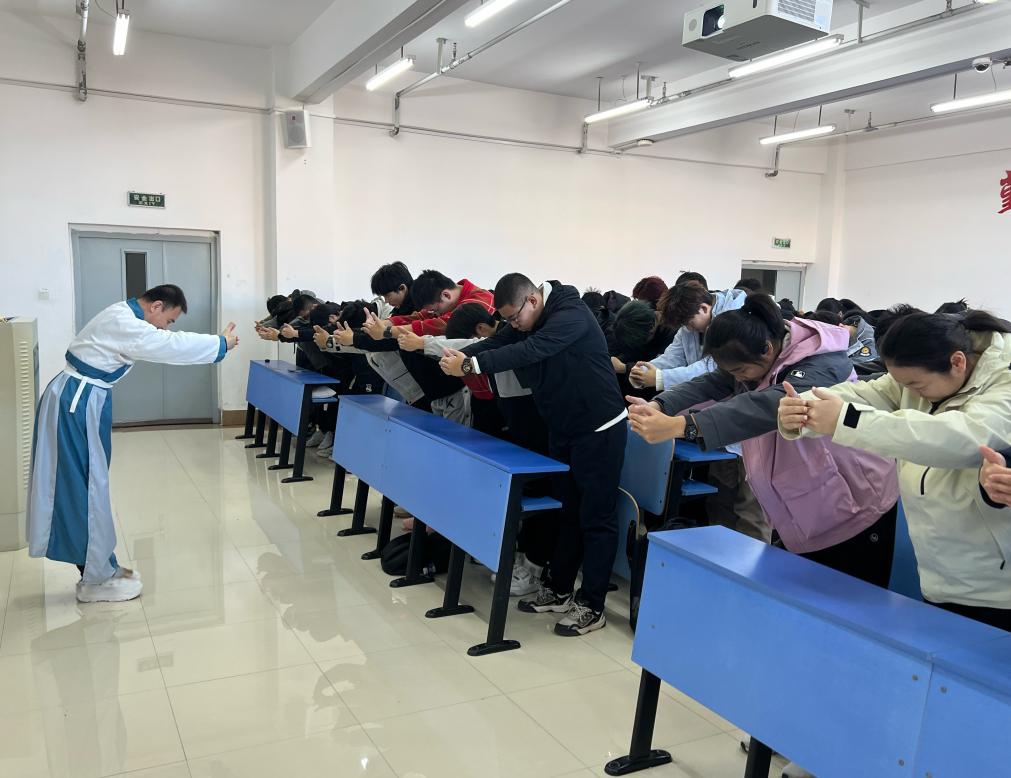
大学语文课堂上的中华文化之美
Xin Hua Wang· 2025-11-19 03:34
Core Insights - Dalian Jiaotong University is innovating its college Chinese curriculum to enhance cultural awareness and provide students with a poetic life experience through immersive learning methods [1][3] Group 1: Curriculum Innovation - The university has established and reformed the college Chinese course, exploring new teaching models that align with contemporary educational contexts such as new liberal arts and ideological education [1][4] - Instructors act as guides to classical literature rather than mere knowledge transmitters, fostering a collaborative learning environment [3] Group 2: Student Engagement - Students are increasingly interested in classical Chinese literature, as evidenced by a rise in borrowing ancient literary works from the library and participation in drama performances themed around classical texts [3] - The curriculum has enriched students' inner worlds, allowing them to engage with historical figures and philosophies, thus compensating for the emotional gaps in their engineering studies [3] Group 3: Cultural Significance - The college Chinese course serves as a vital platform for inheriting Chinese culture and enhancing cultural confidence among students [4] - The university aims to continuously improve the curriculum by balancing the transmission of traditional culture with the changes in contemporary contexts, guiding students to find a poetic spiritual home [4]
共同传承弘扬中华文化(观沧海)
Ren Min Ri Bao· 2025-11-15 21:51
Core Viewpoint - The article emphasizes the deep-rooted connection of Chinese culture in Taiwan and the ongoing efforts to promote and preserve this cultural heritage despite political challenges [1][2][3]. Group 1: Cultural Heritage and Events - The Palace Museum in Taipei is hosting a series of exhibitions to celebrate the 100th anniversary of the Palace Museum in Beijing, showcasing numerous cultural treasures that attract many visitors [1]. - Taiwanese visitors express a strong desire to experience the cultural offerings of the Beijing Palace Museum, highlighting a deep yearning for cultural roots [1]. Group 2: Cultural Exchange and Influence - Recent years have seen a vibrant exchange of Chinese culture between the mainland and Taiwan, with popular media such as the game "Black Myth: Wukong" and the animated film "Nezha" gaining traction in Taiwan [2]. - Taiwanese youth are increasingly embracing "new Chinese-style" fashion, indicating a cultural resonance and shared identity [2]. Group 3: Political Context and Challenges - The article discusses the challenges posed by the current Taiwanese administration, which is accused of attempting to sever cultural ties and promote a narrative of "cultural independence" [2]. - Historical context is provided, noting that even during Japanese colonial rule, the transmission of Chinese culture in Taiwan persisted, showcasing resilience against cultural suppression [2][3]. Group 4: Cultural Identity and Unity - The article asserts that Chinese culture is an intrinsic part of Taiwanese identity, with historical events reinforcing this connection [3]. - It argues that the shared cultural heritage serves as a fundamental bond between the people on both sides of the Taiwan Strait, emphasizing the importance of collaboration in preserving this heritage [3].
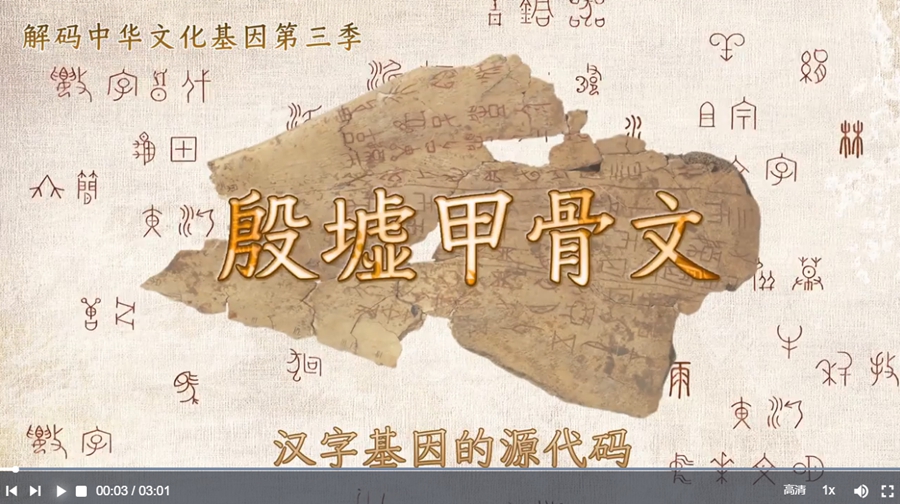
解码中华文化基因|殷墟甲骨文,汉字基因的源代码
Zhong Guo Xin Wen Wang· 2025-11-15 12:38
Core Points - The significance of Chinese characters as a symbol of cultural heritage is emphasized [2] - Oracle bone script is recognized as the earliest mature writing system in China, dating back over 3000 years [2] - The structure of Chinese characters has remained unchanged for over 3000 years, highlighting the continuity of cultural transmission [2] Summary by Categories - **Cultural Heritage** - Chinese characters are a hallmark of cultural transmission in China [2] - The importance of preserving and developing this cultural heritage is stressed [2] - **Historical Significance** - Oracle bone script is identified as the root of Chinese characters and an essential part of traditional culture [2] - The longevity of the character structure reflects a deep cultural lineage [2]
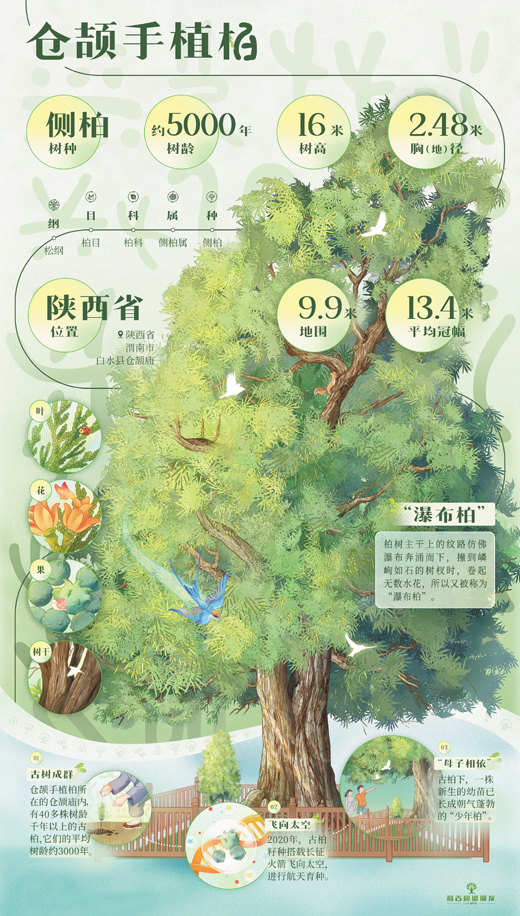
渭南实施数字化监测,保护复壮仓颉手植柏
Ren Min Ri Bao· 2025-10-13 05:41
Core Points - The article emphasizes the importance of protecting ancient trees, referred to as "green national treasures" and "living cultural relics," highlighting the implementation of the "Ancient Tree and Famous Tree Protection Regulations" starting March 15 this year, marking the first time such protection is formalized in administrative law [2][6]. Group 1: Protection Initiatives - The article discusses the establishment of a comprehensive protection network for ancient trees, including the introduction of local regulations and the national "Ancient Tree and Famous Tree Protection Regulations" to enhance protection efforts [6][7]. - A digital monitoring system has been implemented to track the growth and health of ancient trees, allowing for real-time diagnostics and timely interventions by expert teams [7][8]. Group 2: Cultural Significance - The article highlights the cultural activities held at the site of the ancient trees, particularly during the Grain Rain festival, which coincides with the United Nations' Chinese Language Day, promoting traditional culture among youth [7][8]. - The ancient trees serve as a living testament to Chinese history and culture, with educational initiatives aimed at teaching visitors about the origins and development of Chinese characters [7][8]. Group 3: Scientific Advancements - The article mentions the collaboration with the Shaanxi Province Aerospace Breeding Engineering Technology Research Center to explore space breeding techniques for the ancient trees, aiming to enhance their genetic resilience and vitality [8]. - Seeds from the ancient tree were sent into space as part of this initiative, with successful germination observed in the resulting seedlings, which are now being cultivated to continue the lineage of the ancient tree [8].
百岁故宫博物院,生日快乐!
Xin Hua She· 2025-10-10 01:44
Core Points - The Palace Museum, a significant cultural landmark in China, will celebrate its 100th anniversary on October 10, 2025, marking its importance as the largest and best-preserved wooden palace complex in the world and a vital witness to over 5,000 years of Chinese civilization [1][2] Group 1: Historical Significance - The term "Forbidden City" refers to the imperial palace of the Ming and Qing dynasties, and the Palace Museum was established on October 10, 1925, becoming a specialized term for this historical site [2] - The museum houses 1.95 million cultural relics, showcasing the rich heritage of the Chinese nation over thousands of years [3] Group 2: Visitor Engagement - The museum's visitor numbers have significantly increased, surpassing 10 million for the first time in 2009 and expected to exceed 17.6 million in 2024 [3] - A major exhibition titled "A Century of Guardianship: From the Forbidden City to the Palace Museum" features national treasures like "Five Oxen" and "Along the River During the Qingming Festival," illustrating the museum's evolution and growth [3] Group 3: Cultural Impact - The Palace Museum has transformed from a royal collection into a shared cultural treasure for the public, reflecting a shift in accessibility and appreciation of Chinese heritage [4] - The architectural grandeur and exquisite artifacts, such as those displayed in the Treasure Hall and Clock Hall, highlight the museum's role in showcasing both Chinese and Western cultural aesthetics [5] Group 4: Future Prospects - The museum continues to attract a large audience, leveraging technology and cultural creativity to bring artifacts to life and promote traditional Chinese culture globally [7] - The centennial celebration symbolizes not only the museum's transformation but also the broader changes within Chinese society and the ongoing legacy of cultural heritage [7][8]
特写:台北故宫博物院特展观者如潮 中华文化传承生生不息
Xin Hua Wang· 2025-10-05 05:00
Core Points - The Taipei National Palace Museum is celebrating its 100th anniversary with a series of special exhibitions, including the major exhibition "Jiazi Wannian" featuring over a hundred selected artifacts [1] - The exhibition includes a variety of items such as paintings, documents, ancient books, artifacts, archives, and digital works, attracting a large number of visitors [1] - The most popular exhibit is the "Dwelling in the Fuchun Mountains" by Yuan dynasty painter Huang Gongwang, which has drawn significant attention from the public [1] Group 1 - The "Bison" exhibition showcases 98 Song dynasty books, with 19 being unique copies of high historical and cultural value [2] - A notable piece in the exhibition is Su Shi's "Su Wenzhong Gong Zuo Yi," which features a well-preserved edition from the Song dynasty, attracting many visitors [2] - The museum has also transformed the Ming dynasty painting "Han Palace Spring Dawn" into an animated format to enhance viewer engagement and appreciation [2] Group 2 - Future exhibitions include "Millennium Divine Encounter," focusing on the famous gathering of literati in Chinese history, scheduled from October 10, 2025, to January 7, 2026 [2] - The upcoming exhibition will feature renowned works such as Su Shi's "Preface to the Red Cliffs," highlighting the significance of historical literary gatherings [2] - Visitors express a strong interest in traditional Chinese culture, with some planning to visit other museums, such as the Beijing Palace Museum, to further explore cultural heritage [3]