
产业结构优化升级

Search documents
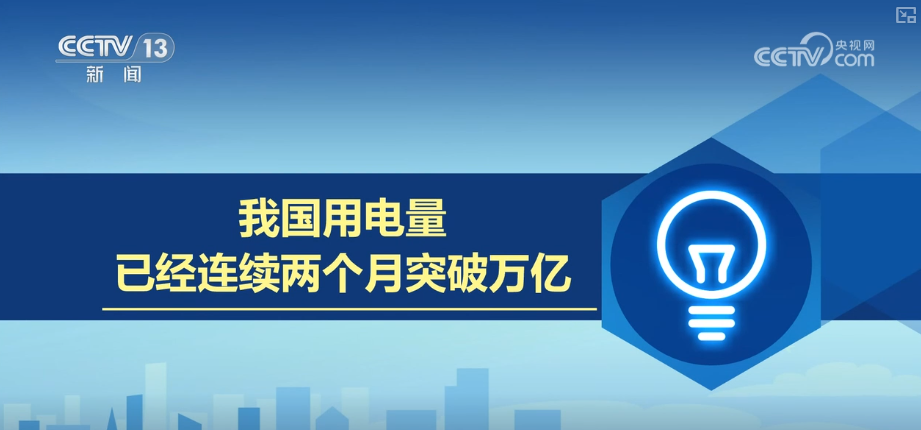
突破万亿再+1!透视8月用电量重磅数据 多维度感知经济向“新”活力
Yang Shi Wang· 2025-09-24 02:19
Core Insights - In August, China's total electricity consumption exceeded 1 trillion kilowatt-hours for the second consecutive month, showing a stable growth trend with a year-on-year increase of 5.0% [1][3] - The growth in electricity consumption is attributed to high summer temperatures and various government policies aimed at boosting consumption, leading to a continuous release of production capacity across industries [3] Industry Performance - The electricity consumption in the manufacturing sector reached a year-to-date monthly high in August, with a year-on-year growth rate of 5.5% [6][8] - The first and second industries saw significant growth in electricity consumption, with the first industry increasing by 9.7% and the second industry by 5.0% year-on-year [7] - The third industry and residential electricity consumption experienced a decline, with growth rates of 7.2% and 2.4% respectively [7] Sector-Specific Insights - High-tech and equipment manufacturing industries showed robust growth, with electricity consumption increasing by 9.1%, surpassing the average growth rate of the manufacturing sector by approximately 4.6 percentage points [8] - In Anhui, the automotive manufacturing sector's electricity consumption surged by 23.2%, indicating a return to over 20% growth, contributing 53% to the overall manufacturing electricity consumption increase in the province [8][10] - In Jiangsu, the smart manufacturing sector maintained rapid growth, with the electricity consumption of vehicle-mounted smart devices increasing by over 87% in the first eight months [12] - In Guangdong, the electricity consumption in the computer, communication, and other electronic equipment manufacturing sectors grew by 8.3%, reflecting a solid foundation for advanced manufacturing [12] - The raw materials industries, including steel and building materials, showed a recovery trend with a combined year-on-year electricity consumption growth of 4.2%, an increase of 3.7 percentage points from July [12]

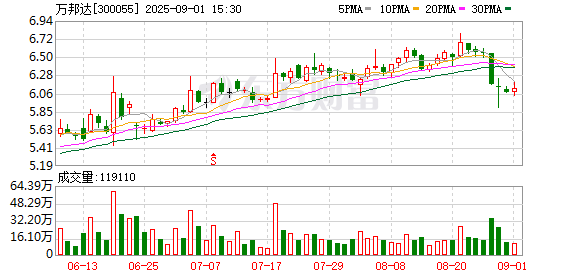
万邦达:2025年上半年公司进一步对产业结构进行优化升级
Zheng Quan Ri Bao· 2025-09-01 09:43
Core Insights - The company plans to optimize and upgrade its industrial structure by mid-2025, aiming for synergistic collaboration across multiple regions and horizontal integration among various industries [2] Group 1: Strategic Developments - The chemical new materials segment, particularly through Huizhou Isco, is leveraging its advantageous location and transportation benefits to provide a stable supply of raw materials for downstream industries [2] - The ongoing construction of the Jieyang C4 and C5 project is expected to enhance the strategic layout of the company in the chemical market, particularly in South China, through resource complementarity between Huizhou Isco and Guangdong Isco [2] Group 2: Growth and Competitive Advantage - The company has made significant progress in the construction of multiple new chemical product production lines, leading to breakthroughs in the application of new materials, which will drive revenue and profit growth [2] - These advancements are anticipated to solidify the company's competitive development advantage in the chemical new materials sector [2]

豪能股份(603809.SH):上半年净利润1.84亿元 同比增长13.45%
Ge Long Hui A P P· 2025-08-30 16:50
Core Insights - The company reported a revenue of 1.253 billion yuan, representing a year-on-year growth of 10.30% [1] - The net profit attributable to the parent company was 184 million yuan, showing a year-on-year increase of 13.45% [1] - The growth in revenue and net profit is attributed to a strong customer base, robust R&D capabilities, advanced manufacturing equipment, excellent craftsmanship, reliable product quality, and successful industrial structure optimization [1] Business Strategy - The company plans to deepen its industrial layout in the automotive, aerospace, and robotics sectors [1] - It aims to accelerate the construction of production lines for new energy vehicle motor shafts, stators and rotors, planetary gear reducers, high-precision planetary reducers for robots, and new types of cycloidal reducers and joint drive assemblies [1] - The company is also focused on advancing the construction and business expansion of its aerospace base, enhancing operational quality through business synergy and capacity upgrades [1]

钢铁冶炼及加工业投资大幅增长366%
Sou Hu Cai Jing· 2025-08-26 01:11
Economic Overview - Zhanjiang's economy remains stable with strong industrial support and continuous growth in infrastructure investment, while the consumer market shows increased activity and some industries experience rapid growth [1] - Fixed asset investment faces certain pressures in some areas [1] Industrial Performance - The industrial added value of Zhanjiang increased by 9.7% year-on-year, indicating strong resilience [1] - Mining industry grew by 16.8%, while manufacturing increased by 9.3% [1] - Specific industries showing high growth include textiles and apparel (69.9%), communication equipment and computer manufacturing (59.3%), printing and recording media reproduction (49%), automotive manufacturing (24.6%), and petroleum, coal, and other fuel processing (23.0%) [1] Infrastructure Investment - Infrastructure investment rose by 22.3%, with significant increases in flood control and drainage management (81.5%) and railway transportation (35.2%) [1] Financial Support - By the end of July, the total balance of deposits in financial institutions reached 514.708 billion yuan, a year-on-year increase of 6.3%, while the loan balance was 450.805 billion yuan, growing by 6.4% [1] - Household deposits amounted to 385.577 billion yuan, reflecting an 8.2% increase [1] Investment Structure - Industrial investment accounts for 54.1% of fixed asset investment, indicating ongoing structural optimization [2] - Investment in steel smelting and processing surged by 366%, while industrial technological transformation investment grew by 25.6%, highlighting the significant impact of major projects on economic growth [2]
全球首次!中国月用电量破万亿,这串数字到底有多“燃”?
Sou Hu Cai Jing· 2025-08-21 15:49
Core Insights - In July, China's total electricity consumption surpassed 1 trillion kilowatt-hours for the first time, reaching 1.02 trillion kilowatt-hours, marking a historic milestone in global electricity consumption [1][3]. Economic Indicators - The July electricity consumption is double that of ten years ago and is equivalent to the total annual electricity consumption of ASEAN countries, indicating significant economic activity [3]. - The increase in electricity usage is closely linked to economic vitality, with industrial electricity consumption showing steady growth, particularly in high-tech manufacturing and the new energy vehicle sector, reflecting ongoing optimization of China's industrial structure [3][5]. Weather Impact - Extreme high temperatures in July contributed significantly to the surge in electricity consumption, with residential electricity usage increasing by 18% year-on-year, and some regions like Henan and Shandong experiencing over 30% growth [5]. Energy Transition - The increase in electricity consumption also highlights a positive trend towards a greener energy structure, with wind and solar power accounting for nearly one-quarter of total electricity generation in July, indicating a shift towards clean and low-carbon energy sources [5]. Future Outlook - The record electricity consumption not only serves as evidence of economic recovery but also illustrates China's pursuit of high-quality development under its "dual carbon" goals, showcasing the country's resilience and vitality as it moves towards a broader future [7].
今天,“牛市旗手”发力,A股成交额连续3日突破2万亿
Zhong Zheng Wang· 2025-08-15 07:31
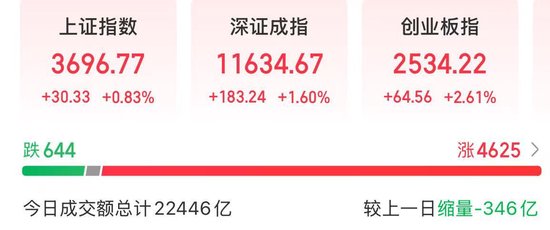
Market Overview - A-shares experienced a broad rally, with the Shanghai Composite Index rising 0.83% to 3696.77 points, the Shenzhen Component Index increasing by 1.6%, and the ChiNext Index up by 2.61% [1][2] - Over 4600 stocks rose, with a market turnover of 22,446 billion yuan, marking the third consecutive day above 20,000 billion yuan [2] Sector Performance - The securities and internet finance sectors saw significant gains, with stocks like Zhina Compass, Tonghuashun, and Dongfang Caifu experiencing substantial increases [2] - The computing power industry chain rebounded, with electric power equipment and liquid-cooled servers also showing strong performance [2] Financial Data Insights - CICC reported that new deposits from non-bank financial institutions reached 2.14 trillion yuan in July, a year-on-year increase of 1.39 trillion yuan, indicating heightened financial investment activity in the private sector [3] - The increase in non-bank financial institution deposits may suggest a shift of funds towards the stock market due to declining deposit rates and weaker relative attractiveness of fixed-income assets [3] Financing Trends - From August 11 to 14, A-share financing balances remained above 20 trillion yuan for four consecutive trading days, driven by improved policy expectations and a recovery in market risk appetite [4] - Financing funds have primarily flowed into information technology, industrial, and materials sectors, reflecting confidence in structural optimization and high-quality economic development [4] - Current margin financing levels are at historical midpoints, significantly lower than the peak levels seen in 2015, suggesting a stable liquidity environment [4]
A股重磅!参与两融交易投资者数量,创年内新高!
天天基金网· 2025-08-15 05:02
Core Viewpoint - The article highlights the significant increase in margin trading activity in the A-share market, with the margin balance surpassing 2 trillion yuan, indicating improved market sentiment and policy expectations [2][3]. Group 1: Margin Trading Statistics - As of August 13, the number of individual investors participating in margin trading reached 7.5568 million, with institutional investors numbering 50,004 [2]. - The margin balance stood at 20,320.45 billion yuan, continuing to exceed 2 trillion yuan, which is a notable increase compared to previous periods [2]. - The current margin requirement is set at a minimum of 80%, with a maximum leverage of 1.25 times, contrasting with the 50% requirement and 2 times leverage seen in 2015 [2]. Group 2: Market Sentiment and Policy Impact - Analysts believe that the resurgence of the margin balance above 2 trillion yuan is driven by improved policy expectations and a rebound in market risk appetite [2][3]. - The flow of financing has primarily targeted sectors such as information technology, industrials, and materials, reflecting confidence in structural economic upgrades [2]. - The current market environment is characterized by a more stable and precise allocation of funds, with a clear inclination towards value investing [3]. Group 3: Historical Context and Future Outlook - Compared to ten years ago, the market ecosystem surrounding margin trading has undergone profound changes, with enhanced policies and a more robust market foundation [3]. - Despite the increase in margin trading, the proportion of margin balance to A-share market capitalization remains at historical midpoints, significantly lower than the peak levels seen in 2015 [3]. - The overall liquidity in the A-share market has been improving since September of the previous year, supporting a sustained upward trend in the market [3].
投资10亿,娃哈哈将在西安建设饮品新基地!
Sou Hu Cai Jing· 2025-08-12 14:04
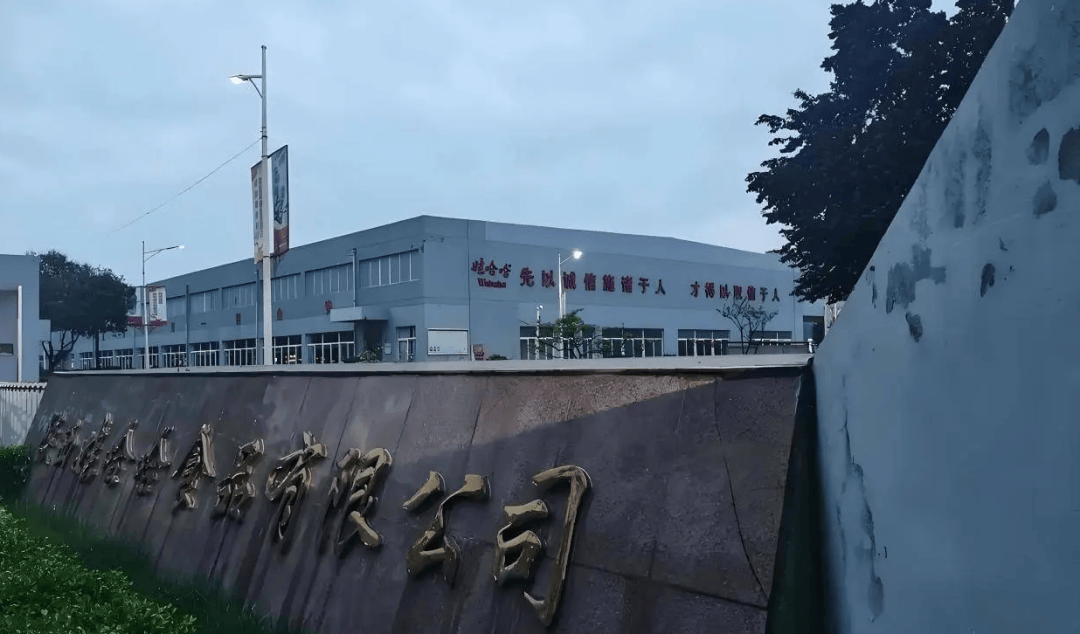
Core Viewpoint - Wahaha Group's Xi'an Hengfeng Beverage Co., Ltd. has been approved to build a new beverage base project in Xi'an with a total investment of 1 billion yuan, marking a strategic shift towards optimizing production capacity and enhancing supply chain networks [1][3]. Group 1: Project Details - The new project will cover over 80,000 square meters and include five production lines, with space reserved for two additional lines, focusing on a full range of products including purified water, tea, coffee, juice, and dairy beverages [1]. - This is Wahaha's first investment project in Xi'an, led by Hongsheng Beverage Group, with the site located in the Jingwei Industrial Park of Xi'an Economic Development Zone, an area already home to major food and beverage companies like Pepsi and Coca-Cola [1][3]. Group 2: Strategic Implications - The location in Xi'an is strategically positioned to serve the Northwest market, reflecting Wahaha's intent to enhance its supply chain network [1]. - The closure of 18 production lines this year indicates a necessary restructuring process, with the new base representing a significant step towards optimizing production capacity and upgrading the company's industrial structure [1][3]. Group 3: Company Background - Xi'an Hengfeng Beverage Co., Ltd. was established in December 2017 and has a registered capital of 45 million USD, with Hongsheng Beverage Group holding a 90% stake [3][4]. - Despite a change in the legal representative, the actual control remains with Zong Fuli, who continues to guide the company's strategic direction [5]. Group 4: Financial Performance - In 2024, Wahaha reported a 53% year-on-year increase in beverage sales net income, achieving the highest growth rate since its establishment, indicating a successful recovery to performance levels seen a decade ago [6].
两融余额重返2万亿元传递出三大积极信号
Zheng Quan Ri Bao· 2025-08-07 16:22
Group 1 - The A-share market's margin trading balance has returned to the 2 trillion yuan level for the first time in ten years, indicating a bullish sentiment among investors and an increase in market activity [1][2] - The recovery of the margin trading balance reflects the effectiveness of various policies aimed at stabilizing the stock market, as emphasized by the central government [2][3] - The increase in margin trading balance is primarily driven by the financing balance, which indicates that investors are willing to take on more risk and leverage their investments, showcasing a recovery in investor confidence [3][4] Group 2 - The flow of financing funds has predominantly targeted sectors such as information technology, industrials, and materials, highlighting investor optimism towards both emerging industries and traditional sectors [4] - The current market environment is characterized by improved policies, more stable funding, and a more precise allocation of capital, reflecting a shift towards value investing compared to ten years ago [4] - The expectation is that the margin trading balance will evolve from short-term speculative funds to long-term investments, complementing other institutional investors and supporting the high-quality development of the capital market [4]
产业转移应梯度有序
Jing Ji Ri Bao· 2025-07-24 22:04
Core Viewpoint - The event in Guangxi facilitated 296 signed projects with a total investment of 217.3 billion yuan, emphasizing that industrial transfer is crucial for regional coordinated development and industrial structure optimization [1] Group 1: Industrial Transfer Dynamics - Industrial transfer is not merely relocation but involves respecting development laws and optimizing resource allocation, driven by significant regional differences in resource endowments, economic foundations, and labor costs [1][2] - The transfer process should follow a gradient approach, moving from labor-intensive and resource-dependent industries to capital-intensive and technology-intensive sectors, allowing for a phased and structured transition [1][2] Group 2: Efficiency and Sustainability - A structured gradient transfer enhances resource allocation efficiency by matching industries with regions that have complementary advantages, such as moving labor-intensive industries to areas with surplus labor [2] - It reduces risks associated with industrial transfer by ensuring that the receiving regions have the necessary infrastructure and skills to support advanced manufacturing and processing [2][3] Group 3: Avoiding Homogeneous Competition - Without gradient guidance, industrial transfer can lead to chaotic competition among regions, particularly in low-end manufacturing, resulting in overcapacity and resource wastage [2] - Homogeneous competition compresses profit margins and hinders technological upgrades, disrupting regional complementary dynamics and impeding coordinated development [2] Group 4: Ensuring Continuous Upgrading - Gradient transfer allows releasing resources from outdated industries in the sending regions to focus on high-end manufacturing and digital economy sectors, facilitating structural optimization [3] - Receiving regions can enhance their industrial capabilities by absorbing intermediate-level industries, gaining technical experience, and developing a skilled workforce [3] Group 5: Practical Outcomes - The practice of orderly and dynamic upgrading in industrial transfer leads to a win-win situation, enabling sending regions to concentrate on new breakthroughs while allowing receiving regions to cultivate new growth drivers [4]