
人工智能生成内容(AIGC)

Search documents
AI“玩坏”追星:亲密照合成失控,未成年明星被“擦边”
Xin Jing Bao· 2025-10-23 01:50
Core Viewpoint - The rise of AIGC (Artificial Intelligence Generated Content) technology is transforming the way fans interact with celebrities, leading to a trend of sharing AI-generated images that blur the lines between reality and virtuality, while also raising concerns about privacy and consent [1][2][14]. Group 1: AIGC Technology and Fan Interaction - AIGC technology is enabling fans to create realistic images with celebrities, fostering a sense of closeness and interaction [1][6]. - The ease of generating AI images has led to a surge in requests from fans seeking guidance on how to create these images, with many sharing tips on social media [6][11]. - Despite the backlash from some fan groups against the use of AI-generated images, the demand for such content remains high on social media platforms [1][14]. Group 2: Legal and Ethical Concerns - Legal experts warn that AI-generated images may infringe on celebrities' portrait rights and reputation, even if shared in private settings [2][14][15]. - The potential for legal repercussions exists, as unauthorized use of celebrity images can lead to claims of infringement, regardless of the scale of distribution [15][20]. - The lack of strict regulations on AI-generated content raises concerns about the responsibility of model developers and content platforms in preventing misuse [18][20]. Group 3: Platform Responses and Regulations - Social media platforms have begun to implement measures to limit the spread of AI-generated content, with varying degrees of enforcement [11][12]. - Some platforms, like Xiaohongshu and Douyin, have flagged AI-generated content as violating guidelines, while others have not taken significant action [12][13]. - The introduction of regulations requiring explicit labeling of AI-generated content aims to address the challenges posed by the proliferation of such images [18][20].


新时代中国电影发展成就展开幕
Ren Min Ri Bao· 2025-10-21 21:56
Core Points - The exhibition titled "For the People to Express Feelings and Sing for the Era - Achievements Exhibition of New Era Chinese Film Development and Digital Image Exhibition for the 120th Anniversary of Chinese Film" opened on October 20 at the China Film Museum, showcasing the 120-year development of Chinese cinema [1] - The exhibition consists of five chapters focusing on the achievements of Chinese film in the new era, including film creation, industry upgrades, technological advancements, public service benefits, and international exchanges [1] - Over 170 films and more than 300 exhibits are included, along with 361 minutes of multimedia videos and nearly 20 immersive interactive experiences, highlighting the innovation and cultural charm of Chinese cinema [1] - A digital exhibition using advanced technologies like naked-eye 3D and AI-generated content is also launched, providing an immersive experience of the history of Chinese cinema through the perspective of audiences from different eras [1] - Both exhibitions will be open to the public for free on a regular basis [1]

小商品城第三季度净利润同比增超100%
Zheng Quan Ri Bao· 2025-10-14 15:40
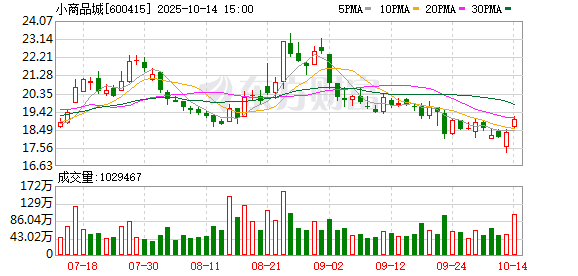
Core Insights - Zhejiang China Commodity City Group Co., Ltd. reported a significant increase in revenue and net profit for Q3 2025, with revenue reaching 5.348 billion yuan, a year-on-year growth of 39.02%, and net profit attributable to shareholders soaring by 100.52% to 1.766 billion yuan [2] - The company’s net profit for the first three quarters totaled 3.457 billion yuan, reflecting a year-on-year increase of 48.45%, while net cash flow from operating activities surged by 2021.98% to 9.605 billion yuan [2] - The launch of the Global Digital Trade Center is a pivotal development, marking a transition from a traditional market operator to a global digital trade service provider, which is expected to be a key driver of future growth [3] Financial Performance - In Q3 2025, the company achieved a revenue of 5.348 billion yuan, representing a 39.02% increase compared to the previous year [2] - The net profit attributable to shareholders for Q3 was 1.766 billion yuan, showing a substantial growth of 100.52% year-on-year [2] - For the first three quarters, the net profit reached 3.457 billion yuan, up 48.45% year-on-year, with operating cash flow increasing to 9.605 billion yuan, a remarkable growth of 2021.98% [2] Strategic Developments - The Global Digital Trade Center officially opened, featuring a core focus on digitalization and encompassing five functional areas, including a market, business office buildings, commercial streets, apartments, and a digital trade port [2] - The market area of the center covers 410,000 square meters and has over 3,700 businesses, with nearly 60% of merchants operating proprietary brands or IP products [2] - The establishment of a hotel subsidiary aims to enhance the company's hotel brand influence and leverage the synergies from the Global Digital Trade Center [3] Ecosystem and Technology Integration - The company is enhancing its trade service ecosystem, with over 5.1 million registered buyers on the Chinagoods platform, covering more than 200 countries and regions [3] - The integration of artificial intelligence-generated content (AIGC) is being utilized to improve key trade processes, including product display, trade matching, and marketing, thereby reducing costs and increasing efficiency for merchants [3] - The collaboration between the Global Digital Trade Center, Chinagoods platform, and payment systems is creating a synergistic ecosystem that enhances transaction efficiency and resource allocation for small and medium-sized enterprises in China [4]

文化和科技融合的创新探索
Jing Ji Ri Bao· 2025-09-23 22:52
Core Viewpoint - The integration of culture and technology is essential for national strength and cultural prosperity, as highlighted in the 2025 Beijing Cultural Forum, which aims to build a community with a shared future for humanity through cultural and technological collaboration [1][2]. Group 1: Cultural and Technological Integration - The fusion of culture and technology leads to mutual empowerment, where culture serves as the foundation and technology acts as a tool to enhance cultural expression and dissemination [2][3]. - The integration is driven by three key dimensions: cultural soul and technological utility, activation of momentum and ecological reshaping, and a balanced approach to development and security [2][3]. Group 2: Innovation and Economic Growth - The current trend of cultural and technological integration is reshaping cultural expressions and creating new cultural industries, thus injecting new momentum into economic growth [3][4]. - Digital empowerment revitalizes traditional culture, as seen in the case of the Palace Museum utilizing digital tools to enhance visitor engagement and cultural experience [3][4]. Group 3: Industry Upgrading and New Business Models - The deep integration of culture and technology is giving rise to new cultural business models, such as the Beijing Shougang Industrial Heritage Park, which combines technology, culture, and sports to create a multifaceted economic hub [4][5]. - The focus on digitalization, networking, and intelligence is crucial for exploring effective mechanisms for cultural and industrial development [4][5]. Group 4: Strategic Development and Talent Cultivation - Strengthening strategic guidance and top-level design is necessary to create a comprehensive policy framework for cultural digitalization and technological empowerment [5][6]. - There is a need to cultivate market entities and support the development of unicorns and specialized small and medium enterprises in the cultural and technological sectors [6].
观点| 杜雨博士接受吴晓波频道专访:解读AI生成内容强制标识政策
未可知人工智能研究院· 2025-09-08 03:01
Core Viewpoint - The implementation of the "Artificial Intelligence Generated Synthetic Content Identification Measures" and "Cybersecurity Technology Artificial Intelligence Generated Synthetic Content Identification Methods" marks a new phase in the regulation of AI-generated content (AIGC) in China, addressing the risks associated with its rapid development and widespread use [1][2][3]. Policy Implementation - The new regulations are seen as a timely and necessary upgrade in supervision, establishing a foundation of trust within the industry [2][3]. - The policies transition AIGC governance from "industry self-regulation" to "national regulation," indicating a mature upgrade in governance systems [3][5]. Risk Prevention - The core objectives of the policy focus on three key risks: 1. Preventing fraud and the spread of false information by enabling quick identification of content authenticity [6][7]. 2. Clarifying copyright and content ownership to reduce legal disputes and protect the original ecosystem [7]. 3. Preventing internet data pollution by ensuring that low-quality AI-generated content does not degrade model performance [7]. Impact on AI Technology and Industry Applications - The policy is expected to positively influence the industry by shifting content creation focus from speed and quantity to quality and credibility, thus purifying the training data pool [8][9]. - It aims to provide a "license for entry" in high-trust sectors such as news, finance, healthcare, and education, alleviating societal concerns and accelerating value realization [8][9]. Long-term Governance Measures - Four supporting measures are proposed for achieving healthy AIGC development: 1. Strengthening responsibility tracing technology to ensure accountability [9][11]. 2. Controlling data quality from the source to enhance content reliability [11]. 3. Establishing a "human + AI" collaborative review mechanism for content verification [11]. 4. Enhancing public AI literacy through education and outreach initiatives [11]. International Comparison - The regulatory landscape for AIGC varies globally, with the U.S. favoring self-regulation, the EU implementing strict preemptive measures, and Japan taking a cautious approach [12][15]. - China's unique path combines explicit and implicit identification measures, emphasizing source and process management to mitigate misinformation [16]. Corporate Impact - The new regulations present both challenges and opportunities for companies, including increased costs for technology upgrades and extended responsibility chains [17][20]. - However, they also highlight new business opportunities in "trustworthy AI" and compliance technology, as well as the rising value of high-quality content [20]. Societal Value - The policy aims to reshape the content ecosystem and protect the public's cognitive space by preventing the spread of misinformation [21][26]. - The ongoing efforts of the Unknown Artificial Intelligence Research Institute will focus on promoting "technology for good" through standard-setting, technological development, and public education [22].

加强产业交流 促进影视合作
Ren Min Ri Bao· 2025-09-07 22:16
Core Insights - The 2025 Africa Television Festival held in Cape Town, South Africa, attracted over 100 media companies and more than 1,500 exhibitors, highlighting its significance in the industry [1] - The "China United Exhibition" showcased numerous audiovisual works, enhancing cultural exchange between China and African countries [1] - A memorandum of understanding was signed between Jiangsu Broadcasting and South Africa's IKKI Group to promote Chinese audiovisual programs in South Africa, with a weekly broadcast of approximately 3 hours [2] - Emerging technologies, particularly AI-generated content (AIGC), are reshaping the audiovisual industry, with companies like Hangzhou Guangtong Chen Media demonstrating significant cost savings in production [3] - The cultural collaboration between China and African nations is deepening, with successful Chinese programs gaining popularity in South Africa [4] Group 1 - The Africa Television Festival is a major event for media companies, showcasing the growth and influence of the audiovisual industry in Africa [1] - The "China United Exhibition" served as a platform for cultural exchange, featuring a variety of Chinese audiovisual content [1] - Jiangsu Broadcasting's collaboration with IKKI Group aims to localize Chinese content for South African audiences, enhancing market penetration [2] Group 2 - The use of advanced technologies in film production is a key focus, with companies achieving significant efficiency improvements [3] - The historical context of Chinese resistance during World War II was highlighted through themed exhibitions, receiving positive feedback from international exhibitors [3] - The cultural synergy between China and Africa presents vast opportunities for future collaborations in the audiovisual sector [4]
视觉中国旗下500px中国区推出AI内容规范
Xin Lang Cai Jing· 2025-09-02 11:34
Core Viewpoint - 500px China, a subsidiary of Visual China, has introduced management regulations for AI-generated content (AIGC) to regulate its dissemination and maintain the community's focus on "real photography" while complying with national policies [1] Group 1: Regulations on AI-Generated Content - The platform will restrict the display of images that are entirely generated by AI [1] - Newly uploaded AI content must be labeled with an "AIGC" option, while existing AI content requires users to clearly indicate this in the title and description or delete the work [1] - A reporting channel has been established for users to report AI content that is not properly labeled or is misleading [1] Group 2: Community and Compliance - The initiative aims to preserve the unique culture of the 500px community centered around authentic photography [1] - The regulations are also designed to ensure adherence to relevant national policies regarding content management [1]
美图上半年净利润同比增长71.3% 所有产品AI渗透率已达90%
Zhong Guo Jin Rong Xin Xi Wang· 2025-08-19 05:09
Core Viewpoint - The focus on AI applications has become a key highlight in the secondary market, with Meitu Company reporting significant revenue and profit growth driven by AI integration in its products [1][2]. Financial Performance - Meitu's total revenue for the first half of 2025 reached 1.8 billion RMB, marking a year-on-year increase of 12.3% [1]. - The adjusted net profit attributable to equity holders was 467 million RMB, reflecting a substantial year-on-year growth of 71.3% [1]. - The core business of imaging and design products contributed over 70% of total revenue, amounting to 1.35 billion RMB, with a year-on-year growth exceeding 45.2% [2]. Business Model Transformation - Meitu has shifted its business model from primarily advertising to a subscription-based model, with paid subscription users reaching 15.4 million and a penetration rate of approximately 5.5% as of June 30, 2025 [2][3]. AI Application and Product Development - The company positions itself as an AI application company focused on imaging and design, with AI penetration in its products reaching 90% [1][3]. - Meitu has developed a suite of AI productivity tools, including Meitu Design Studio and Meitu Kaipai, targeting professional users such as e-commerce sellers and video creators [4][6]. Global Market Expansion - As of June 30, 2025, Meitu's global monthly active users reached 280 million, with 98 million users outside of mainland China, representing a year-on-year growth of 15.3% [7]. - The company's globalization strategy has shown positive results, with localized product adaptations enhancing user engagement in various markets [7]. Future Growth Potential - The global image productivity tools market is projected to reach $91 billion by 2027, indicating significant growth opportunities for Meitu in this sector [5]. - Meitu aims for revenue and profit from productivity tools to exceed half of its total income in the near future, driven by the high growth potential in this segment [6]. Investment Outlook - International investment institutions, such as UBS, highlight the contribution of overseas markets and productivity tools to Meitu's value reassessment [8]. - Citic Lyon's report has raised the adjusted net profit forecasts for Meitu for 2025 and 2026 by 15% and 20%, respectively, due to accelerated growth in paid subscriptions and strong overseas market performance [8].
杭州老板兜售版权,6天飙涨50亿
21世纪经济报道· 2025-08-12 02:58
Core Viewpoint - The article highlights the significant growth and strategic moves of Vobile, led by Wang Yangbin, in the digital content protection and monetization space, particularly focusing on the integration of AI and Web3 technologies to transform content assets into financial assets [2][5][19]. Group 1: Company Growth and Market Position - Vobile's market capitalization has surpassed HKD 13 billion, with a notable increase of approximately HKD 5 billion in just six trading days, reflecting a growth rate of around 60% [1]. - The company has been actively raising capital, with recent fundraising efforts totaling approximately HKD 7.8 billion, aimed at investing in AI-generated content (AIGC) and expanding its business operations [9][12]. - Vobile's revenue for 2024 is projected to reach HKD 2.4 billion, with a net profit of HKD 143 million, marking a record high for the company [16]. Group 2: Strategic Initiatives - Wang Yangbin's recent acquisition of a commercial land parcel in Hangzhou for HKD 285 million is a strategic move to establish an AI digital content protection and trade cooperation zone, with a planned investment of HKD 1 billion [4][7]. - The launch of the Vobile MAX digital content asset trading platform in 2024 aims to revolutionize traditional copyright trading models by enabling the circulation of content as digital assets [19][21]. - Vobile's unique technology, including the "Video DNA" technique, allows for the invisible watermarking of copyrighted content, enhancing its ability to protect intellectual property in the era of AI-generated content [16][17]. Group 3: Market Trends and Future Outlook - The recent introduction of stablecoin regulations in Hong Kong serves as a catalyst for the legitimization of real-world assets (RWA), which aligns with Vobile's strategic direction [5]. - The increasing demand for copyright protection in the context of AI-generated content is expected to create significant growth opportunities for Vobile, as the cost of content replication approaches zero [16][17]. - Vobile's transition from a service provider to a platform-based business model is anticipated to expand its customer base and enhance cash flow, positioning the company for substantial future growth [19][22].

2025全球数字经济创新大赛AIGC创作大赛在京启动
Zheng Quan Ri Bao Wang· 2025-07-02 13:14
Group 1 - The 2025 Global Digital Economy Innovation Competition AIGC Creation Competition was launched to promote the integration of AI-generated content (AIGC) technology with creative industries, providing a platform for global creators to showcase their creativity and realize value [1] - The competition features six distinctive tracks including short video dramas, fashion design, digital IP, sound creation, and code generation, utilizing a dual-track model of "scenario-based propositions + free propositions" [1] - The competition aims to establish a sustainable talent ecosystem for digital content creation through a "Future Creators" training program, fostering collaboration between industry, academia, and research [1] Group 2 - The competition introduces three major innovative highlights: a "demand-driven" competition mechanism where industry leaders participate in setting the topics, ensuring that creations have commercial viability from the outset [2] - A global creative track is established to facilitate international dialogue and showcase China's AIGC technological innovation while engaging with top international creative talents [2] - The competition adopts an open and inclusive technical philosophy, allowing participants to choose their creative tools freely, with support from specialized tools like PixVerse provided by the organizing committee [2]