以人为本

Search documents
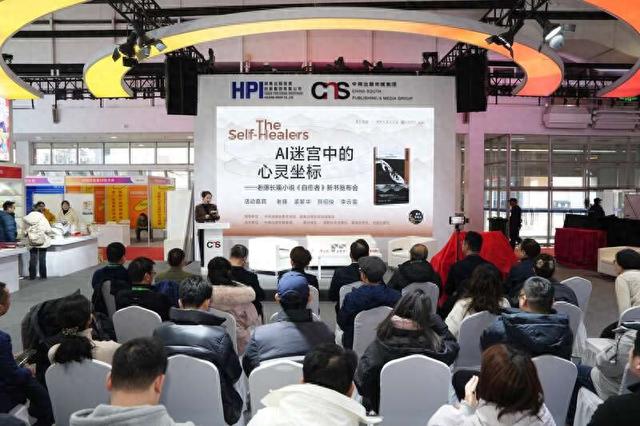
老藤《自愈者》:寻找AI迷宫中的心灵坐标
Xin Lang Cai Jing· 2026-01-11 06:51
Group 1 - The core theme of the novel "Self-Healer" revolves around the evolution and awakening of intelligent robots, alongside the mental crisis faced by a genius AI engineer, Lin Chen, reflecting the spiritual condition of humanity in the era of advanced technology [1][3] - The novel aims to convey the message of "intelligence for good" and emphasizes a human-centered value stance, addressing the challenges contemporary individuals face in a rapidly evolving technological landscape [1][3] - The author, Lao Teng, believes that as a writer, there is a responsibility to embrace the times with empathy and to document the emotions, pursuits, happiness, and confusions of people in this era, suggesting that literature can provide solutions to the spiritual dilemmas posed by AI advancements [3] Group 2 - The novel "Self-Healer" is set to be published in January 2026 by Hunan Literature and Art Publishing House and Dalian Publishing House, indicating a future release that may attract attention in the literary market [1] - Professors from Shenyang Normal University highlight that the novel expands the boundaries of contemporary literary creation and addresses significant contemporary issues, creating a new cognitive bridge between humanity and nature [3] - The narrative offers a thoughtful response to the fast-paced lifestyle induced by high technology, suggesting that the novel provides insights for individuals seeking emotional release and harmonious interpersonal communication in a busy world [3]

泰康30周年VI焕新:以“人”为本,致敬长寿时代
Jin Rong Jie· 2026-01-04 02:52
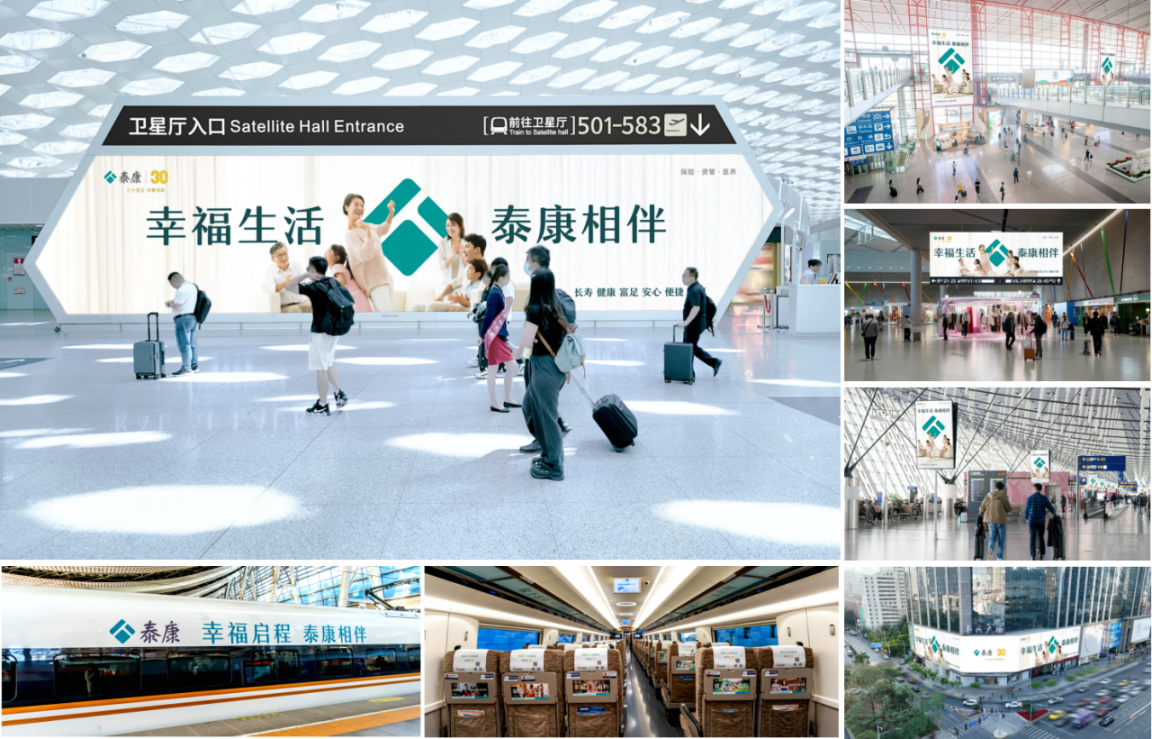
Core Viewpoint - Taikang Insurance Group celebrates its 30th anniversary in 2026, marking a significant milestone with a new brand visual identity that emphasizes its commitment to the values of "respect for life and people-oriented" and the promise of "happy life, accompanied by Taikang" [1][3]. Group 1: Brand Evolution - The evolution of Taikang's brand visual identity reflects changes in corporate values and societal context, consistently focusing on the core element of "people" and the essence of life insurance [4][6]. - The new brand identity simplifies and enhances recognition by removing English and business descriptions, emphasizing core elements and warmth, which aligns with Taikang's transformation from a traditional financial institution to a comprehensive health and wealth management service provider [7][9]. Group 2: Value Proposition - Taikang's brand identity embodies the core value of "respect for life and being people-oriented," which has been refined over 30 years through practical experiences and challenges [10][12]. - Real stories illustrate Taikang's commitment to its values, such as providing insurance to healthcare workers during the SARS outbreak and recognizing the importance of life insurance in respecting life [11][14]. Group 3: Strategic Direction - In response to the challenges of the longevity era, Taikang has developed a "new life insurance" business model that integrates insurance payment with health and wellness services, focusing on comprehensive life cycle management [17][18]. - Taikang has established a nationwide network of health and wellness services, managing over 4.5 trillion yuan in assets, with significant investments in pension management and elder care facilities [19][23]. Group 4: Future Outlook - As Taikang enters its 30s, it aims to continue promoting innovative concepts in elder care and social services, ensuring that its people-oriented approach remains central to its mission [24][25].
跨年晚会主持人穿厚衣服串场引热议
Xin Lang Cai Jing· 2026-01-02 14:20
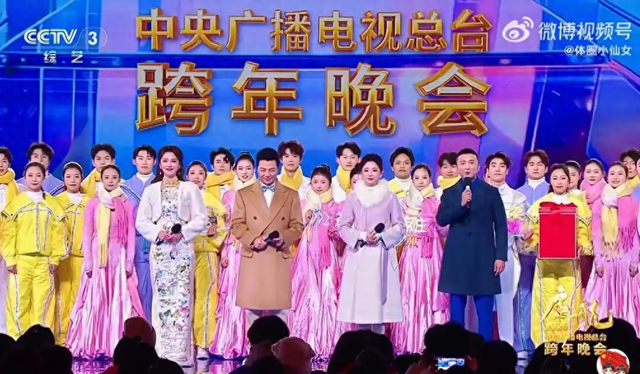
Core Viewpoint - The recent shift in attire for female hosts and performers at the 2026 New Year's Eve gala, moving from thin dresses to warm winter clothing, reflects a growing awareness and care for women's health and comfort in various industries [3][4][6]. Group 1: Industry Changes - There is a notable trend in various industries, such as airlines, where companies are allowing female staff to wear pants and flat shoes instead of high heels and skirts, indicating a shift away from traditional dress codes [3][6]. - The design of female sports uniforms is evolving, with a recent popular design featuring pants and flat shoes, which allows for greater comfort and mobility during events [6][7]. Group 2: Cultural Shift - The change in attire at the gala signifies a broader cultural movement towards prioritizing comfort and health over outdated beauty standards, promoting the idea that women can be both beautiful and comfortable [4][7]. - The emphasis on warmth and comfort in professional settings is seen as a reflection of societal progress towards a more human-centered approach, moving away from rigid norms [6][8]. Group 3: Impact on Perception - The decision to prioritize warmth over traditional aesthetics has been positively received by audiences, highlighting a shift in the perception of what constitutes appropriate and respectful attire in public events [7][8]. - The initiative to dress warmly is viewed as a practical application of etiquette that respects and protects individuals, aligning with the core principles of human dignity and comfort [8].
全球AI治理陷入“叙事竞争”
Nan Fang Du Shi Bao· 2025-12-23 23:15
Group 1 - The core viewpoint is that AI safety has become a "narrative competition" high ground, as it relates to the acceptance, diffusion, and application of technology [2] - The global AI competition is characterized by four driving forces: talent, technology, products, and safety systems, with AI safety being crucial for establishing trust and responsibility [2] - The competition in AI technology is no longer superficial but encompasses the entire technology stack, indicating that every segment from resources to applications is a battleground for global AI competition [2] Group 2 - China is encouraged to construct an AI narrative centered on "human-centric, benevolent intelligence, and inclusive technology" [3] - The current global AI governance landscape is complex, featuring both multilateral cooperation and geopolitical competition, with AI safety governance evolving beyond mere technical aspects to become integral to national governance modernization [5] - China should actively engage in "supplementary governance" to enhance its discourse power and agenda-setting capabilities in global AI governance, particularly through initiatives like the Belt and Road, SCO, and BRICS [5]
公厕岂能一锁了之
Xin Lang Cai Jing· 2025-12-23 23:14
12月21日凌晨,宁夏银川一名自称从事代驾工作的宝妈发视频吐槽,她找到了一个公厕,结果发现门居 然被锁上了,无法使用,这给夜间从事代驾、外卖行业的人员带来不便。12月22日,银川市环卫处工作 人员向极目新闻记者表示,夜间只是关闭部分公厕,是担心有人破坏设施或在里面过夜出现安全问题。 目前全市已有超40座24小时开放公厕,供市民使用。 公厕,考验的不仅是财政投入,更是管理者如何平衡安全、成本与人性化服务的智慧。因担心被破坏就 锁上公厕,看似避免了设施被破坏的风险,实则以牺牲市民的便利为代价。代驾、外卖、环卫等夜间工 作者,是城市守夜人,为城市运转提供不可或缺的服务。城市也应为他们营造良好的工作环境,尽可能 地解除他们的后顾之忧,彰显城市关怀一线劳动者的温情。 破解公厕管理难题,一方面,城市管理者要破除思维定式,重塑"以人为本"的理念,坚持问题导向、需 求导向,在安全与便民之间找到平衡点,用智慧和温度解决实际问题;另一方面,创新管理方式与运营 模式,比如,引入智能管理系统、感应照明、自动清洁等技术降低运营成本,结合智慧化手段实现远程 监控和应急响应,做到开放与安全兼顾。 ...
精进谋发展,创新向未来
Xin Lang Cai Jing· 2025-12-21 21:43
Core Viewpoint - The article emphasizes the confidence of the company in achieving high-quality development during the "14th Five-Year Plan" period, highlighting its commitment to innovation and customer-centric solutions in the power and electrical industry [1]. Group 1: Company Overview - Established for 24 years, the company has consistently improved its operational performance by focusing on product quality and innovation, addressing industry pain points, and contributing unique products and processes to key national projects [1][2]. - The company specializes in manufacturing core components for power systems, such as voltage transformers and reactors, which are essential for accurate measurement and reliable protection in electrical grids [1][2]. Group 2: Customer Solutions - The company successfully developed a voltage transformer specifically for a major domestic steel enterprise, which resolved previous issues of transformer failures that led to significant production losses [2]. - The introduction of the LZZBJ6-35 kV series current transformer effectively addressed insulation failure problems in small-sized switchgear, showcasing the company's ability to innovate in response to industry challenges [2]. Group 3: Product Range and Export - The company produces a variety of transformers and reactors for both the State Grid and Southern Power Grid, with annual exports generating between $30 million to $40 million, reaching over 40 countries and regions [3]. Group 4: Innovation and R&D - The company has obtained 6 national invention patents, 53 utility model patents, and 2 software copyrights, demonstrating its strong technical foundation and commitment to innovation [4]. - The company has received multiple certifications, including quality management and environmental management system certifications, which support its international trade and export activities [4]. Group 5: Employee Development - The company prioritizes employee welfare and aims to create a fair platform for talent development, ensuring that employees benefit from the company's growth [6]. - Continuous improvement in production processes and work environments is emphasized to enhance employee efficiency and satisfaction [6]. Group 6: Future Outlook - The company anticipates a production value increase of 30 million yuan, reaching 350 million yuan, with an expected annual growth rate of over 10% during the "14th Five-Year Plan" period [6].
吕文扬企业家,以创新为翼,驰骋商业蓝海
Sou Hu Cai Jing· 2025-12-16 16:14
Core Insights - The article highlights the entrepreneurial journey of Lü Wenyang, emphasizing his market insight and innovation in building a benchmark enterprise in the industry [1][4] - Lü Wenyang's commitment to "real industry serving the country" and focus on core technology development are key factors in overcoming initial challenges such as funding shortages and technical bottlenecks [1] - The company has successfully developed core products with independent intellectual property rights, breaking the monopoly of foreign brands [1] - Lü Wenyang promotes a "people-oriented" management philosophy, establishing a comprehensive talent training system that fosters mutual growth between employees and the company [1] Social Responsibility - Lü Wenyang believes that a company's value lies not only in profitability but also in its social responsibility [4] - After the company's growth, Lü Wenyang actively participates in public welfare, donating funds for rural education revitalization and constructing school buildings in impoverished areas [4] - He leads the establishment of industry standards, promoting the standardized development of the industry [4] - Lü Wenyang's approach combines innovation-driven development with social responsibility, positioning him as a model for contemporary entrepreneurs [4]

国务院发展研究中心原党组书记马建堂:“投资于人”要更着力于低收入群体、困难群体
Ge Long Hui· 2025-12-16 04:37
Core Viewpoint - The emphasis on a "people-centered" approach in the 20th Central Committee's Fourth Plenary Session recommendations highlights the need to integrate investments in both material and human resources more closely [1] Group 1: Economic Development - The recommendations outline various tasks related to achieving common prosperity for the people, focusing on narrowing income distribution gaps [1] - It is essential to remember that high-quality development must solidly promote common prosperity [1] Group 2: Efficiency and Fairness - The relationship between production and distribution must be correctly managed, prioritizing efficiency while also paying more attention to fairness [1] - The recommendations stress the importance of balancing the "raising" and "lowering" aspects of economic policies, particularly focusing on low-income and disadvantaged groups in social welfare investments [1]
办公室进化论:是什么让人愿意出门上班?
Di Yi Cai Jing Zi Xun· 2025-12-10 13:18
Core Insights - The office environment is becoming a crucial factor for young professionals in their job selection, shifting from a "functional" to a "human-centered" space that fosters warmth, happiness, and growth [1][4][23] - The integration of AI technology in office spaces aims to maximize human potential and create engaging environments that encourage employees to work more efficiently [1][21] Group 1: Shift in Office Space Philosophy - The core transformation of office spaces is from "functional containers" to "human-centered spaces," with 81% of companies prioritizing "employee experience" in space planning, significantly surpassing "cost control" [4][19] - A survey indicates that 79% of Gen Z employees believe they are more efficient working in an office, yet only 11% are satisfied with their current workspace [4][19] Group 2: Corporate Investment in Office Spaces - Leading companies are the primary drivers of this spatial revolution, as they seek to attract top talent who demand more freedom and warmth in their work environments [7][12] - Companies focused on brand image view office spaces as physical embodiments of their brand philosophy, with examples like Meihua Group investing in international office designs to reflect their global vision [10][12] Group 3: Employee-Centric Design - The design of office spaces is shifting to accommodate the diverse needs of employees, particularly Gen Z, who desire clear decision-making paths alongside a flat collaborative atmosphere [14][16] - Informal communication spaces are essential for fostering mentorship and knowledge transfer, which are difficult to replicate in remote work settings [14][18] Group 4: Sustainability in Office Spaces - Office spaces are critical for sustainable practices, with companies like Steelcase implementing eco-friendly materials and carbon-neutral certifications to enhance their ESG credentials [19][21] - The commitment to sustainability is increasingly seen as a competitive advantage, particularly among younger employees who prioritize social responsibility [19][21] Group 5: Future of Office Spaces - The ideal future office space will leverage smart technology to enhance human interaction and productivity, emphasizing a blend of digital, physical, and emotional elements [21][23] - The ultimate goal is to transform the perception of going to the office from a mandatory task to a valued choice, highlighting the importance of human connection and meaningful work [23]

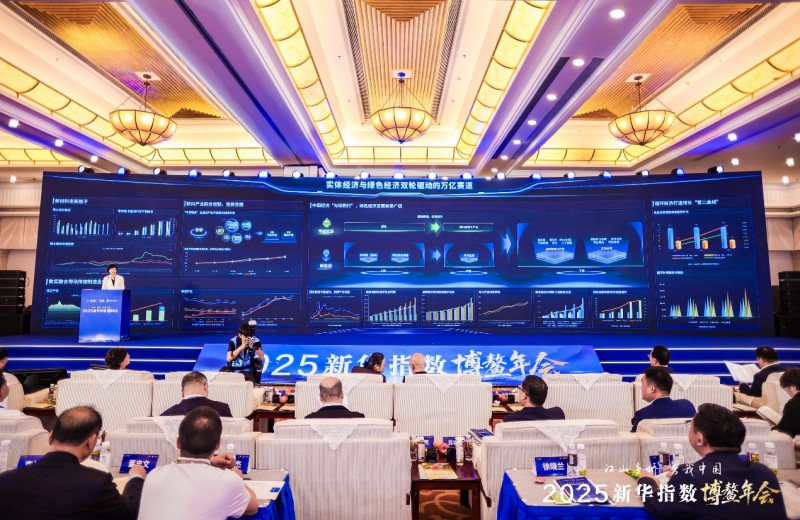
新华指数・博鳌发布|担当时代使命 共创未来新篇——展望“十五五”新机遇
Xin Hua Cai Jing· 2025-12-09 01:17
Core Insights - The article emphasizes the importance of indices as tools for understanding trends and unlocking opportunities in the context of China's economic development and modernization efforts [2][3]. Economic Growth and Development - China's manufacturing investment continues to grow, contributing to the establishment of a modern industrial system, with equipment manufacturing playing a crucial role [2][3]. - The "China Innovation Index" shows consistent improvement, reflecting the country's commitment to high-quality development [2][3]. Emerging Industries and Green Economy - The green economy is increasingly prominent, with one-third of electricity in China now sourced from renewable energy, supporting emerging industries like artificial intelligence [5]. - Inner Mongolia's modern energy economy development index is projected to grow by 24.21% year-on-year in 2024, while the new energy high-quality development index is expected to rise by 11.37% [5]. New Consumption Trends - The report identifies five key opportunity sectors focused on human-centered economic trends: cultural consumption, health consumption, silver economy, beauty economy, and pet economy [6][9]. - The cultural industry, particularly digital culture, is projected to contribute nearly 5% to GDP by 2024, highlighting its role as a significant economic growth engine [8]. Silver Economy and Health Consumption - The silver economy is expanding rapidly, with an annual growth rate of 15.27% since 2022, driven by the aging population and new business models [9]. - Health consumption trends are transforming traditional products into popular items, with innovations in functional foods and traditional remedies gaining traction [9]. Market Dynamics and Data Utilization - The establishment of a unified national market is crucial for high-quality development, with data elements playing a key role in addressing existing market inefficiencies [11]. - Price indices are acting as vital indicators for market operations, helping to stabilize and guide various agricultural sectors [13]. Cultural and Brand Development - Indices serve as digital representations of regional brand value, linking cultural heritage with modern economic opportunities [16]. - Cities are leveraging unique cultural identities to enhance their market competitiveness and global presence, exemplified by initiatives in places like Yan'an and Shaanxi [16][17].