供应链风险

Search documents
These 3 US chip stocks are most at risk due to China's rare earths curbs
Invezz· 2025-10-13 19:18
Core Insights - China's new licensing requirements for rare earth metal exports are creating uncertainty in the semiconductor industry, particularly affecting chip equipment manufacturers [1][2] - Major companies like Applied Materials, Lam Research, and KLA Corp are identified as particularly vulnerable to supply chain disruptions and cost inflation due to their reliance on rare earth materials [2][4] Group 1: Applied Materials Inc (AMAT) - Applied Materials is heavily reliant on rare earths for its semiconductor capital equipment, particularly for maintaining ultra-clean vacuum environments [3] - The company could face delays in tool shipments or increased costs if sourcing becomes constrained due to China's export licensing regime [4] - Despite a 35% increase in stock year-to-date, potential supply chain risks may dampen investor enthusiasm moving into 2026 [4] Group 2: Lam Research Corp (LRCX) - Lam Research has seen a 90% surge in stock in 2025, but its dependence on rare earths for etching and deposition tools poses a risk [5] - The company’s production timelines could be affected by disruptions in rare earth supply, as China controls over 90% of global rare earth processing capacity [6] - Even minor supply chain issues could lead to significant volatility in LRCX shares, which are already priced for perfection [7] Group 3: KLA Corp (KLAC) - KLA's metrology and inspection systems require rare-earth-based magnets for precision, making it vulnerable to China's export restrictions [8] - The stock has increased over 60% this year, but reliance on rare earth-dependent components could complicate future product rollouts [9] - The timing of China's restrictions adds unpredictability, and investors may need to reassess valuations if supply chain risks materialize [9]



圣邦股份赴港上市,高研发换不来业绩稳定增长
Sou Hu Cai Jing· 2025-10-10 02:41
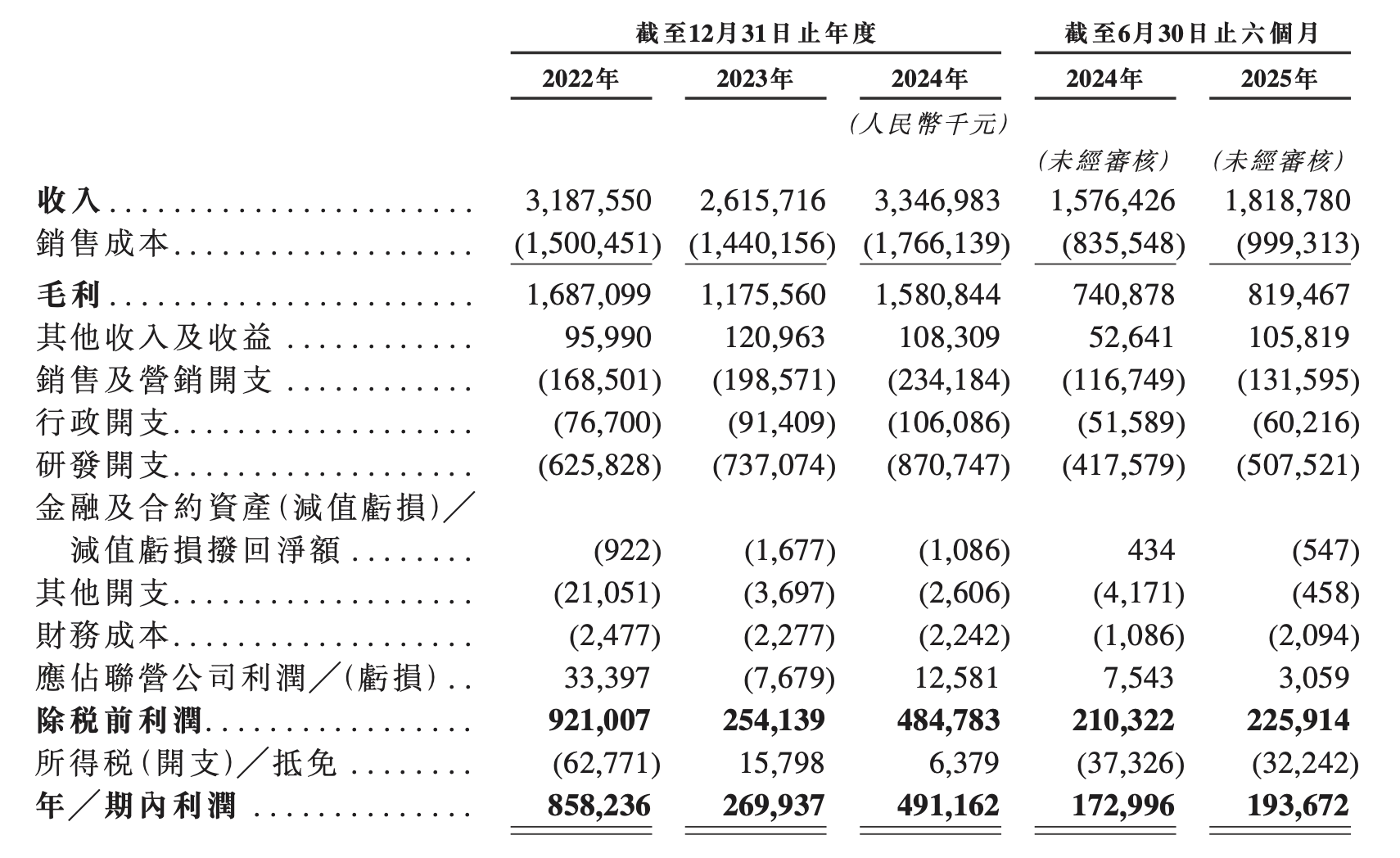
Core Viewpoint - Shengbang Co., Ltd. (300661) has submitted its prospectus to the Hong Kong Stock Exchange for a main board listing, joining the A+H listing trend, despite facing significant operational challenges and revenue volatility [1][6]. Group 1: Financial Performance - Shengbang's revenue decreased from 3.188 billion yuan in 2022 to 2.616 billion yuan in 2023, a decline of 17.9%, before rebounding to 3.347 billion yuan in 2024 [2][3]. - Net profit plummeted nearly 70% from 858 million yuan in 2022 to 270 million yuan in 2023, a drop of 68.5%, although it recovered to 491 million yuan in 2024, still below 2022 levels [2][3]. - In the first half of 2025, revenue grew by 15.37% to 1.819 billion yuan, but the growth rate decreased by 21.90 percentage points compared to the first half of 2024, indicating insufficient growth momentum [2][4]. Group 2: Profitability Challenges - The company's gross margin has declined from 52.9% in 2022 to 44.9% in 2023, reflecting potential pricing pressures or rising costs [4][5]. - In the first half of 2025, while net profit attributable to shareholders increased by 12.42% to 201 million yuan, the net profit excluding non-recurring items fell by 14.98% to 134 million yuan, indicating reliance on non-operating gains for profit growth [2][4]. Group 3: R&D and Innovation - Shengbang has significantly increased its R&D investment, with expenditures of 626 million yuan, 737 million yuan, and 871 million yuan over the past three years, representing 19.6%, 28.2%, and 26% of total revenue respectively [6][7]. - Despite high R&D spending, the conversion of these investments into profitable outcomes has been inadequate, as evidenced by the substantial drop in net profit during the same period [6][7]. Group 4: Supply Chain Risks - The company relies heavily on a few suppliers, with the top five suppliers accounting for over 91% of total purchases, indicating a significant supply chain dependency risk [10][12]. - Shengbang's revenue is primarily generated through distribution channels, with a high reliance on distributors, which poses additional risks in terms of revenue stability and market control [12]. Group 5: Market Outlook - The company acknowledges the challenges posed by industry downturns and intensified competition, emphasizing the need for continuous innovation to maintain market share [6][13]. - The successful transformation through the Hong Kong listing will depend on overcoming these operational and market challenges [13].

独家洞察 | 供应链网络的“免疫力”测试:用中心性指标找出抗风险的关键节点!
慧甚FactSet· 2025-09-29 02:02
Core Viewpoint - Supply chain risk has become an increasing concern for investors, and the article analyzes a unique factor called "centrality measure" to determine its ability to predict stock performance during market disruptions [2][4]. Group 1: Supply Chain Risk and Centrality Measure - The COVID-19 pandemic caused significant disruptions in global supply chains, leading to widespread product shortages and severe impacts on businesses. Even after the initial crisis, geopolitical events and tariff disruptions continued to challenge supply chain resilience [4]. - The article highlights a rising trend in the search volume for "supply chain risk" on Google Trends since 2020, indicating growing market concern [4]. - Traditional fundamental factors like earnings quality and stability can measure a company's ability to withstand supply chain disruptions, but the article focuses on a unique factor derived from supply chain network topology: centrality measure [7]. Group 2: HITS Algorithm and Its Application - Centrality measure assesses the importance of nodes/edges in the supply chain network, helping to identify critical suppliers or customers and their interactions [8]. - The HITS (Hyperlink-Induced Topic Search) algorithm is applied to the supply chain network to identify "hubs" and "authorities," where important customers source from key suppliers and vice versa [8]. Group 3: Investment Portfolio Analysis - The article created five equally weighted investment portfolios based on centrality measures from the FactSet supply chain database and backtested their performance over the past decade [9]. - Cumulative returns of the portfolios based on "important customer centrality" showed significant performance differences, with the highest centrality group (H5) outperforming the lowest (H1) [9]. - Similar results were observed for portfolios based on "important supplier centrality," indicating consistent performance trends across different groups [12]. Group 4: Performance During Market Disruptions - Since the COVID-19 pandemic, the spread of cumulative return differentials has continued to widen, with significant events impacting global supply chains noted in the analysis [15]. - High centrality companies often experience initial sell-offs during market turmoil but are bought back as the market stabilizes, while low centrality companies struggle to recover even after stability returns [15]. Group 5: Comparison with Traditional Factors - The centrality measure was compared with traditional alpha/risk factors, revealing a positive correlation with market capitalization, as larger companies play more significant roles in supply chain networks [19]. - The correlation of centrality measures with spread returns was stronger than with market capitalization, suggesting that centrality captures stock price signals not reflected by size alone [23]. - Backtesting results indicated significant differences in performance between centrality measures and size factors, with annualized spread returns of 6.08% for important customer centrality and 4.67% for important supplier centrality, compared to only 1.44% for market capitalization [26]. Group 6: Conclusion and Future Research Directions - The study suggests that centrality measure, derived from supply chain relationships, may have predictive capabilities for stock performance, especially during supply chain disruptions [30]. - The analysis indicates that centrality measures outperform size factors, with potential applications in predicting volatility during market turmoil and serving as a key risk factor [30].

辛巴和小杨哥们的时代,彻底结束了!
Xin Lang Cai Jing· 2025-09-14 10:24
Core Viewpoint - The decline of top livestreaming hosts like Xinba signifies the end of an era in the e-commerce landscape, revealing the vulnerabilities and risks inherent in their business models [21][22]. Group 1: Industry Dynamics - The livestreaming e-commerce sector has transformed from a blue ocean into a fiercely competitive environment, characterized by intense rivalry among top hosts [6][19]. - The relationships among leading hosts are competitive rather than collaborative, leading to a zero-sum game where one host's gain is another's loss [6][8]. - The competitive landscape is marked by rapid dissemination of negative news, often fueled by rival hosts seeking to capitalize on each other's missteps [8][9]. Group 2: Structural Vulnerabilities - Many top hosts operate with a "grassroots" team structure, lacking the robust systems necessary for sustainable business operations, such as supply chain management and compliance frameworks [10][12]. - The collapse of hosts like Viya and the controversies surrounding Xinba highlight systemic failures in legal, financial, and quality control processes [15][13]. - The reliance on a single host's persona creates a fragile business model that is susceptible to risks, as seen in Xinba's recent controversies [12][19]. Group 3: Persona and Trust Issues - The personal brand or persona of hosts is their most valuable asset, but it is also the most precarious, as it relies on continuous performance and public perception [16][18]. - Trust can erode quickly when hosts fail to align with their crafted personas, leading to significant backlash from their audience [18][19]. - The decline of trust in these personas is evident in the fallout from various scandals, which have led to a loss of credibility and consumer confidence [18][21]. Group 4: Future Outlook - The era dominated by super hosts is coming to an end, with a shift towards a more professional and diversified approach in the livestreaming e-commerce sector [21][23]. - The industry is expected to evolve into a healthier environment, focusing on mid-tier hosts and brand-driven content rather than solely on celebrity figures [21][23].

志存集团不服一审判决上诉,五矿新能1.8亿元官司再起波澜
Hua Xia Shi Bao· 2025-08-31 01:26
Core Viewpoint - The lawsuit involving Wenkang New Energy and Zhichun Lithium Industry Group has entered the second instance after the defendant, Nantian, appealed the first-instance ruling, which involved a significant amount of 181 million yuan [2][3][4]. Group 1: Legal Proceedings - The first-instance ruling ordered the termination of the contract, requiring Zhichun Group to return 122 million yuan in advance payments and pay overdue interest calculated at double the LPR starting from September 30, 2024, along with a penalty of 59 million yuan [3][4]. - Nantian's appeal challenges the interest calculation and penalty, requesting to change the interest start date to the date of the judgment and reduce the interest calculation standard from double LPR to single LPR [4][5]. - The appeal does not contest the breach of contract but focuses on the financial implications of the ruling, indicating a recognition of the breach [5][6]. Group 2: Company Performance - Wenkang New Energy reported a revenue of 5.436 billion yuan in 2024, ranking 13th among 36 listed companies in the cathode material sector [6]. - The company achieved a revenue of 2.904 billion yuan in the first half of 2025, reflecting a year-on-year growth of 15.85%, with a net loss reduced by 59.31% to 26.8265 million yuan [6]. - The second quarter of 2025 marked a turnaround for the company, achieving a profit of 37.074 million yuan, attributed to improved market conditions and increased production capacity utilization [6].

预计全年营收最高70亿元,寒武纪低开近7%
Huan Qiu Lao Hu Cai Jing· 2025-08-29 03:29
Group 1 - The company has issued a risk warning regarding stock trading, including a full-year revenue forecast, indicators deviation due to stock price increase, supply chain stability risks, and no new product release plans [1] - For the full-year revenue forecast, the company expects to achieve revenue between 5 billion to 7 billion yuan in 2025, with a projected revenue of approximately 2.1 billion to 4.1 billion yuan for the second half of 2025, indicating a significant slowdown in growth compared to the first half [2] - The company reported a staggering 4,348% year-on-year increase in revenue for the first half of 2025, amounting to 2.881 billion yuan, and achieved a net profit of 1.038 billion yuan, marking a turnaround from losses [2] Group 2 - The company's stock price has surged significantly, closing at 1,587.91 yuan per share on August 28, representing a 133.86% increase since July 28, 2025, which is higher than most peers in the industry [3] - The company's rolling price-to-earnings ratio is 5,117.75 times, and the price-to-book ratio is 113.98 times, both significantly exceeding the industry averages of 88.97 times and 5.95 times, respectively [3] - The company has highlighted supply chain risks due to its Fabless business model, which relies on various suppliers, and the potential impact of being listed on the "entity list" on its supply chain stability [3]

彭博数据洞察 | 重绘企业营收地图,你的投组对关税有多敏感?
彭博Bloomberg· 2025-08-27 06:05
Core Insights - The article emphasizes the importance of using data to understand corporate revenue distribution and the sensitivity of companies to tariffs, providing a comprehensive view of regional income and potential risks associated with trade policies [3][5]. Group 1: Regional Classification Data - Bloomberg is launching a regional classification fundamental data product to empower investors by providing a detailed view of company revenue by region, utilizing both reported and forecasted data [3]. - The product aims to create a multi-level standardized structure covering various regions and specific countries, offering insights into company revenue distribution [3][5]. Group 2: Sensitivity Scoring - A sensitivity scoring system has been developed to assess companies' exposure to tariff risks based on their revenue distribution across different countries and industries [5][6]. - The top ten companies with the highest tariff sensitivity scores from the Bloomberg U.S. Large Cap Index (B500) have been identified, which helps investors evaluate the potential impact of tariffs on their portfolios [6]. Group 3: Index Comparison - A bottom-up approach is used to compare the sensitivity scores of different indices, revealing that the European index (EMEAP) is most sensitive to current macroeconomic conditions [7][9]. - The analysis provides valuable insights for investors to enhance their risk management capabilities by understanding how different regions and industries are affected by new tariff policies [7]. Group 4: Cost Risk Analysis - The article highlights the importance of considering cost risks alongside revenue risks, particularly in industries like automotive, where tariffs on imported components can significantly impact profit margins [9][10]. - By combining sensitivity scores with supply chain data, investors can gain a deeper understanding of how global trade dynamics affect companies, identifying potential risks and opportunities [9][10]. Group 5: Industry Focus - Automotive - The automotive industry is used as a case study to illustrate how financial data can be leveraged to construct risk/opportunity maps based on profit margins and tariff sensitivity [12][14]. - The analysis of companies like Renault shows that indirect cost risks from suppliers can significantly affect production costs, even if the company itself is not directly impacted by tariff policies [12][15].

安全噩梦:Docker 警告 MCP 工具链中存在的风险
AI前线· 2025-08-07 20:24
Core Viewpoint - Docker warns that AI-driven development tools based on the Model Context Protocol (MCP) are introducing critical security vulnerabilities, including credential leaks, unauthorized file access, and remote code execution, with real-world incidents already occurring [2][5]. Group 1: Security Risks - Many AI tools are embedded directly into editors and development environments, granting large language models (LLMs) the ability to autonomously write code, access APIs, or call local scripts, which poses potential security risks due to lack of proper isolation and supervision [3][4]. - A dangerous pattern has emerged where AI entities with high-level access can interact with file systems, networks, and shells while executing unverified commands from untrusted sources [4][5]. - Docker's analysis of thousands of MCP servers revealed widespread vulnerabilities, including command injection flaws affecting over 43% of MCP tools and one-third allowing unrestricted network access, leading Docker to label the current ecosystem as a "security nightmare" [6][9]. Group 2: Specific Vulnerabilities - A notable case, CVE-2025-6514, involved an OAuth entity widely used in MCP servers being exploited to execute arbitrary shell commands during the login process, endangering nearly 500,000 development environments [7]. - Beyond code execution vulnerabilities, Docker identified broader categories of risks, such as file system exposure, unrestricted outbound network access, and tool poisoning [8]. Group 3: Recommendations and Industry Response - To mitigate these risks, Docker proposes a hardening approach emphasizing container isolation, zero-trust networks, and signed distribution, with the MCP Gateway acting as a proxy to enforce security policies [10]. - Docker advises users to avoid installing MCP servers from npm or running them as local processes, recommending the use of pre-built, signed containers from the MCP Catalog to reduce supply chain attack risks [10]. - Other AI companies, like OpenAI and Anthropic, have expressed similar concerns, with OpenAI requiring explicit user consent for external operations and Anthropic warning about potential manipulative behaviors in unsupervised models [11].

独家洞察 | 别让关税「偷走」你的利润!供应链断链风险暗涌……
慧甚FactSet· 2025-07-09 04:00
Core Insights - The article emphasizes the indirect risks posed by trade disruptions, which are often difficult to quantify and may not immediately reflect in financial statements. Understanding supply chain data is crucial for assessing the financial impact of trade situations [1][3]. Group 1: Trade Risks and Supply Chain Analysis - Investors should analyze a company's broader economic exposure rather than just its registered location, as revenue may span multiple regions, each facing different risks, especially amid escalating trade tensions [3][5]. - FactSet's tools, including GeoRev, supply chain relationships, and RBICS data, assist investors in quantifying a company's true risk exposure by revealing undisclosed regional risks and potential disruption points within the supply chain [3][4]. - The combination of these tools enables a more accurate assessment of a company's risk exposure in key geographic areas, supply chain vulnerabilities, and industry risks, facilitating better strategic positioning [4]. Group 2: Case Study of Vuzix Corp - Vuzix Corp, despite having minimal direct revenue from China (estimated at 2.1%), may still face indirect vulnerabilities due to its multi-tier supply chain, which includes dependencies on upstream partners affected by trade tensions [5][10]. - The analysis of Vuzix's supply chain reveals that indirect risks can arise from dependencies on suppliers like Texas Instruments, which has significant revenue exposure to China and the EU [16][19]. - Understanding the entire ecosystem of a company, including first and second-tier suppliers, is essential for evaluating its resilience against market disruptions [10][19]. Group 3: Importance of Comprehensive Risk Assessment - The article highlights the necessity of identifying indirect risk exposures, particularly for companies with significant revenue from the U.S. and dependencies on Chinese suppliers [26][29]. - By integrating GeoRev, supply chain relationships, and RBICS, investors can uncover indirect risks often overlooked in traditional disclosures, leading to more informed decision-making in a complex market environment [29][30].



辟谣倒闭仅两天,突然宣布:停工停产!员工:太突然,前一天还在工作,月收入暴跌至1000块出头
第一财经· 2025-07-06 10:36
Core Viewpoint - The article discusses the sudden suspension of operations by Roma Shi, a prominent power bank company, due to a battery recall incident, which has also severely impacted its battery supplier, Amprius. The situation has led to significant employee distress and uncertainty regarding job security and compensation [1][10][16]. Group 1: Company Operations and Employee Impact - Roma Shi announced a suspension of operations for six months starting July 7, with employees receiving only 80% of the local minimum wage (approximately 2016 yuan) as living expenses [1][3][5]. - Employees expressed that the sudden nature of the suspension was difficult to accept, as they had been actively working to support the company just days prior [7][8]. - The company’s internal communication regarding the suspension was abrupt, leading to increased anxiety among employees who were not adequately informed beforehand [7][8]. Group 2: Financial and Legal Implications - The living expenses provided to employees during the suspension will be subject to deductions for social security and housing funds, resulting in take-home pay of around 1000 yuan, which is insufficient for living in Shenzhen [3][6]. - Legal experts indicated that under local regulations, the company is allowed to pay 80% of the minimum wage if no work is assigned to employees during the suspension [6][16]. Group 3: Industry Context and Supplier Issues - The battery recall incident has not only affected Roma Shi but also its supplier, Amprius, which is facing severe scrutiny and operational challenges [10][12]. - Amprius has seen its certifications suspended and is under investigation, with rumors of potential closure circulating among employees and the public [10][12][14]. - The incident has raised concerns about the quality control and supplier management practices within the industry, highlighting significant vulnerabilities that could lead to long-term trust issues with consumers [16][17].