燕窝

Search documents
新年暖相伴 送礼送健康 京东健康以营养健康礼为老用户送祝福
Sou Hu Wang· 2026-02-11 08:55
Core Insights - JD Health has launched a special user appreciation campaign for the Spring Festival, collaborating with various health brands to offer customized health gift packages to loyal users [1][3] Group 1: User Engagement and Loyalty - The campaign targets loyal users who have been purchasing from JD Health for six years, with a consistent monthly order for 72 months, showcasing diverse consumer profiles [3] - The ongoing orders reflect a narrative of care and lifestyle, driving JD Health to continuously optimize its products and services [3] Group 2: Market Trends and Consumer Behavior - During the New Year shopping festival, JD Health reported a 13-fold increase in daily visitor traffic for health gift products, with a 3.5-fold increase in searches for "New Year gift boxes" [3] - Searches for specific categories like fish oil, bird's nest, and protein powder doubled, indicating a shift towards more professional and precise gift choices among consumers [3] Group 3: Professional Services and Support - Along with the health products, users receive a year-long free one-on-one service from professional nutritionists, available for online consultations regarding nutritional products and dietary advice [5] - The nutritionist team will be available during the Spring Festival to provide tailored dietary suggestions for various demographics, including those with specific health concerns [5] Group 4: Strategic Direction - JD Health is integrating emotional connection with professional services, evolving health care from one-time gifts to long-term support, establishing itself as a reliable choice for health management during festive seasons [7]



RCEP生效四年,累计为在京企业减免税款6.52亿元
Xin Lang Cai Jing· 2026-02-02 09:46
Core Insights - The Regional Comprehensive Economic Partnership (RCEP) has been effective for four years, benefiting enterprises in Beijing with significant tariff reductions and increased import values [1][2] Group 1: Economic Impact - Since the RCEP's implementation, Beijing enterprises have enjoyed a cumulative import value of 15.38 billion yuan and a tax reduction of 652 million yuan [2] - In 2025, the enjoyed import value is projected to reach 5.175 billion yuan, with a tax reduction of 237 million yuan, representing increases of 161% and 230% respectively compared to 2022 [2] Group 2: Export Certification - Beijing Customs has issued a total of 109,400 certificates of origin for exports to RCEP countries, amounting to 56.157 billion yuan [2] - In 2025, the number of certificates issued is expected to be 31,224, with a value of 14.831 billion yuan, reflecting growth rates of 30.32% and 11.77% compared to 2022 [2] Group 3: Efficiency Improvements - The implementation of intelligent review for export certificates allows for 24/7 processing, with 70% of RCEP certificates being approved instantly and over 90% being self-printed [2] - The approved exporter system enables companies to issue their own origin declarations, reducing the need for traditional certificates and expediting the shipping process [2][3]
福建厦门食药检院开展药品安全科普宣传活动
Zhong Guo Zhi Liang Xin Wen Wang· 2026-01-30 07:51
Core Viewpoint - The event organized by Xiamen Food and Drug Quality Inspection Institute aimed to promote drug safety awareness through a community engagement initiative, integrating party building with health services [1][5]. Group 1: Event Overview - The event featured multiple functional areas, including a drug safety consultation zone where experts addressed public concerns about drug authenticity, proper usage, storage, and adverse reactions, particularly focusing on vulnerable groups like the elderly and children [1]. - A highlight of the event was the authenticity identification zone for precious medicinal materials, where professionals demonstrated how to distinguish between genuine and counterfeit products using traditional methods [1]. - The interactive experience area included a quiz on drug safety knowledge, making learning engaging for participants [1]. Group 2: Participation and Impact - The event lasted for three hours, distributing over 400 informational materials and receiving more than 200 public inquiries, with over 100 participants engaging in interactive experiences [3]. - Feedback from attendees indicated a strong appreciation for the practical advice provided, with one participant expressing a desire for more such events in the future [3]. Group 3: Future Plans - The institute's leadership emphasized that this event represents a practical implementation of integrating party building with business operations, aiming to convert professional advantages into effective services [5]. - Future initiatives will focus on innovating educational formats and expanding service channels to enhance public drug safety and contribute to the health development of Xiamen [5].
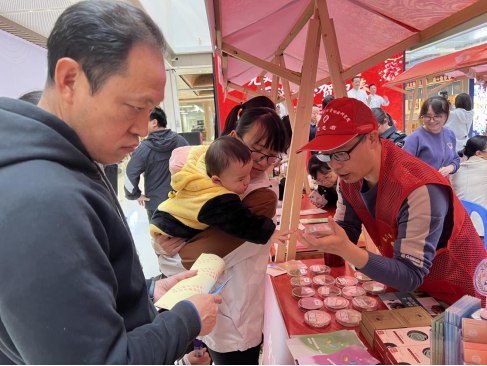
研判2026!中国药食同源行业政策汇总、销售额、销量、竞争格局及发展趋势分析:市场需求爆发,新兴成分表现出强劲增长势头[图]
Chan Ye Xin Xi Wang· 2026-01-26 01:21
Core Insights - The health-conscious consumer trend is driving demand for food products that offer health benefits, leading to increased interest in "food-medicine" products like goji berries, yam, and red dates [1][3][4] Industry Overview - The "food-medicine" concept is rooted in traditional Chinese medicine, emphasizing the dual role of certain foods as both nutrition and medicine [3] - The market for "food-medicine" products in China is projected to reach 56.78 billion yuan in 2024, with a year-on-year growth of 3% [1][6] Market Dynamics - The nutritional health food market in China is expected to grow to 678 billion yuan in 2024, reflecting a 7.3% increase year-on-year, providing a solid foundation for the "food-medicine" industry [6][7] - Sales of traditional ingredients like bird's nest and goji berries remain strong, while new ingredients like poria and astragalus are gaining traction, with astragalus seeing a 75.2% increase in sales [7][8] Competitive Landscape - The "food-medicine" industry features diverse competition from traditional pharmaceutical companies, food enterprises, new retail businesses, and internet health companies [9][10] - Major players include Tongrentang, Yunnan Baiyao, and Kang En Bei, which leverage their traditional medicine expertise to develop health-oriented food products [10][11] Development Trends - Future product development will focus on functional and scenario-specific offerings, catering to various consumer needs, such as liver health for night owls and digestive health for the elderly [12][15] - Cross-industry collaborations will become common, integrating "food-medicine" with baked goods, beverages, and other food categories to enhance flavor and health benefits [14][15] - Young consumers are emerging as a new growth segment, with increased interest in health products and innovative formats appealing to their preferences [15][16] - Stricter regulatory policies are expected to drive the industry towards higher quality standards, with ongoing support for traditional health culture and product innovation [16]


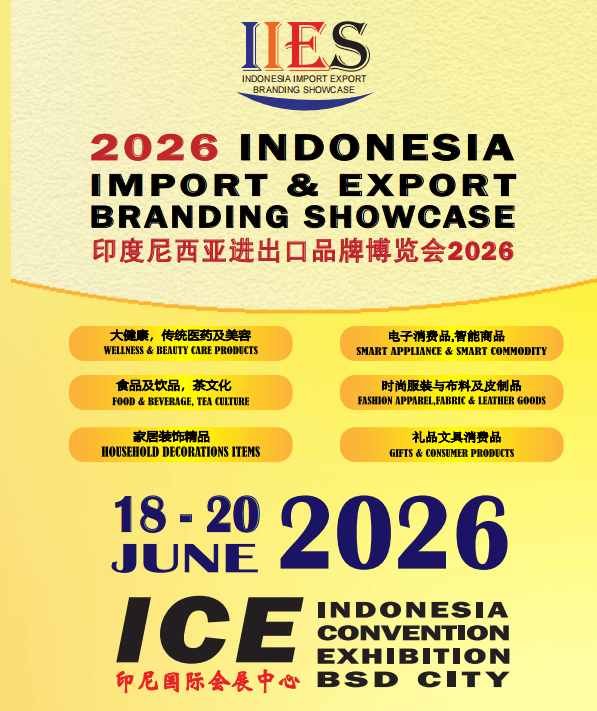
2026印度尼西亚进出口品牌博览会:展示印尼外贸与消费升级趋势。
Sou Hu Cai Jing· 2026-01-22 06:11
Group 1: Exhibition Information - The exhibition is named "Indonesia Import & Export Branding Showcase 2026" and is organized by Malaysia MICE Exhibition Sdn Bhd [1] - The event will take place from June 18 to June 20, 2026, at the Indonesia Convention Exhibition (ICE BSD City) [3] Group 2: Market Background - Indonesia is the largest economy in Southeast Asia, with a projected GDP of approximately $1.4 trillion in 2024 and a per capita GDP exceeding $4,500 [4] - The middle-class population is continuously expanding, indicating a clear trend of consumption upgrade [4] - The Indonesian government is implementing the "Making Indonesia 4.0" strategy, focusing on manufacturing, digital economy, and green industries, providing policy support for import and export trade [4] - Indonesia's total import and export volume is expected to exceed $420 billion in 2024, with trade with China exceeding $120 billion, making China its largest trading partner [5] Group 3: Consumer Market Characteristics - Indonesia has a population of over 270 million, with a significant youth demographic, as over 50% of the population is under 30 years old [6] - Consumer preferences are leaning towards fashionable, smart, and health-related products [6] - E-commerce penetration exceeds 70%, with rapid growth in social and live-streaming e-commerce, making a "dual-channel model" combining offline exhibitions and online channels a mainstream choice for brand promotion [6] - Local consumers show a high acceptance of imported products that offer "high cost-performance and local adaptation," particularly favoring Chinese electronic consumer goods, home products, and beauty products [6] Group 4: Industry Demand Analysis - The beauty market in Indonesia exceeds $8 billion, with an annual growth rate of 12%, driven by strong demand for natural organic skincare and traditional herbal beauty products [7] - The local export of products like coffee and palm oil is strong, while the import of high-end snacks and functional beverages is growing at over 15% [8] - The smartphone penetration rate in Indonesia exceeds 65%, with annual sales growth of 20% for smart home appliances and wearable devices, indicating a reliance on imports for mid-to-high-end products [8] - The real estate and home decoration markets are driving demand for home decor items, with the festive gift market exceeding $3 billion, and personalized products are in high demand [8]
我省对非洲进出口连续7年居中西部第一
Xin Lang Cai Jing· 2026-01-21 19:35
Group 1 - The core viewpoint of the news is that Hunan Province's foreign trade has achieved significant growth and diversification in 2025, with notable increases in exports and imports across various sectors [1][2]. - In 2025, Hunan's total import and export value reached 541.4 billion yuan, maintaining a scale above 500 billion yuan for five consecutive years, representing a 10.8% increase compared to 2020 [1]. - Hunan's automobile exports exceeded 30 billion yuan for the first time, reaching 33.84 billion yuan, with a year-on-year growth of 26.8%, and electric vehicle exports surpassed 100,000 units, increasing by 128.2% [1]. Group 2 - The province's export structure in 2025 showed that total exports amounted to 320.76 billion yuan, with traditional industries like engineering machinery and agricultural machinery seeing significant growth [2]. - Hunan's import volume of bulk commodities increased by 28.4% in 2025, with notable rises in metal ore imports by 37.8% and significant growth in imports of beef, bird's nest, and coffee by 44.3%, 243.4%, and 380.6% respectively [2]. - The province's trade network has expanded globally, achieving import and export growth with 118 countries and regions, with trade with Belt and Road countries reaching 320.08 billion yuan, accounting for 59.1% of the total trade value [1].
RCEP生效实施四年来 北京地区企业享惠货值稳步攀升
Zhong Guo Xin Wen Wang· 2026-01-21 10:39
Group 1 - The Regional Comprehensive Economic Partnership (RCEP) has been effective since January 1, 2022, leading to a steady increase in the value of tariff reductions and benefits for enterprises in Beijing, with a cumulative import value of 15.38 billion and a tax reduction of 652 million [1] - By 2025, enterprises in Beijing are expected to enjoy a benefit value of 5.175 billion and a tax reduction of 237 million, indicating continued growth in trade benefits under RCEP [1] - Beijing Customs has signed a total of 109,400 certificates of origin for exports to RCEP countries, amounting to 56.157 billion, with 31,224 certificates and 14.831 billion expected in 2025 [1] Group 2 - Beijing Tongrentang Health Pharmaceutical Co., Ltd. has benefited from RCEP, with the import tariff on bird's nest from ASEAN countries reduced from 25% to zero, lowering procurement costs and enhancing product competitiveness [2] - The approved exporter system under RCEP allows qualified enterprises to issue their own origin declarations, providing the same validity as traditional certificates without the need for visa, thus streamlining the export process [2] - Beijing Customs aims to enhance services and optimize regulations based on feedback from enterprises, collaborating with local governments and industry associations to promote the application of RCEP rules [2]
食品溯源全景路径剖析:从原料到成品,如何实现全程透明与效果验证?
Xin Lang Cai Jing· 2026-01-21 05:33
Core Insights - The article emphasizes the evolution of consumer expectations from basic safety compliance to a demand for quality certainty and efficacy in food products, highlighting the importance of trust in brand value [1][4][41] Group 1: Traceability in Food Industry - The search index for "food traceability" keywords increased by 157.39% year-on-year in the first half of 2025, indicating a growing consumer interest in product origins and processing [2] - Companies like Nongfu Spring are pioneers in traceability practices, transforming their water source into a symbol of brand trust [2] - Major food brands, including McDonald's and KFC, have initiated traceability journeys, but face challenges in differentiating their offerings in a crowded market [2][4] Group 2: Evolution of Traceability - Traceability marketing has shifted from merely ensuring safety compliance to establishing quality certainty and efficacy stability, driven by consumer health demands and technological advancements [4][5] - The traceability system has evolved from simple information recording to a standardized carrier of product value, integrating into brand building, product innovation, and user delivery [4][5] Group 3: Role of Technology - The traceability system in functional foods is advancing from basic safety assurance to a standardized and refined approach, similar to the beauty industry’s control over active ingredients [9] - Brands are increasingly using digital traceability to provide comprehensive production data, ensuring that active ingredients remain effective through industrial processing [14][15] Group 4: Consumer Engagement - Over 60% of global consumers are willing to pay a premium for brands that transparently disclose ingredient sources and production details, indicating a strong demand for transparency [8] - The trend is particularly pronounced in functional foods, where traceability is becoming a key component of building technical barriers [8][9] Group 5: Supply Chain Management - The ultimate value of traceability lies in the ability to deepen and control the supply chain, transitioning from mere production capabilities to sustainable selling [39][40] - Companies are moving from passive procurement to active supply chain management, enhancing their ability to respond to consumer demands quickly [40] Group 6: Traditional Chinese Medicine and Modernization - The market for "medicinal food" is projected to exceed 500 billion yuan by 2025, driven by consumer demand for standardized and verified products [25][26] - Brands are constructing comprehensive traceability systems to address issues of origin confusion and safety in traditional Chinese medicine [27][29] Group 7: Geographic Branding - Geographic indicators are being transformed into tangible brand assets through traceability, allowing consumers to verify the authenticity and quality of regional products [37][38] - Successful case studies, such as the sales of birch juice from Yichun, demonstrate the effectiveness of deep traceability in building consumer trust [38]

海关“签证作业自动化”实行 全球鲜货“速达”北京市民餐桌
Sou Hu Cai Jing· 2026-01-15 05:16
Core Viewpoint - The automation of customs visa operations has significantly accelerated the customs clearance process for imported goods, enhancing efficiency and freshness of products available to consumers [3][4]. Group 1: Automation Impact - Since the implementation of the automated visa issuance model on December 15, 2025, Beijing Customs has issued over 1,400 electronic certificates for imported goods such as yogurt, fresh aquatic products, and bird's nest [4]. - The new system allows for same-day issuance of the "Entry Goods Inspection and Quarantine Certificate," reducing the time from declaration to receipt of the certificate from several days to mere minutes [3][4]. - The automation process replaces manual steps with a streamlined digital system, which lowers operational costs for businesses while ensuring the quality and safety of imported products [4]. Group 2: Consumer Benefits - The expedited customs process has led to a significant increase in customer satisfaction, as products can be placed on shelves much faster than before, with some items being available just four days after production [3][4]. - The automation has particularly benefited perishable goods, ensuring that they reach consumers in a fresher state, thus enhancing the overall shopping experience [3][4].
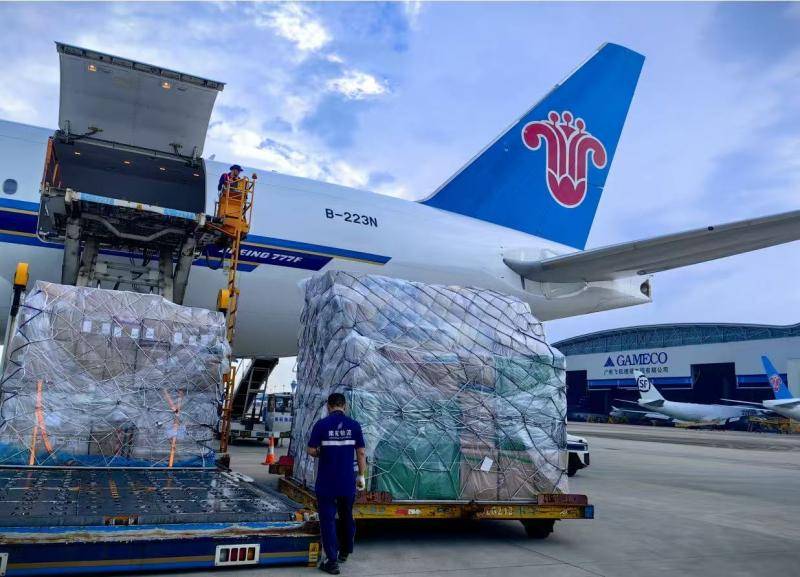
一位海南本土电商创业者的自贸港机遇答卷
证券时报· 2025-12-18 00:00
Core Viewpoint - The article highlights the significant growth of cross-border e-commerce in Hainan, driven by the policies of the Hainan Free Trade Port, which have transformed the business landscape for local entrepreneurs like Wang Jian [1][2][3]. Group 1: Policy Impact - The establishment of the Hainan Free Trade Port has led to a series of policy advantages, including zero tariffs on 74% of goods, which has significantly reduced costs and increased profit margins for local e-commerce businesses [2][3]. - The approval of cross-border e-commerce comprehensive pilot zones in Haikou and Sanya has facilitated smoother customs processes, allowing for faster and more efficient shipping [1][2]. Group 2: Business Development - Wang Jian's company has expanded its operations beyond local sales to a cross-border e-commerce network covering six Southeast Asian countries, showcasing the potential for local products to reach international markets [1][2]. - The introduction of a 1 billion yuan industry guidance fund and various financing services has alleviated the financial challenges faced by small and medium-sized enterprises in the region [3]. Group 3: Future Prospects - The article suggests that the unique tax policies, along with improved logistics and infrastructure, will create diverse opportunities for new business models in cross-border e-commerce [3]. - Wang Jian envisions a future where Hainan's specialty products are sold globally, while also bringing international goods to Chinese consumers, indicating a reciprocal trade dynamic [3].