军国主义

Search documents
中国对日本稀土出口暴涨,高市早苗紧急向美求援,下台加速中?
Sou Hu Cai Jing· 2026-01-06 05:42
Group 1 - The political future of Sanna Takashima, a prominent figure in Japan's right-wing politics, appears uncertain as rumors suggest her potential exit from the political stage by the end of 2026 [1] - Japan's dependence on Chinese rare earth exports has deepened, with a reported 34% year-on-year increase in rare earth magnet exports from China to Japan, reaching 304 tons in November 2025 [1] - Japan's government plans to significantly increase the departure tax from 1,000 yen to 3,000 yen starting July 2026, impacting all departing individuals regardless of nationality [2] Group 2 - Japan's strategy to reduce reliance on Chinese rare earths has proven ineffective, as companies continue to purchase these resources despite rising tensions and anti-China rhetoric [2][3] - The increase in taxes is perceived as a financial burden on Japanese businesses, with implications for military expansion funded by fiscal policies [5] - The political landscape is shifting, with potential internal party challenges to Takashima's leadership expected in the latter half of 2026 [11] Group 3 - The strategic implications of Japan's rare earth procurement and its relationship with China reflect a complex geopolitical landscape, where Japan's actions may lead to unintended economic consequences [3][11] - The ongoing economic pressures, including capital flight and declining public confidence, suggest that Japan's challenges extend beyond individual political figures [12] - The current political and economic strategies may not be sustainable, indicating a potential crisis in Japan's national strategy if fundamental issues are not addressed [12]

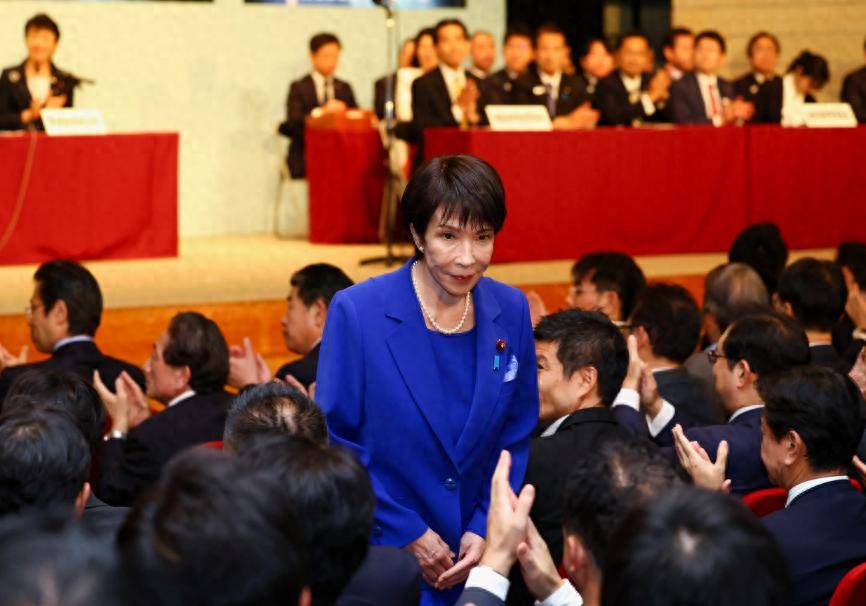
日本民间团体友好人士:高市言论本质是为发动战争制造舆论
Yang Shi Xin Wen Ke Hu Duan· 2026-01-05 10:40
Group 1 - Japanese Prime Minister Sanae Takaichi's remarks regarding Taiwan have drawn strong dissatisfaction and condemnation from Japanese civil society groups, who argue that her statements deviate significantly from Japan's constitutional commitment to peaceful development and exacerbate regional tensions [1][3] - Civil society representatives, including Seki Shizuko, express a deep sense of crisis regarding Takaichi's comments, viewing them as preparatory rhetoric for war, and highlight the evolution of Japan's Self-Defense Forces from a police reserve to a military force, which they claim violates the constitution [3] - The civil society group emphasizes that Takaichi's dangerous rhetoric indicates a lack of reflection on Japan's past aggressive wars, suggesting a potential return to militarism and imperialism [3][5] Group 2 - Another civil society representative, Seki Masahiro, calls for Takaichi to retract her statements and return to a path of peace and friendship with China, expressing concerns about her intentions and the potential consequences of her remarks [5] - The sentiment among civil society members is that Takaichi's comments are not mere slips of the tongue but rather reveal her underlying beliefs, indicating a troubling mindset regarding Japan's historical military actions [5]

中外对话丨中外专家展望2026国际局势:危中寻机 破茧前行
Zhong Guo Xin Wen Wang· 2026-01-01 08:11
Core Viewpoint - The international situation is expected to shift by 2026, with rising far-right groups in the West, Japan's extreme politicians pushing for militarism, and aggressive expansion by the U.S. in Latin America, leading to potential conflicts and violations of international law and the UN Charter [2] Group 1 - The rise of far-right groups and unilateralism in certain countries is creating significant uncertainty in global relations [2] - The emergence of militarism and trade protectionism is a concerning trend that could exacerbate international tensions [2] - There is a belief that by 2026, significant changes in international relations and political economy may occur, potentially leading to a new international order [2]
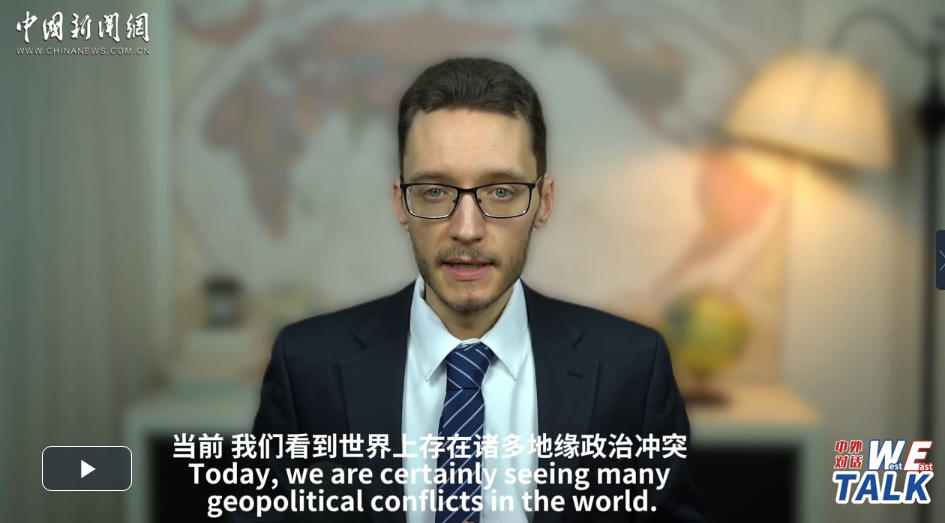
中外对话丨中外专家回望2025:世界不稳定,中国提供确定的力量
Zhong Guo Xin Wen Wang· 2026-01-01 02:03
Core Viewpoint - The article discusses the increasing global instability and the role of China in providing a stabilizing force amid rising nationalism, unilateralism, and complex power dynamics [1]. Group 1: International Relations and Cooperation - The year 2025 marks the 50th anniversary of China-Europe diplomatic relations, with high-level interactions being crucial for development [2]. - China’s new planning cycle is expected to release favorable signals for foreign cooperation, encouraging European countries to strengthen economic ties with China [2]. - Europe is increasingly focusing on China due to its policy continuity and stability, contrasting with the rising internal turmoil and uncertainty in the United States [2]. Group 2: Political Trends and Stability - The article highlights a worrying trend of right-leaning conservatism in global politics, with many countries experiencing a resurgence of militarism [3]. - China is committed to countering any form of militarism and aims to unite more forces to maintain regional stability against destabilizing policies from a few nations [3]. - China's adherence to multilateralism and international cooperation injects much-needed certainty into an uncertain world [3]. Group 3: Economic and Strategic Outlook - Despite the turbulent global landscape in 2025, there is confidence in the potential for positive development, as long as faith in human progress and the stabilizing role of China is maintained [4]. - The limitations of conservatism, unilateralism, and bullying behaviors will become more apparent, prompting the international community to recognize the risks of allowing these trends to continue [4]. - Countries focused on long-term development prefer stable environments for planning, and cooperation with China often provides a reliable foundation for development [5].
马来西亚学者:日本政府妄言“拥核”无异于政治自杀
Xin Lang Cai Jing· 2025-12-27 13:33
Group 1 - The Japanese government under Prime Minister Sanae Takaichi is attempting to revise the "Three Security Documents," specifically aiming to modify the clause regarding "not introducing nuclear weapons," which has sparked strong criticism domestically and internationally [1][2] - The remarks made by Takaichi's government are seen as blurring the lines of Japan's pacifist constitution, potentially worsening relations with neighboring countries and threatening regional security [1][2] - There is a growing concern that Japan's actions may lead to an arms race in East Asia, as neighboring countries may feel compelled to respond militarily to Japan's perceived shift towards militarization [2][6] Group 2 - The Japanese government's push for nuclear capabilities reflects a strategic anxiety regarding the adequacy of the U.S. nuclear umbrella, as well as a desire to become a "normal country" free from post-World War II constraints [4][6] - The potential pursuit of nuclear weapons by Japan could lead to global sanctions and economic collapse, as Japan is a signatory of the Non-Proliferation Treaty [4][6] - Japan's recent policy changes, including easing weapon export restrictions, indicate a shift from being a "peacekeeper" to a "potential arms dealer," which could complicate geopolitical dynamics in the region [6]
坚决遏制任何复活军国主义危险行径
Xin Lang Cai Jing· 2025-12-27 07:23
据新华社北京12月26日电 日本政府2026财年防卫预算再创历史新高。对此,中国外交部发言人林剑26 日在例行记者会上表示,近期国际社会对日本军事安全动向批评声音不断,日方不但没有反省收敛,反 而计划再次大幅增加防卫预算,更加暴露出日本右翼势力推动日本"再军事化"、企图让军国主义死灰复 燃的险恶用心。 "由于日本军国主义罄竹难书的侵略罪行,日本的军事安全动向一直备受亚洲邻国和国际社会关注。"林 剑表示,日本新政府执政以来,明显加快强军扩武步伐。从日本首相高市早苗发表涉台错误言论、对中 国发出武力威胁,到日本首相官邸高官发表拥核言论,再到推进修改"安保三文件",放风修改"无核三 原则"。日本正在背离一贯标榜的"走和平发展道路",在危险的方向上越走越远。 林剑说,近年来,日方自我松绑集体自卫权,发展所谓"对敌基地攻击能力",强化"延伸威慑"合作,将 沿海岛屿打造为"前沿阵地",明显超出"专守防卫"范畴。所谓"防御""反击"成为日本右翼势力煽动民 意、欺骗舆论、突破战后国际秩序和日本宪法规定的借口,这些动向已经引起国际社会高度警惕。 "日本人民也是军国主义的受害者。"林剑说,有日本有识之士指出,增加防卫费并不能带来 ...
更加暴露出企图让军国主义死灰复燃的险恶用心
Xin Lang Cai Jing· 2025-12-26 23:07
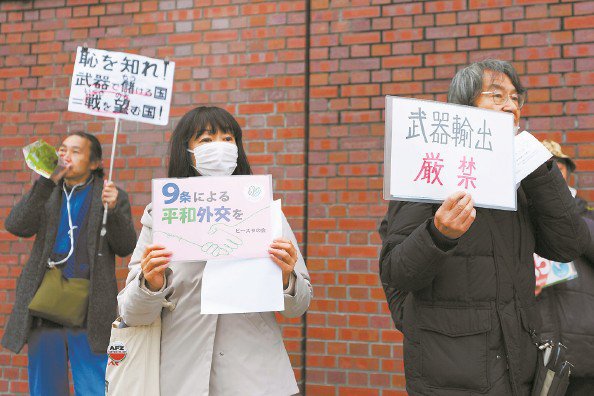
Core Viewpoint - The Japanese government has approved a record defense budget of approximately 9.04 trillion yen for the fiscal year 2026, raising concerns about Japan's militarization and the resurgence of militarism in the region [1][2] Group 1: Defense Budget and Militarization - The defense budget of 9.04 trillion yen marks a historical high for Japan, reflecting a significant increase in military spending [1] - The Chinese Foreign Ministry has criticized Japan's military expansion, suggesting it reveals the intentions of right-wing forces in Japan to promote militarization and revive militarism [1] - Japan's recent military actions, including statements from government officials regarding Taiwan and nuclear capabilities, indicate a shift away from its previously stated commitment to peaceful development [1] Group 2: Domestic and International Reactions - There is growing domestic opposition in Japan against the government's military expansion, with citizens organizing protests against increased defense spending [2] - Scholars have warned that the rising defense expenditures will impose a heavy economic burden on the Japanese populace, ultimately affecting ordinary citizens [2] - The Chinese government has expressed its commitment to collaborating with peace-loving nations to counter any attempts to revive militarism and uphold the outcomes of World War II [2]
日本大幅增加防卫费,中方:暴露日本右翼势力险恶用心
Huan Qiu Shi Bao· 2025-12-26 23:01
Core Viewpoint - The Japanese government has approved a record defense budget exceeding 9 trillion yen for the fiscal year 2026, reflecting a significant shift towards military expansion and modernization in response to perceived threats, particularly from China [1][2][3]. Defense Budget Overview - The defense budget includes funding for various military enhancements, such as 1.001 billion yen allocated for a coastal defense system involving drones, and 11 billion yen for testing long-endurance drones to prevent airspace violations [1][2]. - An additional 301 billion yen is earmarked for acquiring long-range missiles, including hypersonic missiles, while 51 billion yen is designated for upgrading missile defense systems [2]. - The budget also plans to reorganize the Air Self-Defense Force into an "Aerospace Self-Defense Force," with 11 billion yen allocated for satellite interference monitoring equipment [2]. Strategic Implications - This budget marks the 14th consecutive year of defense spending increases in Japan, focusing on offensive capabilities and new operational strategies, including long-range strikes and enhanced air and naval forces [2][3]. - Analysts suggest that this shift represents a transformation from a "defensive" to an "active deterrent" military posture, potentially altering the regional security landscape [3]. Domestic and International Reactions - There is growing criticism from the international community regarding Japan's military expansion, with concerns that it reflects a resurgence of militarism [1][3]. - Domestic protests have emerged against the government's military spending, highlighting concerns over the economic burden on ordinary citizens and questioning the effectiveness of increased defense spending in ensuring national security [3].
12月26日外交部例行记者会答问汇总
Xin Lang Cai Jing· 2025-12-26 10:49
Group 1 - Japan's government has approved a record defense budget exceeding 9 trillion yen for the fiscal year 2026, reflecting a significant increase in military spending [3][5] - The international community has raised concerns about Japan's military security movements, which are perceived as a push towards militarization and a revival of militarism [3][5] - Japan's recent actions, including the development of offensive military capabilities and changes to its security policies, have drawn heightened scrutiny and alarm from neighboring countries and the international community [3][6] Group 2 - The Japanese government's decision to authorize proactive cyber defense measures marks a significant shift from defensive to offensive cyber policies, raising concerns about potential violations of international law [6] - Japan's expansion of its cyber capabilities and the introduction of new laws are seen as attempts to circumvent post-war international order, prompting serious concerns from China [6] - The emphasis on innovation and technological advancement in China, particularly in the field of humanoid robotics, positions the country as a leader in global supply chains and innovation [7]
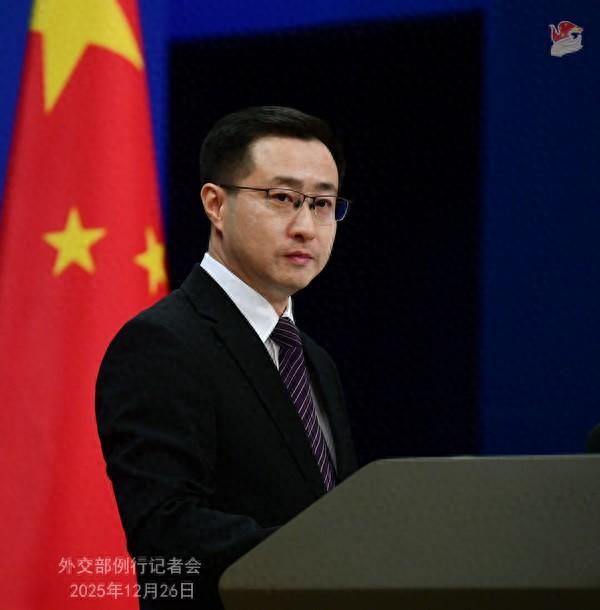
多国人士:日本错误言论扰动地区局势 损害自身利益
Yang Shi Xin Wen Ke Hu Duan· 2025-12-26 07:44
Group 1 - The recent statements and actions by Japanese officials regarding Taiwan and nuclear issues are seen as disruptive to regional stability, ultimately harming Japan's own interests [1][3][4] - Japan has been increasingly deviating from its pacifist stance over the past decade, with rising militarism and military spending, which are viewed as contrary to Japan's own interests [1][3] - The military tensions and rhetoric from Japan are perceived as provocations that could exacerbate regional tensions and negatively impact the global economy [3][4] Group 2 - The international community is urged to remain vigilant against Japan's revival of militarism, as it poses a threat to the established international order [1][4] - There is a consensus that any mention of Taiwan's situation by Japan is an interference in China's internal affairs, which could lead to further regional instability [4]