高超声速导弹

Search documents
中上游企业25年业绩恢复性高增长
HTSC· 2026-02-02 07:09
Investment Rating - The report maintains an "Overweight" rating for the aerospace and defense sector [8] Core Insights - The aerospace and defense industry is expected to experience significant recovery and growth in 2025, with 30 out of 75 listed companies forecasting positive earnings growth compared to the previous year [11][12] - The report highlights structural opportunities in military equipment demand during the "14th Five-Year Plan" period, focusing on new domains, unmanned systems, advanced weaponry, and low-cost equipment [14][16] Summary by Sections Industry Performance - As of January 31, 2025, 75 out of 120 listed companies in the defense sector have disclosed earnings forecasts, with 30 companies expecting positive growth, 7 expecting positive but declining growth, 17 expecting losses but reduced compared to the previous year, and 21 expecting increased losses [11][12] Key Companies to Watch - Recommended companies include: - AVIC Shenyang Aircraft Corporation (600760 CH) - Guorui Technology (600562 CH) - Steel Research (300797 CH) - Guotai Group (603977 CH) - West Superconductor (688122 CH) - Ruichuang Micro-Nano (688002 CH) - Beifang Navigation (600435 CH) - Gaode Infrared (002414 CH) - Aerospace Intelligence (300446 CH) - Aerospace Rainbow (002389 CH) [3][8][9] Earnings Forecasts - Notable companies with significant earnings growth forecasts include: - Beimo High-Tech: 1169% growth due to product delivery and cost reduction [12] - Hailanxin: 509% growth from increased self-produced products [12] - *ST Chengchang: 452% growth driven by industry recovery [12] - Zhimin Da: 414% growth from increased demand in previously established product lines [12] - Aileda: 351% growth from increased military and civilian product demand [12] Long-term Outlook - The report emphasizes the importance of new equipment construction cycles and suggests focusing on new products and markets during the "14th Five-Year Plan" [14][16] - The military trade market is expected to grow, with China aiming to increase its market share in global military trade [17] Market Trends - The report notes a decline in the defense sector index by 7.69% over the past week, underperforming the broader market [28] - The current PE (TTM) for the defense sector is 95.23, indicating a high valuation compared to historical levels [36] Investment Opportunities - The report suggests that companies involved in unmanned systems, low-cost munitions, and military AI are likely to see significant growth opportunities [16][18] - The commercial aerospace sector is also highlighted as a growing area, with advancements in satellite internet and low-altitude economy [18][25]



火箭军成立10周年!大国长剑壁纸震撼上新
Xin Lang Cai Jing· 2025-12-31 06:32
Core Viewpoint - The establishment of the Rocket Force of the People's Liberation Army (PLA) marks a significant milestone in China's military development, showcasing advancements in missile technology over the past decade [1]. Group 1: Development of Rocket Force - The Rocket Force was officially established on December 31, 2015, and has achieved remarkable advancements in weaponry over the past ten years [1]. - The recent military parade featured various advanced missiles, including Dongfeng-5C, Dongfeng-17, Dongfeng-26D, Dongfeng-31, Dongfeng-61, and Changjian-1000, highlighting the force's capabilities [1]. Group 2: Public Sentiment and National Pride - The military parade's commentary emphasized the strength and global reach of the Rocket Force, evoking strong emotions and national pride among the audience [1].

日本拟用560亿日元增设弹药库
Xin Lang Cai Jing· 2025-12-27 00:11
Core Viewpoint - The Japanese government has approved a budget of approximately 56 billion yen for the fiscal year 2026 to establish additional ammunition depots, with plans to add around 130 depots by 2032, raising concerns among local residents about potential military escalation and regional stability [1]. Group 1: Budget and Plans - The budget for the fiscal year 2026 includes about 56 billion yen (approximately 25.1 million RMB) for the construction of new ammunition depots [1]. - The Japanese Ministry of Defense plans to increase the number of ammunition depots from approximately 1,400 to 1,530 by 2032 [1]. - By the fiscal year 2025, the budget for related construction has reached 48.2 billion yen (approximately 21.6 million RMB) [1]. Group 2: Locations and Concerns - Of the proposed 130 new depots, 65 locations have already been determined, primarily in Hokkaido, Kyoto, Miyazaki, Kagoshima, and Okinawa [1]. - Local opposition has emerged, particularly from officials in Kagoshima Prefecture, who express concerns that the depots could become targets in emergencies [1]. Group 3: Strategic Implications - The decision to build additional depots is driven by three main considerations: the need for increased ammunition storage due to expanded military capabilities, the introduction of new weapon systems requiring specialized storage, and the strategic positioning of depots to enhance operational capabilities against potential threats from the north and southwest [1]. - The distribution of the new depots indicates a focus on enhancing military readiness in response to regional tensions, particularly concerning the Taiwan Strait and potential conflicts with Russia [1].
日本大幅增加防卫费,中方:暴露日本右翼势力险恶用心
Huan Qiu Shi Bao· 2025-12-26 23:01
Core Viewpoint - The Japanese government has approved a record defense budget exceeding 9 trillion yen for the fiscal year 2026, reflecting a significant shift towards military expansion and modernization in response to perceived threats, particularly from China [1][2][3]. Defense Budget Overview - The defense budget includes funding for various military enhancements, such as 1.001 billion yen allocated for a coastal defense system involving drones, and 11 billion yen for testing long-endurance drones to prevent airspace violations [1][2]. - An additional 301 billion yen is earmarked for acquiring long-range missiles, including hypersonic missiles, while 51 billion yen is designated for upgrading missile defense systems [2]. - The budget also plans to reorganize the Air Self-Defense Force into an "Aerospace Self-Defense Force," with 11 billion yen allocated for satellite interference monitoring equipment [2]. Strategic Implications - This budget marks the 14th consecutive year of defense spending increases in Japan, focusing on offensive capabilities and new operational strategies, including long-range strikes and enhanced air and naval forces [2][3]. - Analysts suggest that this shift represents a transformation from a "defensive" to an "active deterrent" military posture, potentially altering the regional security landscape [3]. Domestic and International Reactions - There is growing criticism from the international community regarding Japan's military expansion, with concerns that it reflects a resurgence of militarism [1][3]. - Domestic protests have emerged against the government's military spending, highlighting concerns over the economic burden on ordinary citizens and questioning the effectiveness of increased defense spending in ensuring national security [3].
工业克苏鲁,中国想从世界买什么?
虎嗅APP· 2025-12-03 10:22
Core Viewpoint - The article discusses the implications of China's self-sufficiency in manufacturing and its reluctance to engage in international trade, raising questions about the future of global trade dynamics and the concept of "Industrial Cthulhu" [4][8]. Group 1: Trade Dynamics - The author highlights that during a recent trip to mainland China, the prevailing sentiment was a lack of interest in imports, as China is capable of producing everything it needs more efficiently and at lower costs [7]. - The article questions the existence of trade if the largest seller, China, is not interested in buying from others, suggesting a potential shift in global trade paradigms [8]. - The author notes that the current trade surplus for China reached $3.3 trillion by the end of October, indicating a significant imbalance in trade relationships [16]. Group 2: Industrial Innovation - The article emphasizes China's rapid advancements in various sectors, including electric vehicles, photovoltaics, and AI, showcasing its transition from a manufacturing hub to an innovation leader [12]. - It mentions that the cost of hardware for autonomous vehicles in China is less than one-third of that in the U.S., highlighting China's competitive edge in technology [12]. - The article also points out that Western pharmaceutical companies are increasingly investing in Chinese firms, recognizing their potential in innovative drug development [12]. Group 3: Economic Challenges - The author discusses the risks associated with China's high trade surplus, including the potential for increased financial risk and inefficiency in overseas dollar assets [16]. - The article suggests that China's reliance on its status as the "world's factory" may hinder the internationalization of the renminbi, as the country imports less and maintains a singular channel for offshore assets [17]. - It raises concerns about the long-term sustainability of China's economic model, which may lead to a vicious cycle of trade imbalances and reduced global competitiveness [16][17]. Group 4: Future Considerations - The article proposes a shift in narrative from a zero-sum game in trade to a collaborative approach, suggesting that countries should work together and share benefits rather than compete solely on buying and selling [18]. - It emphasizes the need for a new framework that transforms the "world factory" concept into a "world workshop + world testing ground," which could foster innovation and cooperation [18].
日本曾定3套“夺岛”方案,细节曝光
第一财经· 2025-11-23 07:44
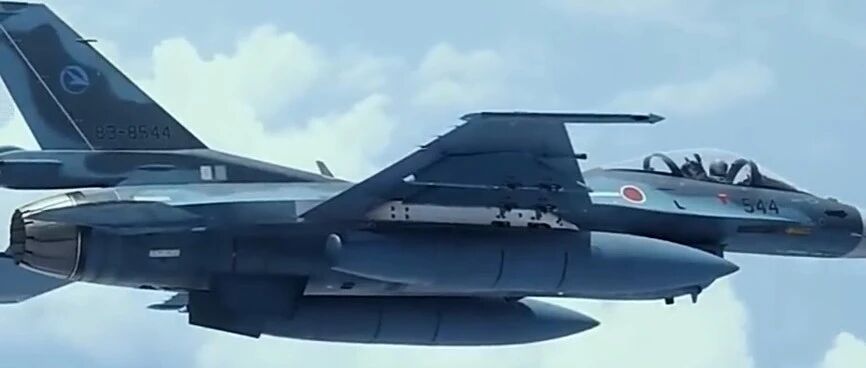
Core Viewpoint - Japan's Self-Defense Forces (SDF) are enhancing military deployments near the Taiwan Strait, with three operational plans aimed at potential conflicts in the region, raising concerns about regional stability [3][4]. Group 1: Military Strategies - The first operational plan involves the "Amphibious Rapid Deployment Brigade" executing a blitzkrieg strategy, with an expansion to 3,000 personnel and utilizing various naval vessels for rapid troop deployment [4]. - The second plan focuses on large-scale amphibious operations, with the SDF aiming to establish a "Maritime Transport Group" by 2027, consisting of 10 transport vessels to project elite forces and conduct sustained military logistics [4]. - The third strategy emphasizes missile firepower suppression and blockade, utilizing advanced anti-ship and hypersonic missiles to support the rapid deployment of forces [5]. Group 2: Limitations and Challenges - The SDF faces significant challenges in securing air superiority, as its F-15 and F-2 aircraft are outdated, and the limited number of F-35A jets are insufficient to protect naval operations [6]. - The SDF's island seizure forces are vulnerable to long-range strikes from various missile systems, indicating a high risk of failure during deployment [6].
日本曾定3套“夺岛”方案,细节曝光
财联社· 2025-11-23 07:44
Core Viewpoint - Japan's Self-Defense Forces are enhancing military deployments near the Taiwan Strait in response to provocative remarks by Prime Minister Sanae Takaichi, with plans established as early as 2021 for military operations in the event of a Taiwan crisis [1][2]. Group 1: Military Strategies - The Japan Ground Self-Defense Force has developed three military strategies focused on the Taiwan Strait, utilizing the "Southwest Islands" as operational bases [2]. - The first strategy involves the "Amphibious Rapid Deployment Brigade" executing a blitzkrieg, with the brigade expanded to 3,000 personnel and utilizing various naval vessels for rapid troop deployment [2]. - The second strategy is a large-scale amphibious operation, with plans to integrate existing forces into a new special operations brigade and establish a "Maritime Transport Group" by 2027, equipped with 10 transport vessels [2]. - The third strategy focuses on missile fire suppression and blockade, employing advanced anti-ship and hypersonic missiles to support the amphibious operations [2]. Group 2: Limitations and Challenges - The Japan Self-Defense Forces face significant challenges in achieving air superiority, as their F-15 and F-2 aircraft are outdated, and the limited number of F-35A jets do not provide adequate protection for naval operations [3]. - The potential for long-range firepower to disrupt Japanese amphibious forces during mobilization poses a critical risk, indicating that any deployment could lead to failure due to overwhelming enemy firepower [3].

日本3套“夺岛”方案曝光
中国基金报· 2025-11-23 06:33
Group 1 - The article discusses Japan's military preparations in response to tensions in the Taiwan Strait, particularly focusing on the deployment of the Self-Defense Forces on the southwestern islands [1][2]. - Three military strategies have been outlined for potential operations in the Taiwan Strait: a rapid assault by the "Amphibious Rapid Deployment Brigade," large-scale amphibious operations, and missile fire suppression and blockade [2]. - The "Amphibious Rapid Deployment Brigade" has expanded to 3,000 personnel, with plans to utilize various naval vessels for quick troop deployment and island seizure [2]. Group 2 - The Japanese Ground Self-Defense Force plans to establish a "Maritime Transport Group" by 2027, which will include 10 transport vessels to enhance military logistics and support operations in the southwestern direction [2]. - The article argues that Japan's military strategies may not succeed due to the inability to secure air superiority, as the Air Self-Defense Force's capabilities are considered outdated compared to advanced enemy aircraft [3]. - Additionally, the article highlights that Japan's forces would be vulnerable to long-range strikes during mobilization, which could lead to failure in any attempted operations [3].

日本3套“夺岛”方案曝光
券商中国· 2025-11-23 05:46
Core Viewpoint - Japan's Self-Defense Forces are enhancing military deployments near the Taiwan Strait, with three operational plans aimed at potential conflicts in the region, raising concerns about regional stability [1][2]. Group 1: Military Strategies - The first operational plan involves the "Amphibious Rapid Deployment Brigade" executing a blitzkrieg strategy, with an expansion to 3,000 personnel and utilizing various naval vessels for rapid troop deployment [2]. - The second plan focuses on large-scale amphibious operations, with Japan's Ground Self-Defense Force set to establish a "Maritime Transport Group" by 2027, integrating existing forces into a new special operations brigade [2]. - The third strategy emphasizes missile firepower suppression and blockade, utilizing advanced missile systems to support the rapid deployment of forces [2]. Group 2: Limitations and Challenges - Japan's Self-Defense Forces face significant challenges in securing air superiority, as their current fighter jets are outdated and insufficient in number, limiting their ability to protect naval operations [3]. - The potential for long-range firepower to disrupt troop movements poses a critical risk, as any deployment could be met with overwhelming fire from advanced missile systems [3].

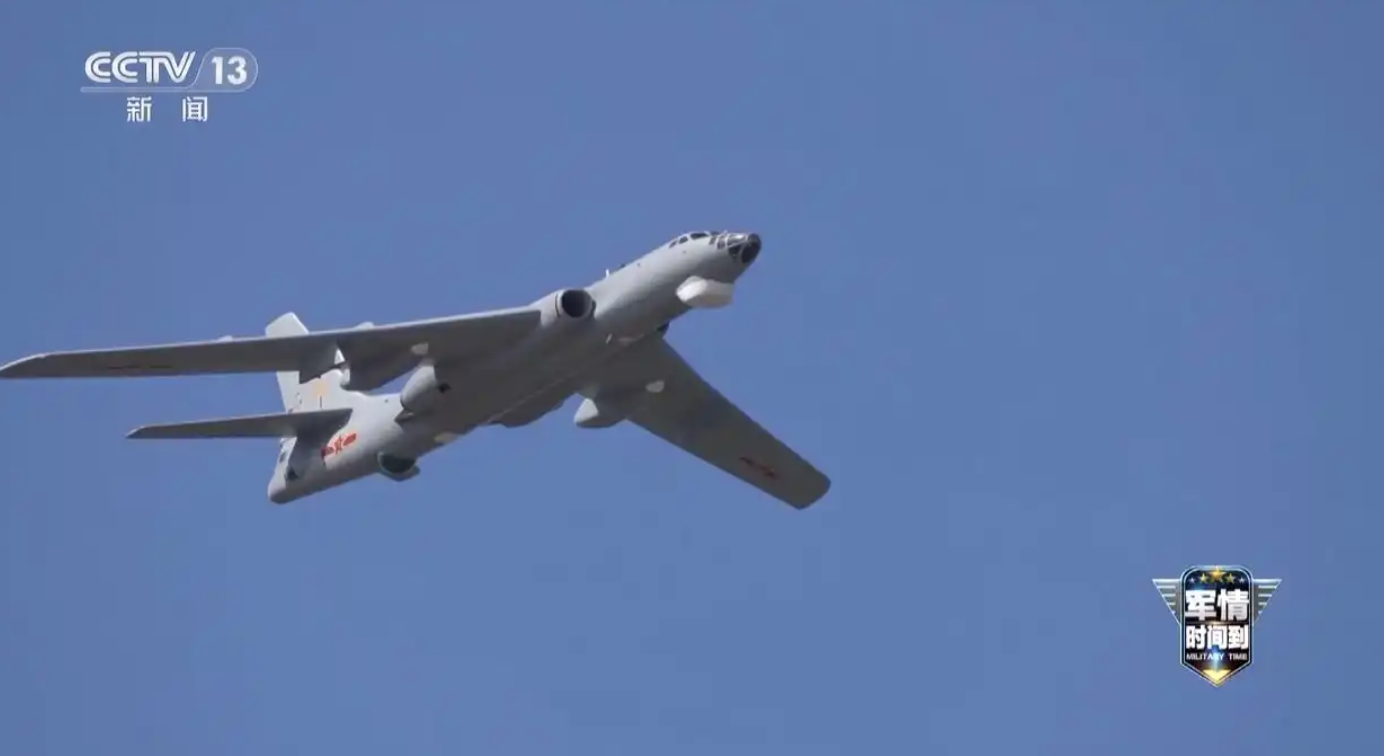
长春航展轰-6首次双机编队通场,有何特别含义?
Yang Shi Xin Wen· 2025-09-21 09:57
Core Viewpoint - The 2025 Air Force Aviation Open Day and Changchun Air Show commenced on September 19, marking the largest and most content-rich event since 2019, showcasing the capabilities of the H-6K bomber family and its strategic significance for national defense [1]. Group 1: Event Overview - The Changchun Air Show is the fourth aviation exhibition held in Changchun since 2019 and features the largest scale and most diverse content to date [1]. - The flying display of bombers, particularly the H-6K, left a significant impression on attendees, symbolizing national strength and the commitment of the People's Air Force to protect national airspace [1]. Group 2: H-6K Bomber Capabilities - The H-6K bomber has transitioned from "platform operations" to "system operations," indicating a strategic shift from coastal defense to far-reaching deterrence capabilities [1]. - The H-6K has been involved in various large-scale missions, including regular training and patrols in the Western Pacific and East China Sea, enhancing its role in maintaining national sovereignty [1]. Group 3: Technical Aspects of Bomber Operations - The low-altitude formation flying of the H-6K is technically challenging due to its size and power, requiring high precision from the crew [6]. - This capability has practical combat value, as low-altitude flying can help evade radar detection during missions, allowing for surprise attacks [8]. Group 4: Armament and Variants - The H-6K is equipped with multiple hardpoints for carrying large missiles, including cruise missiles and hypersonic missiles, enhancing its long-range strike capabilities [9][11]. - Variants of the H-6, such as the H-6H, are designed for specific roles, including anti-ship operations, with modifications to their radar and sensor systems [14][16].