
国际局势

Search documents
特朗普威胁下一个就是古巴
21世纪经济报道· 2026-03-06 04:51
Group 1 - The core viewpoint of the article highlights President Trump's intention to prioritize ending the conflict in Iran before addressing issues related to Cuba, indicating a strategic approach to foreign policy [1] - Trump mentioned that Cuba is "just a matter of time" for reaching an agreement, suggesting a sense of urgency from the Cuban side to negotiate [1] - The article also notes that Trump described the situation in Venezuela as "stable," praising the current interim president, Delcy Rodriguez, which may reflect a shift in U.S. foreign policy towards Venezuela [1] Group 2 - The article references recent military developments, including Iran reportedly hitting the U.S. aircraft carrier "Lincoln," indicating ongoing tensions in the region [4]

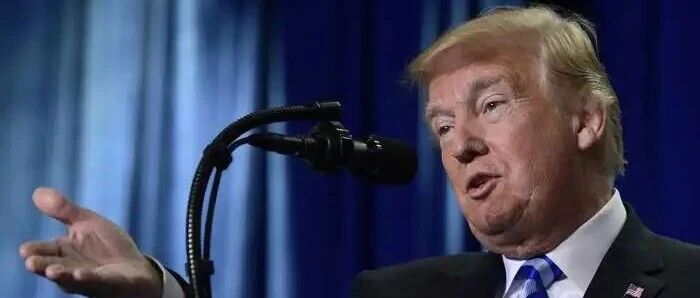
委内瑞拉总统府附近传出枪声,白宫官员称美国“未参与”
Xin Lang Cai Jing· 2026-01-06 04:00
Group 1 - The U.S. government is closely monitoring reports of a shooting incident in Caracas, Venezuela, and has stated that it is "not involved" in the matter [2] - Gunfire was reported near the presidential palace in Caracas, attributed to unauthorized drone flights over the area, leading police to implement warning shots [4] - The Venezuelan Ministry of Communication has indicated that the overall national situation is stable and social order is normal [4]
意大利、德国、西班牙、伊朗、哥伦比亚发声
Xin Lang Cai Jing· 2026-01-03 12:01
Group 1 - Italy's Foreign Minister Antonio Tajani stated that Rome and its diplomatic missions in Caracas are closely monitoring developments in Venezuela, particularly concerning the Italian expatriates in the country [1] - Approximately 160,000 Italians reside in Venezuela, with most holding dual citizenship, while others visit for work and tourism [1] - Germany's Foreign Ministry is also closely watching the situation in Venezuela and has convened a crisis response group to discuss further actions [1] - Spain's Foreign Ministry called for all parties to de-escalate tensions and emphasized the need for actions to comply with international law and the principles of the UN Charter, offering to mediate for a peaceful resolution [1] Group 2 - Colombian President Petro urged the UN Security Council to convene an emergency meeting regarding the situation in Venezuela [2] - Cuban President Díaz-Canel condemned the U.S. actions against Venezuela, labeling them as "criminal acts" [2]
中外对话丨中外专家展望2026国际局势:危中寻机 破茧前行
Zhong Guo Xin Wen Wang· 2026-01-01 08:11
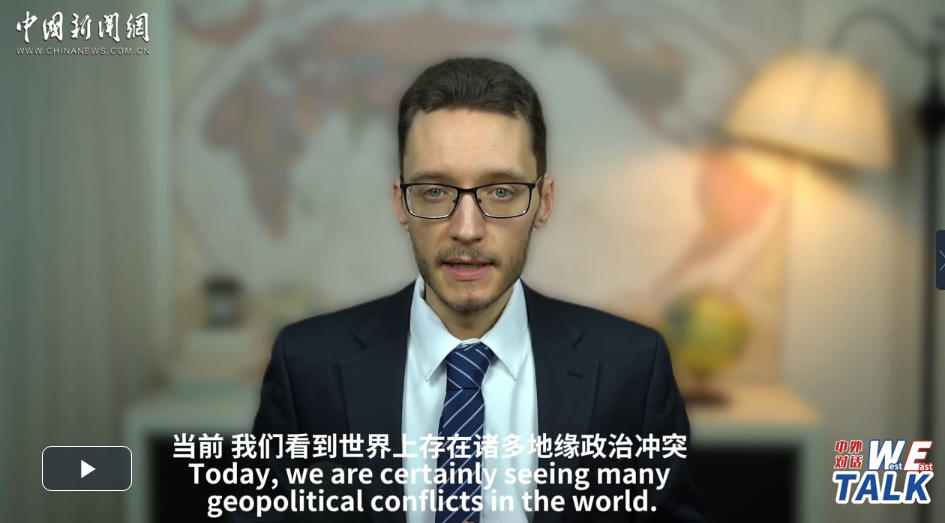
Core Viewpoint - The international situation is expected to shift by 2026, with rising far-right groups in the West, Japan's extreme politicians pushing for militarism, and aggressive expansion by the U.S. in Latin America, leading to potential conflicts and violations of international law and the UN Charter [2] Group 1 - The rise of far-right groups and unilateralism in certain countries is creating significant uncertainty in global relations [2] - The emergence of militarism and trade protectionism is a concerning trend that could exacerbate international tensions [2] - There is a belief that by 2026, significant changes in international relations and political economy may occur, potentially leading to a new international order [2]
古特雷斯对美委紧张局势升级表示关切
Xin Hua She· 2025-12-11 22:31
Core Viewpoint - The United Nations Secretary-General António Guterres expresses concern over the escalating tensions between the United States and Venezuela, urging all parties to exercise restraint to avoid actions that could destabilize Venezuela and the region [1] Group 1: Tensions and Responses - Guterres has been closely monitoring any developments regarding the escalating tensions between the U.S. and Venezuela [1] - The UN calls for all parties to refrain from actions that could further exacerbate bilateral tensions and undermine stability in Venezuela and the region [1] Group 2: U.S. Actions - U.S. President Trump announced the seizure of a large oil tanker near Venezuelan waters by the U.S. military [1] - The Venezuelan Foreign Minister condemned this action as "acts of international piracy" [1] - Recently, the U.S. has deployed several warships in the Caribbean Sea near Venezuela under the pretext of "anti-drug" operations, increasing pressure on Venezuela [1] Group 3: Venezuelan Government's Position - Venezuela has repeatedly accused the U.S. of attempting to instigate regime change through military threats and expanding military presence in Latin America [1]
国际局势对黄金价格影响的深度剖析与展望
Sou Hu Cai Jing· 2025-11-15 06:57
Group 1 - Gold serves as a crucial asset in global financial markets, reflecting supply-demand dynamics and international geopolitical changes [1] - The study aims to reveal the intrinsic relationship between international situations and gold prices, analyzing the impact of various geopolitical events [2] - The research innovatively incorporates multiple factors such as geopolitical, economic, and monetary policy influences on gold prices [3] Group 2 - Gold's commodity attribute is linked to its industrial and jewelry demand, with supply from major gold-producing countries affecting its base price [4] - Gold's financial attribute positions it as a key investment asset and a hedge against risks, with significant increases in ETF holdings during crises [5] - Gold retains its monetary attribute as a recognized "hard currency," with central banks increasing their gold reserves to optimize foreign exchange structures [6] Group 3 - Political instability increases demand for gold as a safe-haven asset, with historical examples showing significant price spikes during geopolitical conflicts [7] - Economic changes, such as growth slowdowns or inflation, influence investor demand for gold, leading to price fluctuations [8] - Adjustments in monetary policy by central banks affect gold prices through changes in liquidity, interest rates, and currency values [9] Group 4 - Historical geopolitical events like the Gulf War and the Russia-Ukraine conflict demonstrate varying impacts on gold prices, with the latter showing prolonged effects due to multiple influencing factors [10][11] - Economic crises, such as the 2008 financial crisis, highlight gold's role as a safe-haven asset, with significant price increases during market turmoil [12] - The European debt crisis showcased gold's value as a non-euro asset, with price fluctuations driven by regional economic risks [13] Group 5 - The implementation of quantitative easing by the Federal Reserve post-2008 significantly boosted gold prices, illustrating the long-term effects of monetary policy [14] - Japan's negative interest rate policy provided a short-term uplift to gold prices, emphasizing the varying impacts of different monetary policies [15] - Recent geopolitical tensions, such as U.S.-China trade disputes and Brexit, have led to cyclical and event-driven fluctuations in gold prices [17][18]
超级周,黄金又暴跌!
Sou Hu Cai Jing· 2025-10-27 09:37
Group 1: Gold Market - The gold market experienced a significant decline last week, with spot gold closing down $138.26, a drop of 3.25%, ending at $4,112.65 [1] - Currently, gold is trading around $4,036, indicating continued downward pressure [1] Group 2: U.S. Economic Indicators - The total U.S. national debt has surpassed $38 trillion, with a recent downgrade of the U.S. sovereign credit rating from "AA" to "AA-" by Scope Ratings due to deteriorating public finances and governance standards [6] - The Federal Reserve is expected to announce a 25 basis point rate cut, bringing the target range to 3.75%-4% during its meeting on October 28-29 [9] - There is uncertainty regarding the release of inflation data next month due to a government shutdown, which could complicate the Fed's decision-making process [10] Group 3: International Relations and Conflicts - Pakistan's defense minister warned of "full-scale war" if no agreement is reached during talks with Afghanistan in Istanbul [14] - The ongoing conflict between Russia and Ukraine has escalated, with Russia targeting Ukrainian defense and energy infrastructure, leading to temporary power outages in Ukraine [16] - A joint statement from multiple Western nations, including Canada and the EU, emphasized support for Ukraine and the need for a ceasefire [17]

普京亲自来要稀土技术,为何中国一口拒绝?
Sou Hu Cai Jing· 2025-10-02 05:24
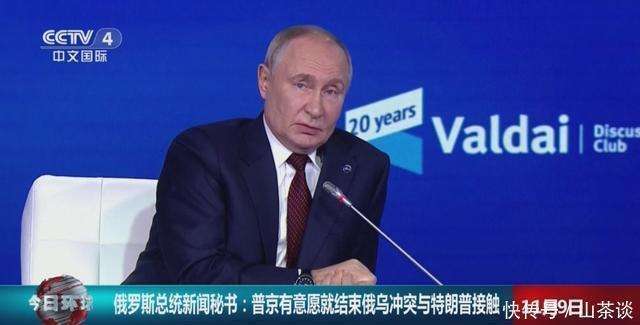
Core Insights - Putin's request during his visit to China for technology transfer in rare earth mining and refining was unmet, leading to disappointment [1] - Russia aims to learn from China due to its significant rare earth reserves and technological capabilities, despite having its own substantial reserves estimated at 28.5 million tons [1][3] - The geopolitical context, particularly the tension between Russia and the West, influences Russia's expectation for cooperation from China [5] Group 1: Russia's Rare Earth Resources - Russia possesses an estimated 28.5 million tons of rare earth reserves, although this figure does not account for much of the Far East region [1] - In addition to rare earths, Russia holds a significant position in the market for certain rare metals like germanium, where it has notable reserves and refining capabilities [1] Group 2: Technological Challenges - Russia faces technological bottlenecks that hinder effective extraction and refining of its rare earth resources, with only a few countries, including China and the U.S., possessing mature technologies [3] - The complexity of extracting rare earth metals is often underestimated, requiring advanced technology that Russia currently lacks [3] Group 3: Geopolitical Context - The current international climate, marked by rising tensions reminiscent of the Cold War, leads Russia to believe that its actions in the Ukraine conflict should warrant support from China [5] - Despite some economic support from China, there is a perception within Russia that such assistance is expected rather than earned [5] Group 4: Dependency on China - Russia's share of global rare earth production is minimal, at only 1%, and it heavily relies on Chinese technology for high-tech product manufacturing [7] - If China were to cease supplying Russia, the impact would be more severe for Russia compared to Western nations [7] Group 5: Strategic Importance of Technology - China controls over 90% of the core technologies in the rare earth industry, making these technologies crucial for its economic and strategic interests [9] - The potential for Russia to become a strong competitor to China in rare earth mining and refining hinges on acquiring these technologies, which China is unlikely to share [9]
胡塞武装切断海底光缆,微软发声明应对
Xin Lang Cai Jing· 2025-09-11 03:26
Core Insights - The article presents a viewpoint on the current market trends and investment opportunities within a specific industry, highlighting key financial metrics and performance indicators [1] Group 1 - The industry has seen a significant increase in revenue, with a reported growth of 15% year-over-year, reaching a total of $5 billion [1] - Major companies within the sector are focusing on innovation and technology integration to enhance operational efficiency and customer engagement [1] - The competitive landscape is evolving, with new entrants disrupting traditional business models and increasing market share [1] Group 2 - Recent mergers and acquisitions have reshaped the industry, with a notable deal valued at $1.2 billion that is expected to create synergies and expand market reach [1] - Regulatory changes are influencing operational strategies, prompting companies to adapt to new compliance requirements [1] - Consumer behavior is shifting towards sustainability, driving companies to invest in eco-friendly practices and products [1]

沈逸老师谈Facebook和谷歌当初退出中国的原因!
Xin Lang Cai Jing· 2025-08-27 10:27
Group 1 - The core reason for Facebook and Google's exit from China was related to regulatory challenges and censorship issues that conflicted with their operational principles [2] - Both companies faced significant barriers in terms of data privacy and content control, which ultimately led to their decision to withdraw from the Chinese market [2] - The impact of their exit has been profound, influencing the landscape of social media and digital advertising in China, allowing local companies to fill the void [2] Group 2 - The discussion highlights the broader implications of international companies navigating complex regulatory environments in foreign markets [2] - It emphasizes the importance of understanding local laws and cultural contexts for global businesses aiming to operate in China [2] - The analysis suggests that the experiences of Facebook and Google serve as cautionary tales for other tech companies considering entry into the Chinese market [2]