
减税降费

Search documents
利好来了!沪深交易所宣布降费
21世纪经济报道· 2025-12-26 11:05
Core Viewpoint - The Chinese capital market received favorable policy news on December 26, with both the Shanghai and Shenzhen Stock Exchanges announcing a series of fee reduction measures for 2026, expected to exceed 19 billion RMB in total [1][10]. Group 1: Shanghai Stock Exchange Measures - The Shanghai Stock Exchange (SSE) announced a notification on December 26, 2025, regarding the exemption of certain fees for 2026, including the initial listing fee and annual fee for both existing and new listed companies [3][7]. - From July 1, 2026, to June 30, 2027, the fee for trading units will be reduced from 45,000 RMB to 30,000 RMB per year [7]. - The SSE will also waive transaction handling fees for various bonds (excluding convertible bonds) and asset-backed securities for 2026, along with discounts on several service fees from its subsidiaries [8][6]. Group 2: Shenzhen Stock Exchange Measures - The Shenzhen Stock Exchange (SZSE) announced similar fee reduction measures, expecting a total reduction of over 8 billion RMB for 2026 [10][13]. - The SZSE will exempt initial and annual listing fees for both listed companies and funds, as well as transaction handling fees for bonds and asset-backed securities [14]. - Additional measures include reduced fees for trading unit flow and network voting services, aimed at enhancing market vitality and supporting the real economy [13][14].

沪深两所宣布2026年推出降费措施
Bei Jing Shang Bao· 2025-12-26 10:44
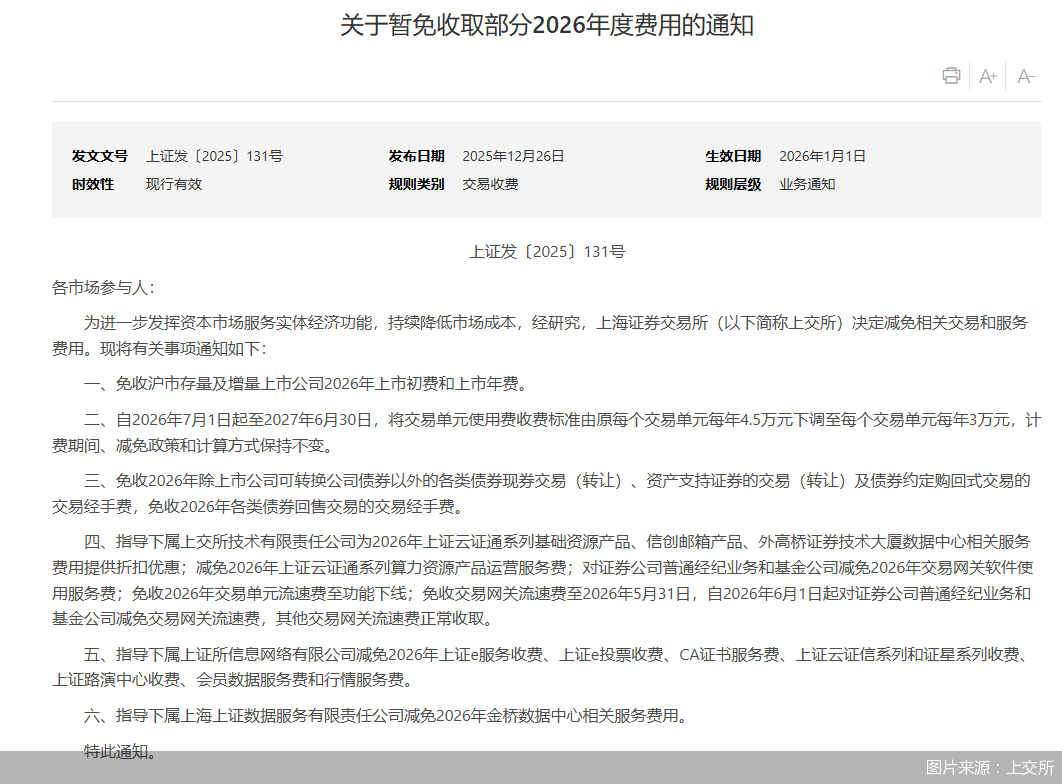
| 发文文号 上证发〔2025〕131号 | 发布日期 2025年12月26日 | 生效日期 2026年1月1日 | | --- | --- | --- | | 时效性 | 规则类别 交易收费 | 规则层级 业务通知 | 北京商报讯(记者 李海媛)12月26日,上交所发布《关于暂免收取部分2026年度费用的通知》,推出2026年系列降费让利措施,免收沪市上市公司上 市费,减免交易单元使用费,免收可转债以外的债券交易经手费等。同时,上交所下属子公司减免交易网关流速费、上证e服务、上证e投票、上证云 等费用。预计2026年降费让利金额约11.13亿元。 上交所提到,始终认真贯彻落实党中央和国务院关于减税降费的决策部署,持续挖掘降费空间,提升让利力度,聚焦支持实体经济发展,推动资本市 场高质量发展。"十四五"期间,上交所研究调降股票、债券、基金、REITs等的交易经手费收费标准,持续免收上市公司及基金、REITs上市费,减免 会员等市场主体的交易单元使用费;上交所下属子公司持续减免上市公司、行业机构相关服务费用,通过系列降费措施提振市场信心、稳定发展预 期,助力经济平稳健康运行。 同日,深交所也发布《关于减免202 ...
沪深交易所发布!两大交易所预计降费总金额将超过19亿元
Shang Hai Zheng Quan Bao· 2025-12-26 10:37
Core Viewpoint - The Chinese capital market has announced a series of fee reduction measures for 2026, which are expected to exceed 1.9 billion yuan, aimed at supporting the real economy and enhancing market confidence [1][7]. Group 1: Shanghai Stock Exchange (SSE) Measures - SSE has introduced fee waivers for 2026, including exemptions for listing fees for both existing and new companies, and reductions in transaction unit usage fees from 45,000 yuan to 30,000 yuan per year starting July 1, 2026 [2][3]. - The total expected fee reduction from SSE is approximately 1.113 billion yuan, covering various financial instruments such as stocks, bonds, and funds [2][3]. - SSE aims to continuously support the real economy and enhance the quality of capital market development through these measures [2][3]. Group 2: Shenzhen Stock Exchange (SZSE) Measures - SZSE has also announced fee reductions for 2026, with an expected total reduction of over 800 million yuan, including waivers for listing fees for companies and funds, as well as transaction fees for bonds and asset-backed securities [7][9]. - The measures include a 50% reduction in fees for online voting services for shareholders' meetings and continued reductions in communication and data service fees [7][12]. - SZSE emphasizes its commitment to implementing national policies on tax and fee reductions to enhance market vitality and support high-quality economic development [7][8].
大商所:减免2026年度交割手续费等相关费用
Sou Hu Cai Jing· 2025-12-26 10:09
为进一步降低产业企业参与期货市场成本,更好服务实体经济高质量发展,近日,大连商品交易所发布 《关于减免交割手续费等相关费用的通知》,推出2026年降费方案。根据通知,2026年全年,大商所将 免收期货交割手续费、标准仓单转让货款收付手续费、标准仓单作为保证金手续费、期转现手续费,并 减半收取套期保值交易手续费。 记者了解到,近年来大商所积极响应国家减税降费号召,陆续出台了多项配套措施,包括:自2020年 起,逐步免收标准仓单作为保证金手续费和交割(含标准仓单期转现)手续费;自2022年起,进一步免 收标准仓单转让货款收付手续费,同时将标准仓单期转现手续费免收业务范畴进一步扩大至全口径的期 转现业务;自2024年起,在继续实施交割、期转现、标准仓单转让货款收付和标准仓单作为保证金4项 业务手续费免收措施的基础上,新增"减半收取套期保值交易手续费"优惠政策。上述各项措施实施至 今,已累计为实体企业降费超6亿元,有助于减轻产业企业等市场主体的负担,帮助其以更低成本将期 货工具拿稳用好。 大商所表示,下一步,将继续坚持服务实体经济的根本宗旨,关切产业所需,多措并举为企业参与期货 市场提供支持与便利,为我国期现货市场高 ...
深交所推出2026年降费措施 预计整体降费金额超过8亿元
智通财经网· 2025-12-26 09:14
Core Viewpoint - The Shenzhen Stock Exchange (SZSE) has announced a series of fee reduction measures for 2026, expecting to save over 800 million yuan for market participants [1] Fee Reduction Measures - The fee reductions include six measures affecting stocks, funds, and bonds in the Shenzhen market, such as waiving listing fees for companies and funds, and transaction handling fees for bonds (excluding convertible bonds) and asset-backed securities [1] - Additional measures include waiving transaction unit flow fees for funds, bonds (excluding convertible bonds), and asset-backed securities, as well as reducing communication and cloud service fees related to trading [1] - The service fee for online voting at shareholder meetings will be halved [1] Implementation and Impact - The SZSE has been actively implementing tax and fee reduction policies in line with national directives, progressively increasing the scale of fee reductions over the years [1] - Previous measures have included lowering transaction handling fees for funds and stocks, and waiving various fees related to bond trading and company listings, which have significantly benefited market participants and investors [1] - The SZSE aims to further stimulate market vitality and support the real economy and high-quality development in accordance with the spirit of the 20th Central Committee and the Central Economic Work Conference [1]
50项政策举措、927亿元投资……“十四五”山东财政“四个支持”助力民营经济发展
Feng Huang Wang Cai Jing· 2025-12-25 07:37
三是减税降费支持民营经济发展。税费优惠政策覆盖面广、普惠性强、落地见效快。"十四五"期间,山 东财政顶格执行国家各项减税降费政策,特别是通过研发费用加计扣除、高新企业税收优惠等政策,有 效减轻民营企业科技创新的资金压力,极大增强了企业拔节成长、向新而行的内生动力。 四是优化政策环境支持民营经济发展。山东树牢市场思维、法治思维,在资金补助、政府采购等方面对 各类市场主体一视同仁,推动打造公平竞争的政策环境。比如,破除民营企业参与政府采购竞争障碍, 禁止以所有制性质等条件设置准入门槛,并通过预留额度等方式扩大中小企业政府采购市场份额,为民 营企业提供更多"保底订单"。"十四五"期间,全省政府采购授予中小企业合同4601亿元,占比达到 76%。又如,加快推进财政惠企政策"直达快享",提升政策落实效率,用可感可及的政策红利,切实增 强企业的获得感。 崔宗涛表示,下一步,山东财政将根据形势发展变化,用心倾听企业诉求,持续落实、完善财政政策措 施,努力把"企业呼声"变为"政策回声",坚定不移推动民营经济高质量发展,努力为现代化强省建设助 力赋能。 (凤凰网山东 成方正) 12月25日,山东省政府新闻办召开新闻发布会,介绍 ...
前10个月贵州支持制造业发展主要政策减税降费及退税超80亿元
Sou Hu Cai Jing· 2025-12-19 09:46
Group 1 - In the first ten months of this year, Guizhou has focused on high-quality development in the manufacturing sector, implementing tax reductions and refunds totaling 8.2 billion yuan to support the transformation and upgrading of the industry [1] - The targeted tax reduction policies for advanced manufacturing enterprises, such as VAT deductions, amounted to 1.6 billion yuan, while the general policies for manufacturing enterprises provided 6.6 billion yuan in tax reductions and refunds [1] - The tax policies have effectively stimulated the vitality and innovation capabilities of manufacturing enterprises [1] Group 2 - The tax department has implemented a "policy find people" approach to ensure that tax benefits reach enterprises quickly, aiding advanced manufacturing companies in improving quality and efficiency [3] - Customized tax guidance has been provided to companies like AVIC Elevator, enabling them to efficiently enjoy various tax incentives and accelerate capital turnover through expedited export tax refunds [3] - The introduction of an "industrial chain tax service package" offers tax compliance guidance and cross-border tax solutions, supporting enterprises in both domestic and international markets [3] Group 3 - Guizhou's tax department has focused on enhancing the white liquor industry by providing tailored services to key enterprises, ensuring the effective implementation of tax policies related to agricultural product purchases and consumption tax management [5][6] - The white liquor industry in Huichuan District achieved an industrial output value of nearly 4.4 billion yuan from January to October 2025, maintaining a strong position in the province [5] - The tax department's involvement in the entire production chain of the liquor industry has strengthened the sustainable development of the sector [6] Group 4 - The tax department has established a comprehensive service mechanism for high-end manufacturing, focusing on precise support throughout the process of technology research and development [7] - Companies like Guizhou Aerospace New Power Technology Co., Ltd. have benefited from tax incentives, resulting in a 25% increase in annual output value and enhanced core competitiveness [7] - The tax department aims to improve the precision of policy delivery and the convenience of tax payment through digital and intelligent means [8]
山东八案例入选“服务企业在基层”典型案例名单
Da Zhong Ri Bao· 2025-11-29 01:14
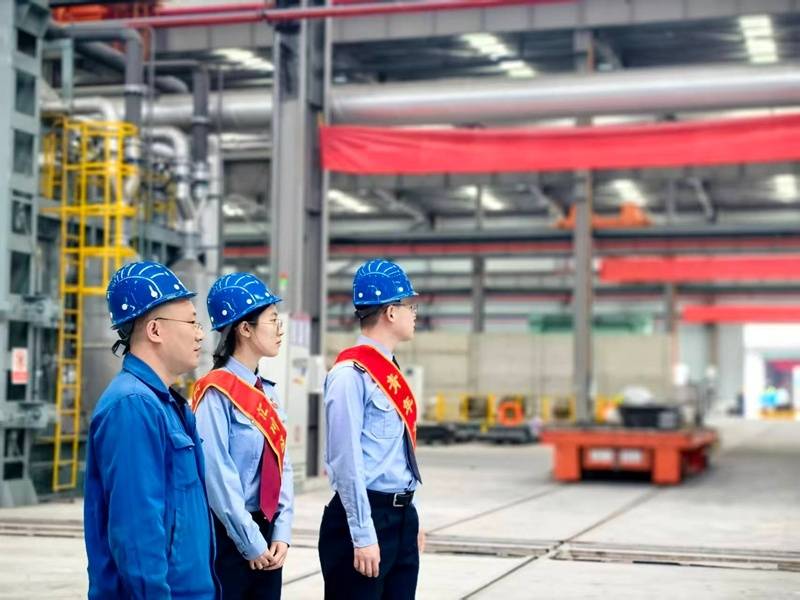
记者从工业和信息化部网站了解到,国务院减轻企业负担部际联席会议办公室近期组织开展"服务 企业在基层"典型案例征集工作,经地方推荐、专家评审、复核及对外公示等程序,确定了十佳案例和 90个优秀案例。山东东营市工业和信息化局的念好"提、服、助、护"四字诀,以一流营商环境赋能企业 高质量发展入选十佳案例,另有枣庄、威海、日照、滨州、淄博、夏津、青岛等地的七个案例入选优秀 案例。 据介绍,入选案例主要包括围绕协调生产要素保障、优化企业营商环境、畅通产业链供应链等,进 一步做好降低制造业综合成本、减轻企业负担工作,切实提升服务企业水平等方面的突出做法。工信部 要求,各地需进一步强化典型案例宣传推广和经验交流,持续推动减税降费政策措施落实,为推动经济 平稳运行、坚定市场信心、优化企业发展环境发挥积极作用。(记者 付玉婷) ...
2026年惠企纾困政策将再加力——聚焦减税降费 加强涉企行政行为规范
Xin Hua Wang· 2025-11-26 02:50
Group 1 - The central viewpoint of the news is that the Chinese government is actively implementing policies to reduce the burden on enterprises, with significant tax reductions and financial support aimed at enhancing the manufacturing sector's strength and innovation capabilities [1][2][5]. - In the first eight months of the year, tax reductions and refunds supporting the manufacturing industry amounted to nearly 1.3 trillion yuan, contributing to a more robust manufacturing sector [1]. - During the "14th Five-Year Plan" period, the cumulative tax reductions and fee cuts exceeded 10 trillion yuan, significantly alleviating the financial burden on enterprises [2]. Group 2 - By the end of September, the balance of loans to small and micro enterprises reached 36.51 trillion yuan, reflecting a year-on-year growth of 12.06%, which is higher than the growth rate of other types of loans [3]. - Various regions are adopting tailored measures to improve the business environment, with Shandong Province reporting a reduction of approximately 270 billion yuan in enterprise burdens in the first three quarters, expecting to exceed 380 billion yuan for the entire year [4]. - A report indicated that while the overall cost burden on enterprises has decreased compared to the previous year, challenges related to raw materials, labor, and capital costs remain significant for some businesses [5]. Group 3 - The government plans to introduce new policies to alleviate enterprise burdens, particularly focusing on the issues of high costs related to raw materials, labor, and capital [6]. - The establishment of a comprehensive directory for enterprise-related fees is underway, aiming to standardize and regulate fees imposed on businesses [3][9]. - Continuous efforts will be made to improve the regulatory environment for enterprises, including the establishment of standards for administrative actions and the optimization of administrative processes [9].
2025年全国企业负担调查评估报告发布:企业综合成本负担较上年减轻
Xin Hua Cai Jing· 2025-11-25 08:34
Core Insights - The Ministry of Industry and Information Technology's report indicates a reduction in the overall cost burden for enterprises in 2023 compared to the previous year, positively impacting business operations and confidence [1] Group 1: Cost Burden Assessment - The report is based on a survey of over 20,000 enterprises across 31 provinces, assessing the effectiveness of cost-reduction measures [1] - Key policies supporting the manufacturing sector have resulted in tax reductions and refunds totaling approximately 1.3 trillion yuan from January to August [1] - The proportion of enterprises feeling the burden of taxes and fees has decreased by 3 percentage points compared to last year, with overall cost burdens in raw materials, labor, logistics, and energy also showing varying degrees of relief [1] Group 2: Future Expectations - A significant 57% of enterprises express a desire for further reductions in value-added tax, while 55% seek lower corporate income tax rates, and 37% wish for decreased costs related to energy and land [2] - Enterprises recommend that the government enhance efforts to optimize the business environment by regulating administrative actions, improving the direct benefits of cost-reduction policies, and supporting digital transformation initiatives [2]