
北上资金

Search documents
国金证券:北上重新回流 两融活跃度升至近三周高点
智通财经网· 2025-11-03 22:40
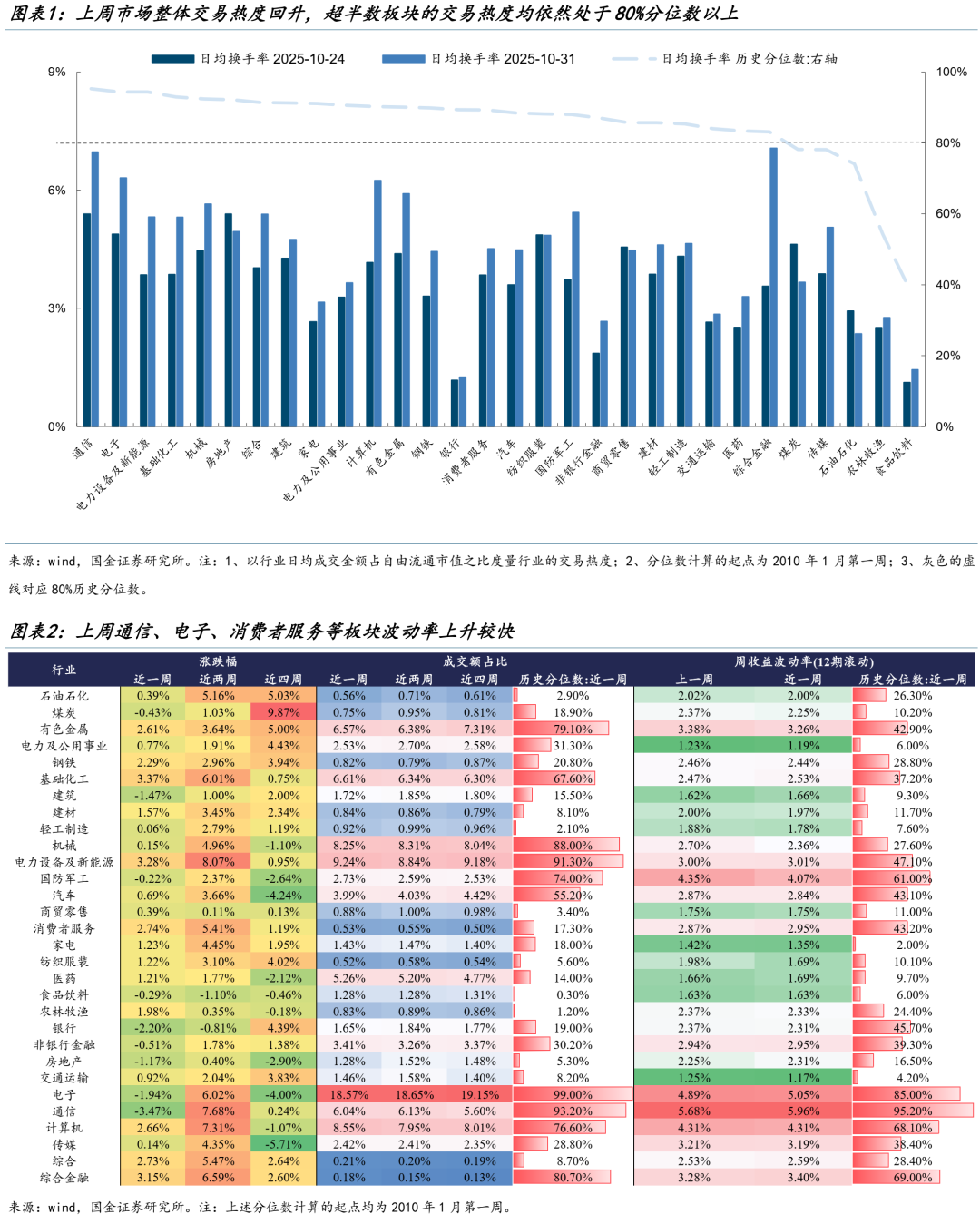
Group 1 - Northbound capital activity has rebounded, with a net buying of A-shares, particularly in the computer, food and beverage, and non-ferrous metal sectors, while there was net selling in the machinery sector [1][10] - Margin trading activity has also slightly increased, reaching a three-week high, with net buying mainly in the electric new energy, communication, and machinery sectors, and net selling in food and beverage, oil and petrochemicals, and coal sectors [16][39] - The trading heat and volatility in the market have risen, with sectors like communication, electronics, electric new energy, chemicals, machinery, and real estate showing trading heat above the 80th percentile [2][5] Group 2 - The ETF market has seen net subscriptions, primarily in institutional ETFs, with significant net buying in sectors such as electronics, non-bank financials, and pharmaceuticals, while there was net selling in electric new energy, chemicals, and banking sectors [31][32] - The buy-sell ratio of the top 10 active northbound stocks compared to the overall northbound trading has shown a slight increase, indicating a shift in trading dynamics [13] - The buy consensus for ETFs and northbound trading has decreased, while the buy consensus for margin trading and the dragon and tiger list has increased, suggesting a mixed sentiment among market participants [39]


国金证券:市场热度与波动率均回落,杠杆资金整体回流
Mei Ri Jing Ji Xin Wen· 2025-10-29 00:19
Group 1 - The core viewpoint indicates that market trading activity has declined, with volatility across major indices also decreasing [1] - Consensus on buying through ETFs and northbound capital has continued to fall, alongside a decrease in margin trading and the buying consensus from the "Dragon and Tiger" list [1] - Margin trading has become a primary source of incremental capital in the market, while fluctuations in northbound capital remain a significant source of market volatility [1]
北上资金累计成交额突破192万亿元
Zheng Quan Shi Bao Wang· 2025-10-28 16:04
Core Insights - The northbound capital trading has remained active since the opening of the interconnection mechanism, with cumulative trading volume exceeding 192 trillion yuan for the first time [1] Trading Activity - On October 28, the trading volume of the Shanghai-Hong Kong Stock Connect reached 237.13 billion yuan [1] - The cumulative trading volume since the opening of the interconnection mechanism has reached 192.17 trillion yuan, marking a significant milestone [1]
北上资金累计成交额突破191万亿元
Zheng Quan Shi Bao Wang· 2025-10-21 13:45
Core Insights - The northbound capital trading has remained active since the opening of the interconnection mechanism, with cumulative trading volume exceeding 191 trillion yuan for the first time [1] Trading Activity - On October 21, the trading volume of the Shanghai-Hong Kong Stock Connect reached 246.87 billion yuan [1] - The cumulative trading volume since the opening of the interconnection mechanism has reached 191.02 trillion yuan, marking a significant milestone [1]
资金跟踪系列之十六:个人 ETF 仍是主要增量,两融整体净流出
SINOLINK SECURITIES· 2025-10-20 07:25
Macro Liquidity - The US dollar index has declined, and the degree of "inversion" in the China-US interest rate spread has narrowed [2][13] - The nominal and real yields of 10-year US Treasuries have decreased or remained unchanged, with inflation expectations also falling [2][19] - Offshore dollar liquidity has tightened, while domestic interbank liquidity remains balanced and slightly loose [2][19] Market Trading Activity - Overall market trading activity has decreased, with the volatility of major indices showing mixed trends [3][25] - Trading heat in sectors such as non-ferrous metals, electric vehicles, steel, electronics, automotive, and real estate remains above the 80th percentile [3][25] - The volatility of the communication and electronics sectors remains above the 80th historical percentile [3][31] Analyst Predictions - Analysts have continued to raise net profit forecasts for the entire A-share market for 2025 and 2026 [4][43] - The proportion of stocks with upward revisions in net profit forecasts for 2025 and 2026 has increased [4][43] - Sectors such as retail, finance, light industry, and public utilities have seen upward revisions in net profit forecasts for 2025 and 2026 [4][43][44] Northbound Trading Activity - Northbound trading activity has decreased, with overall net selling of A-shares [5][29] - In the top 10 active stocks, the trading volume ratio for sectors like non-ferrous metals, electronics, and banking has increased [5][32] - Northbound trading has shown net buying in sectors such as electronics, automotive, and electric vehicles, while net selling occurred in computing, pharmaceuticals, and communications [5][33] Margin Financing Activity - Margin financing activity has dropped to its lowest point since mid-September 2025 [6][35] - The main net buying in margin financing has been in sectors like non-ferrous metals, military, and pharmaceuticals [6][38] - The proportion of financing purchases in sectors such as oil and petrochemicals, steel, and public utilities has increased [6][38] Fund Activity - The positions of actively managed equity funds have continued to rise, with net subscriptions in ETFs persisting [8][45] - Actively managed equity funds have mainly increased positions in sectors like electronics, automotive, and media [8][46] - New fund establishment has seen a rebound, with both actively and passively managed funds experiencing growth [8][50]
北上资金累计成交额突破190万亿元
Zheng Quan Shi Bao Wang· 2025-10-15 13:54
Core Insights - The northbound capital trading has remained active since the opening of the interconnection mechanism, with cumulative trading volume exceeding 190 trillion yuan for the first time [1] Summary by Categories - **Trading Activity** - On October 15, the trading volume of the Shanghai-Hong Kong Stock Connect reached 296.472 billion yuan [1] - The cumulative trading volume since the opening of the interconnection mechanism has reached 190.02 trillion yuan, marking a significant milestone [1]
国金证券:北上资金的反复可能阶段成为市场交易层面的扰动
Di Yi Cai Jing· 2025-10-15 00:12
Group 1 - The market trading activity has rebounded, with the volatility of indices such as the SSE 50, CSI 300, and STAR 50 increasing, while other major broad-based indices have declined [1] - After the holiday, margin trading and personal ETFs have become the main sources of incremental capital in the market, indicating a shift in investor behavior [1] - The fluctuations in northbound capital may serve as a disturbance in market trading dynamics, and there is a need to monitor the sustainability of margin trading replenishment going forward [1]
两融季节性卖出,北上与 ETF 阶段成为主要增量资金
SINOLINK SECURITIES· 2025-10-09 11:24
Group 1: Macro Liquidity - The US dollar index has declined, and the degree of "inversion" in the China-US interest rate spread has narrowed. The nominal and real yields of 10Y US Treasuries have both decreased, indicating a drop in inflation expectations [1][14]. - Offshore dollar liquidity has tightened, while the domestic interbank funding situation remains balanced. The term spread (10Y-1Y) has widened [1][18]. Group 2: Market Trading Activity - Overall market trading activity continues to decline, with major indices showing reduced volatility. More than half of the sectors, including real estate, automotive, electronics, and chemicals, have trading heat above the 80th percentile [2][23]. - The volatility of major indices has mostly decreased, although the communication sector remains above the 80th historical percentile [2][30]. Group 3: Institutional Research - The sectors with the highest research activity include electronics, pharmaceuticals, communications, non-ferrous metals, and food and beverages. The research activity in power and utilities, light industry, and machinery sectors has also increased [3][42]. Group 4: Analyst Forecasts - The net profit forecasts for the entire A-share market for 2025/2026 have been adjusted, with increases in sectors such as computers, machinery, banking, and consumer goods. The forecasts for the Shanghai 50, ChiNext Index, and CSI 300 have been raised, while the CSI 500 has seen a decrease [4][21]. - The proportion of stocks with upward revisions in net profit forecasts for 2025/2026 has decreased/increased, indicating a mixed outlook across different sectors [4][17]. Group 5: Northbound Trading Activity - Northbound trading activity has decreased, but there has been a net buying of A-shares overall. The buying ratio in sectors like electronics and non-banking has increased, while the ratio in communications and pharmaceuticals has decreased [5][31]. - Northbound trading primarily net bought sectors such as computers, electronics, and pharmaceuticals, with slight net selling in home appliances and transportation [5][33]. Group 6: Margin Financing Activity - Margin financing activity has approached the highest point since July 2020, with significant net buying in non-banking and consumer goods sectors, while electronics and communications saw net selling [6][35]. - The trading heat of the "Dragon and Tiger List" continues to decline, with automotive, chemicals, and computers showing relatively high trading volumes [6][41]. Group 7: Fund Positioning - Active equity funds have increased their positions in non-banking, automotive, and electronics sectors, while reducing positions in TMT, pharmaceuticals, and consumer services [7][46]. - ETFs have continued to see net subscriptions, particularly in sectors like electronics, new energy, and computers, while non-banking sectors experienced net selling [7][52].
北上资金累计成交额突破188万亿元
Zheng Quan Shi Bao Wang· 2025-09-29 14:53
Core Insights - The northbound capital trading has remained active since the opening of the interconnection mechanism, with cumulative trading volume exceeding 188 trillion yuan for the first time [1] Group 1 - On September 29, the trading volume of the Shanghai-Hong Kong Stock Connect reached 294.618 billion yuan [1] - The cumulative trading volume since the opening of the interconnection mechanism has reached 188.08 trillion yuan, marking a significant milestone [1]
北上活跃度回落,整体继续净卖出但幅度有所放缓
SINOLINK SECURITIES· 2025-09-29 12:36
Macro Liquidity - The US dollar index continued to rise, and the degree of "inversion" in the China-US interest rate spread deepened, with inflation expectations declining [1][12] - Offshore dollar liquidity tightened overall, while the domestic interbank funding situation remained balanced [1][17] Market Trading Activity - Overall market trading activity has decreased, with major indices' volatility also declining [2][31] - Trading heat in sectors such as electronics, automotive, consumer services, real estate, textiles, and communications remains above the 80th percentile [2][24] - The volatility of the communication sector remains above the 80th historical percentile [2][31] Institutional Research - Research activity is high in sectors such as electronics, pharmaceuticals, communications, non-ferrous metals, and food and beverages, with mechanical, transportation, banking, and consumer services sectors seeing a month-on-month increase in research heat [3][42] Analyst Forecasts - Analysts have adjusted net profit forecasts for the entire A-share market for 2025 and 2026, with increases in sectors such as non-ferrous metals, consumer services, chemicals, machinery, and automotive [4][49] - The proportion of stocks with upward revisions in net profit forecasts for 2025 and 2026 has increased [4][49] - The net profit forecasts for the Shanghai Stock Exchange 50 and CSI 300 indices for 2025 and 2026 have been raised, while the CSI 500 index has seen downward adjustments [4][49] Northbound Trading Activity - Northbound trading activity has decreased, continuing to show net selling but at a slower pace [5][31] - In the top 10 active stocks, the ratio of buy/sell totals in sectors like electronics, electric vehicles, and automotive has increased, while it has decreased in non-bank, pharmaceuticals, and non-ferrous sectors [5][31] Margin Financing Activity - Margin financing activity is approaching the highest point since July 2020, with a net purchase of 26.48 billion yuan last week [6][35] - The main net purchases in margin financing were in electronics, communications, and electric vehicle sectors, while net sales were seen in non-ferrous metals, pharmaceuticals, and non-bank sectors [6][35] Active Equity Fund Positions - Active equity funds have reduced their positions, primarily increasing allocations in media, computing, and machinery sectors while decreasing in communications, non-ferrous metals, and food and beverages [8][45] - The correlation between active equity funds and mid/small-cap growth and small-cap value has increased [8][45] - New fund establishment sizes have decreased, with active funds seeing a rebound while passive funds have declined [8][50]