可重复使用技术

Search documents
明确里程碑节点,商业火箭未盈利企业登科“说明书”来了
第一财经· 2025-12-26 14:38
Core Viewpoint - The article discusses the recent issuance of guidelines by the Shanghai Stock Exchange for commercial rocket companies to apply for listing on the Sci-Tech Innovation Board, emphasizing the importance of technological innovation and market potential in the commercial aerospace sector [2][4]. Group 1: Guidelines for Listing - The Shanghai Stock Exchange released guidelines that allow commercial rocket companies to apply for listing under the fifth set of standards on the Sci-Tech Innovation Board, providing a pathway for these companies to access capital markets [2][4]. - The guidelines specify four key areas: clear technological advantages, defined milestones, necessary approvals from relevant authorities, and substantial market potential [4][5]. - A significant milestone for companies is achieving the successful launch of a medium to large reusable rocket with payload into orbit, which is seen as a critical development direction in the commercial aerospace sector [5][6]. Group 2: Industry Context and Opportunities - The commercial aerospace sector is recognized as a strategic emerging industry in China, with increasing governmental support and recognition in national development plans [9][10]. - The number of commercial rocket companies in China has exceeded 20, with many achieving successful launches of solid or small liquid rockets, indicating a growing industry [9][10]. - The article highlights the need for capital market support to address the current imbalance of "many satellites but few rockets," which is crucial for the development of satellite constellations [10][11]. Group 3: Market Dynamics - The commercial aerospace industry encompasses various activities, including rocket launches, satellite manufacturing, and space tourism, with a potential market size reaching trillions [11]. - Companies in the commercial aerospace sector are increasingly seeking to enter capital markets, with several already listed on the Sci-Tech Innovation Board, indicating a trend towards greater financial backing for the industry [10][11].

明确里程碑节点 商业火箭企业登陆科创板“指引”发布
Xin Hua Cai Jing· 2025-12-26 13:10
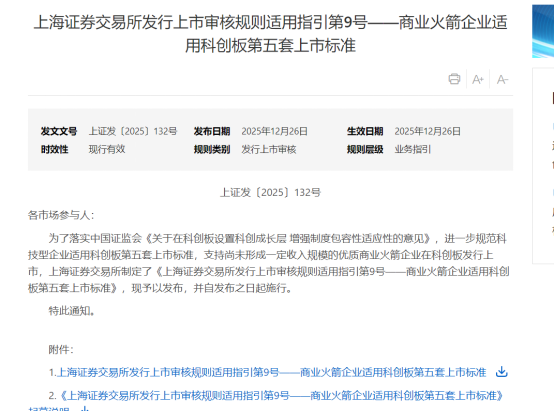
Core Viewpoint - The Shanghai Stock Exchange has released guidelines to support high-quality commercial rocket companies that have not yet formed a significant revenue scale to issue listings on the Sci-Tech Innovation Board, specifically under the fifth set of listing standards [1][4]. Group 1: Guidelines Overview - The guidelines specify that companies must achieve a milestone of successfully launching a medium to large reusable rocket payload into orbit at the time of application [2][3]. - The guidelines consist of 14 articles, focusing on four main areas: 1. Clarification of significant technical advantages, emphasizing the importance of "hard technology" attributes in the core business of commercial rocket development, manufacturing, and launch services [1][2]. 2. Definition of milestone achievements, requiring companies to demonstrate successful payload launches using reusable technology [2]. 3. Requirement for obtaining approvals from relevant national departments for research, manufacturing, and launch processes [2]. 4. Specification of market space requirements, necessitating that companies hold a leading position in the industry and have a clear target market with competitive advantages [2][3]. Group 2: Industry Context - The development of medium to large reusable rockets is identified as a core direction in the commercial aerospace sector, with successful payload launches serving as a validation of commercial viability [3]. - The guidelines aim to enhance the inclusivity and adaptability of the regulatory framework, allowing for flexibility in product design without mandating recovery tasks during initial flights [3]. - The overall landscape of the commercial rocket industry in China is characterized by high technical complexity, significant capital investment, and lengthy research and development cycles, indicating a critical period for commercialization [6].
明确里程碑节点,商业火箭未盈利企业登科“说明书”来了
Di Yi Cai Jing· 2025-12-26 11:49
Core Viewpoint - The Shanghai Stock Exchange has released guidelines for commercial rocket companies to issue IPOs on the Sci-Tech Innovation Board, providing a pathway for these companies to access capital markets and support technological innovation in the aerospace sector [1][2]. Group 1: Guidelines for Commercial Rocket Companies - The guidelines specify that commercial rocket companies must demonstrate significant technological advantages, including the successful launch of a medium to large reusable rocket payload into orbit as a milestone achievement [1][2][3]. - Companies are required to have relevant qualifications for research and manufacturing, and must obtain launch permits before conducting rocket launches [3]. - The guidelines emphasize the importance of market positioning, requiring companies to have a clear target market and a competitive edge over rivals, along with a feasible commercialization plan [3][4]. Group 2: Industry Context and Strategic Importance - The commercial aerospace sector is recognized as a strategic emerging industry in China, with significant government support reflected in recent economic work reports and action plans aimed at enhancing the development of commercial space capabilities [6][7]. - There are currently over 20 commercial rocket companies in China, many of which have successfully launched solid or small liquid rockets, indicating a growing industry [6][7]. - The commercial rocket industry is seen as crucial for the development of satellite constellations and overall high-quality growth in the commercial aerospace sector, addressing the current imbalance of "many satellites but few rockets" [7][8].
上交所重磅!事关商业火箭IPO 里程碑节点具有较强包容性
Zheng Quan Shi Bao Wang· 2025-12-26 10:02
证券时报记者注意到,《指引》明确商业火箭企业适用科创板第五套上市标准的业务范围,即主营业务 为"商业火箭自主研发、制造和提供航天发射服务",更加看重发行人的"硬科技"属性。据悉,商业火箭 研制及发射业务处于商业航天产业链中游,承担"承上启下"的关键枢纽职能,已成为我国商业航天产业 发展的关键所在。 上交所表示,下一步将以《指引》发布为契机,着力推进符合《指引》标准的商业火箭企业在科创板发 行上市,以更大力度支持突破关键核心技术的科技型企业发展。 商业火箭企业适用科创板第五套上市标准指引来了! 12月26日,上海证券交易所正式发布《上海证券交易所发行上市审核规则适用指引第9号——商业火箭 企业适用科创板第五套上市标准》(以下简称《指引》),支持正处于大规模商业化关键时期的商业火 箭企业,适用第五套上市标准登陆科创板,这意味着科创板"1+6"改革举措又一项成果落地。 主营业务明确为商业火箭研制及发射 2025年6月,中国证监会发布实施《关于在科创板设置科创成长层增强制度包容性适应性的意见》,明 确扩大第五套标准适用范围,支持人工智能、商业航天、低空经济等更多前沿科技领域企业适用科创板 第五套上市标准。2025年1 ...
产业催化不断,可复用火箭迎来大发展
2025-12-08 00:41
Summary of Key Points from Conference Call Industry Overview - The conference call discusses the **Chinese commercial aerospace industry**, highlighting the significant policy support and growth potential by 2027, particularly in the development of **low-cost reusable rockets** [1][2][3]. Core Insights and Arguments - **Policy Support**: The Chinese space agency has introduced an action plan to promote high-quality development in commercial aerospace, aiming for substantial industry growth by 2027 [2][3]. - **Cost Reduction**: Reusable rockets can significantly lower launch costs. For instance, SpaceX's Falcon 9 can be reused over 100 times, resulting in a launch cost of approximately **$10,000 per kilogram**, compared to China's Long March series at **$30,000 per kilogram** [1][4][8]. - **Technological Advancements**: The **Zhuque-3**, China's first reusable liquid oxygen-methane rocket, represents a major technological advancement despite its initial launch not being fully successful. It achieved a high-precision recovery, indicating progress in reusable technology [1][6]. - **Market Demand**: The commercial aerospace sector is driven by international satellite communication needs, with projects like Europe’s Link and Musk's Starlink capturing significant market share [1][9]. Development Goals - The action plan outlines several key objectives: - Encourage companies to invest in **chip manufacturing**, application services, and customer operations [3]. - Achieve a **2% GDP contribution** from the commercial aerospace sector by the end of the 14th Five-Year Plan [10]. - Increase the number of rocket recoveries beyond the previous five-year period and reduce satellite manufacturing costs by **50%** [11]. Challenges and Considerations - **Technical Challenges**: Reusable rockets face several technical hurdles, including: - High-precision recovery landing [5]. - Thermal protection design due to high-speed returns [5]. - Ensuring the safety and reliability of reused components [5]. - Comprehensive lifecycle management from manufacturing to decommissioning [5]. Industry Chain Components - The commercial aerospace industry consists of three main segments: - **Upstream**: Satellite and rocket manufacturing [12]. - **Midstream**: Rocket launch services and ground equipment operations [12]. - **Downstream**: Satellite applications, including communication and navigation services [12]. Market Outlook - The commercial aerospace market in China is rapidly evolving, with numerous companies engaged in small satellite development and private rocket enterprises like Blue Arrow and Tianbing Technology emerging [13]. - By **2030**, China aims to launch over **3,000 satellites annually**, with increasing launch frequencies projected from **62 in 2022** to **68 in 2024** [15]. Conclusion - The Chinese commercial aerospace industry is poised for significant growth driven by policy support, technological advancements in reusable rockets, and increasing market demand for satellite services. The successful implementation of these strategies could lead to substantial economic benefits and enhanced global competitiveness [1][7][11].
大象论股|A股震荡下挫,超3800股下跌
Sou Hu Cai Jing· 2025-12-04 02:48
展望后市,沪指今日回踩3888点附近支撑后未能有效企稳,短期仍处于3850-3950点区间震荡格局;警 惕高估值中小票的流动性风险,以及海外美联储政策预期波动对A股的传导影响。 上证指数收跌0.51%报3878点,深证成指跌0.78%,创业板指跌1.12%,科创50跌0.89%,A股全天成交 1.68万亿元,上日成交1.61万亿元,显示市场分歧有所加大。 医药商业板块近期表现活跃,海王生物6连板涨停。消息面上,近日,中国疾控中心相关负责人介绍本 轮流感最新情况,预计全国在12月上中旬达峰的可能性较大,未来6到8周流感防控不能放松。朱雀三号 遥一运载火箭发射升空并实现二级入轨,虽回收试验失败,但为后续可重复使用技术积累数据,对商业 航天板块形成差异化影响。 《大象财经》 -- 河南卫视财经新主张: 把握最新财经热点,传播权威政策解读, 记录真实财经故事,关注全民消费安全, 架起政企沟通桥梁,助力地方经济腾飞。 ...

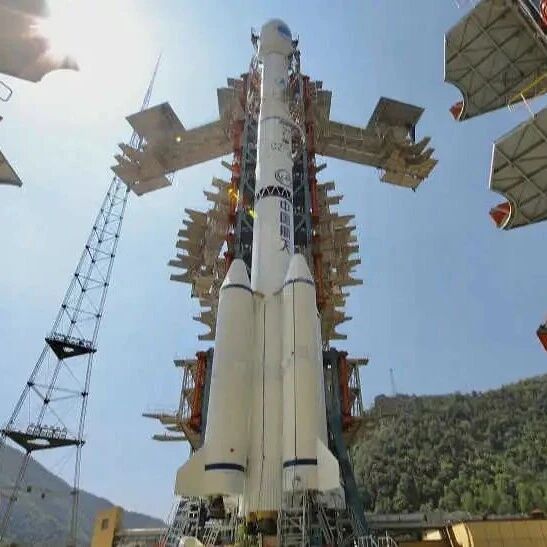
朱雀三号完成入轨目标 可重复使用技术验证取得部分突破
Zheng Quan Shi Bao Wang· 2025-12-03 11:47
Group 1 - The Zhuque-3 rocket successfully completed its flight mission, although the recovery of the first stage was unsuccessful due to an anomaly during landing [1] - Zhuque-3 is a new generation of low-cost, high-capacity, reusable liquid oxygen-methane launch vehicle developed by Landspace, designed for large satellite constellation deployment [1][2] - The rocket's first stage is designed for vertical soft landing and aims for at least 20 reuse cycles, with a near-Earth orbit payload capacity of no less than 18 tons [1][2] Group 2 - The launch validated the entire testing, launch, and flight process of the Zhuque-3 rocket, providing critical engineering data for future optimization and reliability improvements [2] - Landspace is one of the first private rocket companies in China to obtain full industry access for commercial spaceflight and has initiated an IPO on the STAR Market [2] - The company has raised significant funding, including a record single-round investment of 900 million yuan from the National Manufacturing Transformation and Upgrade Fund [2] Group 3 - The Zhuque-3 launch achieved several domestic firsts, including the first successful orbital flight of a reusable liquid oxygen-methane rocket and high-precision return navigation and control technology verification [3] - The commercial space industry in China is still in the experimental validation stage for reusable technology, with multiple hurdles to overcome before commercialization [3] - As demand for rocket launches increases with the peak of low Earth orbit satellite constellation deployment, the commercial space transportation capacity in China is rapidly advancing towards scalability and systematization [3]
太空经济新基建提速,商业航天如何破解产能与成本之困?
2 1 Shi Ji Jing Ji Bao Dao· 2025-12-01 12:27
Core Viewpoint - The space economy is emerging as a new frontier for global competition, with significant opportunities and challenges in satellite internet and remote sensing infrastructure development [1] Group 1: Industry Gaps and Opportunities - There is a significant gap between China and the US in the launch vehicle sector, with US rocket carrying capacity being approximately ten times that of China, and commercial launches accounting for over 80% in the US compared to single-digit percentages in China [2] - The large gap presents a vast space for catching up, with predictions that within three years, the launch costs in China could approach those of SpaceX, and within five years, potentially be lower than SpaceX's Falcon 9 [2] - In the laser communication terminal field, the US has over 10,000 in-orbit terminals with commercial applications, while China's industry is in a critical breakthrough phase from technology verification to mass production [2] Group 2: Cost Reduction Strategies - Reducing costs is seen as crucial for the development of the space economy, with companies aiming to halve rocket costs within three years and lower per-kilogram launch prices below foreign counterparts within five years [4] - Companies are focusing on design optimization, supply chain collaboration, and reusable technologies to achieve cost reductions [4] - The integration of modular production and batch assembly is expected to be a significant direction for long-term cost reduction in laser communication terminal manufacturing [4] Group 3: Need for Patient Capital - The valuation of leading commercial rocket companies has reached between 15 billion to 20 billion yuan, highlighting the need for better access to secondary market financing to share in the growth of the commercial space sector [6] - Long-term capital support is essential for the growth of commercial space enterprises, which require three to five years or more for technology development and capacity realization [6] - A more inclusive and encouraging policy environment is needed to allow commercial space companies to participate in large national projects, creating strong market incentives [6]
国产商业火箭 “批量上天” 背后……
3 6 Ke· 2025-10-20 07:23
Core Insights - The frequency of domestic commercial rocket launches is accelerating, with a "batch launch" trend emerging, as evidenced by the successful launch of the Yao-8 rocket carrying three satellites [1] - In August alone, China completed nine commercial launch missions, with a total of at least 20 planned for the year, indicating a significant increase in launch activity [1][2] - However, the industry faces multiple underlying challenges, particularly in technology, supply chain support, and ecosystem development [1][2] Technology and Development - The commercialization of reusable rocket technology has not yet formed a closed loop, with domestic companies still in the single-use technology validation stage [2][7] - The current gap in rocket payload capacity between China and the U.S. is approximately four to six times, with SpaceX's Starship capable of carrying around 150 tons compared to China's Long March 5's 25 tons [3] - China is actively developing heavy-lift rocket technology, with the Long March 9 expected to achieve a low Earth orbit capacity of 150 tons by 2035, aligning with international heavy-lift capabilities [3] Cost and Pricing - The launch costs for domestic solid rockets are currently around 60,000 to 70,000 RMB per kilogram, with expectations that future liquid rockets could reduce costs to over 20,000 RMB per kilogram [3][4] - The average cost of launching a Long March 3B rocket is approximately 39 million RMB per mission, translating to about 70,900 RMB per kilogram [4] - In contrast, SpaceX's Falcon 9 rocket has a launch cost of about 14,000 to 18,000 RMB per kilogram in a fully reusable state, highlighting the cost disparity [5][6] Industry Challenges - The severe shortage of launch capacity is identified as a core issue hindering the industry's scalable development, rather than merely high launch costs [2][8] - The industry requires the development of high-frequency, low-cost, and reliable launch vehicles to support large-scale satellite constellations [7][8] - The current state of domestic rocket production and reliability is insufficient to meet the anticipated explosive demand in the next 2-3 years, necessitating increased investment in R&D and production capabilities [8][12] Future Prospects - The focus on liquid reusable rockets is seen as a key pathway to addressing the challenges of launch capacity and cost [9][10] - Several companies are making rapid progress in vertical recovery technology, with plans for multiple reusable rocket launches and recoveries by 2026 [10][11] - Achieving a transition from single-test launches to scalable production capabilities is crucial for companies to seize industry opportunities [12]
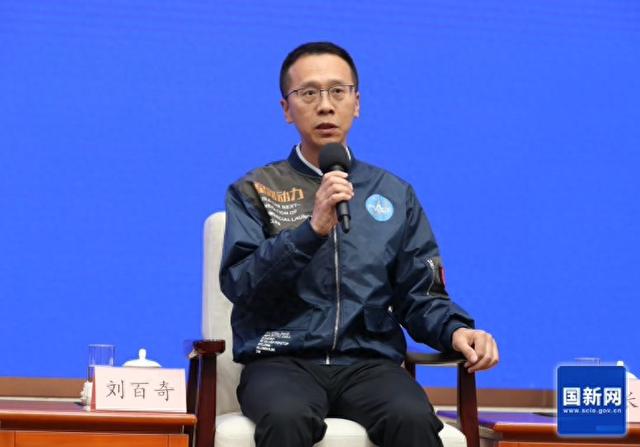
往太空送“快递”,星河动力刘百奇:商业航天这条路走对了
Bei Jing Ri Bao Ke Hu Duan· 2025-07-15 10:53
Core Viewpoint - The meeting highlighted the importance of private enterprises in China's commercial aerospace sector, with a focus on the entrepreneurial spirit and the role of companies like Beijing Xinghe Power Aerospace Technology Co., Ltd. in advancing the industry [1][4]. Company Overview - Beijing Xinghe Power was founded in 2018 by Liu Baiqi, who transitioned from academia and research to establish a private rocket manufacturing company in response to the national "Double Innovation" initiative [1][3]. - The company's business model involves launching satellites into space using its own rockets, generating revenue through launch service fees and transportation costs [1][3]. Market Demand - There is a projected demand for tens of thousands of satellites to be launched into space over the next decade, creating significant market opportunities for rocket transportation [3]. - Xinghe Power has developed two series and four models of launch vehicles, catering to various payload capacities ranging from hundreds of kilograms to several tons [3]. Achievements - As of now, Xinghe Power has successfully completed 19 rocket launch missions, placing 81 satellites into orbit, making it the leading private rocket company in China in terms of launch frequency and success rate [3][4]. - The first successful launch of a commercial satellite into a 500-kilometer sun-synchronous orbit using a privately developed rocket occurred on November 7, 2020, marking a significant milestone for the company [3]. Future Plans - The company is currently developing a larger, reusable rocket, the Zhishen-2, with a basic payload capacity of 20 tons and a bundled capacity of 60 tons, aimed at reducing launch costs through modular design [4]. - Future expansions may include in-orbit services and space tourism, leveraging rocket technology to diversify business operations [4].