品牌保护

Search documents
五粮液构建四位一体品牌保护体系/郎酒经销商聊城出货、回款双过亿······
Xin Lang Cai Jing· 2025-11-22 09:10
Group 1 - Wuliangye has established a four-in-one brand protection system, focusing on prevention, crackdown, collaboration, and co-governance to combat counterfeiting and enhance market regulation [1] - Langjiu's distributor in Liaocheng reported over 100 million in both sales and collections during a recent brand event [1] - Shede Distillery donated 2 million RMB to Fudan University to establish a scholarship fund for graduate students [1] - Huangtai Distillery appointed Xiang Xinzhou as the new Deputy General Manager and Secretary of the Board [1] - Yibin is advancing the "14th Five-Year" planning for the liquor industry, focusing on high-quality development and comprehensive discussions with industry experts [1] - From January to October, the industrial added value of Guizhou's tobacco, liquor, and tea industries grew by 2.1% [1] Group 2 - Thailand's new alcohol law imposes fines on individuals drinking during restricted hours or in prohibited locations, marking a significant shift in legal responsibility from sellers to consumers [2] - The law has faced criticism from industry groups, who argue it contradicts efforts to revive Thailand's tourism sector and could severely impact the service economy [2]

苏州市“监管+服务”推动阳澄湖大闸蟹品牌和市场秩序双向提升
Su Zhou Ri Bao· 2025-11-14 23:32
Core Viewpoint - The Suzhou market regulatory department is enhancing the brand image of Yangcheng Lake hairy crabs through coordinated efforts in regulation and service, aiming for dual improvements in brand protection and market order [1] Group 1: Regulatory Measures - The market regulatory bureau has formed working groups to conduct special research in trading markets and industry associations to identify regulatory challenges and implement precise supervision [2] - A development and brand enhancement plan for the Yangcheng Lake hairy crab industry has been established, guiding local regulatory departments to take action based on regional conditions [2] - Administrative guidance is provided in a tiered manner to different stakeholders, including farmers and e-commerce platforms, to promote compliance with laws and regulations [2] Group 2: E-commerce and Market Monitoring - The regulatory department has held meetings with major e-commerce platforms to optimize management rules and ensure compliance, including prohibiting misleading terms related to the brand [2][3] - A comprehensive monitoring system has been established for e-commerce platforms, covering various sales scenarios and identifying violations, resulting in the removal of 832 pieces of non-compliant content [4][5] Group 3: Consumer Protection and Dispute Resolution - The regulatory department has published typical cases of violations to deter fraudulent practices and enhance consumer awareness [4] - A "one-stop" dispute resolution model has been created to improve the success rate of consumer complaints, with a mechanism for timely handling of complaints established [5] - Continuous efforts will be made to strengthen regulatory measures, including public exposure of violations and collaboration with agricultural departments for data sharing [5]
又一品牌维权胜诉 家装乱象如何破
Bei Jing Shang Bao· 2025-11-12 13:01
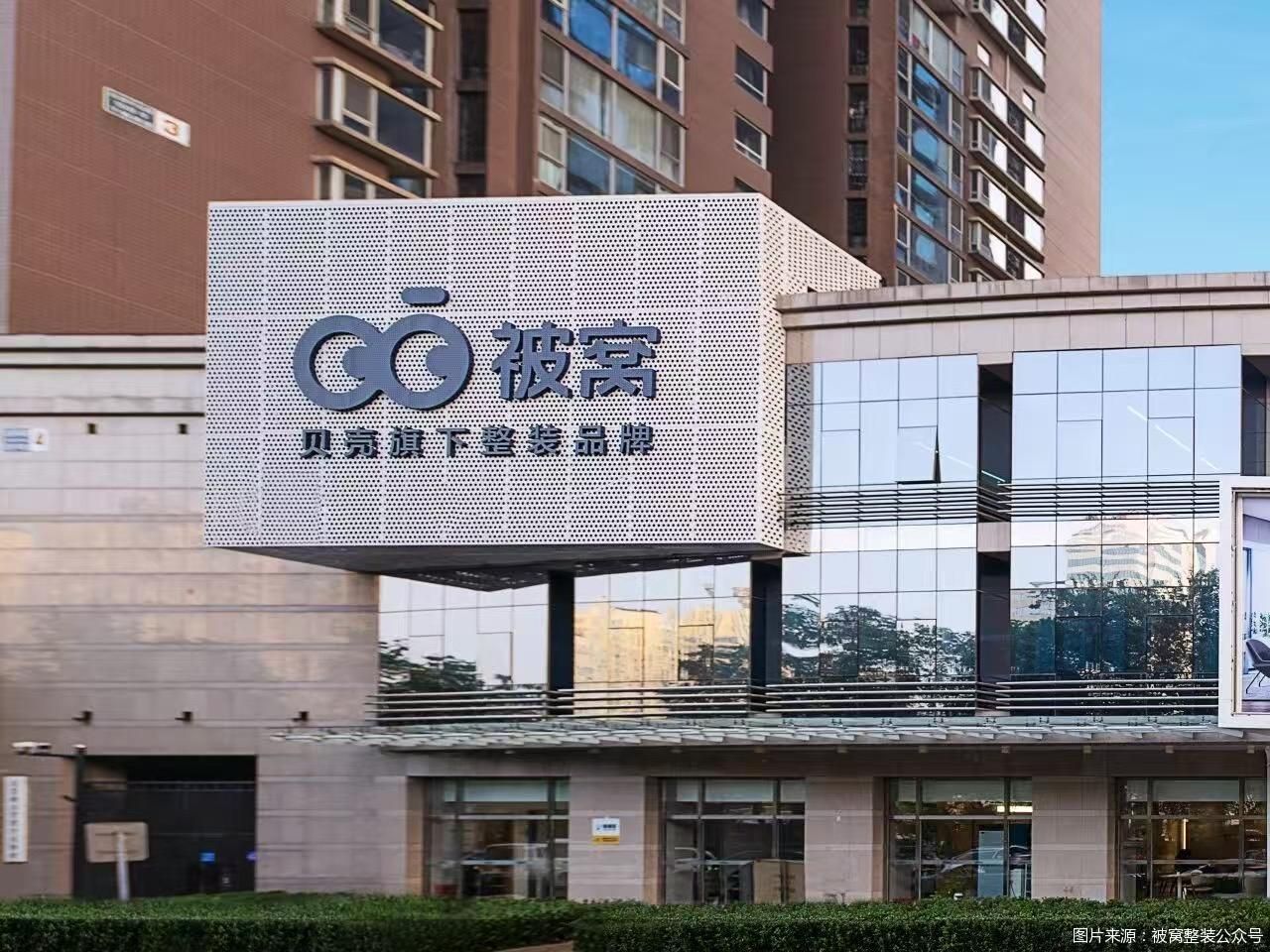
Core Viewpoint - The home furnishing industry is facing a significant challenge with frequent trademark infringement and unfair competition disputes, highlighting the need for stronger brand protection measures [1][4][8]. Group 1: Legal Cases and Outcomes - Beike's brand "Beiwow" won a trademark infringement case against Shangqiu Beiwow Mingsai Decoration Engineering Co., which was ordered to cease infringing activities and pay 50,000 yuan in damages [3][4]. - The court found that the defendant's use of the "Beiwow" mark in signage and advertising could confuse consumers, constituting trademark infringement and unfair competition [3][4]. - Other notable cases include a 3.8 million yuan compensation ruling against a defendant infringing on the "Jiumu" brand and a 300,000 yuan ruling against a company infringing on the "Oppein" brand [4]. Group 2: Industry Trends and Challenges - The frequency of trademark infringement cases in the home furnishing sector is on the rise, particularly in emerging fields like integrated and customized home furnishing [4][6]. - Factors contributing to this trend include the low cost and high profit potential of imitating established brands, as well as the challenges of managing brand identity across a wide network of distributors [5][6]. - The complexity of the home furnishing industry, with its diverse product categories, increases the risk of infringement due to insufficient cross-category trademark protection [6]. Group 3: Consumer Awareness and Behavior - Many consumers lack the knowledge to distinguish between genuine and counterfeit brands, often relying on brand names and appearances for their purchasing decisions [7]. - This information asymmetry allows counterfeit brands to mislead consumers, particularly in offline stores and smaller cities [7]. - Consumer awareness initiatives are necessary to help individuals recognize authentic brands and report infringements [9]. Group 4: Regulatory and Policy Recommendations - There is a call for enhanced regulatory measures to combat trademark infringement, including improving the intellectual property protection system and increasing penalties for violators [8]. - The government aims to establish a comprehensive intellectual property protection network by 2027, with a focus on cross-regional enforcement collaboration [8]. - Companies are encouraged to proactively develop brand protection strategies as part of their long-term business plans [9].

阳澄湖大闸蟹产业为何“越吃越香”
Su Zhou Ri Bao· 2025-11-03 00:26
Core Insights - The Yangcheng Lake hairy crab has evolved from a single agricultural product to a "golden industry" with an annual output value exceeding 35 billion yuan, driven by ecological foundations and technological empowerment [1][2][3] Ecological Foundation and Technological Empowerment - The Yangcheng Lake area, with its unique natural endowments, provides an ideal environment for crab farming, contributing to the firm texture and flavor of the crabs [2] - The local government has implemented the "Three-Year Action Plan for the Revitalization of the Yangcheng Lake Hairy Crab Industry (2023-2025)", focusing on ecological farming practices to ensure sustainable production [2] - Technological advancements, such as AI traceability and smart management systems, have enhanced the quality and safety of the crabs, making them a stable quality label for consumers [3] Industry Chain Extension and Brand Protection - The Yangcheng Lake hairy crab industry has developed a comprehensive supply chain, from farming to processing and sales, with a total output value of 35 billion yuan, of which 4.5 billion yuan comes from farming [6] - The industry has diversified into various products like drunken crabs and crab sauces, while also integrating tourism to attract nearly 2 million visitors annually, generating over 1 billion yuan in tourism revenue [6][7] - A robust brand protection system has been established to combat counterfeit products, ensuring consumer trust and maintaining the brand's reputation [6] Employment Growth and Talent Development - The crab industry has created significant employment opportunities, with over 5,000 workers engaged in crab binding during peak seasons, contributing to local income [7] - Skilled positions, such as crab selectors, have emerged as high-paying jobs, with experienced workers earning over 100,000 yuan per season [7][8] - The next generation is being encouraged to continue the family tradition of crab farming, ensuring the sustainability and growth of the industry [8]
企查查助力湖南知识产权强省建设,知名商标一键可查
Qi Lu Wan Bao· 2025-08-04 05:04
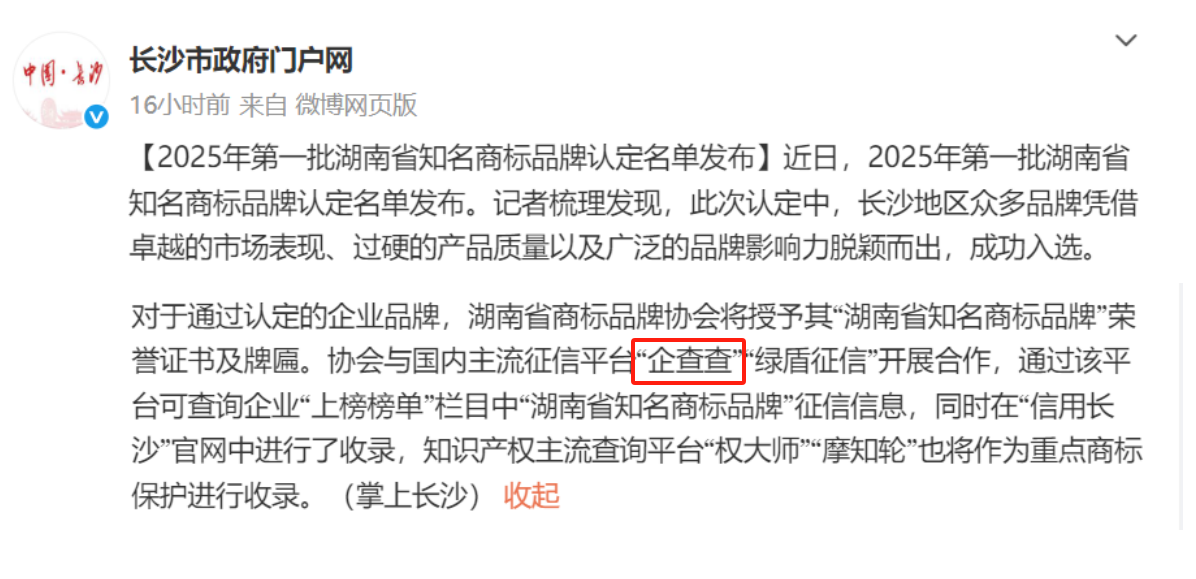
Group 1 - The evaluation of "Hunan Province Famous Trademark Brands" is a rigorous quality project, involving multiple levels of strict review to ensure the brand's market influence, reputation, innovation capability, intellectual property protection, and social contribution [2] - The recognized famous trademark brands are not just certificates; they are integrated into a multi-dimensional dissemination and protection system through collaboration with the credit platform Qichacha, enhancing brand visibility and credibility [2][3] - Qichacha, as a comprehensive credit service platform, provides a dynamic database of over 365 million enterprises, facilitating quick verification of brand qualifications and reducing information asymmetry for both consumers and business partners [3] Group 2 - Hunan has cultivated and recognized hundreds of famous trademark brands across various advantageous industries, and the involvement of third-party platforms like Qichacha is transitioning these brands from administrative recognition to market acknowledgment [4] - The dual drive of "credit + technology" in Hunan's approach is creating a new path for intellectual property protection, with expectations for increased innovation and a stronger brand matrix in the region [4]
这些热门餐饮品牌,竟然是“假的”?
3 6 Ke· 2025-07-30 02:45
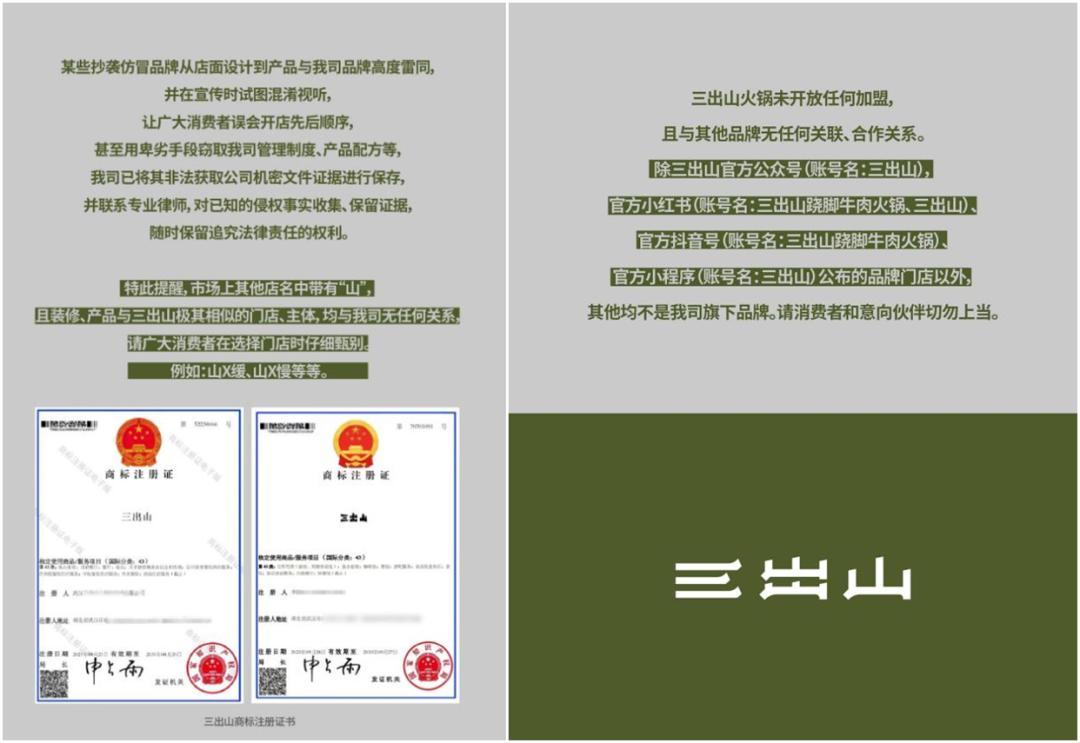
Core Insights - The phenomenon of "shanzhai" brands imitating original brands in the restaurant sector is increasingly prominent, leading to a competitive environment where some imitative brands have more outlets than the originals [1][2] - This trend raises concerns about the survival of original brands and prompts deeper reflections on the commercial environment, consumer psychology, and brand protection mechanisms [1] Group 1: "Shanzhai" Brands vs. Original Brands - The restaurant industry is witnessing a significant level of homogenization, with brands like the Roll'ING and Ameigo being closely replicated [2] - "Shanzhai" brands often adopt a franchise model for rapid expansion, while original brands focus on direct ownership and emphasize quality and reputation [7][9] - The number of outlets for "shanzhai" brands generally exceeds that of original brands, with the former favoring mid-range and mass-market locations [9][11] Group 2: Market Dynamics and Consumer Behavior - The lack of consumer awareness regarding original brands allows "shanzhai" brands to thrive, particularly in emerging markets where brand recognition is weak [16][17] - "Shanzhai" brands utilize a strategy of rapid market entry and low-cost operations, often prioritizing speed and efficiency over brand integrity [16][17] - Original brands face challenges in protecting their intellectual property, as legal actions can be time-consuming and costly, hindering their growth and innovation [18][19] Group 3: Long-term Implications - While "shanzhai" brands may achieve short-term success through imitation, they lack a sustainable brand core and innovation capabilities, which could jeopardize their long-term viability [21] - The market is expected to shift towards brands that prioritize originality, quality, and long-term value as consumer awareness and legal frameworks improve [21] - Original brands must enhance their brand protection mechanisms and consumer education to effectively counter the impact of "shanzhai" brands [21]
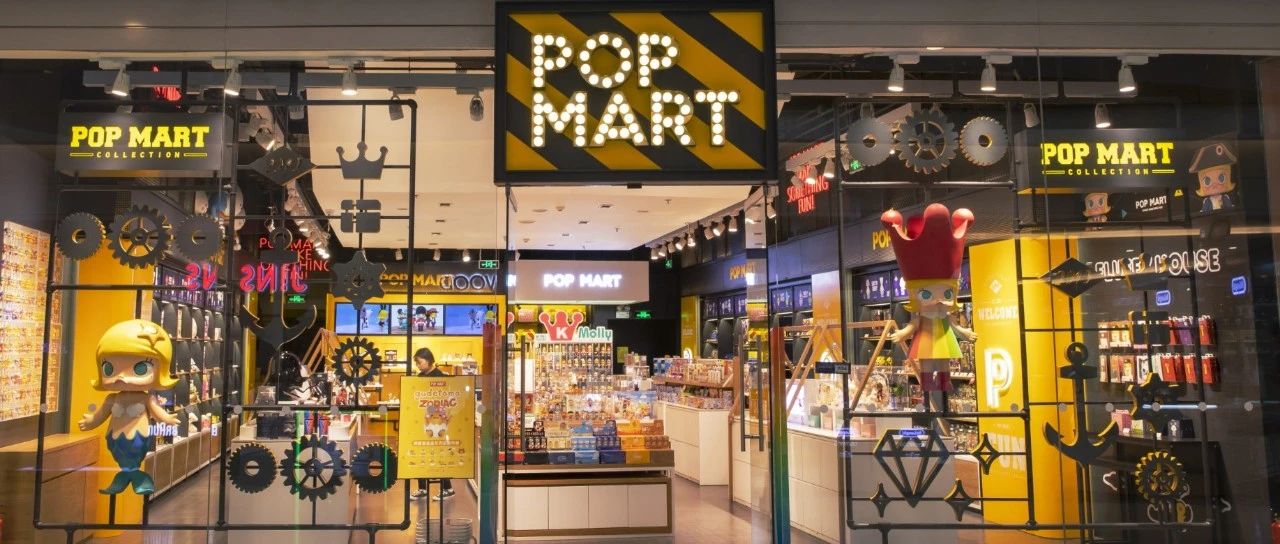
为打击盗版,泡泡玛特抢注“LAFUFU”商标|首席资讯日报
首席商业评论· 2025-07-09 03:20
Group 1 - Bubble Mart has registered the "LAFUFU" trademark to combat piracy, indicating a strong brand protection awareness [1][2] - Bentley has reported that some institutions or individuals are impersonating "Bentley Headquarters" to issue low-price sales schemes, disrupting market order and harming the brand's reputation [3] - ByteDance has denied rumors regarding the sale of TikTok's U.S. operations to a consortium led by Oracle, reaffirming that the information is false [4][5] Group 2 - CoreWeave has agreed to acquire Core Scientific in a stock transaction valued at nearly $9 billion, aiming to enhance its data center infrastructure [5] - BYD's "Shenzhen" ship has completed its first transoceanic voyage, returning from Brazil with over 7,000 electric vehicles and preparing for another journey to Europe [6][7] - Musk criticized OpenAI's CEO Sam Altman for allegedly betraying the company's original mission, highlighting concerns over AI safety and transparency [8][9] Group 3 - Hikvision's Canadian subsidiary has sought judicial review of the Canadian government's decision to halt its operations, claiming compliance with local laws [10] - Wuliangye's chairman has visited Siemens' headquarters to explore long-term cooperation in digital planning, electrification, automation, and low-carbon solutions [11] - A survey revealed that only one-fifth of employees in Germany have received training in using artificial intelligence, raising concerns about compliance with EU regulations [12] Group 4 - ROMOSS has announced a halt in production, potentially incurring losses of up to 200 million yuan per month due to a significant recall of defective power banks [13][14] - Siemens has completed the acquisition of ebm-papst's industrial drive technology business, which will be marketed under the name "Mechatronic Systems" [15] - MicroStrategy reported an unrealized gain of approximately $14.05 billion on its Bitcoin holdings, with a total holding of 597,325 Bitcoins valued at $64.36 billion [16]



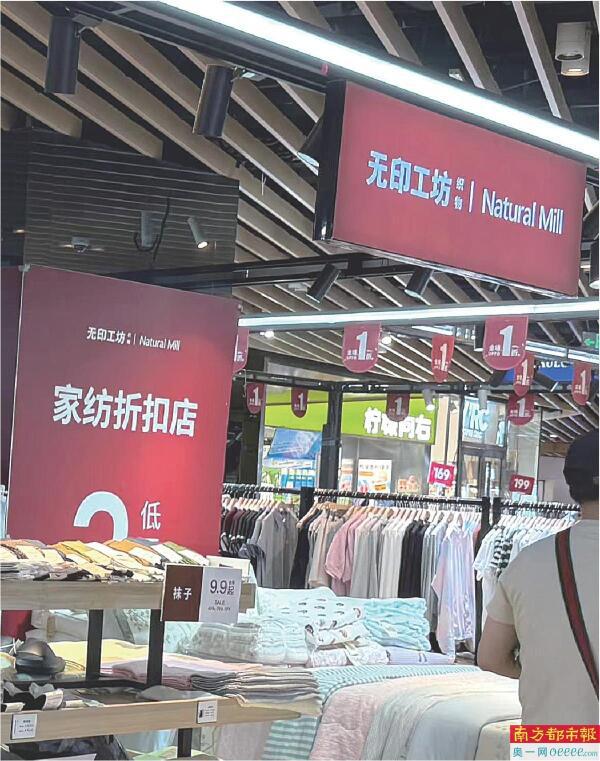
“无印良品”山寨店泛滥,商誉攀附为何愈演愈烈?
Nan Fang Du Shi Bao· 2025-06-12 23:10
Core Viewpoint - The ongoing trademark dispute between MUJI and Beijing Cotton Field has led to consumer confusion regarding the authenticity of various brands using similar names and branding, particularly during promotional events like the 618 shopping festival [5][14][20]. Group 1: Trademark Dispute Background - The trademark conflict began around 2000, stemming from lax trademark registration practices in China, which allowed companies to register numerous idle trademarks, leading to the emergence of counterfeit brands [5][19]. - Over the past decade, nearly 100 lawsuits have been filed between MUJI's parent company, Ryohin Keikaku, and Beijing Cotton Field over trademark rights [5][14]. - Beijing Cotton Field has registered 165 trademarks related to "MUJI" from 2000 to 2024, with 13 currently active and others deemed invalid [11][14]. Group 2: Consumer Confusion and Complaints - Consumers have reported being misled by online stores claiming to be official MUJI outlets, resulting in issues such as product quality discrepancies and misleading information from customer service [7][9]. - The presence of multiple online stores with similar names, such as "MUJI Home Textile Flagship Store" and "MUJI Official Flagship Store," has contributed to consumer confusion [8][9]. - Complaints have surged, with consumers expressing dissatisfaction over the quality of products purchased from these misleading stores [7][9]. Group 3: Business Practices and Market Expansion - Beijing Cotton Field has expanded its product categories and is actively seeking franchise partners, despite ongoing legal disputes [15][17]. - The company has launched a strategy to open 5,000 stores by 2026, aiming for sales exceeding 10 billion [16][17]. - The branding and store design of Beijing Cotton Field's outlets closely resemble that of MUJI, which raises concerns about misleading consumers [10][18]. Group 4: Legal and Regulatory Context - Legal experts suggest that Beijing Cotton Field's actions may violate anti-unfair competition laws due to the potential for consumer confusion [18]. - The Chinese government has implemented policies to strengthen intellectual property protection and promote brand development, which may impact the future of such trademark disputes [20].